Bring home a kitten with confidence. Get vet-backed tips on kitten-proofing, nutrition, litter training, vaccines, grooming, play, stress, and safe pet intro...
Article
•
Designer Mixes
Train Your Kitten to Use the Litter Box

Shari Shidate
Designer Mixes contributor
Bringing home a kitten is exciting, but those first few days can feel a little nerve-wracking when you are watching for accidents. The good news is that most kittens want to use a litter box. Your job is mainly to make it obvious, easy, and stress-free.
As a veterinary assistant, I like to think of litter training as a simple health routine. When the setup is right, you are not only preventing messes, you are also supporting your kitten’s comfort, confidence, and urinary health.
How kittens learn litter habits
Most kittens naturally prefer to eliminate in loose, diggable material. That is why litter training is usually quicker than people expect. When accidents happen, it is often because one of these basics is off, or because your kitten is still adjusting to a big new environment:
- The litter box is hard to find or hard to access.
- The box is not cleaned often enough.
- The litter texture or scent is unpleasant to the kitten.
- The location feels unsafe, noisy, or too exposed.
- Stress, schedule changes, or too much freedom too soon is throwing off the routine.
- There is an underlying medical issue causing urgency, pain, or frequent urination.
Think of it like this: kittens repeat what works. If the litter box feels good and is always available, the habit sticks.
Set up the box for success
Choose the right box
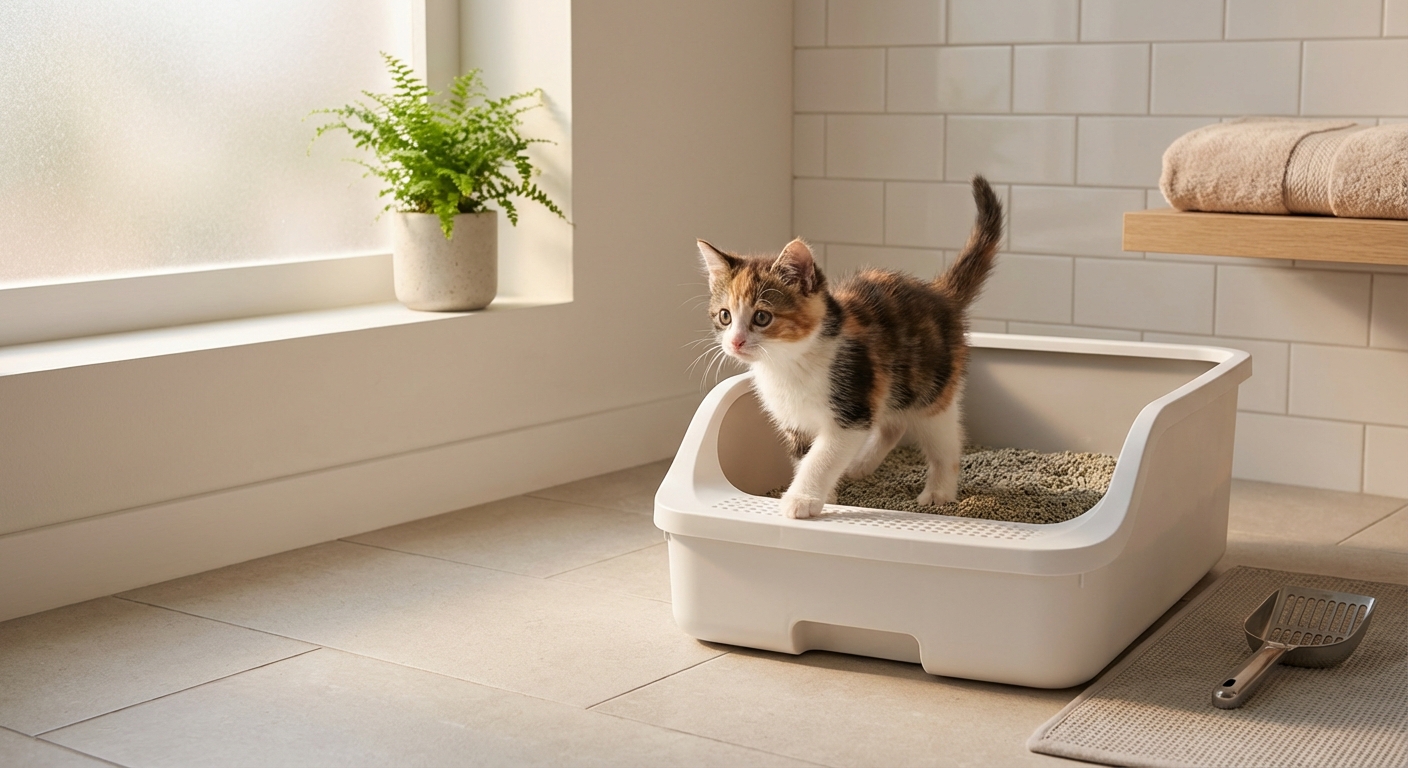
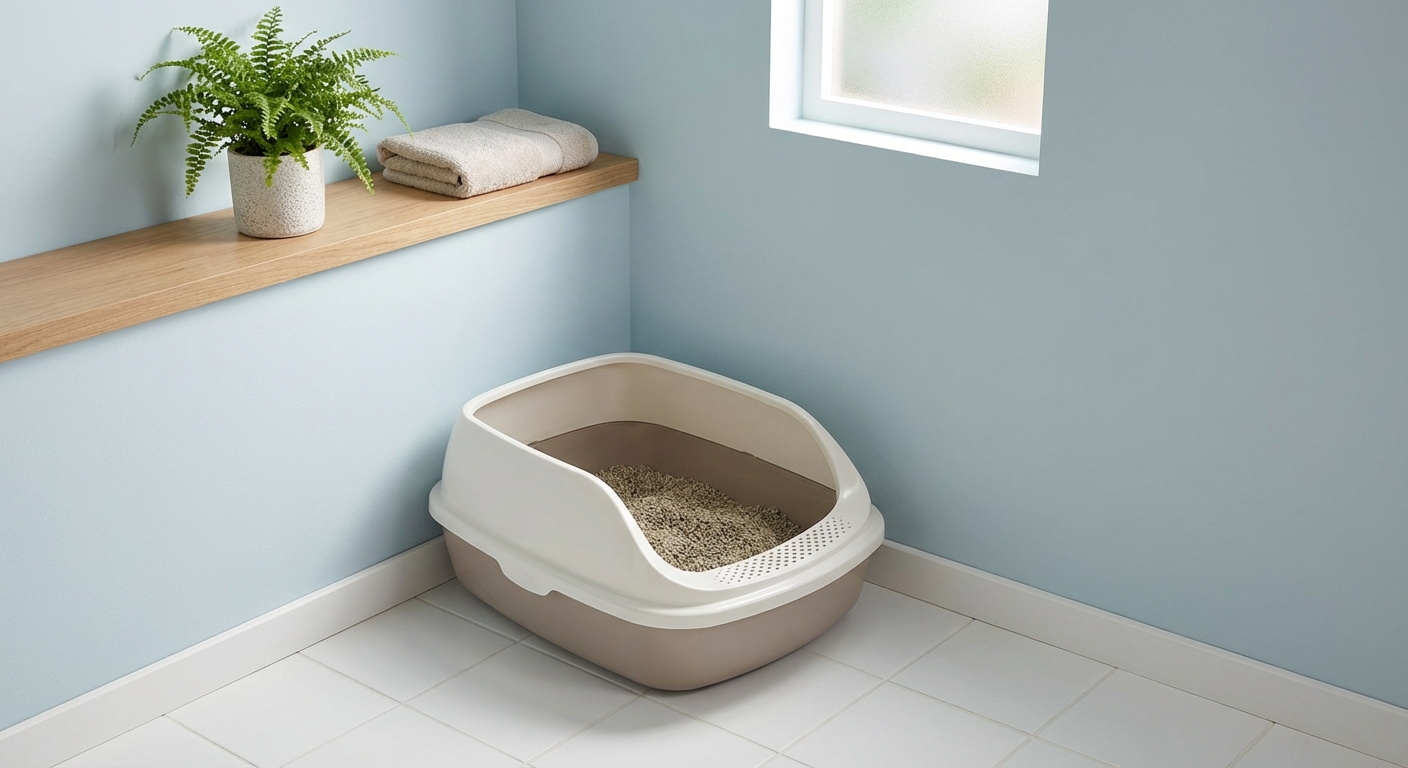
For kittens, the best starter box is usually a shallow, open pan with low sides so they can climb in easily. Covered boxes work well for some cats, but they can concentrate odors and reduce ventilation, and some kittens find them intimidating early on. Once your kitten is reliably trained, you can follow their preference.
- Size: big enough to turn around comfortably.
- Entry: low entry for tiny legs.
- Style: open is often easiest for training.
Pick kitten-friendly litter
Many kittens do best with an unscented, fine-grain litter that feels like sand. Strong perfumes can turn them off. If you adopted from a shelter or breeder, ask what they were using and start with that to avoid a sudden change.
Safety note: Some kittens try tasting litter. If your kitten is very young (especially under about eight weeks), is still nursing, or you notice them eating litter, ask your veterinarian about safer options. Many veterinary teams recommend avoiding clumping litter for these kittens due to ingestion risk, then transitioning later when your kitten is older and no longer mouthy.
How much litter to add
Aim for a comfortable layer your kitten can dig in without sinking. Many cats like about 2 to 3 inches, but some kittens do better with a slightly shallower layer at first (around 1 to 2 inches), especially if they are tiny or unsteady.
Placement matters
Put the box in a quiet, easy-to-reach area. Avoid placing it next to loud appliances like washing machines, and avoid tight corners where the kitten might feel trapped.
- Quiet: low traffic, low noise.
- Accessible: no closed doors between kitten and box (and avoid out-of-the-way spots like basements if doors are likely to be shut).
- Separate from food: keep litter away from feeding areas.
Quick tip: Skip liners if you can. Some cats dislike the shifting or the crinkly feel, and scratching can pull the liner into a messy wad.
Week one: simple steps
Day one: start small
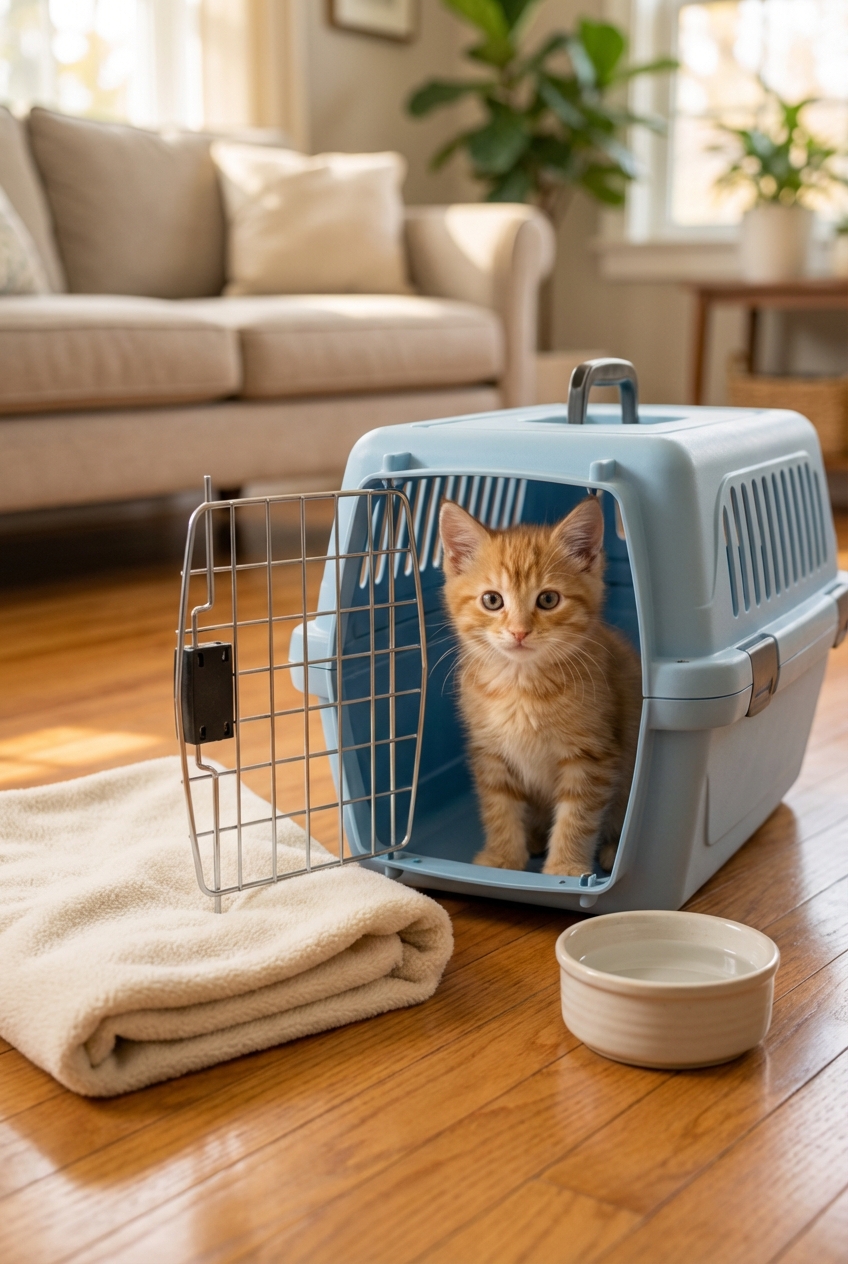
When your kitten arrives home, start with one kitten-safe room with the litter box, food, water, and a cozy bed. This prevents overwhelm and helps them learn where the box is right away.
Gently place your kitten in the litter box:
- After waking up
- After eating
- After playtime
- Before bedtime
Let them sniff, scratch, and step out when they are ready. No forcing and no holding them in the box.
Days two to seven: repeat and expand
As accidents stop and your kitten consistently uses the box, gradually give access to more of your home. If accidents start again after expanding space, scale back for a few days and rebuild confidence.
Consistency wins. Each successful trip to the litter box builds a habit you can count on.
How many boxes
A common guideline is: one litter box per cat, plus one extra. For a single kitten in a small home, one box can be enough, but adding a second box often prevents accidents, especially in multi-story homes.
- One-story home: consider two boxes in different quiet areas.
- Two-story home: at least one box per level.
- Multi-cat homes: multiple boxes reduce stress and territory issues.
Cleaning that keeps them using it
From your kitten’s point of view, a dirty litter box is like being asked to use an overflowing public restroom. Cleanliness is a common and well-supported factor in good litter box habits.
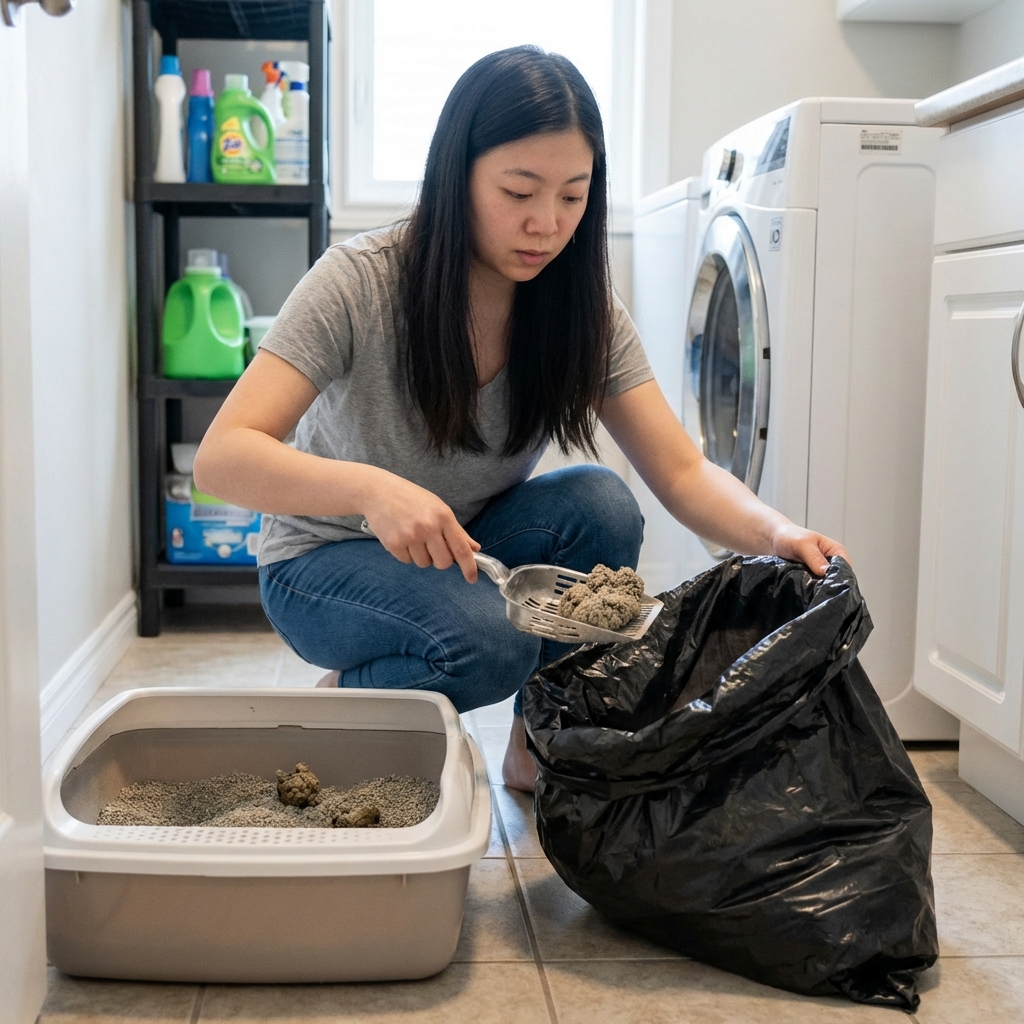
- Scoop: 1 to 2 times daily.
- Top off litter: as needed to maintain a comfortable depth.
- Wash the box: every 1 to 4 weeks with mild, unscented soap and warm water.
- Avoid harsh smells: heavy cleaners and strong deodorizers can cause avoidance.
If your kitten has an accident
Accidents happen, especially during the first days in a new environment. The key is to respond in a way that teaches the kitten what works next time.
Do not punish
Yelling, rubbing their nose in it, or swatting can create fear and make litter box problems worse. Your kitten may start hiding to eliminate, which is the opposite of what you want.
Do this instead
- If you catch them mid-squat: calmly and gently move them to the litter box, then step back and give them privacy.
- If it is already done: do not drag them to the spot. Just clean it and reinforce the routine at the next natural time (after meals and naps).
- Clean thoroughly: use an enzymatic cleaner designed for pet urine and stool to remove odor cues.
- Review the setup: was the box blocked, dirty, or hard to reach?
- Consider adding a box: more options can solve many mystery accidents.
Common mistakes
Changing litter too fast
If you need to switch litter types, do it gradually by mixing the new litter in over 7 to 10 days. Sudden changes can cause avoidance.
Using scented litter or powders
Many cats dislike strong smells. Try unscented litter and focus on scooping more often instead.
Box is too small or hard to enter
If your kitten is climbing awkwardly or hesitating at the edge, choose a lower-entry box now. As they grow, upgrade to a larger box.
Box is in a scary spot
If the box is near loud appliances or in a busy hallway, relocate it to a calmer space. Cats prefer privacy and predictability.
Too much freedom too soon
If your kitten is having accidents after you open up the house, that is a sign they need a smaller space for a bit longer. Build success in one area, then expand again.
When it may be medical
As a vet assistant, I always encourage pet parents to take bathroom changes seriously. If your kitten was doing well and suddenly stops using the box, it is time to think about health, not just behavior.
Call your veterinarian promptly if you notice:
- Frequent trips to the box with little or no urine
- Crying, straining, or discomfort when urinating
- Blood in urine or stool
- Diarrhea or very soft stool that makes it hard to make it in time
- Sudden increased thirst and urination
- Lethargy, vomiting, or reduced appetite
Important: urinary blockage is a life-threatening emergency, especially in male cats. If your kitten is straining and not producing urine, seek emergency care.
Easy daily routine
If you want a simple plan to follow, try this for the first 2 weeks:
- Morning: scoop boxes, place kitten in the box after breakfast.
- Midday: quick scoop if needed, especially in multi-cat homes.
- Evening: scoop again, place kitten in the box after play and dinner.
- Before bed: one last gentle box visit and make sure the path to the box is clear.
Most kittens thrive with predictable routines. When the litter box is clean and easy to reach, you are setting your kitten up for a lifetime of good habits.