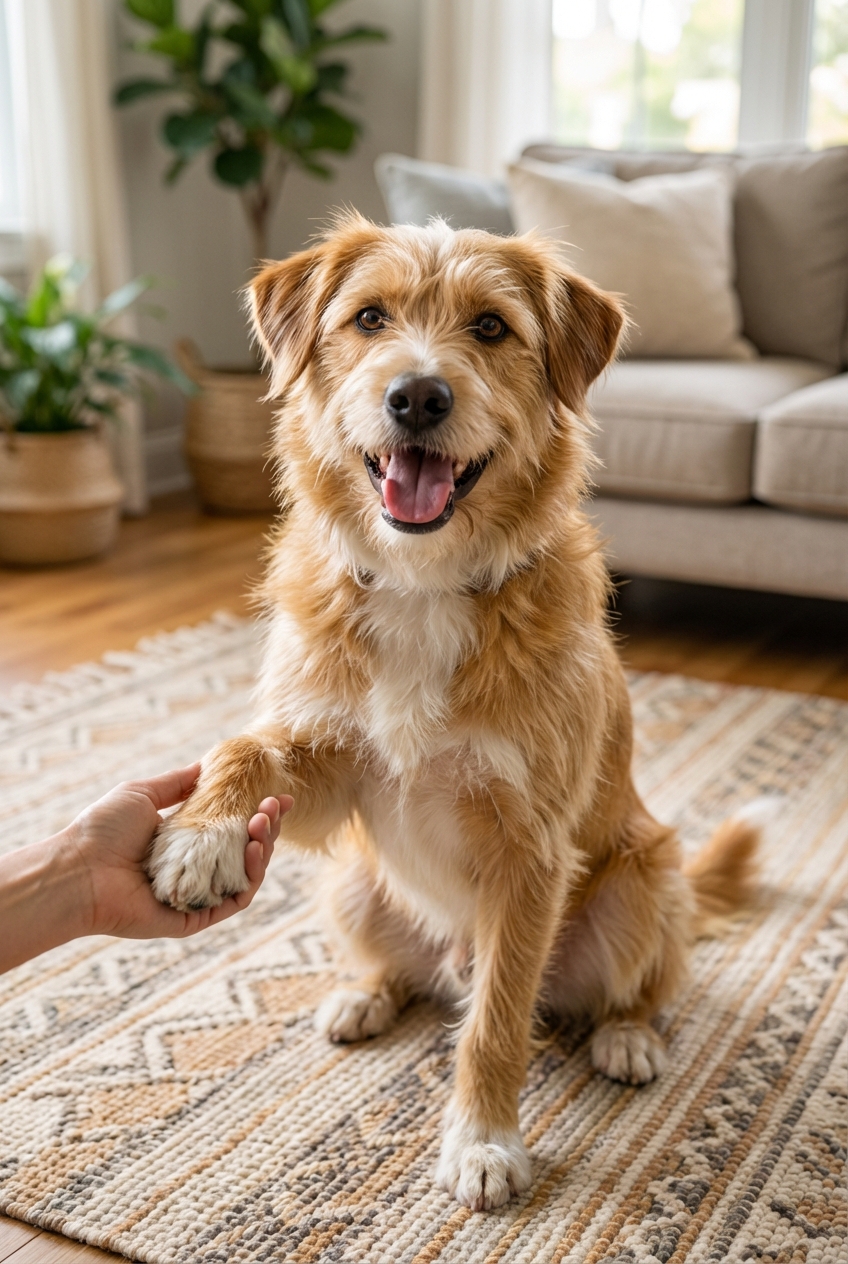
Teach “shake” with positive reinforcement using capture, lure, or shaping. Includes safety checks, common problem fixes, and a simple 10-day plan for a c...
Article
•
Designer Mixes
Train Your Dog to Shake Hands

Shari Shidate
Designer Mixes contributor
One of my favorite “quick-win” tricks is teaching a dog to shake hands. It is cute, confidence-building, and surprisingly useful for handling practice. When done kindly, it also helps your dog learn a core skill that makes future training easier: offering a behavior calmly, on cue, and for a reward.
As a veterinary assistant in Frisco, Texas, I love tricks like this because they can double as gentle body handling practice. A dog who is comfortable with you holding a paw is often easier to help at home and at the clinic. The key is to keep it fun, keep sessions short, and stop before your dog gets frustrated.
Before you start
What you need
- Small, soft treats your dog can eat quickly
- A clicker (optional) or a consistent marker word like “Yes”
- A calm space with minimal distractions
- 1 to 3 minutes of your time per session
Best time to train
Train when your dog is not overly excited and not starving. Right after a walk or play session is often perfect. If your dog is bouncing off the walls, start with a few simple sits and treat for calm before you ask for the paw.
Safety and comfort first
Skip paw training if your dog has a nail injury, sore pads, or recently had a leg procedure. If your dog has arthritis or mobility issues, only do this if it stays comfortable and easy, and ask your veterinarian what is appropriate for your dog.
If your dog consistently yanks the paw away, stiffens, growls, freezes, or looks away with a tense face, pause and work on trust and handling slowly. You can always ask your veterinarian or a force-free trainer for help.
Kids and paws
If children want to participate, supervise closely. Show kids how to offer a flat hand, avoid grabbing, and never pull or hold the paw. A lot of bites happen during handling when a dog feels trapped.
Teach “shake” step by step
There are a few good ways to teach shake. I like the method that encourages your dog to offer the paw, rather than you grabbing it. It supports consent and, for some dogs, can help reduce sensitivity over time when paired with gradual handling and rewards.
Method 1: Capture the paw
- Ask for a sit. This keeps the body steady and makes the paw offer clearer.
- Wait quietly with a closed hand. Hold a treat in your closed fist near your dog’s chest level. Keep your hand still. Most dogs will paw at your hand to investigate.
- Mark and reward the moment the paw lifts. The instant you see the paw come up, say “Yes” or click, then give the treat.
- Repeat 5 to 8 times. Your dog will start lifting the paw faster because it works.
- Raise your criteria. “Criteria” just means what you are rewarding. Now only mark when the paw touches your hand (not just lifts).
- Add the cue. Once your dog is reliably touching your hand with a paw, say “Shake” right before you present your hand.
- Switch to an empty hand. Present an empty hand and reward from the other hand after the paw lands.
If your dog escalates to scratching, mouthing, or frantic pawing: gently pause. Hide your hands behind your back for a second, then try again with a calmer moment and a shorter rep. You want curious pawing, not mugging.
Method 2: Gentle prompt
Some dogs will stare politely forever and never paw. If that is your dog, you can help them understand the idea, but be gentle and brief.
- Ask for a sit.
- Lightly touch behind the wrist (the pastern area) or the elbow to encourage a paw lift.
- When the paw lifts, mark and reward.
- Quickly transition back to Method 1 so your dog learns to offer the behavior.
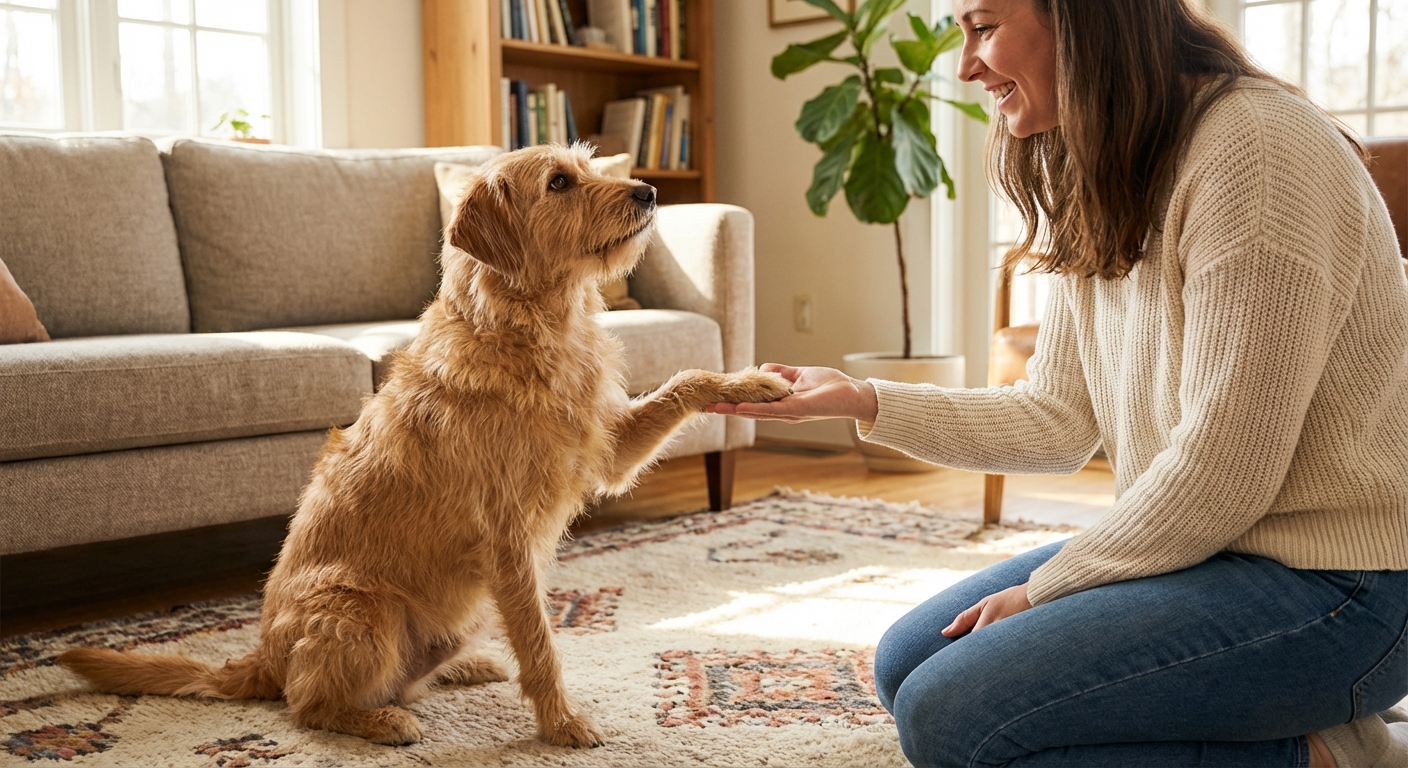
Goal: Your dog hears “Shake,” lifts a paw, and places it in your hand briefly, then you release and reward.
Build duration
Start with a quick touch and reward. Then gradually build to 1 second, then 2 seconds. Always release and reward before your dog pulls away. This keeps it comfortable and prevents frustration.
Add a release cue
This part is overlooked, but it matters. Teach a simple “All done” or “OK” so your dog knows when the paw interaction ends. When you say your release word, let go, then mark and reward as your dog removes their paw. This helps them learn the end of the behavior just as clearly as the start.
What a good shake looks like
- Loose body, soft face, normal breathing
- Paw is offered, not forced
- Short hold (1 to 2 seconds is plenty)
- One shake per cue, then reset
If your dog starts pawing you nonstop, that usually means they are confused about when the behavior is appropriate. Ask for a sit, reward calm, then only reward the paw when you have given the “Shake” cue.
Fun facts
- Dogs do not naturally “shake hands” like humans do. Many dogs will paw for attention or excitement, so training it with a cue helps keep it polite.
- Trick training can boost confidence. Research on canine learning and welfare strongly supports positive reinforcement as a low-stress way to teach skills and strengthen the human-animal bond.
- Shake can support handling practice. When paired with rewards, brief paw contact can help some dogs become more comfortable with nail trims and paw checks.
- Left paw or right paw is teachable. Many dogs can learn “Left” and “Right” as separate cues if you are consistent.
Problems and quick fixes
Your dog mouths your hand
Keep treats out of the “shake hand,” and reward from the other hand. If your dog gets grabby, switch to tossing the treat on the floor after the shake so the mouth moves away from you.
Your dog slaps hard or claws
Reward only gentle contact. Mark and treat for softer touches, and keep nails trimmed. You can also present your hand lower and flatter to reduce the “swat” motion.
Your dog refuses to lift a paw
Try training on a non-slip surface, ask for a sit, and wait longer. Some dogs need 20 to 30 seconds to “solve” the puzzle the first few times. You can also use the gentle prompt method briefly, then return to capturing.
Your dog jumps forward or loses the sit
Keep your hand low and close to your dog’s chest, not out in front. Reward your dog for staying seated with elbows down, even before you ask for the paw. Shorter sessions help, too.
Your dog offers shake constantly
This is common. Teach an “All done” cue, reward calm sitting, and only reinforce shake when you ask for it. Consistency solves this quickly.
Your dog is uncomfortable with paw handling
Go slower. Some dogs dislike paw handling because of past nail trims or sore feet. Start by marking and treating for looking at your hand near the paw, then for a light touch, then for a brief hold. If you suspect pain, check with your vet before continuing. Your dog should always have the option to opt out.
Tips for faster results
- Do 1 to 3 minute sessions, 1 to 3 times a day
- End on a win, even if it is a simple paw lift
- Use high-value treats for the learning phase, then switch to intermittent rewards
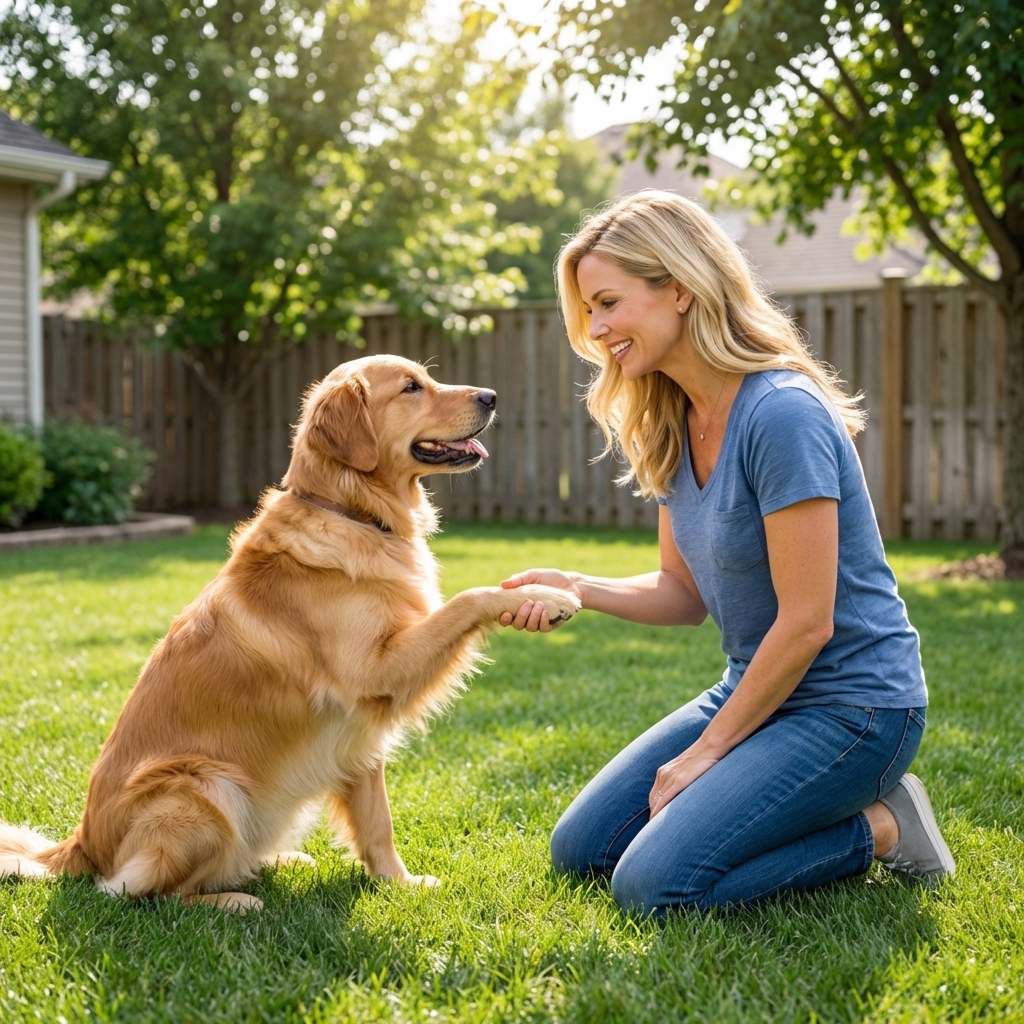
- Practice in new places after your dog knows the cue at home, like the backyard or a quiet park
Make it a game
Shake, high-five, fist bump
Once your dog understands “Shake,” you can have a lot of fun without adding much complexity.
- High-five: hold your palm vertically and reward when the paw hits your palm
- Fist bump: offer a closed fist and reward gentle paw taps
- Wave: reward a paw lift without touching your hand
Two-paw “hug”
Some dogs love placing both paws on your forearm. Keep it brief and avoid encouraging jumping on guests. This is a “by invitation only” behavior.
When to ask a pro
If your dog shows signs of fear, guarding, or pain with paw contact, it is worth getting personalized help. A force-free trainer can coach your timing and reward strategy, and your veterinarian can rule out medical causes like sore nails, allergies, or joint discomfort.
Training should feel safe for your dog. If it is not fun anymore, it is not the right pace.