Jumping isn’t dominance—it’s a rewarded greeting habit. Learn vet-approved, positive steps to stop it: ignore jumps, reward four paws down, teach sit/m...
Article
•
Designer Mixes
Train Your Dog Not to Jump on People

Shari Shidate
Designer Mixes contributor
Jumping is one of the most common greeting and attention-seeking behaviors dogs use, and it can also be one of the most frustrating. If your dog launches at guests, knocks kids over, or snags clothing with muddy paws, you are not dealing with a “bad dog.” You are dealing with a behavior that has been rewarded, even accidentally, and can absolutely be retrained.
As a veterinary assistant here in Frisco, Texas, I see this all the time. The good news is that teaching a polite greeting is a skill, just like leash walking. With a clear plan, consistency, and a little practice, most dogs improve quickly.
Why dogs jump
Understanding the “why” makes the training feel less personal and more practical.
- It works. Many dogs have learned that jumping brings attention. Even pushing them away or saying “No” can still feel rewarding.
- Many dogs greet face-to-face. Your dog may be trying to reach your hands and face, especially if you talk, smile, or make eye contact. Other dogs are more “sniff first” and rush your legs or body instead.
- Overexcitement and impulse control. Some dogs struggle to regulate their arousal, especially adolescents and high-energy mixes.
- Inconsistent rules. If some people allow jumping sometimes, your dog will keep trying.
The core principle: what gets rewarded gets repeated. We are going to make “four paws on the floor” and “sit to say hi” the behaviors that pay.
Before you start
Rule out pain and cover basics
If jumping escalated suddenly or your dog seems restless, talk with your veterinarian. Discomfort, anxiety, or under-exercise can make impulse control worse. Also make sure your dog is getting enough:
- Daily physical exercise appropriate for age and breed mix
- Mental enrichment (sniff walks, food puzzles, training games)
- Predictable routines (many dogs jump more when the household is chaotic)
Manage the environment
Management prevents your dog from rehearsing jumping while you teach new habits.
- Use a leash indoors when guests arrive so you can guide your dog calmly.
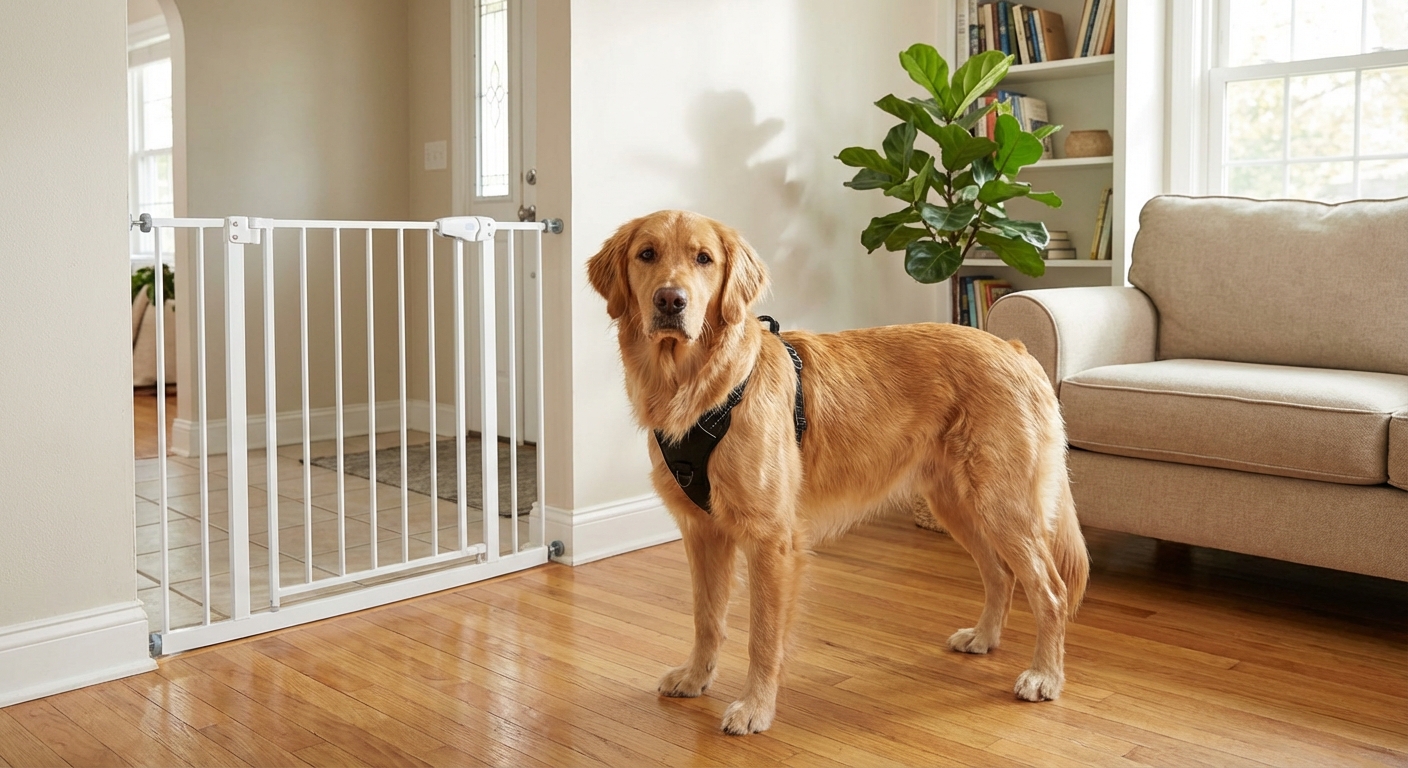
- Use baby gates or an exercise pen to create space for greetings.
- Prepare high-value treats (pea-sized chicken, cheese, or soft training treats).
- Consider a front-clip harness for better control and comfort.
Pick one house rule
The fastest progress happens when everyone follows the same script. Choose one:
- Option A: Dog must keep four paws on the floor to get attention.
- Option B: Dog must sit to greet people.
I recommend sit because it is clear, teachable, and easy for guests to understand.
Step-by-step training
Step 1: Teach “sit” and pay it
If your dog does not have a reliable sit yet, practice in low-distraction areas first.
- Say “Sit” once.
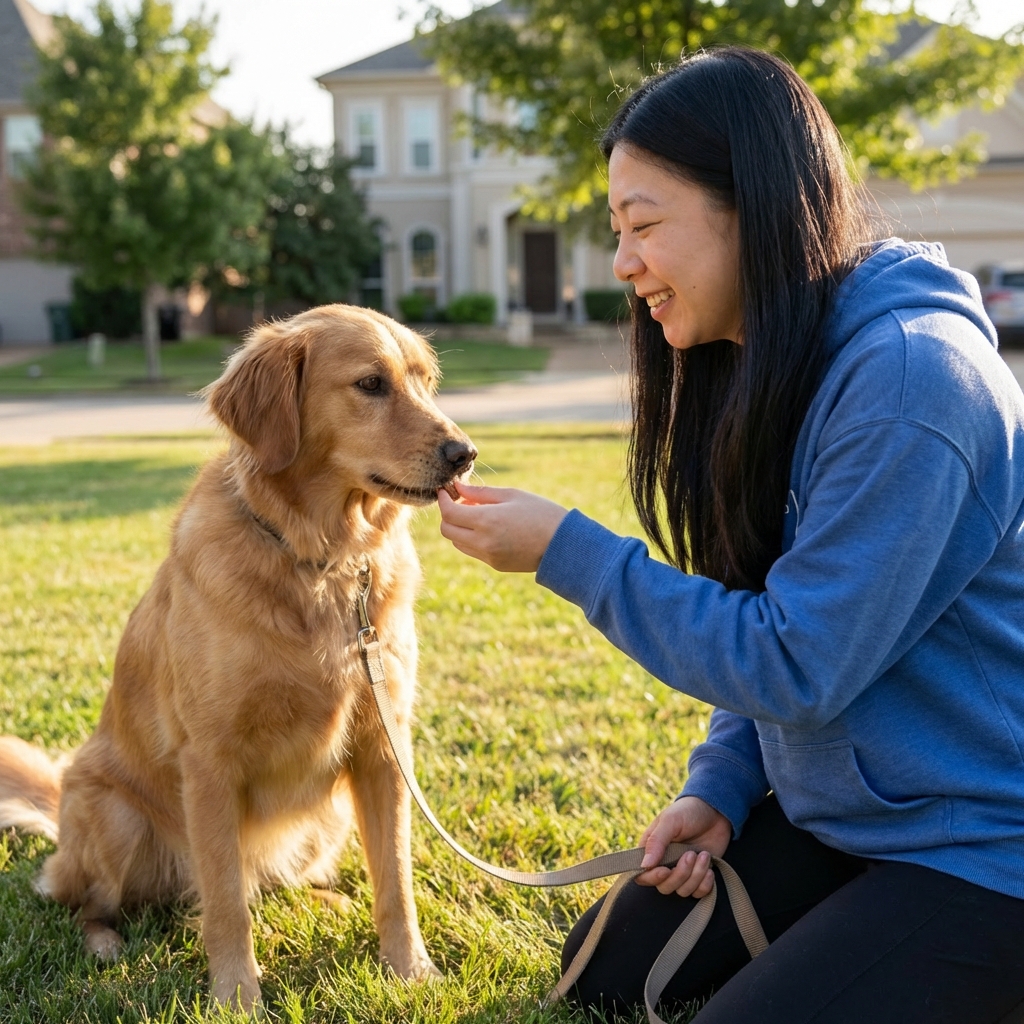
- The moment your dog’s bottom touches the floor, mark it with “Yes” (or a clicker) and give a treat. A marker word tells your dog the exact second they got it right.
- Repeat for short sessions: 1 to 3 minutes, a few times a day.
We want your dog to think, “Sitting makes good things happen.”
Step 2: Add excitement gradually
Dogs often sit beautifully until the exact moment someone enters. So we practice in tiny, winnable steps:
- Ask for a sit while you walk toward the door. Reward.
- Touch the doorknob. If your dog stays seated, reward.
- Open the door a crack. Reward calm.
- Step outside and step back in. Reward.
If your dog pops up, that is not “being stubborn.” It means the step was too hard. Make it easier and try again.
Step 3: Make jumping stop the reward
Plain English: when jumping happens, attention disappears. When four paws are on the floor (or your dog sits), attention comes back. In learning terms, this is negative punishment, but done kindly and without scary corrections.
- If your dog jumps, immediately remove attention. Turn your body away, fold arms, and stay quiet.
- The moment four paws are on the floor (or your dog sits), say “Yes” and give attention or a treat.
Timing matters. You are not trying to “punish.” You are showing a clear cause and effect.
Step 4: Practice with a guest script
Recruit a friend who will follow directions. Keep the first sessions short.
- Dog on leash.
- Friend enters calmly, no talking to the dog yet.
- You cue “Sit.”
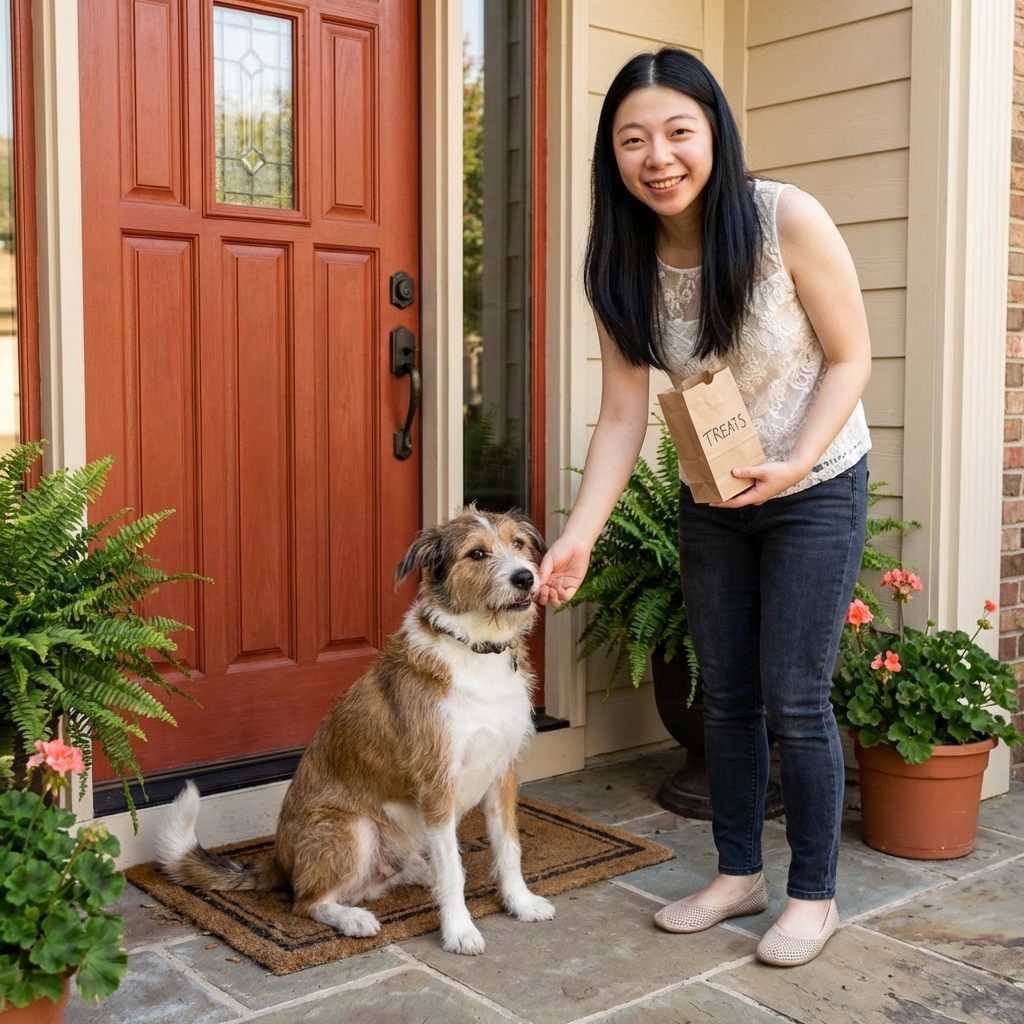
- If the dog sits: friend approaches and gives a treat low to the dog’s mouth, or gently pets the chest (not the top of the head). Keep voices low and calm.
- If the dog jumps: friend turns away and steps back. You guide the dog back to a sit, then try again.
If your dog revs back up during petting, pause petting, ask for a sit again, and restart. Calm greetings stay calm by rewarding calm, not hype.
Step 5: Add “go to mat”
Some dogs need a “station” behavior, especially when multiple guests arrive.
- Place a dog bed or mat near (not right at) the entry.
- Toss a treat onto the mat. When your dog steps on it, mark “Yes” and treat again.
- Add the cue “Mat” or “Place.”
- Gradually reward your dog for staying there longer.
This gives your dog a clear, safe spot to succeed while the door is busy.
In the moment
These are not magic, but they help you get through real life while your dog is learning.
- Keep treats at the door. Before your dog jumps, cue “Sit” and pay it.
- Toss a treat scatter. Toss 5 to 10 tiny treats on the floor away from the guest. Sniffing can help lower arousal and buys you time.
- Use a barrier. A calm greeting through a gate is still a win.
- If you must tether, do it safely. I prefer gates, crates, or a leash held by an adult. If you tether, use a harness only, a short tether attached to a secure, fixed anchor (not a chair), and never leave your dog unattended. Avoid slip leads, choke chains, or anything that tightens.
Common mistakes
- Kneeing the dog in the chest: can create fear, increase arousal, and may injure a dog. Instead: remove attention and reward calm.
- Repeating “Off, off, off”: dogs often hear this as background noise. Instead: teach what you want (sit, mat).
- Pushing the dog down: physical handling often turns into a game. Instead: step away and reset.
- Using aversives at the door: shock collars, prong collars, spray collars, or yelling can increase fear and arousal around visitors, and can make some dogs defensive. Instead: manage the setup and reward the behavior you want.
- Letting the dog rehearse jumping: every successful jump is practice. Instead: manage with leashes, gates, and planned greetings.
- Only training when guests come: too hard, too soon. Instead: practice door routines daily with pretend arrivals.
Help guests and kids help you
Even good training falls apart if visitors accidentally hype your dog up. A simple script helps:
- Come in calmly. No squealing, fast movements, or direct leaning over the dog.
- Ignore jumping completely. Turn away and be quiet.
- Reward the behavior we want. Toss a treat on the floor or offer one low when the dog is sitting.
- Pet the chest or side, not the top of the head. Pause if the dog gets wiggly and jumpy again.
Puppies, adults, big dogs
Puppies
Puppies jump because everything is exciting and their feet are spring-loaded. Keep sessions very short and reward sits constantly. Ask guests to crouch or offer attention low so the puppy is not tempted to climb.
Adult dogs
Adult jumpers usually have a longer reinforcement history. That means the behavior is stronger, not impossible. Be extra consistent for a few weeks and prevent “surprise greetings” that undo your progress.
Large and strong dogs
For big dogs, management is safety. Use a secure front-clip harness, leash, and a gate. Consider working with a certified trainer if anyone in the home feels physically unsafe.
How long does it take?
Many families notice improvement in 1 to 2 weeks with daily practice and good management, but timelines vary a lot based on your dog’s age, reinforcement history, your household consistency, and how often visitors come. Reliable, polite greetings around excited visitors often take 4 to 8 weeks or longer.
Progress is not linear. Expect a few setbacks, especially during adolescence (roughly 6 to 18 months) or around holidays when routines change.
Troubleshooting
Sometimes jumping is not just excitement. Consider getting professional support if:
- Your dog jumps and mouths, nips, or grabs clothing
- Your dog seems fearful of guests, hides, growls, barks, or lunges at the door
- Jumping happens alongside separation anxiety or intense hyperactivity
- There are children, elderly family members, or mobility concerns in the home
If fear is part of it, focus on distance and safety first. Use gates, increase space, ask guests to ignore the dog, and use treat tosses away from the person so your dog can decompress. For these cases, a qualified trainer or behavior consultant can make a huge difference.
Look for a trainer with credentials such as CPDT-KA or KPA-CTP, and favor force-free, reward-based methods backed by behavioral science.
A plan to start today
- Today: Put treats by the door. Practice sit 10 times.
- This week: Do 2 minutes of “door practice” daily, plus one planned greeting session with a friend.
- This month: Manage surprises with a gate or leash, and reward calm greetings every time.
Polite greetings are not about “dominating” your dog. They are about teaching a behavior your dog can repeat successfully, even when excited.
If you stick with it, your dog will not just stop jumping. They will learn what to do instead. And that is the real win for both of you.