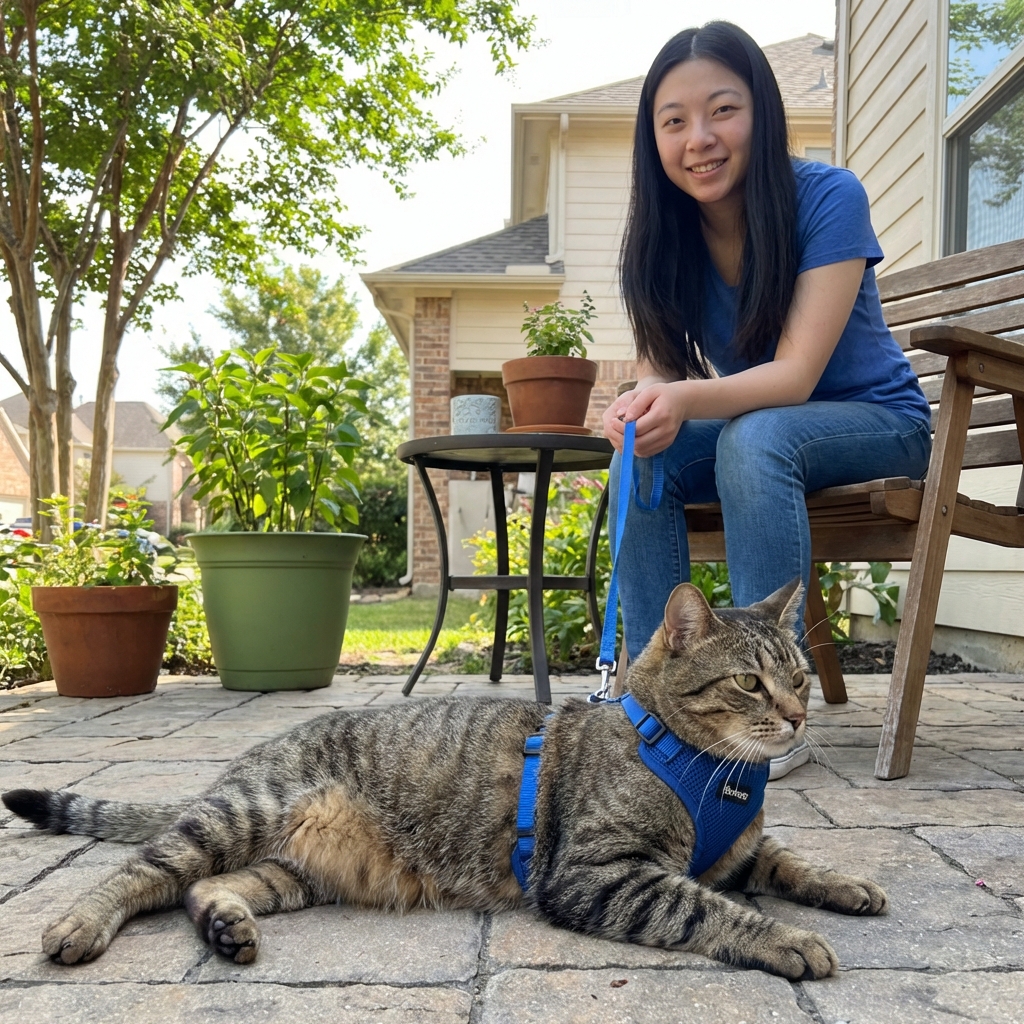
Teach your cat to enjoy calm, safe outdoor time with a harness and leash. Follow a step-by-step plan, choose the right gear, prevent escapes, and troubleshoo...
Article
•
Designer Mixes
Train Your Cat to Walk on a Leash

Shari Shidate
Designer Mixes contributor
As a veterinary assistant here in Frisco, Texas, I can tell you this with confidence: many cats can learn to walk on a leash, but success depends a lot on temperament, early handling, and how patient you are with the process. They also need a slower, more respectful training pace than most dogs. The goal is not a long hike on day one. The goal is a calm, curious cat who feels secure and in control.
Leash walking is not just “cute content.” For many indoor cats, it can be a safe way to add enrichment, support weight management, and reduce boredom behaviors like nighttime zoomies or excessive vocalizing. It is not a magic fix for weight loss though. Diet is still the main driver there, and leash time works best as a supplement. The secret is to set your cat up to succeed with the right gear, tiny training steps, and smart safety boundaries.
Is leash walking right for your cat?
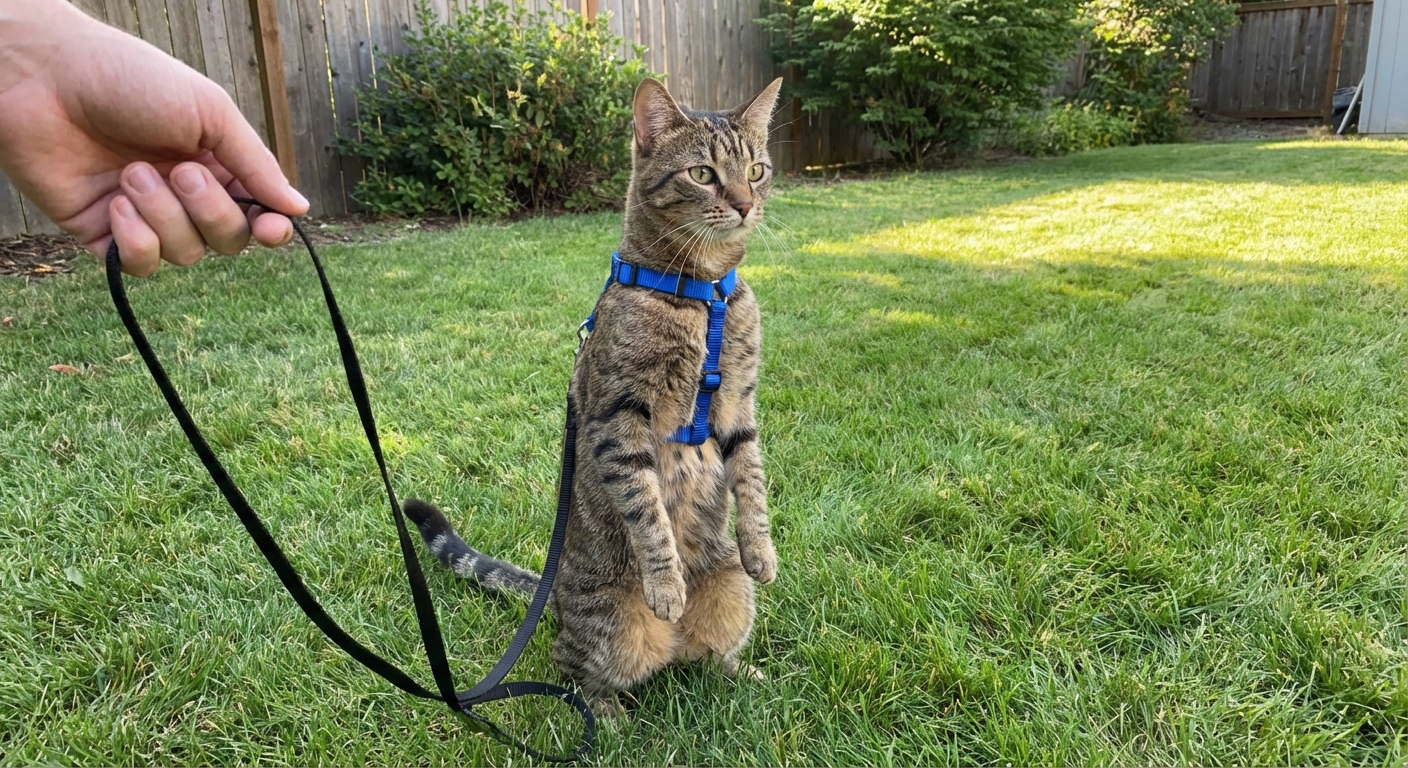
Some cats take to leash training quickly. Others will always prefer window time and puzzle toys. Leash walking is typically a good fit if your cat:
- Is curious and confident in new spaces
- Enjoys treats, play, or training games
- Is comfortable being handled (especially around the shoulders and chest)
- Is not easily startled by noises
It may not be a great fit right now if your cat is extremely fearful, has a history of bolting, or becomes aggressive when restrained. Also check with your veterinarian before starting if your cat has heart or respiratory disease, arthritis, or severe obesity. In those cases, focus on indoor enrichment first and talk with your vet if anxiety or discomfort seems intense.
Start with the right equipment
Choose a harness, not a collar
Cats can slip out of collars far more easily than you might expect, and pressure on the neck can be risky. Collars are best for ID (ideally breakaway), not for leash attachment. Look for:
- H-style or vest-style harness made for cats
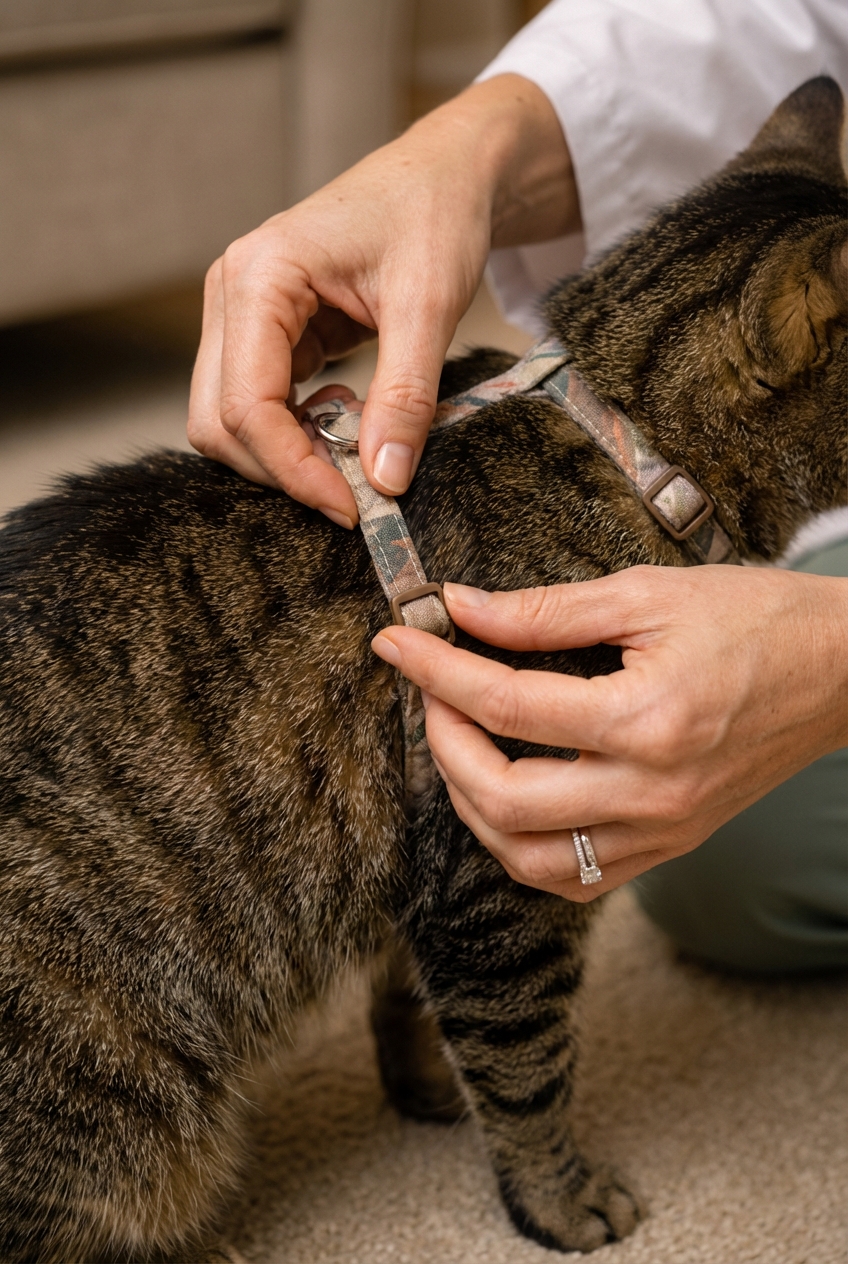
- Snug but not tight fit: you should fit 1 to 2 fingers under straps
- Secure buckles and sturdy stitching
- Good coverage for escape artists: many cats are harder to back out of in a cat-specific vest harness
Long-haired cat note: fluff can hide a loose fit. After you put the harness on, part the fur and double-check the straps against the body.
Pick a leash you can control
A lightweight standard 4 to 6 foot leash is ideal for training. Avoid anything too long or heavy. Retractable leashes can create tangles and sudden tension, which often scares cats.
Do a safety check every time
- Harness cannot slide over the head when gently pulled from behind
- Cat can breathe comfortably and move shoulders freely
- No rubbing in the armpit area (a common sore spot)
- Nails are trimmed to reduce snagging and accidental scratches if your cat startles
Training steps
Think of this as a ladder. Do not climb to the next step until your cat looks relaxed at the current one. Many cats need days or weeks per step.
Step 1: Make the harness a good thing
Leave the harness near your cat’s favorite hangout and pair it with good things.
- Set harness on the floor
- Toss high-value treats nearby
- Play with a wand toy next to it
Goal: your cat approaches the harness without hesitation.
Step 2: Wear the harness briefly indoors
Place the harness on gently, reward, then remove. Keep sessions very short.
- Start with 5 to 30 seconds
- Reward with rapid-fire tiny treats at first (so it feels easy and fun)
- End on a steady, relaxed note
If your cat freezes or flops dramatically, that is normal. Do not laugh, do not pull. Just reward any small movement and try again later with shorter sessions.
Step 3: Move around indoors in the harness
Once your cat tolerates wearing it, allow supervised movement.
- Offer treats for walking a step or two
- Use play to encourage movement
- Keep it low pressure
Goal: your cat walks, sits, and turns normally while wearing the harness.
Step 4: Add the leash (keep it slack)
Clip on the leash and let your cat get used to the sensation.
- If you let your cat drag the leash briefly, do it only in a snag-free indoor area with constant supervision so it cannot wrap around furniture or legs
- Then pick it up and follow your cat, keeping slack in the leash
- Do not “lead” your cat like a dog
- Reward your cat for checking in with you
- Stop if your cat startles or panics
Step 5: Practice at the door, then a very calm outdoor spot
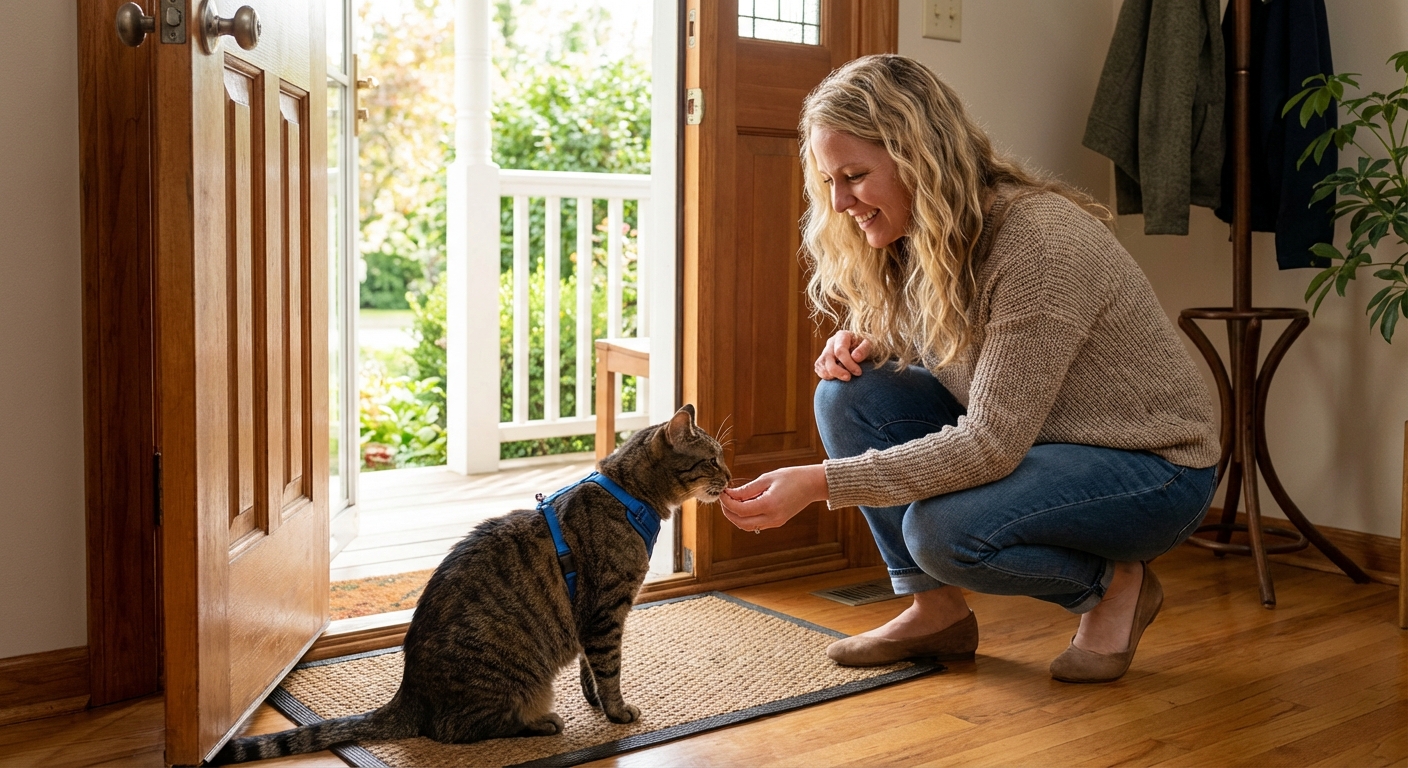
Before you go outside, practice near the door with the harness and leash on. Then choose the calmest possible first outing, like:
- A quiet, fenced backyard
- A calm patio
- A low-traffic courtyard
Start with 2 to 5 minutes. Many cats do best with “sniff and observe” time rather than actual walking. If your cat is hesitant, a cat backpack, carrier, or stroller can be a great transition option. You can sit outside with the carrier door open and let your cat choose when to step out.
Teach “walk with me”
Leash walking with cats is more like guided exploration. Here are the techniques that work best:
Use a treat lure, then reward the follow
- Hold a treat near your cat’s nose
- Take one step
- Reward when your cat follows
- Repeat in tiny sequences
Teach a simple cue
Pick one cue like “let’s go” or “this way.” Say it once, then lure and reward. Consistency beats volume.
Let your cat choose the route
Safety boundaries are yours, but direction is often theirs. If you constantly steer, many cats will pancake and refuse. Instead:
- Follow your cat within a safe area
- Redirect gently with treats if needed
- Reward relaxed pauses and check-ins
Keep sessions short and end early
Stop while your cat still seems confident. If you wait until your cat is overwhelmed, the next session will be harder.
Common problems
“My cat flops over and won’t move.”
This is usually a harness comfort and confidence issue, not stubbornness.
- Double-check fit and style (some cats prefer H-style over vest, or vice versa)
- Shorten sessions to 10 to 20 seconds
- Use play, not pulling, to encourage movement
“My cat tries to back out of the harness.”
That is a huge escape risk.
- Adjust for a snugger fit around the chest
- Practice indoors only until escape attempts stop
- Consider a more secure cat-specific vest harness
“Outside is too scary.”
That is common, especially with noise-sensitive cats.
- Start outdoors in a carrier with the door open so your cat can choose
- Try quieter times of day
- Use shorter outings, even 60 seconds
“My cat eats grass and tries to chew everything.”
Some nibbling is normal, but avoid areas treated with pesticides or fertilizers. Also watch for toxic plants (lilies are a big one). If your cat grazes obsessively or vomits frequently after outings, pause and ask your veterinarian for guidance.
Safety essentials
- ID and microchip: A breakaway collar with ID plus a microchip is ideal, even with a harness.
- Vaccines and parasite prevention: Outdoor time increases exposure risk. Here in North Texas, fleas, ticks, and mosquitoes can be persistent, so ask your vet what is appropriate for your cat (including whether heartworm prevention is recommended).
- Avoid dog-heavy areas: Even friendly dogs can spook a cat.
- Avoid wildlife and stray cats: Limit exposure to unfamiliar animals, which can trigger fear, fights, and disease risk.
- Watch temperature: Cats can overheat in warm weather. Avoid outings above about 85°F (29°C) when possible, stick to shade, and stop immediately if you see panting, drooling, or sudden lethargy.
- Never tie the leash to something and walk away: Cats can panic and injure themselves.
- Never punish or force it: Do not scruff, yank, or “flood” your cat with scary exposure. If your cat is panicking, you went too far too fast.
My favorite rule: if you feel yourself getting impatient, the session is done. Cats learn best when they feel safe and successful.
Quick FAQ
How long does it take to leash train a cat?
Some cats are comfortable in 1 to 2 weeks. Many need 4 to 8 weeks. Nervous cats may take longer. Progress is not linear, and that is normal.
Can kittens learn faster than adult cats?
Often yes. Kittens are in a key socialization period (roughly 2 to 9 weeks of age), and gentle handling and positive exposure during that time can make new experiences easier later. That said, adult cats can absolutely learn too, especially with food motivation and calm repetition.
Should I carry my cat outside first?
It depends. Confident cats may do fine walking to the door. Shy cats often do better starting in a secure carrier or backpack, then choosing when to step out.
Is it okay if my cat only wants to sit and watch?
Yes. For many cats, a successful outing is simply calmly observing the environment. That still counts as enrichment.