Tired of counter surfing? Learn why cats jump up and follow a fast 3-part plan: make counters boring, create a better “yes” perch, and use safe, consiste...
Article
•
Designer Mixes
Train Your Cat to Stay Off Counters

Shari Shidate
Designer Mixes contributor
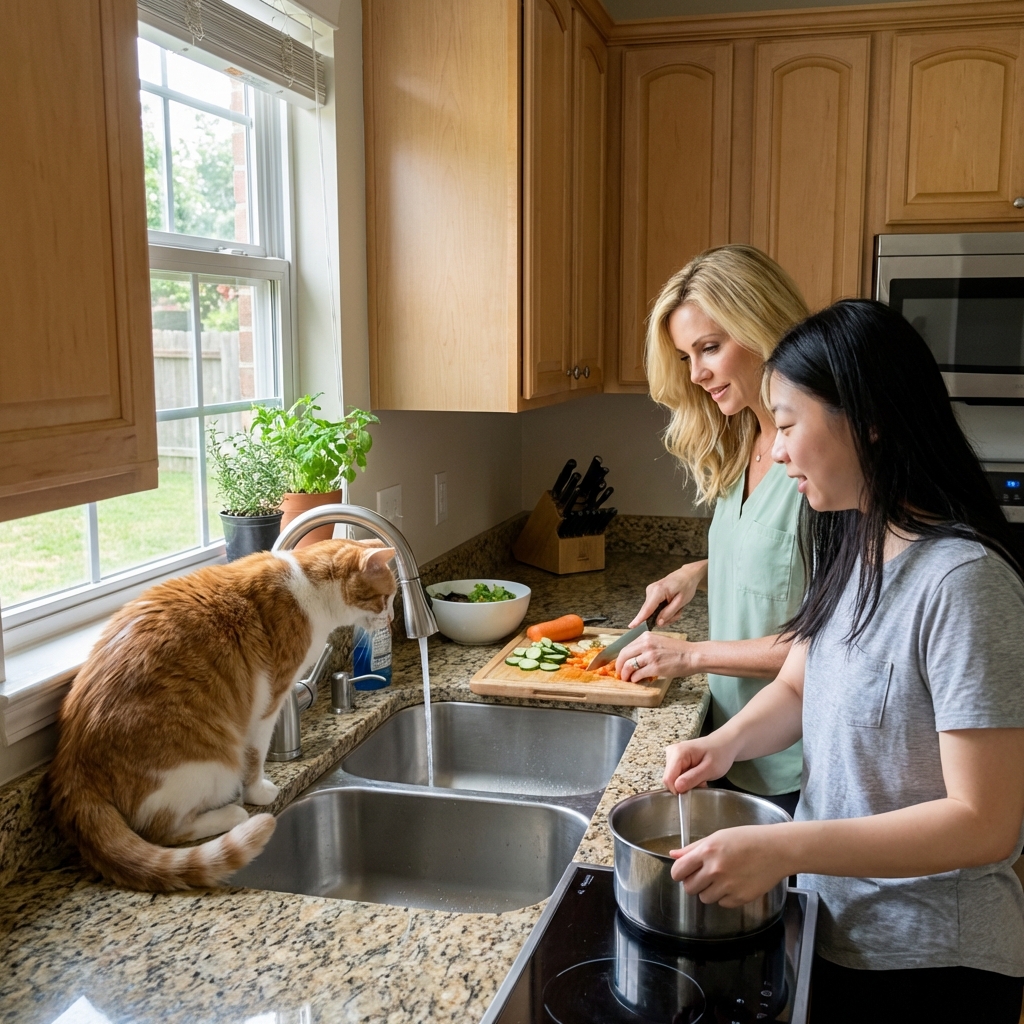
Cats love counters for the same reasons we do: they are high, interesting, and often where the action is. The goal is not to “win a battle” with your cat. It is to teach a clear, steady rule while meeting your cat’s real needs for height, safety, and enrichment. With the right setup, many cats improve quickly, often within a few weeks, though some need more time (especially kittens, very food-motivated cats, or multi-cat households).
Why cats jump on counters
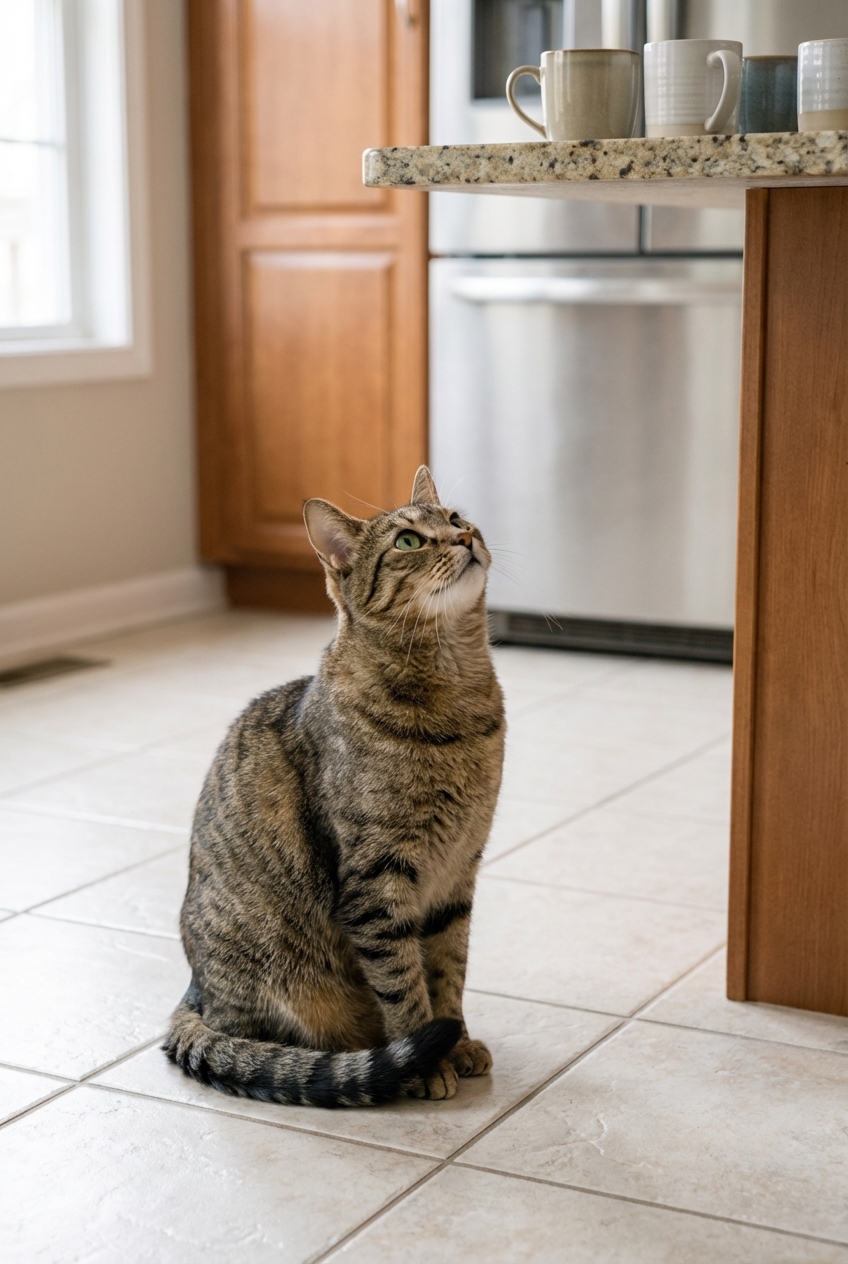
Before training, it helps to understand what is driving the behavior. Cats typically counter-surf because:
- Height feels safe, especially in busy homes or homes with dogs or young kids.
- Food smells rewarding, and even tiny crumbs can reinforce the habit.
- Warmth and comfort, like near a window, refrigerator motor, or sunny spot.
- Curiosity and routine, since kitchens are stimulating and predictable.
- Competition for space in multi-cat homes, where one cat may claim the “best” perches.
If we only punish the jumping but do not provide a better option, your cat will usually keep trying, especially when you are not in the room.
Safety and realistic expectations
From a care standpoint, counters can be risky. Hot stovetops, sharp knives, and certain foods can be dangerous. Training takes repetition. If your cat has been practicing counter-jumping for months or years, plan on consistent work over several weeks. Some cats take longer, and that is normal.
If your cat suddenly starts counter-surfing more than usual, seems ravenous, or is drinking and urinating more, schedule a vet check. Sometimes behavior changes are tied to medical issues like dental pain, GI upset, or metabolic disease.
Kitchen hygiene and food safety
Even if your cat is healthy, counters are a human food surface. Keep basic hygiene and safety in mind while you train:
- Sanitize counters and avoid leaving cutting boards out.
- Store leftovers promptly and keep sink scraps out of reach.
- Do not leave toxic foods accessible, including onions, garlic, chives, grapes and raisins, and products containing xylitol (common in some sugar-free gums and candies).
The training plan that works
1) Remove the reward
Cats do what works. If the counter ever pays off, the habit strengthens. For at least 2 to 3 weeks, reduce the “paychecks” as much as you can.
- Wipe counters after every meal and snack prep.
- Put food away immediately, including bread, butter, meat packaging, and treats.
- Keep the sink clear of dishes and food residue when possible.
- Use lidded trash cans and avoid leaving food in open compost containers.
2) Provide a better, legal perch
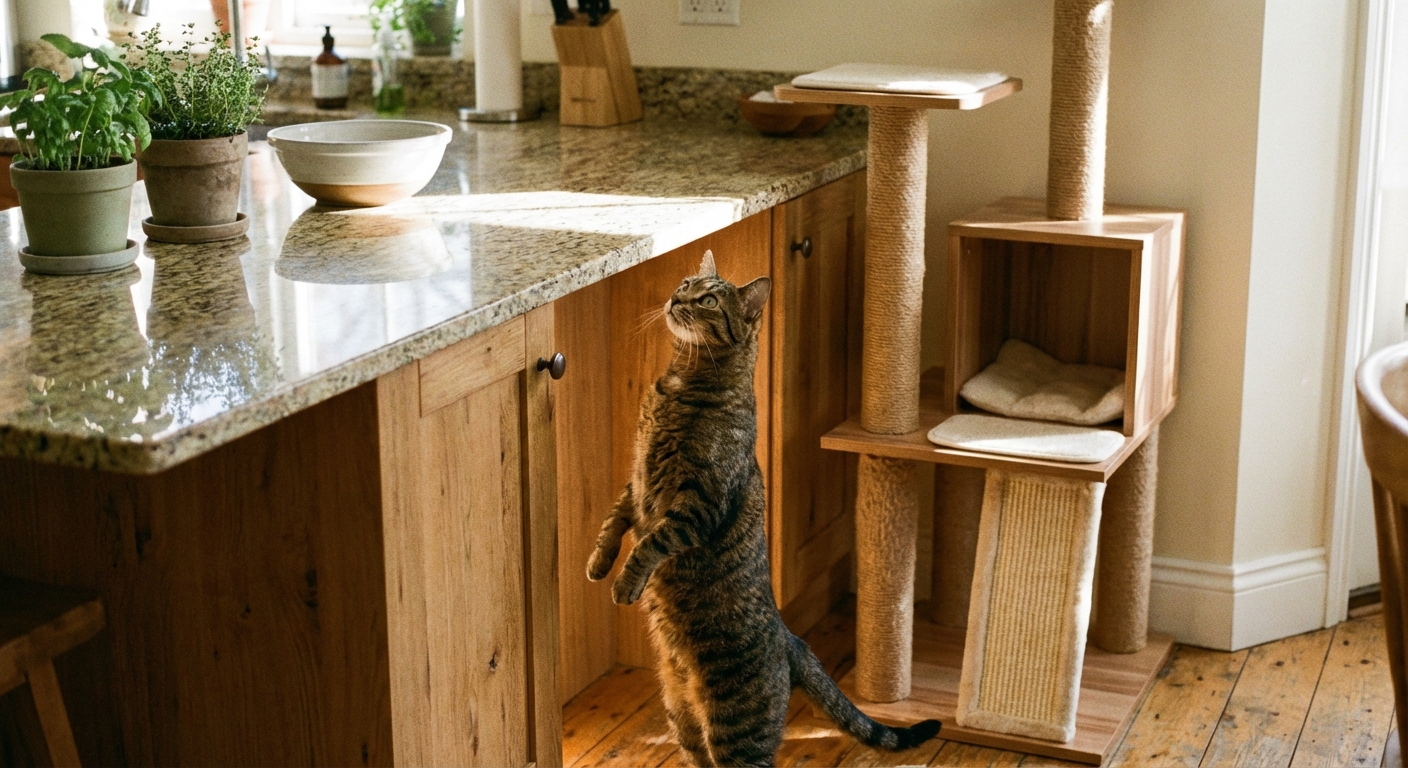
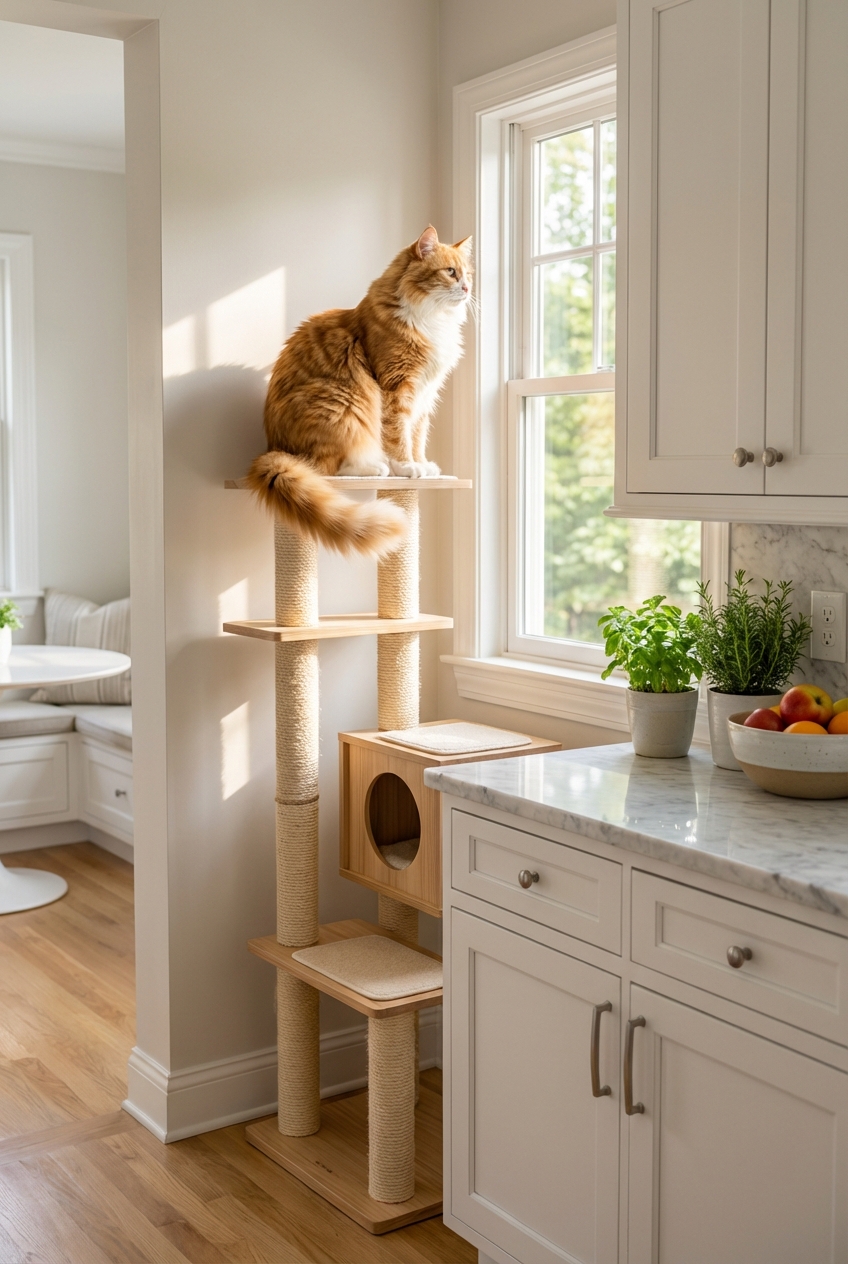
Most cats do best with an approved high place near where people are. Set up an attractive alternative within a few feet of the kitchen activity.
- A sturdy cat tree or wall shelf near the kitchen entrance.
- A window perch in or near the kitchen if your layout allows.
- A chair or bench with a non-slip mat as a temporary “cat station.”
Make it more rewarding than the counter by adding a soft blanket and giving occasional treats or a lickable treat only when your cat is on the approved spot. In multi-cat homes, consider adding more than one approved perch so no one feels crowded out.
Teach an “off” cue gently
Pick a calm cue such as “off” or “down”. The key is to teach what you want your cat to do, not just what you do not want.
Step-by-step
- Prepare: Keep a few pea-sized treats in a jar or treat pouch.
- Get ahead of the jump (when possible): If you see your cat gearing up to jump, cue them to the approved perch first and reward there. This prevents practicing the unwanted behavior.
- Catch the moment: If your cat is already on the counter, say “off” once in a neutral voice.
- Reward the right position: Wait for four paws on the floor, then reward by placing a treat on the approved perch (or tossing the treat away from the counter toward the perch). Avoid treating while your cat is still on the counter.
- Repeat: Do this every time. Calm, steady repetition is what teaches the rule.
Try not to chase, yell, or physically grab your cat. Fear can damage trust and can also teach your cat to avoid you, not the counter.
Use smart deterrents
Deterrents work best when they are reliable and not tied to you. If your cat only avoids the counter when you are present, they have not truly learned the rule.
Common humane options
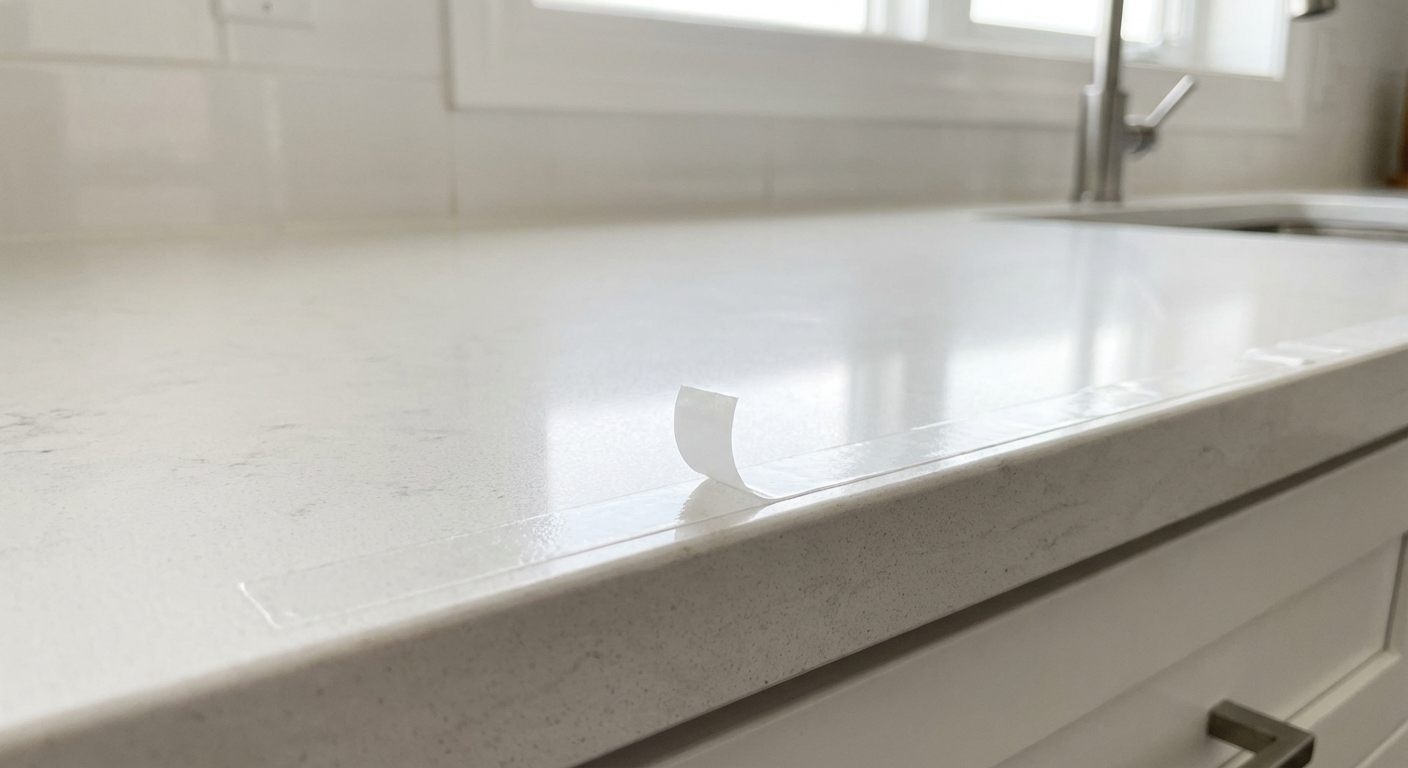
- Double-sided tape on the edge of the counter for 1 to 2 weeks. Many cats dislike the sticky feel.
- Aluminum foil temporarily, if your cat finds it unpleasant. Some cats do not care, so it is not universal.
- Motion-activated air puff devices placed so the burst is near the counter edge, not aimed at the face. Use the least intensity needed and monitor for stress. If your cat becomes fearful, jumpy, or avoids the kitchen entirely, discontinue and switch to a milder approach.
- Closed kitchen at night if possible, especially during the early training stage.
Avoid deterrents that can injure or terrify, including booby traps that could cause falls, loud startling noises at close range, or spraying water directly at your cat. Those can create anxiety around the kitchen and worsen overall behavior.
Daily routine: 10 minutes
If you want daily progress, keep it simple and repeatable.
- Morning (2 minutes): Refresh the approved perch with a treat or a few kibbles and a quick cuddle if your cat enjoys touch.
- Meal prep time (3 minutes): Before you start, cue your cat to the perch and reward. Give a food puzzle in another room if your cat is very persistent.
- Evening (5 minutes): Play with a wand toy or toss toys down a hallway. End with a small meal or treat. This “hunt, eat, rest” pattern can help many cats settle and may reduce attention-seeking counter jumping.
For many cats, counter-surfing is partly boredom. A little structured play often lowers the urge.
If your cat loves the sink or stove
Sink
If your cat loves the sink, it may be about water. Consider:
- A pet fountain, cleaned regularly.
- Offering fresh water in a wide, shallow bowl (some cats may simply prefer less whisker contact).
- Adding an ice cube or a few floating toys to a water bowl as enrichment.
Stove
Stoves are a true safety hazard. Even after cooking, glass and electric ranges can stay hot. If your cat tries to jump up:
- Use stove knob covers if your model allows it.
- Cover cooled burners with a large pot or a fitted cover when not in use.
- Block access during cooking and cool-down periods.
Troubleshooting
“My cat only jumps up when I am not looking.”
That is very normal. Increase environmental management: keep counters clear, add a motion-activated deterrent if your cat tolerates it well, and make the approved perch more rewarding than the counter.
“My cat jumps up right after meals.”
Try feeding a little more frequently, using a slow feeder, or adding a small portion of wet food. Hunger and food-seeking are powerful motivators. If your cat acts unusually hungry, talk with your vet.
“Nothing works and my cat is relentless.”
Escalate enrichment and structure. Use puzzle feeders daily, schedule two play sessions, and consider a consult with a veterinary behaviorist or a qualified positive-reinforcement trainer. There is no shame in needing support, especially for very food-motivated cats.
“It works, but only with treats.”
That is part of learning. Once your cat reliably chooses the approved perch, start rewarding calm sitting there and gradually fade treats. Switch to intermittent rewards (every other time, then randomly) and add non-food rewards like praise, petting (if your cat likes it), or a short play session.
Bottom line
The most effective approach is a kind, steady combination of management and training: remove the reward, provide a better perch, reward the right choice, and use humane deterrents that work even when you are not in the room. Your cat is not trying to be “bad.” They are being a cat. With a clear plan, you can have both a cleaner kitchen and a confident, enriched companion.