House-train your puppy with a proven routine: best potty schedule, crate and confinement tips, reward timing, accident cleanup, door signals or bells, and a ...
Article
•
Designer Mixes
Train a Puppy to Pee Outside

Shari Shidate
Designer Mixes contributor
Bringing home a puppy is exciting, but potty training can feel overwhelming quickly. The good news is that most puppies can learn to pee outside with a simple routine, smart timing, and plenty of praise. As a veterinary assistant here in Frisco, Texas, I want you to know this is not about perfection. It is about consistency.
In this guide, I will walk you through a step-by-step system that works for young puppies, older puppies, and even newly adopted adult dogs who need a reset. You will also learn what to do when accidents happen, how to adjust for apartments, and when to call your veterinarian.
How puppies learn potty habits
Puppies do not naturally understand that the living room is different from the yard. They learn through patterns: where they go, when they go, and what happens right after they go. If your puppy pees on the rug three times and nothing changes, the rug can start to feel like a “bathroom spot.”
Your job is to make the right choice easy and rewarding, and the wrong choice difficult (without scary punishment).
- Reinforcement: Rewards right after peeing outside increase the chance your puppy repeats it.
- Management: Preventing accidents prevents “practice” of the wrong habit.
- Timing: Taking puppies out at predictable potty times is half the battle.
What you need before you start
You do not need fancy equipment. You need a plan and a few basics.
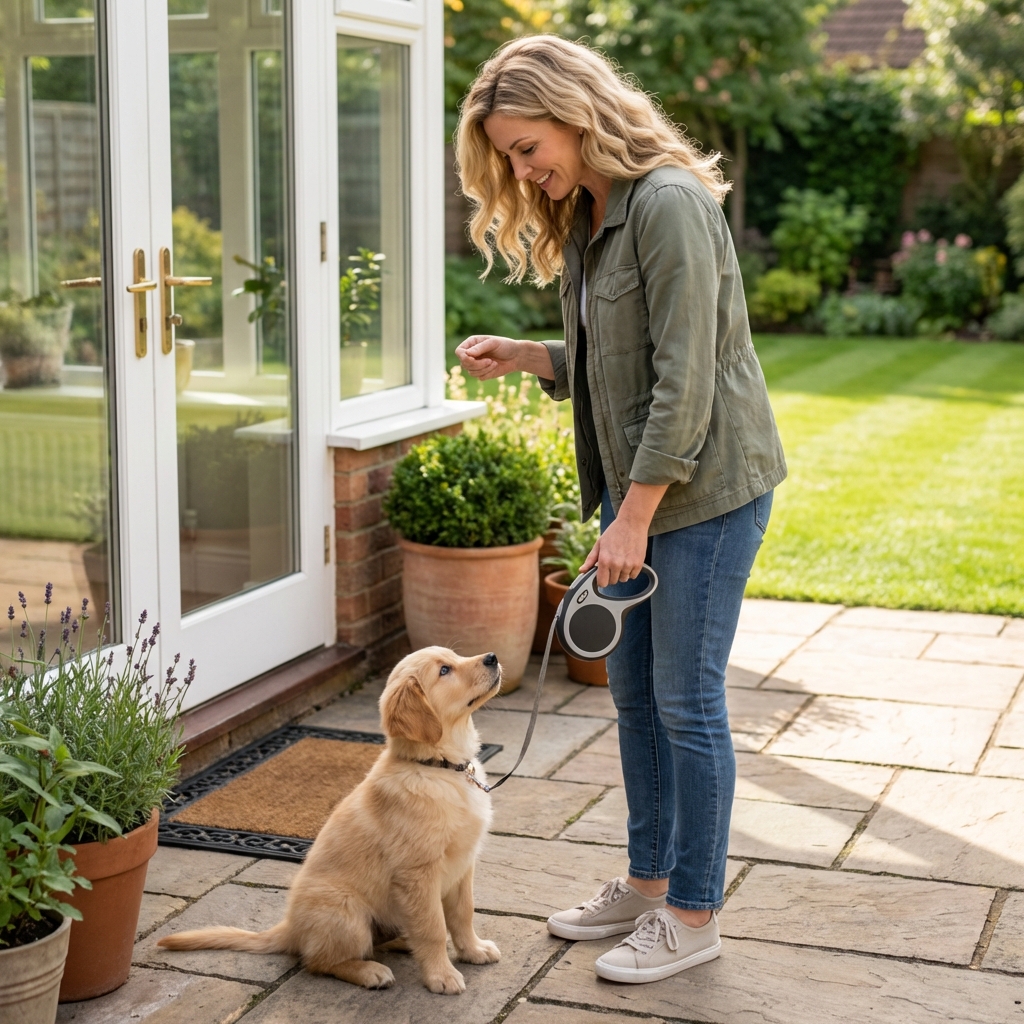
- A leash (even for a fenced yard). Leash potty trips keep your puppy focused.
- Tiny, high-value treats (soft and quick to swallow).
- An enzymatic cleaner for accidents indoors. Regular cleaners can leave scent behind that invites repeat accidents.
- A crate or safe confinement area (crate, playpen, baby-gated zone) to prevent free-roaming.
- A consistent potty cue like “Go potty.”
The step-by-step routine that works
Step 1: Pick one potty spot
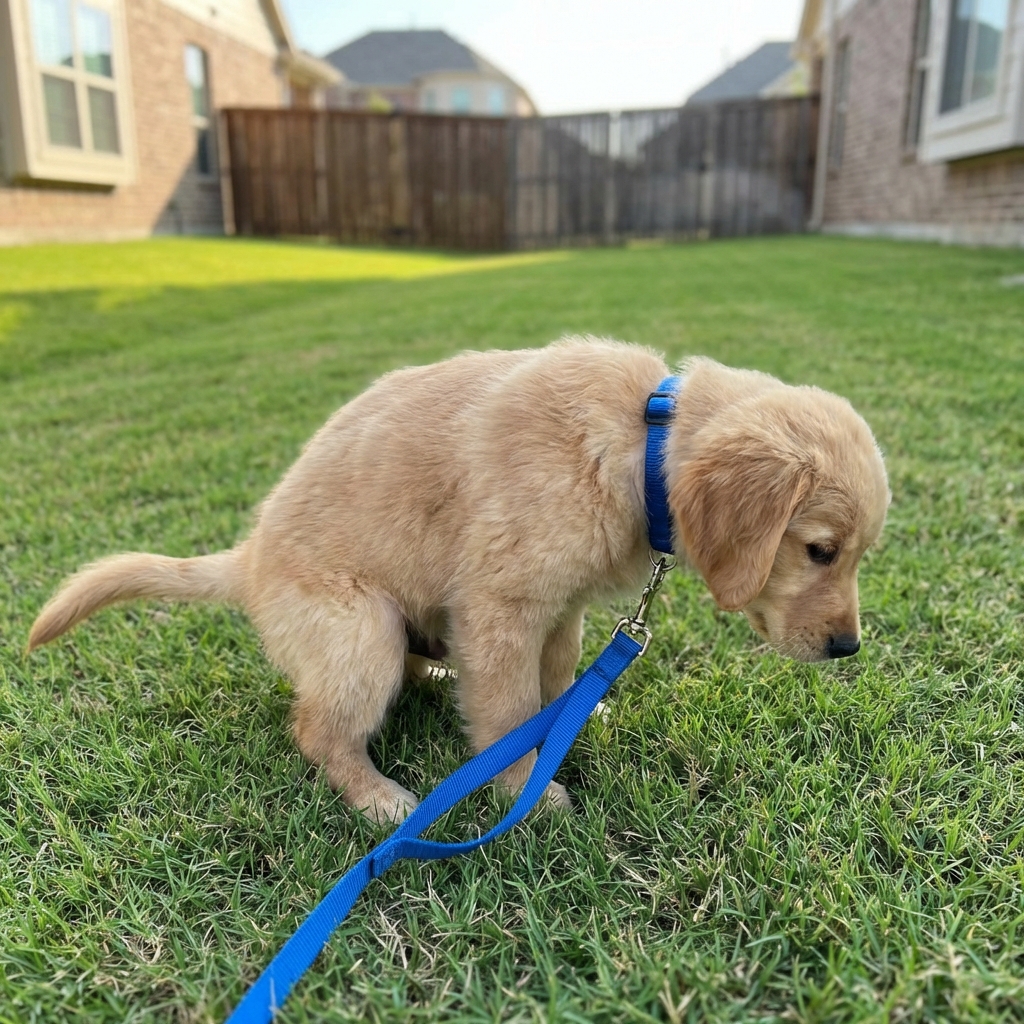
Choose a specific patch of grass or a specific outdoor area. The familiar smell helps trigger the behavior. Walk your puppy to that spot on leash, stand mostly still, and give them a few minutes.
Step 2: Use a simple cue
Say your cue once, calmly: “Go potty.” Then be quiet. Repeating the cue over and over can turn it into background noise.
Step 3: Reward immediately
The reward should happen right away, ideally within a few seconds of finishing. Treat, praise, and then allow a short sniff or a little walk as a bonus reward.
Think of it like this: potty first, freedom second.
Step 4: Supervise or confine indoors
If your puppy is not actively being watched, they should be safely confined. Too much freedom too soon is one of the most common reasons potty training drags on.
Step 5: Repeat on a schedule
The schedule is what creates predictable success. More trips outside early on means fewer accidents and faster learning.
How long can they hold it?
A common rule of thumb is age in months + 1 hours (for example, a 3-month-old puppy might manage about 4 hours). This is only a rough estimate. Many puppies need to go sooner, especially small breeds, very active pups, and puppies who just ate, drank, or played.
Best potty schedule by age
These are general guidelines. Some pups can hold it longer, and some need more frequent breaks, especially tiny breeds.
8 to 12 weeks
- Take out every 30 to 60 minutes when awake.
- Always take out: after waking, after eating, after drinking, after play, after training, and before bedtime.
- Many puppies need 1 to 2 potty trips overnight.
3 to 6 months
- Take out every 1 to 2 hours when awake.
- Most can reduce nighttime trips, but some still need one break.
6 to 12 months
- Take out every 2 to 4 hours depending on the dog, activity level, and size.
- Adolescents may regress temporarily. Stick to the routine.
Adult dogs (newly adopted)
- Start like a puppy for the first 1 to 2 weeks: every 1 to 2 hours.
- Slowly extend the time only after consistent success.
The most important potty times
- Right after waking up (morning and naps)
- 5 to 20 minutes after meals
- After excited play
- After training sessions (mental work can trigger a potty need)
- Before crating and right after coming out of the crate
- Before bedtime
Do not forget poop
Many families focus on pee and then feel blindsided by poop accidents. The same system applies: routine, timing, and immediate rewards.
- Most common poop times: after waking, 5 to 30 minutes after meals, and after a good play session.
- Give a little extra time: some puppies pee quickly but need a few more minutes to poop.
- Use the same cue style: you can use your potty cue for both, or teach a second cue like “Go poop.” Keep it calm and consistent.
Parvo and vaccine safety
If you have a very young puppy, ask your veterinarian where it is safest to potty. Until your puppy is fully vaccinated, be cautious about high dog traffic areas like apartment dog runs, parks, and busy pet store sidewalks. A lower-risk option is a quiet, low-traffic spot at home. If you must use a shared area, keep trips short and avoid sniff-heavy wandering.
Crate training and potty training
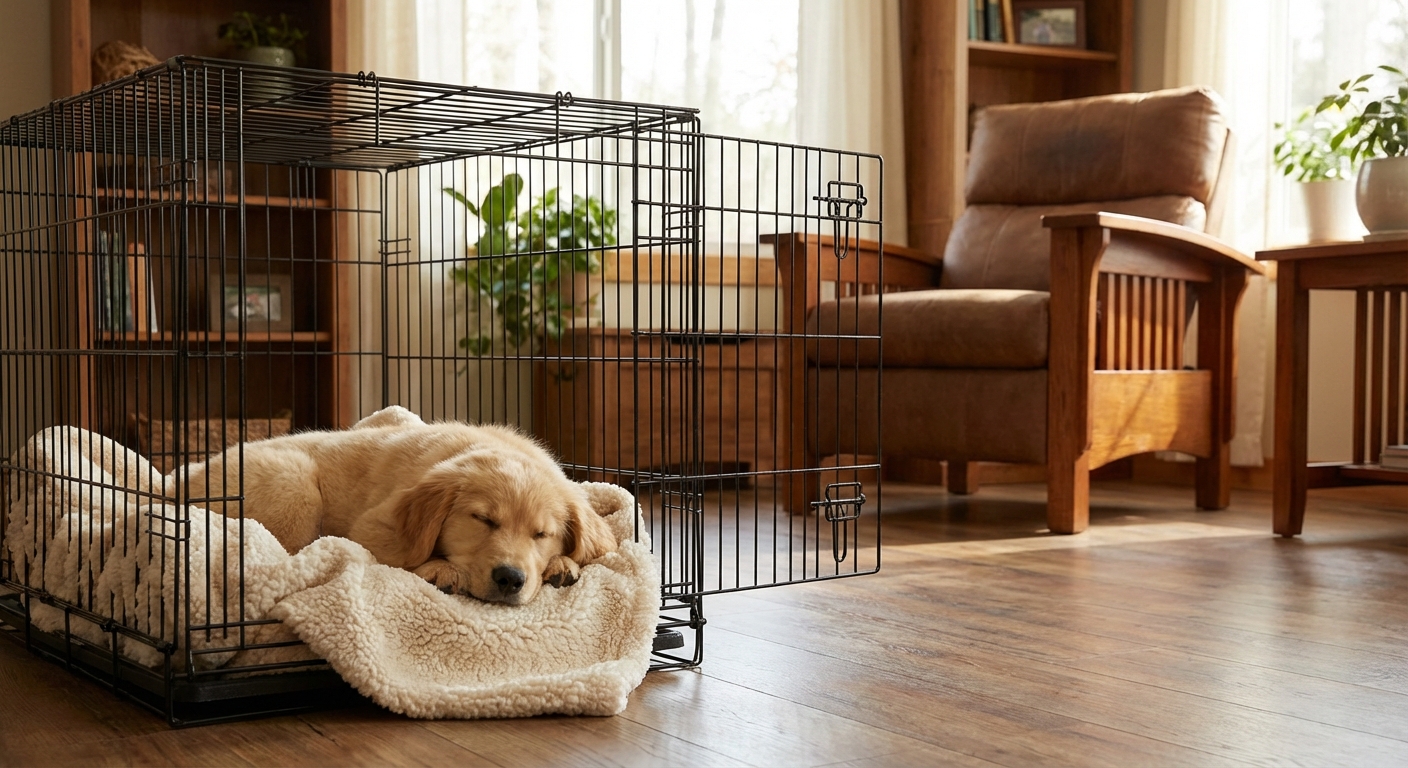
A properly sized crate can tap into many dogs’ natural instinct to keep their sleeping area clean. That said, the crate is not a “fix” if a puppy is left too long, is stressed, or is not feeling well.
Crate sizing basics
- Big enough to stand, turn around, and lie down comfortably.
- Not so big that your puppy can pee on one side and sleep on the other.
How to use the crate for potty success
- Puppy wakes up in crate, you go straight outside.
- Puppy pees outside, then earns supervised freedom.
- If you cannot supervise, back to crate or playpen.
Tip: If your puppy soils the crate, do not assume they are “being stubborn.” It usually means they were left too long, the crate is too large, they are stressed, or there is a medical issue to rule out.
What to do when accidents happen
Accidents are part of learning. What matters is what you do next.
If you catch them in the act
- Make a quick, neutral interruption like “Oops.”
- Pick them up or lead them outside immediately.
- If they finish outside, reward like crazy.
If you find it after the fact
- Do not scold. Puppies cannot connect your reaction to something that happened minutes ago.
- Clean thoroughly with an enzymatic cleaner.
- Review your schedule and supervision. Accidents are usually a management problem, not a training problem.
Teach your puppy to signal
At first, your puppy will not “ask.” You prevent accidents by taking them out proactively. Once they are having consistent success, you can teach a signal.
Common signals
- Sitting by the door
- Ringing a bell hanging from the doorknob
- Touching a target (your hand or a sticky note on the door)
How to train the door signal
- Each time you take your puppy out, pause at the door.
- Ask for a sit (or touch).
- Open the door immediately and go to the potty spot.
- Reward for peeing outside, not for the sit itself.
Important: Doorbells can work, but some clever pups learn to ring them for playtime. If that happens, keep potty trips boring until they pee, then reward and come right back in if it was a false alarm.
Apartment and bad weather solutions
If you live in an apartment or you are dealing with Texas summer storms, you can still potty train successfully. You just need extra planning.
Apartment tips
- Keep your puppy on a predictable route to the potty area.
- Carry very young puppies to reduce hallway accidents.
- Use the leash every time so potty trips stay focused.
Bad weather tips
- Use a raincoat for you and a towel by the door for your pup.
- Short, frequent trips beat long miserable ones.
- Do not rush them too much. Many puppies need an extra minute to relax enough to pee.
Pee pads: helpful or confusing?
Pee pads can be useful for high-rise living or medical situations, but they can also teach “pee on soft surfaces,” which looks a lot like rugs. If you use pads, place them in one consistent area and plan a gradual transition outdoors.
Marking vs normal pee
As puppies grow (and in some adult dogs), you may see marking. Marking is usually small amounts of urine, often on vertical surfaces, and it can happen more during adolescence, new environments, or stress.
- Stick to the routine: frequent outdoor breaks and close supervision indoors still matter.
- Clean thoroughly: use an enzymatic cleaner to remove scent cues.
- Talk to your veterinarian: if marking is new or intense, ask about medical causes and whether spay or neuter timing is relevant for your dog.
Why potty training is not sticking
- Too much freedom too soon: roaming leads to hidden accidents.
- Not rewarding fast enough: the treat happens after you come back inside, so the puppy thinks indoors is the reward.
- Inconsistent schedule: random potty trips create random success.
- Using punishment: puppies may learn to hide and pee where you cannot see.
- Cleaner not enzymatic: lingering scent keeps the spot “active.”
- Stress or excitement: submissive urination and excitement peeing need a gentler approach.
When to call your veterinarian
As a veterinary assistant, I always encourage families to rule out medical issues early if something feels off. This article is general training guidance, and your veterinarian can help tailor advice to your puppy and their health history. Call your veterinarian if you notice any of the following:
- Straining to urinate, crying, or producing only small drops
- Blood in urine
- Needing to pee very frequently with little output
- Accidents that start suddenly after your puppy was doing well
- Excessive thirst, lethargy, vomiting, or diarrhea along with potty changes
Urinary tract infections, bladder inflammation, and even stress can affect house training. Parasites are more likely to contribute to poop accidents through diarrhea or urgency than to urinary accidents, but they still matter to rule out when the overall potty picture changes. Medical support plus training often solves the issue faster than training alone.
A realistic 14-day plan
If you want a simple roadmap, here is a gentle two-week plan you can follow. Adjust based on your puppy’s age and success.
Days 1 to 3: prevent accidents
- Leash to potty spot every 30 to 60 minutes when awake.
- Supervise closely indoors or confine.
- Reward every outside pee like it is the best thing ever.
Days 4 to 7: build the habit
- Extend the time slightly only if you have had multiple accident-free days.
- Begin teaching a door sit or doorbell routine.
Days 8 to 14: test small freedoms
- Allow short supervised time in one extra room after a successful potty trip.
- If accidents return, reduce freedom and go back a step.
Progress is not a straight line. Consistency beats intensity. A calm routine teaches faster than frustration ever will.
Quick FAQ
How long does it take to potty train a puppy?
Many puppies show strong improvement in 2 to 4 weeks with a consistent schedule. Reliable house training often takes a few months, especially for small breeds or busy households.
Should I wake my puppy up at night to pee?
For very young puppies, yes, you may need one planned nighttime trip. Keep it quiet and boring: potty, tiny praise, back to bed.
My puppy pees outside, then pees again inside 10 minutes later. Why?
Sometimes they did not fully empty their bladder, or they got excited indoors. Give them a little more time outside, reward, then take them out again 10 to 15 minutes later for a “double-check” trip.