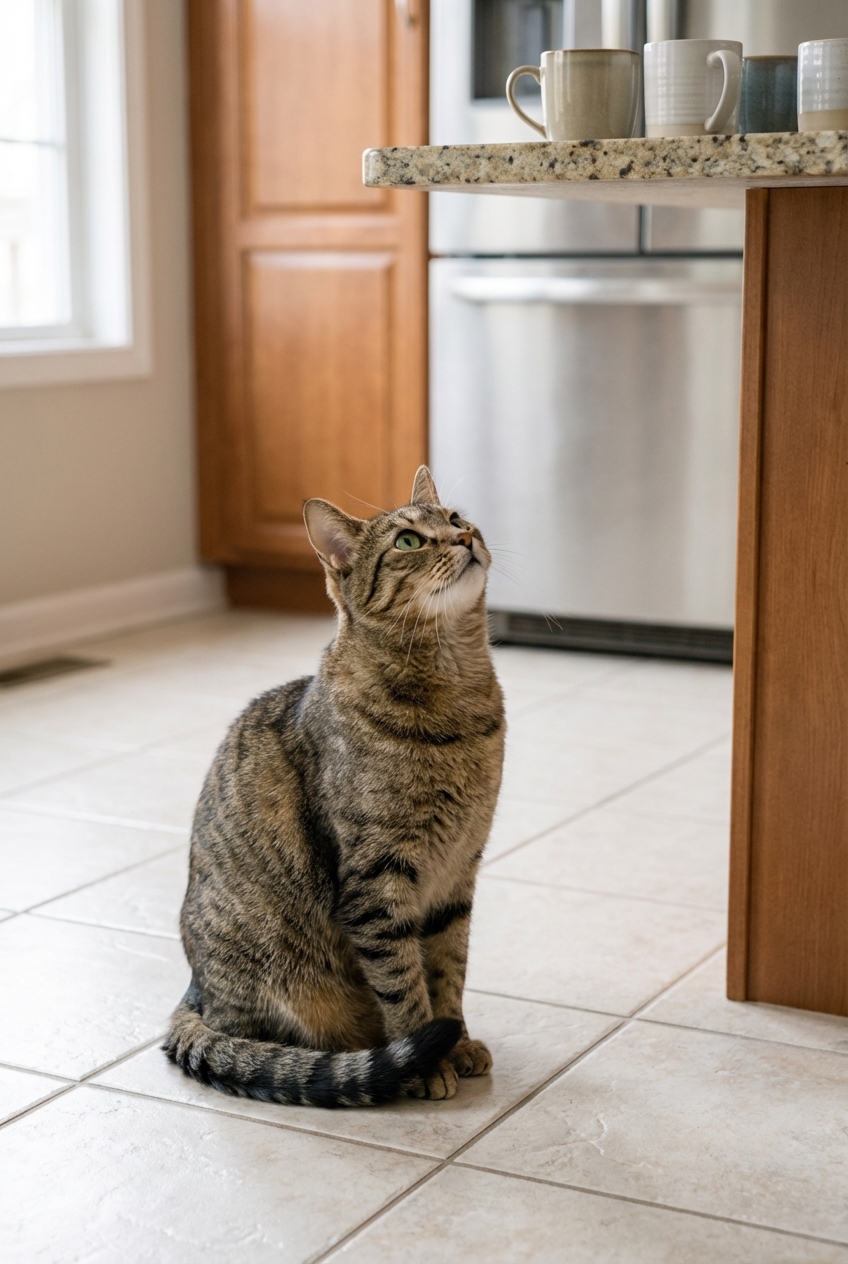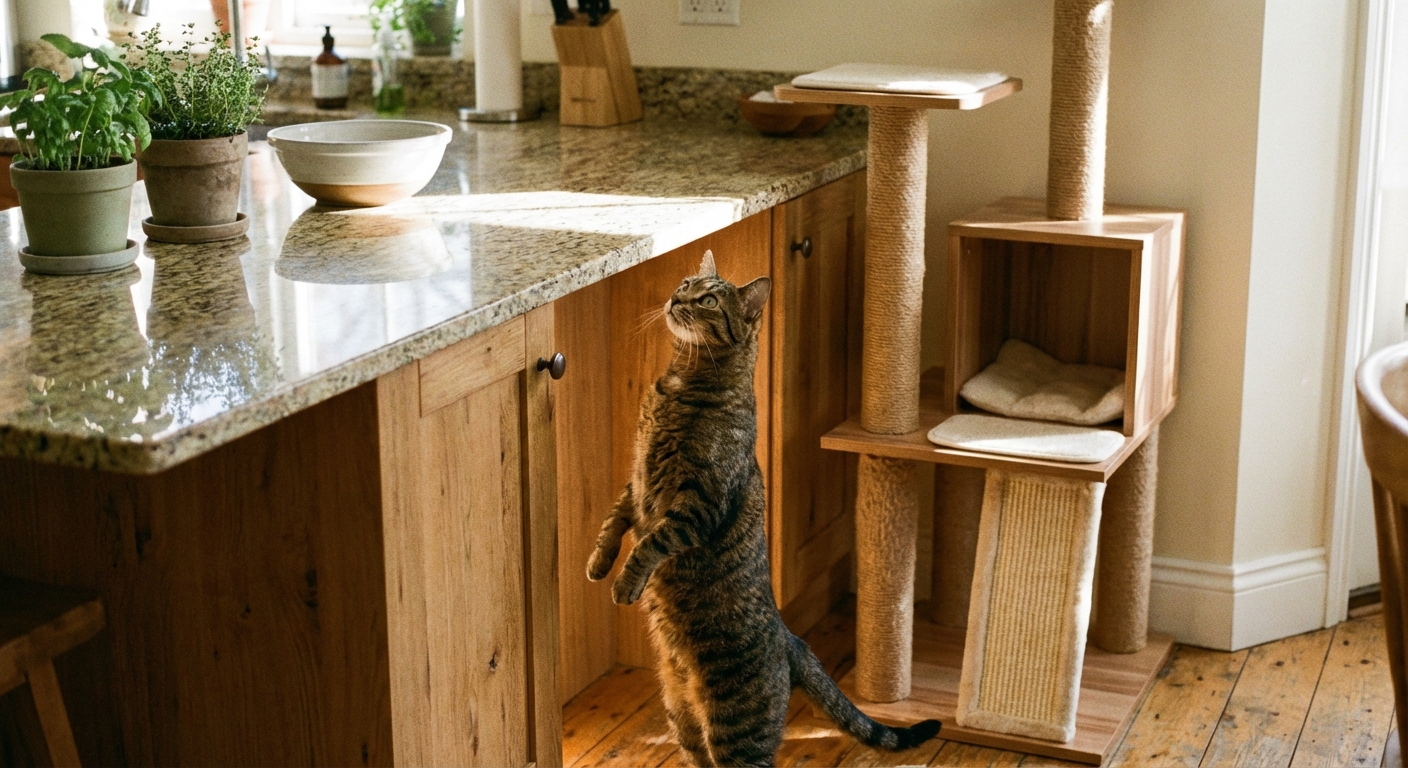
Tired of counter surfing? Learn why cats jump up and follow a fast 3-part plan: make counters boring, create a better “yes” perch, and use safe, consiste...
Article
•
Designer Mixes
Train a Cat Not to Jump on Counters

Shari Shidate
Designer Mixes contributor
If your cat treats the kitchen counter like a personal runway, you are not failing as a pet parent. You are living with a natural climber who loves height, warmth, interesting smells, and being close to you. The good news is that most counter jumping is very trainable once you combine two things: (1) making the counter boring and unrewarding, and (2) giving your cat a better “yes” spot nearby.
Why cats jump on counters
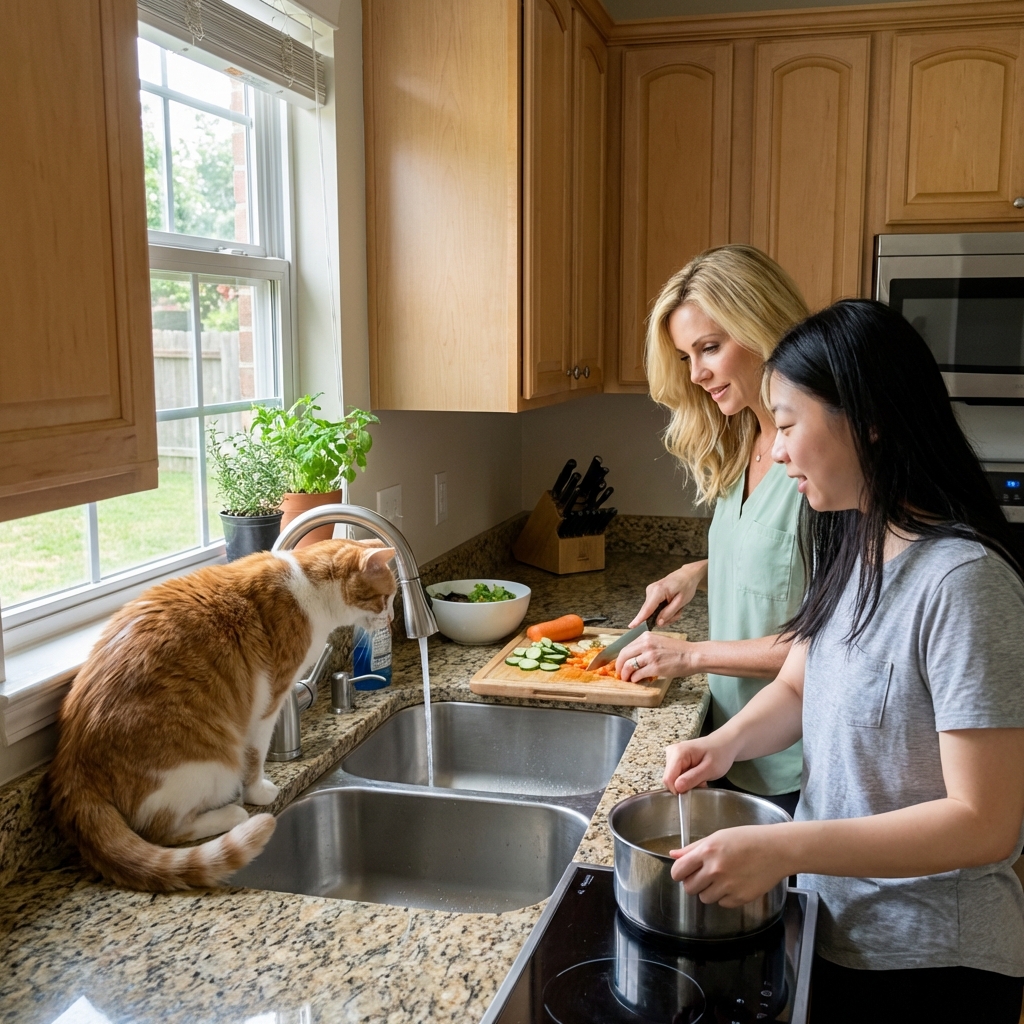
Cats are built to climb and observe. Counters offer:
- Height and security: A vantage point feels safe.
- Warmth: Sun patches, the top of a warm dishwasher, and recently used appliances are cozy.
- Food rewards: Crumbs, butter dishes, and drying pans smell amazing.
- Attention: If counter time reliably gets a big reaction, it can become a game.
Understanding the “why” keeps the plan kind and effective. The goal is not punishment. The goal is changing what the behavior accomplishes for your cat.
Start with safety
Some cats will always try. Your training plan should be designed for consistency, not perfection. Focus on reducing the habit and protecting food prep areas.
When to call your vet
If your cat suddenly starts jumping up more than usual, seems ravenous, or is waking you to demand food, it is worth ruling out medical or diet issues. Common possibilities include hyperthyroidism, diabetes, parasites (more common in kittens and outdoor cats), gastrointestinal disease or malabsorption, pain that changes routines, or cognitive changes in senior cats. In clinical settings, we often see “behavior problems” improve once the health piece is addressed.
The golden rule
Counter jumping continues because it works for the cat. Your plan is simple in theory:
- Make counters uninteresting: No food, no fun, no attention jackpots.
- Create an irresistible alternative: A cat tree, perch, or stool that is allowed.
- Reinforce the alternative: Treats, praise, play, and consistency.
Modern, welfare-forward cat training works best when you combine positive reinforcement with management and removing access to rewards. Punishment and scare tactics often increase stress and can damage trust.
Step 1: Remove rewards
This is the part most people skip, and it matters more than any deterrent.
Counter management checklist
- Wipe counters after cooking and eating, especially grease and meat juices.
- Do not leave dirty pans, plates, or food cooling uncovered.
- Use sealed containers for bread, treats, and leftovers.
- Put the trash in a lidded can or a cabinet.
- Use a predictable feeding routine. Meals or measured portions often reduce scavenging better than an always-full bowl.
If your cat never finds anything good up there, the habit starts to lose its appeal.

Step 2: Add a yes spot
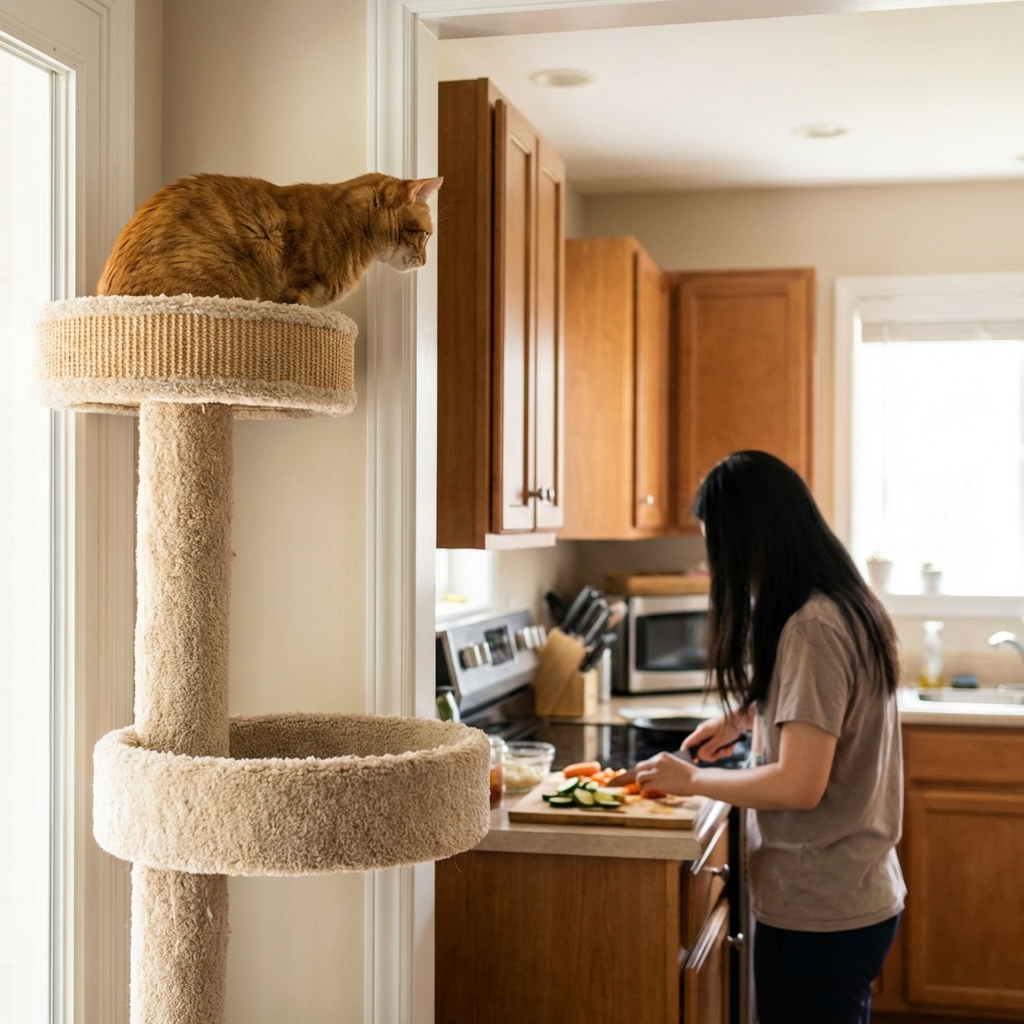
Most cats are not trying to be defiant. They want height and a front-row seat. Provide a legal viewing station close to where you spend time.
Great alternatives
- Cat tree near the kitchen: Ideally with a top platform at human chest or head height.
- Window perch: A strong suction or bracket-mounted perch for bird watching.
- Sturdy stool or shelf: Add a nonslip mat and make it a “station.”
Make it pay
For the first 1 to 2 weeks, actively reward your cat for choosing the right spot. Toss a treat onto the cat tree when you start cooking, or offer a food puzzle there. You are teaching, “This is where good things happen.”
Step 3: Teach “Off”
Training goes faster when your cat understands what to do instead of only hearing “no.”
How to train it
- Keep a small, sealed treat container somewhere convenient, and out of reach of kids and pets who might get into it.
- If your cat jumps up, calmly say “Off” one time.
- Lure them down with a treat held at nose level, moving it to the floor.
- The moment their paws touch the floor, give the treat and gentle praise.
- Immediately guide them to the approved perch and reward again.
Important: avoid chasing or yelling. Big reactions can become attention rewards. Calm and consistent wins.
In the moment
Sometimes you are cooking, hosting, or simply tired and cannot do a full training session. That is normal. Aim for a boring, predictable reset:
- Calmly guide or lift your cat down, then place them on their perch.
- Reward the perch choice (even a tiny treat helps) and return to what you were doing.
- Avoid feeding, bargaining with human food, or making it a chase game.
You are not “letting them win.” You are preventing accidental rewards and keeping everyone safe.
Step 4: Deterrents as backup
Deterrents work best when your cat has a strong alternative spot and the counter has stopped paying out with food.
Humane options
- Double-sided tape: Placed along the edge where they land.
- Aluminum foil: Some cats dislike the feel and sound (not all).
- Motion-activated air puff devices: Useful when you are not home, but some cats find them very upsetting. Introduce gradually, avoid using them with timid cats, and discontinue if you see fear or anxiety.
Skip these
- Squirt bottles or loud noises: They can increase stress and teach your cat to only avoid the counter when you are present.
- Sticky traps meant to catch paws: They can injure, panic, or create long-term fear of the kitchen.
- Essential oils or strong sprays on surfaces: Many are unsafe for cats, and strong odors can cause stress or respiratory irritation.
The goal is “not worth it,” not panic.
Step 5: Meet needs
Counter jumping is often a symptom of boredom or a cat who is seeking engagement.
Simple daily enrichment
- Two play sessions a day: 5 to 10 minutes of wand toy play that ends with a small meal or treat.
- Food puzzles: Let your cat “hunt” part of their daily calories.
- Vertical territory: Add shelves, trees, or safe climbing routes.
- Predictable schedule: Cats relax when life is consistent.
When your cat’s needs are met, unwanted behaviors often soften naturally.
Common mistakes
- Only correcting when you see it: If the counter is rewarding when you are not around, the habit stays strong.
- Inconsistent rules: “Sometimes it’s fine” is confusing. Pick your boundary and stick with it.
- Leaving food out: Even a few crumbs can be a powerful reward.
- Punishing after the fact: Cats do not connect delayed punishment with earlier behavior. It just creates fear.
A simple 7-day plan
Days 1 to 2
- Deep clean counters and remove temptations.
- Place a cat tree or perch near the kitchen.
- Start rewarding your cat for using the perch.
Days 3 to 5
- Practice “Off” calmly and consistently.
- Use treats to reinforce the perch during cooking time.
Days 6 to 7
- Apply double-sided tape or foil to favorite landing zones if needed.
- Continue rewarding the perch, especially when your cat chooses it on their own.
Many households notice improvement within a few weeks. Some cats take longer, especially if the habit is old or the counter has been a reliable snack bar. Stick with the plan and look for steady progress.
Perch troubleshooting
If your cat ignores the “yes” spot, it is usually not stubbornness. It just is not valuable enough yet. Try:
- Adjusting location: Move the perch closer to where you cook or where your cat likes to watch you.
- Increasing height: Many cats prefer a top platform at or above counter height.
- Upgrading comfort: Add a grippy mat or a familiar blanket that smells like home.
- Boosting rewards: Feed treats, lickable snacks, or a puzzle feeder only on the perch for a week.
- Reducing competition: In multi-cat homes, add more perches so no one has to negotiate for a seat.
If you have multiple cats
Multi-cat homes often need more vertical space and more feeding stations. If one cat is guarding resources, others may jump up to feel safe or to access food.
- Provide multiple perches in different locations.
- Use separate feeding areas if there is tension.
- Consider microchip feeders if one cat steals meals.
Kitchen safety
Even with training, assume your cat may jump up occasionally. These habits protect your family and your cat:
- Sanitize counters before and after cooking.
- Keep cats out during high-risk cooking if you can (a closed door or baby gate can help).
- Use back burners when possible, turn pot handles inward, and never leave hot burners unattended.
- Use stove knob covers if needed.
- Keep toxic foods secured (onions, garlic, including powders, grapes, raisins, xylitol, alcohol).
- Store sharp items and stringy foods (like floss and twine) out of reach.
Progress is the goal. With clean counters, a tempting perch, and calm training, most cats learn that the best seat in the kitchen is the one you chose for them.