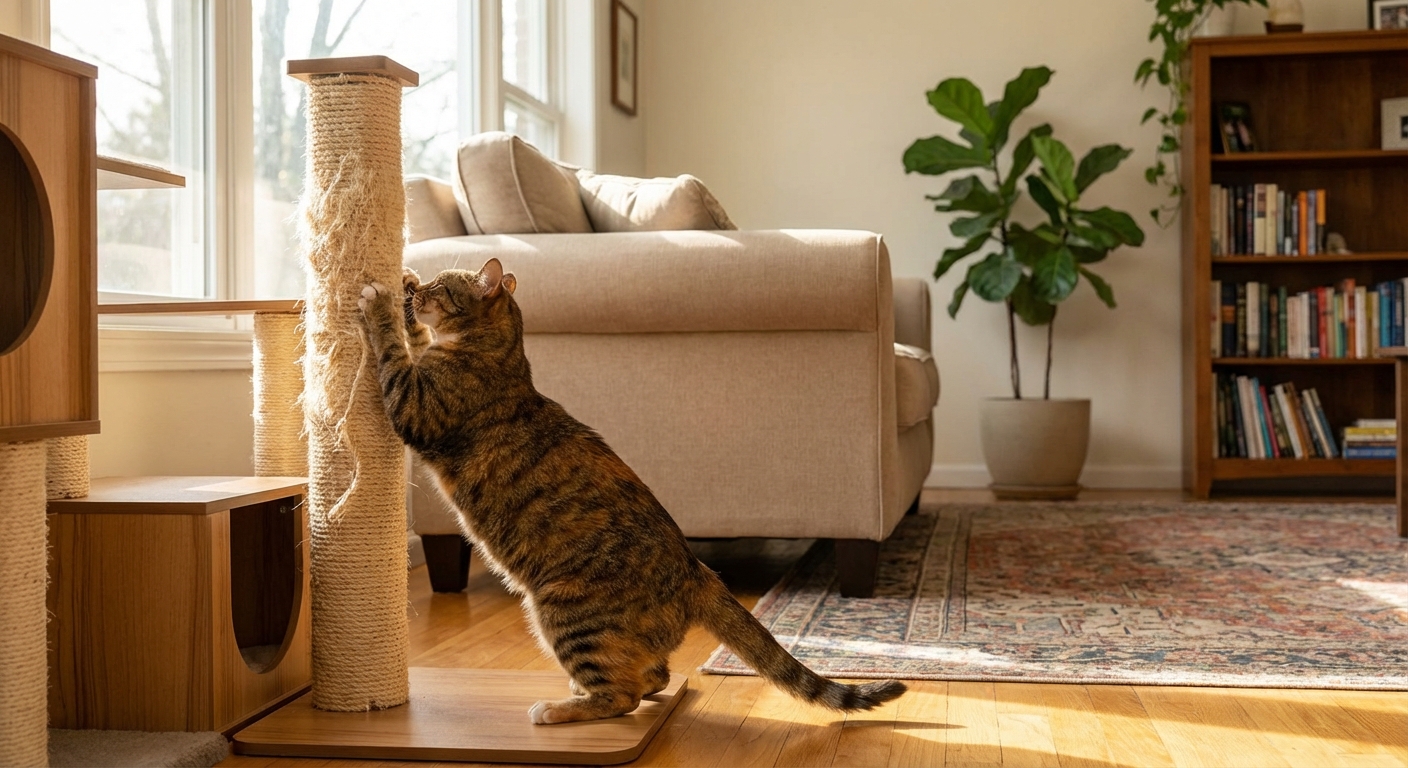
Cats scratch to stretch, maintain claws, mark territory, and relieve stress. Use this vet-assistant plan to redirect scratching with the right post, placemen...
Article
•
Designer Mixes
Train a Cat Not to Claw Furniture

Shari Shidate
Designer Mixes contributor
As a veterinary assistant here in Frisco, Texas, I see this all the time: a sweet cat, a beautiful couch, and scratch marks that make everyone feel frustrated. The good news is that scratching is not “bad behavior.” It is normal feline care. Your job is to give your cat a better place to scratch and make that option feel irresistible.
In this guide, I will walk you through humane, vet-approved steps you can start today, plus what to avoid so the training actually sticks.
Why cats scratch
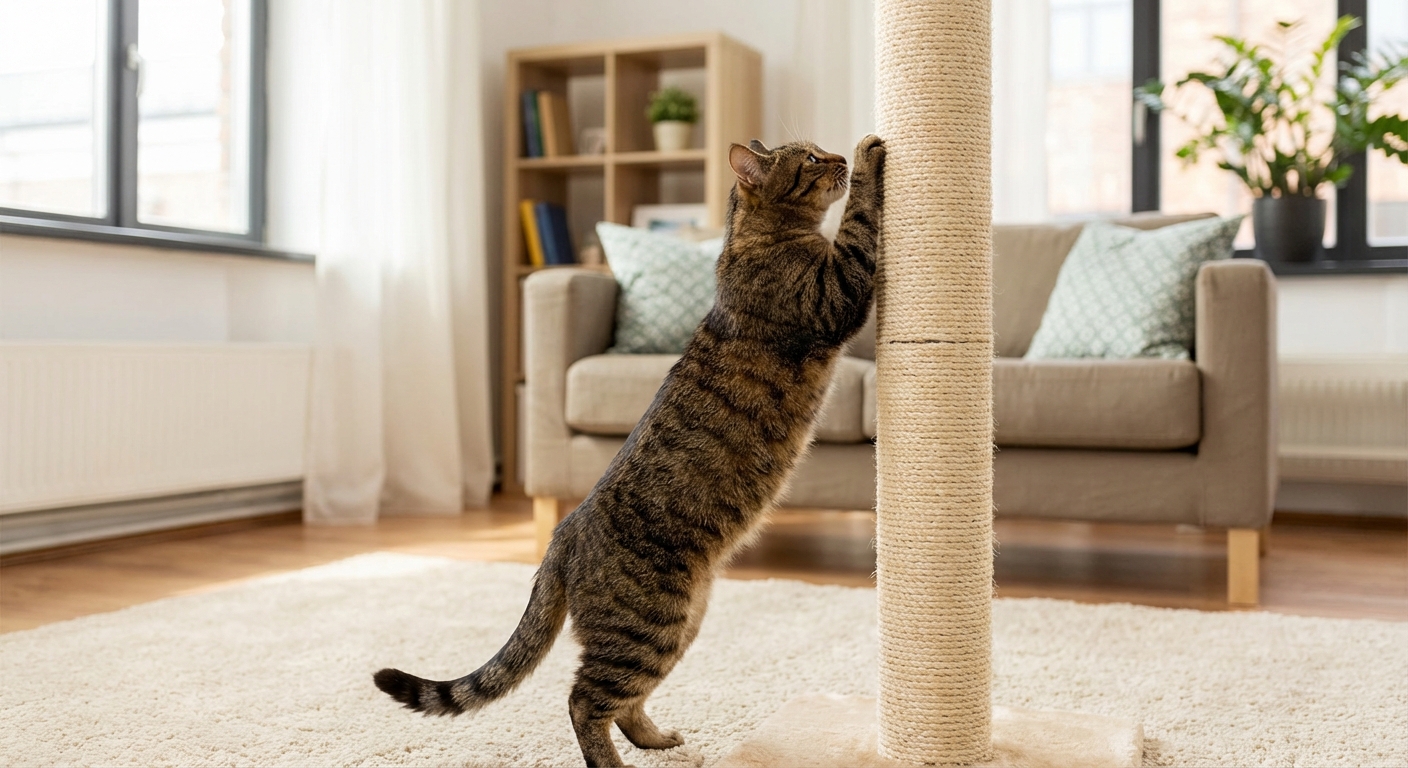
Scratching is a basic, healthy behavior. Cats scratch to:
- Maintain claws by shedding the outer nail sheath
- Stretch and strengthen shoulder, back, and paw muscles
- Mark territory using scent glands in their paws, plus visible scratch marks
- Relieve stress or burn off energy
Because scratching is instinctive, punishment rarely works long term. It can also create fear of you, increase stress scratching, or push your cat to scratch when you are not around. Training works best when you redirect scratching to an appropriate surface and reward your cat for using it.
Step 1: Set up good scratchers
Many cats scratch furniture because furniture is a great scratching surface: sturdy, tall, and placed in the most important parts of the home. We can compete with that, but we need to set your cat up for success.
Pick the right style
- Vertical scratchers (tall posts) for cats that scratch couch arms, door frames, or chair backs
- Horizontal scratchers (cardboard loungers, flat sisal mats) for cats that scratch rugs or carpet
- Angled scratchers for cats that do a bit of both
Tip: If you are not sure what your cat prefers, offer 2 to 3 styles for 1 to 2 weeks and see what gets the most use. Preference matters.
Size and stability
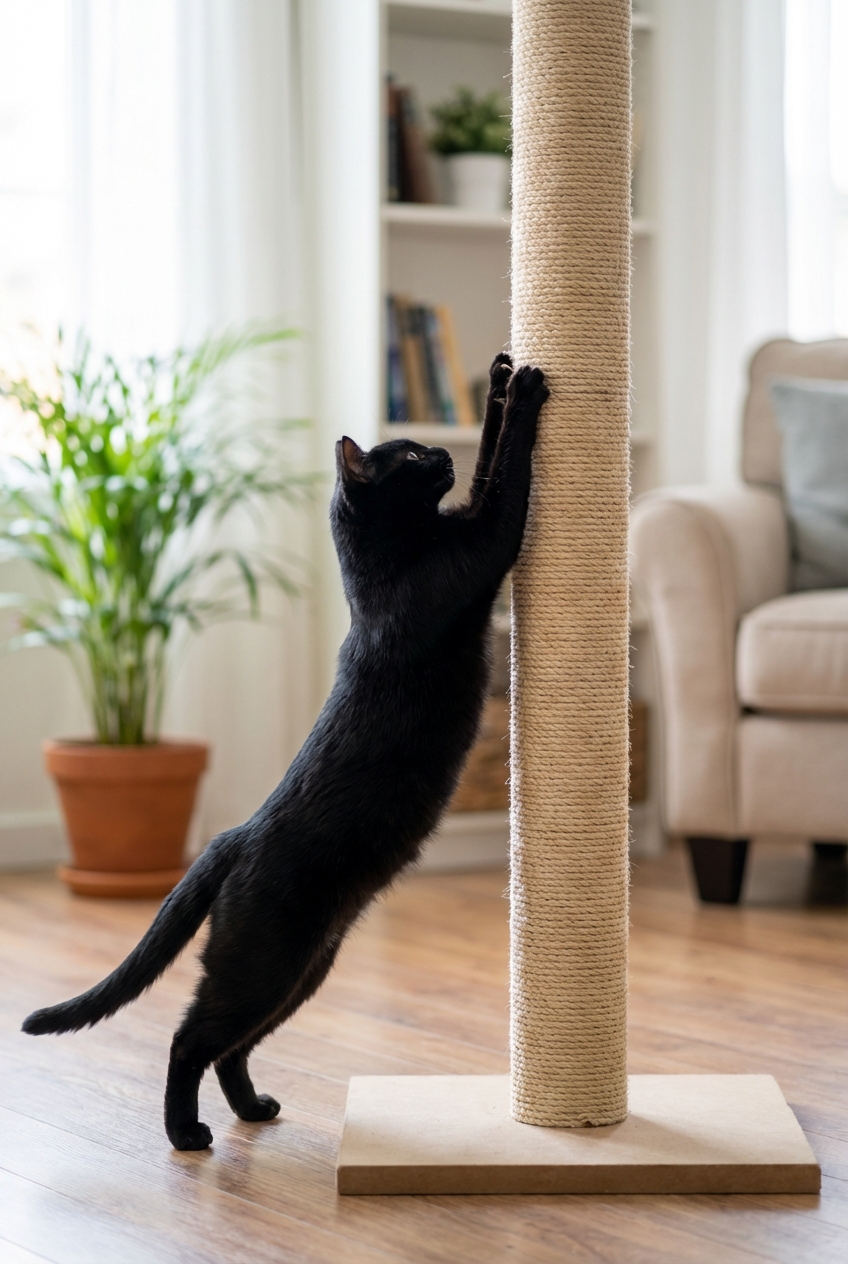
- Choose a post that is tall enough for a full-body stretch. For many adult cats, that is often around 30 inches or taller, but your cat is the real measuring stick.
- Pick a base that is heavy and does not tip.
If a scratcher wobbles or slides, some cats may avoid it. A stable post builds confidence fast.
Put it where it counts
Location is half the training. Start by putting scratchers where your cat already scratches, then gradually relocate if needed.
- Right next to the problem furniture (within 1 to 2 feet at first)
- Near resting areas because many cats scratch after waking
- In social zones like living rooms, not hidden in a laundry room
In multi-cat homes, plan for more than one scratcher. A good starting point is one per cat, plus one extra, spread across key rooms to reduce competition.
Keep scratchers usable
Replace or refresh scratchers before they get “too smooth” to be satisfying. Cardboard scratchers often need regular replacement. Sisal posts may need re-wrapping over time. Many cats keep using scratchers long term, so it is worth maintaining the stations in the rooms your cat actually lives in.
Step 2: Make furniture less rewarding
While you build the new habit, you also want to make the old habit less satisfying. Think “temporary management,” not forever solutions.
Use safe deterrents
- Double-sided tape on couch corners or arms (many cats dislike the sticky feel)
- Furniture shields (clear plastic corner guards)
- Slipcovers as a short-term protection layer
Safety notes: Use pet-safe products, test tape on a small hidden area first (some finishes are sensitive), and apply it smoothly so edges do not curl and catch fur. Avoid strong scents or essential oils. Some can be irritating or unsafe for cats, especially in poorly ventilated areas.
Block access when needed
If your cat targets one specific area, temporarily block it with a chair, storage bin, or folded playpen panel while the new scratching station becomes the default.
Step 3: Reward the right choice
This is the part that changes behavior for the long run. The goal is simple: scratching the post makes good things happen.
Catch and reward
When you see your cat scratch the approved surface, reward within 1 to 2 seconds:
- A tiny treat
- Praise in a calm, happy voice
- A short play session if your cat is toy-motivated
Do this consistently for at least 2 weeks. Many cats learn quickly, but consistency is what locks the habit in.
Catnip or silvervine
Sprinkle a small amount of catnip on the scratcher, or use a catnip spray. If your cat is not into catnip, silvervine often works for more cats.
Refresh it every few days. If you use it constantly, some cats seem to lose interest, so less is often more.
Use play to aim your cat
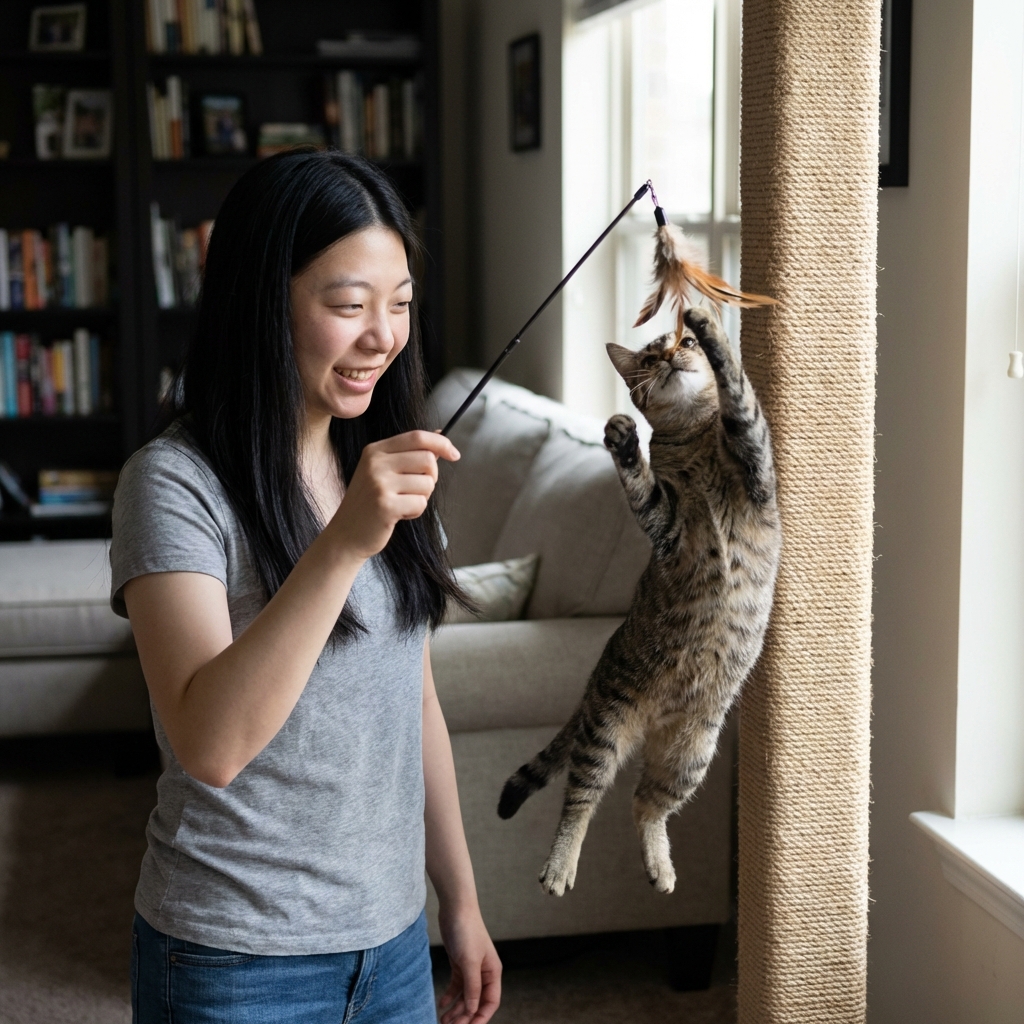
Try a wand toy and guide the game around the scratcher. Let your cat pounce nearby, then reward any paw contact or scratching. This is especially helpful for high-energy cats who scratch when bored.
Step 4: In-the-moment redirects
You want to interrupt without scaring your cat.
- Calmly interrupt with a gentle sound like a soft clap or a cheerful “oops”
- Redirect by luring your cat to the scratcher with a treat or toy
- Reward when they scratch the right surface
Try not to grab or pick up your cat mid-scratch. Some cats startle easily, and you can also get scratched. If you do need to move your cat, do it calmly and only if it is safe for both of you.
Skip yelling, chasing, or spraying with water. Those methods can increase anxiety and make cats more secretive about scratching.
Claw care options
Trim nails to reduce damage
Regular nail trims do not stop scratching, but they can make scratches less destructive. Many cats do well with trims every 2 to 4 weeks.
If you are new to it, ask your veterinary team for a quick demo. A calm technique and tiny treats can make trims much easier.
Soft nail caps
Soft caps can reduce damage during training or in special situations. They need correct sizing and regular replacement as nails grow.
Declawing is not training
Declawing is an amputation of the last bone in each toe. Many veterinary organizations discourage routine declawing because of pain and potential long-term behavior and mobility issues. If scratching is severe, talk with your veterinarian about humane alternatives and a full behavior plan.
Troubleshooting
The post is unstable or too short
If it wobbles or your cat cannot fully stretch, upgrade to a sturdier, taller option.
Wrong material
Some cats love sisal rope, others prefer cardboard, and some want carpet-like texture. Offer at least two textures for a few weeks and see what gets used.
Wrong location
If the post is tucked away, many cats will not bother. Move it to the exact spot your cat is already choosing, then adjust gradually.
Stress or conflict
New pets, new furniture, schedule changes, outdoor cats at the window, and tension between cats can all increase marking behavior. Multi-cat households may need more scratching stations and more spacing between resources.
If scratching suddenly escalates, consider a veterinary check and a behavior consult to rule out stress-related causes.
A simple 14-day plan
Days 1 to 3: Set up and protect
- Place a tall, sturdy scratcher next to the furniture target
- Add double-sided tape or a furniture shield to the scratched area
- Reward any interaction with the scratcher
Days 4 to 7: Train the habit
- Reward scratching the post every time you see it
- Use wand-toy play near the post once or twice daily
- Keep the furniture deterrent in place
Days 8 to 14: Fade support slowly
- Continue rewards, but start spacing them out (every other time)
- If scratching stays consistent on the post, reduce tape coverage gradually
- Add a second scratcher in another favorite room
If your cat relapses, that is normal. Just go back a step for a few days. Training is not linear, especially during stressful weeks.
When to call your vet
Reach out to your veterinarian if:
- Scratching becomes sudden and intense
- Your cat seems painful, stiff, or is avoiding jumping (arthritis and other mobility issues can show up this way)
- You notice nail bed redness, swelling, overgrown nails, or broken nails
- There is aggression, urine marking, or major anxiety along with scratching
Sometimes behavior is telling us about discomfort or stress, and it is always worth checking.
Bottom line: your cat is not being “difficult.” Scratching is normal. With the right scratchers, smart placement, and consistent rewards, most cats happily choose the post and leave the couch alone.
References
- American Association of Feline Practitioners (AAFP) (client education and feline behavior resources)
- International Cat Care (ISFM) (environment and behavior guidance)