
Toad Poisoning in Dogs

If your dog just mouthed a toad and suddenly starts drooling like a faucet, pawing at their face, or acting panicky, treat it as an emergency. Some toads, especially highly toxic bufonid toads (the family that includes cane toads and the Colorado River, also called Sonoran Desert, toad), secrete potent toxins that can cause rapid neurologic and heart-related effects. Key takeaway: start safe first aid immediately and get to an emergency vet as fast as you can.
What causes toad poisoning?
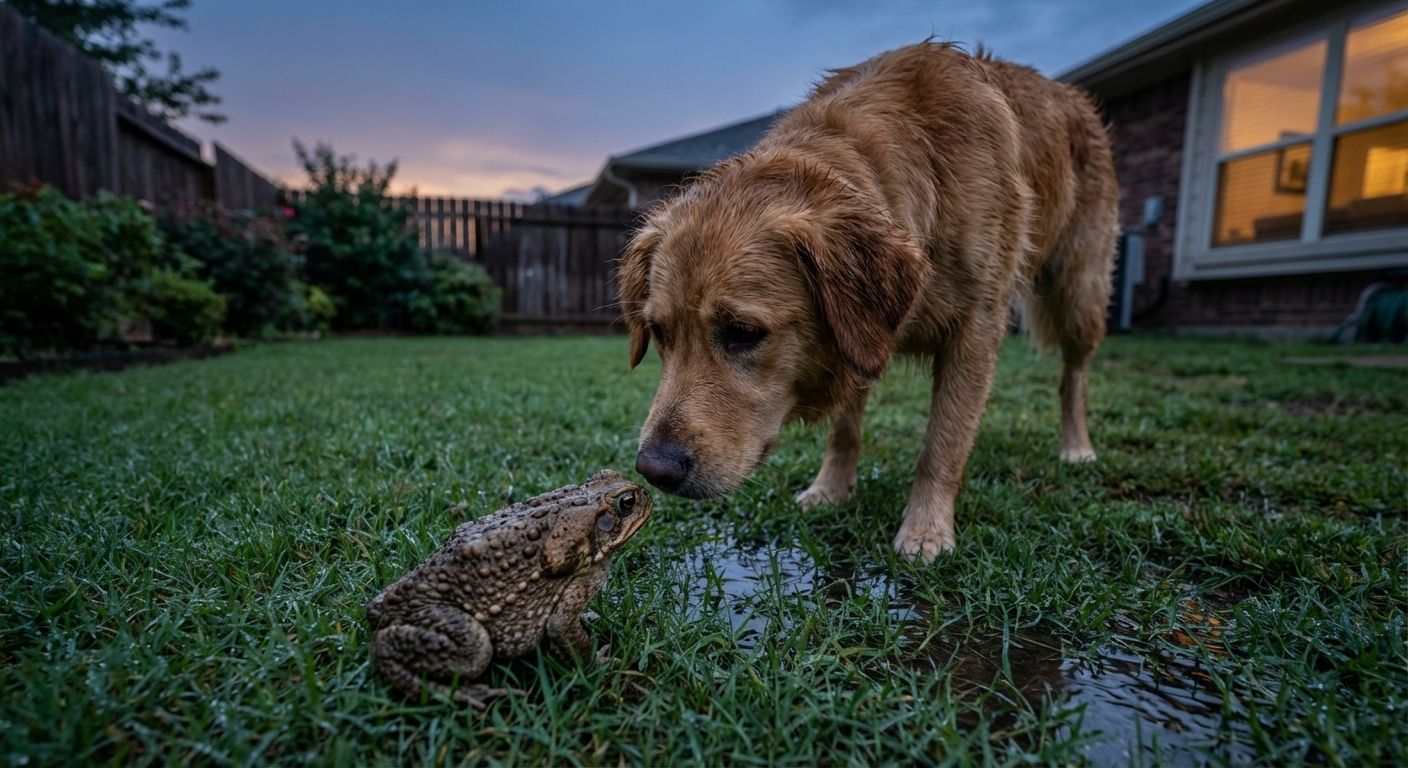
Toad poisoning happens when toad toxin contacts a dog’s mouth, gums, tongue, or eyes, usually after the dog licks, picks up, or mouths a toad.
Many toads can irritate a dog’s mouth, but the most dangerous cases are typically linked to highly toxic bufonid toads. In the United States, the biggest concerns are the cane toad (Rhinella marina) in Florida and the Colorado River toad, also called the Sonoran Desert toad (Incilius alvarius), in the Southwest. These toads secrete bufotoxins from glands behind the head and along the back.
Bufotoxins can be absorbed quickly through oral and eye tissues. That is why symptoms can begin within minutes.
Where and when toxic toads are most likely
Geography hot spots
Risk is highest in warm regions, but the type of habitat depends on the species.
- Florida: Cane toads are a well-known issue, especially in warmer, wetter areas.
- Southwest: The Colorado River (Sonoran Desert) toad is associated with desert and semi-arid regions, and activity increases during seasonal rains and warm nights.
If you live in a warm climate and see large toads out at night, it is worth taking this risk seriously.
Season and time of day
- Warm months: Late spring through early fall tends to bring more toad activity.
- After rain or during humid periods: Toads often come out on wet nights and humid mornings.
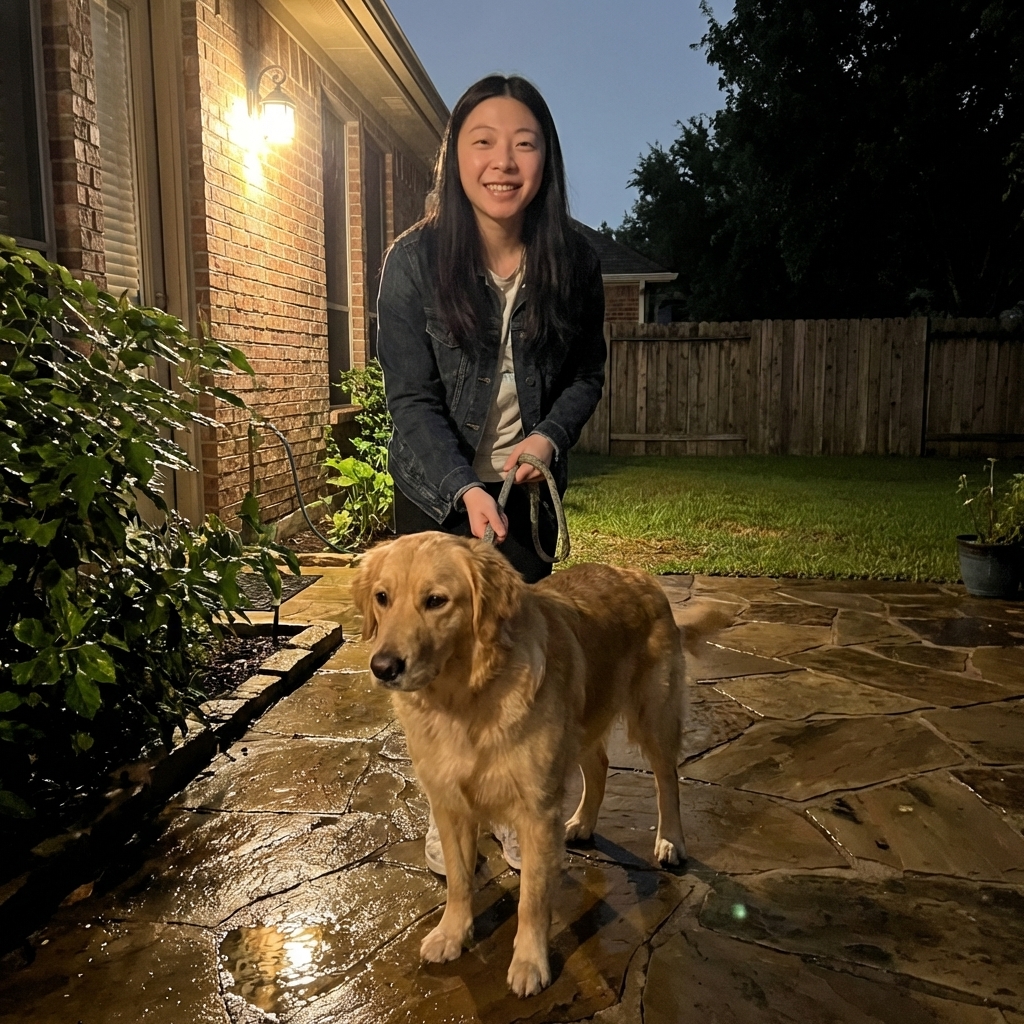
- Dusk to dawn: Many exposures happen during evening potty breaks when visibility is low.
How symptoms can progress
One of the hardest parts for families is how fast this can move. Some dogs only have local irritation, while others progress to severe neurologic signs. Body size, how long the dog mouthed the toad, and how quickly you start decontamination can all matter.
Early signs (often within minutes)
- Sudden, heavy drooling or foamy saliva
- Pawing at the mouth, head shaking, gagging
- Bright red gums and obvious oral discomfort
- Vomiting in some dogs
- Squinting or eye irritation if toxin contacts the eyes
Worsening signs
- Tremors or whole-body shaking
- Wobbliness, weakness, collapsing
- Abnormal heart rhythm (may look like extreme weakness, fainting, or sudden distress)
- Seizures
- High body temperature from muscle activity and seizures
When it is life-threatening
If you see tremors, seizures, collapse, or your dog seems mentally “not there,” do not wait to see if it passes. This is emergency vet territory.
Emergency first aid at home
The goal of at-home first aid is to reduce toxin contact time in the mouth while you arrange immediate veterinary care. You are buying time, not finishing treatment.
Step 1: Get your dog away
Leash your dog or carry them away if safe to do so. If your dog is frantic or snapping from pain, protect your hands.
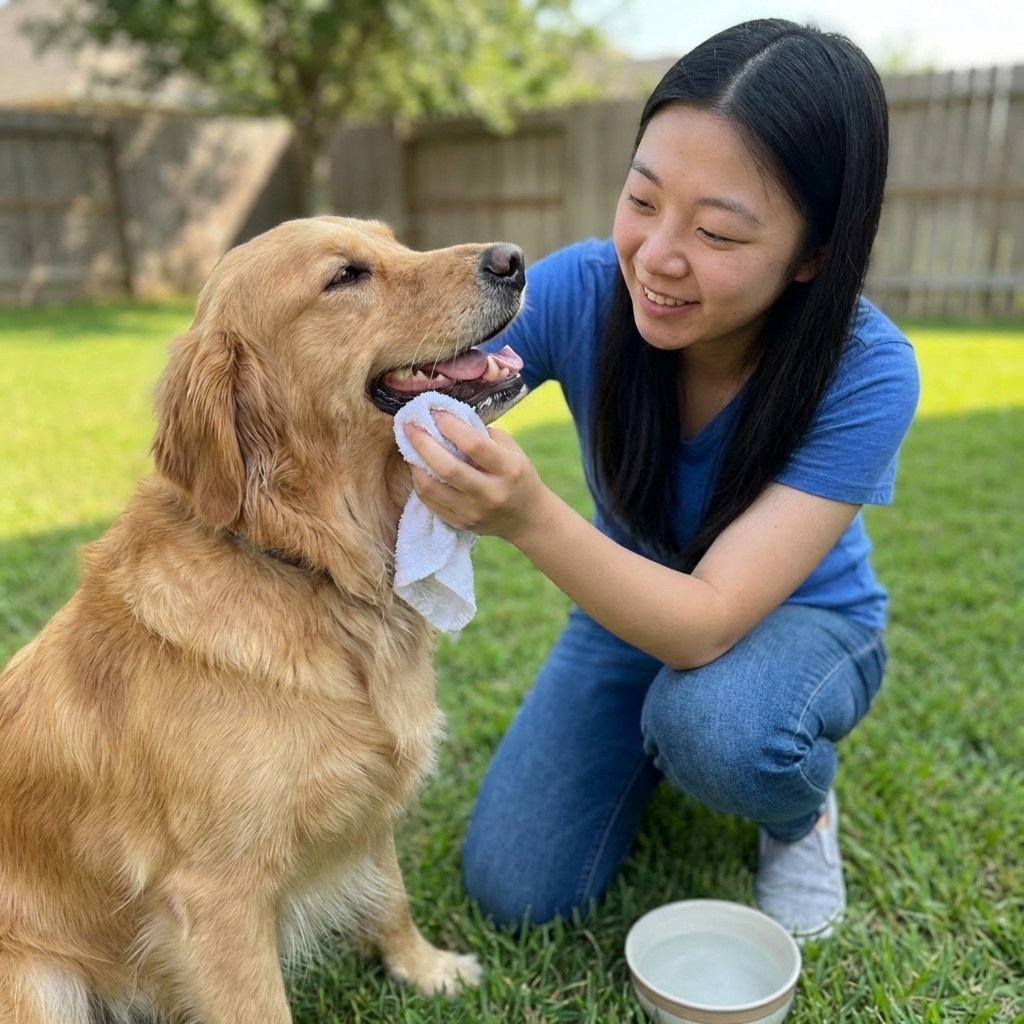
Step 2: Wipe the mouth (often safest)
Many veterinary toxicologists recommend the wet washcloth method, especially if your dog is frantic or you do not have great control of a water stream.
- Soak a washcloth in clean water and gently wipe the gums, tongue, and inside of the cheeks.
- Rinse and re-soak the cloth frequently so you are removing toxin instead of spreading it around.
- Keep the head slightly down so fluid and saliva can drain out.
- Aim for at least 10 minutes of repeated wiping if your dog will tolerate it.
Step 3: Rinse if you can do it safely
If your dog is calm enough and you can control the flow, you can also flush the mouth with a gentle, low-pressure stream of clean water for at least 10 minutes.
- Use low pressure only: A hose on low, a shower sprayer, or a large syringe or turkey baster can work.
- Direction matters: Aim water from the back corners of the mouth forward and out to reduce swallowing.
- Avoid forcing water into the throat. If your dog is fighting you, switch to the wet washcloth method.
- If the eyes were exposed: Rinse eyes with clean water or sterile saline for several minutes.
Step 4: Call an emergency vet while you decontaminate
If another adult is present, have them call your nearest emergency vet right away. If you are alone, wipe or rinse for a few minutes, then call, then continue as you prepare to leave.
Do not do these things
- Do not induce vomiting.
- Do not use high-pressure water or spray directly toward the throat.
- Do not delay transport to “monitor at home,” especially in cane toad or Sonoran Desert toad areas.
- Do not put anything caustic in the mouth (no soap, no peroxide).
If your dog is showing anything beyond mild drooling, or if you are in a high-risk region and exposure is likely, it is safer to head to the emergency vet as you continue supportive steps.
Common myths vs. facts
In an emergency, you want actions that are effective and low-risk.
- Myth: “Make your dog drink milk to dilute the toxin.”
Fact: Encouraging drinking can lead to swallowing more toxin and may increase vomiting and aspiration risk. Stick to wiping or rinsing outwards and get to the vet. - Myth: “Give activated charcoal at home.”
Fact: Toad toxins are absorbed quickly through oral tissues. Activated charcoal is generally not a helpful first step for mouth exposure and can be dangerous if your dog is drooling heavily, tremoring, or not fully alert. Use it only under veterinary direction. - Myth: “Scrub the mouth with soap.”
Fact: Soap can irritate tissues and risks being swallowed. Use clean water or saline only. - Myth: “Wait it out if the drooling stops.”
Fact: Some dogs worsen after a brief lull. If exposure is known or strongly suspected, call a vet immediately.
If your dog is having tremors or a seizure
Tremors and seizures are a medical emergency. Your priorities are safety and fast transport to an emergency vet.
Seizure precautions
- Do not put your hands near the mouth. Dogs do not swallow their tongues, but they can bite unintentionally.
- Move hazards away. Clear furniture edges, stairs, and anything your dog could hit.
- Dim lights and reduce noise if possible.
- Time the seizure on your phone. It feels longer than it is, and the vet will want this information.
- Keep your dog cool if they are overheating, using a fan or cool room air. Avoid ice baths.
Skip oral rinsing during active seizure
If your dog is actively seizing or thrashing, do not try to rinse or wipe the mouth. Focus on safe containment and immediate transport.

Transport tips
- Call ahead so the team can prepare for a toxin case.
- Bring details: Time of exposure, what you saw (licked vs. carried), when signs started, and whether you wiped or rinsed the mouth.
- If safe, take a quick photo of the toad from a distance. Do not handle it.
- Keep your dog secure in the car. Use a towel or blanket for traction.
- Drive carefully but urgently. If your dog is seizing, have a passenger monitor if possible.
What the veterinarian may do
Emergency treatment is focused on stabilizing your dog and managing neurologic and cardiac effects. Depending on severity, your veterinarian may:
- Continue oral and eye decontamination
- Give medications to control tremors and seizures
- Provide IV fluids and temperature support
- Monitor heart rhythm and treat arrhythmias if present
- Run bloodwork to assess organ function and electrolytes
The earlier treatment begins, the better the odds. Many dogs can recover well with prompt care.
Hotlines if you need help fast
If you cannot reach a veterinarian immediately, you can contact a pet poison hotline for urgent guidance. These services typically charge a consultation fee.
- ASPCA Animal Poison Control: 1-888-426-4435
- Pet Poison Helpline: 1-855-764-7661
How to prevent toad poisoning
- Supervise nighttime potty breaks in warm seasons, especially after rain.
- Keep dogs on leash in toad-prone areas.
- Remove attractants: standing water, spilled pet food, and bright outdoor lighting that draws insects.
- Scan the yard after rain before letting your dog out.
- Teach “leave it” and reward it heavily.
When in doubt, treat it like an emergency
If you suspect your dog mouthed a toad and you see heavy drooling, tremors, weakness, or any seizure activity, do two things: wipe or rinse the mouth safely and go to the emergency vet immediately. Fast action can truly be lifesaving.
If you live in an area with cane toads or Sonoran Desert toads, save your nearest emergency vet number in your phone now. In a real toxin emergency, having it ready can cut minutes off your response time.