No cat is truly hypoallergenic. Learn what causes cat allergies (Fel d 1), which breeds may trigger fewer symptoms, how to test before adopting, and ways to ...
Article
•
Designer Mixes
The Truth About Hypoallergenic Cats

Shari Shidate
Designer Mixes contributor
If you have allergies but love cats, you have probably searched for a “hypoallergenic cat” and felt a spark of hope. I get it. In veterinary clinics and rescue circles, I have seen how much people want this to work out.
Here is the honest, evidence-based truth: no cat is truly 100% hypoallergenic . But some cats and some situations can be more allergy-friendly than others, and that can be enough for many families.
Why people react to cats
Most cat allergies are triggered by proteins, not cat hair itself. The biggest culprit is a protein called Fel d 1 , which is produced mainly in a cat’s salivary glands and skin (sebaceous) glands. Cats groom themselves, the saliva dries on the coat, and then tiny allergen particles spread through the home on fur, skin flakes (dander), and household dust.
Fel d 1 can also show up on surfaces because it transfers easily. You may also hear about allergens in urine and other secretions. For most people, Fel d 1 is still the main one.
- It is lightweight and sticky, so it clings to fabric and can stay suspended in indoor air.
- It builds up over time in carpet, upholstery, bedding, and on many surfaces (including walls).
- It can be carried on clothing, which is why symptoms can flare even when the cat is not nearby.
Do hypoallergenic cats exist?
The word “hypoallergenic” simply means “less likely to cause an allergic reaction.” It does not mean “allergy-proof.”
Some cats naturally produce lower levels of Fel d 1 or spread less of it into the environment. That is where the hypoallergenic idea comes from. The challenge is that allergen production varies widely by individual cat, not just by breed.
If you remember one thing: you are not allergic to “fur.” You are allergic to proteins that end up on fur and in your home.
Breeds called “hypoallergenic”
Some breeds are frequently marketed as hypoallergenic because they may shed less, have different coat types, or have anecdotal reports of being easier for allergy sufferers. Examples you will often hear include:
- Siberian
- Balinese
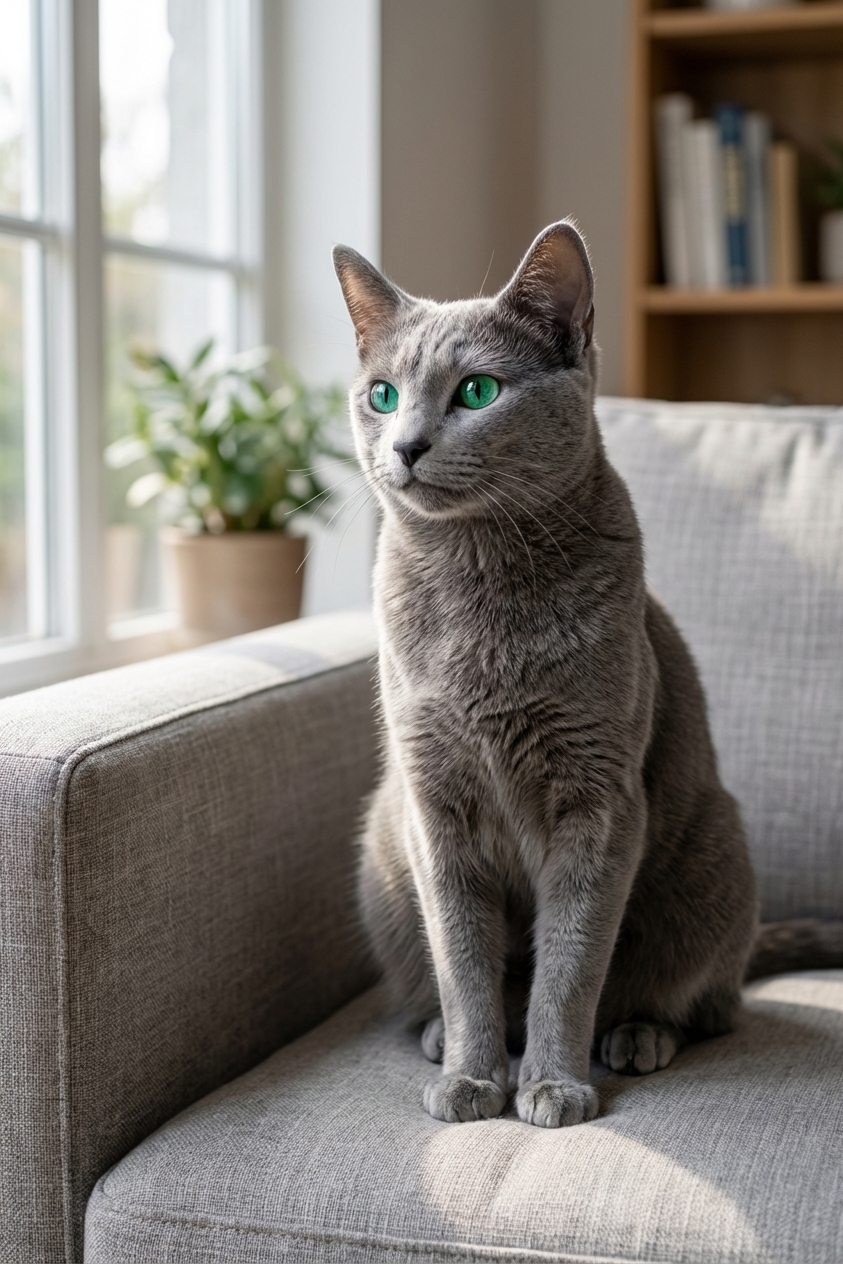
- Russian Blue
- Sphynx
- Devon Rex and Cornish Rex
- Oriental Shorthair
Here is the reality check: there is no breed guarantee. Some Siberians, for example, may have lower Fel d 1, but others do not. And coat type or shedding level does not reliably predict how you will react, because allergen comes from saliva and skin, then spreads through the home.
What affects allergen levels?
When I say “allergenic,” I mean how likely a specific cat and setup are to trigger symptoms.
1) The individual cat
Two cats of the same breed can trigger completely different reactions. Even littermates can vary.
2) Sex and neuter status
Evidence suggests intact male cats often have higher Fel d 1 levels than females or neutered males, but the effect varies and is not a guarantee. If allergies are a major concern, adopting a spayed or neutered cat is usually a wise move anyway for health and behavior reasons.
3) Grooming and skin
Cats that groom heavily can deposit more saliva allergen onto the coat. Skin health matters too. Dandruff , oily skin, and underlying skin disease can all increase what ends up in the environment.
4) Coat and shedding
People often assume long-haired cats are worse, but coat length is not a dependable predictor. A short-haired cat can absolutely trigger significant symptoms. What tends to matter more is how much allergen gets into your home and how long it stays there.
5) Your home
Allergies often worsen when allergen load builds up indoors. Flooring, ventilation, and cleaning routines can make a bigger difference than breed labels.
Test before you commit
If you are considering adding a cat to your family and allergies are in the mix, I strongly recommend a “real life” trial whenever possible.
- Spend time with the exact cat you plan to adopt, not just a similar breed.
- Do multiple visits over a few days if you can. Some reactions are delayed.
- Be thoughtful about contact. If you pet the cat, do not touch your face, and wash your hands afterward. If you have asthma or a history of severe reactions, do not push through symptoms “just to see.”
- Talk with your allergist about testing and medication options before adoption.
Many rescues and shelters offer trial periods. That is a wonderful option for allergy households.
One more note I wish more people heard: kittens can still trigger allergies, and early exposure does not reliably prevent symptoms in someone who is already allergic.
Living with a cat with allergies
In many cases, the best results come from combining a few strategies. Think of it like lowering the volume of allergens rather than trying to mute them completely.
Make the bedroom cat-free
This is one of the most effective steps because it protects your sleep and reduces overnight exposure.
Use HEPA filtration
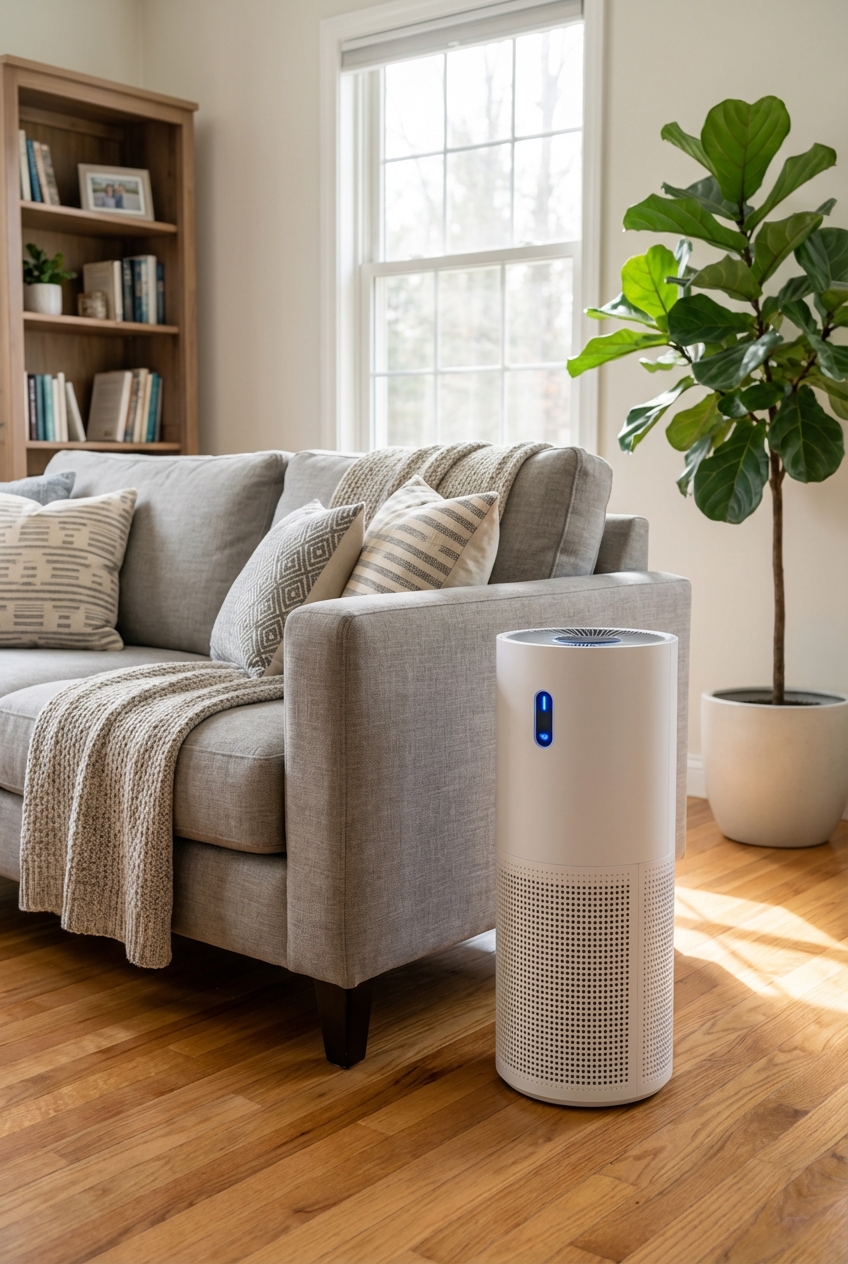
Place a HEPA air purifier in the bedroom and one in the main living area if possible. Choose a unit sized for the room and run it consistently.
Improve ventilation
Use high-quality HVAC filters (when compatible with your system) and replace them on schedule. Good airflow helps reduce what lingers.
Clean for allergen control
- Vacuum with a HEPA vacuum, especially on rugs and upholstery.
- Damp dust rather than dry dusting, which can kick allergens back into the air.
- Wash bedding, throws, and washable covers weekly in hot water if the fabric allows.
- Wash pet bedding and favorite blankets regularly too.
- Consider hard flooring instead of wall-to-wall carpet in high-traffic areas.
Reduce direct exposure
- Wash hands after handling your cat.
- Avoid touching your face after petting.
- If you are very sensitive, change clothes after extended cuddle time.
- Keep closets closed and store “clean” clothes in covered bins if your symptoms are severe.
Grooming support
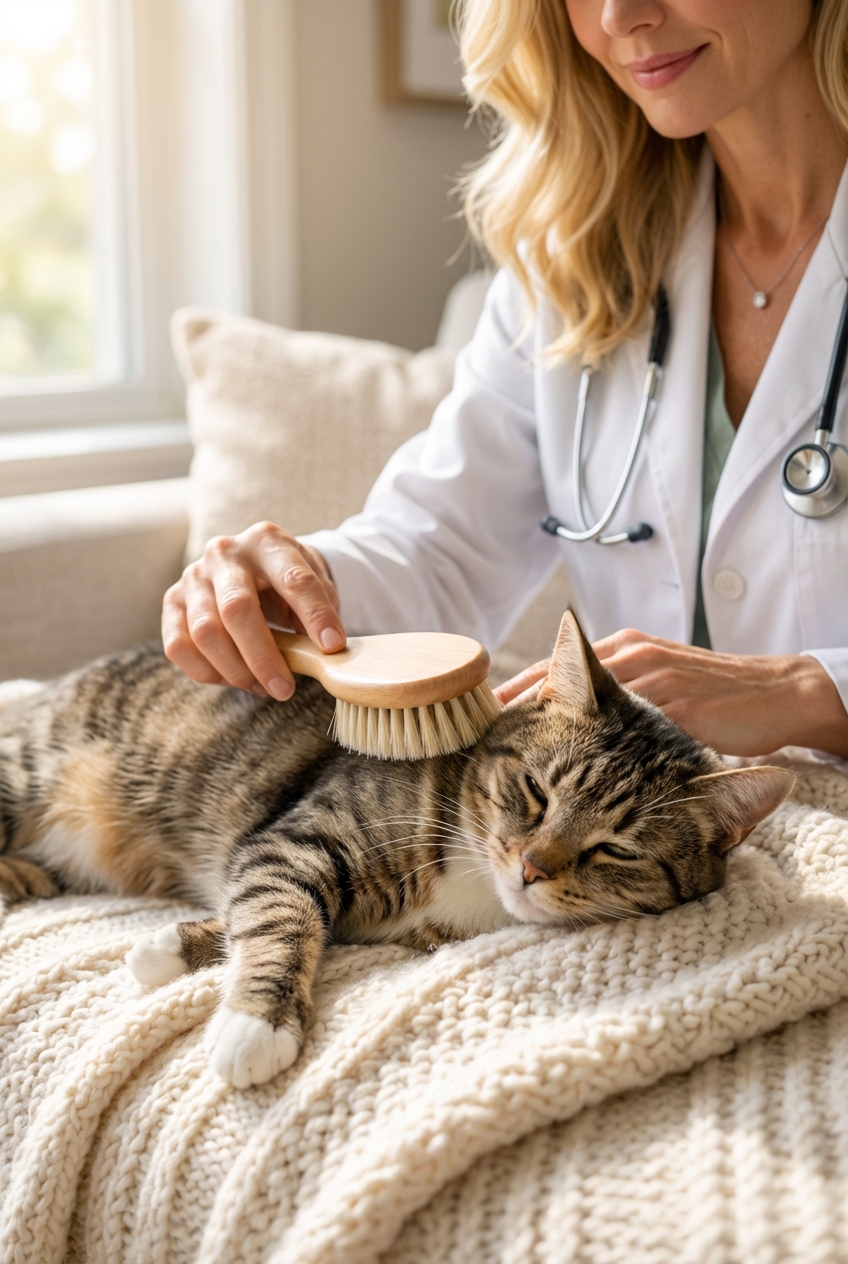
Regular brushing can reduce loose hair and dander. If bathing is tolerated , it may help temporarily, but many cats hate baths. I focus on what is realistic and low-stress, and I often suggest that a non-allergic household member handle brushing when possible.
Diets and products that claim to help
You may see cat foods or topical products marketed to reduce allergens like Fel d 1. One example is diets designed to reduce active Fel d 1 on the coat by using an egg-derived antibody (IgY) that binds Fel d 1 in saliva. Some studies show these approaches can lower measurable allergen levels in certain settings.
My practical advice is to treat these as support tools, not magic fixes. Results vary, and they do not eliminate allergy risk. If you try them, track your symptoms and combine them with environmental steps like HEPA filtration and bedroom boundaries.
Check with your veterinarian before making major diet changes, especially if your cat has digestive issues or medical conditions.
Medical options to ask about
Environmental changes do a lot, but some people still need medical support. Talk with your clinician or allergist about options like:
- Non-sedating OTC antihistamines
- Nasal steroid sprays for congestion and post-nasal drip
- Prescription eye drops or inhalers when appropriate
- Allergen immunotherapy (allergy shots) for longer-term control in some patients
If asthma is part of the picture, good asthma control is not optional. It is the foundation.
When not to get a cat
If anyone in the household has a history of severe asthma, allergic reactions that require emergency care, or uncontrolled allergy symptoms, speak with an allergist before adopting. Sometimes the safest, kindest choice is to admire cats from a distance or consider other pets that are less likely to trigger severe symptoms.
Bottom line
Truly hypoallergenic cats do not exist, but some cats are more manageable for allergy sufferers, and many people do succeed with the right setup.
If allergies are part of your story, focus on three things:
- Meet the individual cat and test your reaction.
- Lower allergen load at home with HEPA filtration, cleaning, and a cat-free bedroom.
- Get medical support from your allergist and veterinary guidance for your cat.
You deserve a home that feels good to breathe in, and cats deserve families that can truly keep them long-term. With honest expectations and a solid plan, those two goals can absolutely meet.