Discover what catnip does, how long it lasts, and the best ways to use dried catnip, spray, toys, and fresh plants for play, scratching, and stress relief—...
Article
•
Designer Mixes
The Truth About Catnip

Shari Shidate
Designer Mixes contributor
Catnip has a funny reputation. One cat rolls around like they just won the lottery, another stares for two seconds and walks away like, “Hard pass.” If you have ever wondered whether catnip is safe, why it works at all, and why it does absolutely nothing for some cats, you are in the right place.
As a veterinary assistant, I love this topic because it is one of those rare pet things that is fascinating and generally low-risk when you use it with a little common sense: small amounts, short sessions, and a setup that does not spark squabbles between cats.
What catnip is
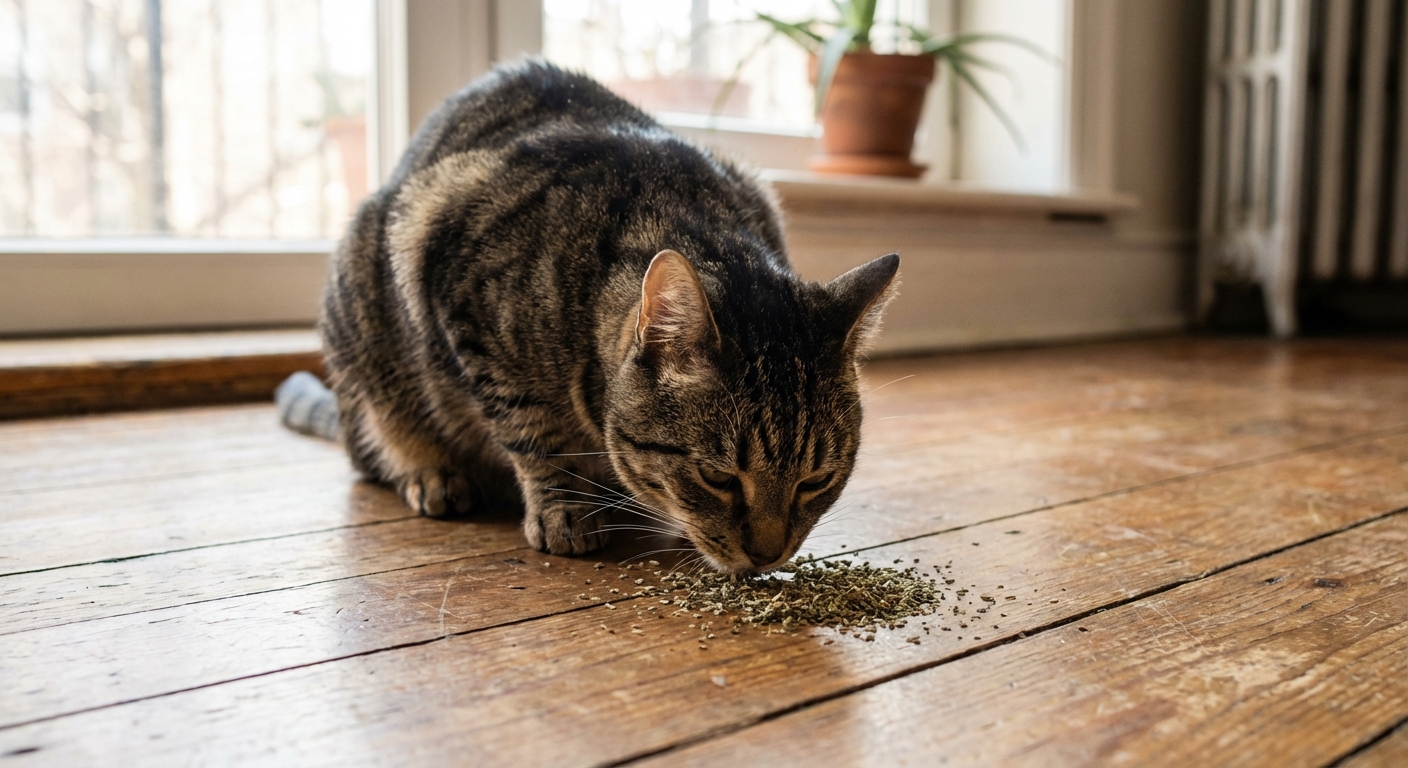
Catnip is a plant in the mint family called Nepeta cataria. The “magic” comes from an aromatic compound in the leaves and stems called nepetalactone. When cats smell it, that compound binds to receptors in their nose and triggers a response in the brain.
It is important to know that catnip is not an opioid, not cannabis, and not a sedative in the human sense. The reaction can look dramatic, but it is considered a normal, temporary behavioral response.
Why cats act “high”
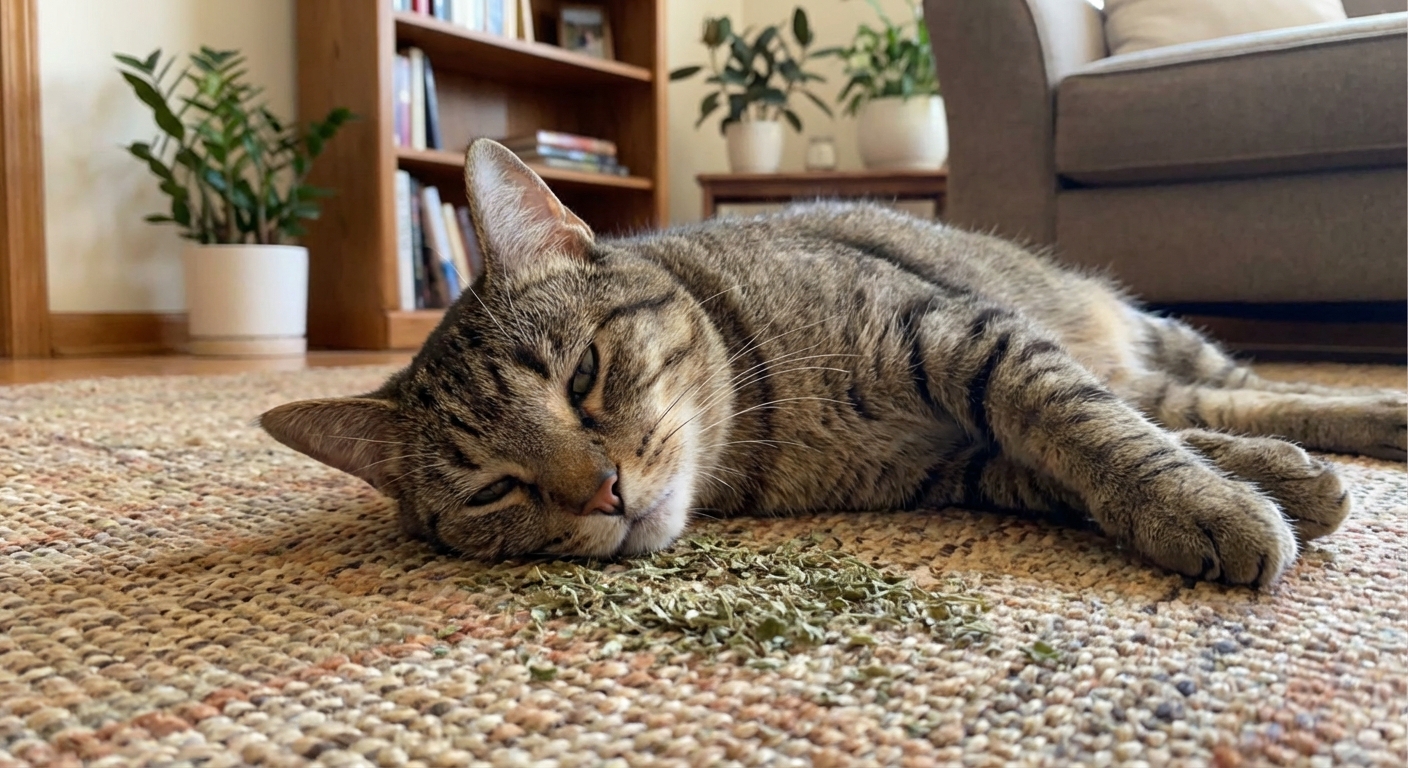
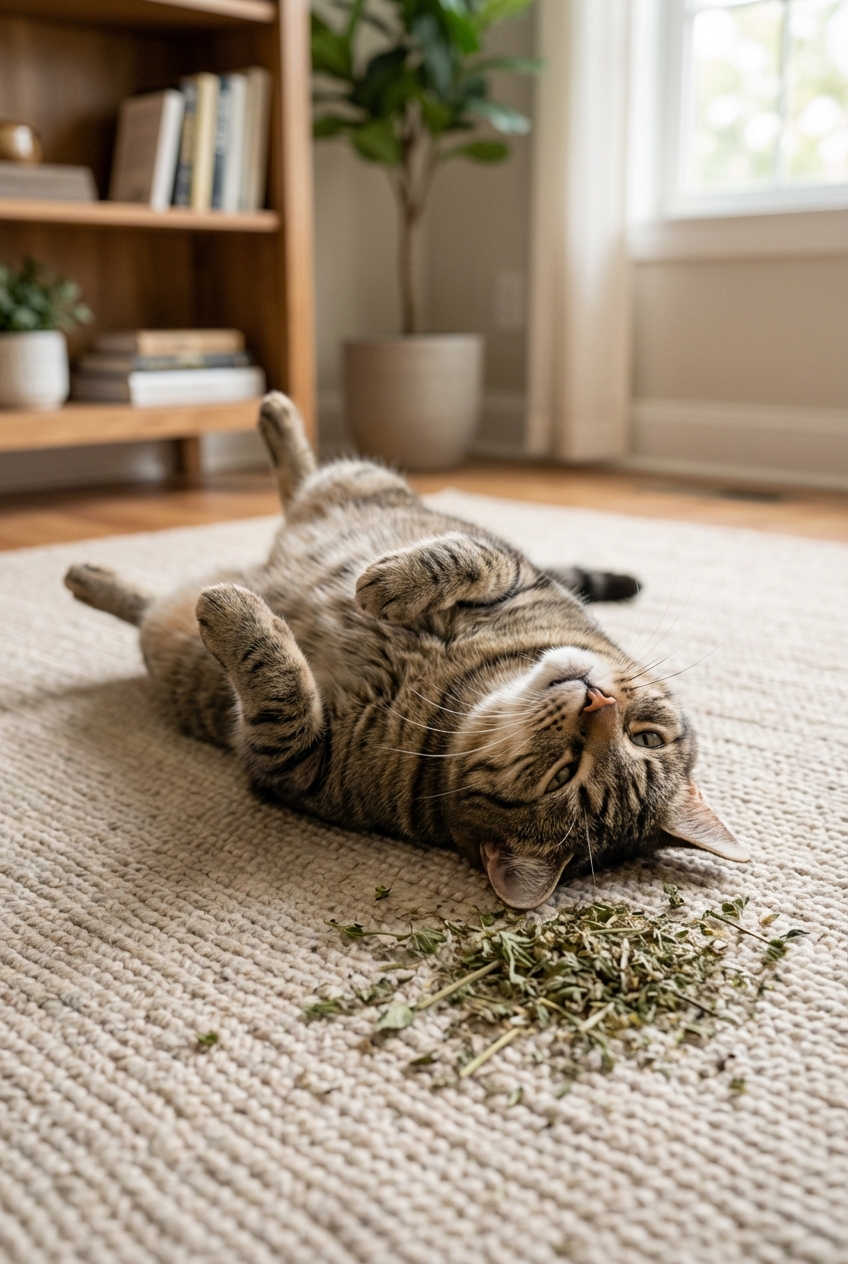
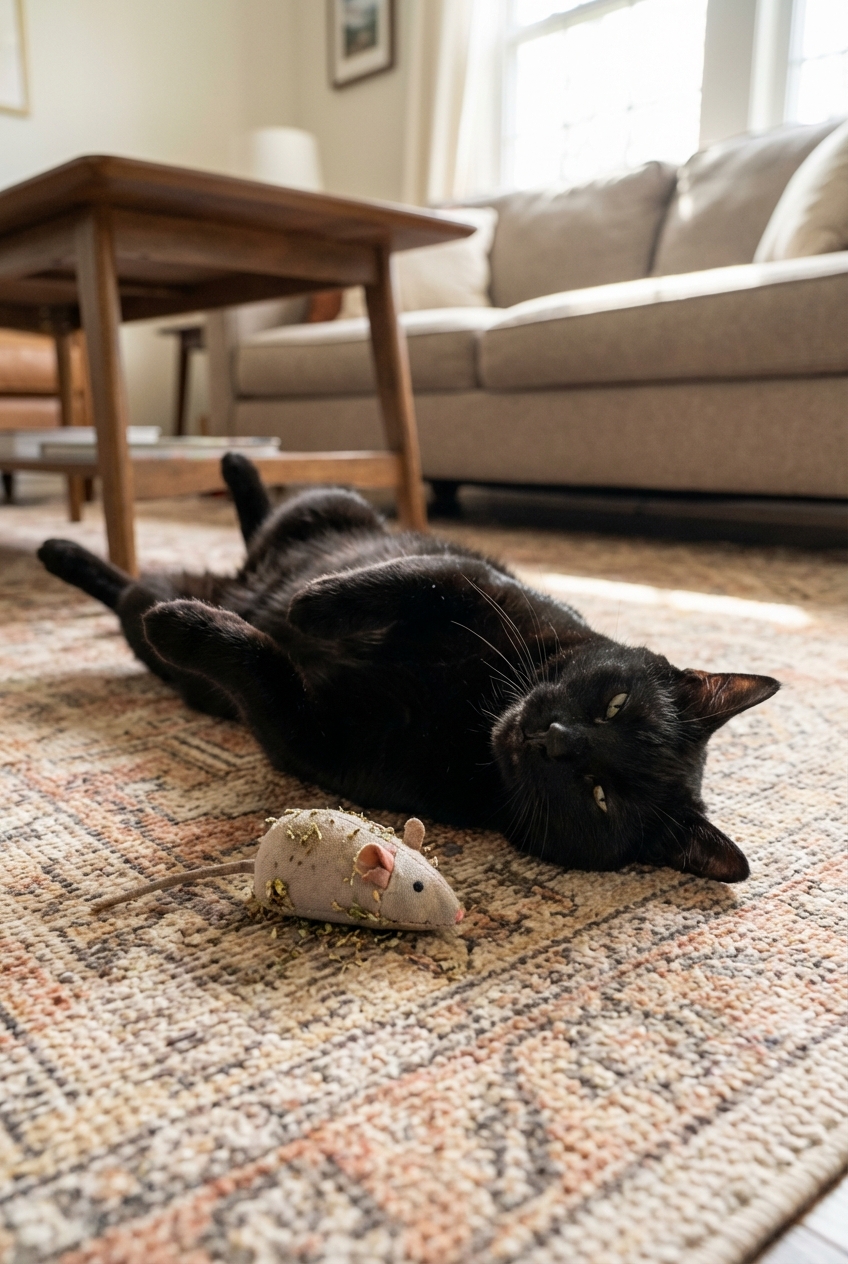
Most catnip reactions are driven by smell, not taste. When a cat sniffs catnip, nepetalactone stimulates sensory neurons and sets off brain signals that can resemble social and reproductive cue behaviors. That is why you often see:
- Face rubbing and cheek marking
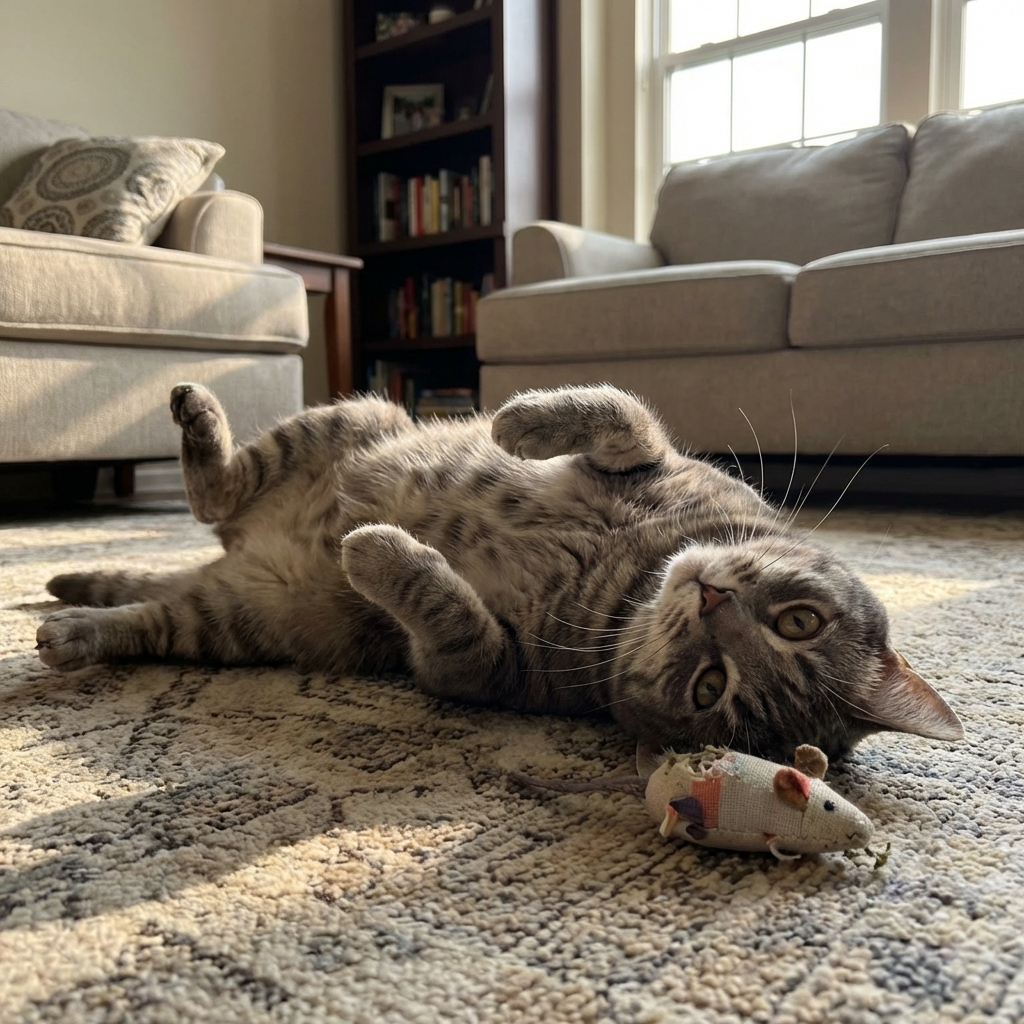
- Rolling, flopping, and wriggling
- Head shaking
- Zoomies or playful pouncing
- Happy drooling or purring
That “buzz” usually lasts about 5 to 15 minutes. After that, many cats go temporarily “immune” to it for a while (often 30 minutes to a couple of hours) before it becomes interesting again.
Why some cats do not care
1) Genetics is the main reason
The ability to respond to catnip is largely inherited. A commonly cited estimate is that about two-thirds of cats show a noticeable response (you will also see ranges like roughly 50% to 75% reported). If your cat ignores catnip, you did not do anything wrong. They may simply not have the genetic sensitivity.
2) Age matters
Kittens typically do not respond until they are older. Many cats start reacting somewhere around 3 to 6+ months, with a more consistent response commonly showing up by around 6 months or later.
3) Your cat might prefer a different “cat herb”
Some cats that ignore catnip will react to other safe plant options like:
- Silver vine (often stronger for some cats)
- Valerian root (can be very stimulating and a bit pungent)
- Tatarian honeysuckle (usually offered as wood sticks)
If your cat is indifferent to catnip, try one alternative at a time, in small amounts, and watch their response.
Is catnip safe?
For most healthy cats, catnip is considered safe when used in moderation. There is no good evidence that it causes dependence in cats.
That said, a few common-sense cautions matter:
- Too much can upset the stomach. If a cat eats large amounts, they may vomit or have diarrhea.
- Overstimulation can happen. Some cats get a little too intense and may swat or bite during play. A small percentage can get temporarily irritable.
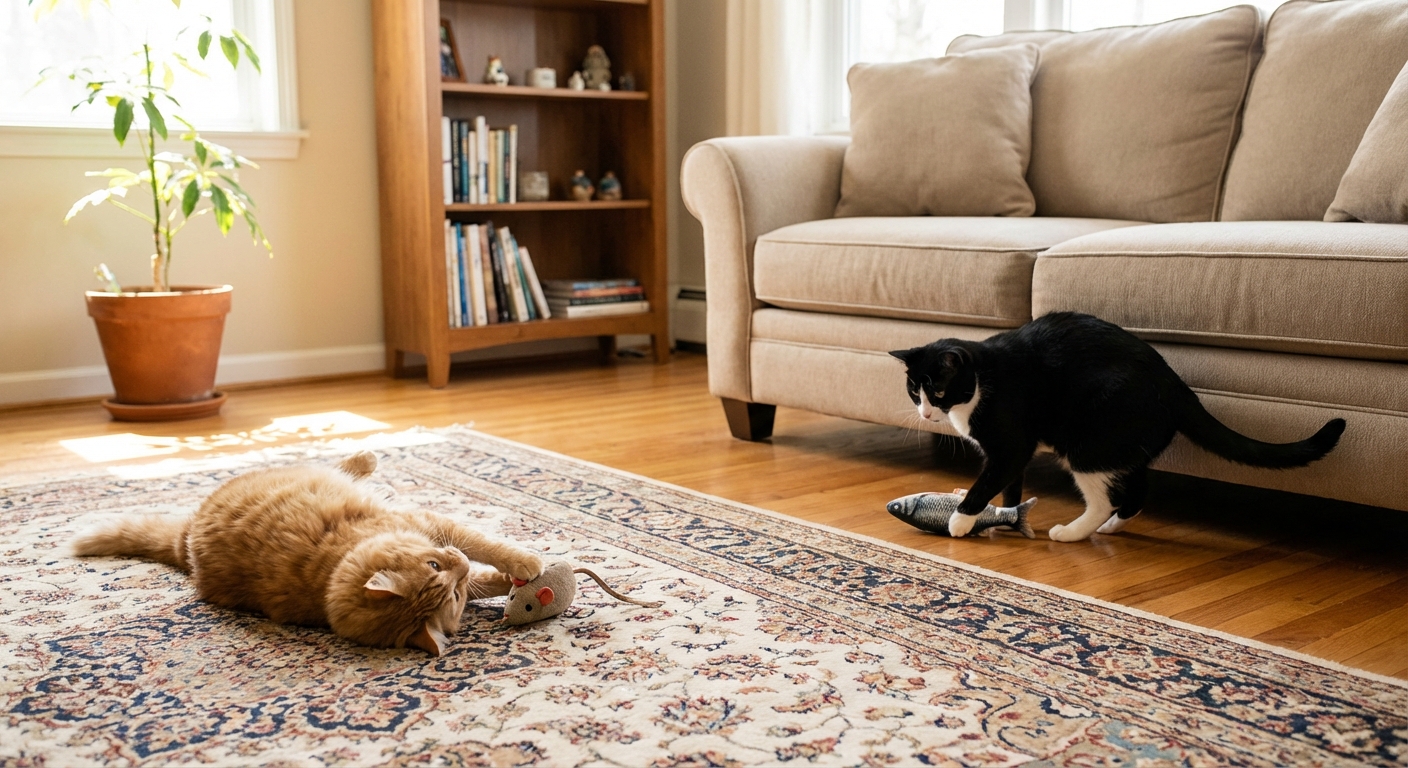
- Multi-cat households can get tense. Catnip can trigger competition over toys or “prime territory.”
If you are introducing catnip in a home with multiple cats, consider offering separate toys in different areas to reduce conflict.
Smelling vs eating
When cats smell catnip, they often act energized or euphoric. When cats eat catnip, some owners notice a calmer or sleepier vibe. The sniffing effect is the best-studied and most consistent, while the “mellow after nibbling” response seems to vary by cat.
So if your cat sniffs and walks away, but will nibble catnip in a toy or on a scratcher, that still counts as a response. It is just a different one.
How to use catnip
Pick the right form
- Dried catnip: Great for sprinkling on scratchers or in a play area.
- Catnip spray: Less messy, often milder. Helpful for training cats to use new beds or scratch posts.
- Catnip toys: Good for interactive play and enrichment.
- Fresh catnip: Can be more aromatic and enticing for some cats.
How much and how often
Start small. For many cats, a pinch about the size of a pea (or roughly 1/8 to 1/4 teaspoon) of dried catnip is plenty. Offer it for 10 to 15 minutes, then put it away to keep it special. Many households find that a few times per week is a good rhythm, but you can adjust based on your cat’s behavior.
Use it for positive “training moments”
Catnip is a simple, gentle way to encourage healthy cat behaviors. Try it to:
- Redirect scratching to an appropriate scratching post
- Make a carrier feel less scary (spray a towel, then let it fully dry before use)
- Encourage exercise in indoor cats who need more movement
Moderation helps
If you offer it constantly, it often becomes less exciting, and you lose the enrichment benefit.
When to skip it or ask your vet
Most of the time, catnip is a safe “yes.” But consider pausing and checking with your veterinarian if:
- Your cat becomes aggressive, panicky, or very stressed after exposure
- Your cat has a history of seizures or unusual neurologic episodes (not because catnip is known to “cause” seizures, but because any big arousal trigger is worth discussing)
- Your cat has gastrointestinal disease and tends to vomit easily
- Your cat is on behavior medications and you are not sure how extra stimulation fits into their plan
In these cases, the concern is usually about behavioral intensity or tummy sensitivity, not toxicity.
How to tell if your cat likes it
Look for relaxed, playful body language: loose posture, rolling, rubbing, slow blinking, and friendly engagement with a toy. If you see stiff posture, pinned ears, growling, or intense guarding, it is fine to remove the catnip and reset the environment.
Catnip should add enrichment, not stress. If it creates tension, swap to calmer play options like food puzzles or wand toys.
Store it so it stays strong
Catnip loses potency when it sits exposed to air, heat, and light. To keep it fresh:
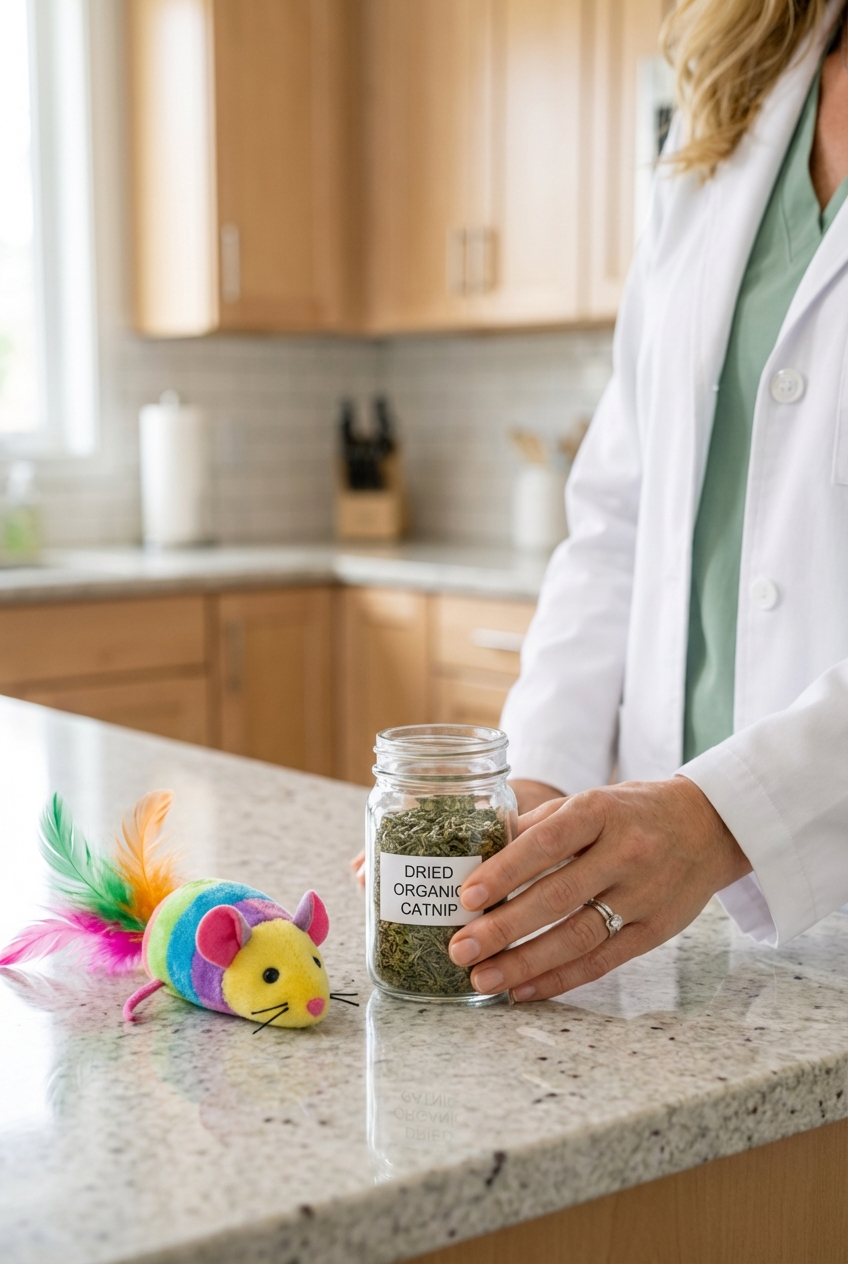
- Store dried catnip in an airtight container
- Keep it in a cool, dark spot
- Consider portioning it into small containers so you are not opening the main stash constantly
- Refresh toys by adding new catnip or rotating toys in and out
Quality matters, too. Catnip that is mostly “dust” tends to be less satisfying than leafy catnip. If your catnip smells faint to you, it is probably faint to your cat too.
The bottom line
Catnip is a natural mint-family plant that triggers a short-lived, typically harmless behavioral response in many cats. The reason some cats go wild while others ignore it comes down mostly to genetics and age. Used in moderation, catnip can be a great tool for play, stress relief, and enrichment, especially for indoor cats who need more stimulation.
If your cat is not impressed, do not take it personally. Try silver vine or another cat-safe alternative, and keep focusing on what your individual cat enjoys most.