Wondering if your cat loves you? A vet assistant explains 12 bond and trust signals—slow blinks, bunts, purring, greetings, sleep habits—plus stress look...
Article
•
Designer Mixes
The Slow Blink

Shari Shidate
Designer Mixes contributor
If you've ever looked at your cat and wondered, “Do you know how much I love you?”, here's some good news. Cats have a simple, beautiful way of showing trust and affection that doesn't require treats, toys, or perfect timing.
It's called the slow blink, and it's often compared to a cat version of a kiss.
What is a slow blink?
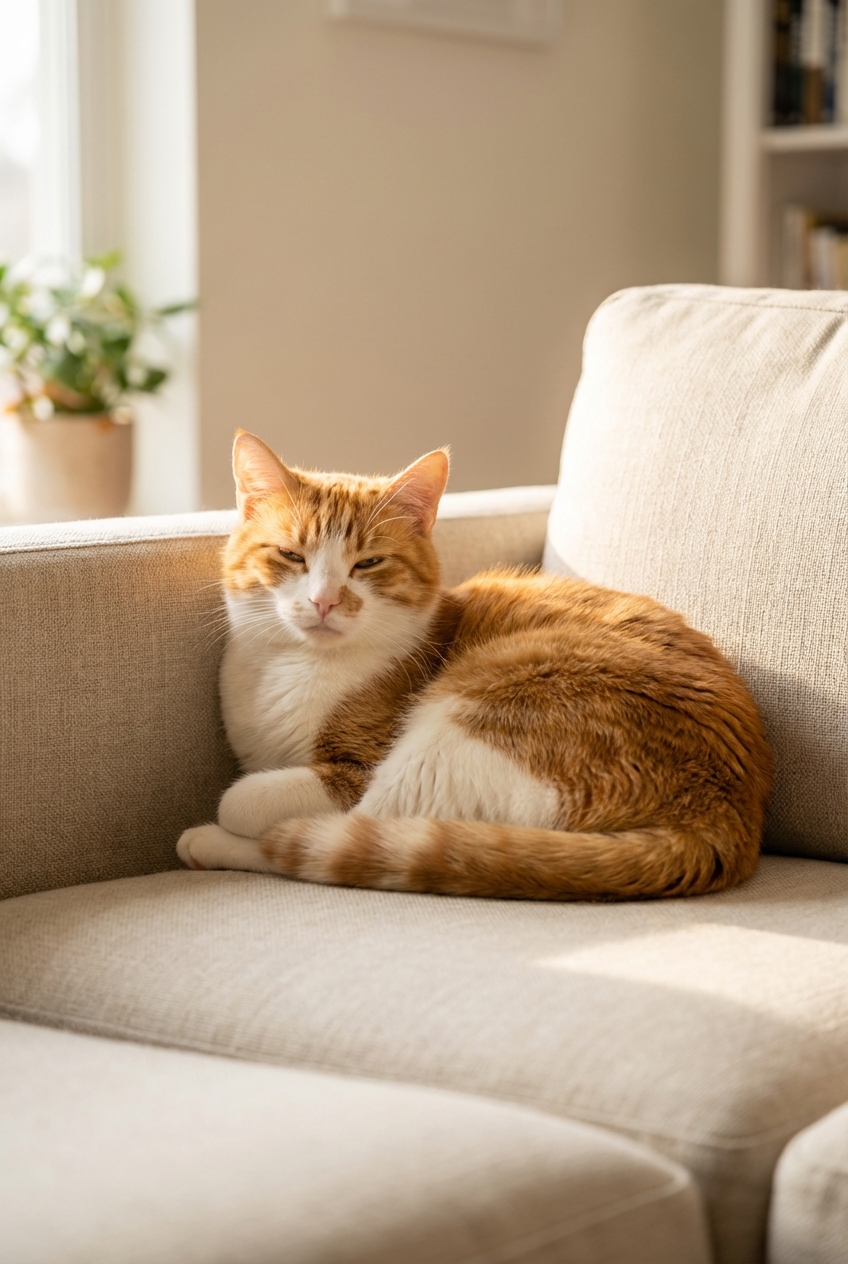
A slow blink is exactly what it sounds like: your cat looks at you with soft eyes, then slowly closes and opens their eyelids. Often, the eyes narrow first, then close fully, then reopen. The whole expression looks calm, sleepy, and gentle.
In cat body language, this kind of soft eye contact usually signals comfort, trust, and safety. A cat who feels threatened is more likely to stare wide-eyed, freeze, or look away abruptly. A cat who gives you a slow blink is essentially saying, “I feel safe enough to relax around you.”
One quick reassurance: if your cat slow blinks and then looks away, that can still be a good sign. In many cat conversations, looking away is part of polite, non-threatening communication.
Why cats do it
Cats are both predators and prey, which means they're naturally careful with their surroundings. In the animal world, sustained staring can be a challenge or threat. So when a cat deliberately relaxes their eyes and closes them, it's a strong hint they're comfortable enough to drop their guard for a moment.
There's also research suggesting the slow blink works as a positive social signal between cats and humans. A widely shared study from the University of Sussex (Humphrey, Proops, and colleagues, 2020) found cats were more likely to approach and interact with a person after the person slow blinked at them, compared with a more neutral expression.
A slow blink isn't just cute. It's a trust signal that can lead to friendlier, more confident interactions.
How to slow blink at your cat
You don't need to force eye contact or “teach” your cat anything. You're simply offering a friendly signal and letting your cat decide what to do with it.
1) Set the scene
- Choose a calm moment when your cat is already relaxed.
- Stay a few feet away, especially if your cat is shy.
- Keep your posture soft and still. Turning your body slightly sideways can be less intimidating.
2) Make gentle eye contact
Look toward your cat's face, but avoid a hard stare. Think “soft focus” instead of intense focus.
3) Do the slow blink
- Let your eyelids lower slowly for about 1 to 2 seconds.
- Pause briefly with your eyes closed or nearly closed.
- Open your eyes slowly, keeping your expression relaxed.
4) Let your cat choose
Your cat might slow blink back, look away peacefully, purr, knead, or even walk over to you. Any of these can be a positive sign. If your cat doesn't respond, that's okay too. You still offered a friendly signal, and some cats are simply more subtle than others.
Signs of affection
Slow blinking is powerful, but it's even more meaningful when it comes with other relaxed body language. Look for combinations like these:
- Soft eyes (squinty, relaxed lids)
- Loose posture (no tense shoulders, no crouching)
- Tail held calmly (upright with a soft tip, or resting comfortably)
- Purring in a relaxed context
- Head bunting or cheek rubbing (scent marking you as “safe”)
- Kneading (often a comfort behavior)
- Choosing to be near you, even without being held
One important note from the veterinary world: purring can also happen when cats are stressed or not feeling well. Context matters. A purring cat who's hiding, not eating, or acting unusually may need a health check.
Common mistakes
Most cats respond best when we keep things calm and respectful. Here are a few habits to avoid:
- Don't stare intensely. A long, unblinking stare can feel threatening to many cats.
- Don't move in fast. If your cat slow blinks, resist the urge to immediately scoop them up.
- Don't chase a response. Some cats are affectionate but subtle. Let your cat decide the pace.
- Don't slow blink during high stress. If your cat is flattened, growling, or has dilated pupils, give space instead.
For shy or anxious cats
In clinic settings, I've seen how much a gentle approach matters. For fearful cats, the slow blink can be one small way to communicate, “I'm not a threat.” It's not a cure-all, but it can support trust-building when paired with good handling and patience.
Try this routine
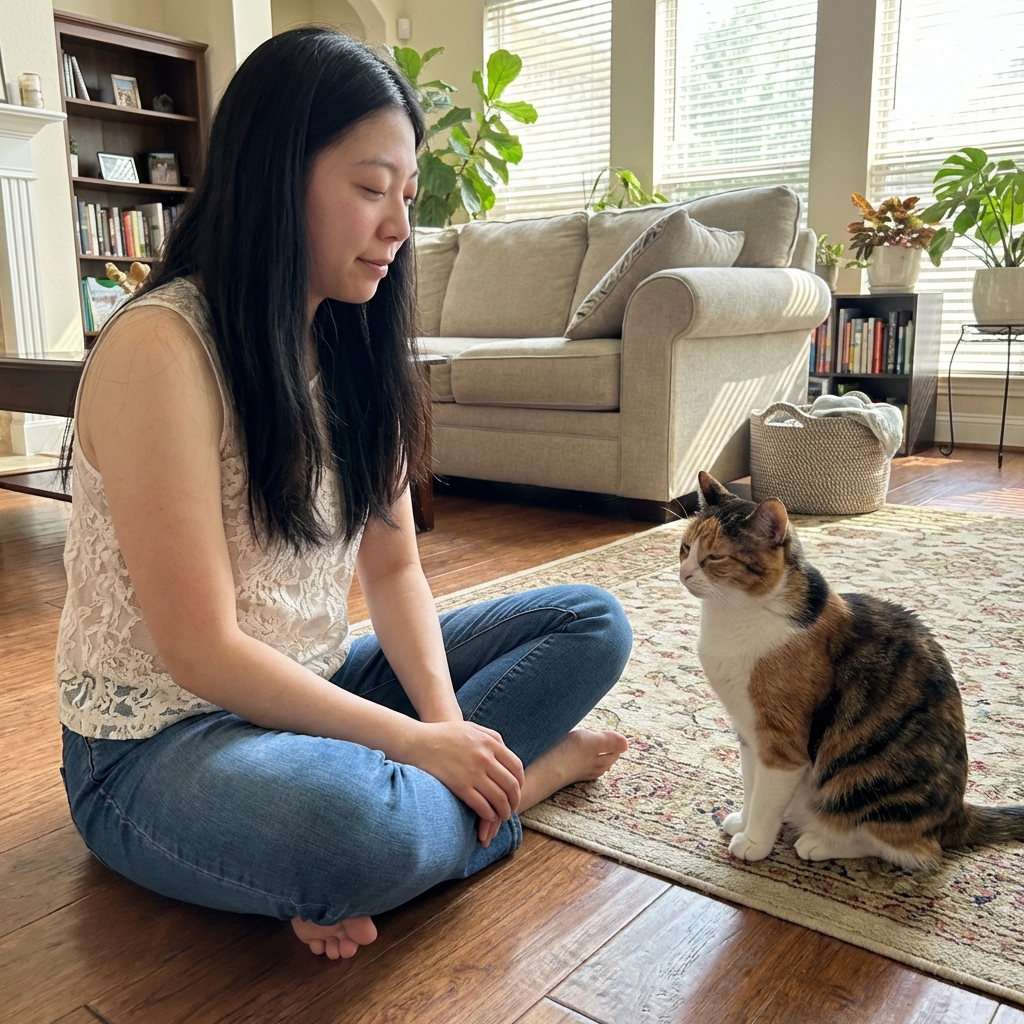
- Sit on the floor at your cat's level.
- Avoid reaching toward them at first.
- Slow blink once or twice, then look slightly away.
- Toss a treat near them (not directly at them), then let them choose whether to approach.
Over time, many cats start to associate your presence with calm and good things, which is exactly what we want.
When not to do it
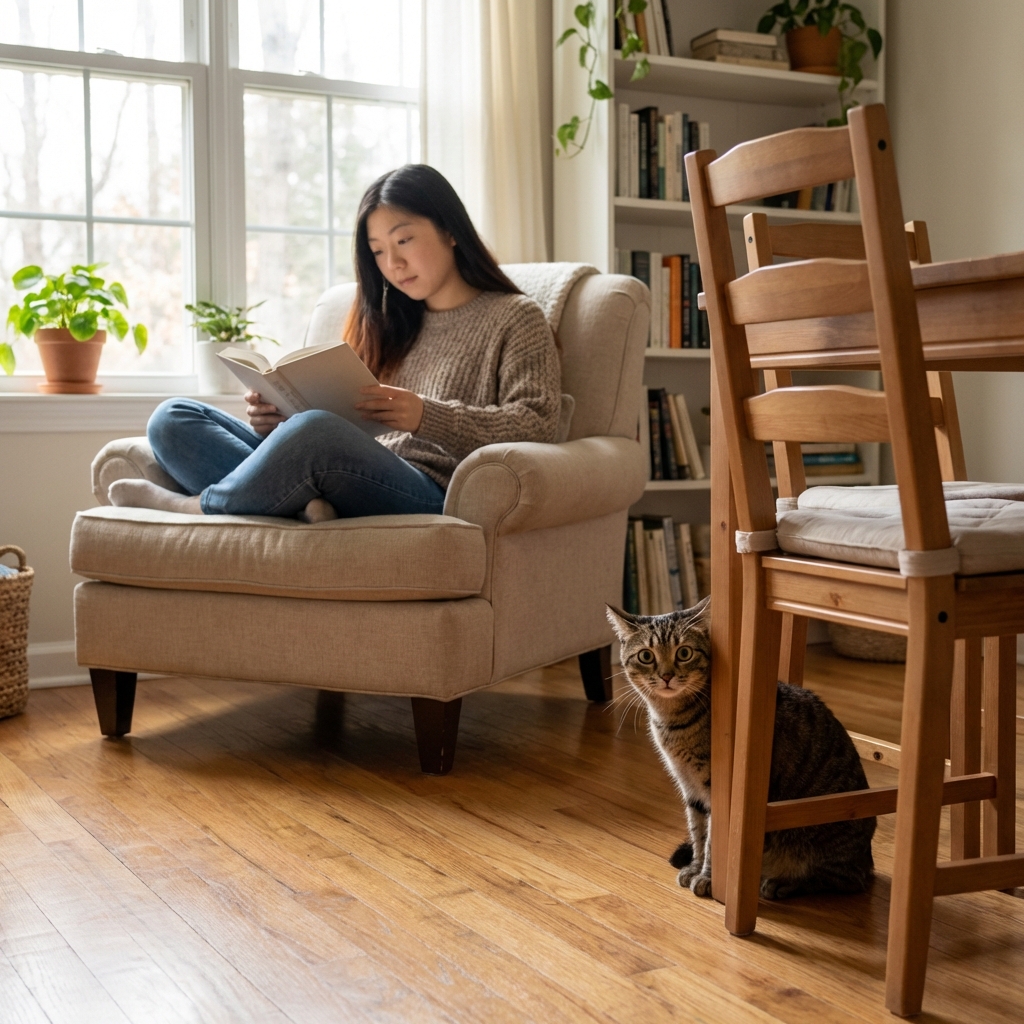
If your cat is showing signs of fear or agitation, your best “I love you” is often space and quiet. Back off and reduce stimulation if you notice:
- Ears pinned back or sideways like airplane wings
- Wide eyes with large pupils
- Tail lashing or thumping
- Growling, hissing, or swatting
- Stiff, low body posture
And if you ever notice sudden behavior changes, hiding more than usual, appetite changes, or litter box issues, it's worth a conversation with your veterinarian. Cats are masters at masking discomfort, and behavior is often the first clue.
Safety note: with unfamiliar or fearful cats, keep your distance. Let them come to you, and don't attempt close contact until you see relaxed body language.
Quick FAQ
What if my cat doesn't slow blink back?
That's normal. Some cats show affection in other ways, and some simply need more time. If your cat stays relaxed or chooses to hang around, your signal likely landed.
Do kittens and senior cats do this?
Yes, they can. As long as your cat is comfortable and their eyes look healthy, slow blinking can show up at any age.
Is direct eye contact always stressful?
Not always, but for many cats, hard staring can feel like pressure. Gentle eye contact plus a slow blink is usually the friendliest version.
Final thought
The bottom line is this: love in cat language isn't loud. It's consistent, respectful, and safe. A slow blink is one small way to say, “I trust you,” and to invite your cat to say it back in their own time.