Cats purr for more than happiness—bonding, attention, stress relief, even pain. Learn how to read body language, spot red flags, and support your cat with ...
Article
•
Designer Mixes
The Mystery of Purring

Shari Shidate
Designer Mixes contributor
Purring is one of those beautiful cat mysteries that feels simple on the surface. Your cat curls up, starts to vibrate, and suddenly the whole room feels calmer. But here is the twist: cats also purr when they are nervous, in pain, or even near the end of life.
As a veterinary assistant, I see this all the time. A cat might purr through a nail trim, during an exam, or while recovering from surgery. So if you have ever wondered, “Is my cat happy or hurting?”, you are asking exactly the right question.
What purring is
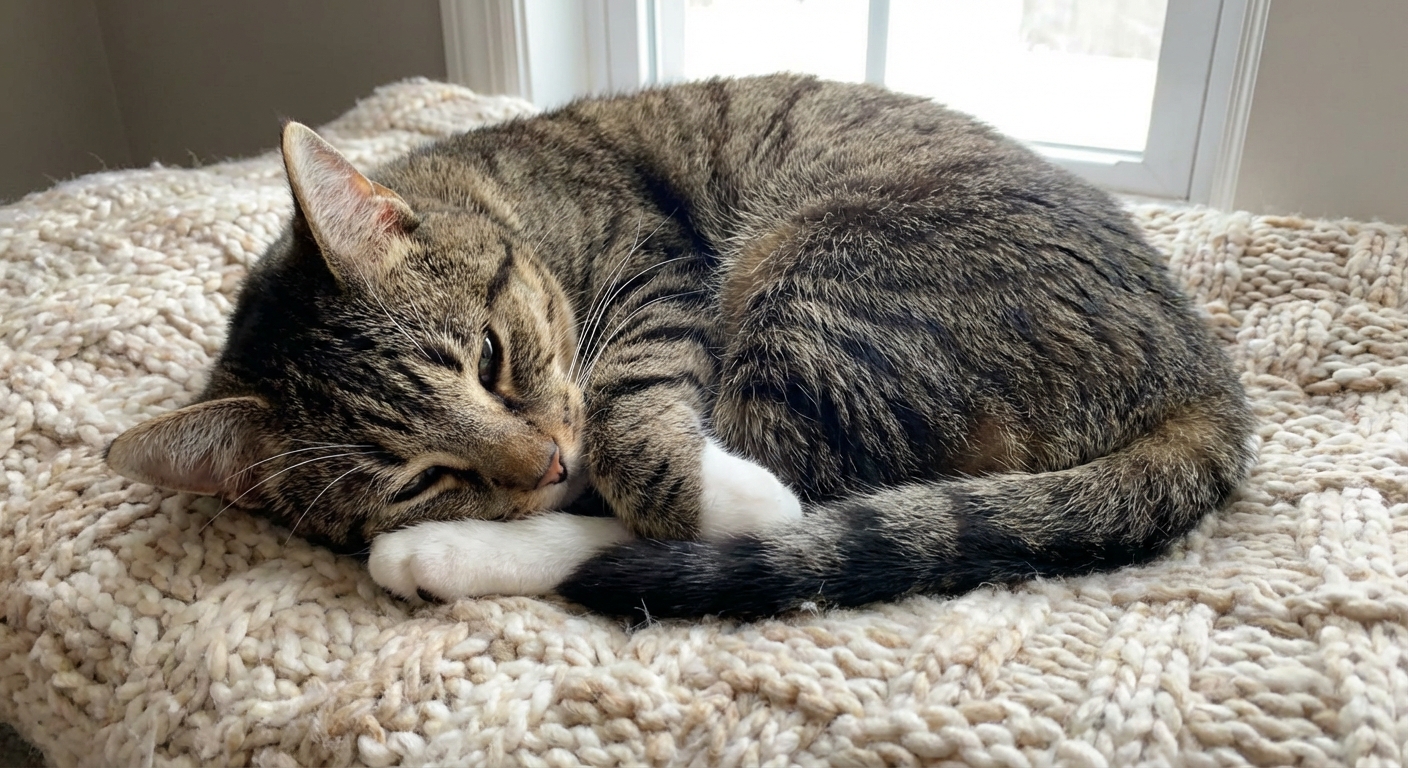
Purring is a rhythmic vibration that usually happens during both inhalation and exhalation. The leading theory is that rapid muscle movements in the larynx (voice box), guided by signals from the brain, cause air to pulse as the cat breathes. The details are still being studied, but the result is that familiar low, steady rumble many of us can feel through a cat’s chest.
Domestic cats purr frequently and in many contexts. Some wild felines purr too, but it is not universal. For example, cheetahs and some other non-roaring cats can purr, while the classic “roaring” big cats in the Panthera group (like lions and tigers) are not known for the same continuous purr.
Happy purrs
In many homes, purring is a sign of contentment. The classic “happy purr” often shows up alongside other relaxed body language. When the whole scene looks calm, a purr is usually good news.
Common happy-purr moments
- Snuggling next to you on the couch or bed
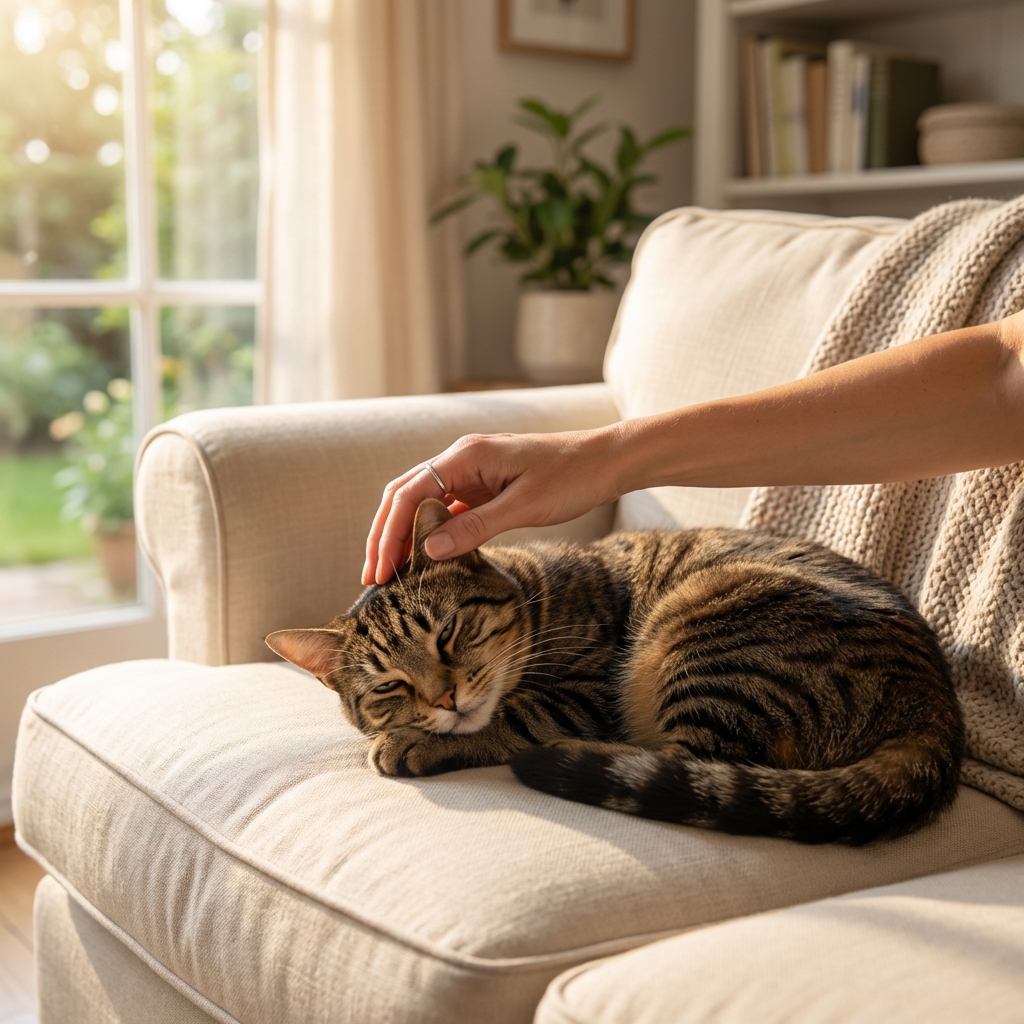
- Being petted in a favorite spot (often cheeks, chin, and base of ears)
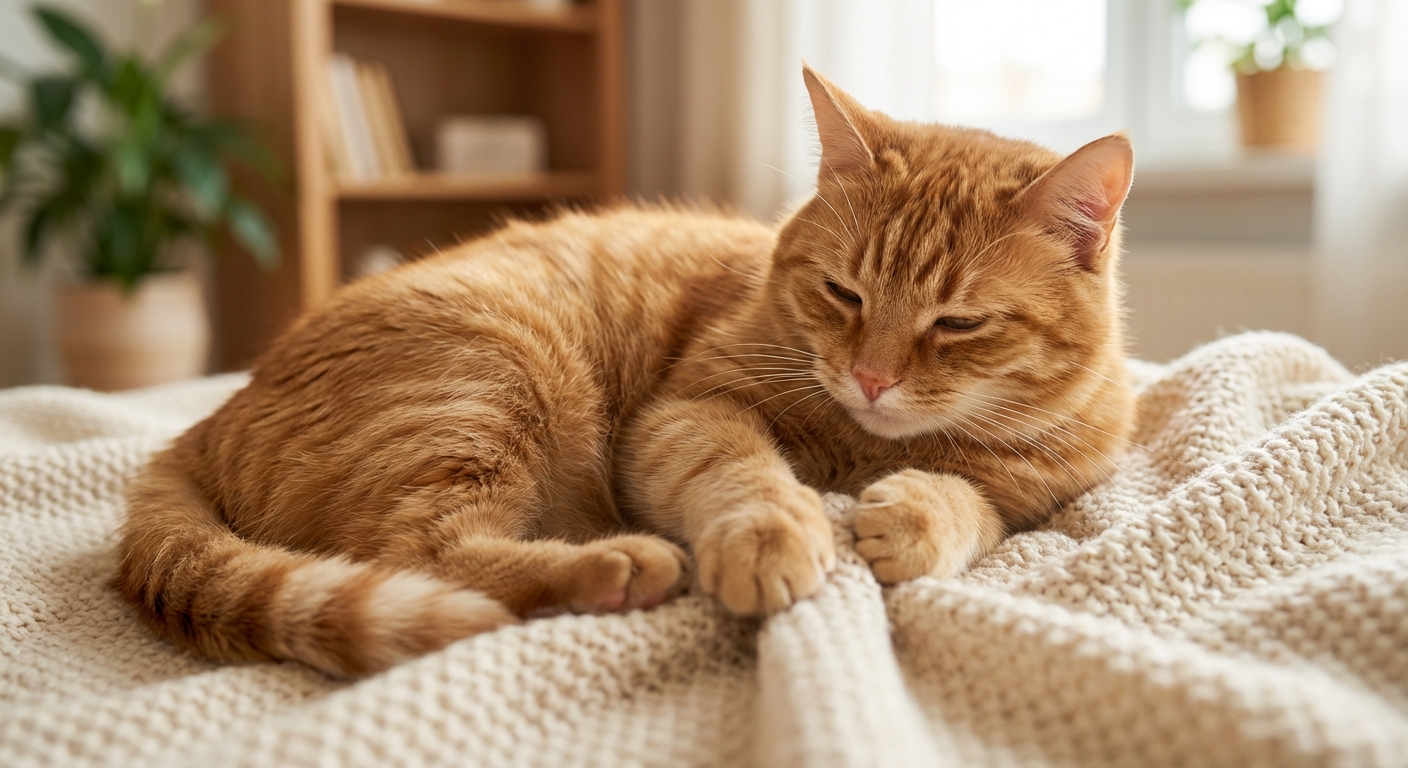
- Kneading with front paws, sometimes called “making biscuits”
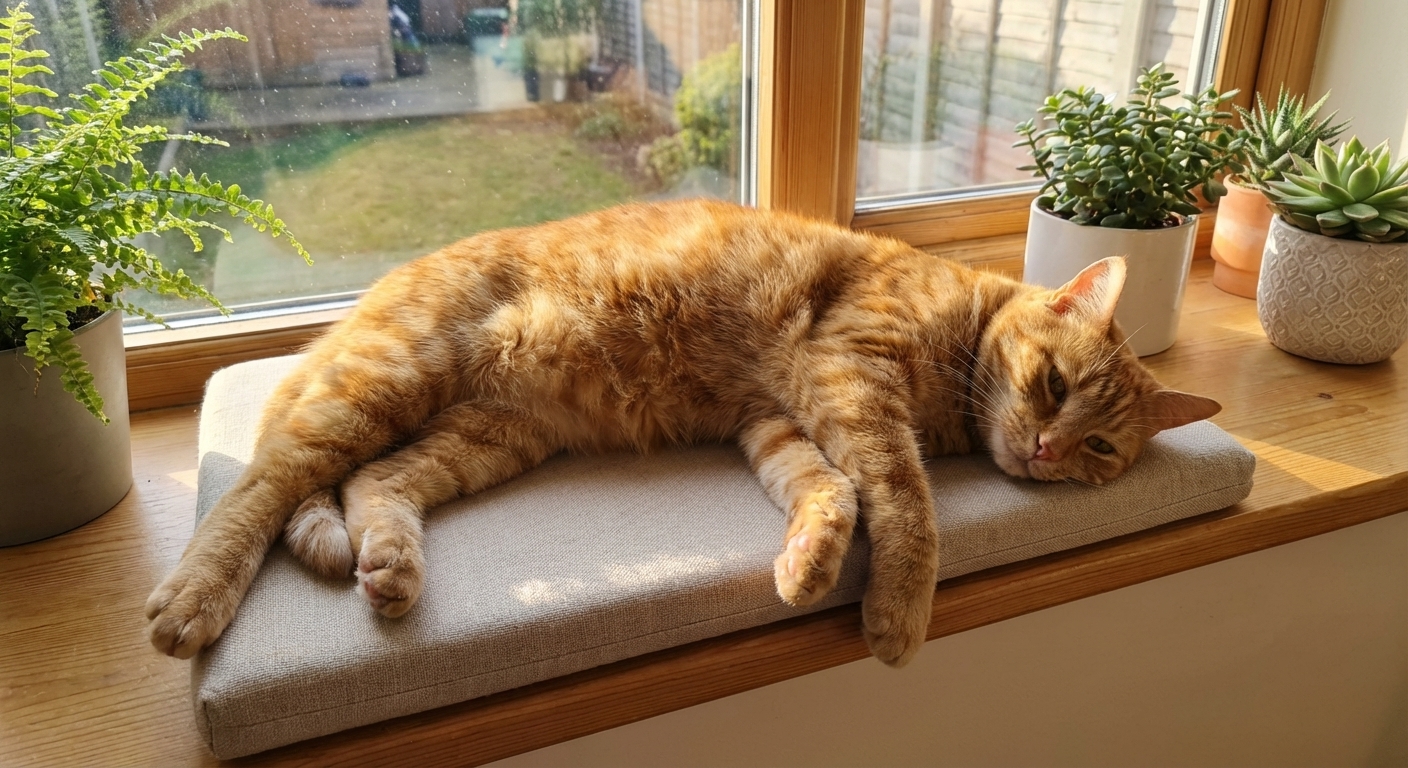
- Settling into a warm sunny window
- Greeting you at the door
How to confirm comfort
Look for loose muscles, a soft face, slow blinking , a neutral or upright tail, and ears that are forward or gently to the side. Many content cats will also stretch out or tuck their paws in comfortably.
Stress and pain purrs
This is the part that surprises most people. Purring is not only a “happy” behavior. It can also be a coping tool. Cats often hide discomfort, and purring may show up during stressful events, illness, and pain as a way to self-soothe.
A helpful way to think about it is this: sometimes a purr means “I feel safe,” and sometimes it means “I am trying to feel safe.”
When a purr can mean discomfort
- At the veterinary clinic, especially in the waiting room or on the exam table
- After an injury, a fall, or a painful jump
- During labor and after giving birth
- During illness, including nausea or fever
- Near other animals or people that make them uneasy
One reason purring can be confusing is that it can blur the obvious signs of distress. A purring cat can still be uncomfortable, so it is important to check the whole picture, not just the sound.
Other reasons cats purr
Not every purr fits neatly into “happy” or “hurting.” Many cats also use purring as a social tool.
- Attention or food: some cats use a “solicitation purr” when they want breakfast, play, or your focus.
- Reassurance: a cat may purr when approaching a favorite person or animal as a friendly signal.
And one more important note: some cats purr very quietly or rarely. A lack of purring does not automatically mean a cat is unhappy.
Does purring help healing?
Researchers have explored a fascinating idea: the frequency range of cat purring overlaps with vibrations that, in other settings, are associated with tissue support and bone remodeling. This has led to the hypothesis that purring could provide a physical benefit, not just emotional comfort.
Evidence here is limited and mostly indirect, and we do not have clinical proof that purring “heals” a cat the way medicine would. What we can say with more confidence is that purring appears to be part of a built-in calming system. It often shows up during recovery periods and stressful moments, which fits with the idea that it helps cats regulate their stress response.
Purring is best understood as communication plus self-comfort. It can mean “I feel safe,” but it can also mean “I am trying to feel safe.”
Tell the difference
If you want a practical rule that helps at home, use this: purring is a clue, not a diagnosis. Body language and context do the heavy lifting.
Context clues in real life
- Likely content: purring while kneading on a blanket, stretched out, eyes half closed, and leaning into your hand.
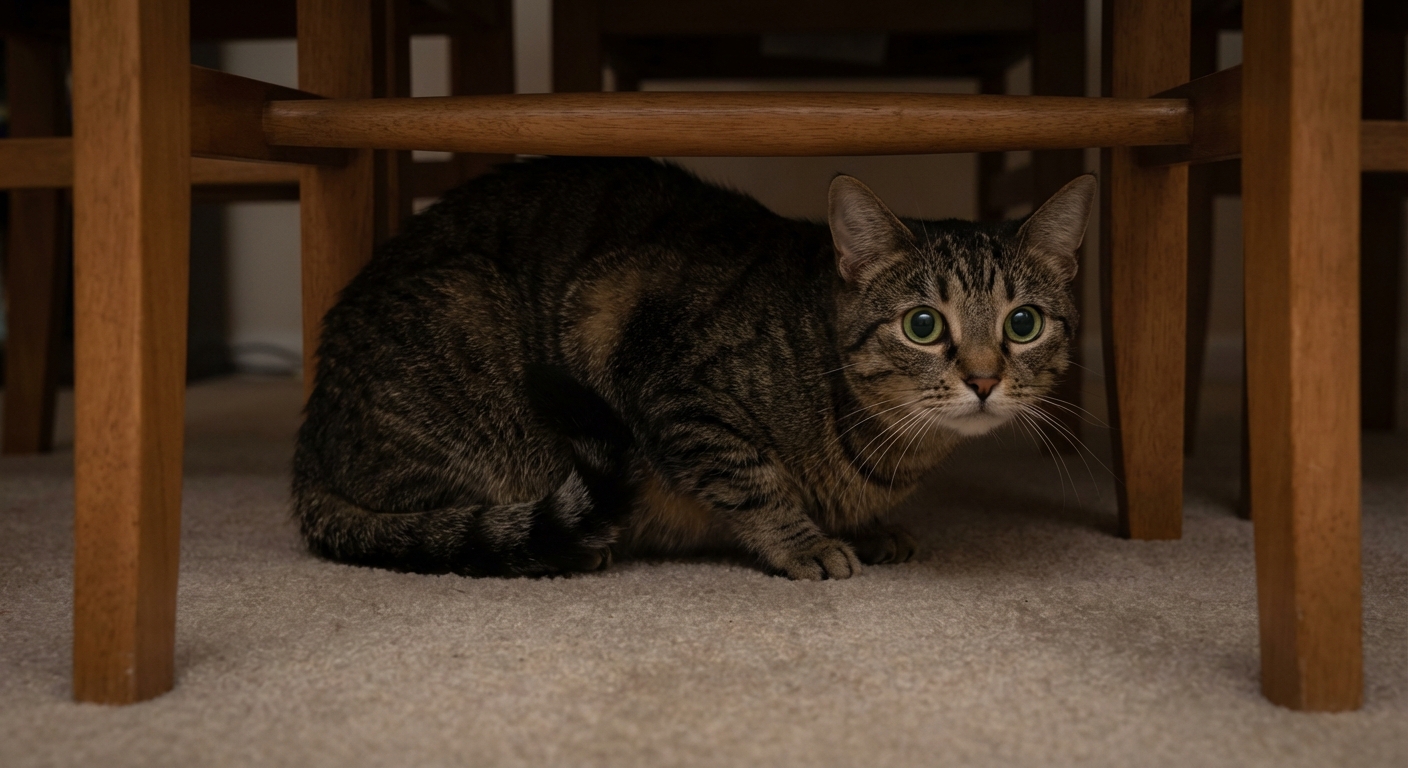
- Be cautious: purring while crouched tight, hiding under furniture, or refusing touch, even if the purr sounds steady.
- Watch closely: purring while eating normally and moving comfortably is usually reassuring. Purring while not eating and acting withdrawn is not.
Signs your cat is likely content
- Relaxed posture, lying on side or loafing comfortably
- Slow blinking, soft eyes, normal pupils
- Normal appetite and water intake
- Normal litter box habits
- Enjoys touch and does not guard any body part
Signs you should be cautious
- Hiding more than usual, or acting withdrawn
- Changes in eating, drinking, or weight
- Vomiting, diarrhea, constipation, or straining
- Limping, stiffness, or reluctance to jump
- Growling, swatting, or flinching when touched
- Fast breathing, open-mouth breathing, or unusual lethargy
If your cat is purring while showing any of the caution signs above, it is time to slow down and look closer.
What to do next
You do not have to panic, but you do want to be proactive. Cats can go downhill quickly when they stop eating or when pain is missed.
Steps you can take today
- Check the basics: eating, drinking, litter box output, mobility, and grooming.
- Do a gentle body scan: look for sensitivity, swelling, heat, or flinching. Do not force it if your cat resists.
- Note the context: Did something change recently like a new pet, a move, new food, or construction noise?
- Record a short video: capture breathing, posture, and gait. This helps your veterinarian a lot.
- Call your veterinarian: especially if there is reduced appetite, breathing changes, straining, or hiding.
When it is urgent
Seek immediate veterinary care if you notice open-mouth breathing, blue or pale gums, collapse, repeated vomiting, extreme lethargy, or straining in the litter box with little or no urine. Those are not “wait and see” situations, even if your cat is purring.
Quick note: This article is educational and cannot diagnose your cat. If something feels off, trust that instinct and contact your veterinary clinic.
Encourage happy purring
When cats feel safe, understood, and comfortable, purring becomes the soundtrack of a peaceful home.
- Create predictable routines: consistent feeding times and quiet rest areas lower stress.
- Offer cozy warmth: heated cat beds or warm blankets are purr magnets.
- Support joint health: keep a healthy weight and use pet stairs for cats who are getting older.
- Enrichment matters: short play sessions, window perches, and puzzle feeders reduce anxiety.
- Gentle handling: let your cat opt in to touch, and reward calm behavior.
The bottom line is this: purring is a powerful signal, but it is not one-size-fits-all. When you pair the purr with body language and daily habits, you will understand your cat so much better.