Cat urine odor comes back when uric acid crystals remain. Learn how to find hidden spots, blot correctly, use enzyme cleaners, treat each surface, and preven...
Article
•
Designer Mixes
The Miracle Cleaner for Cat Pee Smell

Shari Shidate
Designer Mixes contributor
If you have ever walked into a room and immediately thought, "Oh no, the cat peed here", you are not being dramatic. Cat urine odor is uniquely stubborn because uric acid can form crystals that cling to fibers and surfaces and can “wake back up” with moisture. The good news is that you can get rid of it, even from carpet, bedding, and hard floors, as long as you use the right chemistry and the right steps.
As a veterinary assistant, I have seen the whole cycle: an accident happens, a well-meaning person cleans with the wrong product, the smell lingers, and the cat returns to the same spot. Let’s break that cycle with an evidence-based approach that works.
Why the smell lingers
Cat urine is not like spilled coffee or muddy paw prints. It is a mix of water, urea, uric acid, and other compounds. When urine sits, bacteria break urea down and the sharp ammonia smell becomes more noticeable. Meanwhile, uric acid can form crystals that bind tightly to surfaces and fibers.
Here is the key: many household cleaners remove the surface odor but do not break down uric acid crystals. When humidity rises or the spot gets damp again, the smell can come right back.
The biggest mistake
Using ammonia-based cleaners. Cat urine already leads to an ammonia smell as it ages. If your cleaner smells like ammonia, it can make the area smell like a bigger bathroom to your cat, which increases the chance of repeat marking.
The most reliable cleaner: enzyme formulas
If you want one product category that consistently performs best, it is an enzymatic pet urine cleaner. Enzymes (and sometimes beneficial bacteria) help break down the organic compounds in urine, including the ones tied to lingering odor.
When used correctly, enzymatic cleaners can do two important things:
- Remove odor at the source rather than covering it up
- Reduce repeat accidents by eliminating the scent trail cats follow
Important: Results vary by product and conditions, so follow the label closely. Enzymes are also picky. Heat, bleach, and many disinfectants can inactivate them. That is why the order of operations matters.
Patch test: Before you saturate a large area, test the cleaner on a hidden spot first, especially on delicate fabrics, wool rugs, leather, and finished wood.
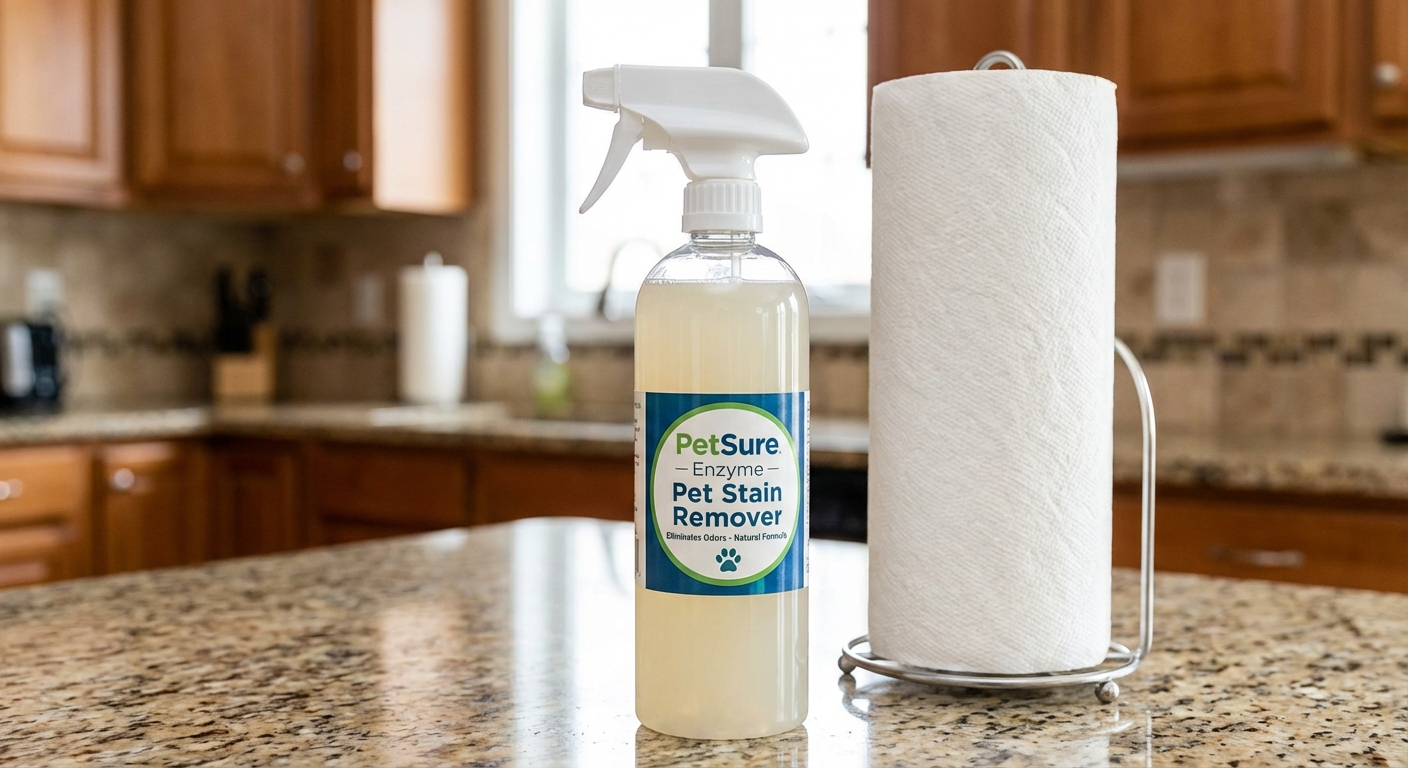
Step-by-step: remove cat pee odor
Step 1: Find all the spots
Before you clean, locate every area. Cats are masters at choosing corners and edges.
- Check baseboards, rug edges, laundry piles, and near doors.
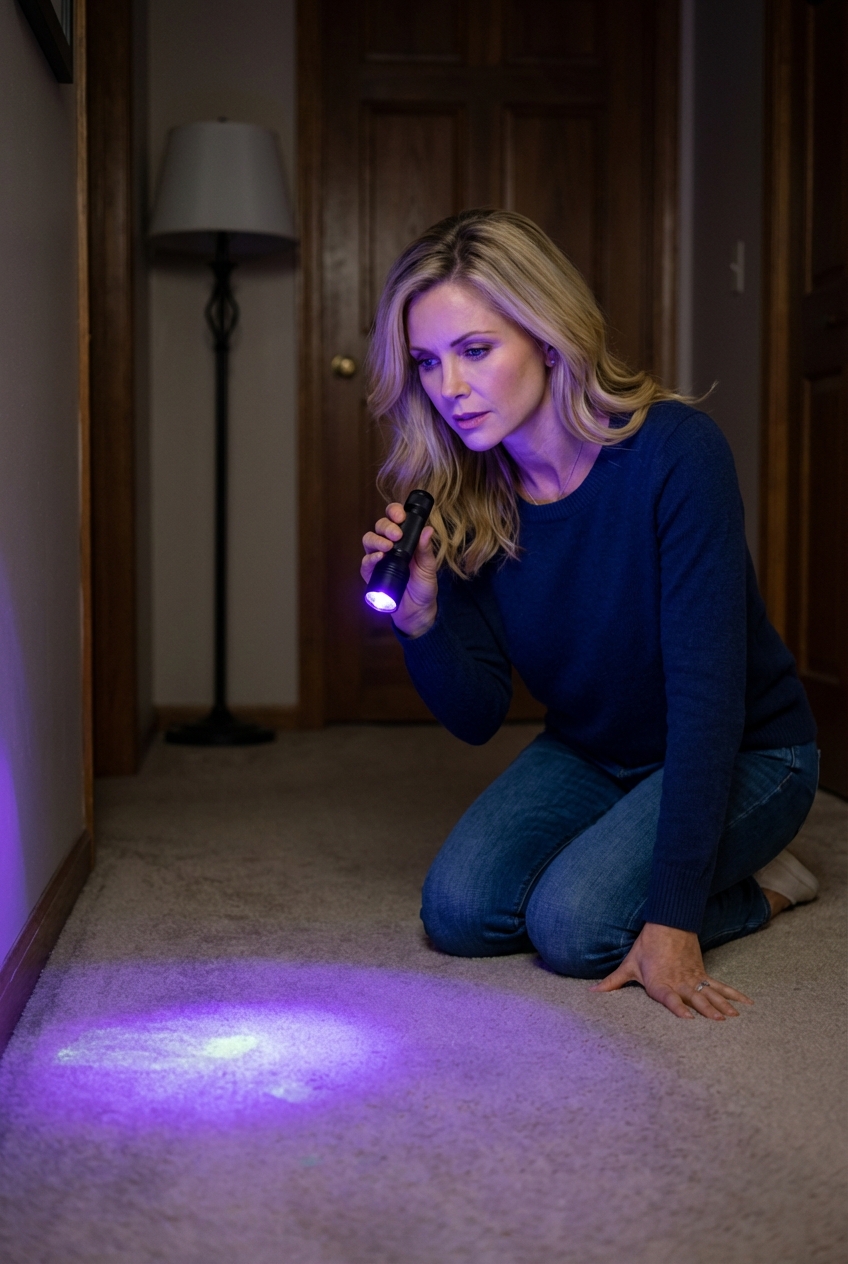
- If possible, use a UV flashlight in a dark room to reveal some dried urine. Quick caveat: UV is helpful but not foolproof. Some stains fluoresce that are not urine, and some urine does not show clearly. Confirm with location clues and your nose.
Step 2: Blot, do not scrub
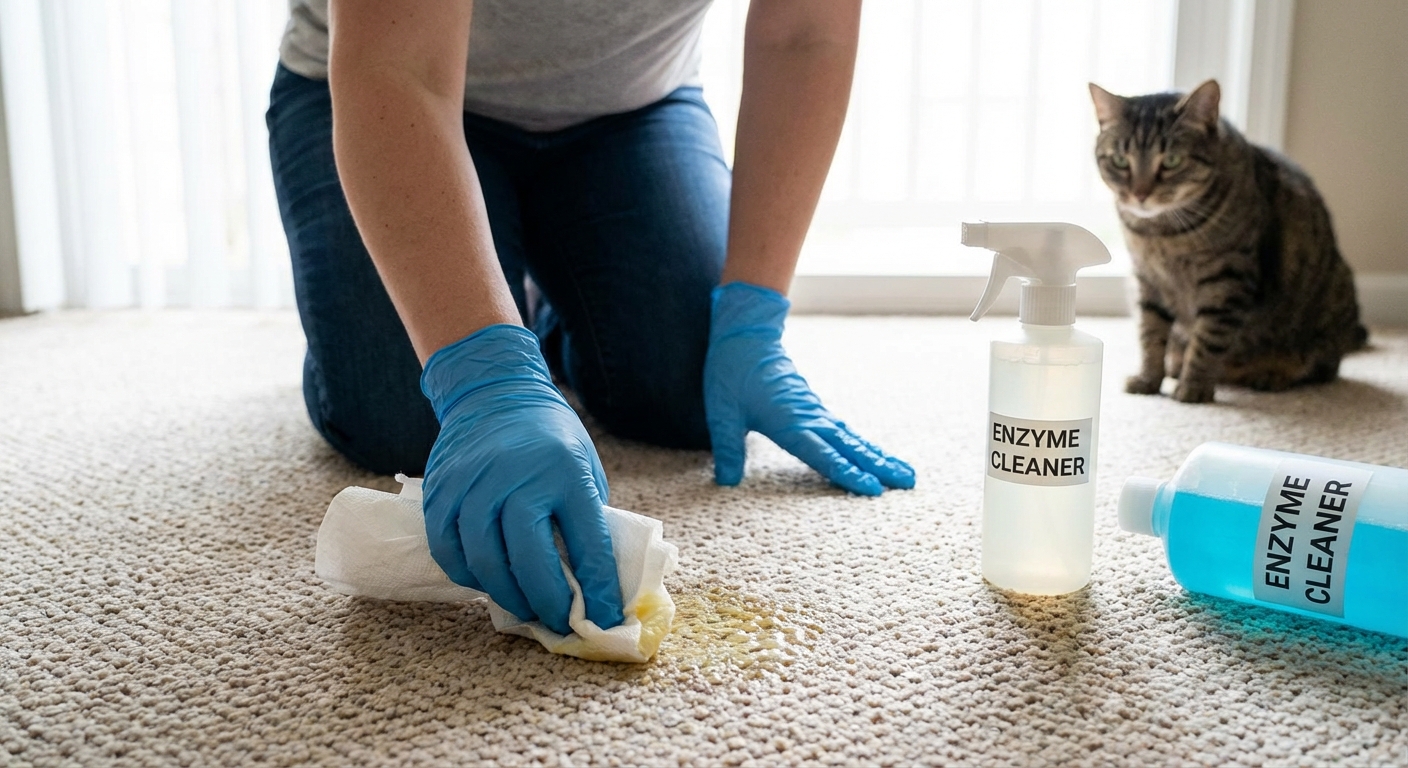
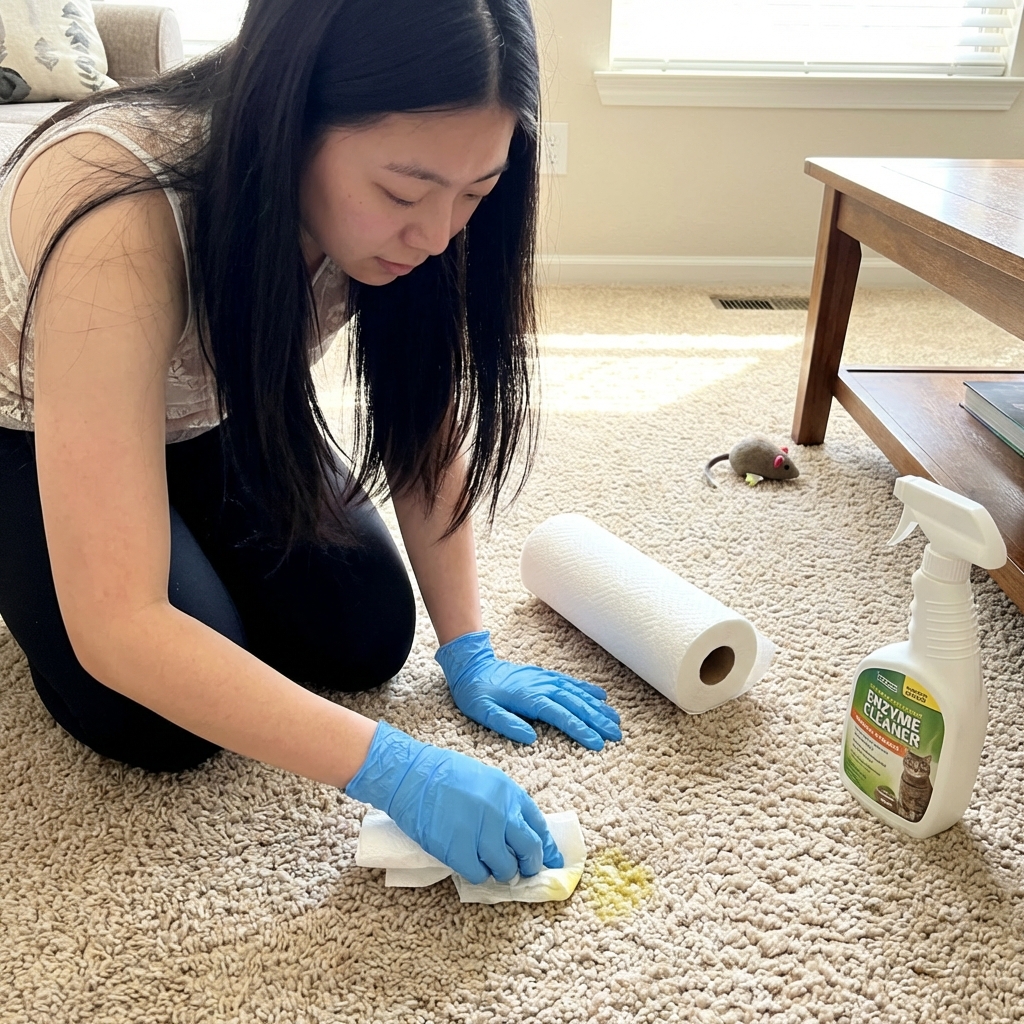
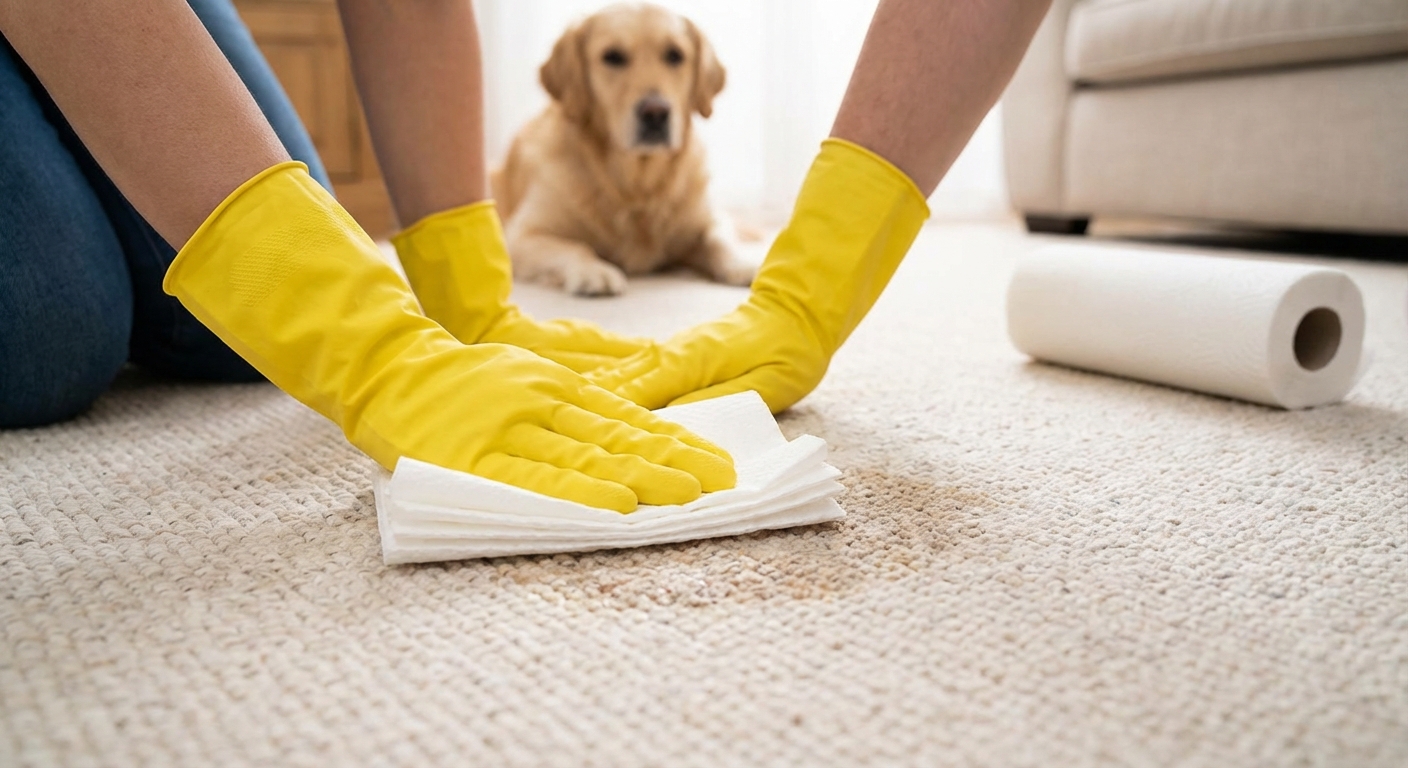
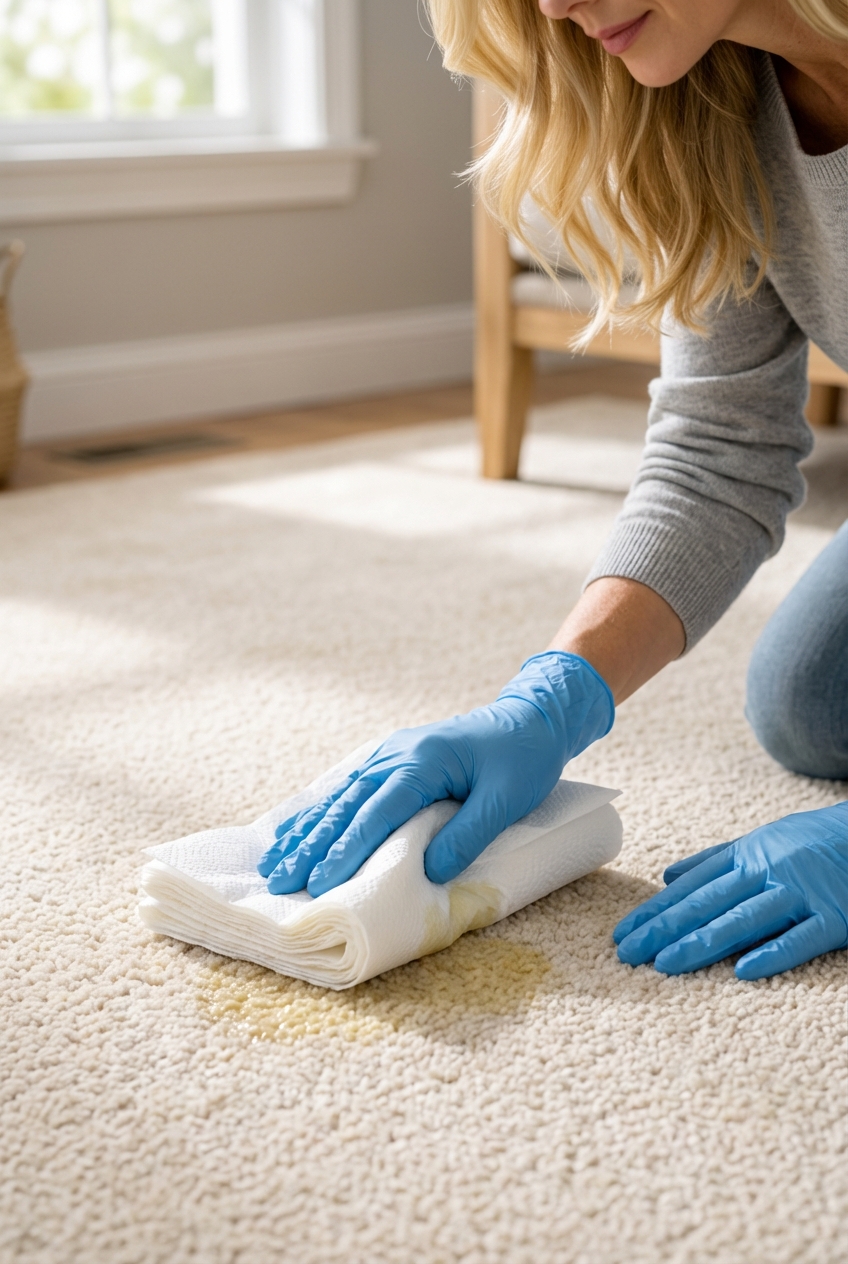
If it is fresh, blot with paper towels or a clean white towel. Stand on the towels to apply pressure and pull urine up.
- Do not scrub. Scrubbing pushes urine deeper into carpet padding and upholstery.
- For old stains, lightly dampen with cool water first, then blot again to lift residue.
Step 3: Saturate with enzyme cleaner
This is where most people under-apply product. Urine spreads and wicks. You need to apply enough enzymatic cleaner to reach as deep as the urine went.
- On carpet and upholstery, pour or spray until the area is thoroughly saturated.
- Follow label directions for contact time. Many require 10 to 15 minutes minimum, and some recommend longer.
Step 4: Keep it moist
Enzymes work best when they stay moist.
- Cover the area with plastic wrap or a clean plastic bag (weighted at the edges) for a few hours or overnight.
- Safety note: Keep pets and children away. Avoid placing plastic where someone could slip or where a pet could chew it.
Step 5: Air dry fully
Let the spot dry naturally. Fans help. Avoid steam cleaners or high heat until the odor is gone, since heat can set stains and make odor harder to remove.
- Once dry, smell-test.
- If you still detect odor, repeat. Old stains sometimes need 2 to 3 rounds.
How to treat surfaces
Carpet and rugs
- Blot thoroughly.
- Saturate with enzyme cleaner all the way into the pad if needed.
- If odor persists, the padding or subfloor may be holding urine and may require deeper treatment or replacement.
Hardwood floors
Hardwood is tricky because urine can seep between boards and into the subfloor.
- Wipe up immediately and avoid soaking the wood with water.
- Use an enzyme cleaner that is labeled safe for sealed hardwood, and test in an inconspicuous area first.
- If the floor is unsealed or urine has penetrated, you may need multiple treatments and may need to refinish, seal, or address the subfloor.
Tile and grout
Tile may be easy, but grout is porous.
- Apply enzyme cleaner generously over grout lines.
- Let sit, then gently brush with a soft brush and wipe.
Mattresses and upholstery
- Blot, then saturate with enzyme cleaner.
- Cover to keep moist, then air dry with a fan.
- For cushions, treat both sides if urine soaked through.
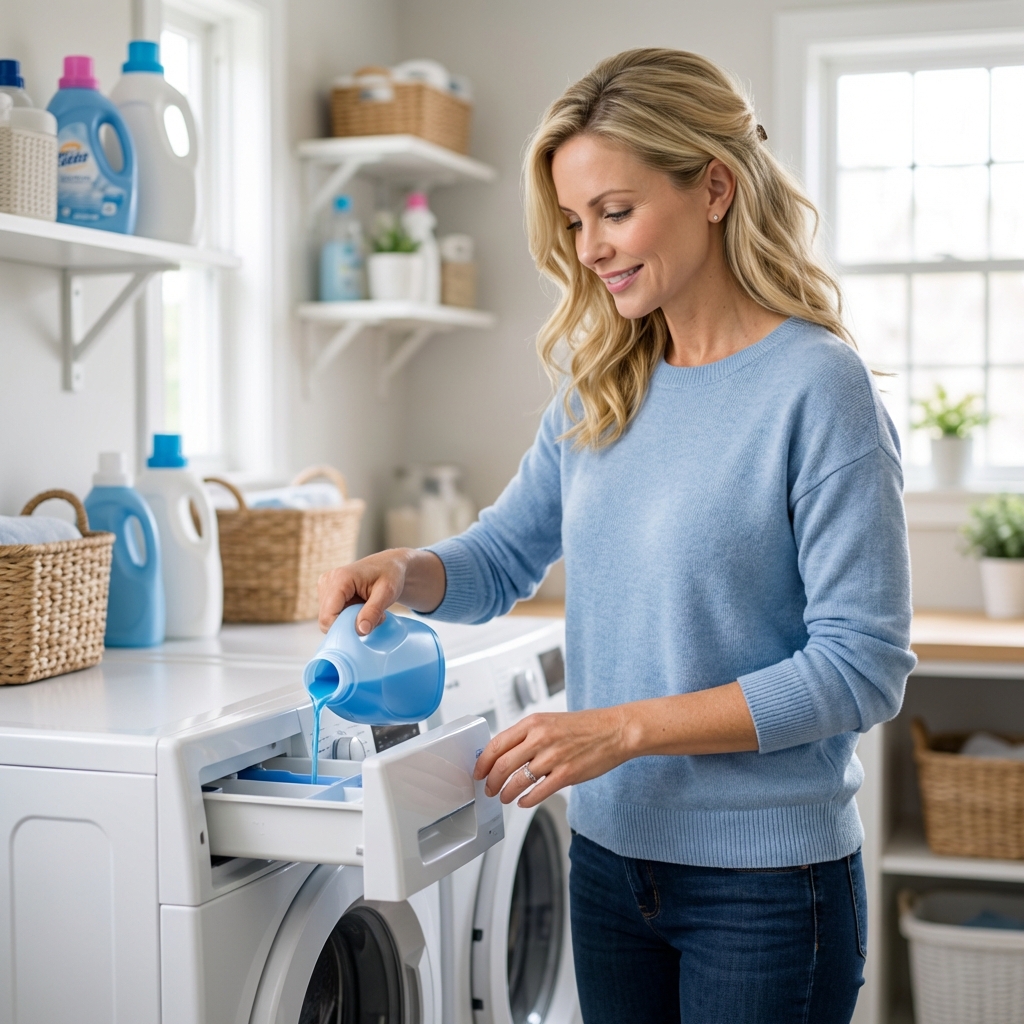
Clothing and bedding
Skip heat until the smell is gone. Heat can set odor. Some detergents and fabric softeners can also trap odor, so keep it simple until you pass the smell test.
- Rinse with cool water.
- Pre-soak in an enzymatic laundry additive or enzyme cleaner (only if the label allows fabric use).
- Wash with detergent in cool or warm water.
- Air dry and smell-test, then machine dry only if odor-free.
Urine vs spraying
Not all “pee smells” are the same situation.
- Urination is usually a larger puddle on horizontal surfaces like floors, beds, and laundry.
- Spraying (marking) is often smaller amounts on vertical surfaces like walls, furniture legs, curtains, and doors.
Cleaning is similar either way, but spraying often means you should also address behavior triggers (stress, new pets, outdoor cats at windows) and talk to your vet about prevention.
Home remedies
Baking soda
Baking soda can help absorb moisture and mild odors, but it does not reliably break down uric acid. It is best as a finishing step after enzyme treatment: sprinkle lightly when dry, let sit, then vacuum.
Vinegar
Vinegar can reduce some odor and may help with fresh accidents, but it is not as effective as enzymatic cleaners for fully removing the compounds that cause repeat marking. Also, vinegar is acidic and can reduce enzyme performance for some products. In general, do not mix vinegar and enzymes. If you used vinegar first, rinse with water (if the surface allows), blot, and let the area dry before applying enzymes. When in doubt, check the product label.
Bleach and harsh disinfectants
Avoid on urine spots, especially on fabric and carpet. Bleach can create dangerous fumes when mixed with ammonia residues and can permanently damage surfaces. It also does not solve the uric acid crystal problem in many cases.
If the smell comes back
When odor returns, it usually means one of three things:
- The urine went deeper than the cleaner reached (pad, subfloor, cushion core).
- The spot was not kept wet long enough for enzymes to work.
- The cat is still peeing there due to a medical or behavioral issue.
Check health first
If your cat is urinating outside the box, it is worth a vet visit. Common causes include:
- Urinary tract infection or inflammation
- Bladder stones or crystals
- Pain, arthritis, or mobility changes
- Stress-related urinary issues
If your cat is straining, crying in the litter box, producing small drops, or not able to urinate, treat it as urgent and contact a veterinarian right away.
Make the litter box easier
- Use the rule of thumb: one box per cat, plus one extra.
- Scoop daily and wash boxes regularly with mild soap and water.
- Place boxes in quiet, accessible areas, not next to loud appliances.
- Try a different litter texture if your cat seems hesitant.
When to escalate
Sometimes you can do everything right and still lose the battle because the contamination is deep or repeated. Consider escalation if you have tried multiple enzyme rounds and the odor returns with humidity.
- Carpet: Replace the pad, or treat the subfloor before reinstalling.
- Subfloor: After cleaning and drying, an odor-blocking sealer or primer made for pet odors can help lock in what you cannot fully remove.
- Heavily soaked items: Some cushions, mattresses, and inexpensive rugs are more cost-effective to replace than to salvage.
- Professional help: A reputable professional cleaner can extract deeper contamination, but avoid services that rely mainly on fragrance or high heat.
Quick checklist
- Blot first, never scrub
- Use an enzymatic cleaner and fully saturate the area
- Keep the area moist long enough for enzymes to work
- Air dry and repeat if needed
- Avoid ammonia and avoid heat until odor is gone
- If accidents continue, look for a medical or litter box cause
You do not have to live with that lingering odor. With the right enzyme cleaner, correct application, and a little patience, you can get cat pee smell out of most household surfaces and help your home feel fresh again.