Wondering if your cat is pregnant? Learn early signs, how long pregnancy lasts, how vets confirm it, a week-by-week timeline, nutrition and nesting tips, and...
Article
•
Designer Mixes
The Feline Pregnancy Timeline: How Long Are Cats Pregnant?

Shari Shidate
Designer Mixes contributor
If you have a pregnant cat at home, you are probably asking one big question: how long are cats pregnant? Most cats (queens) carry kittens for about 63 to 65 days, which is right around 9 weeks. Many veterinary sources cite a typical window of about 63 to 67 days. A wider normal range can be 58 to 72 days depending on the individual cat, the size of the litter, and how accurately we know when ovulation and breeding happened.
In this guide, I will walk you through a week-by-week feline pregnancy timeline, what changes you can expect, and when it is time to call your vet.
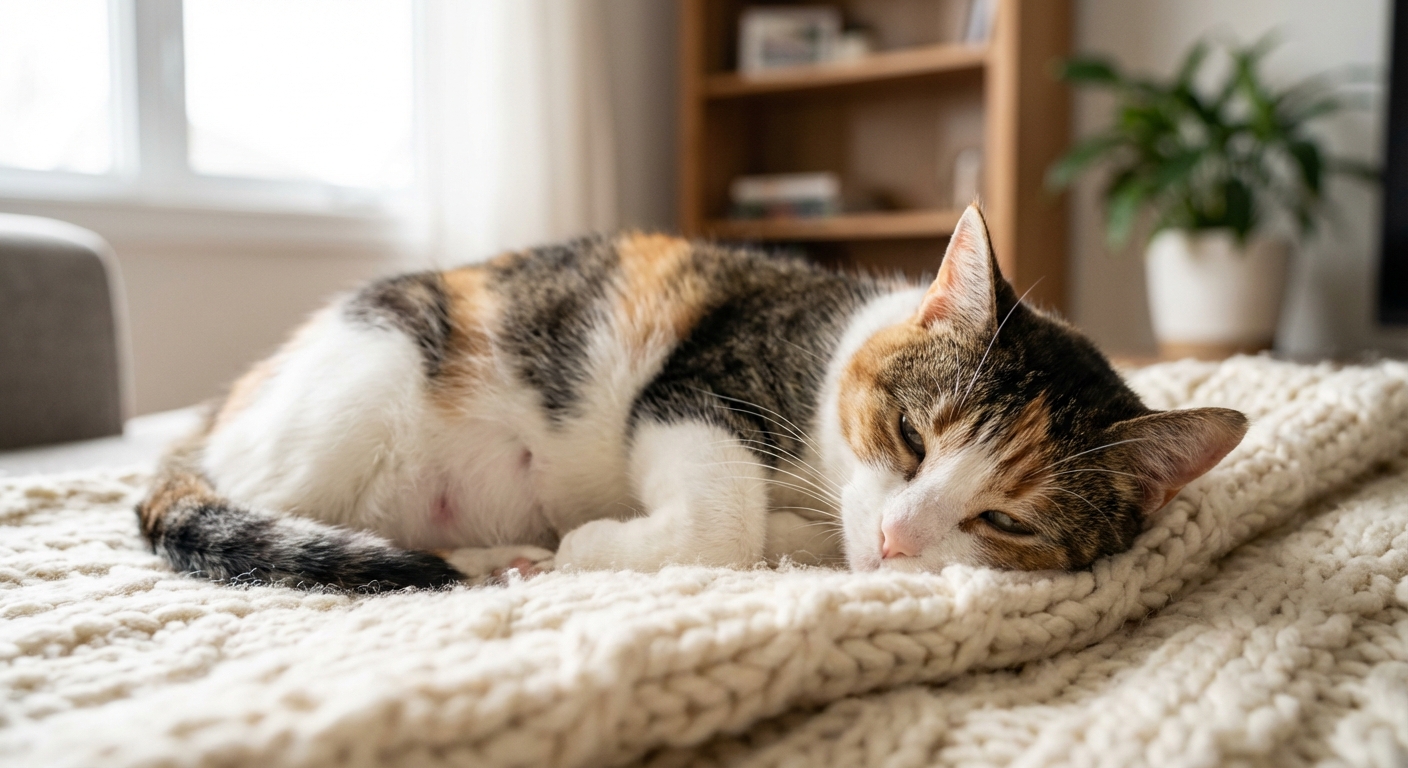
Quick answer: gestation length
- Average: 63 to 65 days (about 9 weeks)
- Typical range cited by many vets: about 63 to 67 days
- Normal range: 58 to 72 days
- Why timing can be confusing: cats can mate multiple times over several days, and ovulation is triggered by mating
If you do not know the exact mating date, your vet can estimate timing based on exam findings and imaging. Keep in mind that a “mating date” is not always the same as the day she actually ovulated.
Week-by-week timeline
Cat pregnancy moves fast. Here is what many owners notice as the weeks go by. Remember, every queen is a little different, and first-time moms may show fewer obvious signs at first.
Weeks 1 to 2: early and subtle
- You may notice no visible changes.
- Some cats become more affectionate or a bit sleepier.
- Appetite can be normal or slightly increased.
If you suspect pregnancy, this is a great time to schedule a vet visit and discuss safe parasite prevention, nutrition, and whether she should be tested for common infections.
Week 3: nipple changes
- Many queens develop “pinking up ,” where nipples become more prominent and pink.
- A few cats experience mild nausea or decreased appetite for a couple of days.

Week 4: easier to confirm
- Many clinics can confirm pregnancy with ultrasound by about 3 to 4 weeks, and in some cases as early as 2 to 3 weeks depending on equipment and experience.
- Appetite often increases.
- Some weight gain may start, though it is usually not dramatic yet.
Important: Avoid squeezing or pressing the belly at home. It can be uncomfortable and is not a safe way to check.
Week 5: belly starts to round
- Abdomen may look slightly fuller, especially from above.
- Your cat may begin seeking cozy resting spots.
This is also when good nutrition really matters. Most vets recommend transitioning to a growth or kitten diet during pregnancy and nursing because it is more calorie-dense and supports fetal development.
Week 6: noticeable weight gain
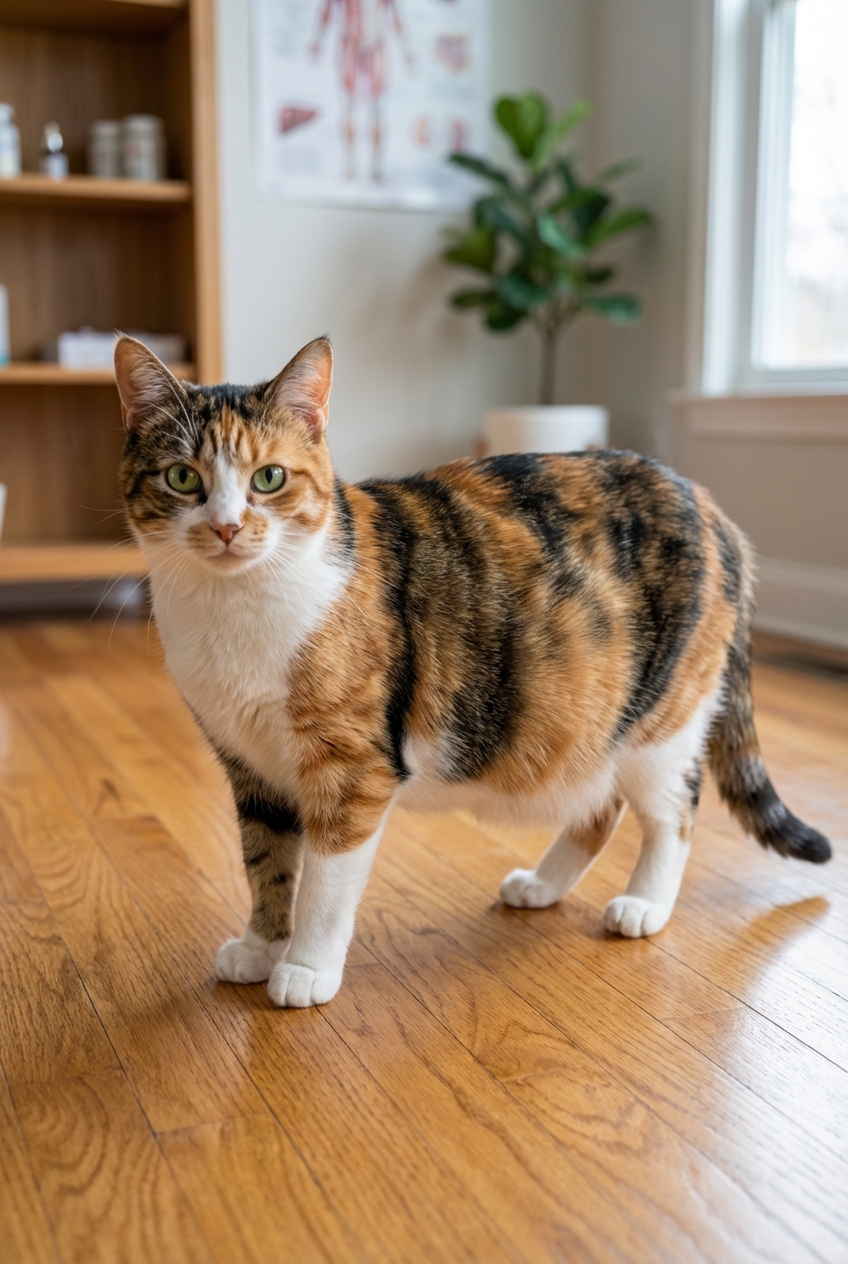
- Many queens show clear weight gain and a more pear-shaped body.
- Energy levels may decrease.
- Some cats become more protective of their space.
Week 7: nesting often begins
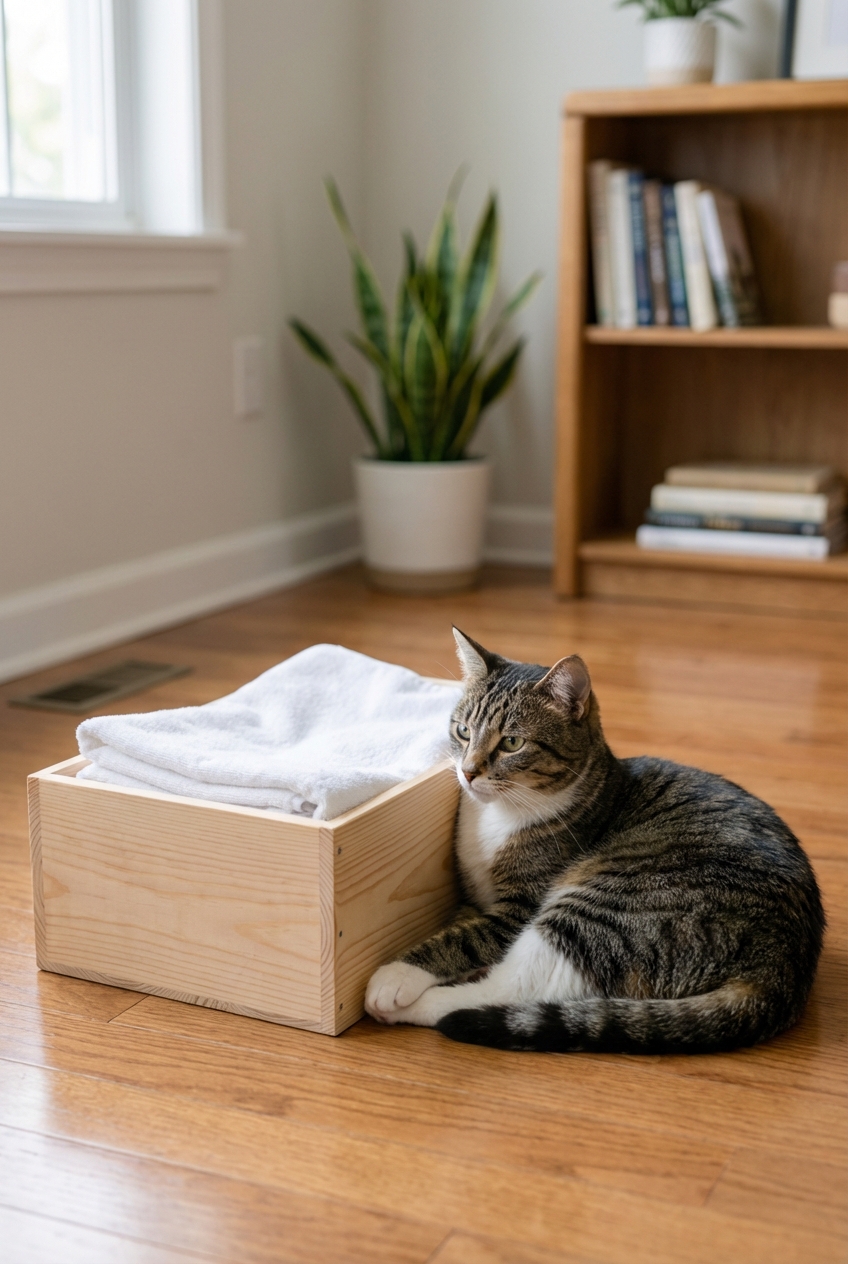
- She may start nesting , such as exploring closets, boxes, or quiet corners.
- Mammary glands develop further as her body prepares for milk production.
This is a great week to set up a quiet, warm, low-traffic area with a nesting box. Keep it easy for her to get in and out, with soft washable bedding.
Week 8: rapid development
- Her belly is usually quite round.
- You may see more grooming, especially around the belly and vulva.
- She may prefer smaller, more frequent meals.
Some people can feel kitten movement late in pregnancy, but it is not necessary to check that way. When in doubt, a vet exam is the safest route.
Week 9: close to delivery
- Restlessness, increased nesting, and clinginess are common.
- Some queens have a drop in appetite in the day or so before labor.
- You may notice intermittent panting or pacing as early labor begins.
Most queens deliver around day 63 to 67, with some normal variation. What matters most is how she is acting and whether labor progresses appropriately.
Estimating the due date
If you know the breeding date, you can count forward about 63 to 67 days for a practical estimate. If you do not know the date, your vet may use:
- Ultrasound: often used to confirm pregnancy and estimate stage (commonly 3 to 4 weeks, sometimes as early as 2 to 3)
- Physical exam: body changes and uterine enlargement can provide clues. Abdominal palpation is typically most helpful around 3 to 5 weeks and should be done by a professional.
- Radiographs (X-rays): later in pregnancy, X-rays can help estimate litter size once fetal skeletons are visible, often around day 42 to 45 and onward
Knowing litter size can be useful because you can watch for the final kitten to arrive and reduce the risk of a retained kitten being missed.
Next, let’s cover daily care basics, because good planning makes the last couple of weeks much less stressful.
What to feed a pregnant cat
Pregnancy and nursing are energy-intensive. In general, most queens do best with:
- A complete and balanced kitten or growth diet (commercial) for calories and nutrients
- Free-choice feeding or multiple small meals, especially later in pregnancy
- Fresh water available at all times
Avoid supplementing calcium or vitamins unless your vet specifically recommends it. Over-supplementation can cause problems, and a quality growth diet already contains appropriate levels.
Medications and parasite control
During pregnancy, be cautious with all medications, dewormers, and flea or tick products.
- Do not give over-the-counter or leftover medications without asking your vet first.
- Do not assume all flea and tick preventives are pregnancy-safe. Some products are safer than others, and the right choice depends on her health, your location, and parasite risk.
- If your cat goes outdoors, ask your vet about a safe plan for fleas, ticks, and worms during pregnancy and nursing.
When in doubt, bring the product name or package to your vet visit so you can confirm what is safe.
Preparing for delivery
- Set up a nesting space in a quiet room, away from other pets and kids.
- Keep the area warm and draft-free.
- Use clean, washable bedding (towels or blankets work well).
- Keep her indoors and minimize stress in the home.
- Separate her from intact males and any pets that make her anxious.
- Have your vet’s number and an emergency clinic number saved in your phone.
You do not need to hover, but you do want to be available to monitor for warning signs.
Signs labor is near
In the last 24 to 48 hours, many cats show a mix of these signs:
- Nesting and seeking privacy
- Increased vocalization or clinginess
- Restlessness, pacing, or mild panting
- Less interest in food
- More licking of the genital area
Some queens prefer to deliver completely privately, while others want their person nearby. Follow her lead and keep the environment calm.
Stages of labor (simple)
- Stage I: early labor. Restlessness, nesting, and occasional panting can happen. This can last hours.
- Stage II: active labor and delivery of kittens. You will see visible straining with a kitten being born.
- Stage III: passing placentas. This can alternate with Stage II, meaning a placenta may pass after each kitten or after a couple of kittens.
Quiet breaks between kittens can be normal, especially if mom is relaxed, nursing, and not actively straining.
When to call the vet right away
Cat labor can go smoothly, but complications can happen. Contact your vet or an emergency clinic if you notice:
- Hard straining for about 30 to 60 minutes with no kitten produced, or any intense straining that worries you
- A long pause between kittens (often more than 1 to 2 hours), especially if she seems distressed, continues straining, or you know more kittens are expected
- Heavy bleeding or foul-smelling discharge
- Lethargy, collapse, feverish behavior, or extreme weakness
- A kitten stuck at the vulva
- Suspected pregnancy that goes past about 72 days (keeping in mind that mating date can be unreliable if there were multiple matings or unknown ovulation timing)
Trust your instincts. If something seems off, it is always okay to ask for help.
After birth: what normal looks like
After delivery, it is normal for a mom cat to:
- Clean her kittens and encourage nursing quickly
- Be very protective of the nest
- Have a small amount of postpartum discharge for a period of time
Placenta note: There is typically one placenta per kitten. It is helpful to keep a simple count if you can do so without stressing mom. If you suspect a placenta may be retained, call your vet.
Discharge note: A small amount of dark or reddish-brown discharge can be normal after birth, but foul smell, heavy bleeding, pus-like discharge, or a mom cat who seems ill are not normal and should be checked promptly.
First 48 hours: kitten basics
- Warmth matters: kittens should feel warm and stay tucked in close.
- Nursing: kittens should latch and nurse often, then sleep quietly.
- Daily weights: if possible, weigh kittens once daily to confirm steady gain.
Constant crying, cool bodies, or failure to nurse are signs you should call your vet promptly.
FAQ
Can a cat be pregnant and not show much?
Yes. Some cats, especially first-time moms or cats with small litters, may not look obviously pregnant until late in the timeline.
How soon can a vet confirm pregnancy?
Often by 3 to 4 weeks with ultrasound. Some clinics may be able to see signs as early as 2 to 3 weeks.
Do cats need special prenatal vitamins?
Usually no, as long as they are eating a complete and balanced growth diet. Supplements should be vet-guided.
A gentle reminder
If your cat may be pregnant, schedule a vet visit early. You will get the most accurate timeline help, nutrition advice, and a plan for a safe delivery. And if this pregnancy was unexpected, ask your vet about spaying after the kittens are weaned. It is one of the kindest ways to protect her long-term health.