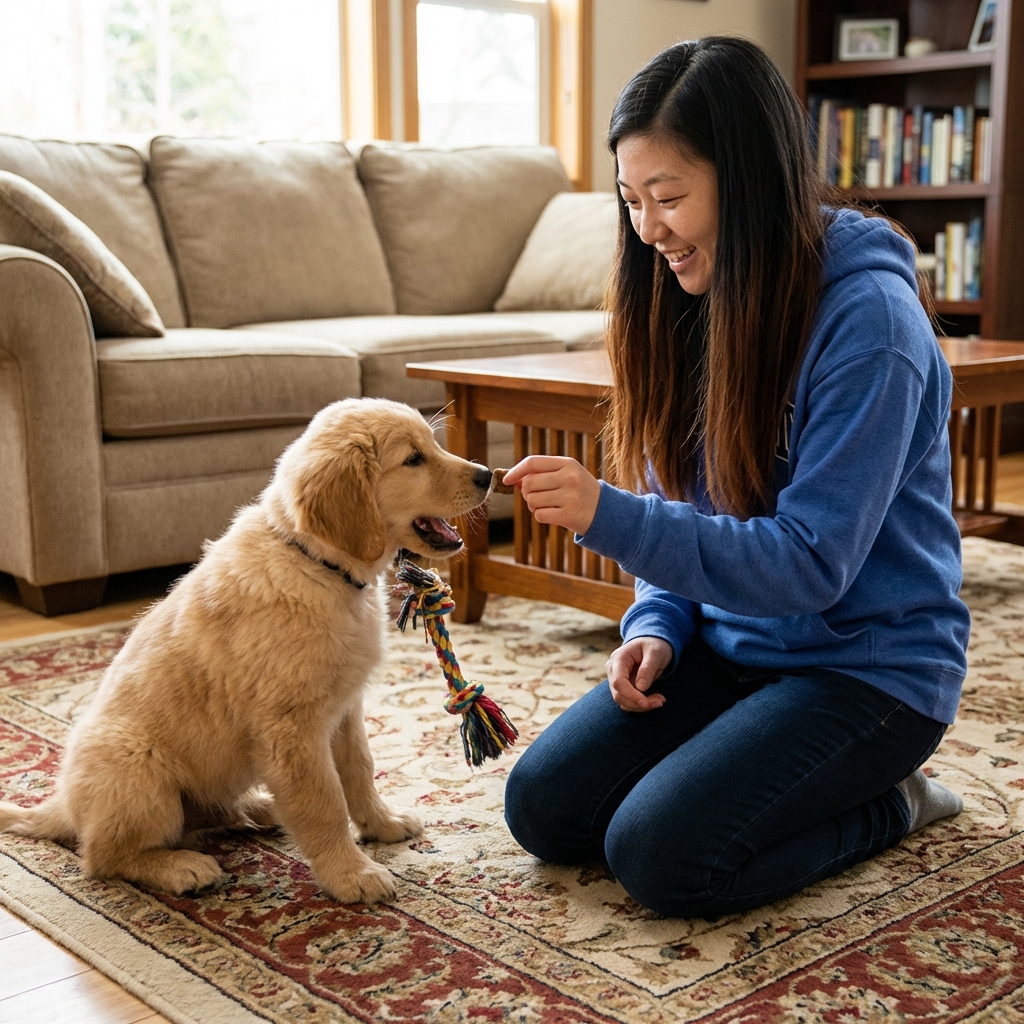
Learn to teach fetch with calm, short sessions: take it, drop it, return, and cue “fetch.” Includes safe toy choices, joint and tooth protection, heat sa...
Article
•
Designer Mixes
Teaching Your Puppy Fetch

Shari Shidate
Designer Mixes contributor
Fetch is one of those simple games that can quietly teach your puppy a whole lot: how to listen, how to come when called, how to drop things, and how to focus even when they are excited. As a veterinary assistant here in Frisco, Texas, I also love fetch because it can be low-cost enrichment when it is taught thoughtfully and kept age-appropriate and low-impact.
Quick note: if your puppy is very young, is a large-breed puppy still in their long growth phase, has an orthopedic condition, or seems sore or limping after play, pause fetch and check in with your veterinarian. Growing joints deserve extra care.
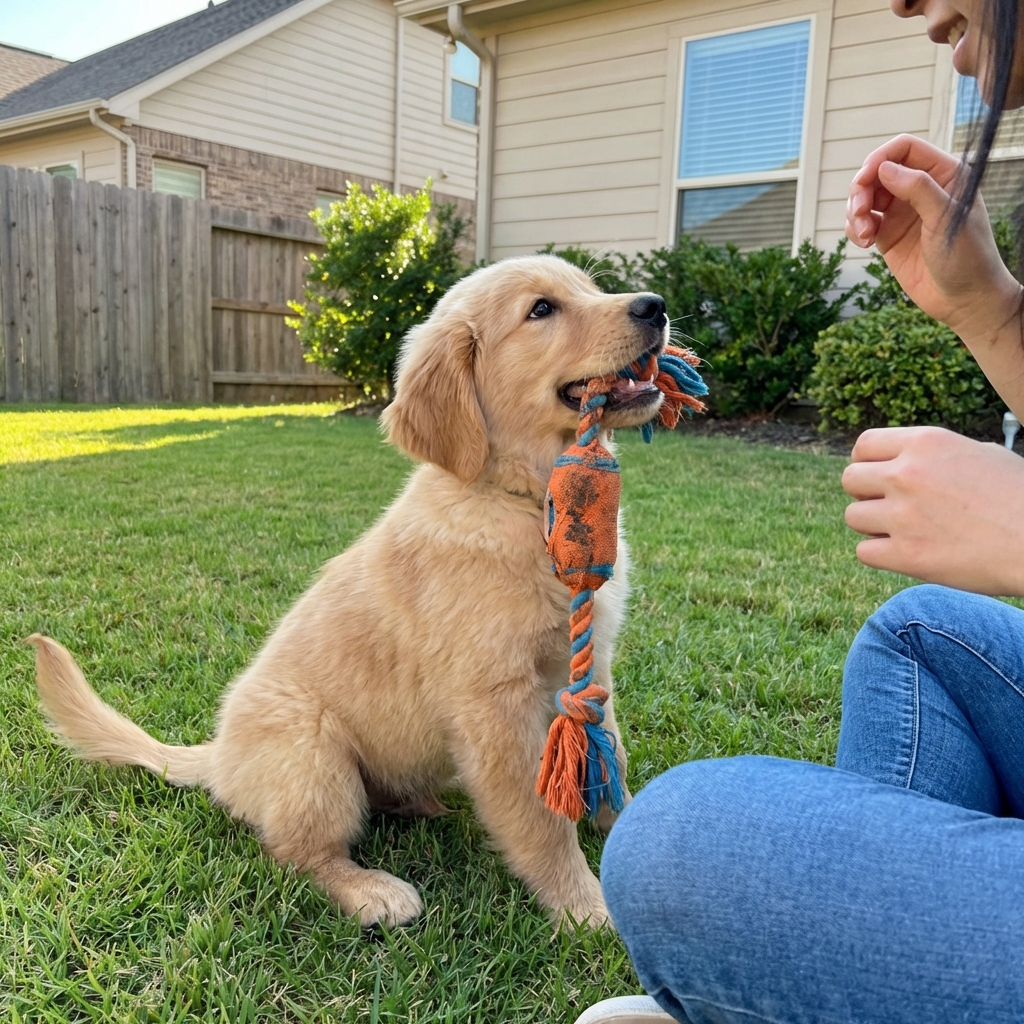
Fetch basics (what you are really teaching)
Most people think fetch is just “chase and bring it back.” For puppies, it is a chain of skills:
- Interest: engaging with a toy instead of the couch cushion.
- Chase: moving to the object with enthusiasm.
- Pick up: holding the toy comfortably.
- Return: coming back toward you (this is the part many pups skip).
- Release: dropping the toy when asked.
- Reset: calmly getting ready for the next throw.
When one link is weak, the whole game falls apart. The good news is you can train each piece with tiny wins.
When to start and how long to play
Age and safety
Many puppies can begin gentle, short fetch sessions as soon as they are comfortable in your home and motivated by toys. Keep it low impact, especially during growth. Breed and size matter here, too. Larger-breed puppies often take longer to mature, so it is extra important to avoid repetitive hard stops, sharp turns, and big jumps.
- Keep throws short on flat ground.
- Avoid repetitive jumping (like leaping for high balls) in young puppies.
- Skip slippery floors because wipeouts can strain growing joints.
- Watch the surface outdoors. Grass or turf is usually kinder than concrete.
Session length
Think “snack-sized” training. Aim for 1 to 3 minutes at first, then stop while your puppy still wants more. That keeps motivation high and helps prevent overstimulation.
Pick the right toy
A toy that feels good in your puppy’s mouth and is easy to carry makes everything easier.
- Soft tug toys or fleece tugs are great starters for many pups.
- Small, squishy balls work for pups who naturally love balls, but avoid anything small enough to swallow.
- Lightweight bumpers can be excellent for retriever-type mixes.
- Avoid hard objects (like rocks or very hard plastic) that can crack puppy teeth.
Toy safety basics: Choose size-appropriate toys, supervise play, and toss toys that are cracking, splitting, or shedding pieces. If a fleece toy is fraying, trim loose threads or retire it. Stringy bits are not something you want swallowed.
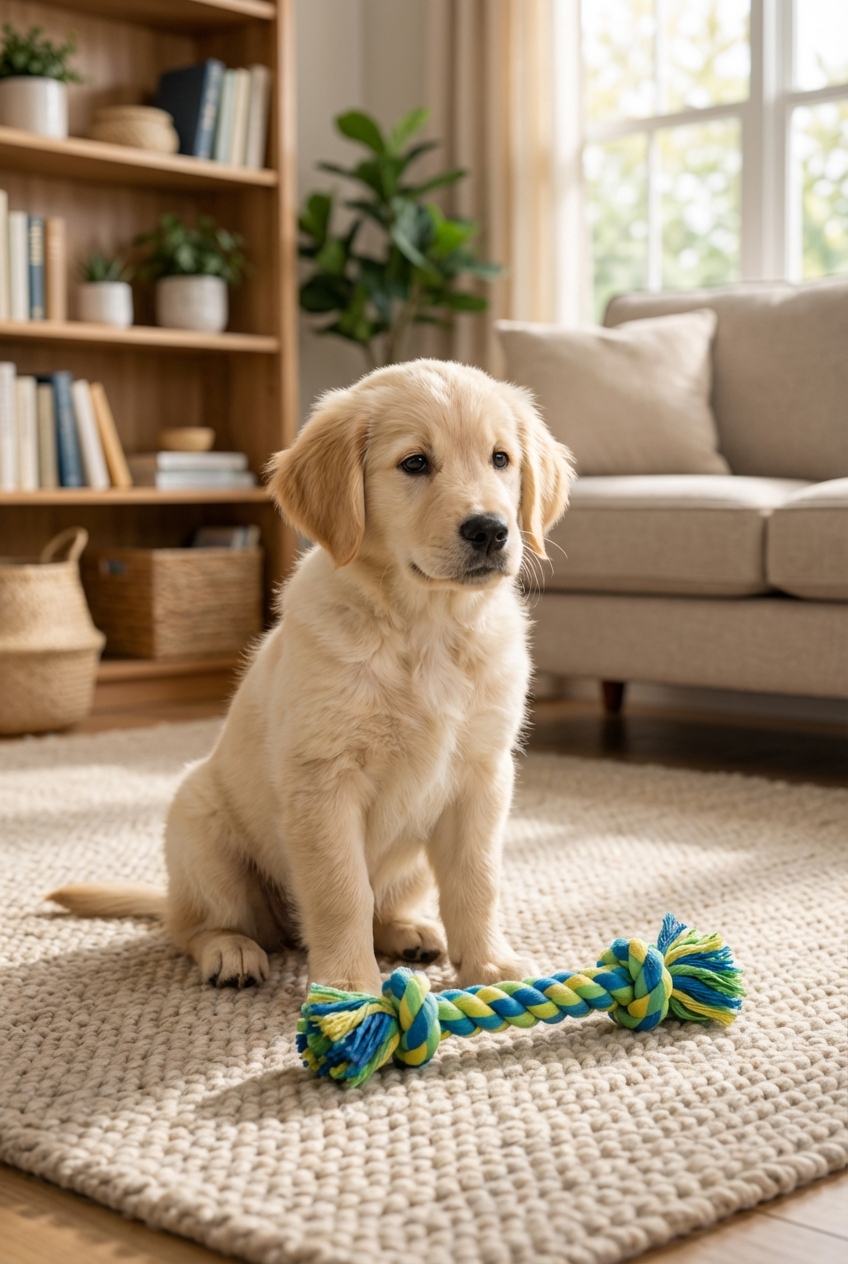
How to teach fetch
Step 1: Make the toy valuable
Before you throw anything, build desire. Wiggle the toy, move it away from your puppy like it is “escaping,” and praise when they grab it. If your puppy is not into toys yet, you can rub a tiny smear of something tasty (like a pea-sized amount of peanut butter with no xylitol) on the toy to get things started. Peanut butter is calorie-dense and can upset sensitive stomachs, so keep it truly tiny and stop if you notice loose stool or vomiting.
Step 2: Trade, do not chase
Chasing your puppy for the toy turns into a super fun keep-away game. Instead, teach a trade:
- Let your puppy hold the toy.
- Present a treat to their nose.
- As they release the toy, say “Drop it” and give the treat.
- Immediately give the toy back (this is what makes “drop it” feel safe).
This builds trust: dropping the toy does not mean losing it forever.
Step 3: The baby toss
Sit on the floor in a hallway or a small room. Roll the toy just a few feet. Many puppies will chase a rolling toy more naturally than a flying one.
- If your puppy picks it up, praise in a calm voice. Avoid squealing or getting too big and exciting. Then back up a step or two to invite them toward you.
- If they turn away, do not grab. Instead, show a treat and encourage them to come.
Step 4: Reward the return
The most important moment in fetch is your puppy coming back. Reward that return generously at first.
- Treat when they arrive with the toy.
- Then cue “Drop it”.
- Then praise and restart the game.
This is basic learning theory in action: behaviors that are reinforced tend to happen more often.
Step 5: Add a cue like “Fetch”
Once your puppy is reliably chasing and returning, you can name the behavior. Say “Fetch” right before you roll or toss the toy. Keep your voice upbeat and consistent.
Common puppy fetch issues
“My puppy runs after it but will not bring it back”
This is incredibly common. Often, the toy is more exciting than the return. Make the return more rewarding.
- Use higher-value treats for the return.
- Play in a hallway to reduce opportunities to run off.
- Back up as they approach so they follow you.
“My puppy drops it halfway”
That is actually progress. Praise it and take a step backward to encourage them to bring it the rest of the way. You can also shorten the distance so success is easier.
“My puppy wants to tug instead of release”
Tug is not bad. Tug can be a reward. The key is structure.
- Teach “Take it” to start tug.
- Teach “Drop it” for release using treats at first.
- Keep tug gentle and avoid yanking, especially with young puppies.
“My puppy grabs the toy and zooms away”
That can be an overstimulation sign or a keep-away habit. Lower arousal.
- Use calmer praise.
- Shorten sessions.
- Switch to rolling the toy instead of big throws.
“My puppy freezes or growls over the toy”
Stop the game and do not try to take the toy by force. If you see stiff body posture, hard staring, growling, snapping, or your puppy running off to guard the toy, it is time to get help. Reach out to your veterinarian for guidance and consider a qualified reward-based trainer or behavior professional. The earlier you address guarding, the easier it usually is.
Health and safety tips
- Watch the mouth: Puppies teethe. If your puppy suddenly avoids the toy or seems mouthy and fussy, consider softer toys and shorter sessions.
- Protect growing joints: Repetitive high-impact play can stress developing bones and soft tissues. Keep fetch low to the ground and avoid nonstop repetitions.
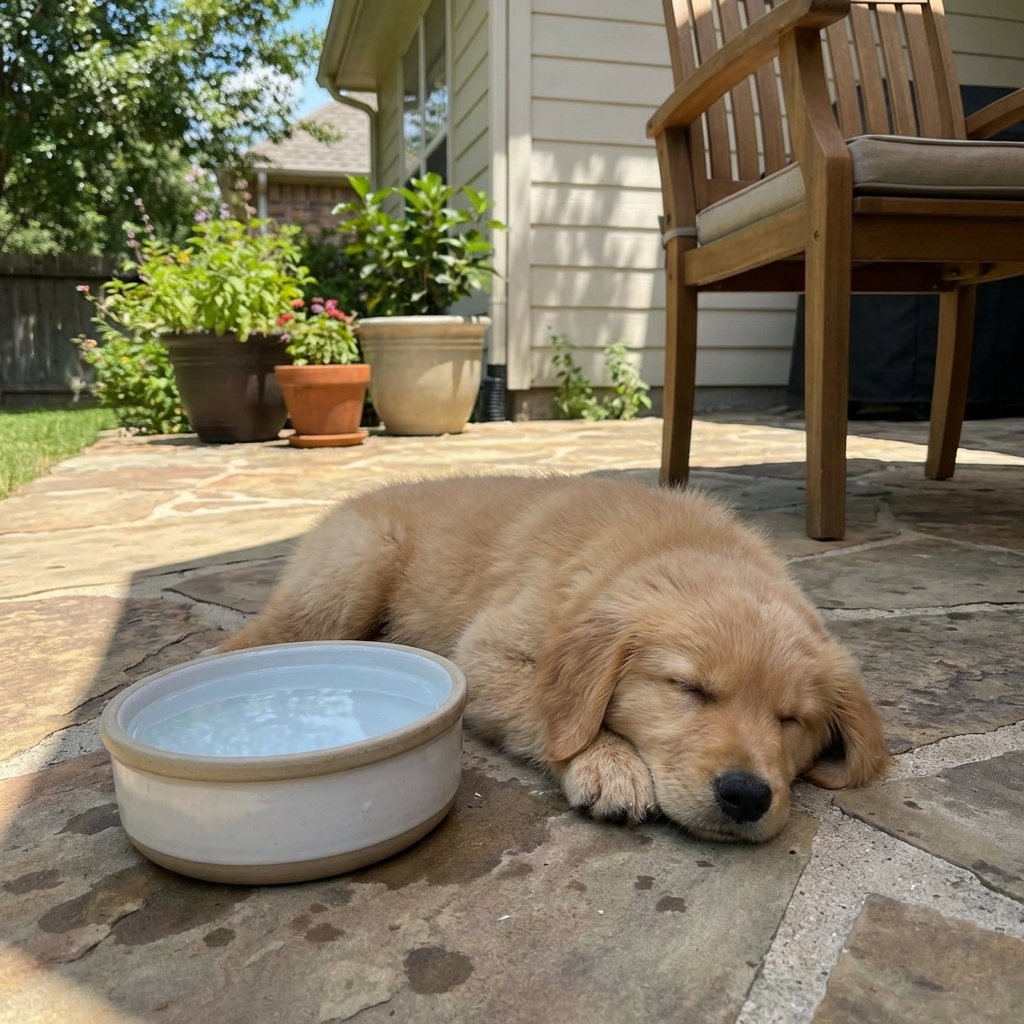
- Heat safety: Texas summers can be intense. Play early or late, offer water breaks, and take shade breaks. Normal panting happens with play, but watch for warning signs like excessive panting that does not settle, thick or stringy drool, weakness, vomiting or diarrhea, bright red or very pale gums, stumbling, or collapse. If you suspect heatstroke, seek veterinary care urgently.
- Outdoor setup: Use a fenced yard when possible. If you are in an open area, a long line can help prevent bolting while you practice returns.
- Know when to stop: Limping, stiffness, or reluctance to move after play is a reason to rest and call your veterinarian if it persists.
Troubleshooting checklist
- Motivation low? Try a different toy texture or add a tiny food scent.
- Too distracted? Train indoors first, then move outside.
- Won’t drop it? Go back to trades and reward the release.
- Gets wild and bitey? End the session, offer a chew, and let them decompress.
- Fetch turns obsessive? Add pauses and ask for a simple cue like “sit” between throws.
- Chase is escalating? Keep the goal calm and connected, not frantic. If your puppy is getting amped up, shorten the distance, slow the pace, and end on an easy win.
A simple 7-day plan
If you like structure, here is a gentle progression you can follow.
Days 1 to 2
- Build toy interest.
- Practice “drop it” trades 5 times.
Days 3 to 4
- Roll the toy 3 to 5 feet in a hallway.
- Reward any return toward you.
Days 5 to 6
- Increase distance slightly.
- Begin saying “Fetch” right before the roll or toss.
Day 7
- Practice outside in a quiet area (fenced if you can, or use a long line).
- Keep it short and end on a win.
And remember, you do not need perfection. A puppy who happily brings a toy back once or twice is already learning the skills that turn into a solid adult fetch game.
When fetch is not the best game
Some puppies love it. Some do not. That is okay. If your puppy seems stressed, guards toys, or gets overly intense, focus on other enrichment like sniff walks, food puzzles, gentle tug with rules, or basic training games. A calm, confident puppy is always the goal.
Fetch should leave your puppy happy and relaxed, not frantic. Short, successful reps beat long, wild sessions every time.