Stop nuisance barking with reward-based training. Identify triggers, meet daily needs, use management, teach “Quiet” and “Go to Mat,” plus targeted f...
Article
•
Designer Mixes
Teach Your Puppy Not to Bark

Shari Shidate
Designer Mixes contributor
Puppies bark. It is one of the main ways they communicate, and it is completely normal. The goal is not a silent puppy. The goal is a puppy who can settle, feel safe, and look to you for guidance instead of barking as a default response.
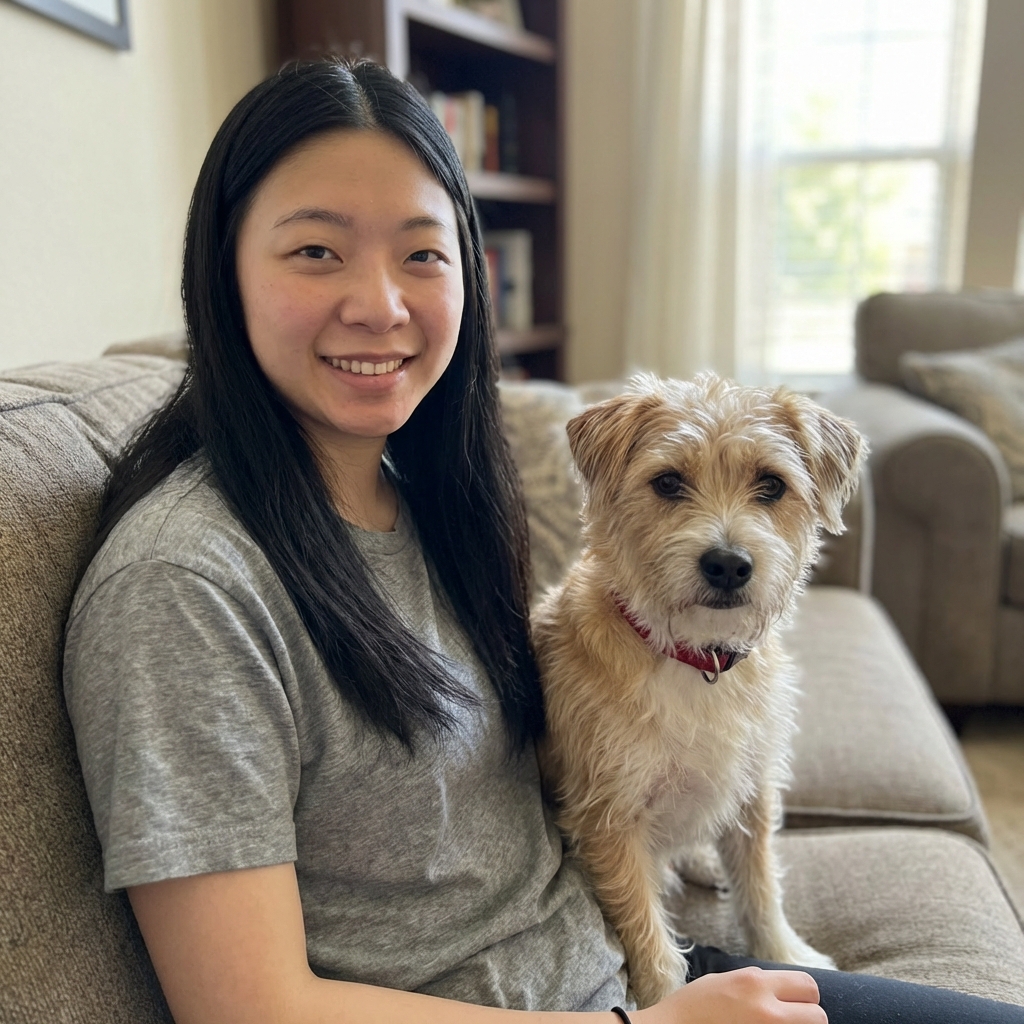
As a veterinary assistant here in Frisco, Texas, I see this all the time: barking starts small, gets accidentally reinforced, and then becomes a habit. The good news is that you can shift it with consistent, kind training and a few simple routines at home.
Why puppies bark
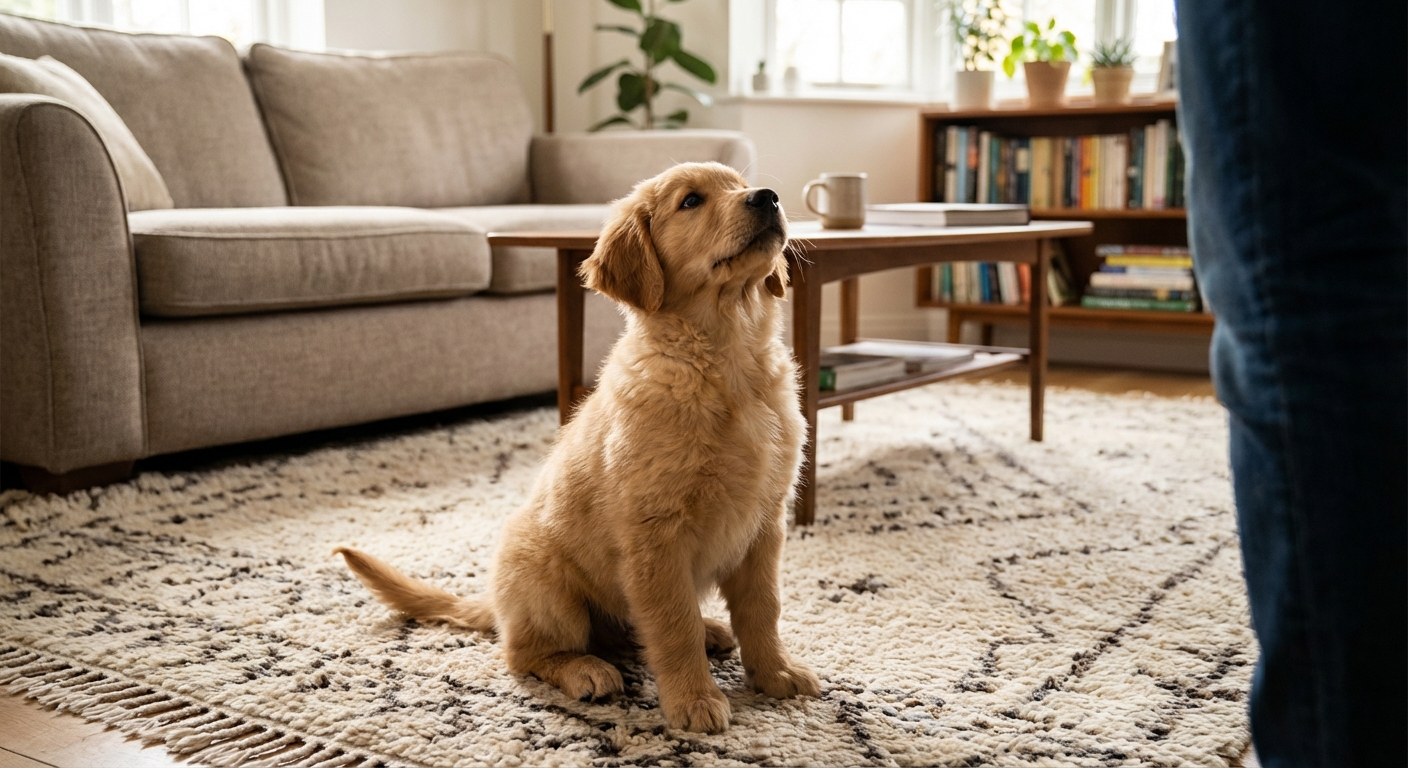
Before you can reduce barking, it helps to identify the reason. Different motivations need different solutions.
- Attention seeking: barking makes you look, talk, move, or pick them up.
- Alarm or fear: new sounds, visitors, dogs outside, delivery trucks.
- Excitement: play, leash comes out, you arrive home.
- Frustration: they want to greet someone, reach a toy, or get out of a pen.
- Boredom or under-stimulation: not enough appropriate chewing, play, training, or rest.
- Needs: potty, hunger, thirst, discomfort, too hot or too cold.
Veterinary note: sudden barking changes, nighttime restlessness, or barking paired with pain signals (hunched posture, sensitivity to touch, limping) should be checked by your veterinarian.
Start with management
Training takes time. Management reduces barking today so your puppy can practice calmer behavior while learning.
Reduce the triggers
- Block visual stimulation: close blinds or use removable window film if your puppy barks at passersby.
- Create distance: move your puppy farther from the door or fence line where they get worked up.
- Use sound buffering: a fan or white noise can help with outside sounds.
- Prevent rehearsal: if your puppy barks at the window 20 times a day, that is 20 reps of the habit.
Meet the basics first
Many “behavior” problems soften when a puppy’s daily needs are met.
- Age-appropriate sleep (many puppies need a lot of sleep and may rest up to 18 to 20 hours in a 24-hour period)
- Regular potty breaks
- Chew outlets (rubber toys, safe chews approved by your vet)
- Short training sessions that use food rewards
- Calm time to decompress
Example: If your puppy always barks when you sit down to eat, try pre-loading the situation. Potty break first, then a stuffed food toy on their mat before you start your meal.
Teach a calm alternative
It is hard for a puppy to understand “do not bark” unless we teach what to do instead. I like a simple, reward-based approach that reinforces the behavior you want.
Step 1: Capture Quiet
- Keep treats handy.
- Mark and reward silence. When your puppy is quiet for 1 to 2 seconds, calmly say “yes” (or click) and give a treat.
- Practice in easy moments, then start rewarding quiet around mild triggers too. For example, your puppy notices a sound outside and stays quiet, mark and treat.
This builds the idea that being calm pays.
Step 2: Add the cue
- If your puppy barks once or twice, wait for a brief pause.
- As soon as they pause, say “Quiet” in a calm voice, mark “yes,” then treat.
- Slowly increase the required quiet time from 1 second to 3, then 5, then 10.
Guardrail: If your puppy is barking nonstop and cannot pause, do not wait them out. Make it easier. Increase distance from the trigger, lower the intensity (lower doorbell volume, close blinds), and try again.
Tip: Raised voices can increase arousal and escalate barking. Stay calm and simple.
Step 3: Pair Quiet with a Mat
Teach your puppy to relax on a mat or bed.
- Toss a treat onto the mat.
- When your puppy steps onto it, mark “yes” and feed another treat on the mat.
- Gradually reward for sitting, then lying down, then relaxing.
This becomes your go-to alternative behavior when the doorbell rings or company arrives.
Stop accidental rewards
If barking reliably makes a human respond, barking will grow. Puppies do what works.
For attention barking
- Check needs first: potty, water, pain, and overtired puppies can look like “demand barking.” Meet basics before you train.
- Remove the payoff: avoid eye contact, talking, touching, or picking up.
- Reward the pause: the moment your puppy is quiet, calmly reward with attention or a treat.
- Teach a replacement: ask for “Sit” or “Touch” before greeting.
It can feel uncomfortable at first, but consistency matters. If barking works 2 times out of 10, puppies will keep trying because intermittent rewards are powerful.
Doorbell and visitors
This is one of the most common barking struggles, and it is very trainable with practice.
Practice when nobody is visiting
- Play a doorbell sound at a very low volume on your phone.
- Immediately toss treats on your puppy’s mat or on the floor away from the door.
- Repeat until the sound predicts “treats rain from the sky.”
- Slowly increase volume over days.
Use a simple routine
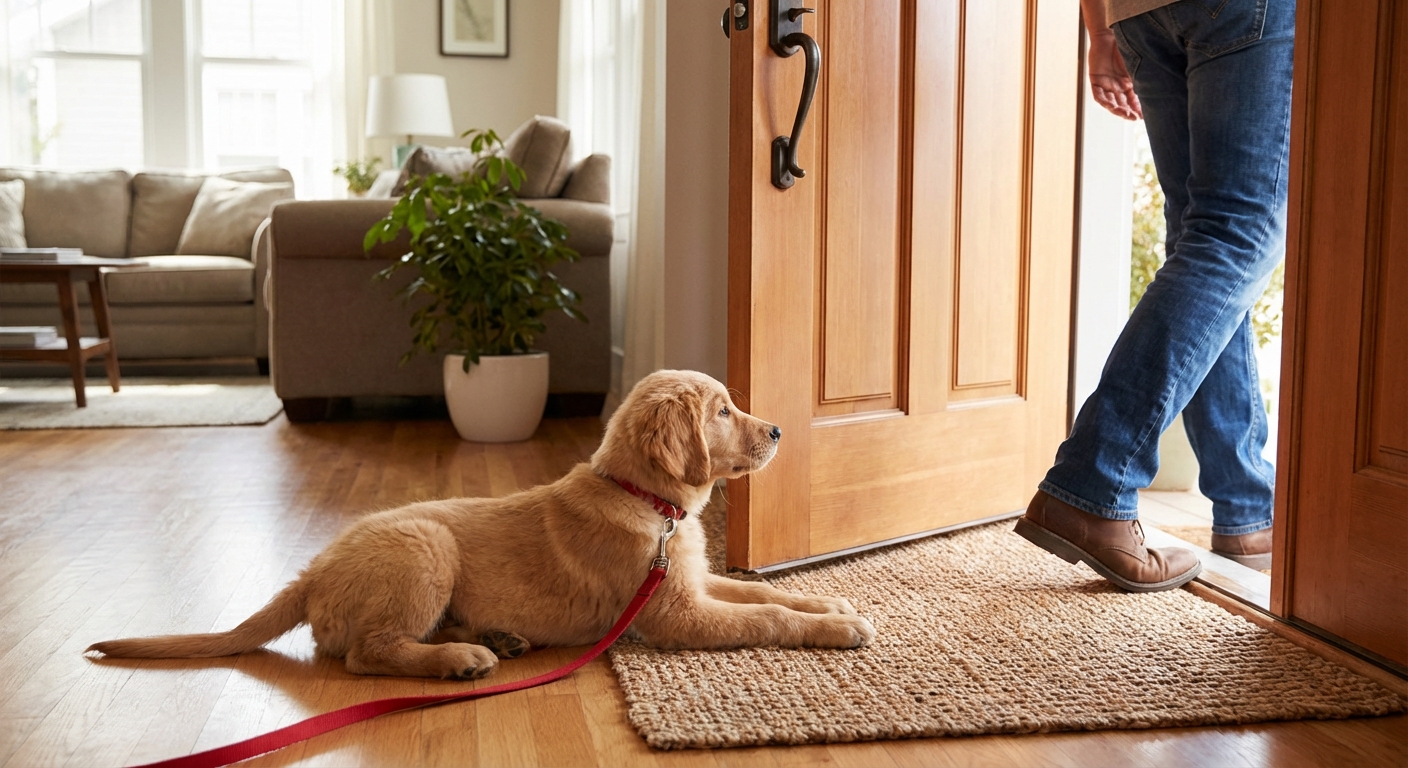
- Leash your puppy before opening the door.
- Send puppy to Mat, reward.
- Ask guests to ignore your puppy until they are calm.
- Release for greeting only when quiet.
Alert barking at noises
Some puppies bark because they are doing their version of neighborhood watch. You can acknowledge it, then redirect.
Try a “Thank you, Mat” routine
- When your puppy barks at a sound, calmly say “Thank you.”
- Toss a treat away from the window or door to break the stare.
- Send them to Mat, then reward quiet.
Over time, your puppy learns: sound happens, you handle it, and they can settle.
Barking in the crate
Some barking is protest. Some is panic. Your response should match what is happening.
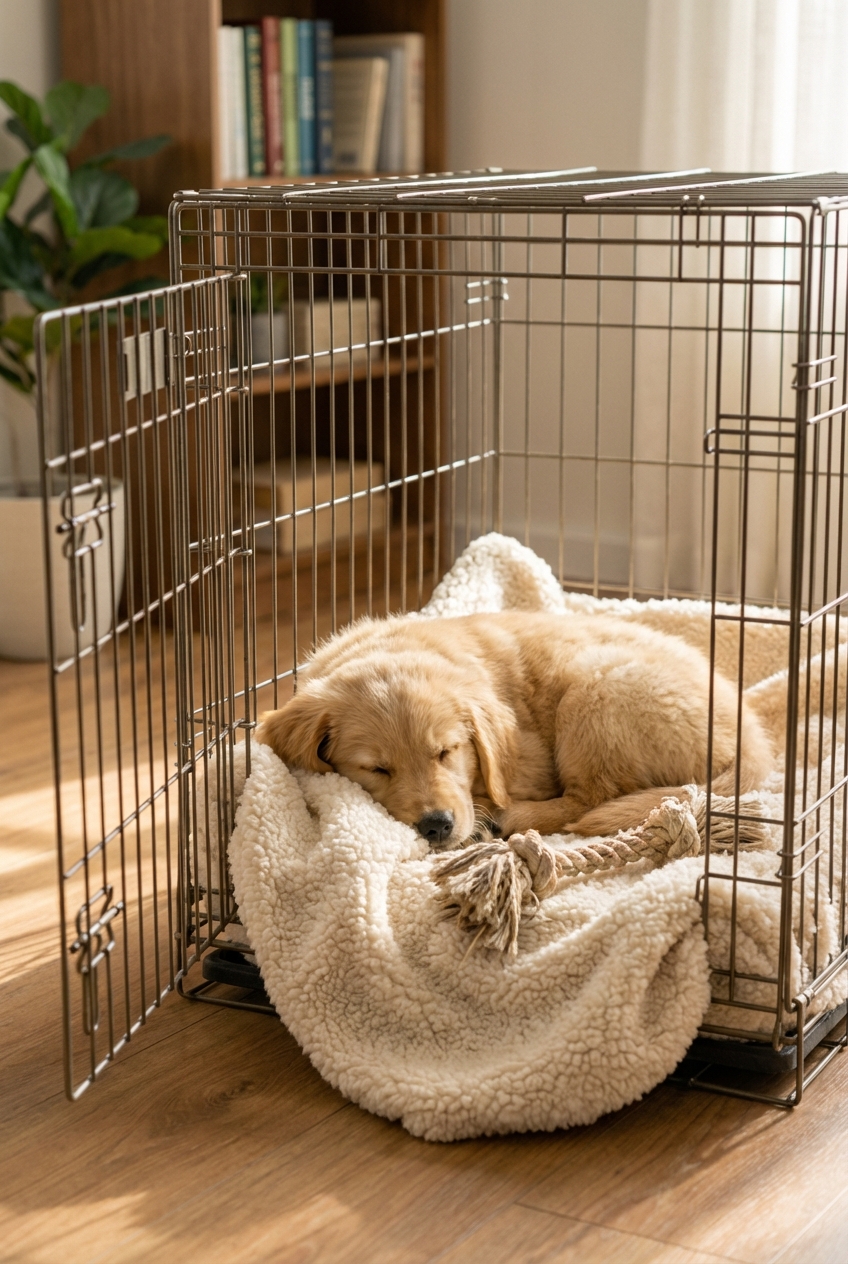
Make the crate a safe place
- Feed meals in the crate with the door open at first.
- Use a stuffed food toy for short crate sessions.
- Practice tiny departures, then return before your puppy escalates.
Avoid common mistakes
- Do not use the crate only for time-outs.
- Do not push duration too fast. Crate training is a gradual skill.
- Do not ignore signs of true distress (drooling, frantic escape attempts, self-injury). Talk with your vet or a qualified trainer.
Separation barking basics
If barking happens mostly when you leave, or your puppy cannot settle even with food and a comfy setup, you may be seeing early separation-related distress. Early help matters.
- Go slower than you think: practice very short absences that stay below your puppy’s panic threshold.
- Keep greetings calm: boring exits and boring returns help some puppies.
- Use a camera if you can: it is easier to train when you know what is actually happening.
- Get support early: separation issues can be complex. A certified trainer, veterinary behaviorist, or your veterinarian can help you build a safe plan.
Prevent boredom barking
Puppies need appropriate outlets for their brains and mouths. A tired puppy is not just “exercised.” They are mentally satisfied and able to rest.
Easy, puppy-safe ideas
- Sniff walks: 10 to 15 minutes of slow exploration can be more calming than a long power walk.
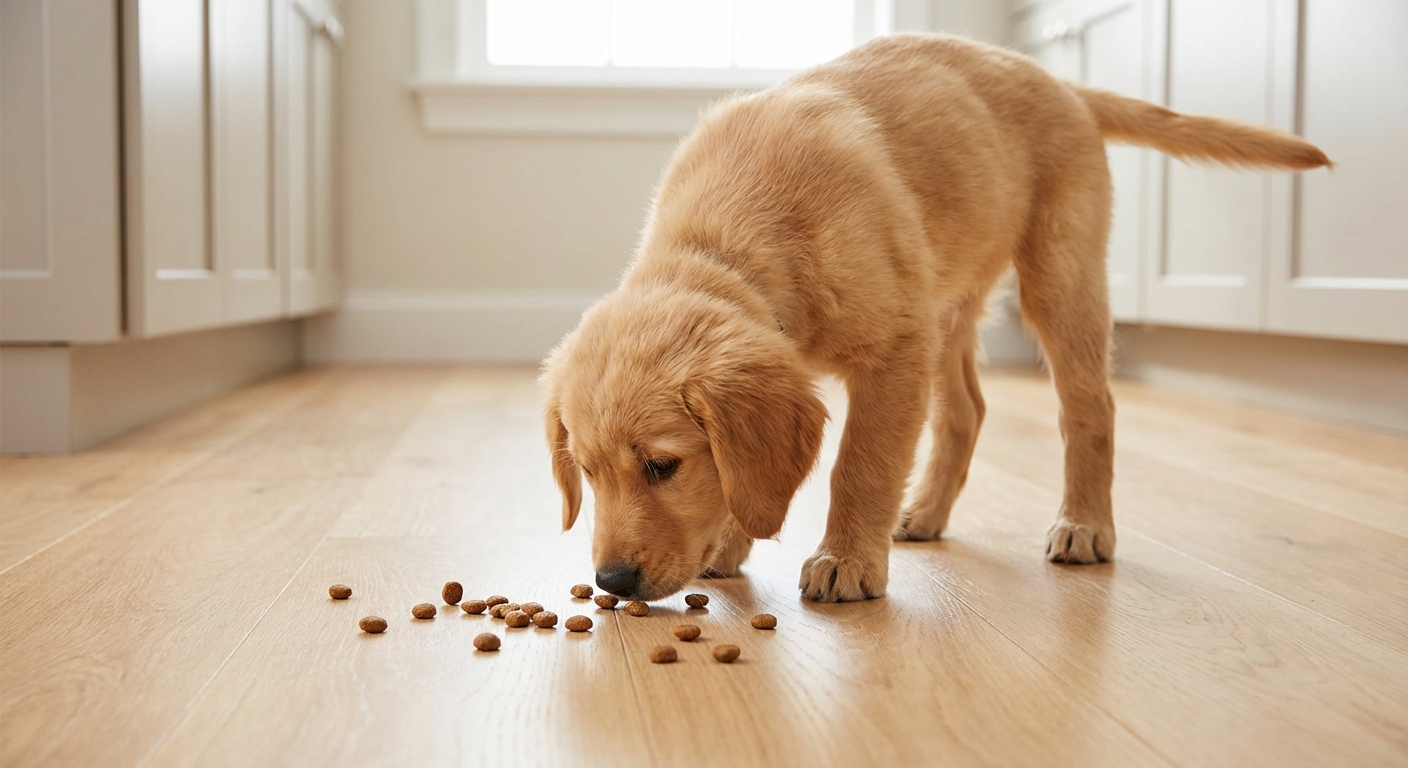
- Food puzzles: kibble in a rolling toy, snuffle mat, or scatter feeding.
- Short training games: Sit, Down, Touch, name response, leash skills. Keep sessions 3 to 5 minutes.
- Chew time: vet-approved chews or a rubber toy stuffed with part of their meal.
Safety note: Always supervise chews, avoid cooked bones, and check with your veterinarian about appropriate chew types for your puppy’s age and teeth.
What not to do
Some techniques can increase fear and barking, even if they look effective in the moment.
- Avoid yelling: it can escalate arousal.
- Avoid punishment tools: shock, prong, and spray collars may worsen anxiety or create new behavior issues in many dogs.
- Avoid forcing scary situations: flooding a puppy with triggers can backfire.
If you feel stuck, it is a sign you need a better plan, not a harsher one.
A simple 7-day plan
Days 1 to 2: Reset and observe
- Write down what triggers barking and when it happens.
- Block windows, add white noise, create a calm rest area.
Days 3 to 4: Train Quiet and Mat
- Capture Quiet 10 to 20 times a day.
- Introduce the Mat and reward calm behavior on it.
Days 5 to 7: Add controlled practice
- Doorbell sound practice at low volume.
- Short crate sessions paired with food toys.
- One enrichment activity daily that uses sniffing or chewing.
Many families notice some improvement in the first week, especially with management. Timelines vary by puppy and trigger. Strong, reliable skills often take a few weeks of repetition.
When to get help
Reach out to your veterinarian, a certified trainer, or a veterinary behaviorist if:
- Barking is paired with fear, cowering, shaking, or growling
- Your puppy cannot settle even after potty, food, and rest
- You suspect separation anxiety or panic
- Barking is sudden, intense, or accompanied by signs of illness
Kind training works best when it is consistent. Every time you reward calm, you are teaching your puppy a life skill: how to feel safe and quiet in a busy world.