
Teach a reliable “Down” with simple lure, capture, or shaping methods. Learn how to add a cue and release word, build duration, troubleshoot issues, and ...
Article
•
Designer Mixes
Teach Your Dog to Sit

Shari Shidate
Designer Mixes contributor
Sit is one of the most useful cues you will ever teach your dog. It is polite. It is calming. And it becomes your go-to way to ask for good manners before meals, greetings, getting the leash clipped on, or stepping through a doorway.
As a veterinary assistant here in Frisco, Texas, I love “sit” because it is a gentle foundation behavior when taught with positive reinforcement. It builds trust and communication and is usually easy on the body, though some dogs with hip, knee, or back discomfort may need a different option.
What “sit” really means
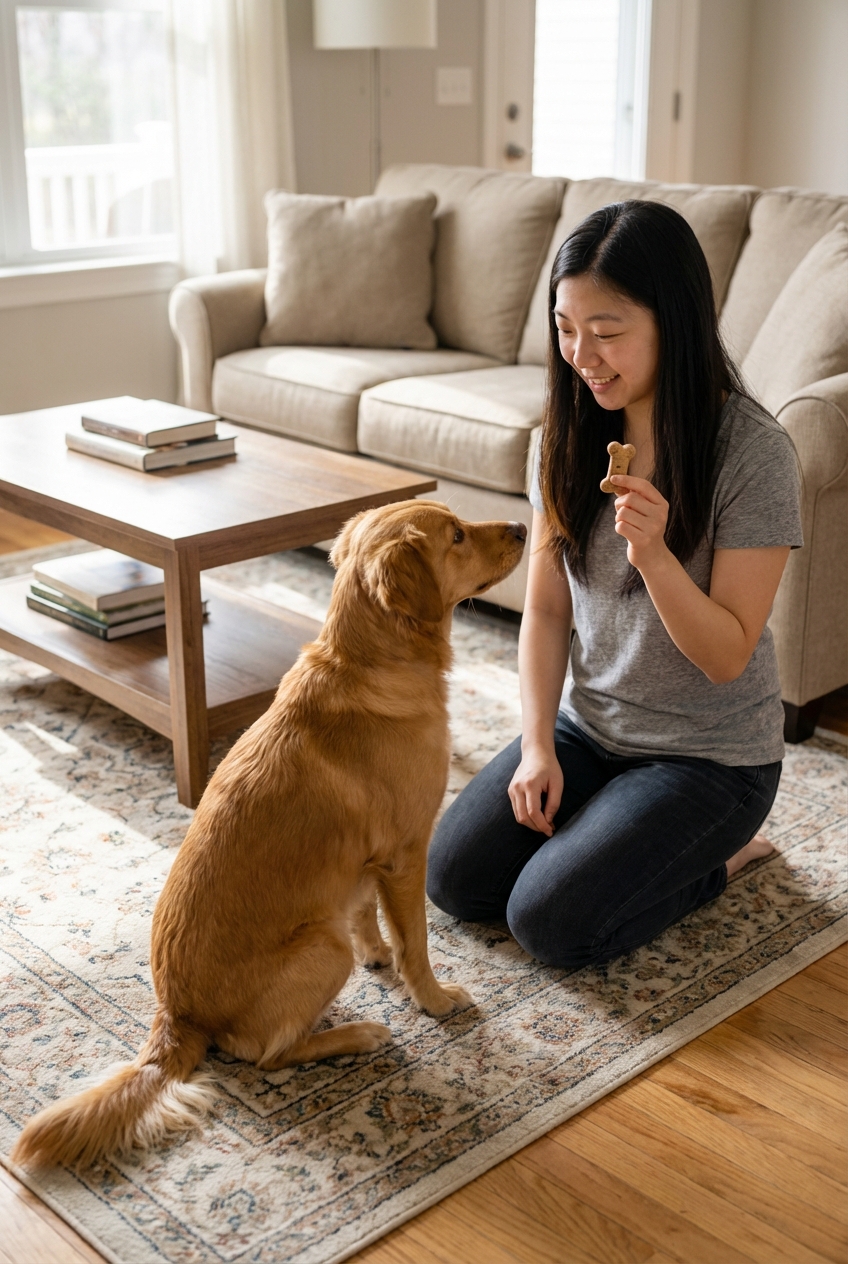
When we say “sit,” we are asking for a specific body position: your dog’s rear on the ground with a relatively upright posture. Your dog does not need to hold it forever at first. In early training, even a half-second sit counts.
Training works best when you focus on three things:
- Clarity: Make it easy for your dog to succeed.
- Timing: Reward the exact moment the rear hits the floor.
- Consistency: Use the same cue and the same hand signal while your dog is learning.
Before you start: set yourself up for success
Pick the right rewards
Most dogs learn fastest with soft, pea-sized treats they can swallow quickly. If your dog is not food-motivated, try higher value options (tiny bits of cooked chicken, turkey, or cheese), or use a toy for a quick tug as a reward.
Health note: If your dog is on a special diet or has pancreatitis history, use their regular kibble or vet-approved treats and keep portions small.
Choose a low-distraction spot
Start indoors, on a non-slip surface. Slippery floors can make sitting feel unstable, especially for puppies, seniors, or dogs with orthopedic issues.
Keep sessions short
One to three minutes is plenty, especially for puppies. Do a few mini-sessions each day rather than one long session.
Quick marker tip
If you use a clicker or say “Yes!”, think of the marker as a promise. It tells your dog, “That was it, your reward is coming.” Then deliver the treat.
Method 1: Lure into a sit
This is the classic approach because it uses your dog’s natural movement to “discover” the sit.
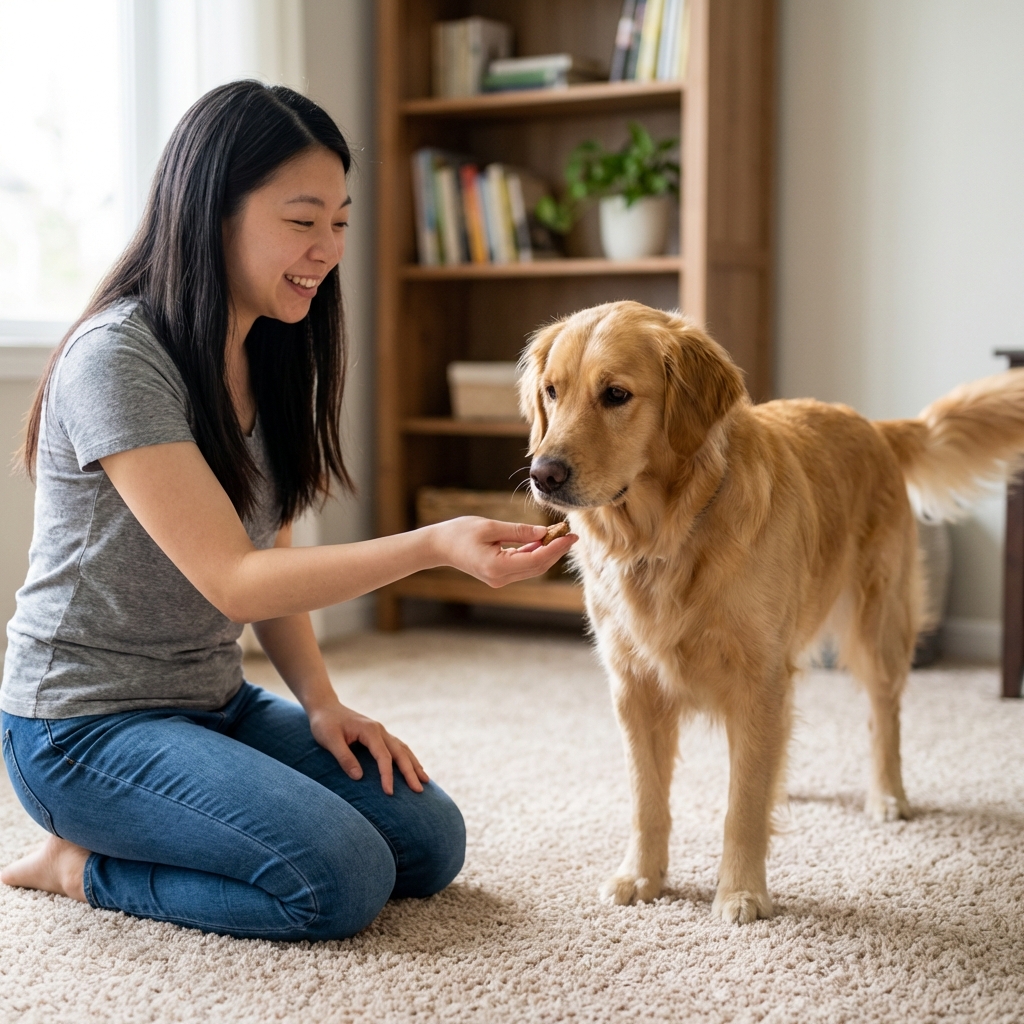
- Start with your dog standing in front of you.
- Hold a treat at your dog’s nose so they can smell it.
- Slowly move the treat up and slightly back toward the top of their head. Many dogs will shift their weight back and lower their rear to keep their eyes on the treat. If your dog backs up, make the motion smaller and more upward than backward, and pause the lure instead of continuing to drift back.
- Mark and reward the moment their rear touches the floor. You can use a clicker or a happy marker word like “Yes!”
- Reset by tossing a treat a step away so your dog stands up again, then repeat.
Tip: Keep your lure close to your dog’s face. If you lift your hand too high, some dogs will jump up instead of sitting.
Method 2: Capture the sit
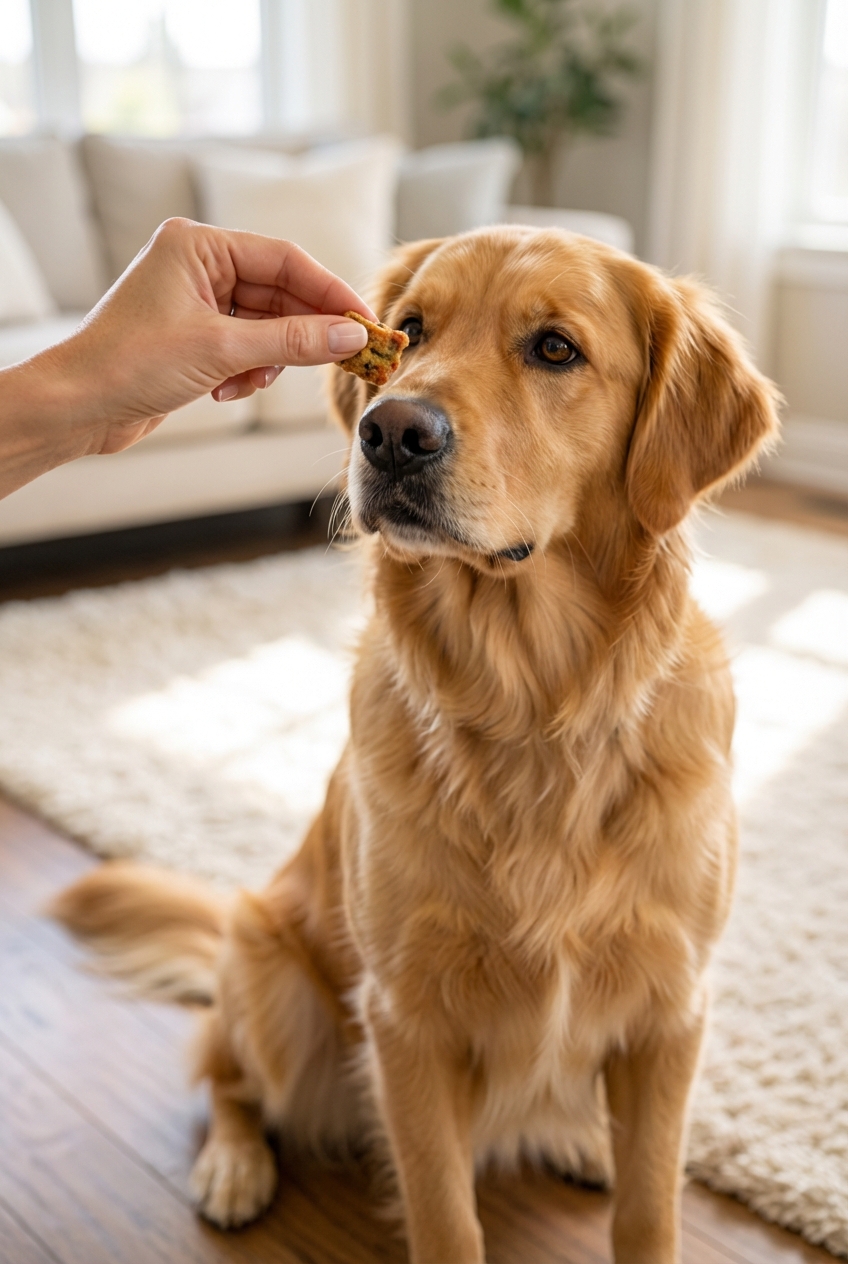
Capturing means you reward a behavior your dog offers naturally, without guiding them with a treat.
- Have treats ready in your pocket or treat pouch.
- Wait quietly while your dog is near you.
- The instant your dog sits on their own, mark (“Yes!”) and drop the treat right to them.
- Repeat throughout the day. Dogs sit more than you think, especially when they are waiting.
This is a lovely option for dogs who get overexcited by lures or who are worried about hands near their face.
Add the word “sit”
A common mistake is saying “sit, sit, sit” while your dog is still figuring it out. Instead:
- Do a few successful reps first using your lure or capture method.
- Once your dog is reliably sitting with your hand motion, say “Sit” one time right before you move your hand.
- Mark and reward when they sit.
Over time, your dog learns the word predicts the behavior and the reward.
Teach a hand signal
Dogs often respond to body language even faster than words. A simple hand signal is a gift for noisy environments and for dogs who may lose hearing as they age.
Try this:
- Palm up near your waist, then move it slightly upward.
- Use the exact same motion each time in the beginning.
Add a release word
A release word helps your dog understand when the sit is finished. Pick something simple like “OK” or “Free.”
- Ask for sit.
- Mark and reward while they are still sitting.
- Say your release word once, then toss a treat a step away to help them stand up.
This keeps your training clean and prevents your dog from guessing whether they are allowed to move.
Build duration
Once your dog can sit on cue, start rewarding them for staying seated.
- Ask for sit.
- Count one second in your head.
- Mark and reward while they are still sitting.
- Say your release word, then reset.
- Slowly increase to 2 seconds, 3 seconds, and so on.
Important: If your dog stands up early, simply reset and make it easier next time. Duration is a skill that grows with practice.
Fade treats the right way
You do not need to reward with a treat forever, but it helps to fade food thoughtfully. Once your dog understands “sit,” start mixing rewards:
- Reward most sits at first, then begin skipping an easy one here and there.
- Use real-life rewards too, like opening the door, setting down the food bowl, or clipping on the leash.
- Keep surprise “jackpot” treats for especially fast, confident sits.
This builds a sit that holds up when you do not have a treat in your hand.
Practice in real life
“Sit” is most useful when it shows up in everyday routines. Here are easy places to practice:
- Before meals: Ask for sit, then place the bowl down.
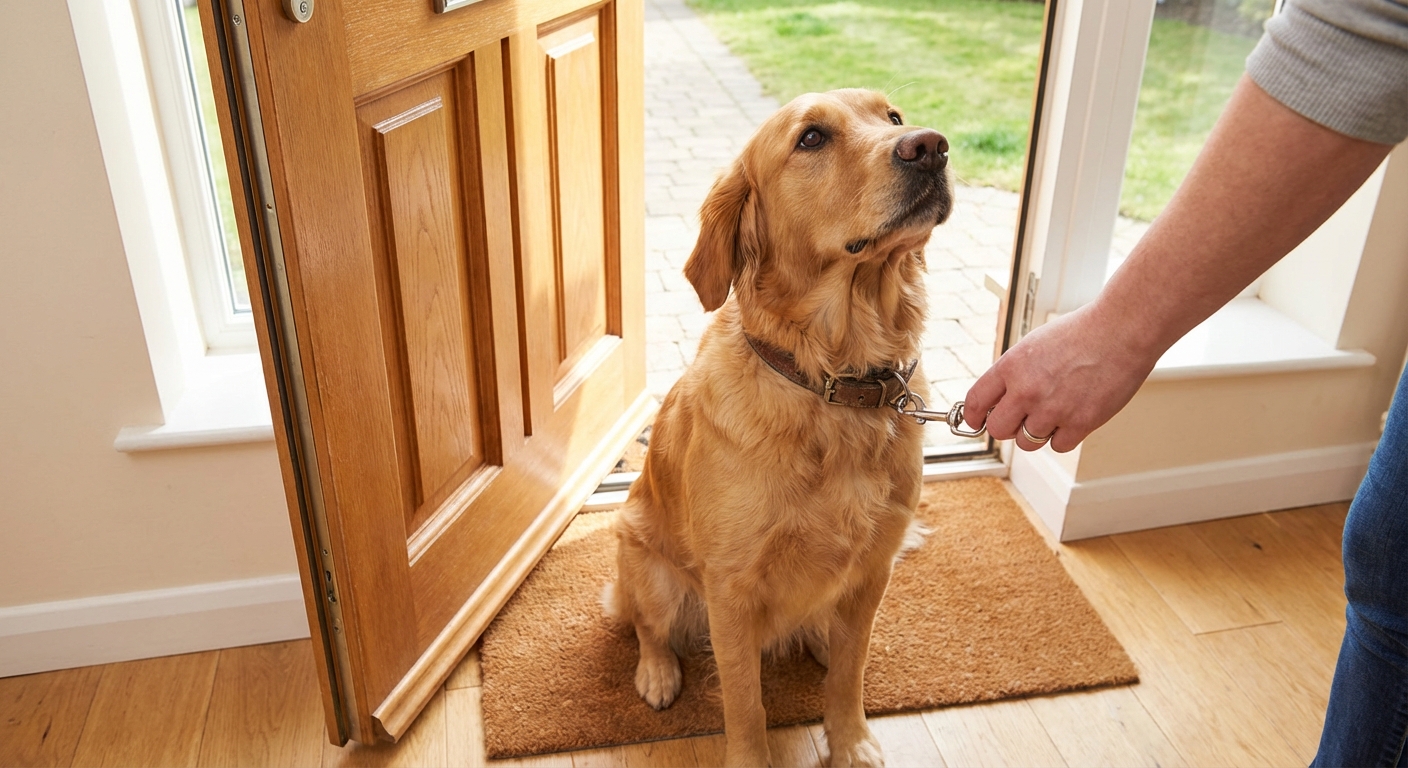
- Before going outside: Sit, then open the door.
- Before leash on: Sit, clip, then go.
- Greeting people: Sit becomes your polite hello.
These moments help your dog learn that sitting makes good things happen, even when you do not have a treat in your hand.
Proof it gently
Many dogs do not automatically generalize skills to new places. To make “sit” reliable, practice the same behavior with small increases in:
- Distance: You take one step back, then return and reward.
- Duration: One second becomes two, then three.
- Distraction: Quiet room first, then the yard, then the sidewalk.
Change only one of these at a time so your dog keeps winning.
When to skip “sit”
If your dog has known orthopedic pain, is recovering from surgery, or is a very senior dog with stiffness, repeated sits may be uncomfortable. In the clinic, I often see dogs who are “stubborn” about sitting when they are actually sore.
If sit seems hard, teach a different stationary behavior like stand or touch, and check in with your veterinarian or a qualified trainer for a plan that fits your dog’s body.
Troubleshooting
My dog backs up instead of sitting
Your lure may be too far forward or moving too far back. Keep it close to the nose and arc up in a smaller motion. Also check footing. A slippery floor often makes dogs scoot backward.
My dog jumps up at the treat
Hold the treat closer to their nose and move more slowly. Reward with the treat delivered low, right to their mouth while they are seated.
My dog sits crooked or leans to one side
Some dogs do this when they are still developing balance, or if they are guarding a sore spot. Practice on a non-slip surface, keep sessions short, and consider a vet check if you notice stiffness, limping, or reluctance to sit.
My dog will sit at home but not outside
This is normal. Many dogs do not automatically generalize skills to new places. Practice in new locations with easier expectations and better rewards at first.
My dog seems uncomfortable sitting
Please take this seriously. Puppies can be clumsy, but adult dogs that suddenly avoid sitting may have pain in hips, knees, or back. Less commonly, issues like anal gland discomfort can also make sitting unpleasant. If “sit” looks hesitant or awkward, pause training and ask your veterinarian for guidance.
How long does it take?
Some dogs learn the basic motion in a single day. Reliability can take days to weeks, depending on your dog’s age, history, motivation, and how consistently you practice in different locations.
Think of it like building a habit. You are not just teaching a position. You are teaching your dog how to learn with you.
Safety and kindness rules
- No pushing the rear down. It can create discomfort and make some dogs resist.
- Avoid repeating the cue. Say it once, then help your dog succeed.
- End on a win. If your dog nails it once, you can stop there.
- Keep it positive. Your dog should feel safe trying.
The goal is not perfection. The goal is a dog who understands you and feels good doing it.
Quick 5-day sit plan
Day 1
- 3 sessions indoors, 1 to 2 minutes each
- Lure into sit, reward every success
Day 2
- Add the word “Sit” right before the lure
- Practice in two different rooms
Day 3
- Fade the lure slightly (empty hand motion, treat from the other hand)
- Introduce a release word and begin 1 to 2 seconds of duration
Day 4
- Practice near mild distractions (someone walking by, TV on)
- Reward the fastest sits
Day 5
- Try a few sits outside in a quiet area
- Use higher-value treats and keep it easy