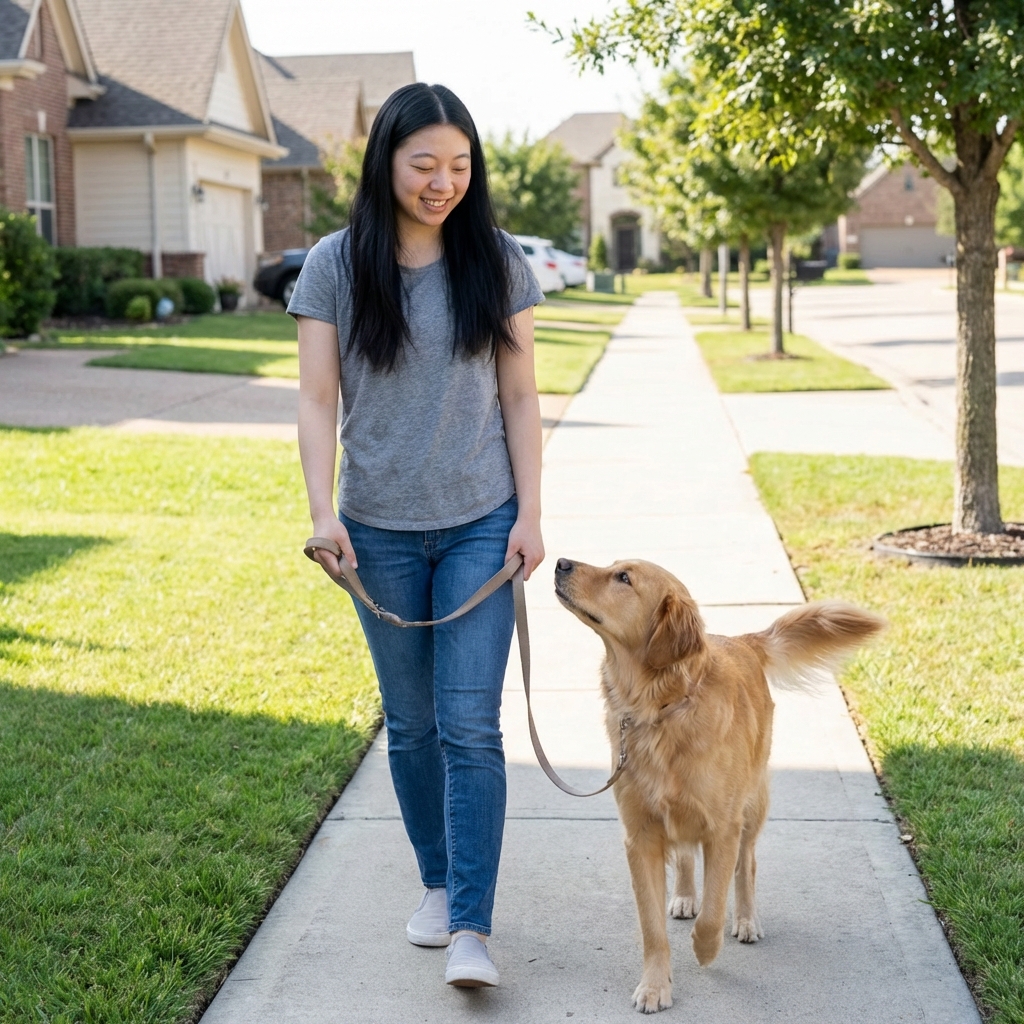
Measure your dog’s chest girth correctly to choose a harness that’s secure and comfortable. Includes step-by-step instructions, extra measurements, fit c...
Article
•
Designer Mixes
Teach Your Dog to Run With You

Shari Shidate
Designer Mixes contributor
Running with your dog can be one of the happiest routines you build together. It is exercise, enrichment, training, and quality time all rolled into one. The key is doing it in a way that protects your dog’s joints, paws, and confidence while also keeping the experience fun for you.
As a veterinary assistant in Frisco, Texas, I have seen both sides: dogs who thrive with structured runs, and dogs who end up sore, limping, or stressed because they were pushed too fast. This handbook will help you start safely, teach the skills that matter, and build a running habit you can keep for years.
Quick note: This is general guidance, not a substitute for veterinary care. If you are unsure what is safe for your dog, your veterinarian is the best place to start.
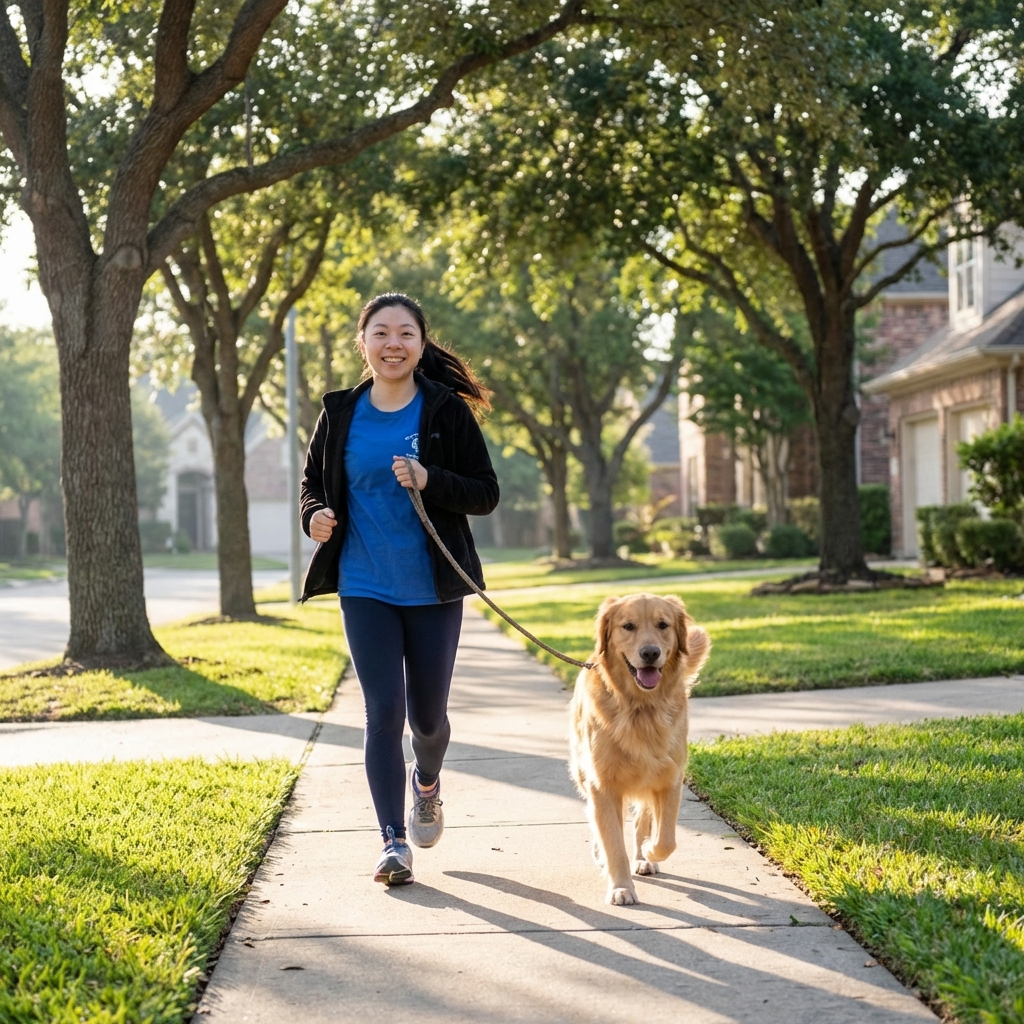
Is your dog a good running partner?
Most healthy dogs can enjoy some form of running, but not every dog should do sustained distance or speed. Before you start a running plan, consider these big factors.
Age and growth plates
Puppies should not do repetitive distance running because their growth plates are still developing. Many vets recommend waiting until your dog is fully grown before you begin steady runs. For small breeds, that is often around 10 to 12 months. For many medium to large breeds it is often 12 to 18 months, and some large or giant breeds may not be fully mature until closer to 18 to 24 months. If you are unsure, ask your veterinarian to confirm whether your dog’s growth plates are likely closed.
Breed and body type
- Great candidates: Many sporting, herding, and mixed breeds with an athletic build often enjoy running.
- Use extra caution: Brachycephalic dogs (like Bulldogs, Pugs, and some mixes) can overheat quickly due to airway anatomy. Dogs with very short legs or long backs may be more prone to strain.
- Overweight dogs: Running can help, but you must start slower because extra weight increases joint stress.
Health and temperament
Dogs with arthritis, cruciate ligament history, heart disease, respiratory disease, or chronic pain need a veterinarian-guided plan. Also, a dog who is fearful, reactive, or easily overstimulated may need loose leash training and confidence-building walks before “run mode” is enjoyable.
Helpful baseline: If your dog can comfortably do a brisk 30-minute walk without coughing, limping, lagging, or being wiped out afterward, that is a good sign you can begin a gentle run-walk program.
Gear that makes running safer
You do not need a huge shopping list, but the right basics prevent injuries and frustration.
Harness over collar
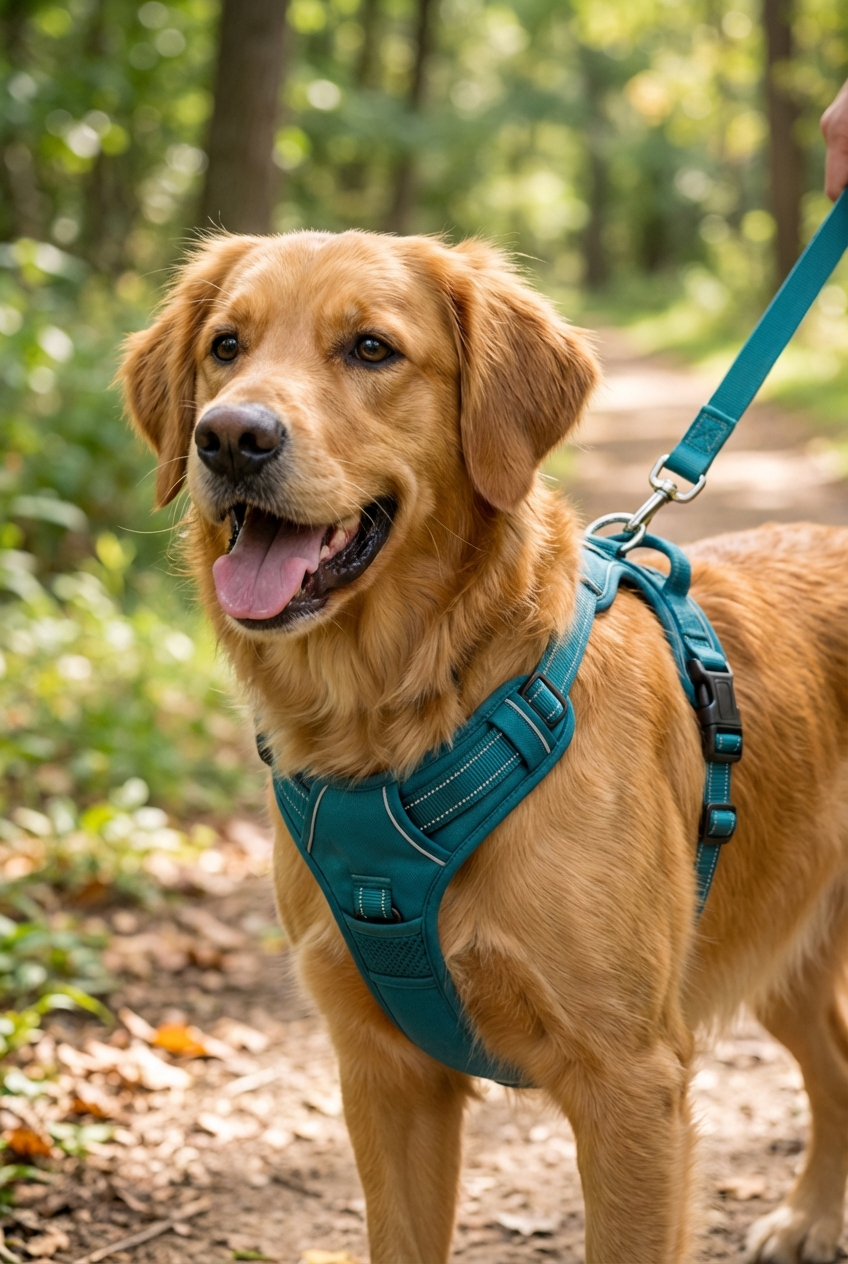
For running, a well-fitted harness is usually safer than a collar because it reduces pressure on the neck and trachea. Look for a harness that does not restrict shoulder movement and fits snugly without rubbing.
- Two-finger rule: you should be able to fit two fingers under the straps.
- Check armpits: rubbing near the “armpit” area is a common irritation spot.
Leash length and hands-free option
A 4 to 6 foot leash is a good starting point. Many runners love a hands-free waist belt leash, but only after the dog reliably does not lunge or zig-zag. If your dog is still learning, keep it simple and hold the leash.
Reflective gear and ID
If you run near roads or at dawn or dusk, reflective trim or a light can be a lifesaver. Make sure tags are current and microchip info is up to date.
Paw protection (sometimes)
Most dogs do fine without boots, but hot pavement, road salt, sharp gravel, and long distances can cause paw pad wear. If you use boots, introduce them at home first with treats so your dog does not panic mid-run.
Before you run: health habits
Small habits prevent big problems.
Temperature and surface
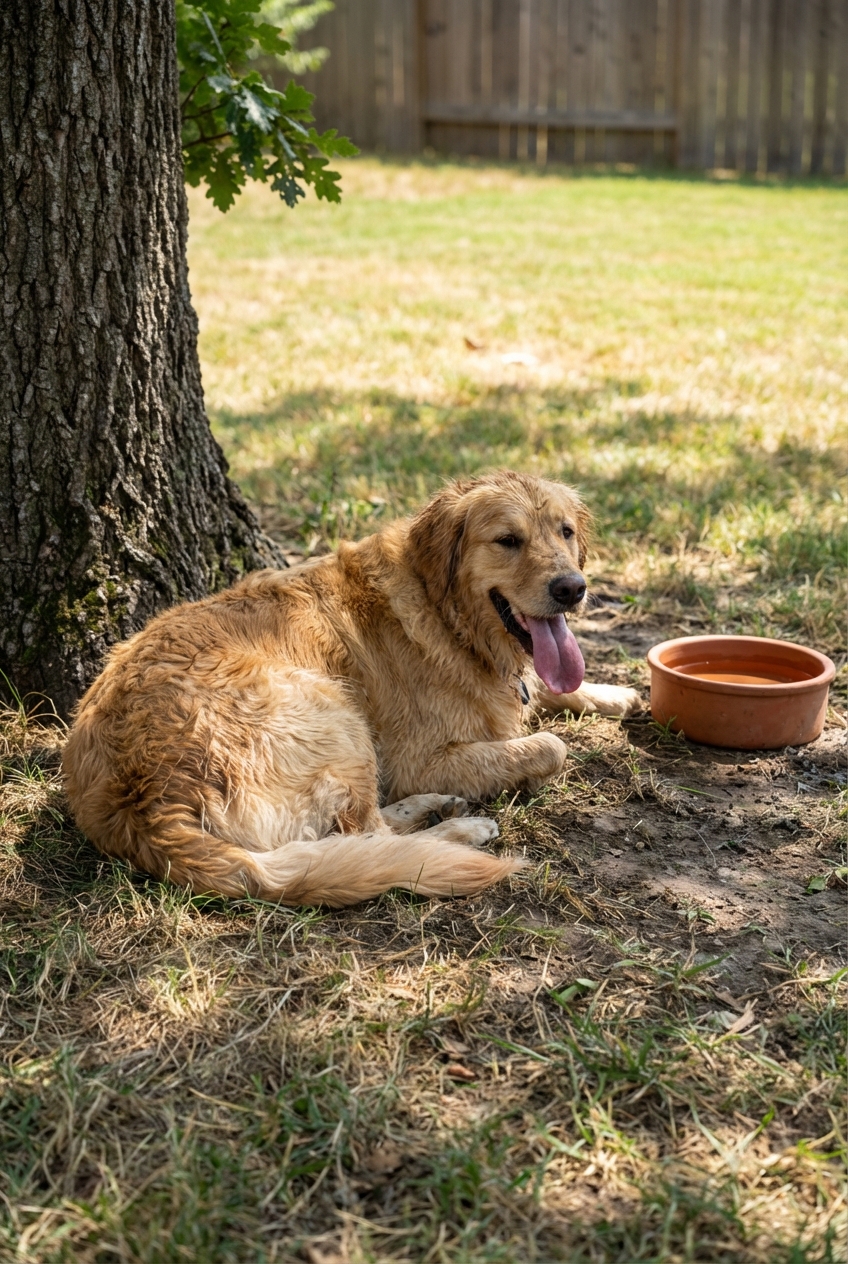
- Heat: Dogs overheat faster than people. Run early or late in warm months and choose shade.
- Pavement check: As a practical rule of thumb, place your palm on the pavement for about 7 seconds. If it is too hot for you, it is too hot for paws.
- Humidity: High humidity makes cooling harder because panting is less effective.
- Cold and ice: Watch for ice melt chemicals, salt, and sharp ice edges. Consider boots, wipe paws after, and keep sessions shorter in extreme cold.
Hydration and timing
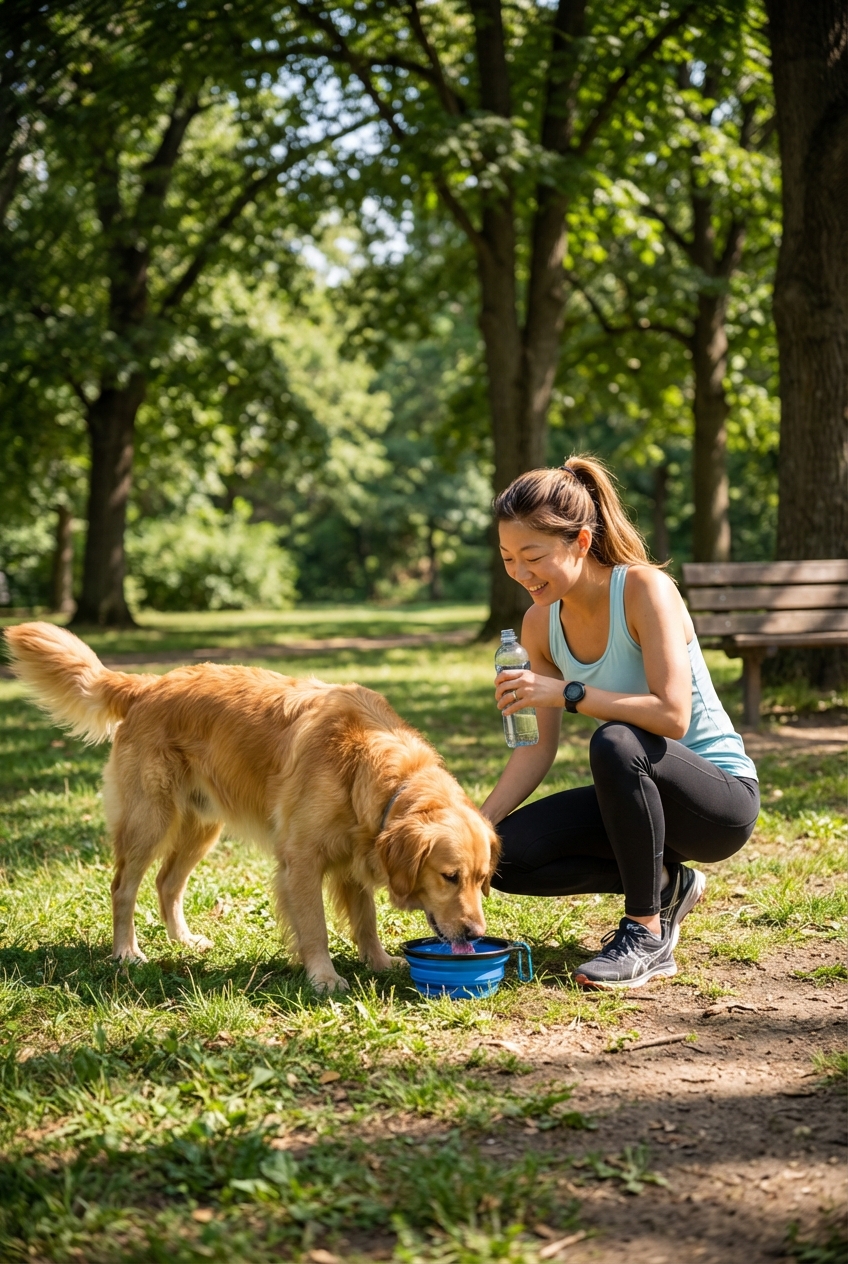
Bring water for longer outings, and avoid a full meal right before a run. For many dogs, waiting at least 2 hours after eating is a safer baseline. Some dogs may need longer, especially deep-chested breeds that are higher risk for bloat. When in doubt, ask your veterinarian what timing makes sense for your dog.
Warm-up and cool-down
Start with a 5 to 10 minute brisk walk. End with a 5 to 10 minute walk to help recovery. Many dogs will also handle bathroom business during these walking segments, which keeps the run itself smoother.
Teach the core skills first
Running is not the time to find out your dog does not know how to walk politely. Build these skills on calm walks, then bring them to jogging.
1) A running position cue
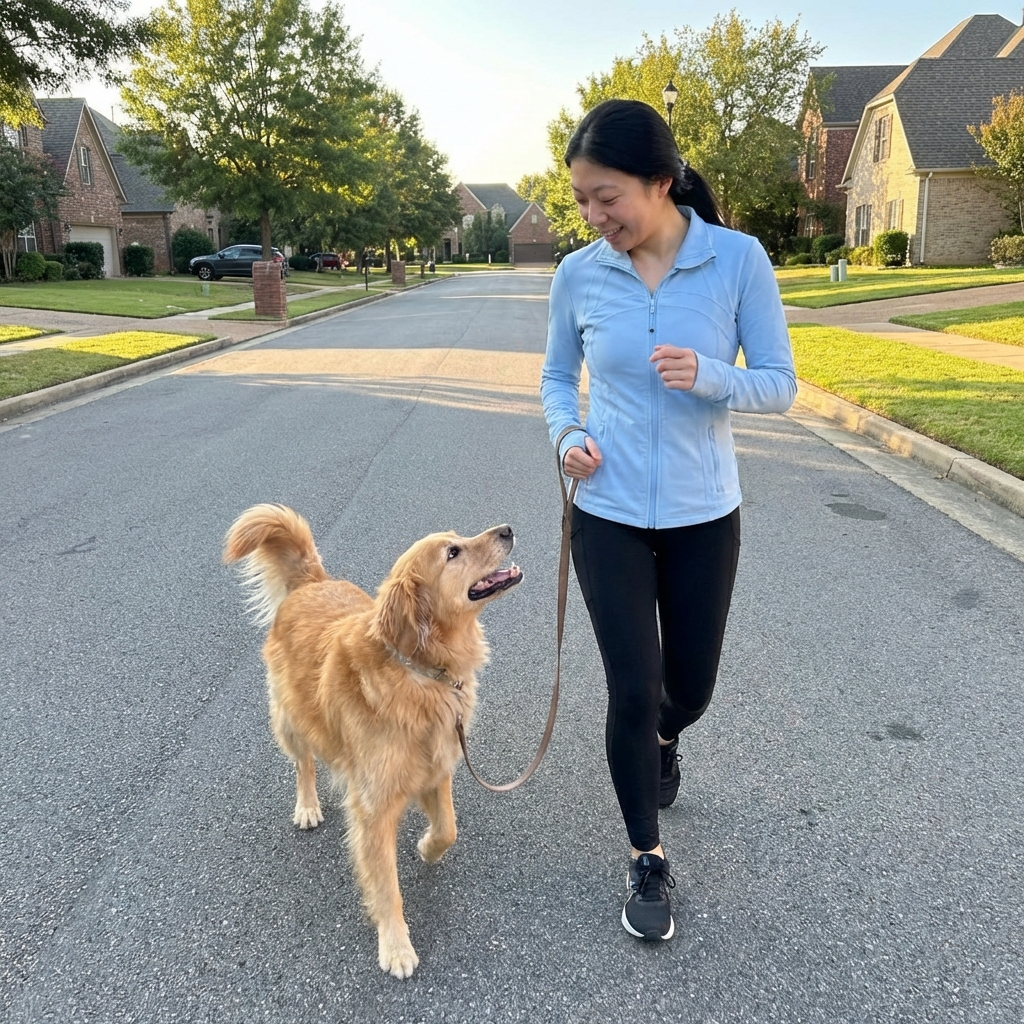
Pick a side for your dog (left or right) and stick with it. Teach a cue like “with me” for your running position. Reward your dog for being beside you with a loose leash.
2) Loose leash basics
You do not need competition-level heeling, but you do need a leash that stays mostly slack. If your dog pulls, stop running and return to walking until the leash loosens, then try again. Consistency matters more than intensity.
3) Start and stop cues
- “Let’s run” means we are jogging now.
- “Easy” means slow down.
- “Stop” means freeze and look at me.
Practice in short bursts in your driveway or a quiet sidewalk: walk, cue “let’s run” for 10 seconds, cue “easy,” then walk again. Reward calm transitions.
4) Direction cues
“Left,” “right,” and “this way” are incredibly helpful. They reduce sudden leash jerks and make you both feel like a team.
5) Leave it and ignore distractions
Squirrels, rabbits, dropped food, and interesting smells are everywhere. Teach “leave it” with high-value treats at home, then on walks, before you rely on it during a run.
6) Safe spacing and turns
Aim to keep your dog beside you or slightly ahead, but not crossing in front of your legs. When you need to turn, slow down first, cue the turn, then resume your pace. This simple habit prevents trips and sudden leash yanks.
Your first 2 weeks: a run-walk plan
Most dogs do best when you start slower than you think you need to. Tendons, ligaments, paw pads, and cardiovascular fitness all need time to adapt. If your dog is new, older, heavier, or coming off a couch-potato season, it is completely fine to stretch this “two-week” plan into 4 to 6 weeks.
Rule of thumb
If your dog is new to running, begin with a run-walk interval plan 3 days per week, with rest or easy walks on other days. Avoid doing these sessions on three consecutive days at first.
Two-week starter schedule
- Week 1 (Sessions 1 to 3): 5 minute warm-up walk, then 6 rounds of 30 seconds easy jog plus 90 seconds walk, then 5 minute cool-down walk.
- Week 1 (If your dog is thriving): For the last 1 to 2 sessions of the week, repeat the same plan or add 1 to 2 rounds if your dog seems fresh and happy.
- Week 2 (Sessions 4 to 6): 5 minute warm-up walk, then 8 rounds of 45 seconds easy jog plus 75 seconds walk, then cool-down.
What “easy jog” means: You can talk in full sentences and your dog is not dragging you forward. This should feel almost boring at first, and that is perfect.
How to progress safely
Increase total running time gradually. Some runners use a “10 percent per week” increase as a conservative starting point, but it is not a rule for every dog. Let your dog’s recovery and comfort guide you more than any number. If you see soreness, limping, or reluctance, scale back.
How to read your dog
Your dog will tell you when something is too much, but you have to know what to look for.
Signs you should slow down or stop
- Lagging behind, sitting, or refusing to move forward
- Excessive panting that does not improve quickly with rest
- Foamy drool, bright red gums, or glazed eyes
- Limping or favoring a leg during or after the run
- Sudden “bunny hopping” gait in the back end
- Paw licking, holding a paw up, or visible pad cracks
Post-run check (2 minutes)
- Look at paw pads for wear, debris, or cuts.
- Run your hands down each leg and gently flex joints to watch for flinching.
- Offer water and let your dog rest in shade or indoors with cool air.
If your dog is limping after a run, take a break from running and contact your veterinarian for guidance. It is always better to address soreness early.
Heat safety: when it is urgent
Heat stress can turn into heatstroke quickly. If your dog shows severe distress, stop immediately.
Emergency signs
- Collapse or inability to stand
- Weakness, disorientation, or seizures
- Heavy panting that is not improving with rest
- Vomiting or diarrhea during heat exposure
- Gums that are very bright red, pale, or bluish
What to do
- Move to shade or air conditioning immediately.
- Cool with tepid water (not ice water), especially on the belly, chest, and paws.
- Offer small sips of water if your dog is alert and able to swallow.
- Seek urgent veterinary care. Keep cooling during transport.
Make it fun
Dogs repeat what feels good. When running becomes a positive game, training gets easier.
Use sniff breaks
Sniffing is enriching and calming. Plan short sniff breaks during walk intervals. It is also a natural reward for good leash behavior.
Bring tiny treats at first
For the first few weeks, a small treat every so often can help your dog stay focused. Keep treats soft, small, and easy to swallow quickly.
Choose dog-friendly routes
- Soft surfaces like dirt or grass are easier on joints than concrete.
- Low-traffic paths reduce stress and sudden stops.
- Shade and access to water are a big plus in Texas summers.
Parasites and plant hazards
If you run on trails or through tall grass, keep flea and tick prevention current, and do a quick coat check afterward. In some areas, burrs and foxtails can cause painful problems, so remove anything you find right away.
Common problems and quick fixes
Pulling at the start
Fix: Do not start running while your dog is pulling. Stand still, wait for slack, then cue “let’s run.” You are teaching that pulling never makes forward motion happen.
Zig-zagging to sniff
Fix: Keep your dog on one side and use an “okay, sniff” cue during walk breaks. During jogging segments, reward forward focus.
Stopping suddenly
Fix: Slow your pace and shorten sessions. Some dogs need more walk time between jogs. Also consider surface temperature and paw comfort.
Overexcitement around other dogs or people
Fix: Increase distance from triggers, run at quieter times, and practice “look at me” and “leave it” on regular walks. If reactivity is significant, a positive reinforcement trainer can make a huge difference.
GI upset during or after
Fix: Avoid running right after meals. Carry water, but do not let your dog gulp large amounts mid-run. If it keeps happening, check in with your veterinarian.
Etiquette and leash safety
A little planning keeps everyone safer and makes your runs more relaxing.
- Follow leash laws and keep your dog close when passing others.
- Announce yourself when approaching from behind and give people space.
- Avoid retractable leashes for running. They are harder to control and can cause injuries.
- Pick up waste and pack it out when required.
Nutrition and recovery
Food is fuel, but you do not need a complicated sports diet to support a running buddy.
Keep a healthy body condition
Lean dogs typically handle running better. If you cannot easily feel your dog’s ribs with gentle pressure, talk with your veterinarian about a safe weight plan. Even modest weight loss can reduce joint strain.
Protein and hydration matter
Active dogs need adequate protein for muscle maintenance. Make sure fresh water is always available, and consider bringing water for any run longer than about 20 to 30 minutes, especially in warm weather.
Joint support discussion
If your dog is middle-aged, large-breed, or has a history of orthopedic issues, ask your veterinarian about joint support options. Omega-3 fatty acids (EPA and DHA) have stronger evidence than many other supplements. Glucosamine and chondroitin are commonly used, but the evidence is mixed. Your vet can help you choose products and doses that make sense for your dog.
When to talk to your vet first
It is a smart idea to get the green light if any of these apply:
- Your dog is a puppy or still growing
- Your dog is overweight or newly adopted with an unknown history
- Your dog has ever limped, had knee issues, or has arthritis
- Your dog coughs, wheezes, or tires quickly on walks
- Your dog is brachycephalic or struggles in heat
A quick checkup can help you choose a safe starting plan and avoid setbacks.
Quick checklist for your first run
- Harness fitted and leash comfortable in your hand
- 5 to 10 minute warm-up walk
- Run-walk intervals, short and easy
- Water and a plan for shade
- Watch your dog’s breathing and stride
- Cool-down walk and paw check
Most importantly, keep the first few sessions short enough that your dog finishes thinking, “That was fun. Let’s do it again.”