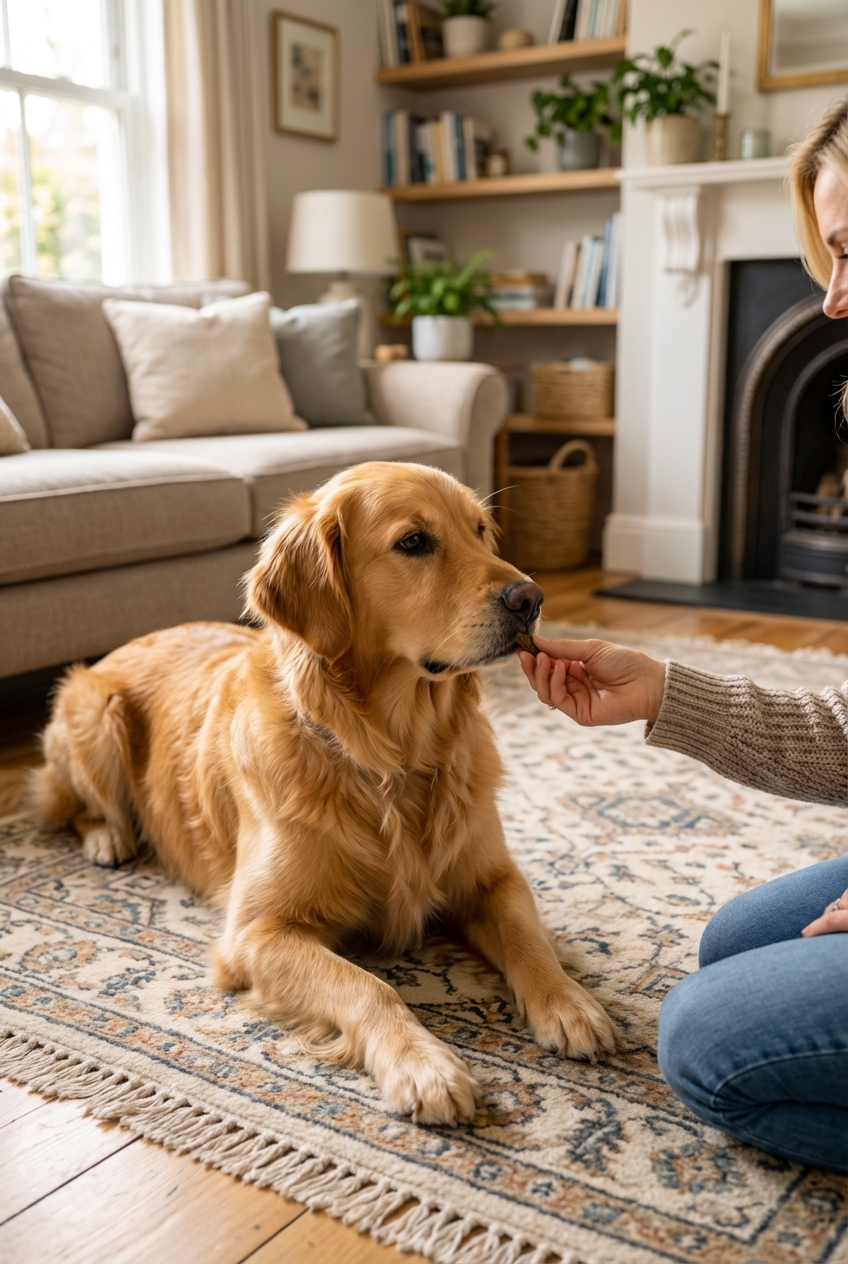
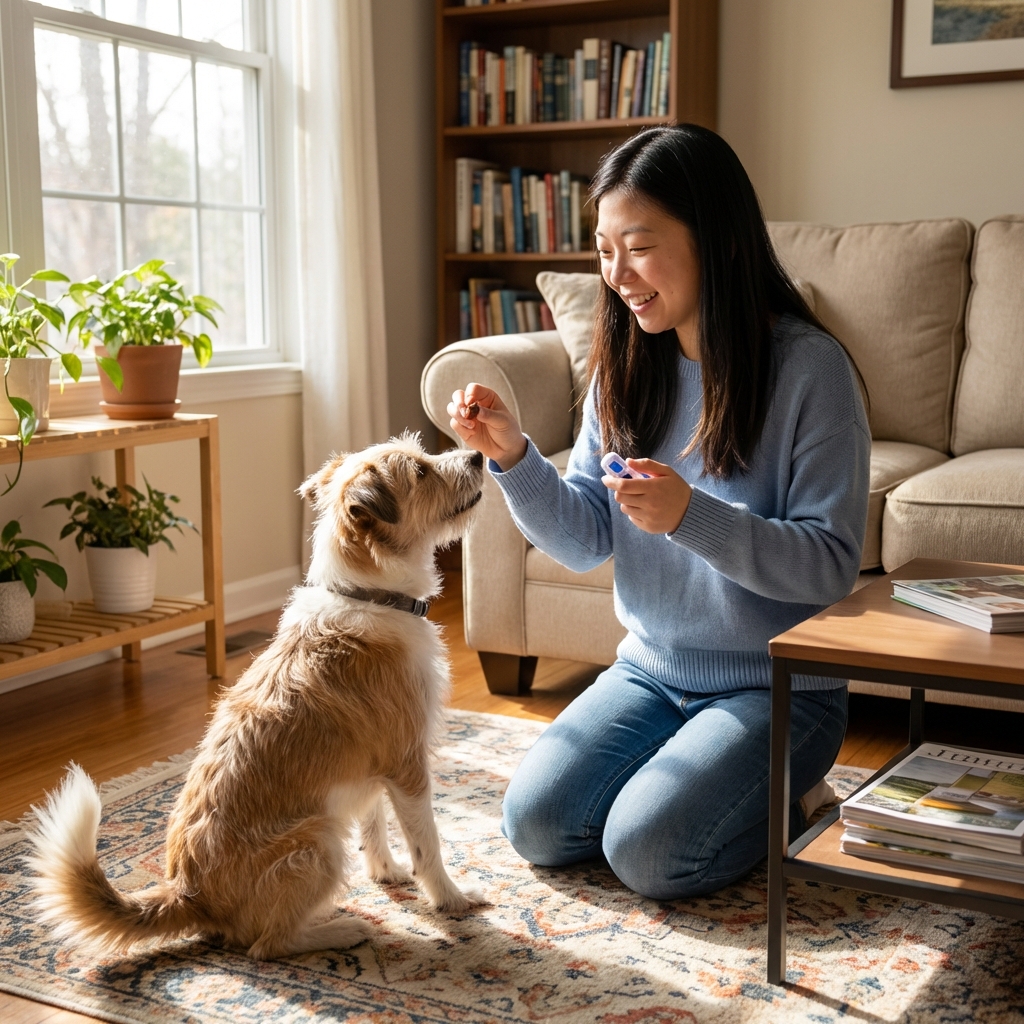
Teach “roll over” with short, reward-based sessions. Get step-by-step luring instructions, when to avoid the trick, supplies needed, and quick fixes for ...
Article
•
Designer Mixes
Teach Your Dog to Roll Over

Shari Shidate
Designer Mixes contributor
Roll over is one of those classic tricks that looks impressive, but it is really just a series of tiny, teachable moments. If your dog already knows down, you are halfway there. And if they do not, no worries. We can build the skill with a gentle, reward-based approach that keeps your pup confident and comfortable.
Before we start, a quick safety note from the vet-assistant side of me: if your dog has back or neck pain, arthritis, a recent surgery, or any mobility issues, check with your veterinarian first. For many dogs, we can also teach a modified “half roll” or a simple “side” that avoids strain.
The secret: make “yes” easy
Dogs learn fastest when we set up the environment so the right choice is simple and the wrong choice is unlikely. For roll over, that means:
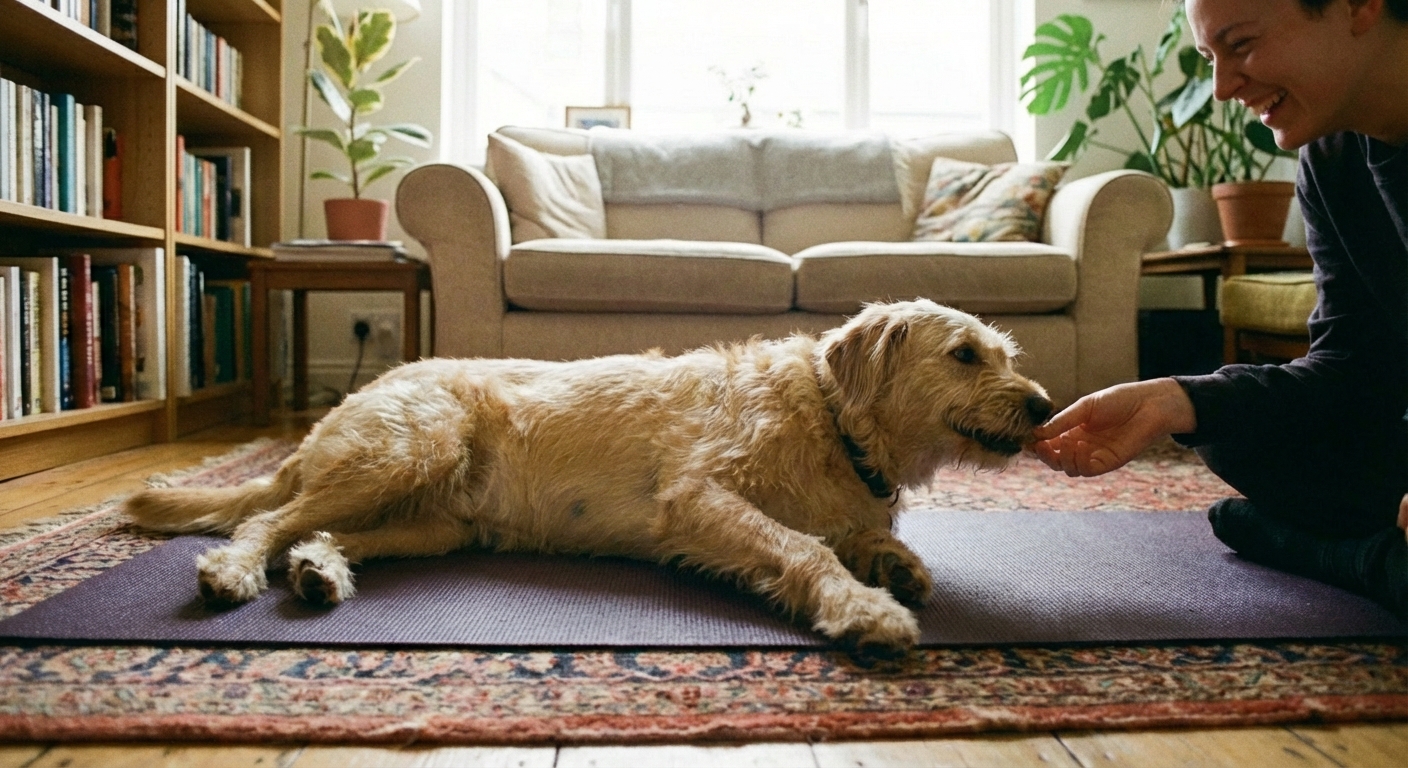
- Train on a soft, non-slip surface like carpet, a yoga mat, or grass.
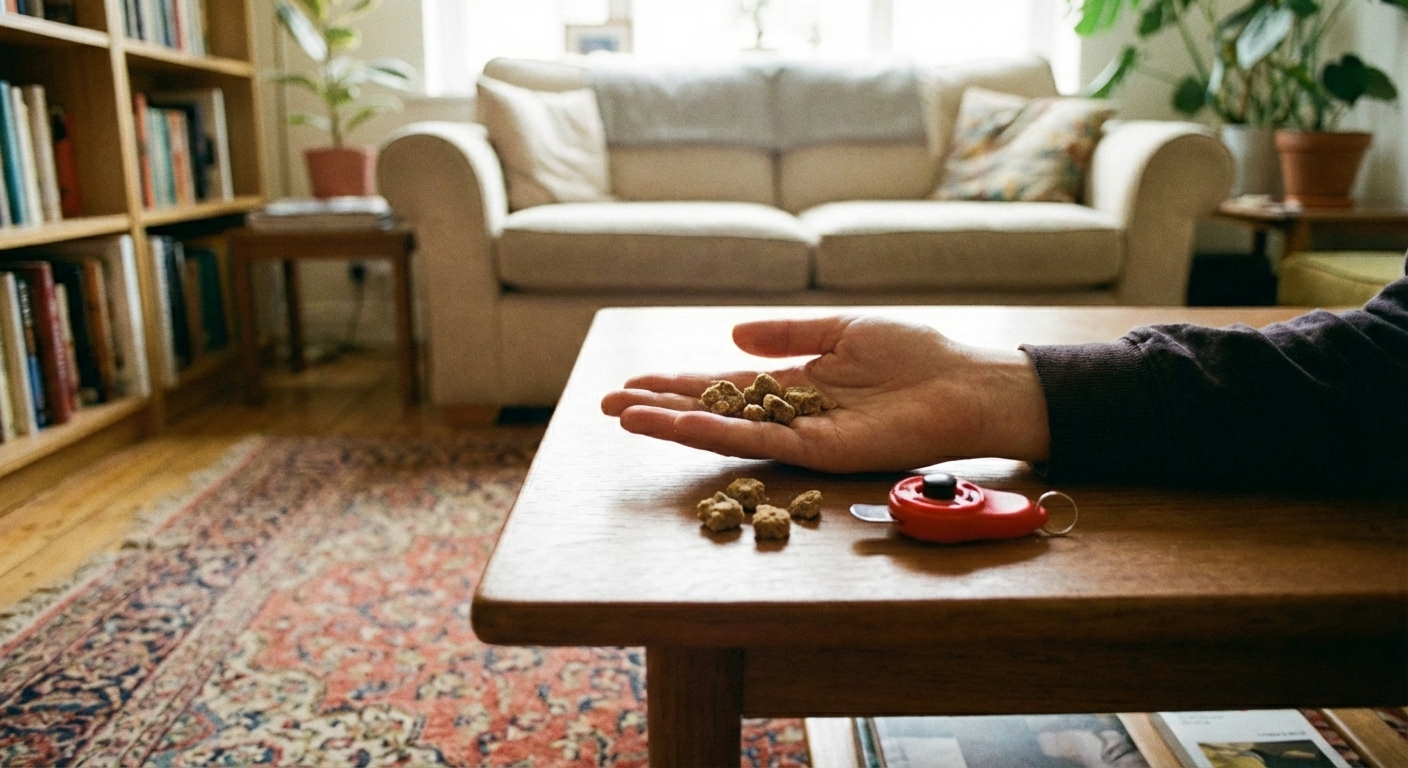
- Use tiny, high-value treats (pea-sized). Soft treats or bits of cooked chicken work well.
- Keep sessions short: 3 to 5 minutes, once or twice a day.
- Reward progress, not perfection. First we pay for a shoulder dip, then a side lie-down, then a full roll.
If you have a clicker, great. If not, a consistent marker word like “Yes!” works just as well. The marker tells your dog, “That exact movement earns a treat.”
One more thing that helps: end while your dog is still eager. A cheerful “All done” and a handful of calm pets or a sniff break can keep them excited for next time.
What you need
- A quiet space with traction
- 20 to 40 small treats
- Optional: clicker
- Optional: a mat or towel (helpful for hardwood floors)
How to teach roll over
Step 1: Get into position
If your dog knows down, ask for it. Mark and treat once your dog is settled.
If your dog does not know “down” yet: lure them to the floor by holding a treat at their nose and slowly moving it straight down between their front paws, then slightly back toward their chest. The moment their elbows touch the ground, mark and treat. Repeat a few times until getting down is smooth and easy.
Step 2: Lure to the shoulder
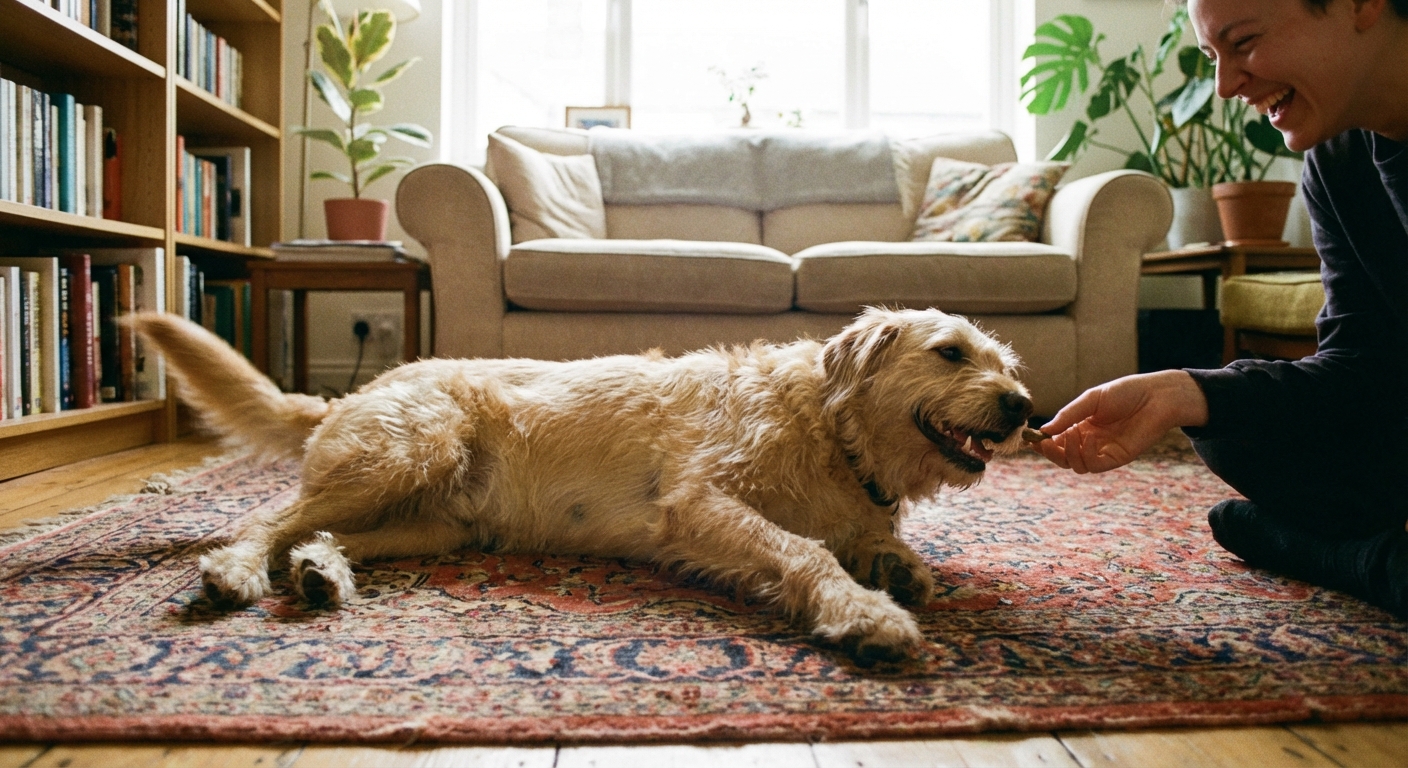
Hold a treat at your dog’s nose, then slowly move it toward their shoulder, like you are drawing a small “C” shape along the side of their face. Keep the treat close to the nose so your dog does not pop up.
The moment you see a shoulder dip or your dog shifts weight to one hip, mark and treat.
Goal: your dog smoothly slides onto one side.
Step 3: Reward the side position
When your dog is lying on their side, mark and treat again. Give 2 to 3 quick rewards in that position so it feels safe and worth repeating.
Tip: deliver treats close to their mouth, not behind their head. This helps avoid awkward neck twisting.
Step 4: Lure the roll
Now move the treat from their nose along their ribs and slightly up and over, so their head follows and their body naturally tips into a roll. Think: nose follows the treat toward the dog’s back, then continues over the top.
The second their hips begin to follow, mark and treat.
At first, you might reward a half roll (shoulders rotate but they do not fully flip). That is normal and a great sign you are on track.
Step 5: Pay for the full roll
As your dog understands the game, wait for a little more movement before you mark. Soon you will be marking when they complete the full roll and land back in a down or a sit.
Training “secrets” are usually just good timing: reward tiny steps early, then raise criteria slowly.
When to add the cue
Add the cue “Roll over” only after your dog is doing the motion reliably with your hand lure. A good rule: if your dog can follow the lure and complete the roll about 8 out of 10 tries, you are ready.
Here is how:
- Say “Roll over” once.
- Pause briefly.
- Do the lure motion.
- Mark and treat.
After a few sessions, make the hand motion smaller and smaller. That is how you “fade” the lure and end up with a clean behavior on cue.
Common problems
Your dog pops up into a sit
- Train on a softer surface.
- Move the lure slower and keep it close to the nose.
- Reward more in the down and side-lying stages.
Your dog only rolls halfway
- That is progress. Mark the half roll and treat.
- Next, lure just a tiny bit farther before marking.
- Try practicing on the easier side. Many dogs have a “favorite” roll direction.
Your dog gets mouthy with the treat hand
- Use a closed fist and deliver the treat from the other hand.
- Mark calm following, not grabbing.
- Switch to slightly larger, softer treats so you can deliver faster without repeated nibbling.
Your dog seems uncomfortable
- Stop and reassess. Stiffness, flinching, or reluctance can be a sign to pause training.
- Practice a “side” cue instead (down, then relax onto one hip).
- Consider a vet check if discomfort is new or worsening.
Make it reliable
Once your dog can roll over at home, the next step is teaching them that the cue still matters in new situations. Trainers call this proofing, and it is the difference between “my dog can do it” and “my dog can do it anywhere.”
- Change locations: living room, backyard, quiet park.
- Change your position: standing, sitting, one step away.
- Lower distractions first, then slowly add more.
- Use occasional jackpot treats (3 to 5 treats in a row) for especially great responses.
How long does it take?
Many dogs learn the basics in 3 to 10 short sessions, especially if they already know down and enjoy food rewards. Some dogs take longer, including shy dogs, large dogs, and dogs with less body awareness, and that is perfectly okay. Consistency beats intensity every time.
If you only practice a few minutes a day, you are still doing it right. Your dog’s confidence is the real win.
Gentle option for seniors
If a full roll is too much, teach a “Play dead” or “Side” cue instead:
- Ask for down (or lure down).
- Lure to the shoulder until your dog lies on one side.
- Mark and reward that comfortable side position.
It looks adorable, it is easier on the body, and it still builds cooperation and trust.