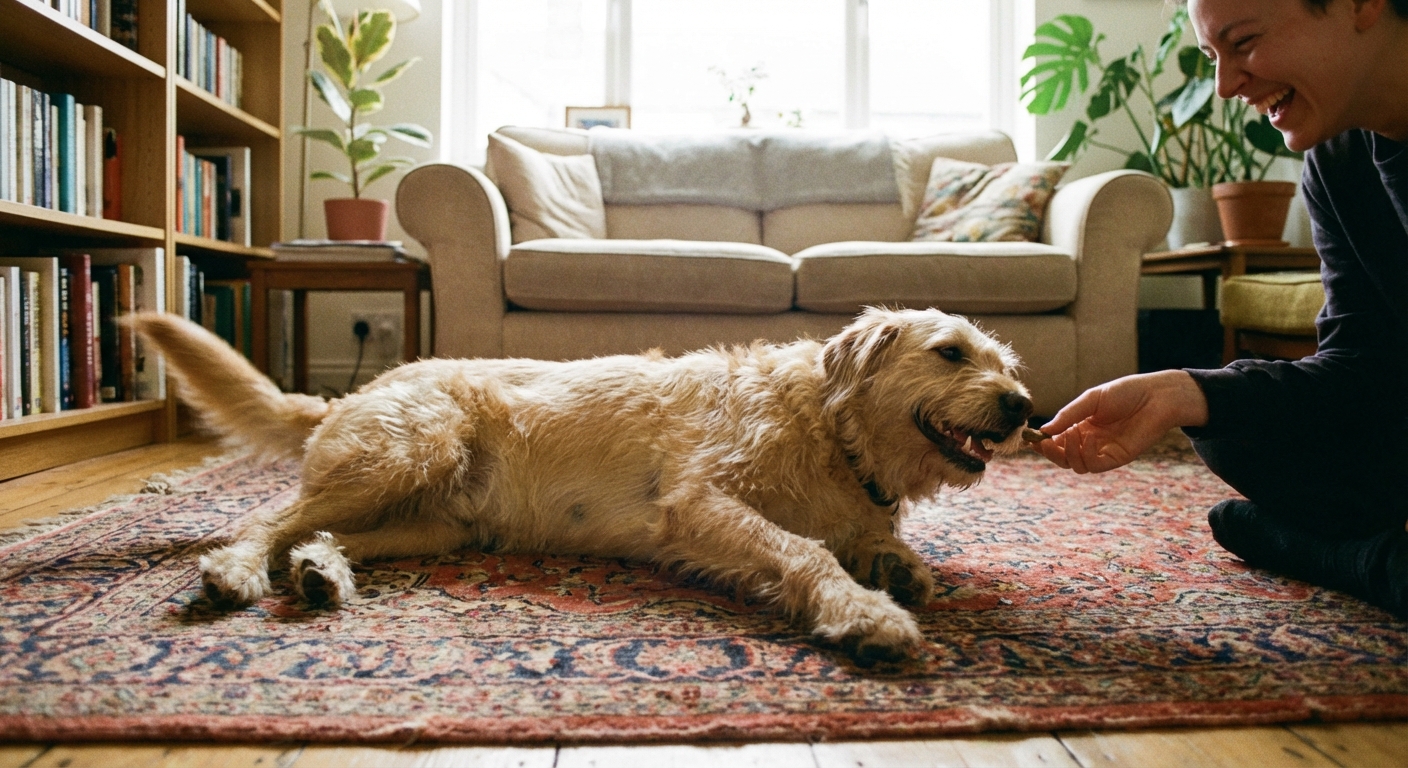
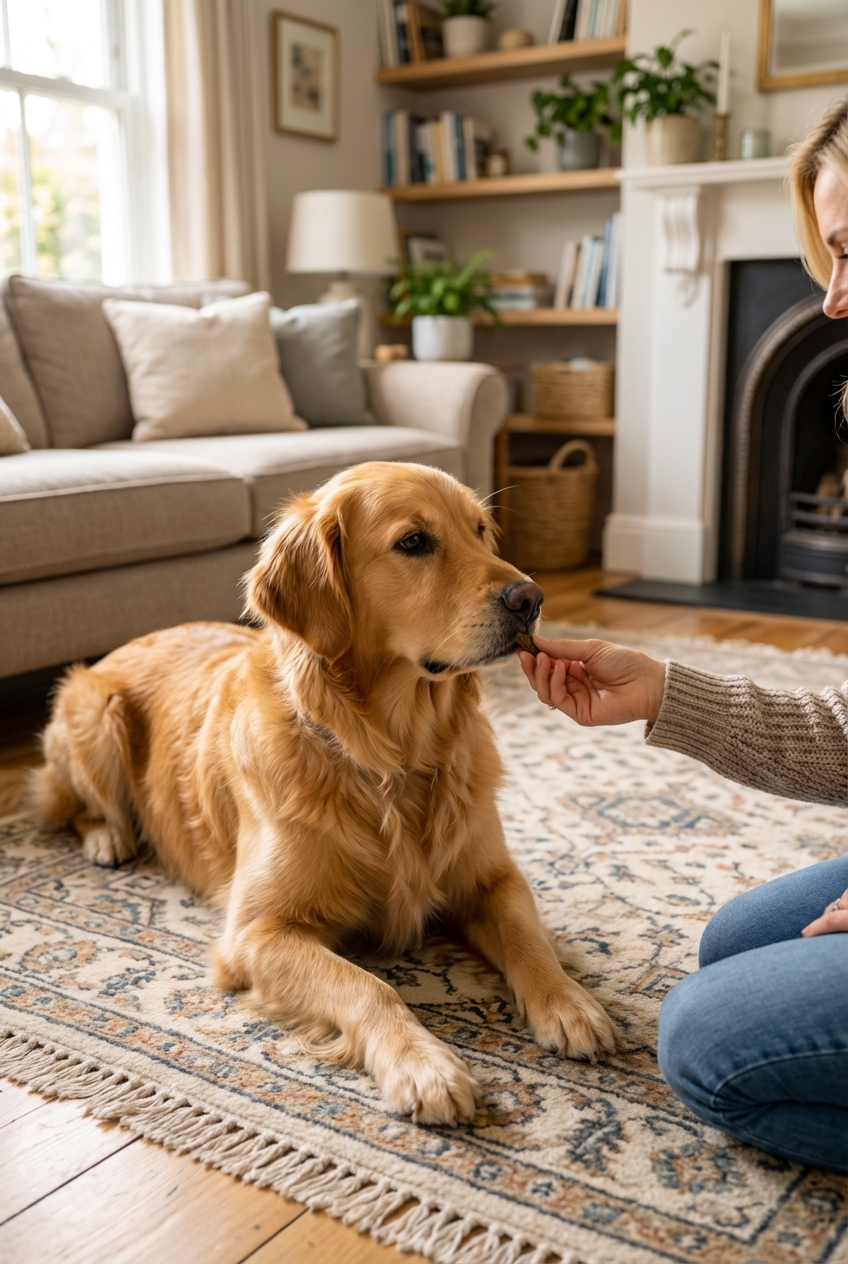
Teach “roll over” with short, reward-based sessions. Get step-by-step luring instructions, when to avoid the trick, supplies needed, and quick fixes for ...
Article
•
Designer Mixes
Teach Your Dog to Roll Over

Shari Shidate
Designer Mixes contributor
Roll over is one of those classic tricks that looks adorable, but it is also a surprisingly useful training skill. When you teach it thoughtfully, you are building body awareness, confidence, and a stronger “listen and respond” habit that carries over into real life.
As a veterinary assistant in Frisco, Texas, I also like roll over because, when it is taught gently and your dog is in control of the movement, it can support calmer, more cooperative body positioning. The key is keeping it positive and never forcing a dog onto their back.
What “roll over” means
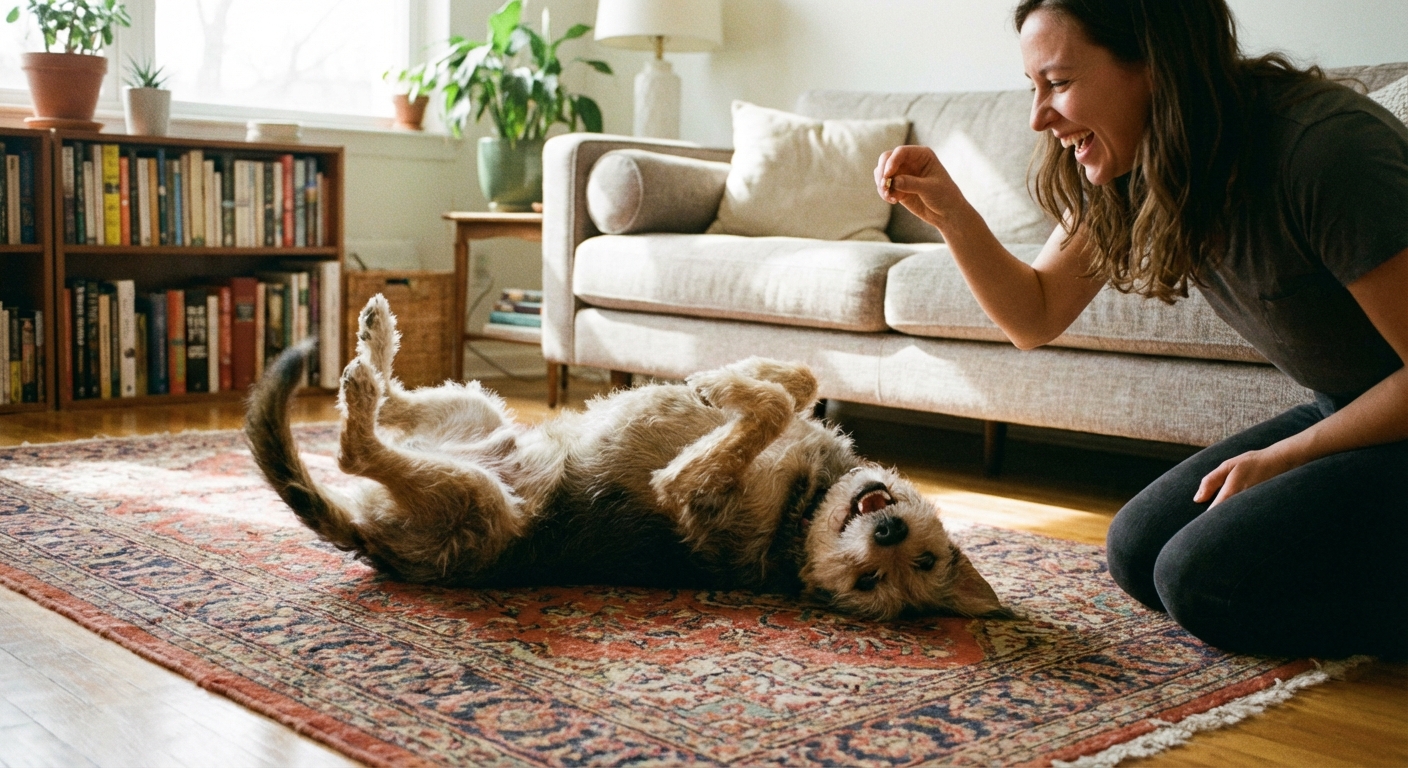
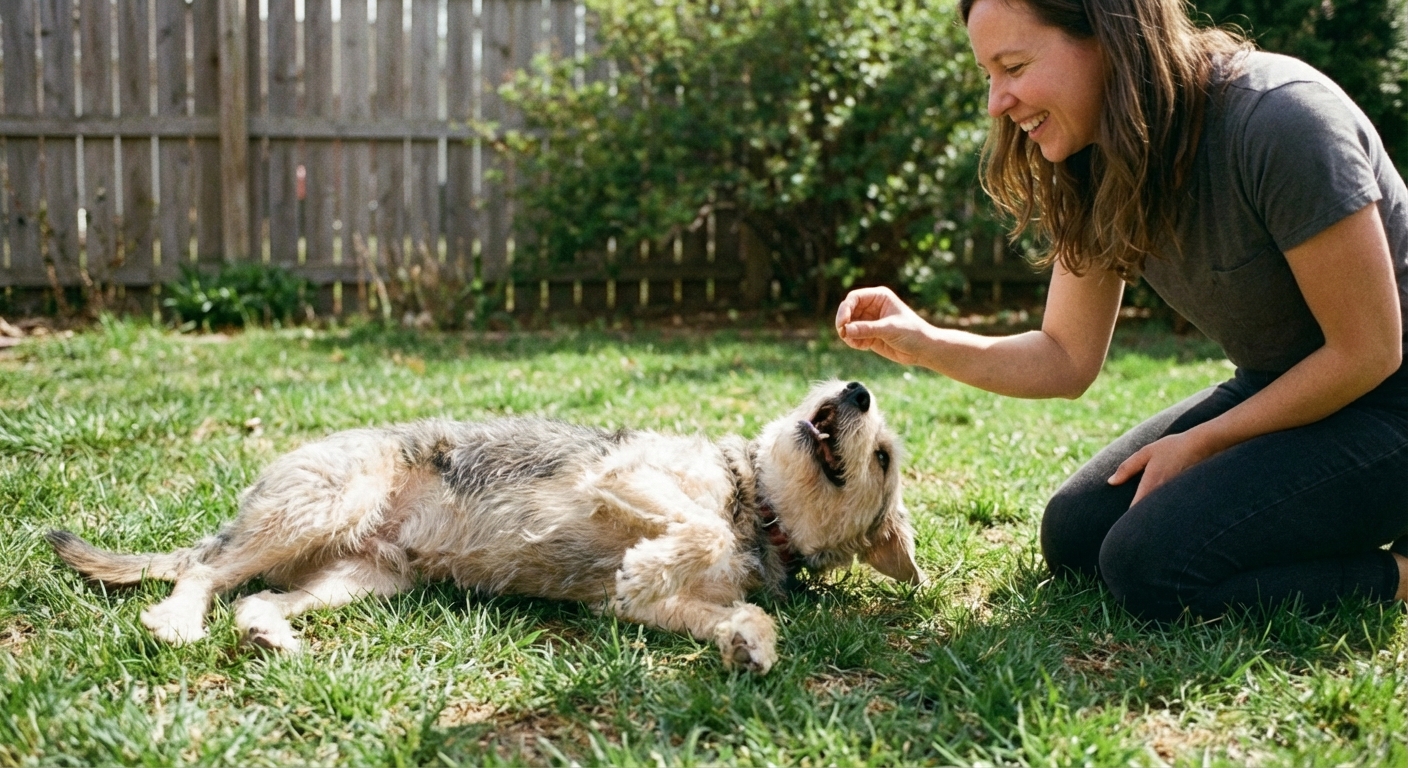
Roll over is typically a behavior chain: the dog goes from a down position, tips to one side, rotates onto their back, then continues the rotation to land on the other side and finish.
That is a lot of body movement, which is why some dogs learn it in one session and others need time to get comfortable with each piece.
Why some dogs hesitate
- Body sensitivity or discomfort: rolling can feel awkward if a dog has sore hips, a sensitive spine, or tight shoulders.
- Emotional comfort: being on the back can feel vulnerable for some dogs. A dog can be confident and still dislike that position.
- Flooring: slick surfaces make rolling harder and can increase worry about slipping.
If your dog seems uncomfortable, slow down and consider checking in with your veterinarian, especially for senior dogs or dogs with a history of orthopedic issues.
Safety basics
Do not physically roll your dog
Hands-on “forcing” often creates stress and can cause a dog to resist handling. Instead, use a lure, shaping, and rewards so your dog chooses the movement.
Choose good footing
Pick a surface with traction like carpet, grass, or a yoga mat. Avoid slick tile or hardwood where a dog may strain trying to push off.
Do a quick warm-up
A brief warm-up often helps your dog move more smoothly and can reduce awkward slips. Try 30 to 60 seconds of easy cues your dog knows well, like sit, down, touch, and a few steps of loose-leash walking.
When to skip roll over
- Immediately after surgery or during injury recovery unless your veterinarian clears it
- In dogs with known spinal disease, severe arthritis, or mobility issues without professional guidance
- If your dog shows stress signals such as lip licking, whale eye, freezing, or moving away when you lure toward the side
Training should make your dog look proud, not worried. If you see stress, shrink the goal and reward easier steps.
Before you start
- High-value treats cut into tiny pieces (pea-sized)
- A clicker or a consistent marker word like “yes”
- Short sessions: 3 to 5 minutes is plenty
- A cue plan: decide what word you will use, such as “roll over” or “roll”
Quick note on marking: “Mark” means you click or say “yes” the instant your dog does the exact thing you want, then you deliver the treat.
Rep guideline: Aim for about 3 to 5 repetitions, then take a short break. More is not always better with a body-heavy trick like this.
How to teach roll over
Step 1: Start with a comfy down
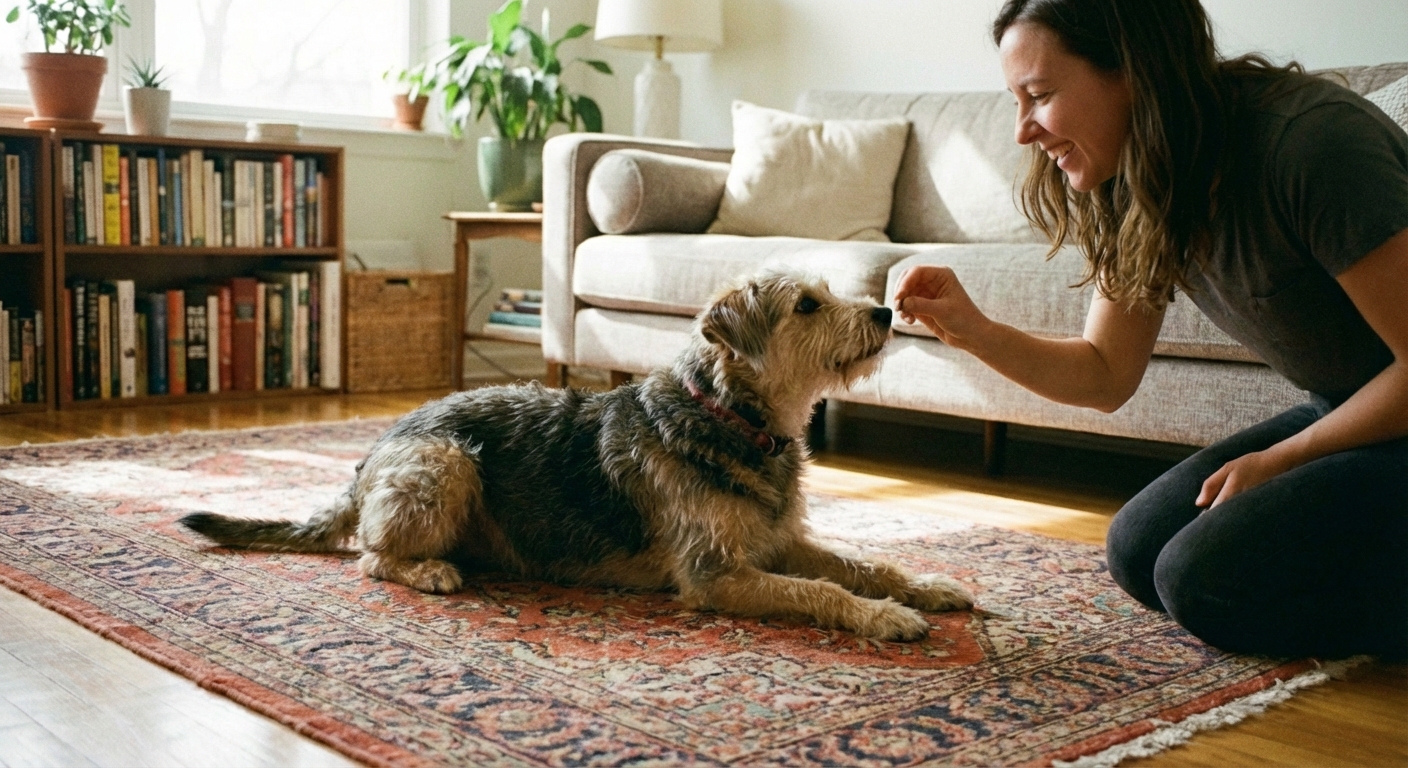
Ask for down on a surface with good grip. Mark and reward. This is your calm starting point.
Step 2: Teach the side-lean
Move the treat slowly from your dog’s nose toward their shoulder, then slightly back. Many dogs follow best if your hand draws a gentle C-shape, which encourages the body to tip onto one hip.
- Mark the moment your dog’s shoulder drops or they shift onto their side.
- Reward right there on the ground so they stay low and relaxed.
Step 3: Reward halfway
Once the side-lean is easy, continue luring so your dog’s nose follows the treat up and over, encouraging them to rotate onto their back. Some dogs will briefly end up “paws in the air.” Mark that and reward.
If your dog pops up to standing, you are moving too fast. Go back to rewarding the side-lean.
Step 4: Complete the roll
Keep the lure moving in a smooth arc so your dog’s head leads the body. When your dog completes the roll and lands on the other side, mark and give a small jackpot (a few tiny treats in a row).
Step 5: Add the cue
Only add the verbal cue when the motion is predictable. Say “roll over,” pause briefly, then lure. After enough repetitions, your dog will start rolling when they hear the cue.
Step 6: Fade the lure
Gradually change from a treat in your fingers to an empty hand signal, then reward from your other hand or a treat pouch. This prevents your dog from only performing when they see food.
Troubleshooting
“My dog only rolls halfway”
- Reward the smallest improvements toward the full roll.
- Try a slightly higher value treat.
- Practice on a softer, grippy surface like grass or carpet.
“My dog gets up instead of rolling”
- Lower the lure and slow it down.
- Reward earlier, at the side-lean stage.
- Keep sessions shorter. Overtraining can make dogs restless.
“My dog looks uncomfortable on their back”
- Do not push it. Some dogs simply dislike that position.
- Consider teaching an alternative trick such as “spin,” “bow,” or “play dead” without full back exposure.
- If discomfort seems physical, talk with your veterinarian.
If your dog cannot roll comfortably (or just does not want to), you can still build body awareness with lower-impact skills like “side” (lying on one hip) or a cooperative “chin rest.”
“My dog is a big breed and the roll looks clunky”
That is normal. Large dogs often need more time for coordination. Use a wide, open space and reward often. Progress can be slower but still very steady.
How long does it take?
Many dogs can learn the basics in a week of short sessions, but the timeline varies widely. Puppies often learn quickly, while adult dogs may need more repetitions to feel comfortable with the body movement.
Focus on consistency: a few minutes daily is more effective than one long session on the weekend.
Make it reliable
Practice in new places
Once your dog can roll over at home, practice in new safe places, like the backyard, a friend’s living room, or a quiet corner of a park. Dogs do not automatically generalize skills, so new environments can feel like a new trick.
Reward on purpose
After your dog understands the cue, you can mix in variable rewards: sometimes a treat, sometimes praise, sometimes a toy. This helps keep the behavior strong without needing food every time.
Keep it easy on the body
Roll over is not a trick you need to drill. A handful of reps a week for fun is plenty once your dog knows it.
FAQ
Is roll over good for puppies?
It can be, as long as you keep it positive, use good footing, and stop if your puppy seems unsure. Puppies are still growing, so keep repetitions modest and avoid lots of back-to-back drills.
Does teaching roll over make my dog “submissive”?
No. A trained roll over is a voluntary behavior done for a reward. It is different from older dominance-based methods that rely on forcing positions, which can add stress and harm trust.
Can I teach roll over from down or from standing?
Most owners start from down because it creates a clear, low starting point. Later, you can teach a “stand to roll” variation, but it is harder and not necessary.
Quick checklist
- Choose a surface with traction
- Use tiny high-value treats
- Break the trick into small steps
- Never force your dog onto their back
- Stop and reassess if your dog seems uncomfortable
- Keep sessions short and upbeat
If you go slowly and celebrate the little wins, roll over becomes a fun confidence-builder for many dogs. And if it is not your dog’s favorite, that is okay too. Great training is always about listening to the dog in front of you.