
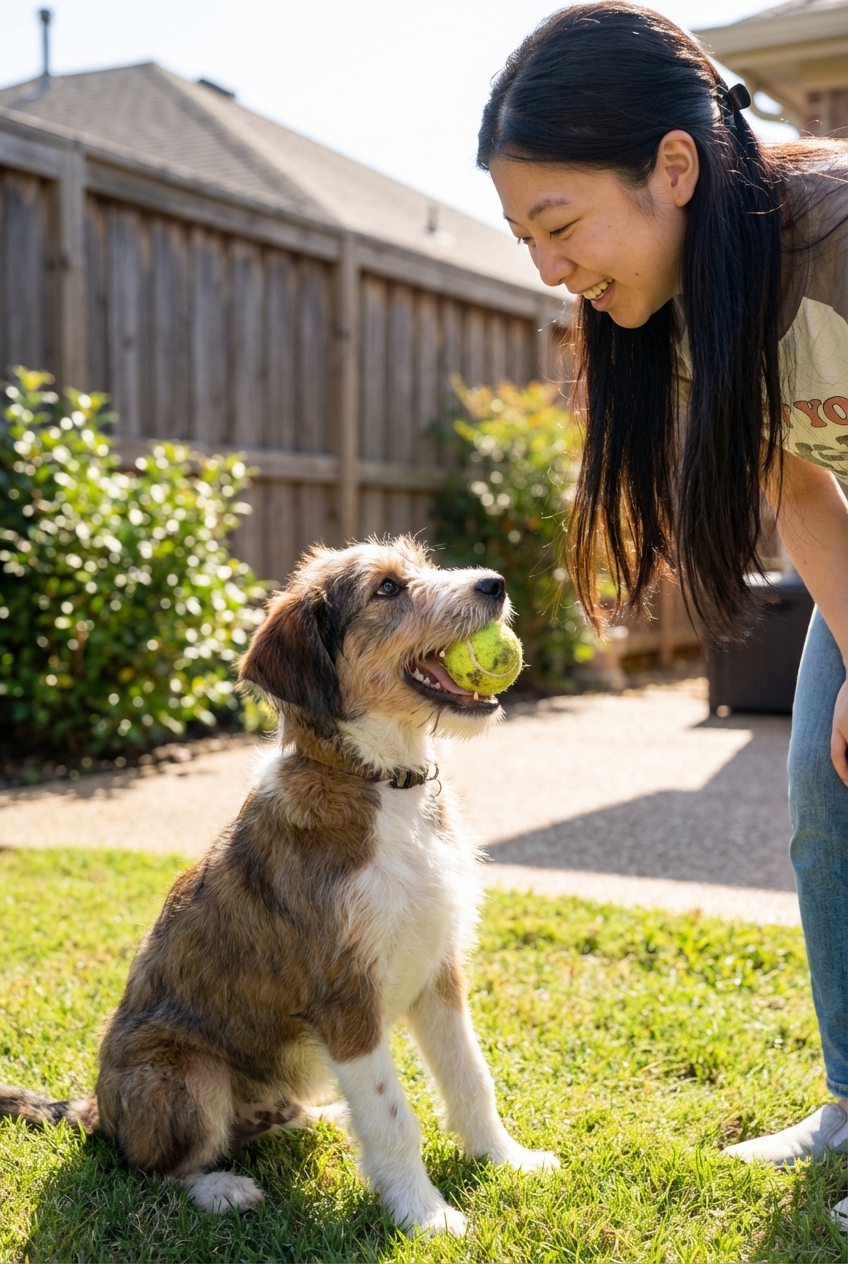
Fetch is a chain of skills. Learn how to teach take it, a reliable return, and drop it with reward-based steps, plus fixes for keep-away and safety tips.
Article
•
Designer Mixes
Teach Your Dog to Fetch

Shari Shidate
Designer Mixes contributor
Fetch looks simple, but for a lot of dogs it is actually a chain of skills: notice the toy, pick it up, hold it, come back, and let go. As a veterinary assistant here in Frisco, I love fetch because it is one of the easiest ways to build healthy exercise, confidence, and a stronger bond. The secret is to teach it step by step, using rewards your dog truly cares about.
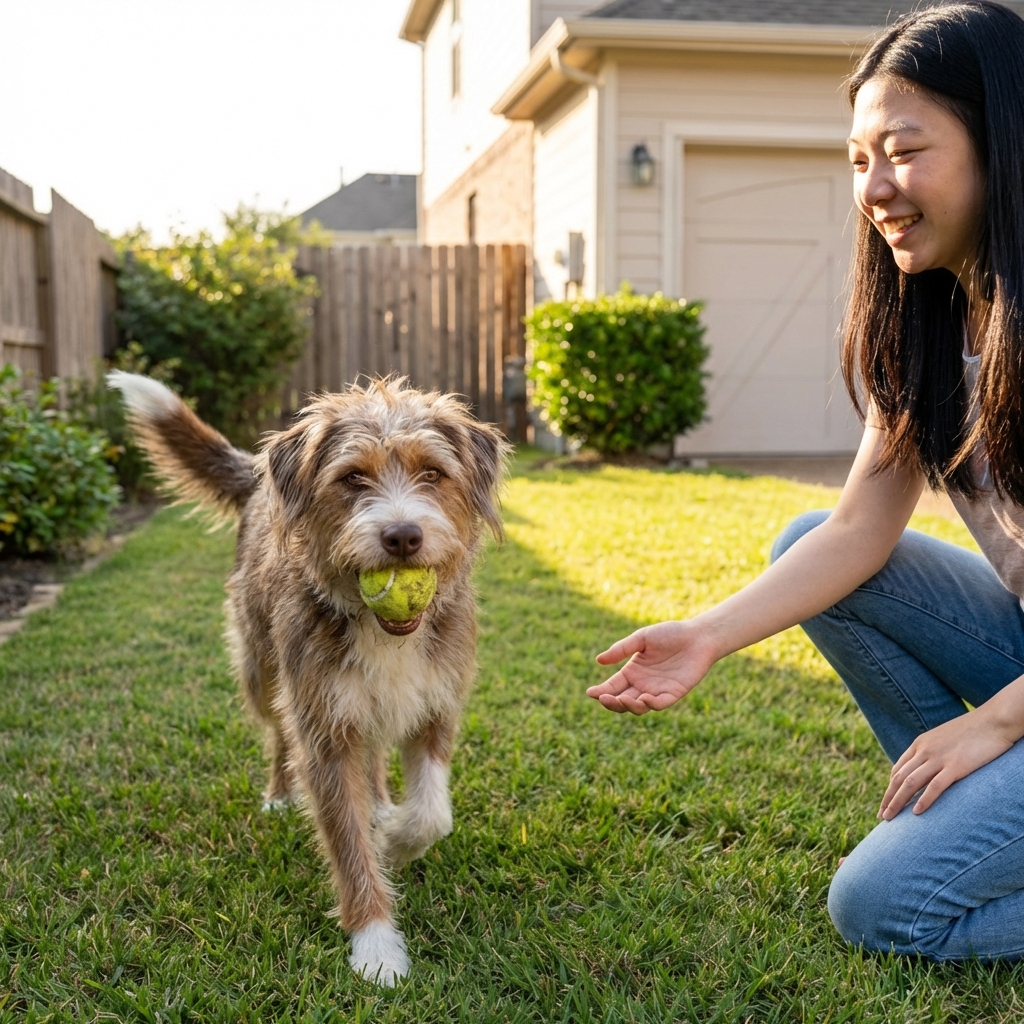
Below is a science-informed, age-friendly plan you can use with puppies, adult dogs, and seniors. Go slowly, celebrate small wins, and stop sessions while your dog still wants more.
Before you start
Pick the right rewards
Dogs repeat what pays off. For many dogs, a tiny training treat works best. For others, praise, tug, or a squeaky toy is the jackpot. Use something your dog does not get all day long.
What “mark” means
A marker is a short sound or word (like “Yes” or a click) that tells your dog, “That right there earns a reward.” It helps your timing stay clear.
Choose the right fetch object
- Puppies: soft fleece tug, small plush, or a lightweight ball that is too big to swallow.
- Adults: rubber ball, bumper style toy, or a ball that is sized for your dog’s mouth.
- Seniors: soft toy or low-bounce rubber ball to reduce joint impact.
Safety note: avoid sticks (splinters, mouth injuries) and anything small enough to be swallowed. If your dog is a super chewer, choose a durable rubber toy and supervise. Tennis balls are popular, but the felt can be abrasive on teeth for some dogs, and an undersized ball can be a choking risk. When in doubt, choose a smooth rubber ball and size up.
Session setup
- Train in a hallway, fenced yard, or quiet room to limit distractions.
- Keep sessions short: 3 to 8 minutes, 1 to 3 times per day.
- Stop before your dog gets tired or frustrated.
If you are training outdoors, check ground temperature first. Hot pavement can burn paws fast, and dogs can overheat even in shade when humidity is high. In North Texas, I aim for early morning or evening play whenever possible.
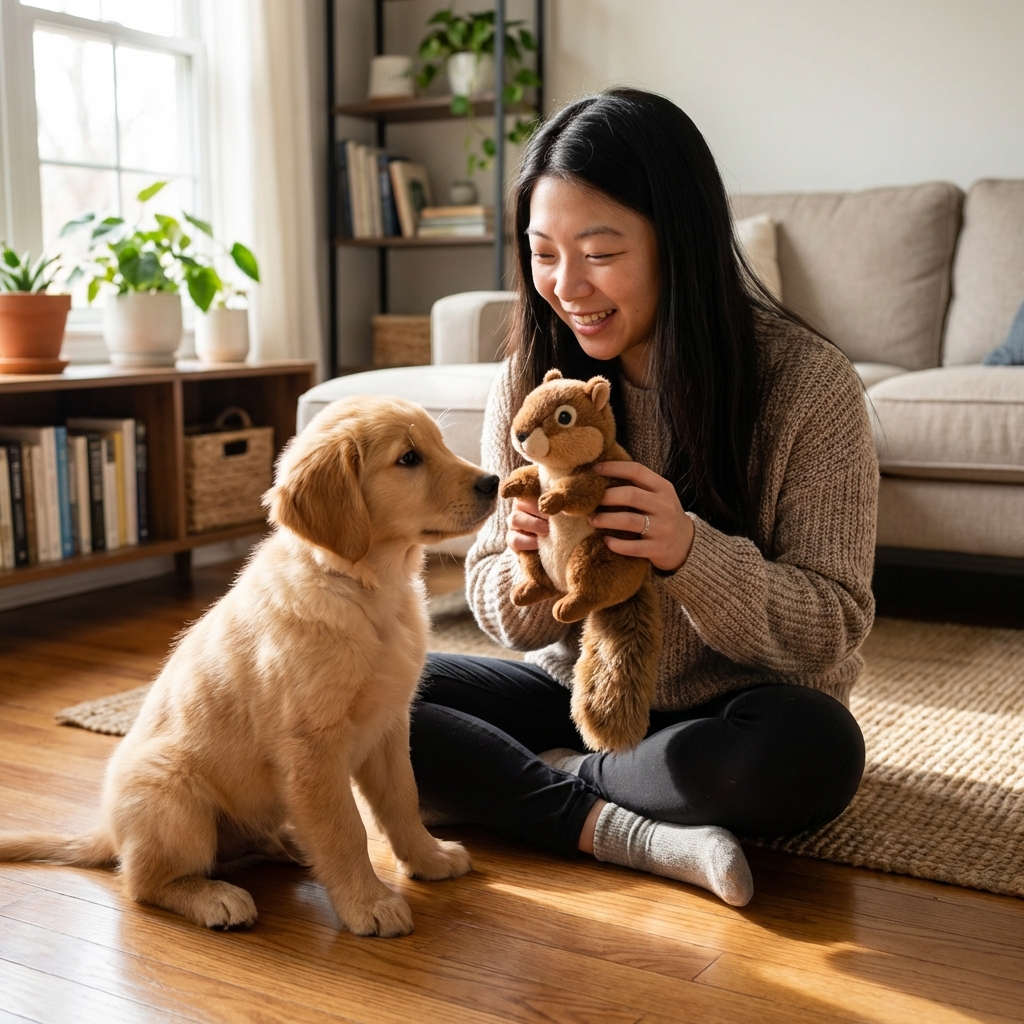
How to teach fetch
Step 1: Make the toy valuable
Hold the toy still. When your dog sniffs it, mark with “Yes” (or a clicker) and give a treat. Repeat until your dog happily moves toward the toy.
- If your dog is hesitant, rub a tiny amount of xylitol-free peanut butter on a rubber toy, or use a toy with a gentle squeak. Always check the ingredient label (xylitol is toxic to dogs), and keep peanut butter minimal since it is calorie-dense and can be too rich for some dogs.
- If your dog gets overexcited, keep your energy calm and reward quiet interest.
Step 2: Teach “take it”
Offer the toy close to your dog’s mouth and say “Take it.” The moment your dog puts their mouth on it, mark and reward.
Goal: your dog willingly grabs the toy, even for a second.
Step 3: Teach “hold”
Once your dog can “take it,” delay your marker for one second while they keep the toy in their mouth, then mark and treat. Gradually build to 2 or 3 seconds.
- If the toy drops, simply reset and make it easier.
- Keep your hands close to the toy so it feels supported.
Step 4: Teach “drop it”
Start with a trade. Say “Drop it,” pause for a beat, then hold a treat right in front of your dog’s nose. Most dogs will release the toy to take the treat. Mark the moment they let go, then reward.
As your dog improves, say “Drop it” first, wait briefly, then offer the treat only if needed.
Tip: Avoid prying the toy from your dog’s mouth. We want them to feel safe releasing items, not defensive. If your dog has shown resource guarding (freezing, growling, snapping), do not practice fetch or “drop it” games without guidance from your vet or a qualified force-free trainer.
Step 5: Add movement
Place the toy 1 to 2 feet away. Point and say “Take it.” When your dog picks it up, cheerfully step backward a couple of steps. Many dogs will follow you naturally. When they reach you, cue “Drop it,” then reward.
- Try not to loom over your dog or reach toward their mouth as they approach. That can trigger keep-away.
- If you need extra control outdoors, a long line (drag line) can help you guide safely without grabbing your dog.

Step 6: Toss it a short distance
Now do a gentle toss, just a few feet. When your dog grabs the toy, use a happy cue like “Bring it!” and move backward to invite them in. When they reach you, cue “Drop it,” reward, then toss again.
Keep tosses low and short at first. Distance comes later.
Step 7: Build the fetch loop
When your dog understands the pattern, you can start rewarding after the drop, and then “reward” with the next throw. Many dogs find the throw itself reinforcing.
- For treat-motivated dogs: treat every return, then gradually treat every other return.
- For toy-motivated dogs: reward with a quick tug game, then throw again.
Fetch for puppies
Puppies often love chasing but do not naturally return. That is normal.
- Use soft toys and keep throws very short.
- Skip big jumps and hard stops. Developing joints need gentle play.
- End early: 3 to 5 tosses can be plenty.
- Teething check: if your puppy suddenly avoids toys, gums may be sore. Offer chilled rubber toys and keep fetch light.
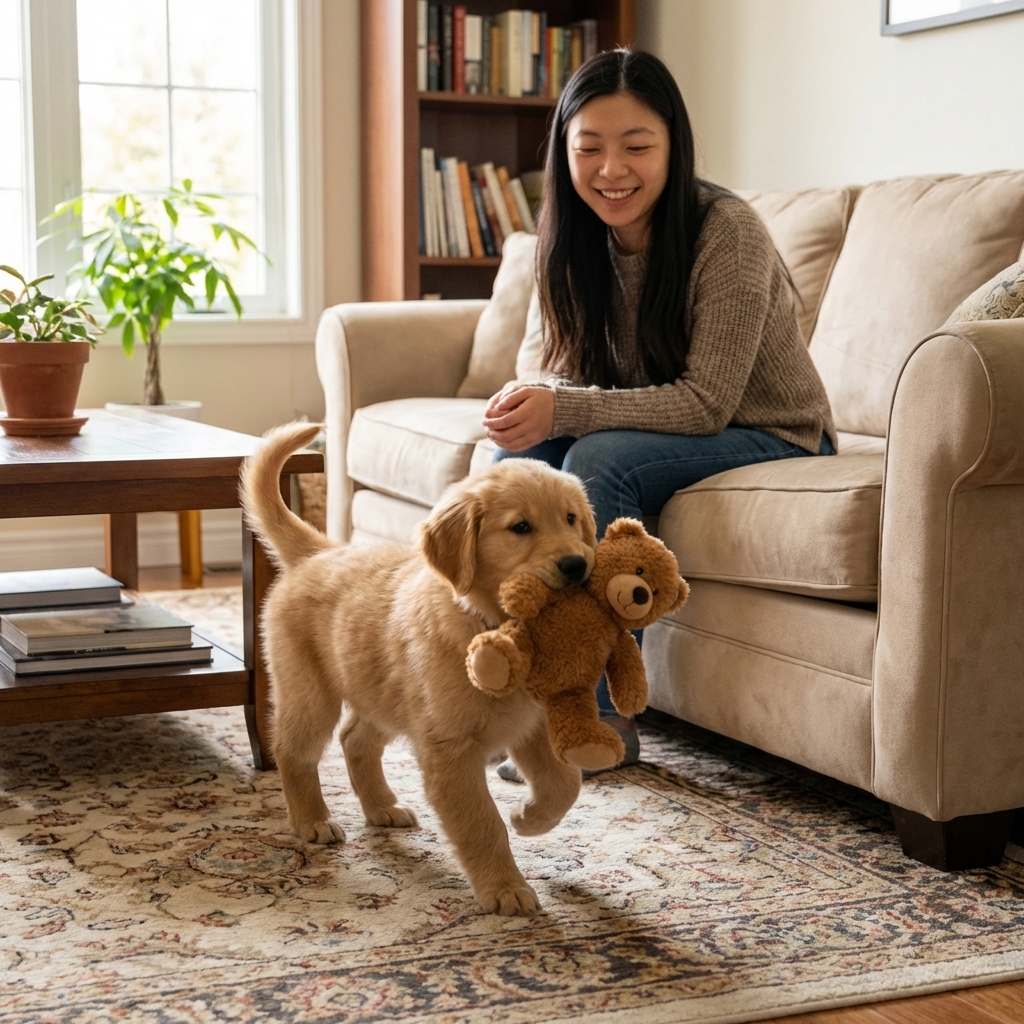
Fetch for adult dogs
Adult dogs can usually handle longer sessions, but stamina varies by breed mix, fitness, and the weather. In Texas heat (and any hot, humid climate), keep fetch to early morning or evening, offer water breaks, and watch for overheating.
- Use a cue like “All done” to end the game calmly.
- Mix in obedience: ask for a sit before the next throw to prevent frantic grabbing.
- Rotate toys to keep interest high.
- Avoid busy dog parks for early training. Too many distractions can build bad habits fast.
Fetch for senior dogs
Seniors can absolutely play fetch, but we want it to feel good the next day.
- Choose low-impact surfaces like grass or carpet, not slick floors.
- Keep tosses short and avoid high leaps.
- Warm up with a slow walk first.
- Stop if you see limping, stiffness, heavy panting, or reluctance to pick up the toy.
If your senior loves the game but struggles with running, try “fetch to a mat” indoors: roll the toy slowly a few feet, reward the pickup and return, and keep it gentle. This also works well for small spaces or for anyone who cannot do big throws.
Common problems and fixes
Chases but will not bring it back
- Use a hallway or fenced area.
- Run backward and cheer when they pick the toy up.
- Reward the return, not just the pickup.
- Try two identical toys: show toy #2, and when your dog returns with toy #1, cue “Drop it,” then throw toy #2.
Grabs the toy and plays keep-away
- Do not chase. Chasing is a reward.
- Use a long line in the yard for gentle guidance.
- Practice “drop it” and “trade” separately with high-value treats.
Will not pick the toy up
- Try a different texture: fleece, rope, rubber, or a soft bumper.
- Start with “take it” from your hand instead of the floor.
- Reward tiny steps: sniffing, touching, then mouthing.
Drops it halfway back
- Reward closer to you. Back up as they approach.
- Train “hold” for 2 to 3 seconds before you add distance.
- Use a slightly larger toy that is easier to carry.
Will not let go
- Teach a reliable “drop it” with trades.
- Keep treats ready and avoid tugging the toy out.
- Pause the game if they clamp down and do not release. Calmly wait, then trade.
How much fetch is too much?
Fetch is fantastic exercise, but repetitive sprinting and hard stops can be tough on bodies. A good rule is to keep it short, structured, and varied.
- Use soft tosses instead of long launching throws every time.
- Mix in sniff breaks or simple cues like sit and touch.
- Stop if your dog seems dizzy, collapses, pants heavily and cannot recover with a short rest, or coughs during or after intense play.
If coughing happens repeatedly, pause fetch and contact your veterinarian. It can be a sign your dog is pushing too hard, or it can point to an airway or heart issue that needs attention.
If you have a flat-faced breed mix (like Pug or Bulldog mixes), be extra cautious in heat and humidity and keep fetch low-intensity.
Sample 7-day plan
If you like a simple schedule, try this and adjust to your dog’s pace.
- Days 1 to 2: “Toy is valuable” plus “take it” (5 minutes).
- Days 3 to 4: Add “hold” and “drop it” (5 to 8 minutes).
- Day 5: Micro-fetch in a hallway (5 minutes).
- Day 6: Short tosses, reward returns (5 to 8 minutes).
- Day 7: Build the loop, add “all done” (5 to 10 minutes).
Remember, there is no prize for rushing. A slow, happy fetch training process creates a dog who loves the game for life.
When to ask your vet
If your dog suddenly stops playing, cries out, limps, or seems sore after fetch, it is worth checking in with your veterinarian. Pain can look like “stubbornness,” especially with arthritis, dental issues, or soft tissue injuries. And if your dog guards toys or has a bite history, work with a qualified force-free trainer who can guide you safely.