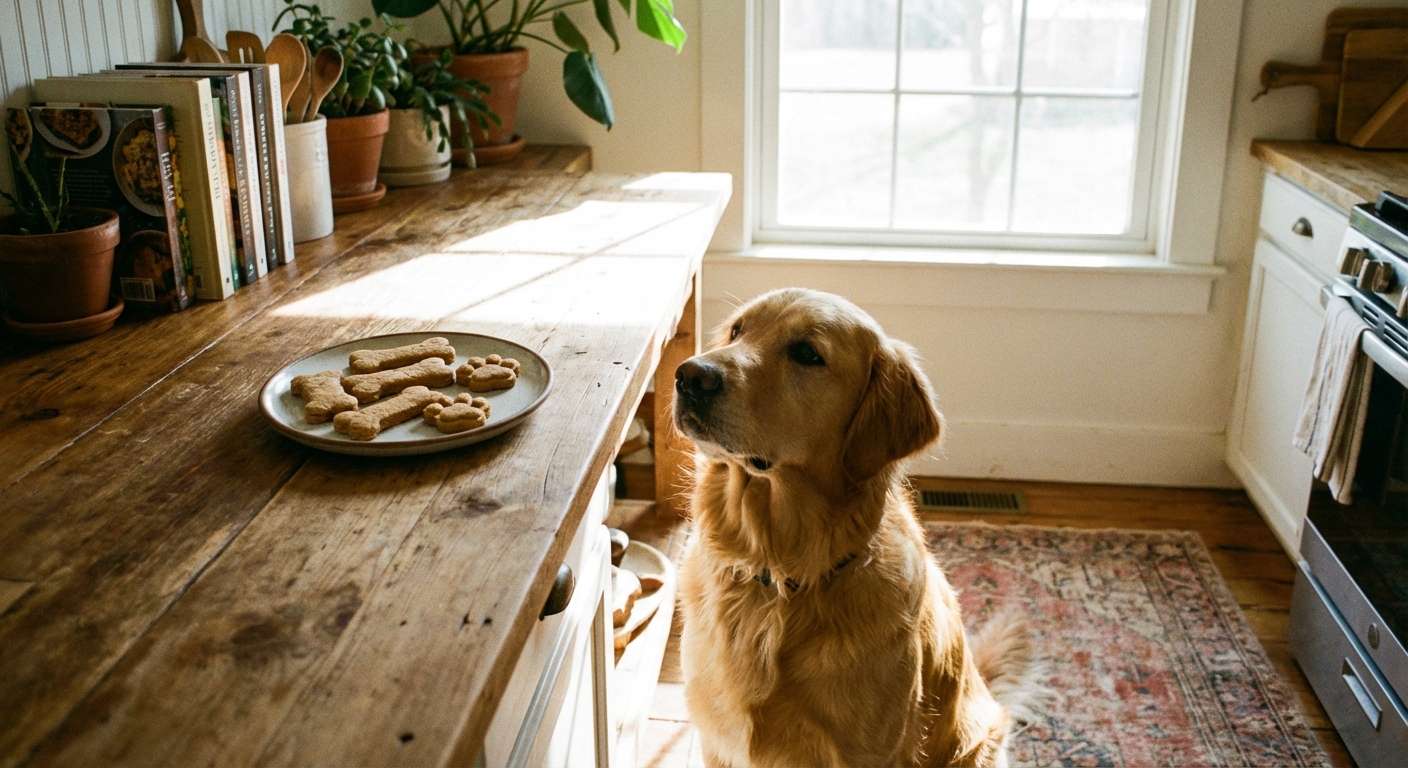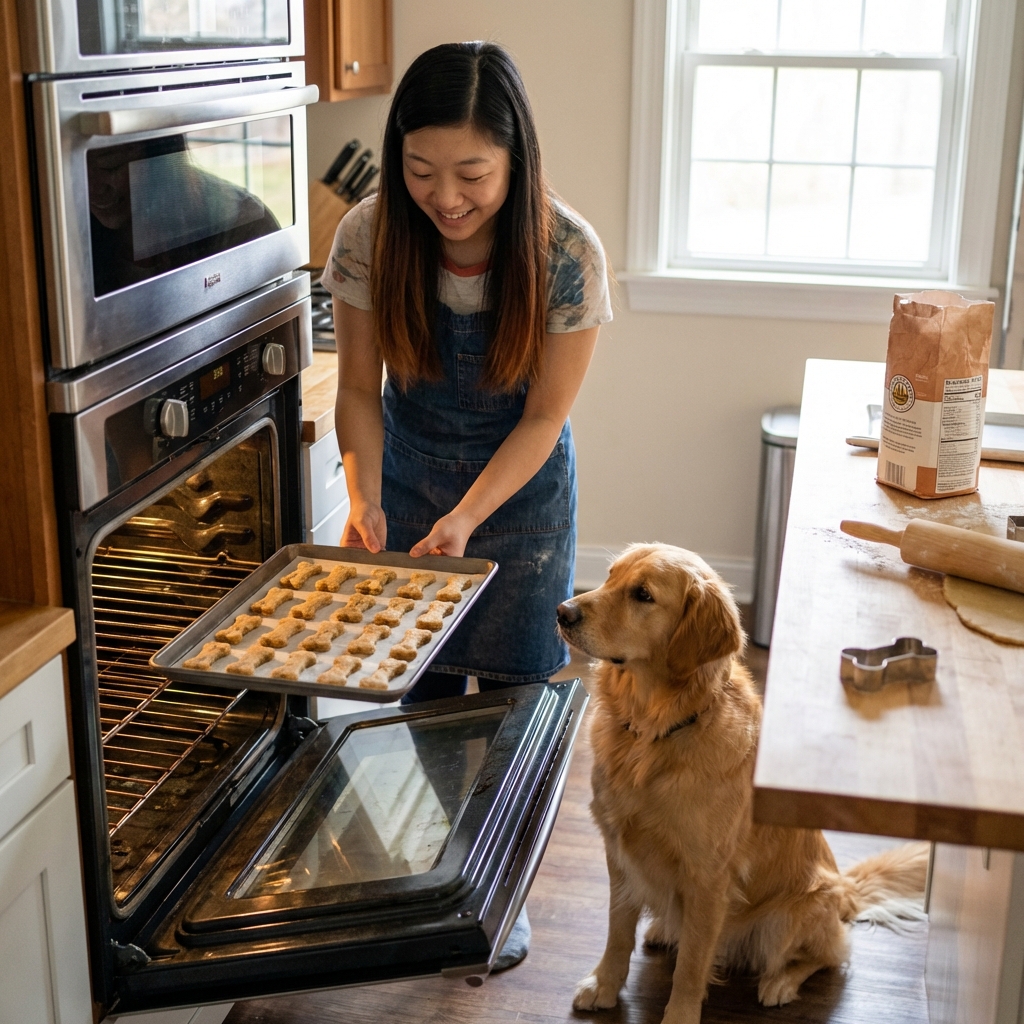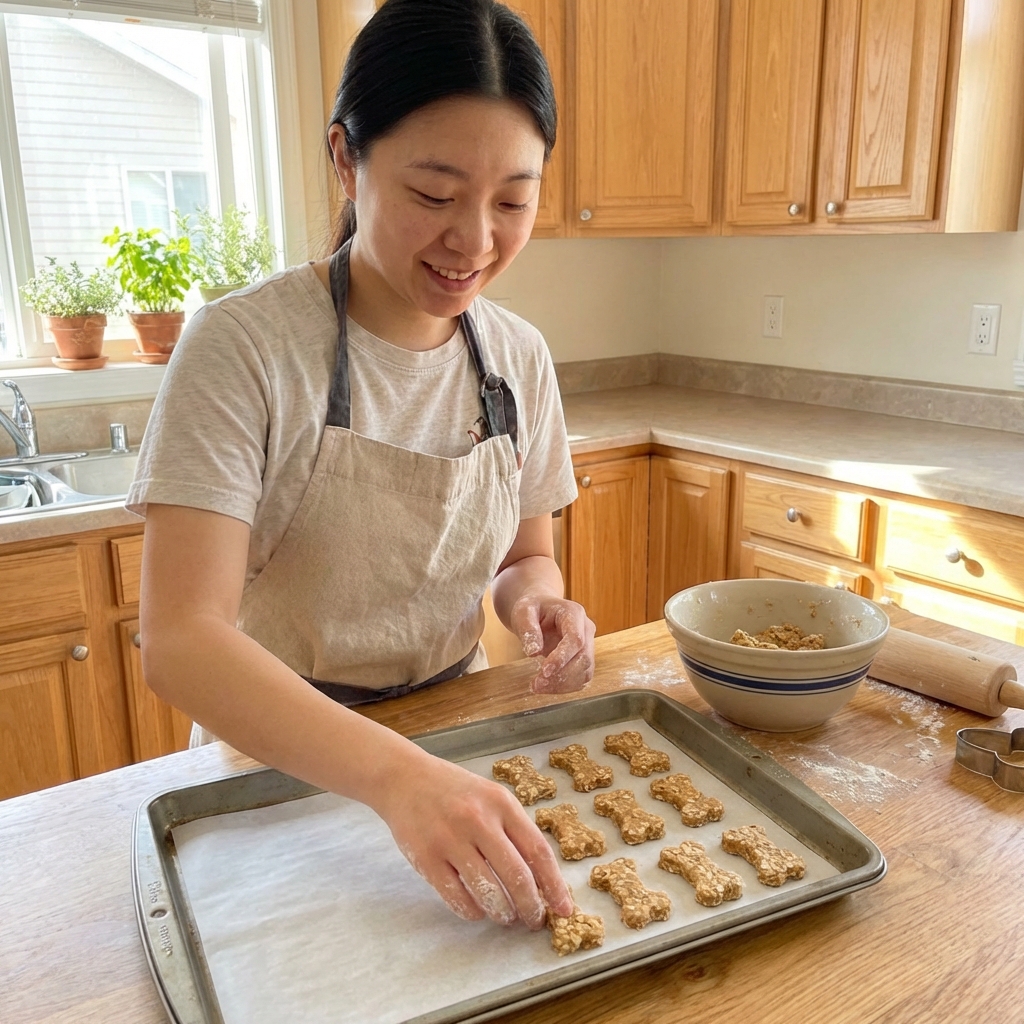
A vet assistant’s guide to safe homemade dog treats: vet-friendly ingredients, common toxins to avoid, 3 simple recipes, portion guidance, and storage best...
Article
•
Designer Mixes
Teach Your Dog Their Name

Shari Shidate
Designer Mixes contributor
Teaching your dog their name is one of the kindest, most practical things you can do. A name is not just a label. It becomes a cue that means: look at me, check in, and good things happen when you pay attention. Once that connection is solid, every other skill, like “sit,” “come,” and leash manners, gets easier.
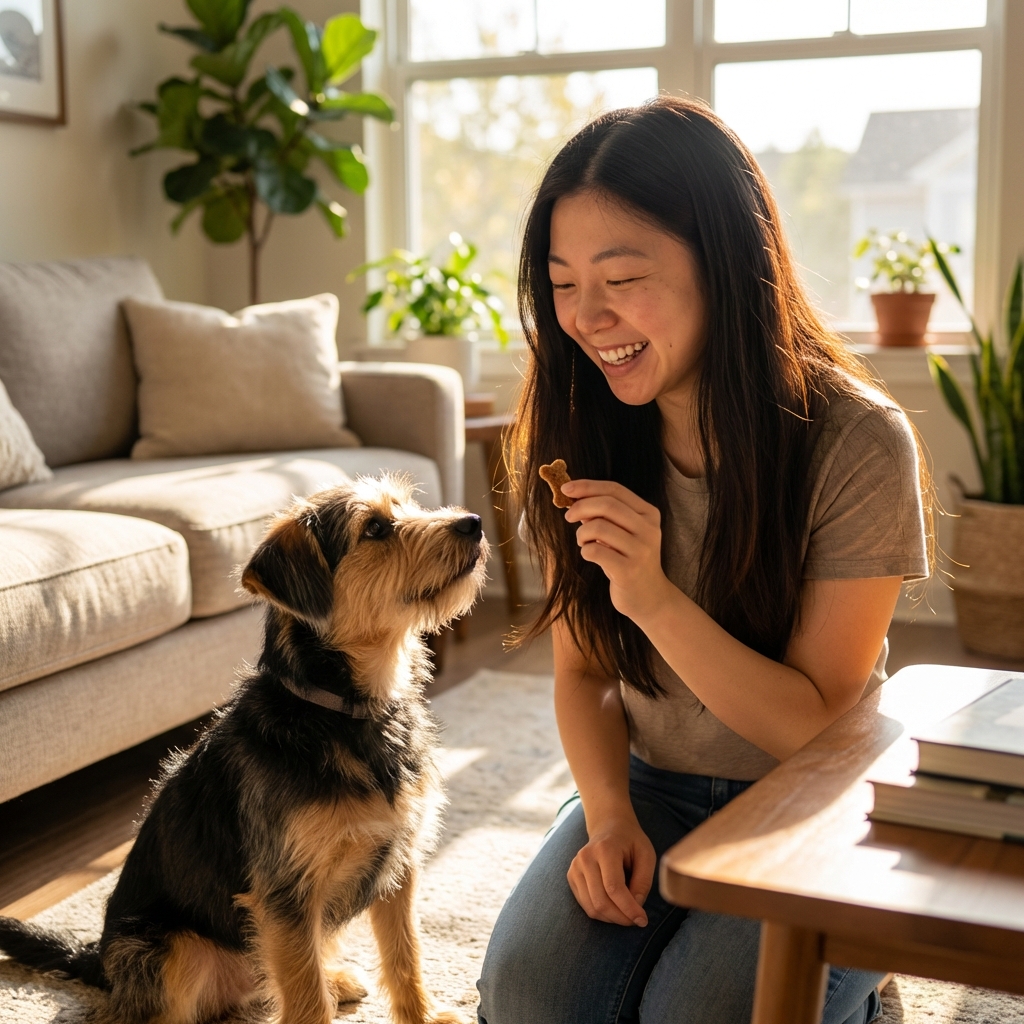
As a veterinary assistant, I love name training because it is gentle, reward-based, and it builds a habit of focus without force. The goal is simple: when you say your dog’s name once, they orient to you quickly, even with mild distractions.
Quick note: This article is general training guidance, not medical advice. If your dog has sudden behavior changes, seems painful, or you notice a sudden change in hearing or awareness, check in with your veterinarian.
What your dog is learning
Your dog is not “learning English.” They are learning a predictable pattern: a sound (their name) reliably predicts a reward for engaging with you. In training terms, you are conditioning an attention response using positive reinforcement and clear timing.
- Name = attention cue, not a command to move, sit, or stop something.
- Fast responses help because they let you redirect early and manage situations before your dog gets too locked in. It is not a guarantee, but it is a useful habit.
- Reinforcement builds reliability, especially around distractions.
If you keep the meaning clean, your dog’s name becomes one of your most powerful tools for safety and connection.
Before you start
Pick a name your dog can hear
Most dogs do well with names that are short and distinct. Two syllables often works nicely (think “Daisy” or “Milo”), but any name can work if you teach it consistently.
- Avoid names that sound like common cues in your home (for example, “Kit” can sound like “sit”).
- If multiple people will train, agree on pronunciation and nicknames.
Gather simple supplies
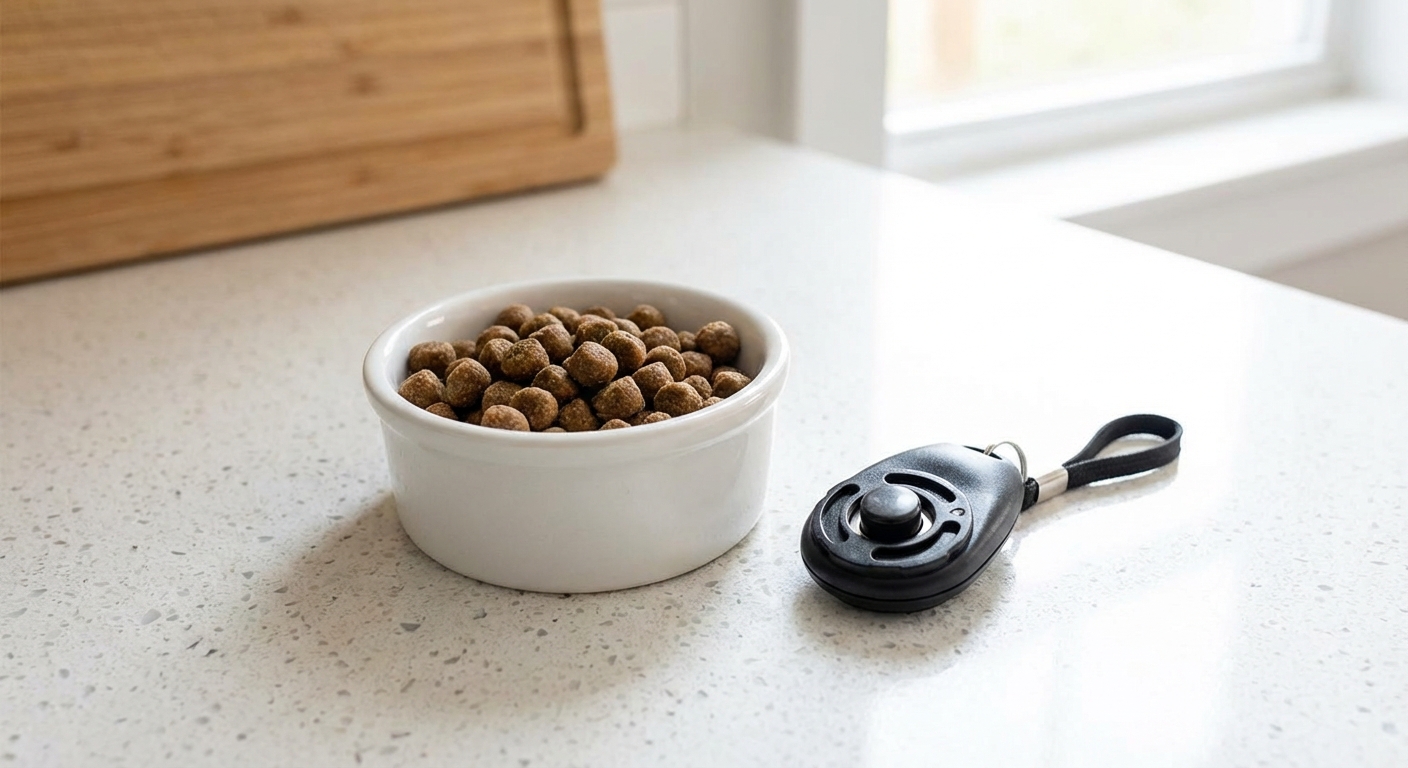
- Soft, pea-sized treats (chicken, cheese, or a high-value training treat)
- A quiet room with minimal distractions
- Optional: a clicker or a consistent marker word like “yes”
Set realistic expectations
Some dogs start responding within a day or two, especially in a quiet room. For others, it takes longer. Age, breed traits, prior learning history, stress level, and your environment all affect speed. Puppies, newly adopted dogs, and fearful dogs may need extra time. That is completely normal.
The core method
This is the simplest, most effective approach for most dogs. You reward the moment your dog turns toward you after hearing their name.
Step by step
- Wait until your dog is near you and not staring intensely at something else.
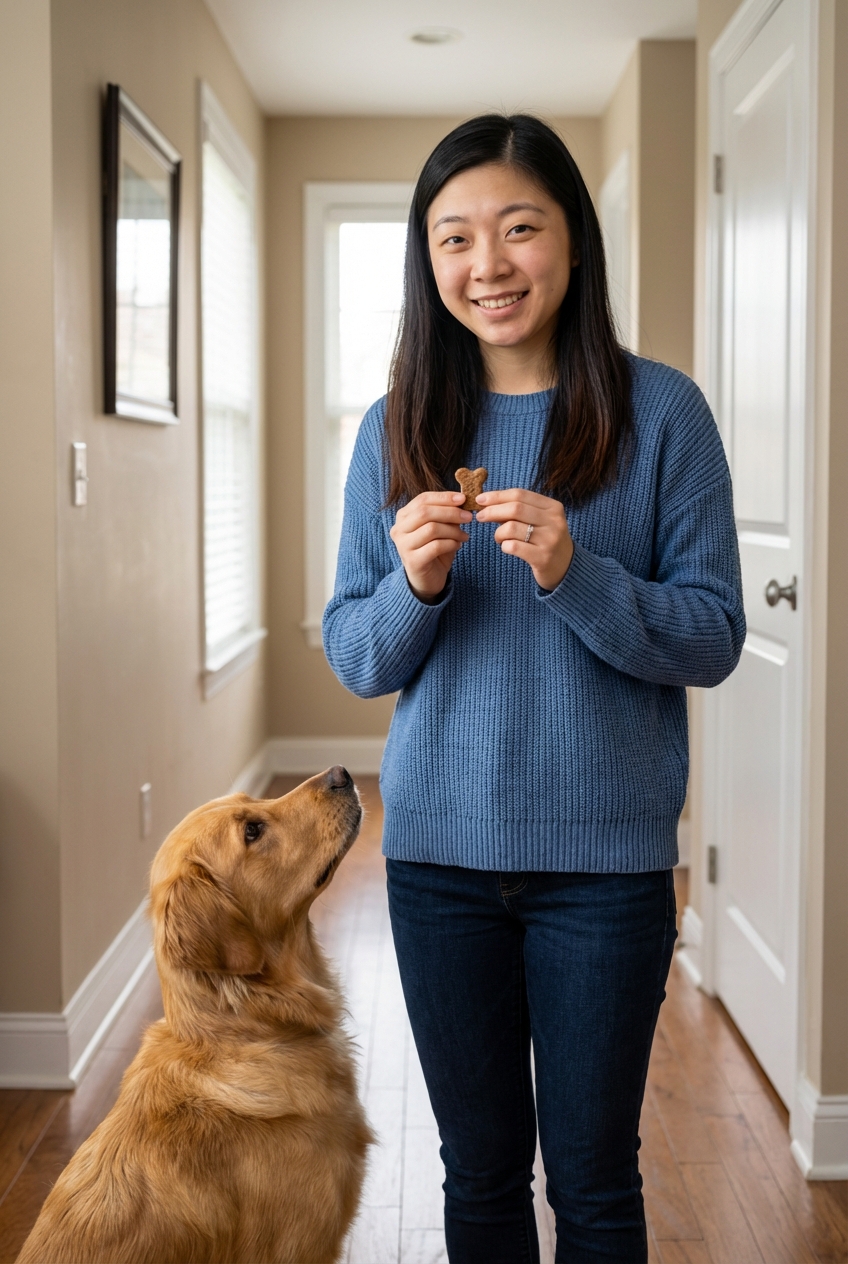
- Say their name once in a warm, calm tone.
- The instant they look at you, mark (click or say “yes”).
- Reward right away.
- Pause 2 to 5 seconds, then repeat.
Tip: Deliver the treat close to your body (near your chest or leg) instead of luring your dog away from you. That helps build a strong habit of orienting toward you when they hear their name.
Do 5 to 10 reps, then take a break. Two to four mini-sessions a day beats one long session.
What counts as success?
In the beginning, reward any glance toward you. Over time, you will shape it into quicker responses and slightly longer eye contact.
Your dog’s name should feel like a compliment, not a correction.
What to do after they look
Think of the name as an attention starter. Once your dog looks at you, you have options:
- Reward and release: Mark, treat, then let them go back to what they were doing (this keeps the name from always meaning “fun is over”).
- Reward, then cue: Mark and treat, then ask for a simple behavior like “sit,” “touch,” or “come.”
- Use it for gentle redirection: Name, eye contact, then move away from a distraction and reward again.
If you only use the name to start a chain of instructions, some dogs get hesitant. Mixing in “reward and release” helps keep the response happy and fast.
Troubleshooting
If your dog ignores their name
Ignoring is usually information, not defiance. It often means the environment is too distracting, the reward is not valuable enough, or your dog is stressed, tired, or overexcited.
- Lower distractions: move to a quieter room or increase distance from the trigger.
- Increase value: switch to higher-value treats.
- Shorten sessions: stop before your dog checks out.
Do not repeat the name
If you say “Buddy, Buddy, Buddy…” you accidentally teach that the first two do not matter. Say it once, then make it easier and try again.
Keep the name positive
If “Bella!” is followed by nail trims, scolding, or the end of play every time, the name can lose its happy meaning. You can still do real-life tasks, of course, but balance them with lots of positive name moments.
For unavoidable unpleasant tasks: when possible, go get your dog calmly instead of calling them, and pair the task with high-value rewards (treats, licking a spreadable snack, or a favorite toy) so the overall experience improves.
Games to build response
1) The Name Game
Exactly like the core method, but you gradually add mild distractions and distance. Start in your living room, then your backyard, then your driveway, and so on.
2) Treat Toss and Turn
Toss a treat a few feet away so your dog turns their head away from you. When they finish, say their name. Mark and reward when they turn back to you.
- This teaches re-orienting to you quickly.
- It works great for high-energy dogs who need movement.
3) Hide and Seek
Have your dog in a safe area. Step behind a doorway or around a corner. Say their name once. When they find you, celebrate and reward.
Safety note: Avoid this game with dogs who panic when separated. For those pups, start with very easy “peek-a-boo” versions.
Proofing in real life
Dogs do not automatically generalize well, so “knows their name in the kitchen” does not always transfer to “knows their name at the park.” Proofing is simply practicing the same skill in new places, with new distractions, at an easy level.
- Change one thing at a time: new room, then more distance, then mild distractions.
- Pay more in harder spots: bring better treats outside and around distractions.
- Reward check-ins: if your dog looks at you on their own, mark and reward. This builds attention as a habit, not just a response to a word.
Also, remember: your dog’s name is not a recall cue. If you need your dog to come to you, teach and maintain a separate “come” (or whistle) that always pays well.
How long will this take?
Many dogs can learn the basics within a few days with consistent mini-sessions, but the timeline varies. Reliability usually takes longer because you are practicing across locations, distractions, and real life moments. If it takes weeks, that does not mean you failed. It means your dog is learning at a normal pace for their situation.
A simple 7-day plan
- Days 1 to 2: Quiet room, 2 to 4 sessions a day, 5 to 10 reps per session.
- Days 3 to 4: Add mild movement and distance inside the home.
- Days 5 to 6: Practice in the backyard or on a calm walk, high-value treats.
- Day 7: Mix locations and add easy distractions, like a toy on the floor.
Special situations
Shy, fearful, or newly adopted dogs
Give them time. Stress can suppress appetite and attention. Start by pairing the name with gentle rewards like a tossed treat (less pressure than reaching over their head) and keep sessions very short.
Multi-dog households
Train one dog at a time at first. Use a baby gate, crate, or another room so each dog can succeed. Later, practice with both dogs present and reward the one who responds to their name.
Senior dogs or dogs with hearing loss
If hearing is reduced, consider pairing the name with a visual cue, like a gentle hand signal, or a light floor tap they can feel. For sudden hearing changes, check in with your veterinarian.
Common mistakes
- Name as punishment: Avoid saying the name in an angry tone or right before scolding.
- Name as “come”: If you need your dog to approach, teach a separate recall cue like “come.”
- Too much too soon: Busy parks and pet stores are graduate-level environments.
- Long sessions: Stop while your dog still wants more.
- Low-paycheck training: If rewards are too small, too boring, or too rare, your dog will not want to play. Early on, pay generously. You can fade treats later, but build the habit first.
When to get help
If your dog consistently cannot focus, startles easily, shows signs of fear, or becomes reactive when you try to train, it is worth getting professional support. Look for a reward-based trainer (often listed as CPDT-KA, KPA-CTP, or similar) and involve your veterinarian if you suspect pain, anxiety, or sensory changes.
Bottom line
Teaching your dog their name is a small skill with a big ripple effect. Keep it positive, reward attention, and practice in real life. With steady, short sessions, you can build a dog who checks in with you more often, feels safer, and is much easier to guide through everyday moments.
References
- American Veterinary Society of Animal Behavior (AVSAB). Position statements on humane, reward-based training methods.
- Overall, K. L. Clinical Behavioral Medicine for Small Animals.