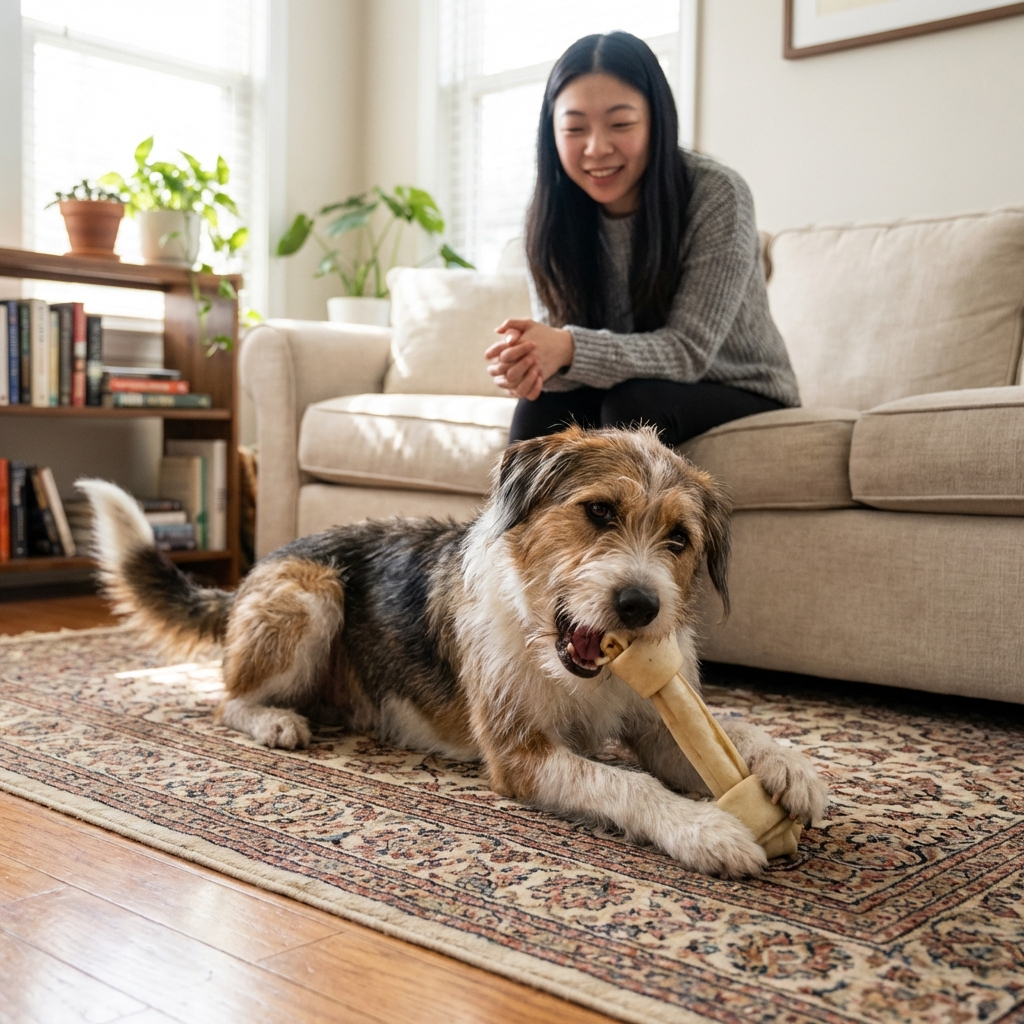
Learn how to teach “drop it” with reward-based trades, add the cue, fade lures, and practice anywhere. Includes tug game training, common mistakes, and s...
Article
•
Designer Mixes
Teach Your Dog “Drop It” Fast

Shari Shidate
Designer Mixes contributor
As a veterinary assistant here in Frisco, Texas, I can tell you this with confidence: teaching “drop it” is not just a fun trick. It is one of the most practical, safety-first cues you can teach any dog, especially curious Designer Mixes who love to grab socks, mulch, toys, and mystery items on walks.
The best part is that “drop it” does not need to be a battle. When you teach it the right way, your dog learns that letting go makes good things happen.
Why “Drop It” matters more than you think
In clinic settings, we see a lot of problems that start with one simple moment: a dog picks something up, and a person panics and tries to pry it out. That can lead to:
- Resource guarding (your dog learns humans approaching means items get stolen)
- Swallowing faster (dogs gulp to keep the “prize” away from you)
- Choking risk when an object gets pushed deeper
- Broken teeth from hard items like rocks, bones, antlers, or hooves
“Drop it” gives you a calm, trained option when it matters most.
The biggest secret: “Drop it” is a trade, not a test
Here is the mindset shift that unlocks fast progress: your dog is not being stubborn. They are making a simple choice.
If the thing in their mouth is more rewarding than what you offer, they will keep it. So the “secret” is not dominance or forcing the mouth open. The secret is teaching your dog that letting go reliably pays.
When you stop trying to “take,” your dog stops trying to “keep.”
Prep: set your training up to win
Choose the right rewards
Use something your dog loves more than the item you are practicing with. For many dogs, that is tiny pieces of chicken, cheese, freeze-dried liver, or a favorite squeaky toy.
- Soft treats work best for fast repetitions.
- Keep pieces pea-sized so your dog does not fill up quickly.
Pick safe practice items
Start with items you can control and that are safe if your dog briefly chews them:
- Rope toy
- Rubber toy
- Tennis ball (only under supervision, not for heavy chewers)
Keep sessions short
Think 1 to 3 minutes, a couple times a day. Short sessions prevent frustration and keep your dog eager.
Step-by-step: the fastest way to teach “Drop It”
Step 1: Start with “take it” (optional, but helpful)
Offering a toy and saying “take it” creates clarity: there is a start and an end to the game. Many dogs learn “drop it” faster when they understand they will get chances to grab things again.
Step 2: Trade for a treat
Do this in a low-distraction area.
- Let your dog hold the toy.
- Place a treat right at their nose.
- When your dog opens their mouth to take the treat, calmly say “drop it”.
- As the toy falls, feed the treat.
At first, you are not asking your dog to drop it without help. You are teaching the pattern: cue, release, reward.
Step 3: Give the item back
This is another “secret” that prevents guarding and makes your cue stronger.
After your dog drops the toy and gets the treat, say “take it” and offer the toy again. This teaches your dog that dropping does not end all fun, it starts a reward cycle.
Step 4: Repeat until the cue predicts the release
Over a few sessions, you will notice something magical. Your dog begins to release as soon as they hear “drop it,” because they know what is coming next.
Level up: how to make “Drop It” reliable in real life
Increase difficulty one variable at a time
Reliability comes from smart practice, not just more practice. Change only one thing at a time:
- Value: swap the toy for something more exciting
- Distance: ask while you are standing, not leaning over
- Distraction: practice in the yard, then sidewalk, then park
- Duration: ask after 1 second of holding, then 3, then 5
Add a “bonus reward” for hard drops
If your dog drops something truly tempting, pay extra. Give a small handful of treats one at a time, or start a quick game of tug, or toss a ball. This is called a jackpot, and it helps your dog think, “Dropping the good stuff is really worth it.”
Practice with safe real-world items
Once your dog understands the cue, practice with everyday objects under supervision:
- Cardboard tube
- Clean sock (held by you, not stolen)
- Low-value chew (only if your dog is safe with chews)
Always start easier than you think you need to. Success builds success.
Common mistakes that slow you down (and what to do instead)
Mistake 1: Repeating the cue
Saying “drop it, drop it, drop it” teaches your dog they can wait you out. Say it once, then help them succeed by trading with a higher-value treat.
Mistake 2: Chasing your dog
Chase turns into a game and increases gulping risk. Instead, get still, use a calm voice, and move to your trading routine.
Mistake 3: Grabbing the item too fast
Even if your dog drops it, wait one beat, reward, then pick it up calmly. If you snatch, some dogs learn to re-grab or run away next time.
Mistake 4: Using “drop it” only when you are upset
Practice during fun moments so your dog does not associate the cue with tension.
Emergency version: what if it’s dangerous?
If your dog picks up something harmful (medication, cooked bones, sharp objects), safety comes first.
- Do not pry unless you have to. It can worsen swallowing or trigger a bite.
- Trade up fast with the best treat you have.
- Use “drop it” once in a calm voice.
- If your dog swallows the item or you suspect choking, call your veterinarian or an emergency clinic immediately.
If your dog tends to grab dangerous items outdoors, consider a basket muzzle for prevention while you train. A properly fitted basket muzzle allows panting and drinking, and it can be a lifesaver for determined scavengers.
Fun games that secretly build a strong “Drop It”
Tug with rules
Tug is not the enemy. It is one of the best ways to teach impulse control.
- Start tug: “take it”
- Pause: hold toy still
- Say “drop it,” show treat
- Reward, then restart tug as the bonus
Two-toy swaps
Use two identical toys. When your dog has one, squeak or animate the other and say “drop it.” Many dogs drop automatically to grab the second toy. Then reward with play.
Treat toss reset
If your dog is getting overly excited, toss a treat a few feet away after the drop. This creates space, reduces grabbing, and helps you pick up the item calmly.
Quick troubleshooting
- My dog drops but then grabs again: reward first, then pick up. Also practice “drop it” with a leash on so you can prevent re-grabbing.
- My dog won’t trade: you need a better reward or an easier object. Go down in difficulty and increase treat value.
- My dog growls when I approach: pause training and contact a qualified force-free trainer. Growling is communication, and it is fixable with a safety plan.
A simple weekly plan (so you actually stick with it)
Consistency beats intensity. Here is a realistic plan:
- Days 1 to 2: Trade toy for treat in the living room, 10 reps per day
- Days 3 to 4: Add “give it back” (restart play), 10 reps per day
- Days 5 to 6: Practice in the yard or hallway, 10 reps per day
- Day 7: One short session on a walk with a toy you bring, 5 to 8 reps
Keep it light and upbeat. Your dog should finish the session wanting more.
Bottom line
Teaching “drop it” is one of those skills that pays you back for years. It keeps your dog safer, protects their teeth and tummy, and creates trust between you and your best friend.
Start easy, trade generously, and practice when nothing is wrong. That is how you get the “secrets revealed” results without stress.