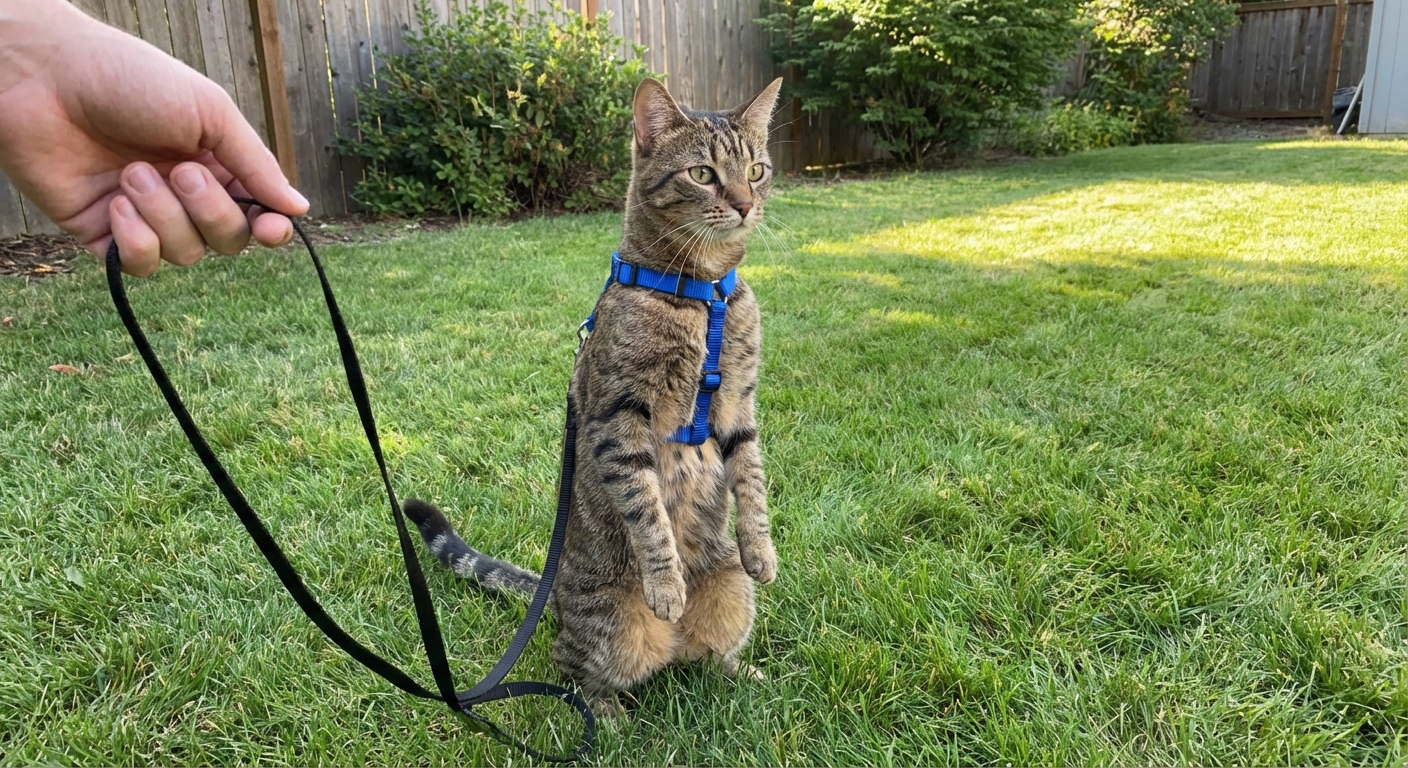
Leash training a cat is possible with patience and the right harness. Learn step-by-step indoor training, first outdoor sessions, safety tips, stress signals...
Article
•
Designer Mixes
Teach Your Cat to Walk on a Leash

Shari Shidate
Designer Mixes contributor
Leash walking is not just a dog thing. Many cats can learn to enjoy safe, supervised outdoor time on a harness and leash, especially when you go slowly and make it positive. As a veterinary assistant, I love leash training because it can enrich your cat’s life and, compared with unsupervised roaming, can reduce some risks like fights, cars, and getting lost.
Key idea: We’re not “walking the cat” the way we do with dogs. We are teaching your cat that the harness is comfortable, the leash is predictable, and outdoor time happens calmly and safely.
And it is also okay if you try this and decide leash walks are not your cat’s thing. Some cats are happier with indoor enrichment or a catio, and that is still a win.
Is your cat a good candidate?
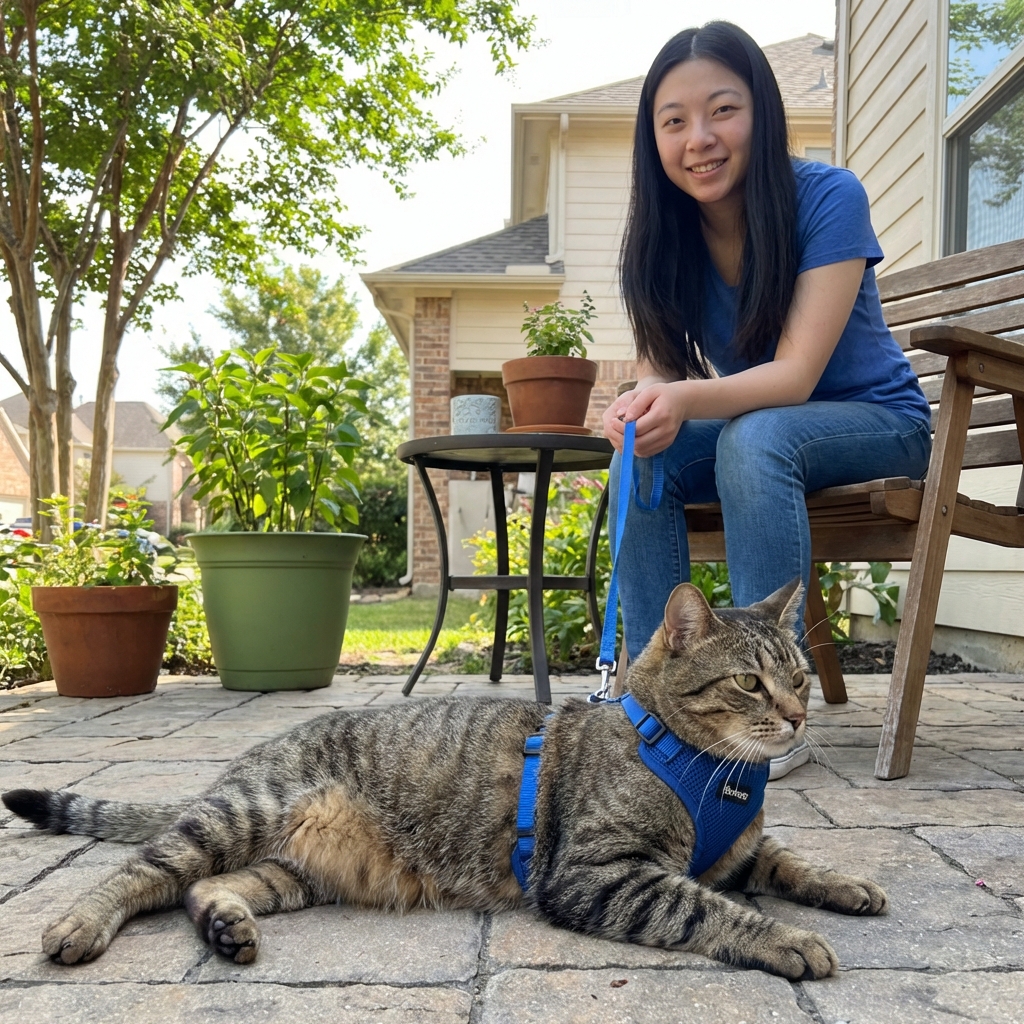
Most healthy cats can learn leash skills, but personality matters. Curious, food-motivated, confident cats often learn faster. Shy cats can still succeed, but the timeline may be longer.
Check with your vet first if:
- Your cat has heart or breathing issues, arthritis, or is recovering from surgery.
- Your cat is extremely fearful or panics with handling.
- Your cat is not up to date on vaccines or parasite prevention.
Safety basics before you go outside: microchip your cat, use a breakaway collar with ID (even on a harness cat), and keep flea, tick, and heartworm prevention current if your veterinarian recommends it for your area. Also make sure your microchip registration info is up to date.
Before you start
A few quick prep steps make training smoother and safer.
- Nail trim: A simple trim helps prevent snagging and reduces accidental scratches if your cat startles.
- Calm space: Start in a quiet room with good footing (not slippery floors).
- Leash awareness: When you begin leash practice indoors, supervise closely so your cat does not chew the leash or get tangled around furniture.
Choosing the right harness and leash
A good harness is the difference between “this is fun” and “I’m never doing this again.” Skip collars for leash walking. Cats can easily back out of a collar, and sudden pressure on the neck can cause injury.
What to look for
- Escape resistance: a secure H-style harness or a well-fitted vest-style harness.
- Comfort: soft edges, lightweight material, and no rubbing in the armpits.
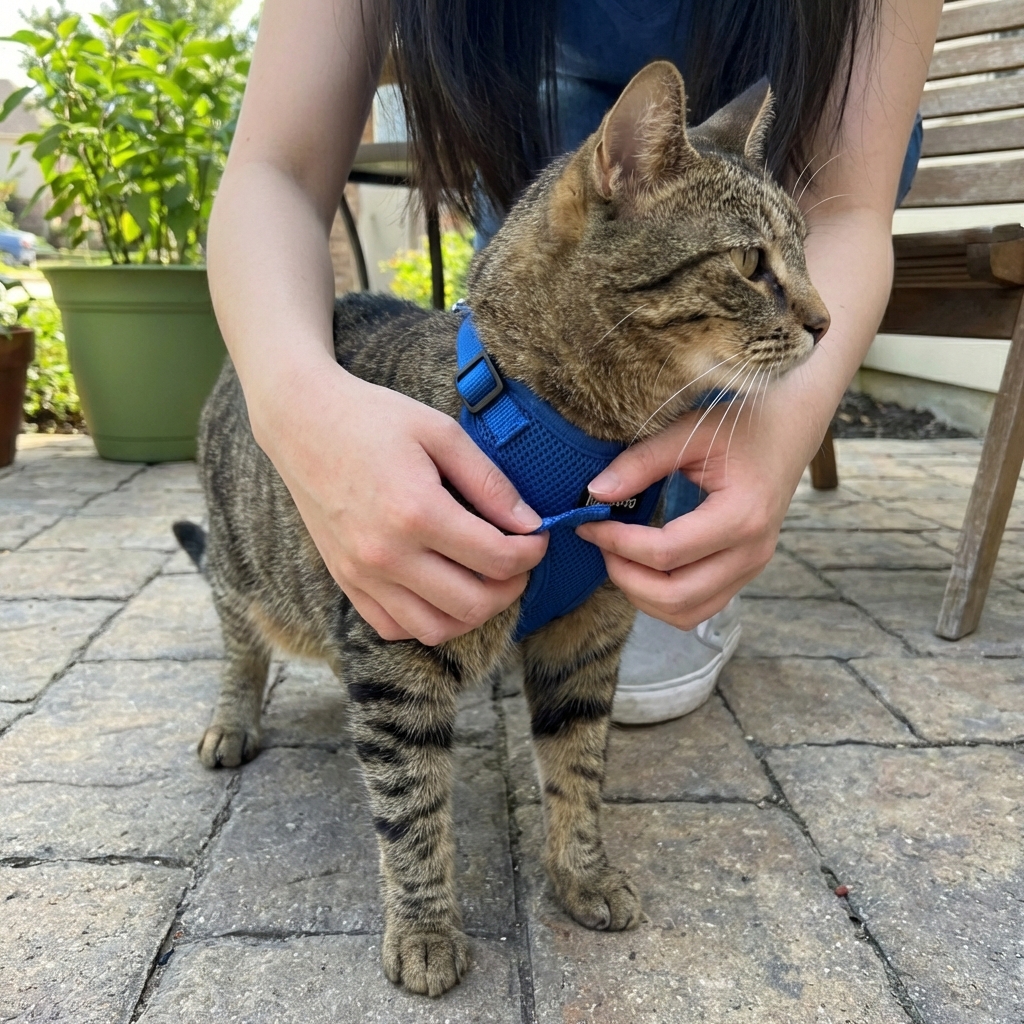
- Adjustability: snug but not tight. For many cats you can slide one finger comfortably under a strap (sometimes two, depending on harness style and your cat’s size and coat). Check that your cat can breathe and move normally, and that nothing rubs at the shoulders or under the front legs.
- Leash length: 4 to 6 feet is ideal for training. Avoid retractable leashes early on.
- Attachment point: clip the leash to the harness (often the back D-ring), not to a breakaway collar. Breakaway collars are designed to release.
If your cat backs out of harnesses, try a vest-style harness with a higher belly strap, and focus on fit. Many escapes happen because the neck strap is too loose.
Step-by-step training plan
Plan for short sessions, once or twice daily. Think in minutes, not miles. The goal is confidence.
Step 1: Make the harness normal
- Leave the harness near your cat’s favorite area for a few days.
- Pair it with treats, play, or a meal. Harness appears, good things happen.
Step 2: Wear the harness indoors
- Start with 10 to 30 seconds, then remove it and reward.
- Build up to 5 to 15 minutes while your cat eats, plays, or relaxes.
- If your cat “freezes” or flops over, do not drag or force movement. Encourage motion with a wand toy or treat trail.
Step 3: Add the leash inside
- Clip the leash on and let your cat walk around a safe room while you supervise.
- Hold the leash loosely and follow your cat. Avoid tension on the leash.
- Teach a simple, choice-based skill: slight tension means “pause.” The moment your cat creates slack again by stepping toward you, reward. This is not a correction, it is a communication tool.
Step 4: Door practice
Many cats learn the harness fine but get spooked by doors, stairs, and new sounds. Practice at the door first.
- Harness and leash on, then open the door briefly, treat, and close.
- Repeat until the door opening is boring.
- Then step outside for 10 to 30 seconds, treat, and return inside.
Step 5: First outings
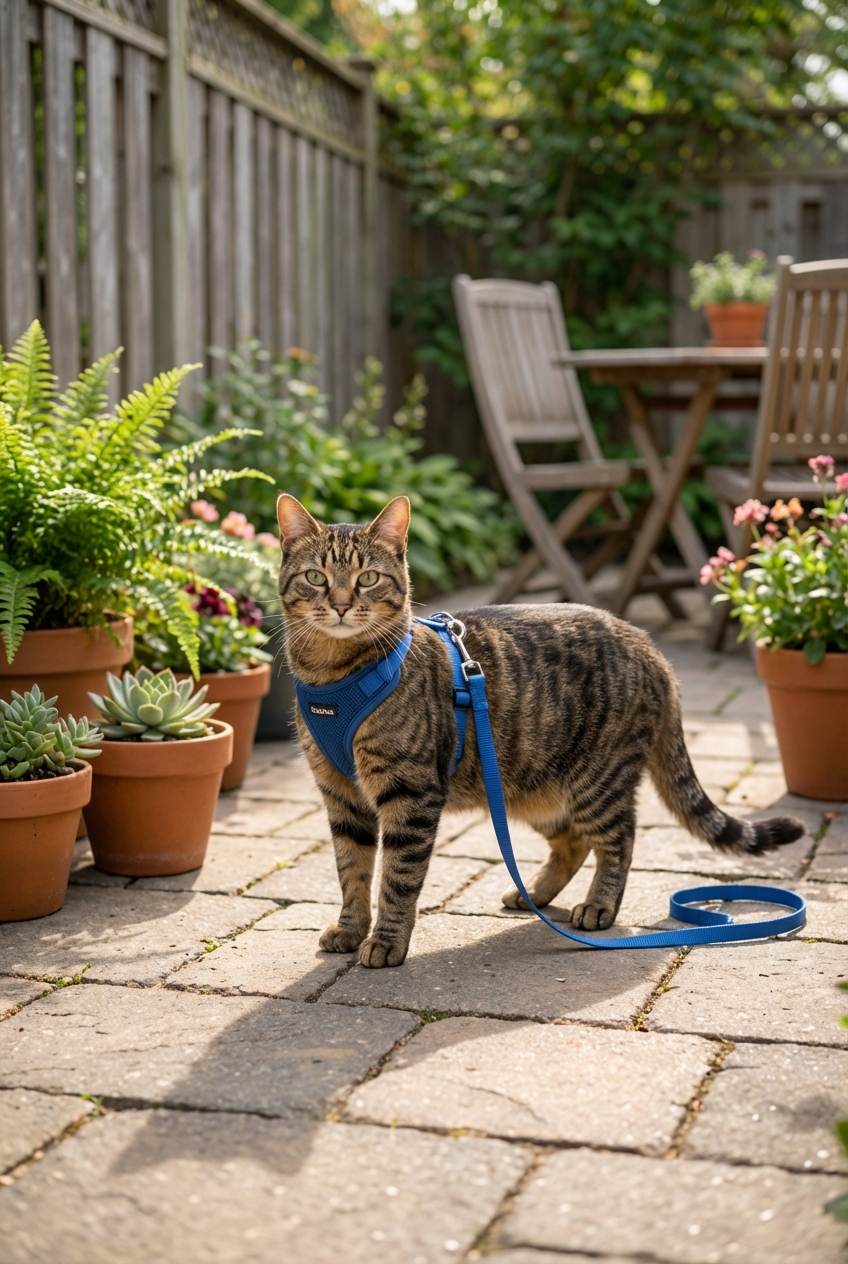
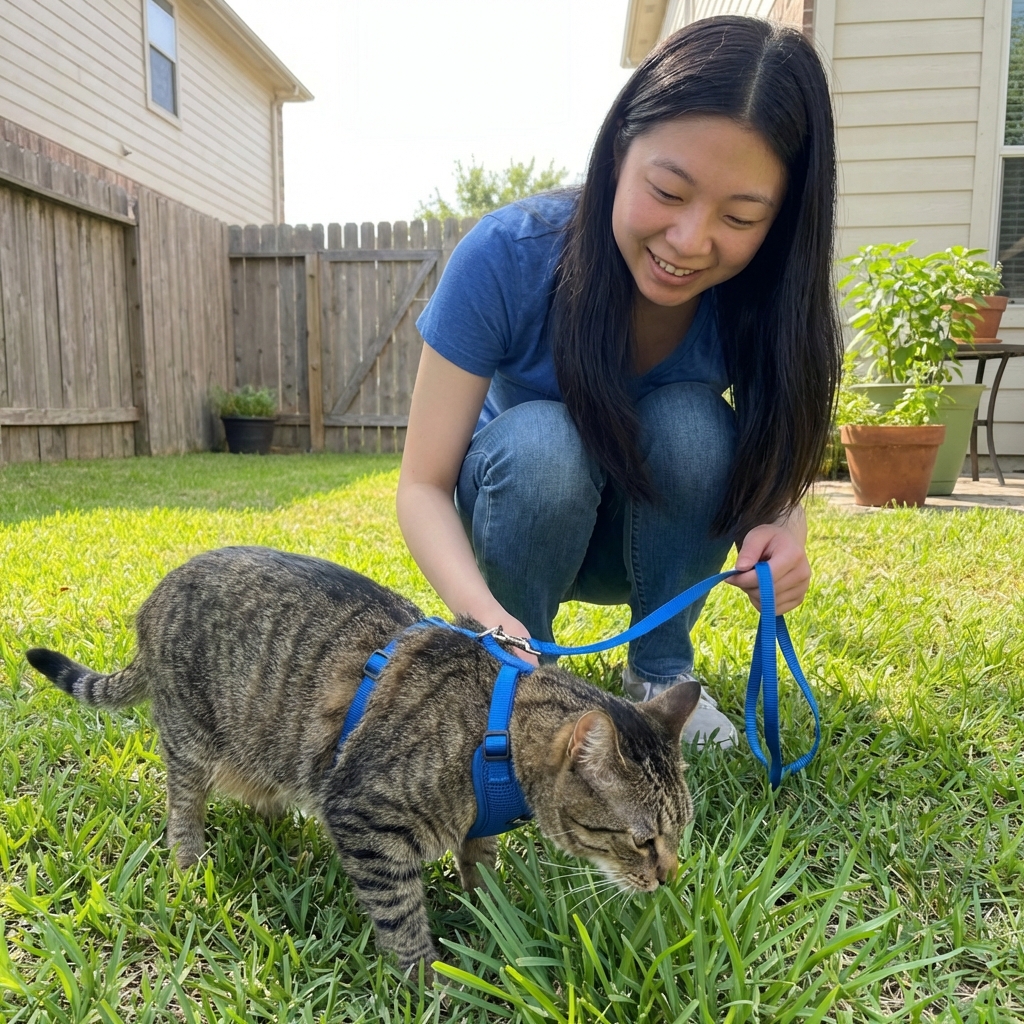
Pick the quietest time of day. Start with a porch, patio, or small yard. Let your cat sniff. You are building a positive outdoor routine, not exercise distance.
- Keep sessions short, 3 to 10 minutes at first.
- End on a success. If your cat is doing well, stop anyway and leave them wanting more.
- Gradually expand the “safe zone.”
Tip: Your cat chooses the pace. Your job is to keep them safe, calm, and curious.
How long does it take?
Some cats are ready to explore outside in 1 to 2 weeks. Others take 1 to 2 months. A cautious cat may need longer, and that is completely normal.
Aim for progress you can measure:
- Harness goes on without a struggle.
- Cat eats or plays while wearing it.
- Cat walks normally indoors with the leash attached.
- Cat can step outside calmly and return inside without bolting.
Common problems
1) The “statue cat”
This is usually uncertainty, not stubbornness.
- Try shorter sessions and higher-value rewards (freeze-dried meat treats often work well).
- Use play to create movement. A wand toy can be magic.
- Check harness fit. Too tight can cause discomfort, too loose can feel unstable.
2) Rolling or wiggling out
- Stay calm and avoid chasing. Chasing turns it into a game or increases panic.
- Adjust the harness and consider switching styles.
- Practice indoors until your cat is relaxed before attempting outdoors again.
3) Bolting at a noise
- Use a secure harness and keep a gentle, close leash length when outside.
- Choose quieter locations and times.
- Consider bringing a carrier or backpack so your cat has a “safe retreat.”
4) Eating everything outside
Grass nibbling can be normal, but plants, mulch, mushrooms, and lawn chemicals can be dangerous.
- Redirect with treats and keep moving.
- Avoid treated lawns and unknown plants.
- If your cat eats a plant and vomits, drools, or seems weak, call your veterinarian or Pet Poison Helpline immediately.
5) Refusing the harness after a bad outing
Go back a step. Rebuild indoors with treats and very short sessions. One scary dog bark can set training back, and that is okay. Consistency brings confidence back.
If your cat spooks
Have a simple plan before you need one.
- Do not run, and do not yank the leash. Keep your voice calm and your movements slow.
- Create safety fast: shorten the leash smoothly to prevent sprinting, then move behind a visual barrier (car, fence, shrub) or back toward your door.
- Use the carrier: if you brought a carrier or backpack, open it low to the ground and guide your cat in with treats if possible. Many cats feel safer retreating than being held.
- Avoid picking up a panicking cat if it makes them thrash or scratch. Some cats tolerate being held, others escalate quickly. Safety first, for both of you.
Outdoor safety rules
- Never tie the leash to a chair, railing, or stake and walk away. Cats can twist, panic, and injure themselves.
- Avoid dog-heavy parks. Choose quiet, low-traffic areas.
- Skip extreme heat and cold. Cats can overheat quickly, and many can chill fast too, especially short-haired, senior, or small cats.
- Watch for foxtails, burrs, and stickers, especially around paws and between toes.
- Do a quick tick check after outings if ticks live in your area.
- Remember: supervised outdoor time still has exposure risks (fleas and ticks, dogs, toxic plants). Stay alert and keep outings controlled.
Training toolkit
- Well-fitted harness (H-style or vest)
- Lightweight 4 to 6 foot leash
- High-value treats in tiny pieces
- Wand toy for confidence and movement
- Carrier or cat backpack for safety breaks
- Microchip and ID (with up-to-date registration)
If your cat loves routine, consider making leash time predictable. Same harness, same door, same short loop, same treat after. Cats often relax when they know what comes next.
When to stop
Pause training and return indoors if you see:
- Heavy panting, drooling, or wide-eyed panic
- Tail tucked tight, ears pinned back, or trembling
- Repeated escape attempts or frantic spinning
Leash training should build confidence. If it is consistently escalating stress, talk with your veterinarian. Some cats benefit from a behavior plan, environmental changes, or in certain cases, short-term anti-anxiety support.
Alternatives to leash walks
If leash training is not a fit, you still have great options for safe enrichment:
- Catio or screened porch: fresh air with less risk
- Stroller or backpack outings: outdoor sights with a secure “base”
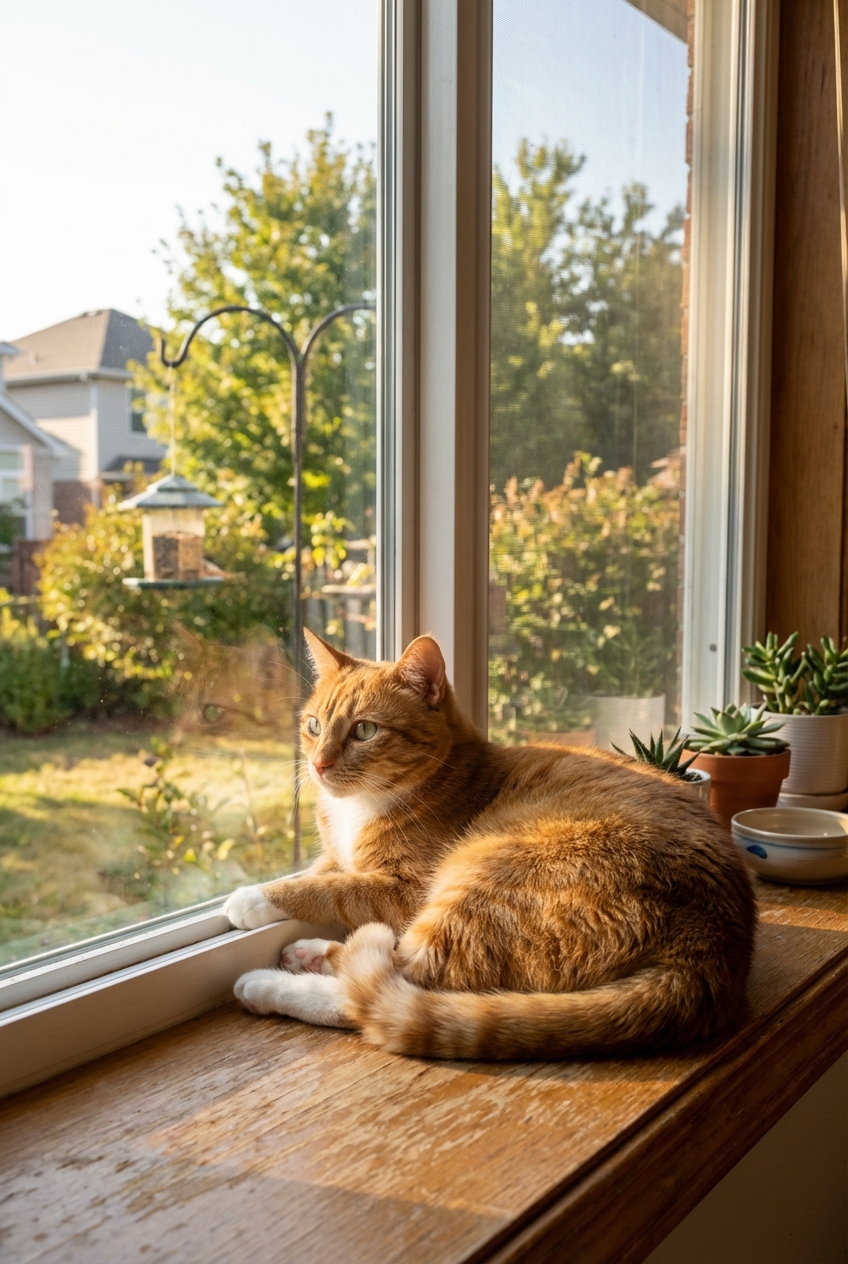
- Indoor enrichment: window perches, bird feeders outside a window, puzzle feeders, and more play routines