A vet assistant explains why cats bite and the best toys to stop boredom nipping—wand toys, puzzle feeders, kicker toys, track toys, and smart play routines.
Article
•
Designer Mixes
Teach Your Cat Not to Bite

Shari Shidate
Designer Mixes contributor
Cat bites can feel like they come out of nowhere, but they are often communication. Your cat may be saying, “I’m overstimulated,” “I’m scared,” “I need to play,” or “Please stop touching me there.” Sometimes a bite is more reflexive or pain-driven, especially if your cat is startled or sore. The good news is that biting is a behavior you can change with the right mix of prevention, training, and safe outlets for natural hunting instincts.
As a veterinary assistant, I also want to gently flag something important: cat bites can become infected quickly because feline teeth can push bacteria deep under the skin. Any bite that breaks the skin, especially on the hand or near a joint, is worth prompt medical advice even if it looks small. Wash the area right away with soap and running water, and contact a clinician about next steps. Depending on your location and your cat’s vaccination status, you may also be advised about tetanus or rabies guidance. This article is educational and not a substitute for medical or veterinary care.
Why cats bite
Before you try to correct biting, it helps to identify what type of bite you are dealing with. Different causes need different solutions.
1) Play biting
This is one of the most common, especially in kittens and young cats. Cats are predators, and their play is practice for hunting. If hands and feet become the “toy,” biting becomes part of the game.
2) Overstimulation bites
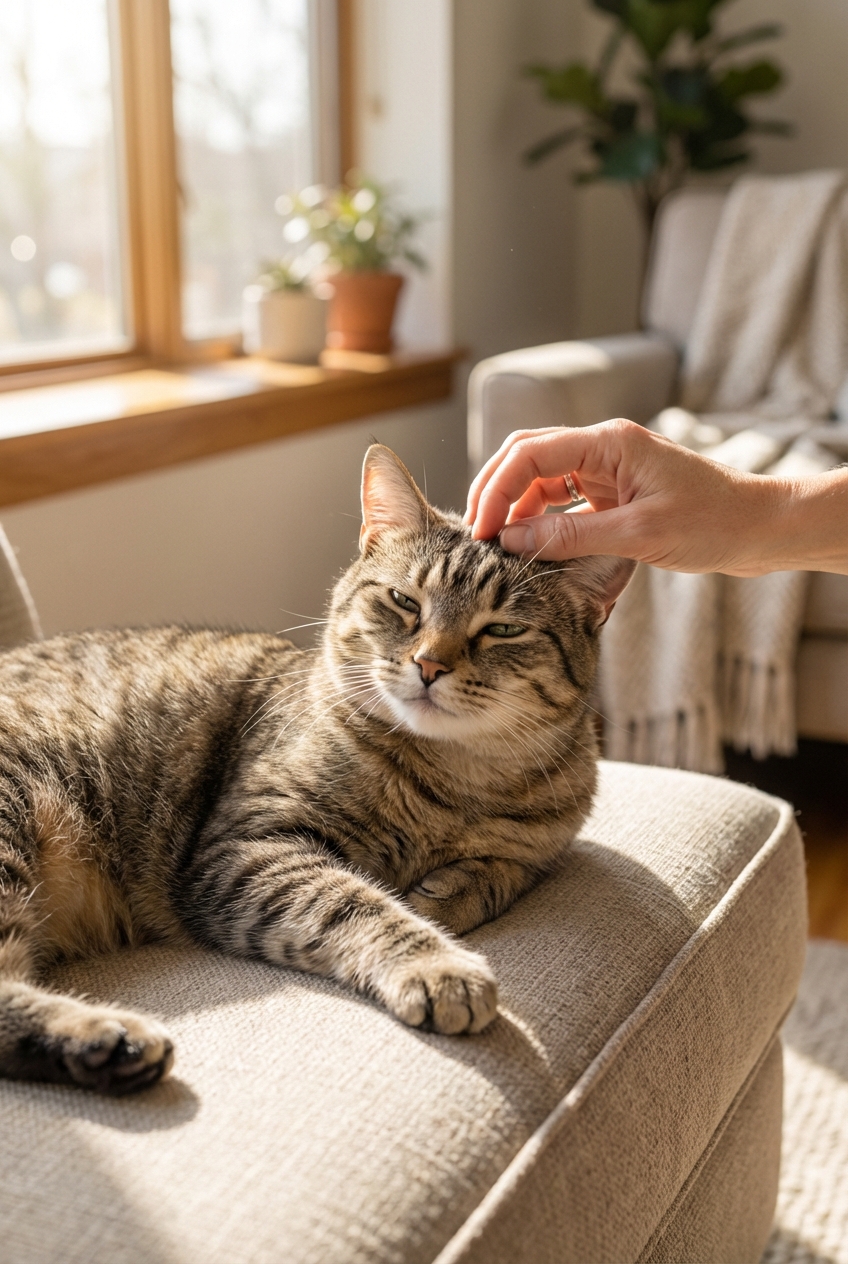
Some cats enjoy petting, until they suddenly do not. Their skin and nerves can become overloaded, and a bite is their way to stop the interaction.
3) Fear, pain, or stress
If your cat is cornered, startled, handled when they are uncomfortable, or experiencing pain, biting can be defensive.
4) Redirected aggression
This happens when a cat gets worked up by something they cannot reach, like an outdoor cat seen through a window, then turns and bites whoever is closest.
5) Attention-seeking
Some cats learn that biting makes people react fast. Even “No!” and a big movement can be rewarding if your cat is seeking engagement.
Start with safety
Rule out pain or illness
If biting is new, escalating, or paired with hiding, growling, changes in appetite, litter box changes, or sensitivity to touch, schedule a vet visit. Dental disease, arthritis, skin irritation, and other conditions can make a normally tolerant cat bite.
Set up a calmer routine
- Provide a safe retreat: a covered bed, a quiet room, or a high perch.
- Reduce stress triggers: loud noises, unpredictable handling, and unwanted interactions.
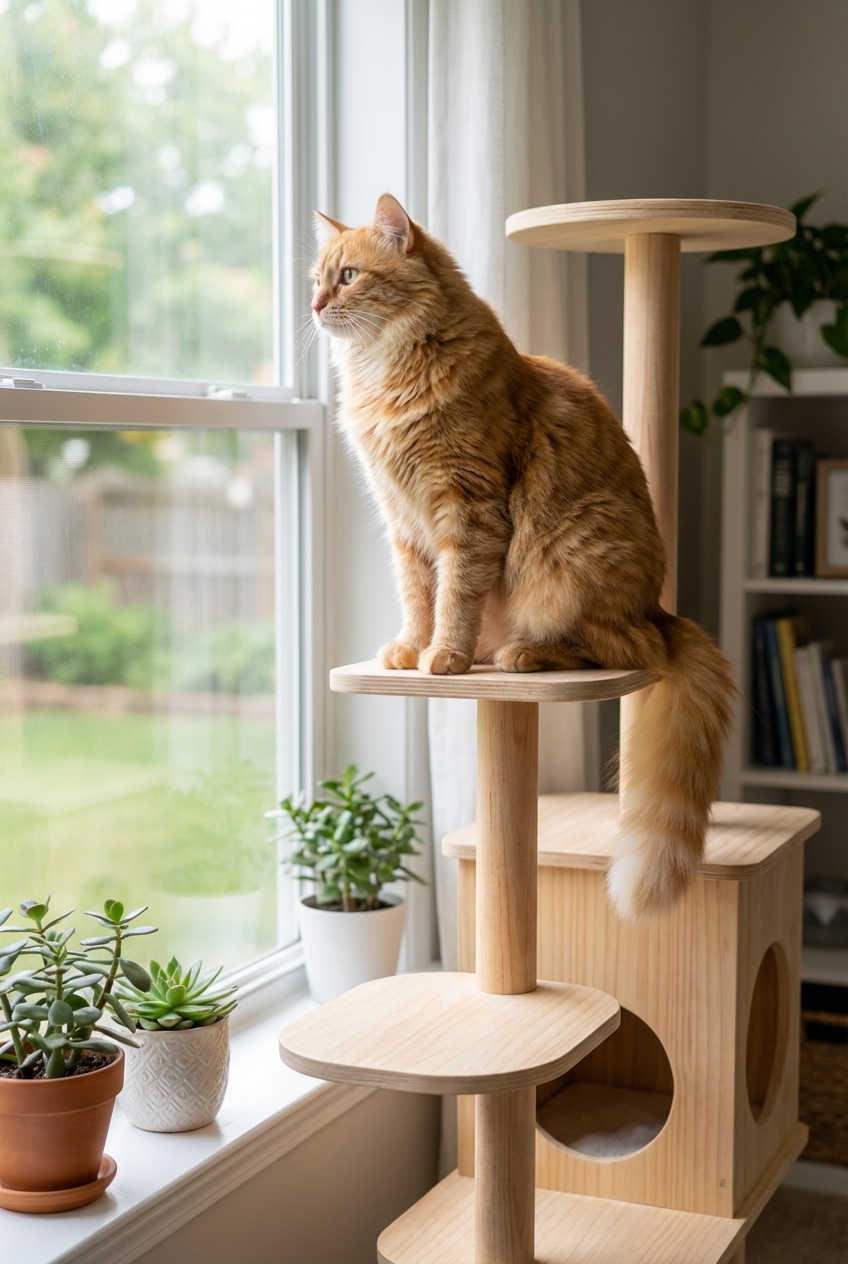
- Add vertical space: cat trees, shelves, and window perches can lower tension fast in multi-person or multi-pet homes.
- Protect your hands: if your cat is in a biting phase, use toys and treats to interact, not fingers.
Kids and visitors
If you have children, keep interactions supervised. Teach kids to use toys (not hands), avoid hugging or squeezing, and let the cat walk away. If your cat gets wound up, separate them and give them a quiet reset.
Teach “no bite”
The goal is simple: biting stops the fun, gentle behavior makes good things happen. Cats learn best through consistency and clear consequences, not punishment.
Step 1: Stop reinforcing biting
- Do not hit, flick, scruff, shout, or punish. These methods increase fear and can make biting worse.
- Avoid spray bottles and “air can” style deterrents. They may stop behavior in the moment, but often increase stress and can damage trust.
- Do not pull your hand away fast. Quick movement can trigger chase and bite. Instead, freeze for one second, then slowly disengage.
- Do not keep playing through bites. If biting works, it will repeat.
Step 2: Use a brief, boring time-out
The moment teeth touch skin, calmly end interaction for 30 to 60 seconds.
- Stand up and turn away.
- Place a pillow between you and the cat if needed.
- If your cat continues, calmly leave the room and close the door for a short reset.
A cat “time-out” is simply removal of attention and access to you, not scolding and not long confinement.
Step 3: Reward gentle choices
Cats repeat what works. Catch your cat being good.
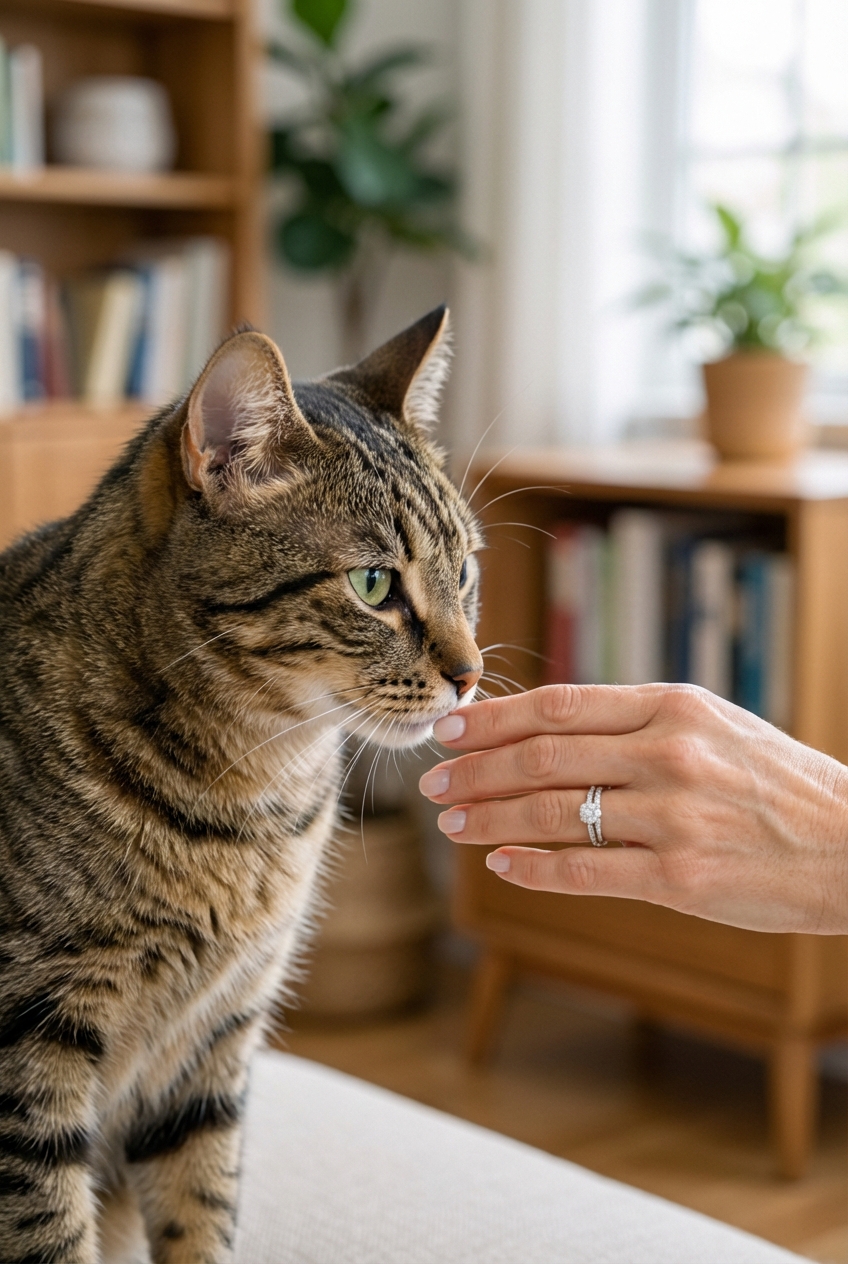
- When your cat sniffs your hand without biting, drop a treat.
- When your cat plays with a toy instead of your fingers, praise softly and continue the game.
- When your cat relaxes during petting, pause and offer a treat for calm body language.
Step 4: Train an alternate behavior
Pick one simple alternative you can reinforce daily:
- “Touch”: teach your cat to boop your finger with their nose, then reward.
- “Go to mat”: reward your cat for stepping onto a small blanket or bed, especially when excited.
- Sit for treats: a calm default behavior reduces mouthy grabbing.

Fix play biting
If your cat bites during play, the fix is usually the same: make sure their hunt drive has an appropriate outlet every day.
Use the right toys
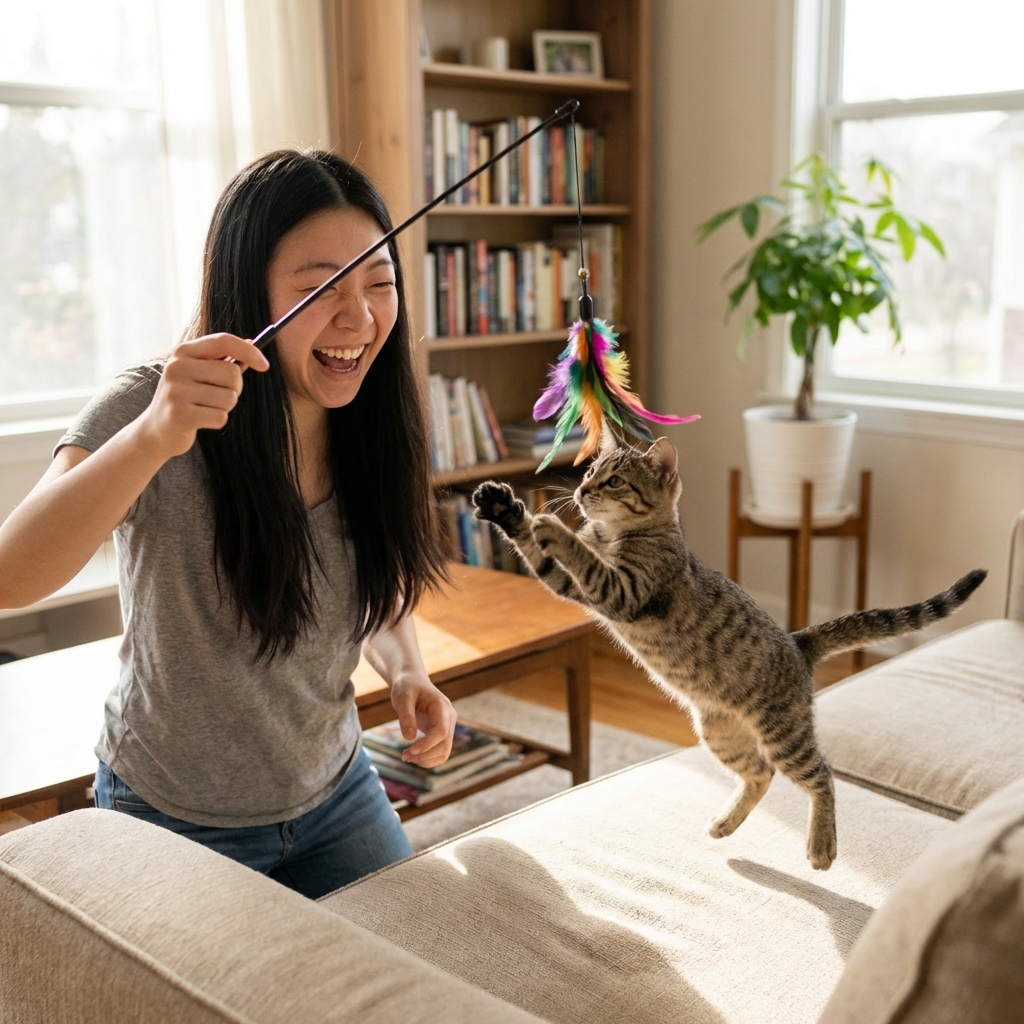
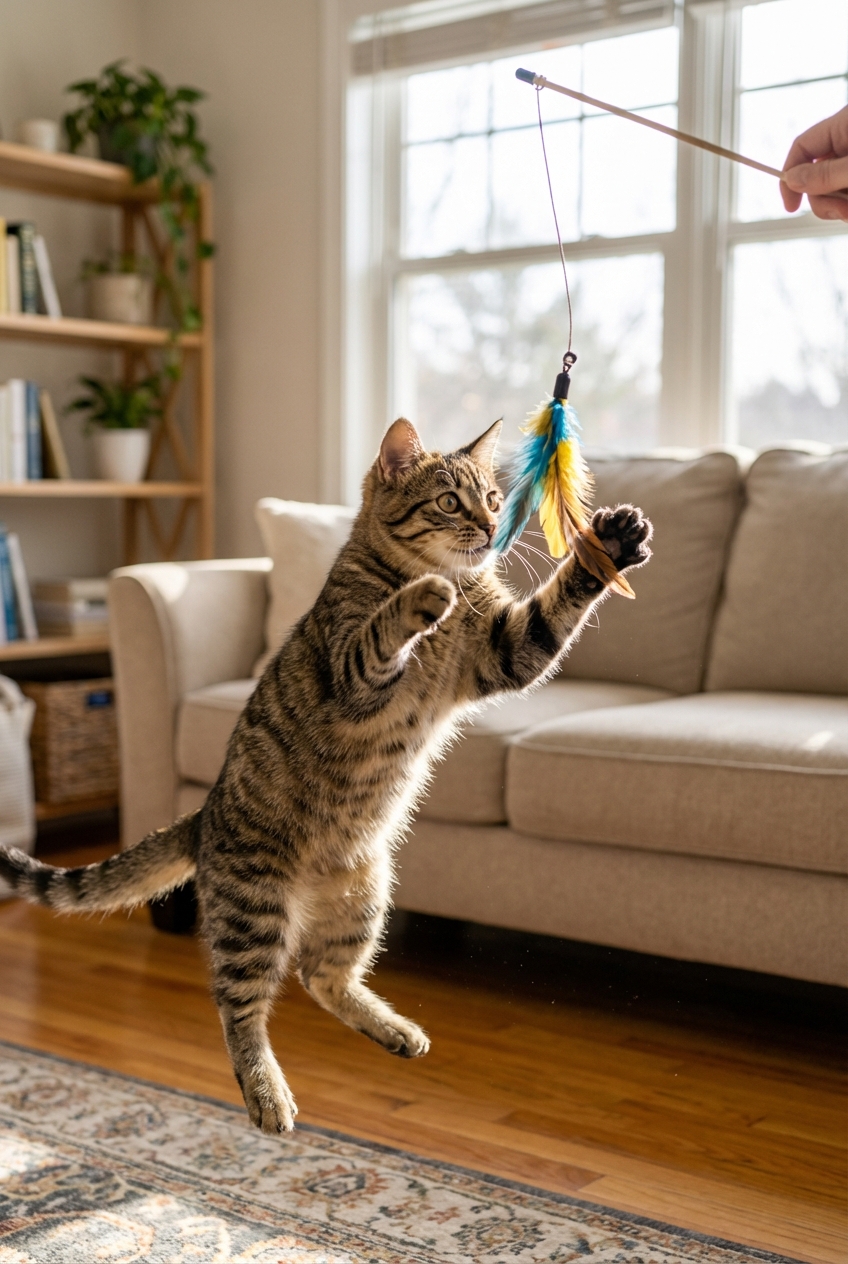
- Wand toys: keeps teeth away from hands while letting your cat chase and pounce.
- Kick toys: great for cats that like to bunny-kick and wrestle.
- Food puzzles: turns hunting into a brain game.
Try the Hunt, Catch, Eat routine
Two short play sessions daily can change everything.
- Hunt: 5 to 10 minutes with a wand toy moving like prey.
- Catch: let your cat “win” a few times.
- Eat: offer a small meal or treat afterward to complete the cycle.
Stop hand play
If you have ever wiggled fingers under a blanket for fun, you are not alone. But for bitey cats, hands must become boring and predictable. Save the excitement for toys.
Helpful management add-ons
- Trim nails routinely: it will not solve biting, but it can reduce injury during rough moments. Ask your vet or groomer for a demo if needed.
- Use an interactive feeding schedule: more, smaller meals or puzzle feeding can reduce “stalker” energy in the evening.

Prevent petting bites
Many cats give subtle warnings before they bite. Learning these signals helps you stop before your cat feels they have to escalate.
Common “I’m done” signs
- Tail flicking or thumping
- Skin rippling along the back
- Ears turning sideways or back
- Sudden stillness
- Turning head toward your hand
- Dilated pupils
Pet smarter
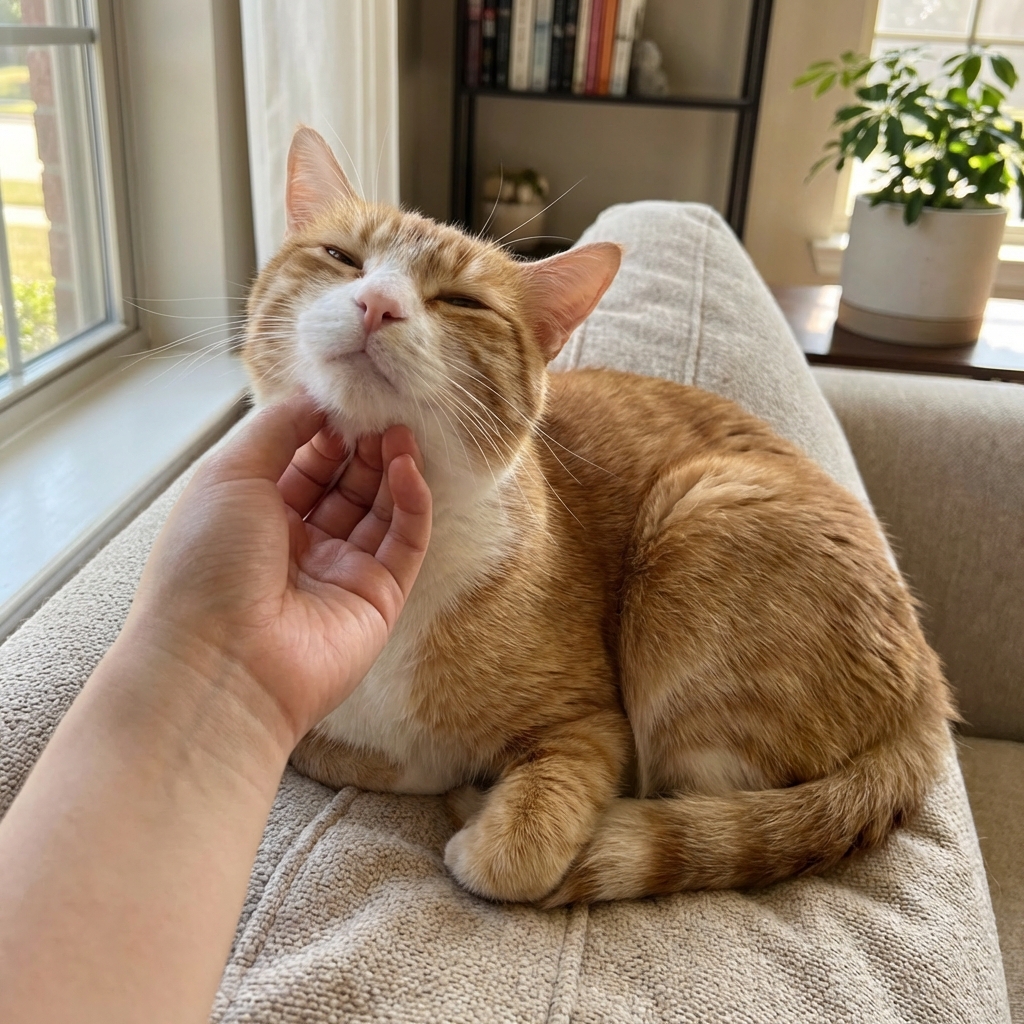
- Keep sessions short: 3 to 10 seconds, then pause.
- Use consent tests: stop petting and see if your cat leans in for more. If not, give space.
- Focus on safer zones: many cats prefer cheeks, chin, and head over full-body petting.
When you consistently stop at the first warning sign, your cat learns they do not need to bite to be heard.
In the moment
If a bite happens, your goal is calm and consistency. Use the same steps every time.
- Freeze: avoid yanking your hand away.
- Go still and quiet: big reactions can add excitement or fear.
- End interaction: use the brief time-out (turn away or leave for 30 to 60 seconds).
- Redirect after the break: offer a wand toy, toss a kicker toy, or start a food puzzle so your cat has a safe outlet.
Special situations
Kittens that bite everything
Kittens need extra play and gentle boundaries. If possible, a well-matched kitten buddy can help teach bite inhibition through normal play. If not, you will need multiple short play sessions a day and lots of appropriate toys.
Redirected aggression
If your cat bites after seeing another animal outside, block visual triggers with window film or curtains and provide enrichment away from the window. Do not attempt to pick up an aroused cat. Give space and let them decompress.
Fearful cats
If your cat bites when approached or handled, focus on trust-building and choice. Use treats tossed gently nearby, avoid reaching over the head, and allow your cat to initiate contact. For severe fear or aggression, work with your veterinarian and a qualified behavior professional.
How long it takes
Many families see improvement within 1 to 3 weeks once they consistently stop hand play and add daily hunting-style play, but timelines vary. Habitual biting, fear-based biting, pain-related biting, and redirected aggression often take longer. What matters is that biting becomes less frequent and less intense over time.
When to get help
Reach out to your veterinarian if:
- Biting is sudden or worsening
- You suspect pain or illness
- Your cat attacks without warning
- You see stalking behavior toward family members
- There are multiple bites that break skin
Your vet can rule out medical causes and discuss behavior support. In some cases, medication plus behavior modification is the kindest and safest path forward.
After a bite
If you are bitten, wash the wound thoroughly with soap and running water. If the bite breaks skin, especially on the hand, wrist, face, or near a joint, contact a medical professional promptly. Seek urgent care sooner if you have increasing redness, warmth, swelling, pain, drainage, red streaks, numbness, trouble moving the area, or fever. Follow local public health guidance about tetanus and rabies as needed.
Quick recap
- Identify the cause: play, overstimulation, fear, pain, or redirected aggression.
- Hands are not toys. Use wand and kicker toys daily.
- Teeth on skin means the fun ends, every time.
- Reward gentle behavior with treats and calm attention.
- Watch for early body language and stop petting sooner.
- See a vet for sudden changes or escalating bites.