

A broken dog nail can bleed a lot and hurt. Learn calm, step-by-step first aid, how to stop bleeding, prevent licking and infection, and when to see a vet fast.
Article
•
Designer Mixes
Teach a Puppy to Drop It

Shari Shidate
Designer Mixes contributor
If you live with a puppy, you already know they explore the world with their mouths. Socks, mulch, tissues, rocks, your kid’s crayons. Teaching Drop It is one of the most useful life skills you can give your dog because it protects their health and helps you avoid power struggles that can lead to resource guarding.
As a veterinary assistant here in Frisco, Texas, I’ve seen the “I thought he would spit it out” moment turn into an emergency visit. The good news is that Drop It is very teachable, and you can do it in a calm, evidence-based way that builds trust.
What Drop It means
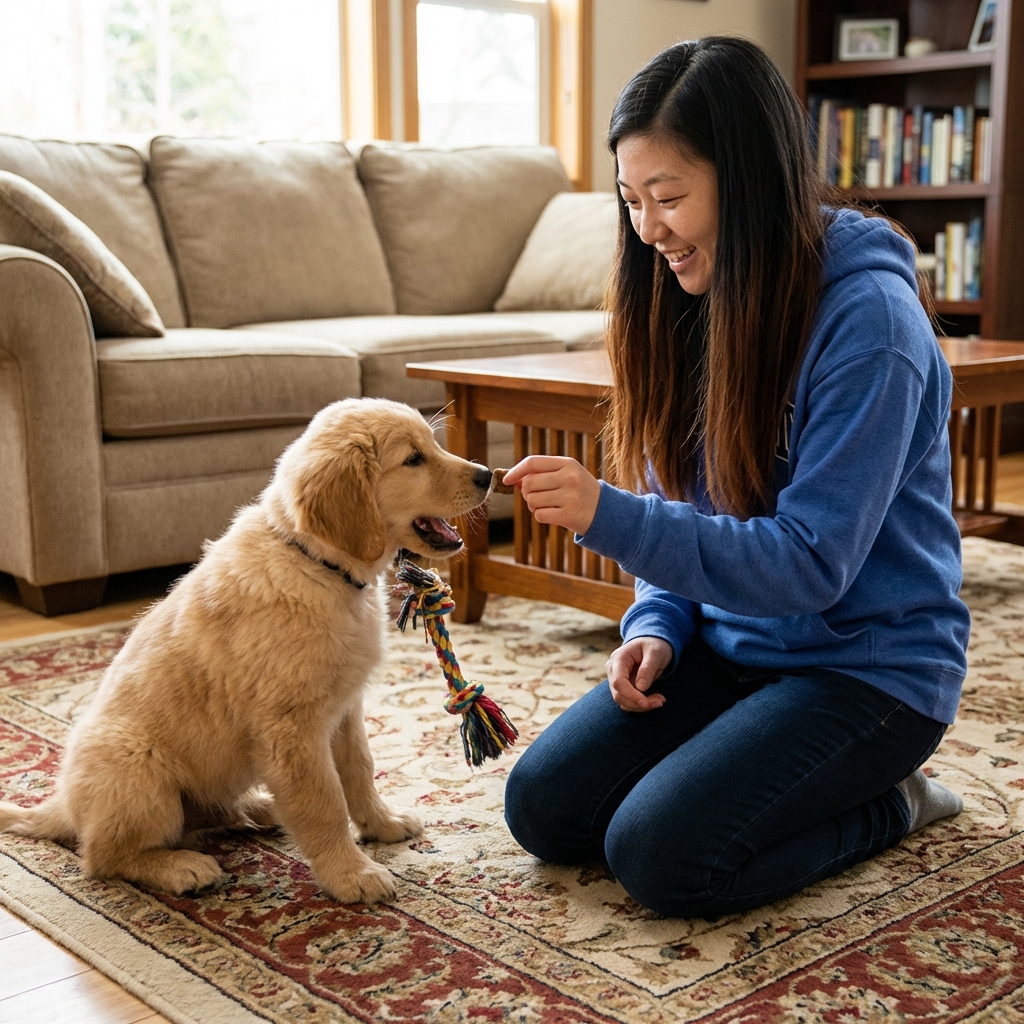
Drop It means: “Open your mouth and release what you have, then look back to me because something good happens next.” It is different from:
- Leave It: Do not take it in the first place.
- Give: Often used in games like fetch, but some dogs interpret it as negotiable.
- Off: Remove paws or body from something.
For safety, I like Drop It to be a fast reflex, not a debate.
Why puppies hold on tighter
Many puppies are naturally inclined to grab and keep. When you run at them, they often clamp down and run away because:
- Chase is fun and self-rewarding.
- Loss feels scary if they think you always take things and never give anything back.
- Pressure triggers resistance. Grabbing at the item can turn into a tug-of-war or guarding.
The goal is to teach your puppy that releasing items is safe and worthwhile.
Before you start
Pick the right rewards
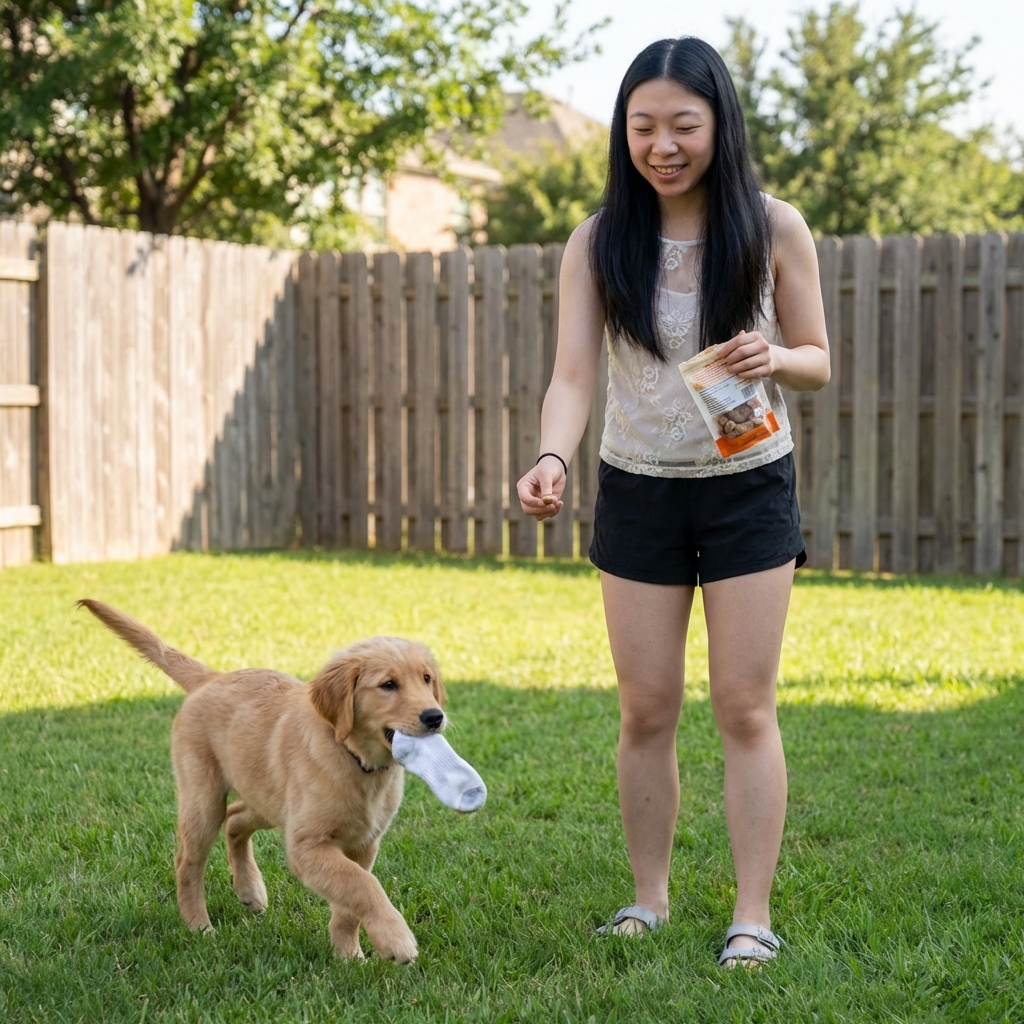
Use tiny, soft, high-value treats your puppy can swallow quickly. Think pea-sized pieces of chicken, turkey, or a quality training treat. Kibble works for some pups, but if you are practicing Drop It, you want your puppy thinking, “Yes, that is worth it.”
Choose low-stakes items
Start with a toy your puppy likes but does not go crazy over. Avoid prized chews at first.
Train when your puppy is reasonably calm
Right after a potty break and a little play is a sweet spot. If your puppy is over-tired and bitey, the session will feel harder than it needs to.
Use simple management
The fewer chances your puppy has to rehearse stealing, the faster this skill sticks. Pick up socks and kid clutter, use baby gates, and consider a leash indoors during the “everything goes in my mouth” phase.
Trade, mark, give it back
This is the backbone of a reliable Drop It, and it is trust-building.
Quick definition: A marker is a word like “Yes” (or a click) that tells your puppy, “That exact moment earned the reward.”
- Offer the toy and let your puppy take it.
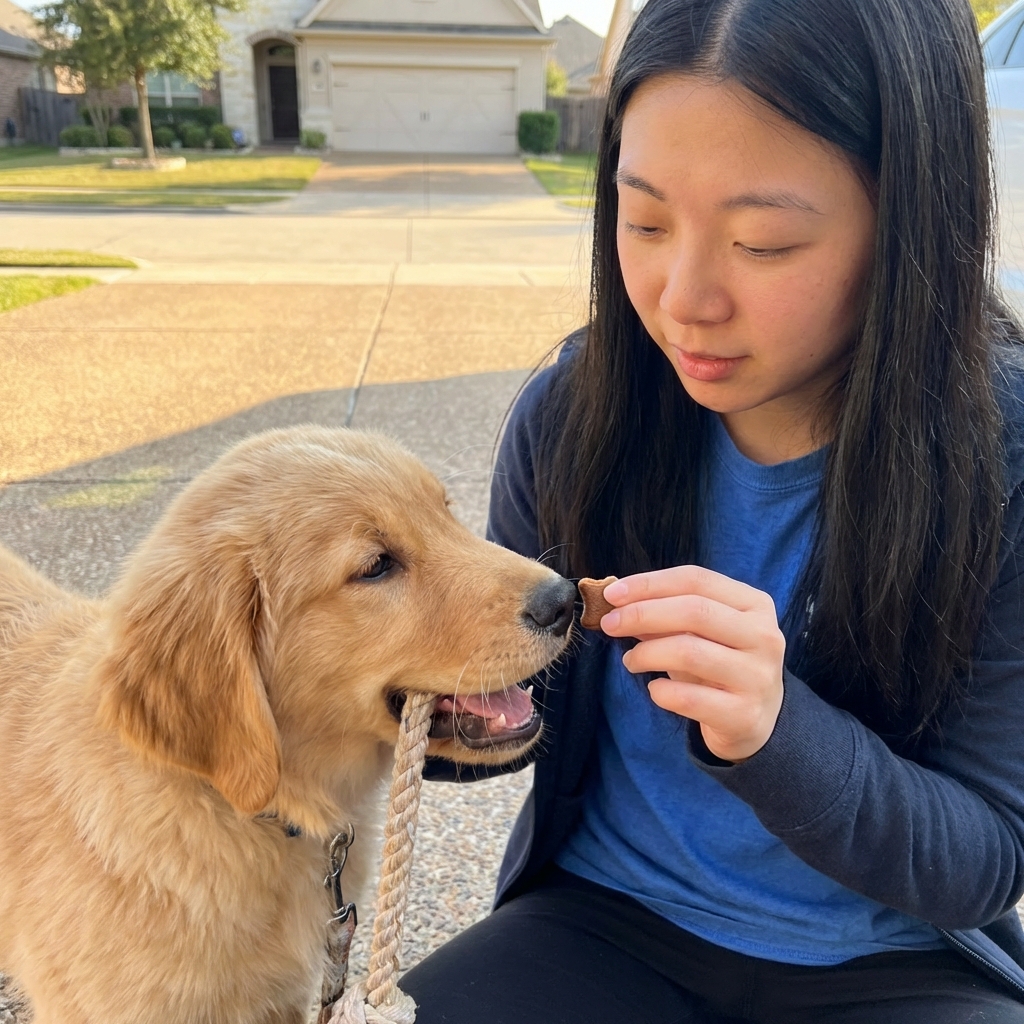
- Place a treat right at their nose. Do not yank the toy. Just let the treat do the convincing.
- When they open their mouth to take the treat, mark the moment with “Yes” or a clicker.
- Say “Drop it” as they release. At first, you are labeling the behavior as it happens.
- Reward with the treat.
- Give the toy back right away for many repetitions. This is huge. It teaches your puppy that dropping does not mean losing forever.
Practice 5 to 10 reps, then stop. Short sessions keep it fun and prevent frustration.
Add the cue
Many people say “Drop it, drop it, drop it” while the puppy clamps down. Instead, do this:
- For the first few sessions, let the trade cause the drop. Say “Drop it” as the item falls so your puppy starts to connect the words with the action.
- As you see the puppy start to release predictably, say “Drop it” one second before you present the treat.
- Reward as soon as the item hits the floor.
Over time, your cue becomes the predictor that good things happen, and you will need to show the treat less often.
Build reliability
Think of Drop It like leveling up in a video game. Add one challenge at a time.
Level 1: Easy toys indoors
- Soft toys, low distraction
- High rate of reward
- Give the toy back often
Level 2: Better toys
- Tug toy, ball, toy with squeaker
- Reward with higher value treats
Level 3: Chews (carefully)
Only practice with chews if your puppy is relaxed and you can safely trade. Offer a better reward than the chew, then return the chew after the treat. If your puppy stiffens, freezes, or growls, stop and get professional help from a qualified trainer.
Level 4: Real-world items
Now practice on walks with safe, staged items you control and can pick up quickly (for example, your own toy dropped on the ground). Keep your puppy on leash so they cannot rehearse running away. Be cautious with sticks, since they can splinter and cause mouth or GI injuries in some dogs.
Drop It games
Two-toy swap
Use two similar toys. Let your puppy hold toy A, then make toy B exciting. When they drop A to grab B, say “Drop it,” mark, then let them have B. Repeat back and forth.
Tug with rules
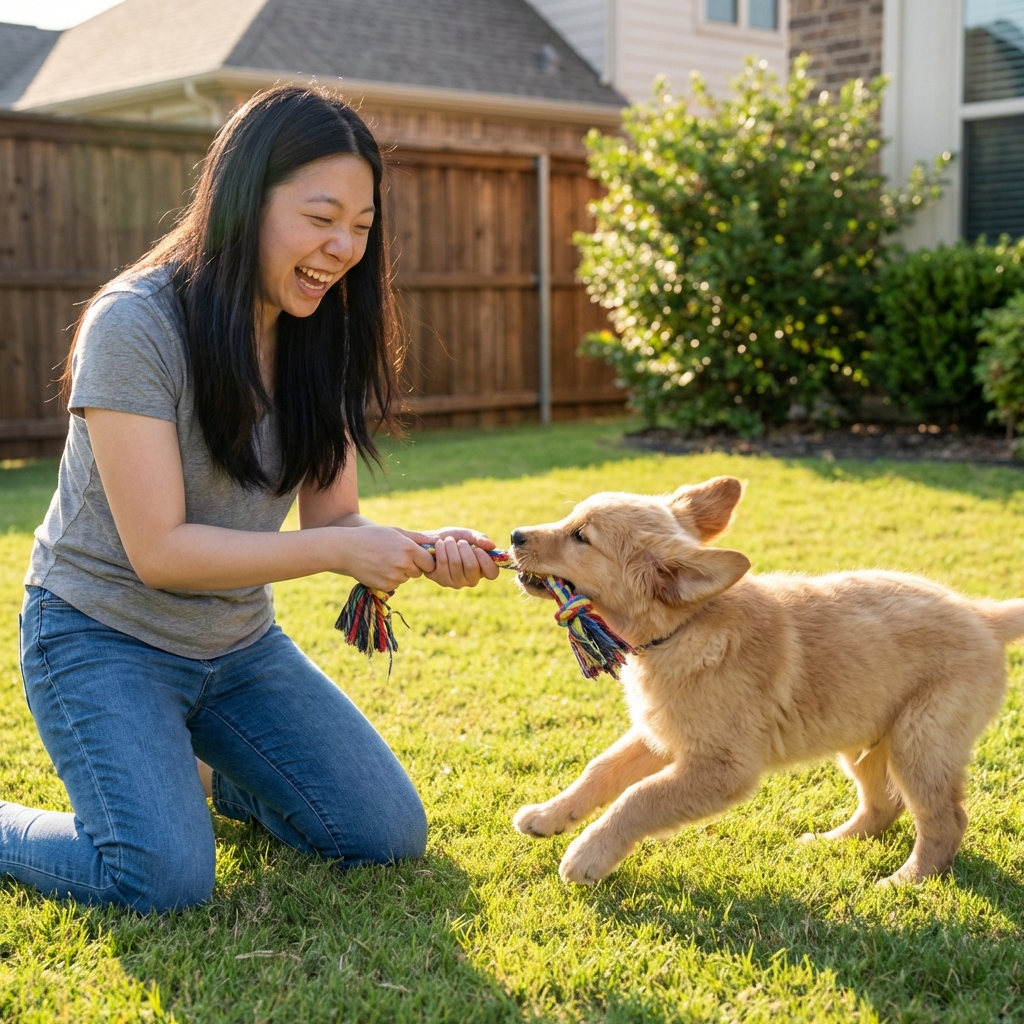
Tug is not “bad.” It can be a great way to teach impulse control when it is structured. Keep it age- and teeth-appropriate, and stop if your puppy gets overly amped, starts grabbing clothing or hands, or shows any guarding behavior.
- Start tug.
- Go still and say “Drop it.”
- Trade for a treat if needed.
- Restart tug as the bonus reward.
For many puppies, restarting the game is even more powerful than food.
Common mistakes
- Prying things out of their mouth: This can create guarding or cause injury. Use trades and management instead.
- Chasing your puppy: Stand still, get happy, and become more interesting. Then cue Drop It and trade.
- Only practicing with contraband: Train when it is easy so the cue is solid when it matters.
- Always taking the item away: Give it back frequently during training.
- Repeating the cue: Say it once, then help your puppy succeed with the trade.
If they grab something dangerous
This is where safety comes first.
If it is choking-sized or toxic
- Do not chase.
- Trade fast with the best treats you have.
- If your puppy will not drop and the item is truly dangerous, do not stick your fingers deep into their mouth. This can lead to bites or push the item farther back.
- Only attempt removal if it is safe, you can clearly see it, and you can gently grip it without a struggle. Otherwise, seek urgent veterinary help right away.
- Do not induce vomiting unless your veterinarian or a pet poison hotline tells you to.
Know the poison short list
If your puppy gets into any of these, call your vet or a pet poison hotline immediately: grapes or raisins, xylitol (often in sugar-free gum), chocolate, ibuprofen or naproxen, ADHD medications, nicotine products, rodenticides, and many household cleaners.
If you can do so safely, take a photo of the product or ingredient list for your vet.
When to get help
Drop It training should feel cooperative. Please reach out to a qualified positive-reinforcement trainer or a veterinary behavior professional if you notice:
- Stiff body, whale eye, freezing over items
- Growling, snapping, or biting when approached
- Your puppy “gulps” items to keep you from taking them
These can be early signs of resource guarding, and the earlier you address it, the better the outcome tends to be.
Weekly plan
- Days 1 to 3: 1 to 2 short sessions daily with an easy toy indoors.
- Days 4 to 7: Add two-toy swap game and begin saying the cue right before the trade.
- Week 2: Practice in a new room, then in the yard, then on a quiet walk.
Keep sessions short, end on a win, and celebrate the small improvements. Puppies learn fastest when they feel safe and successful.
My favorite mindset shift: You are not “taking things away.” You are teaching your puppy that letting go is a skill that pays well.