Train a reliable puppy sit with lure–mark–reward, plus capture tips if luring fails. Troubleshoot jumping, backing up, or lying down, and build sit for d...
Article
•
Designer Mixes
Teach a Dog to Sit: Care & Training Tips

Shari Shidate
Designer Mixes contributor
As a veterinary assistant here in Frisco, Texas, I can tell you this: teaching sit is one of the simplest skills that can make everyday life calmer and safer. “Sit” gives your dog a clear job to do when they feel excited, uncertain, or overstimulated. It can help with jumping, door-dashing, greeting guests, and even those busy moments in the clinic, like stepping on the scale or settling for an exam-room hello.
The best part is that sit training is gentle, reward-based, and fun when you keep it short.
Why “sit” matters
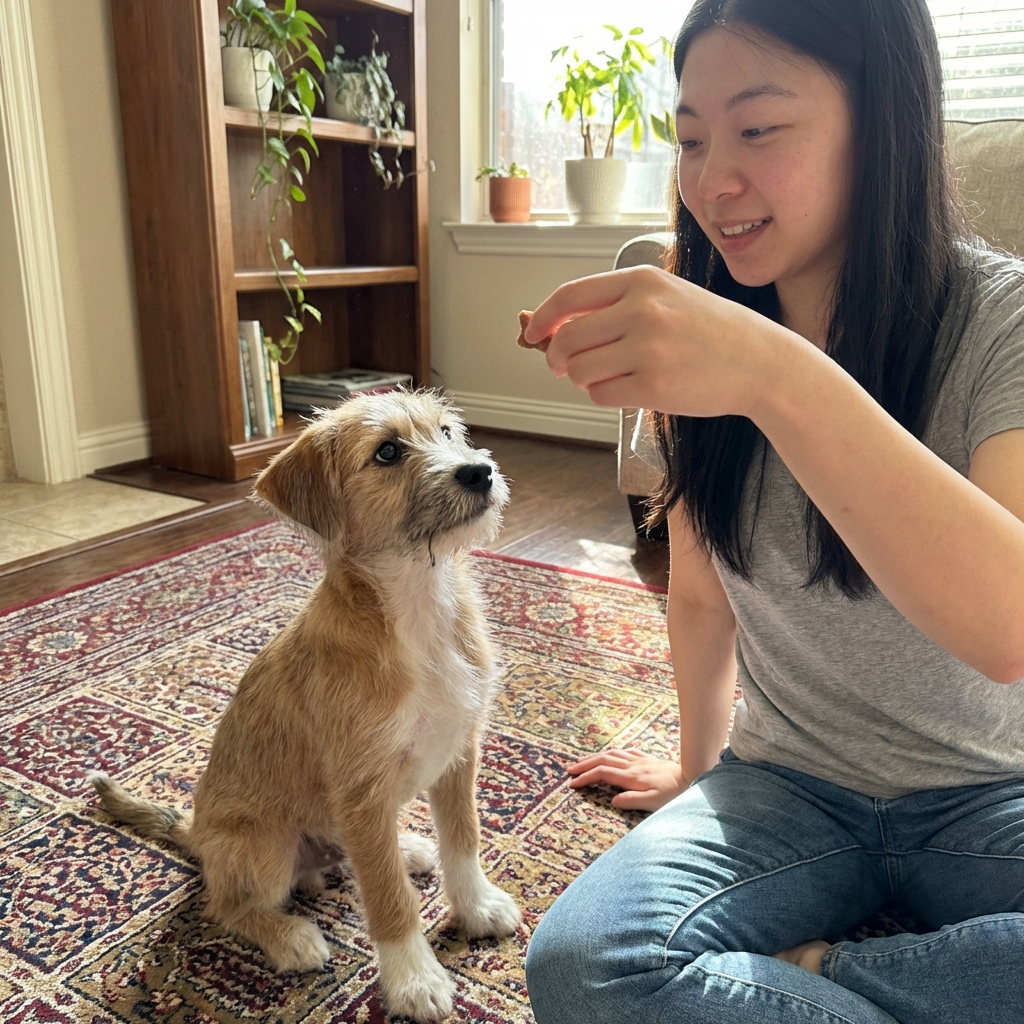
“Sit” is more than a party trick. It is a foundation behavior that supports good manners and reduces risk.
- Impulse control: Sitting gives your dog an alternate behavior that can reduce jumping and help them pause before reacting.
- Safer handling: A dog who can sit on cue is often easier to leash, groom, wipe paws, and examine.
- Confidence builder: Clear, consistent cues lower stress because your dog understands what earns rewards.
- Great for many ages: Puppies learn it quickly, and many adult dogs find it easier than more complex cues.
Before you start
Set yourself up for quick wins. A few small choices make training dramatically easier.
Pick the right rewards
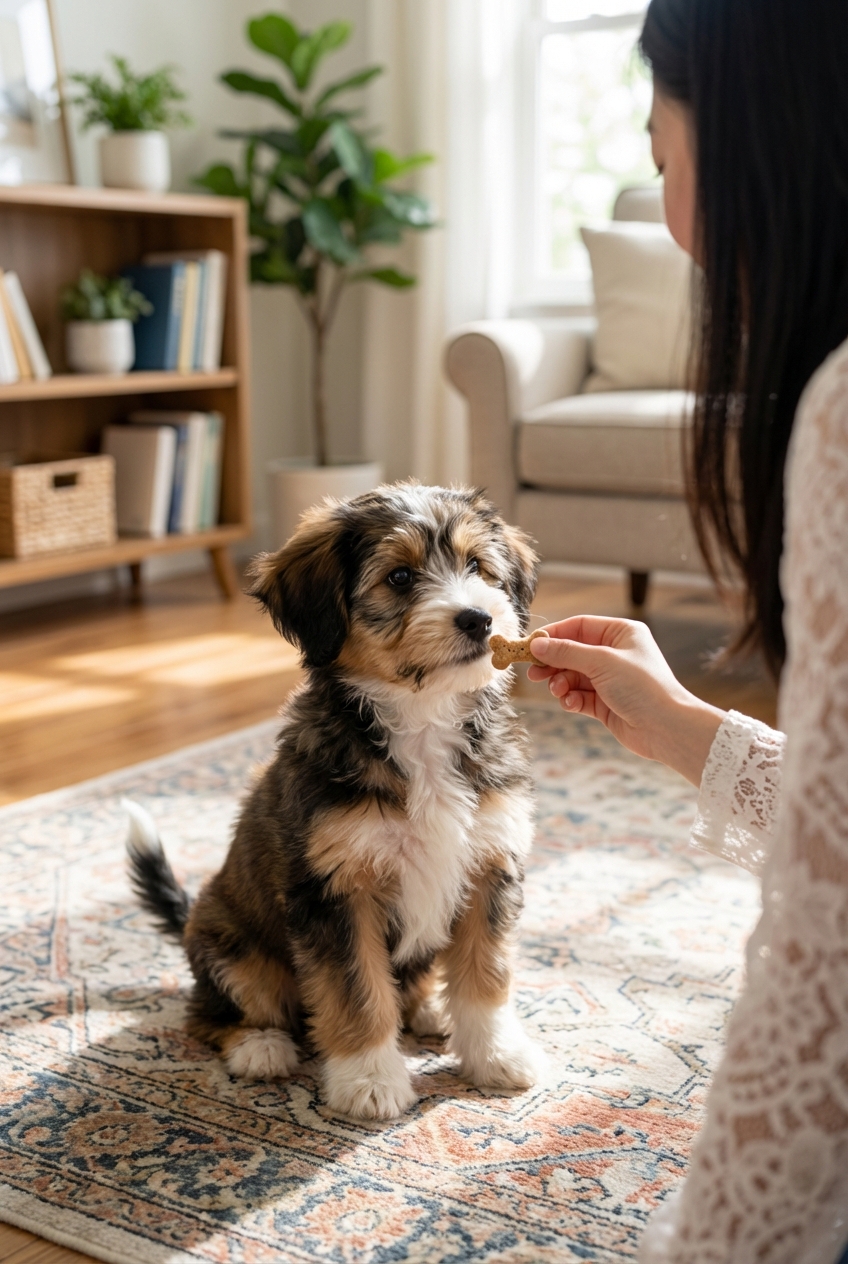
Most dogs learn fastest with tiny, soft treats they can swallow quickly. Think pea-sized. If your dog is food-motivated, you can even use part of their meal as training kibble.
- High-value options: cooked chicken, turkey, small bits of cheese, freeze-dried meat.
- Lower-calorie options: training treats labeled “mini,” or small pieces of carrot for dogs who like crunchy rewards.
Food note: Some dogs are sensitive to rich treats. Cheese and fatty meats can upset stomachs, and they are not a great choice for dogs with a history of pancreatitis. If your dog is on a prescription diet or has medical issues, check with your veterinarian before changing treats.
Tip: If your dog has a sensitive stomach, use a familiar food and keep sessions short.
Choose a low-distraction space
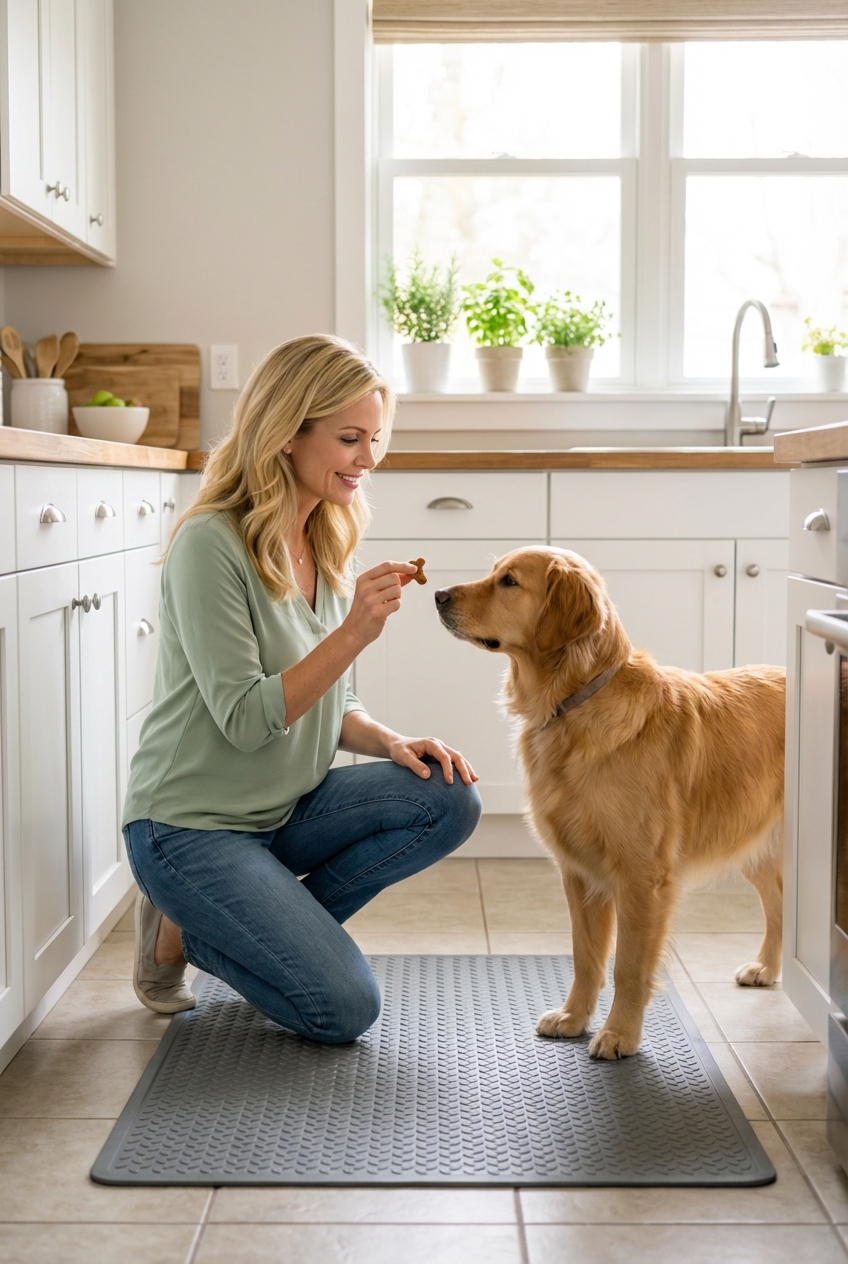
Start indoors, on non-slip flooring if possible. Slippery floors can make sitting physically uncomfortable, especially for puppies, seniors, and dogs with joint pain.
Keep sessions short
One to three minutes is perfect for many dogs. End while your dog still wants more, not when they are tired or frustrated.
When not to drill sits
If sitting looks uncomfortable, skip repetitive reps and choose an easier option in the moment, like a hand target or a calm “stand.” Be extra cautious with:
- Dogs recovering from surgery or injury
- Seniors with arthritis or stiffness
- Dogs who hesitate, sit crooked, “plop” hard, or pop right back up
If you are seeing pain signs (limping, stiffness, reluctance to jump, bunny hopping), talk with your veterinarian.
Method: lure, mark, reward
This is the approach I recommend most often because it is clear, humane, and widely recommended by modern trainers and behavior professionals. (If you want a deeper dive, the American Veterinary Society of Animal Behavior, AVSAB, has public position statements supporting reward-based training.)
Step-by-step: teach sit with a lure
- Start with your dog standing in front of you.
- Hold a treat at nose level.
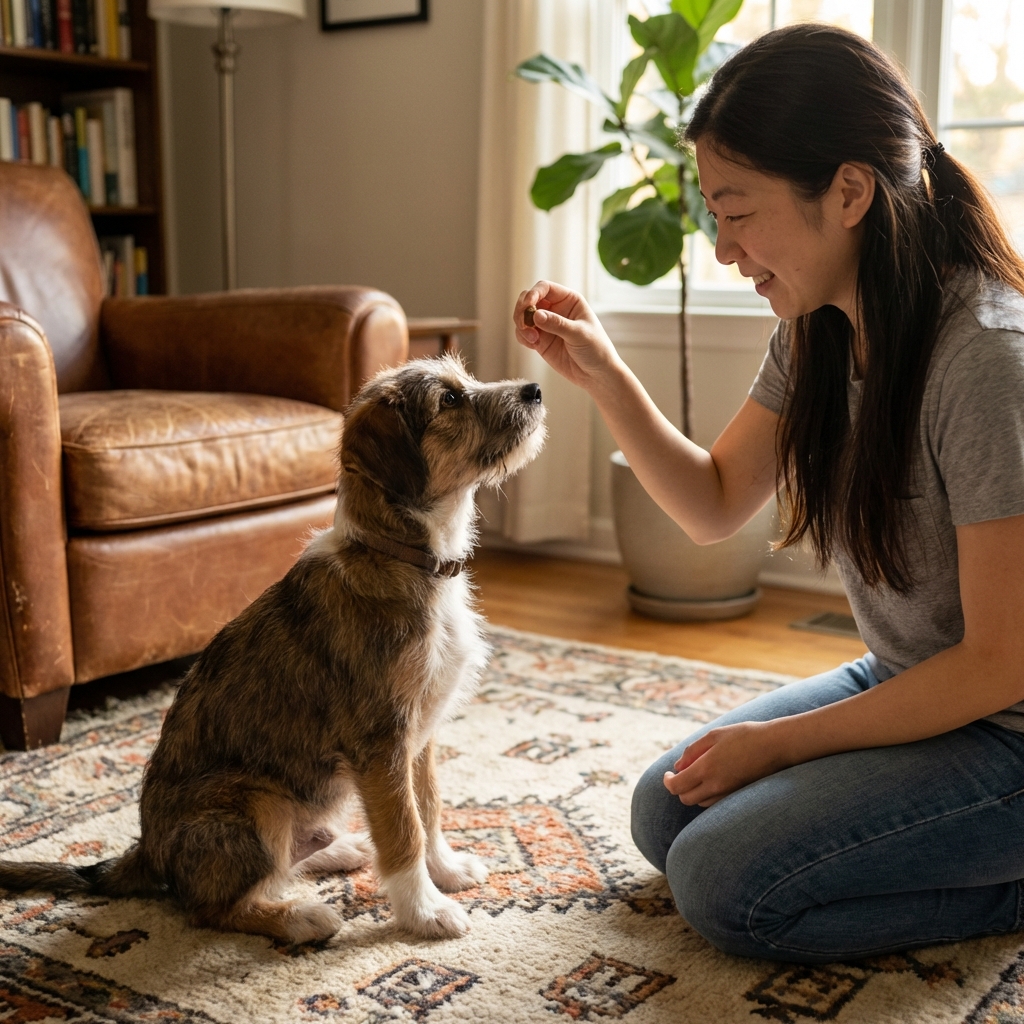
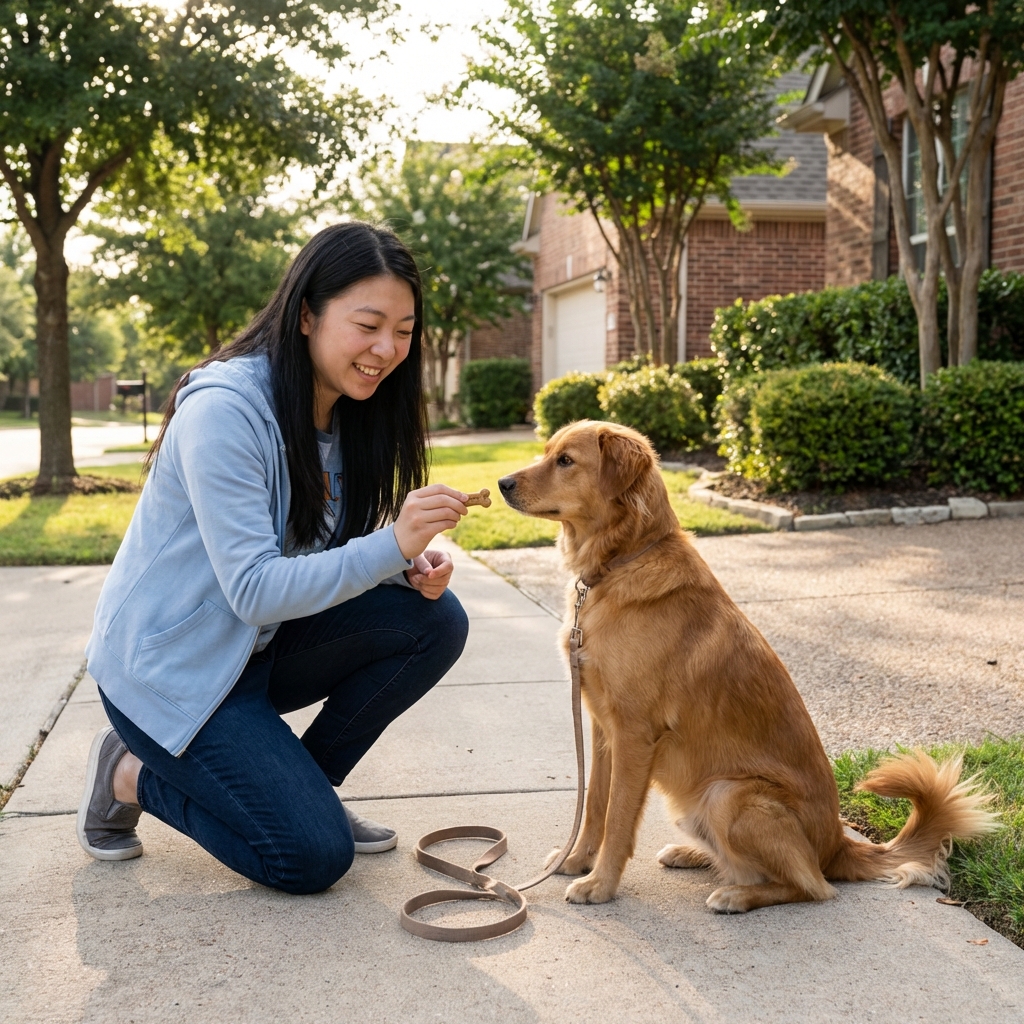
- Slowly lift the treat up and slightly back toward the top of their head. Most dogs naturally tuck their rear down as their nose follows the treat.
- The moment their bottom hits the floor, mark it with “Yes!” or a clicker.
- Reward immediately, then let them stand up and reset.
Repeat 5 to 10 times, then take a break, especially if your dog is still engaged and happy. If they start wandering off, sniffing, or getting grabby, stop and try again later.
When to add the word “sit”
Wait until the motion is predictable. Once your dog is sitting reliably from the lure, say “sit” right before you move your hand. Mark and reward the sit as usual. This helps your dog connect the cue with the behavior.
Fade the lure
As soon as your dog understands the cue, begin using the same hand motion but without a treat in that hand. Keep treats in your other hand or pocket. Mark the sit, then deliver the reward.
This step is important. It turns the treat from a bribe into a reward.
Stop “treat-only” sitting: reward schedule
Once your dog is reliably responding, you can start spacing out food rewards.
- First: reward every sit in new or distracting places.
- Then at home: reward most sits, but not all. For example, treat 2 out of 3 reps.
- Keep it worth it: still use praise, petting, or a quick game, and bring food back more often if reliability dips.
Common problems
If sit is not clicking, it is usually a simple adjustment.
Your dog jumps for the treat
- Hold the treat closer to their nose and move slower.
- Reward only when all four paws stay on the floor and the bottom lands.
- Try lower-value treats at first if excitement is too high.
Your dog backs up instead of sitting
- Train near a wall or corner so backing up is harder.
- Keep the lure closer to the dog’s face and lift gently up, not forward.
Your dog “folds” into a down
- Raise the lure slightly higher and reward earlier for any sit attempt.
- Practice on a firm surface, not a plush bed where down feels easier.
Your dog seems uncomfortable sitting
This one matters. If your dog avoids sitting, sits sideways, sits slowly, or pops up quickly, consider comfort first.
- Try a non-slip mat and a softer but supportive surface.
- Keep sessions very short.
- Use alternatives like a hand target or “stand” while you check in with your veterinarian.
Common handler mistakes
- Repeating the cue: Say “sit” once, then help with your hand motion. Repeating teaches your dog they can wait you out.
- Luring too fast: Fast hands create jumping and grabbing.
- Luring too far back: This can cause backing up. Keep the treat close and lift gently.
Make “sit” useful
Once your dog can sit in the kitchen, it is time to practice where it counts. This is called generalization, and dogs need it.
Use sit in routines
- Meals: Ask for a sit before you set the bowl down.
- Leash and harness: Sit makes gear-up time calmer.
- Doors: Sit before you open the door to reduce bolting.
- Greeting guests: Sit earns attention. Jumping gets ignored.
- Care tasks: A quick sit can help with nail trims, ear checks, and calm starts to vet visits.
Add duration
Once your dog sits on cue, pause for one second before you mark and reward. Then two seconds. Build slowly. If they break the sit, you just went too fast. Reset and make it easier.
Add distractions
Practice in new rooms, then the backyard, then the front yard. Keep the cue easy and increase reward value when distractions increase.
How often to train
Many dogs learn the basic motion quickly, but reliability takes repetition. Aim for:
- 2 to 5 mini-sessions per day (1 to 3 minutes each)
- 5 to 15 reps per session, depending on attention span
Progress is usually fastest when you pair short training sessions with real-life “sit” moments throughout the day.
Keep it healthy
Watch treat calories
Training treats add up quickly. If your dog is gaining weight, reduce meal portions slightly or use part of their daily kibble. A healthy body condition supports joint health and makes sitting more comfortable.
Basic needs first
A dog who is thirsty, needs to potty, or is overtired will struggle to focus. Quick basic needs checks prevent frustration.
Use positive reinforcement, not pressure
Avoid pushing your dog’s rear down. It can create discomfort or conflict, especially in dogs with sensitive hips, knees, or backs. Luring and rewarding builds trust and clear communication.
Quick sit checklist
- Train in a quiet space with non-slip footing
- Lure up and slightly back, then mark and reward the moment the bottom hits
- Add the cue word after the behavior is predictable
- Fade the lure so your dog responds to the cue, not the treat
- Move to new rooms and real-world situations
- Shift to intermittent rewards after the cue is reliable
- Keep it short, upbeat, and consistent
If you only teach one cue this month, teach “sit.” It is a small skill that creates big everyday calm.