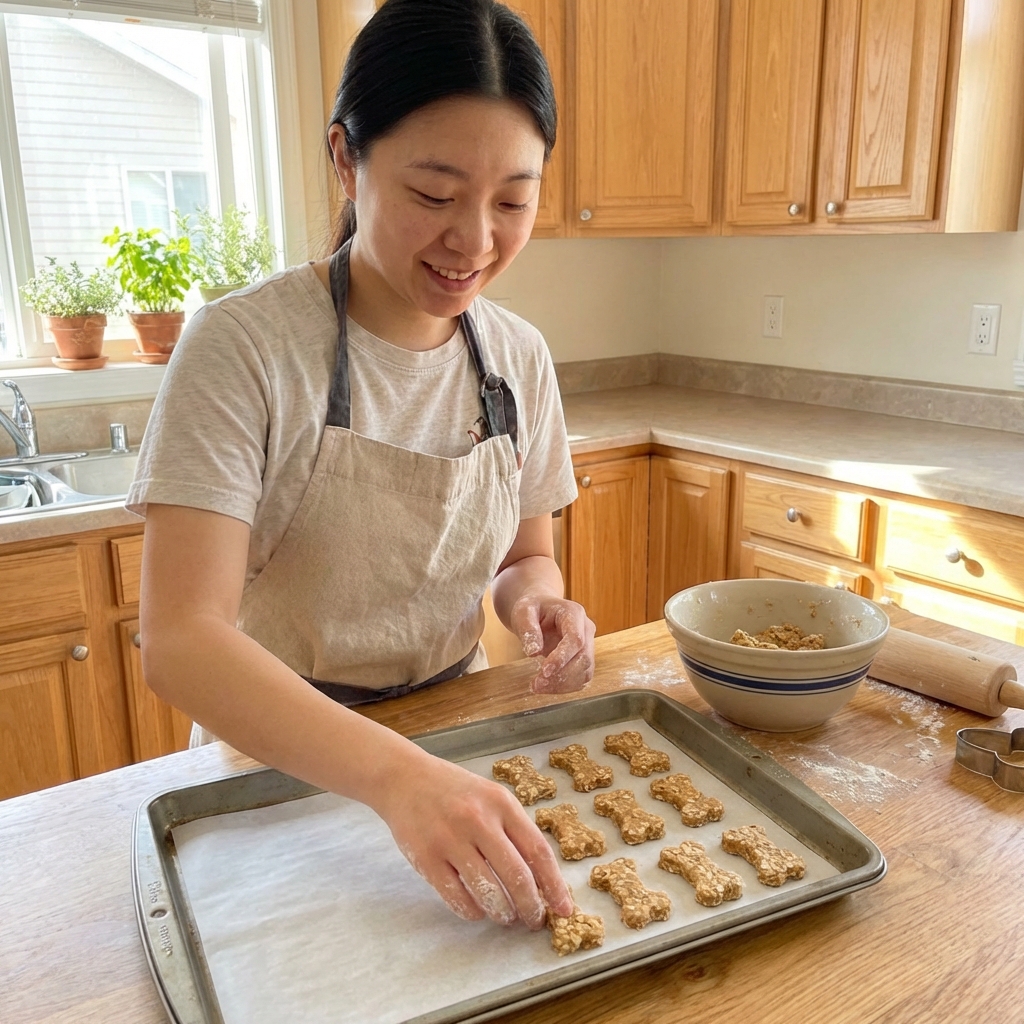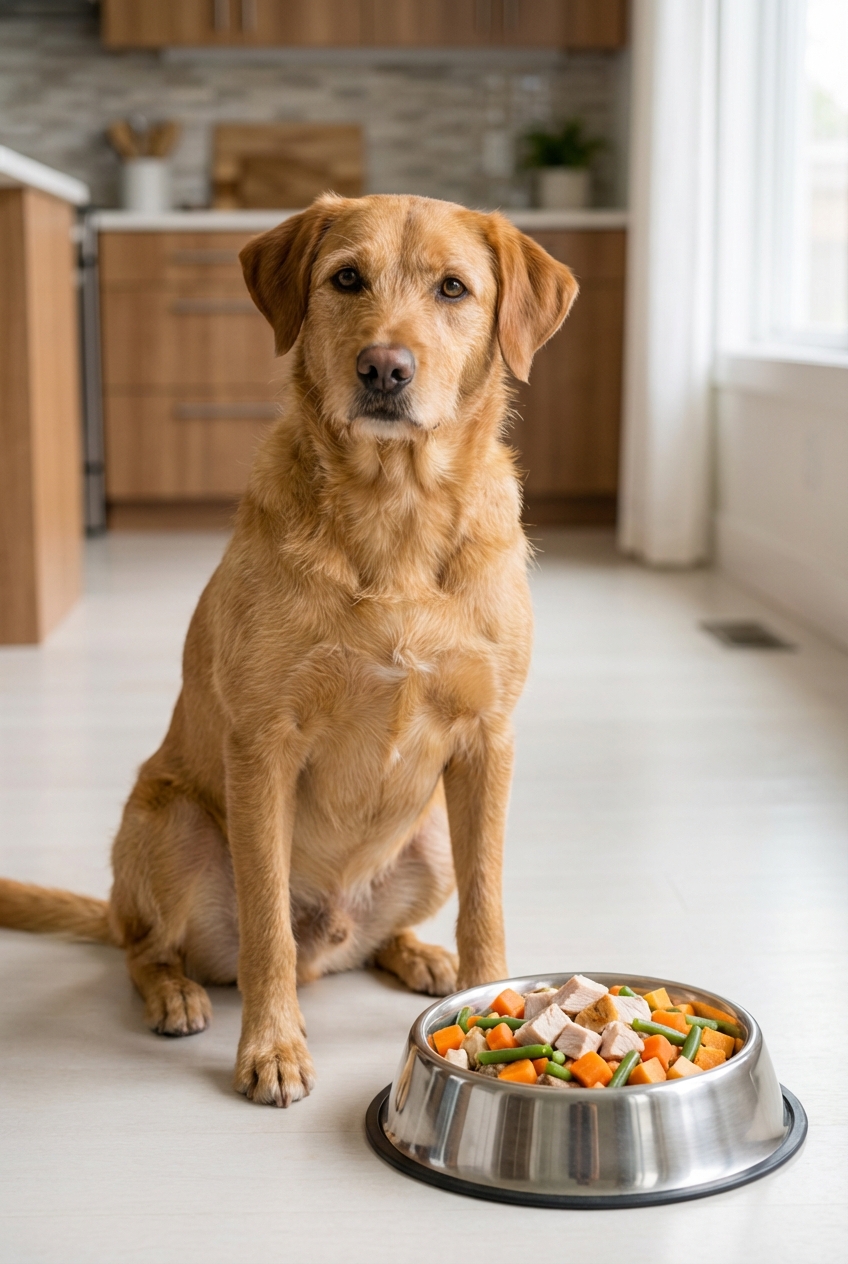
Skip pricey processed treats with 5 easy homemade dog treat ideas—from frozen pumpkin yogurt bites to sweet potato chews. Includes vet safety tips, portion...
Article
•
Designer Mixes
Teach a Dog to Lay Down

Shari Shidate
Designer Mixes contributor
“Lay down” is one of those skills that looks simple, but it is a huge life skill for real-world calm. A reliable down helps with greeting guests, waiting at doors, settling at patios, cooperative care at the vet, and even safer play with other dogs. The best part is that you can teach it kindly, without pushing your dog’s shoulders or forcing them into position.
As a veterinary assistant, I love this cue because it supports calm behavior and makes handling easier when a dog is nervous or overstimulated. We are going to build it in a way that protects trust and sets your dog up to succeed.
What “Down” means
In this guide, we will treat a “down” as your dog lowering so their elbows and belly are on the floor. The style can vary. Many dogs offer a quick “sphinx” down (front legs tucked neatly) or a hip-rolled down (one hip off to the side). Both are perfectly fine for most pet homes unless you need a specific position for a sport.
Relaxation is the goal. A soft body and calm breathing often come with practice, especially once your dog understands that down can turn into a settle.
For pet homes, I prioritize:
- Comfort: your dog chooses the position without pressure.
- Clarity: down happens on one cue, not after multiple repeats.
- Calm duration: your dog can stay down for a few seconds, then a minute, then longer.
Before you start
Pick the right place
Start on a non-slip surface like carpet, a yoga mat, or a bath mat. Slippery floors make many dogs avoid lowering their bodies because it feels unsafe.
Choose a reward your dog loves
Small, soft treats that your dog can swallow quickly work best. If your dog is not food-motivated, use a toy reward, but teach the down with calm energy so it does not become a bouncy, frantic behavior.
Keep sessions short
Think 1 to 3 minutes, a few times a day. We want your dog to end each session feeling successful, not frustrated.
Comfort note
If your dog is older, very large, recovering from surgery, or has arthritis, hip dysplasia, or back pain, ask your veterinarian about the most comfortable way to practice. A down should never look like your dog is bracing, yelping, hesitating in pain, or popping right back up as if it hurts.
Tip for tiny dogs and giant breeds: use a thick mat, folded blanket, or a cushy bath mat to reduce joint pressure. If your dog struggles to fold smoothly, an easy setup is to lure onto a low platform (like a stable ottoman, aerobic step, or curb-height surface) and then lure into a down. Many dogs find that angle easier on their bodies.
Method 1: Lure from a sit
This is a simple, gentle method that works well for dogs who already know “sit.”
- Start in a sit. Hold a treat at your dog’s nose.
- Move the treat straight down toward the floor between their front paws.
- Then slowly move the treat outward along the floor, away from their paws. This “out” motion encourages the elbows to bend and the body to follow.
- The moment elbows touch the floor, mark it (say “Yes” or click) and give the treat.
- Reset by tossing a treat a step away or inviting them back up, then repeat.
Tip: If your dog backs up instead of lowering, your hand may be too high or moving too fast. Slow down and keep the lure right on the floor.
Method 2: Under the leg
Some dogs do not like to fold into a down from a sit at first, especially long-legged dogs, puppies who are wiggly, or dogs who are unsure. This method uses a gentle “low space” to guide the motion.
- Sit in a chair or kneel with one knee up, creating a low “bridge” with your leg.
- Show your dog the treat and guide them under your leg.
- Most dogs naturally crouch or lie down to fit. Mark and reward as soon as elbows hit the ground.
- Repeat a few times, then go back to an easier open-floor lure.
This should feel like a game, not a trap. Keep your body relaxed and give your dog space to opt out.
Method 3: Capture it
If your dog already lies down on their own during the day, you can “capture” it and turn it into a cue.
- Keep treats in a jar nearby.
- When your dog lies down naturally, calmly say “Yes,” then deliver a treat right between their paws.
- After a few days, begin saying “Down” right as they start to lower, then mark and reward.
This method is wonderful for sensitive dogs who dislike luring or hands near their face.
Add the cue
Only add the word “Down” when you are about 80 to 90% sure your dog will do the behavior. If you say it too early, the word becomes background noise.
- Step 1: Lure or capture the behavior.
- Step 2: Say “Down” once.
- Step 3: Help your dog succeed (lure if needed).
- Step 4: Mark and reward.
With consistent practice, many dogs begin responding to the word alone in a week or two, but timelines vary widely. If your dog needs longer, that is completely normal.
Fade the lure and add a hand signal
Most people accidentally teach the hand motion first (because the lure is a hand motion). That is not a problem, we just want to fade the food from your hand so “Down” does not become “follow the treat.”
- Step 1: Do the same lure motion, but with an empty hand. Then reward from your other hand or pocket after your dog is down.
- Step 2: Make the gesture smaller over time (a short sweep down, then just a finger point).
- Step 3: Say “Down,” pause a beat, then give the hand signal. Gradually wait longer before helping, so the word starts to do the work.
A simple hand signal that pairs nicely with “Down” is an open palm moving toward the floor.
Build duration
A common mistake is rewarding only the moment your dog hits the floor. That can create a dog who pops back up right away. We want a calm down that can last.
Simple duration game
- Ask for “Down.”
- Reward quickly for the first few reps.
- Then start waiting one second before the mark and treat.
- Gradually increase to 2 seconds, 3 seconds, 5 seconds, and so on.
Place your treats low, right between the paws. This keeps your dog in position and promotes relaxation.
Add a release word
Teach your dog that “Down” means stay down until you say a release like “Okay” or “Free.” Practice by saying your release word, then tossing a treat a short distance away to reset.
Proof it
Dogs do not automatically generalize. “Down” in the kitchen is not the same as “Down” at the park. Proofing makes your cue reliable.
Change one thing at a time
- Location: living room, backyard, front porch, quiet park.
- Distance: take one small step back, then return and reward.
- Distraction: TV on, someone walking by, a toy on the floor.
If your dog struggles, go back to an easier version. That is not failure. That is smart training.
Do not repeat the cue
Repeating “Down, down, down” teaches your dog that the first word does not matter. Instead, give the cue once, then help your dog succeed.
- Say “Down” once.
- Pause for a moment (one to two seconds).
- If your dog does not move, use your hand signal or lure to guide them.
- Mark and reward, then reset and try again at an easier level.
Troubleshooting
My dog won’t go down, they just stare
- Use a higher-value treat and practice when your dog is not overexcited.
- Try the “under the leg” method.
- Practice on carpet or a mat for better footing.
My dog crawls forward instead of lying down
- Slow your lure and keep it on the floor.
- Reward only when elbows are down.
- Try luring slightly back toward the chest first, then outward.
My dog drops fast, but pops up right away
- Start rewarding between the paws and add duration gradually.
- Use a calm voice and avoid exciting body language.
- Teach a release word so your dog understands when the down is finished.
My dog seems uncomfortable lying down
- Switch to a softer surface and keep sessions very short.
- Talk to your veterinarian if you notice stiffness, limping, yelping, or reluctance to sit or climb stairs.
Make it daily
The fastest way to build a strong down is to use it in calm, predictable moments.
- Before meals: ask for a down, place the bowl, then release.
- At the door: down as guests arrive, then reward calm.
- On a mat: pair “Down” with a comfy bed or mat to create an automatic settle.
- During grooming: practice short downs with gentle brushing and treats.
Kind training is not permissive training. You can have clear rules and a well-mannered dog while still protecting trust, comfort, and confidence.
When not to use “Down”
“Down” is a great tool, but it should not be used to shut a dog down emotionally or to suppress normal communication.
- If your dog is fearful of guests or tense around other dogs, prioritize management and safety first (distance, barriers, leash, quiet room) rather than insisting on a down.
- If your dog is growling, freezing, or trying to move away, treat that as important information. Create space and reassess the situation.
Quick 7-day plan
If you like structure, here is an easy week you can repeat.
- Days 1 to 2: 3 mini-sessions per day, lure into down, reward immediately.
- Days 3 to 4: add the cue “Down” right before the lure, begin 1 to 2 seconds duration.
- Day 5: practice in a second location, like the backyard.
- Day 6: add a release word and a tiny bit of distance (one step).
- Day 7: practice with mild distractions and reward calm holds.
Safety notes
- Do not push your dog into a down. It can create avoidance and fear.
- Skip punishment for “not listening.” Noncompliance usually means the step is too hard, the reward is too low, or your dog is stressed.
- Watch for signs of stress like lip licking, yawning, pinned ears, sudden scratching, turning away, or refusing treats.
- Use a harness for training if your dog tends to pull or gets excited. When properly fitted, many dogs find a harness more comfortable than collar pressure.