From slow swishes to fast thrashing, learn what your cat’s tail is really saying. Get vet-assistant tips to spot stress, prevent bites, and build trust saf...
Article
•
Designer Mixes
Tail Talk: Your Cat’s Tail Language

Shari Shidate
Designer Mixes contributor
Your cat’s tail is like a little mood flag. It is not the only “word” in their body language, but it is one of the clearest. As a veterinary assistant, I have learned that when families understand tail signals, they get fewer scratches, less stress, and a more confident, connected cat.
One quick reminder before we dive in: no single tail position is a complete sentence. Always pair tail cues with what the ears, eyes, whiskers, posture, and environment are saying. Also, baseline matters. Some cats naturally carry their tails lower, have limited mobility from an old injury, or simply move differently than the average chart.
Note: This article is educational and not a substitute for veterinary care. If something seems painful or sudden, it is worth a call to your veterinarian.
Start with the big picture
Think of tail language in three layers:
- Height: confidence, arousal, or caution
- Shape: friendliness, tension, or fear
- Movement: intensity of emotion and whether it is building
Now let’s translate the most common tail “phrases” you will see at home.
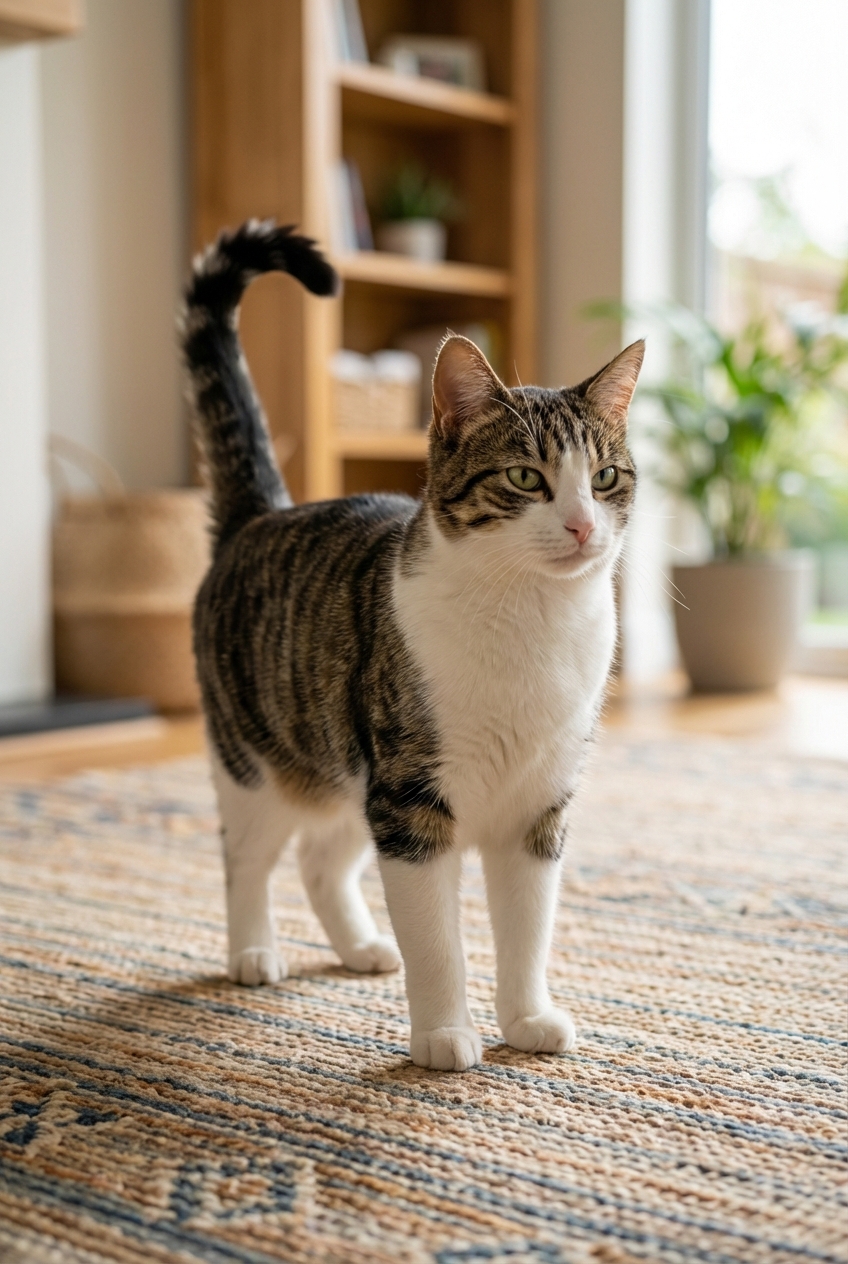
Tail up
Straight up
This is usually a great sign. A vertical tail often means your cat feels safe and social. Many cats greet trusted people this way and may walk right up for head bumps.
Up with a hook tip
That little curl at the end is often a “happy hello.” It commonly appears when your cat is approaching you with curiosity and comfort.
What to do: Offer a calm greeting. Let your cat initiate contact. A slow blink and a gentle hand offered at nose level can be perfect.
Tail neutral
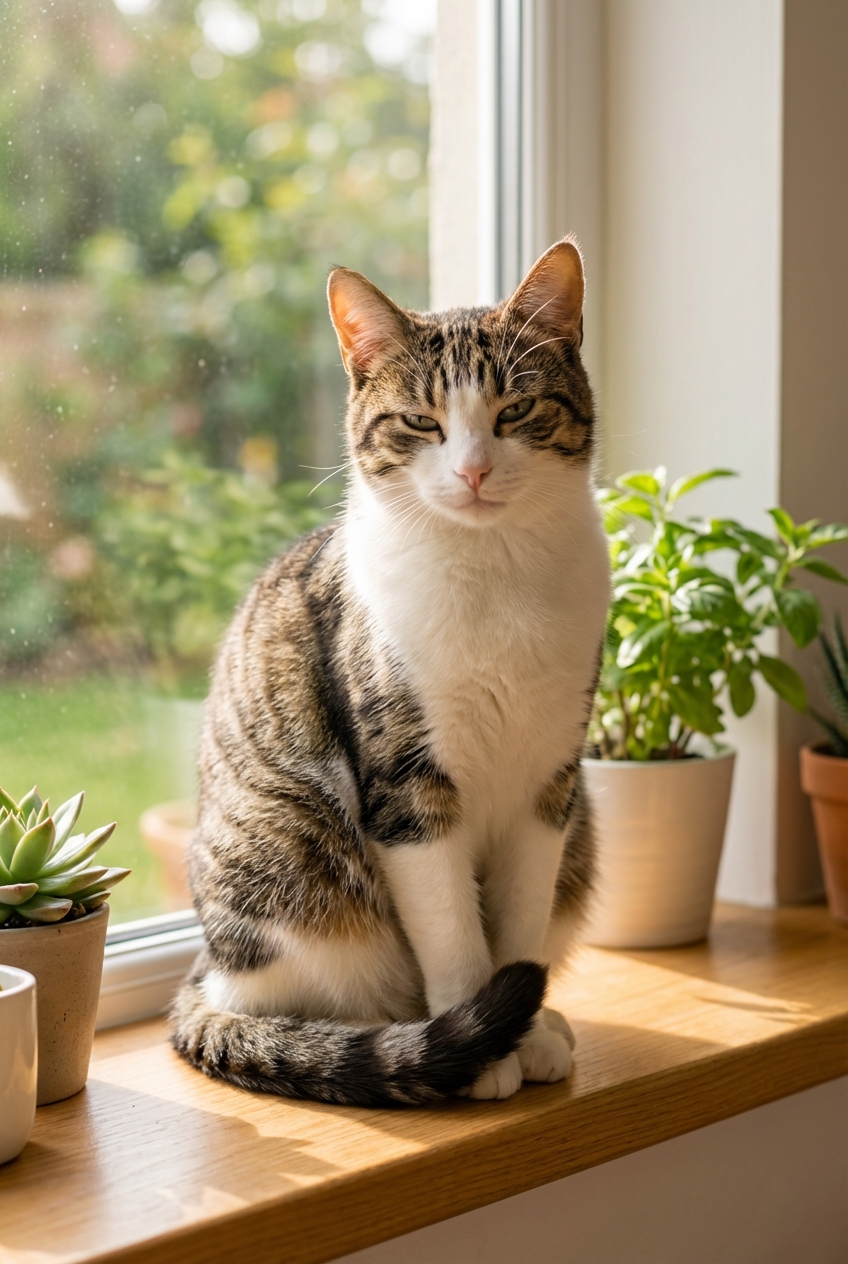
A tail held at mid-level or carried naturally behind the body often shows a relaxed, casually interested cat. In some situations, a neutral tail can also mean your cat is simply assessing what is happening, especially in a new room or around unfamiliar guests.
You might also see a neutral tail during “work mode,” like stalking a toy or watching birds through a window.
What to do: This is a good time for gentle play, training with treats, or routine handling like brushing, as long as the rest of the body looks soft.
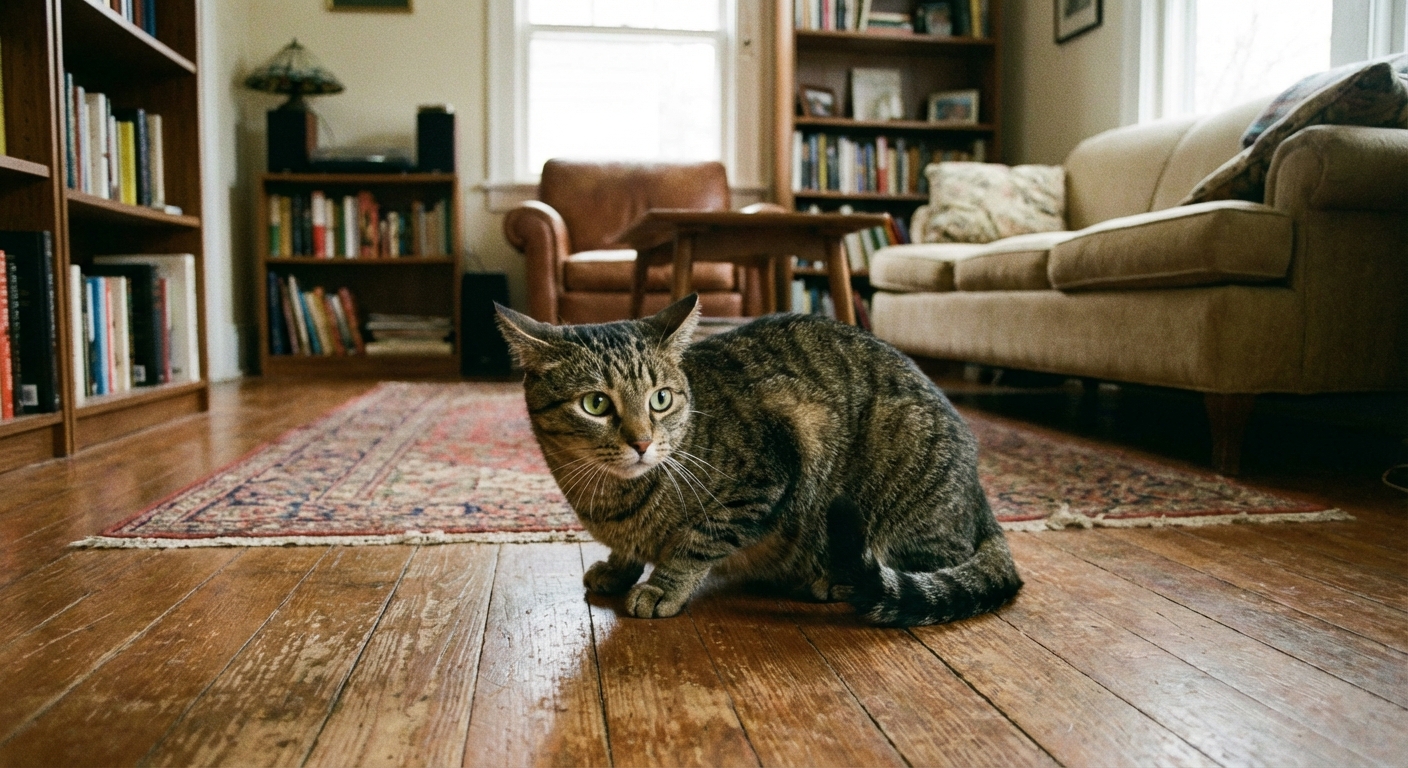
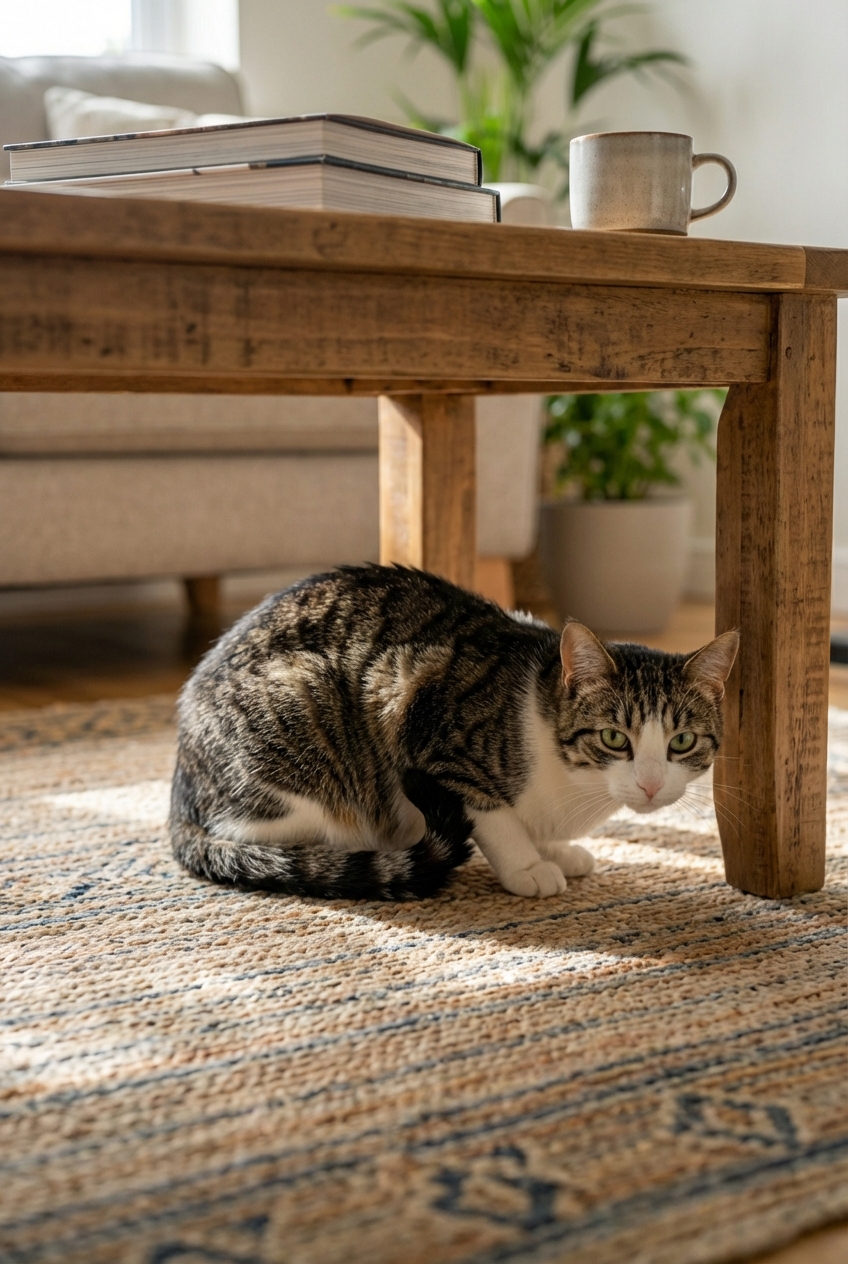
Tail low or tucked
A low tail can mean your cat is cautious, uncomfortable, or trying to avoid conflict. If the tail is tucked tightly under the body, that is a stronger fear signal and may show up during vet visits, loud gatherings, or when a new pet arrives.
What to do: Reduce pressure. Give space and a clear escape route. Speak softly and avoid reaching over the cat. If this is happening frequently at home, consider what is stressing them and whether you need help from your veterinarian or a qualified feline behavior professional.
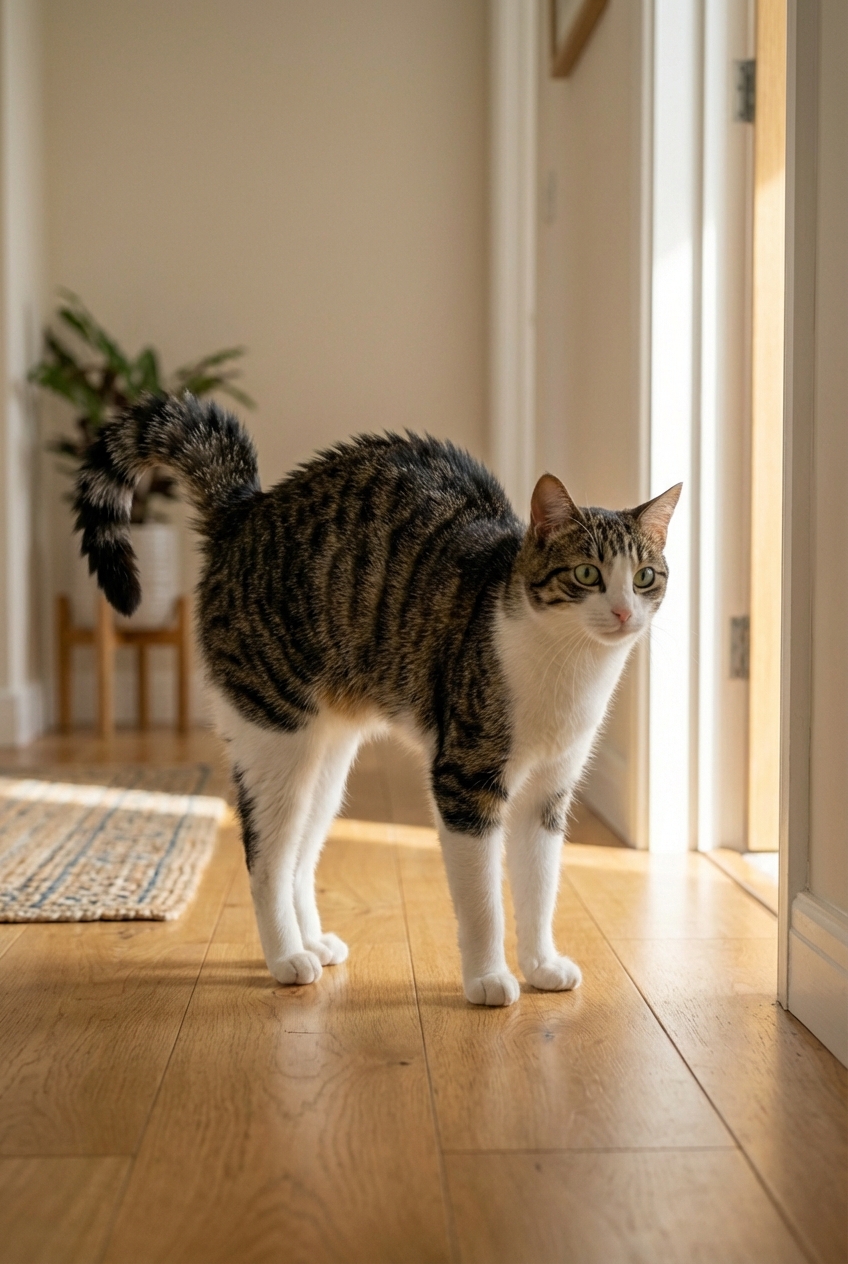
Puffed tail
A “bottlebrush” tail happens when the fur stands up. This is a classic fight-or-flight response. Your cat is startled and trying to look bigger to protect themselves. You may see it during an unexpected noise, a tense cat-to-cat interaction, or when an outdoor cat appears at the window.
What to do: Do not pick your cat up. Create distance from the trigger and allow time to decompress. If the cause is another pet, separate them and reintroduce calmly after everyone settles.
Swishing and thumping
Slow swish
This often means your cat is conflicted or mildly irritated, like they want to keep resting but do not love what is happening. This is common during petting that is going on a bit too long.
Fast whipping or hard thumps
This is a higher-arousal signal and a common warning that a bite or swat could be next. People sometimes mistake it for playful happiness, but in cats it more often signals rising arousal, frustration, or “I’m done.”
What to do: Pause interaction. Let your cat reset. If you are petting, stop before the tail gets intense. If you are playing, switch to a toy-on-a-string that keeps hands far away and end the session while your cat is still having fun.
Tail tip twitch
A tiny twitch just at the end of the tail can mean intense focus, like a cat watching a bug or tracking a feather toy. It can also reflect mild irritation if paired with tense shoulders, pinned ears, or a stiff posture.
What to do: Look at the context. During play or hunting, it is usually fine. During handling, take it as a cue to lighten up or stop.
Tail quiver
Some cats do a quick tail “vibration” or quiver, often while greeting you with an upright tail. This can be friendly excitement and is commonly seen in social cats. In some situations, it can also be scent marking, especially if your cat is backing up to a vertical surface.
What to do: If it happens during greetings, respond calmly and reward gentle, polite contact. If your cat is quivering against walls or furniture and you notice urine spraying , talk with your veterinarian. Medical issues and stress can contribute, and early help matters.
Tail around you
When a cat wraps their tail around your leg or another cat, it is often a friendly social gesture. It can be a sign of bonding and comfort.
That said, ankle-weaving at mealtime is frequently anticipation and excitement. Arousal can be friendly, but it can still lead to accidental nips or tripping if everyone gets too worked up.
What to do: Enjoy it, but avoid bending down for a big hug unless the rest of the body looks loose and happy. If your cat gets grabby around food, toss a treat away from your feet or ask for a simple cue like “sit” before setting the bowl down.

Read the full body
Here are a few helpful combos to watch for:
- Tail up + soft eyes + forward ears: friendly, social, approachable
- Tail low + wide eyes + crouched body: fearful, needs space
- Puffed tail + sideways body + ears back: defensive alarm, do not touch
- Fast tail whipping + tense back + skin twitching: overstimulation, stop petting
Petting overstimulation can also show up as ear rotation, rippling skin along the back, sudden head turns toward your hand, stiffening, or a quick freeze before a swat.
If you have kids at home, these combos are gold. Teach them that a moving, thumping tail is a “no touch” sign.
Common mix-ups
- Assuming a wagging tail means happiness. In dogs, often yes. In cats, it more commonly signals arousal or irritation. It can also appear during intense play focus.
- Petting through the warnings. If the tail starts thumping, your cat is already asking for a break.
- Cornering a scared cat. A tucked tail plus no exit can escalate quickly.
- Using hands as toys. This teaches cats that skin is fair game, especially when aroused.
When to call the vet
Not all tail changes are behavioral. Contact your veterinarian promptly if you notice:
- Sudden tail limpness or your cat cannot lift the tail
- Pain at the tail base (flinching, growling, hiding)
- Hair loss, swelling, wounds, or discharge on or under the tail
- New litter box accidents alongside tail discomfort
In clinic, we see tail and tail-base pain tied to injuries (including tail-pull injuries and fractures), bite wounds and abscesses, arthritis or lumbosacral pain, and neurologic concerns. Less commonly, issues near the rear end such as anal sac problems can contribute. It is always worth a check when the change is sudden, severe, or paired with mobility or bathroom changes.
Practice for one week
Try this for one week:
- Take 10 seconds, twice a day, to notice your cat’s tail height and movement.
- Mentally note what else is happening: food, play, another pet nearby, noises, visitors.
- Adjust your actions based on what the tail is telling you. Stop petting sooner. Offer more space sooner. Reward calm greetings.
Most families are surprised how quickly their cat becomes more predictable when humans start listening to the early signals.
Your cat does not go from calm to scratching “out of nowhere.” The tail is often the early warning system.