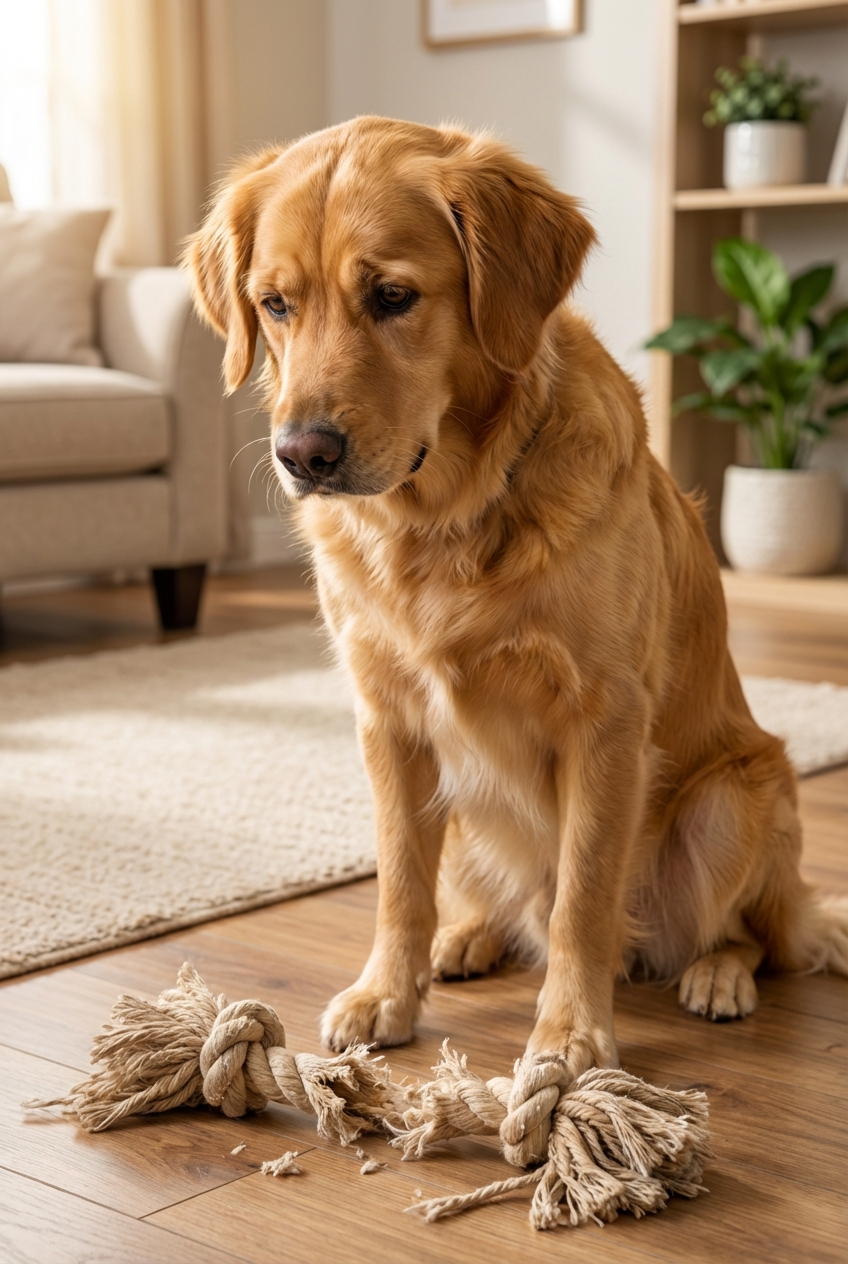
A dog bowel blockage can turn serious fast. Learn early symptoms, red flags, home do’s and don’ts, how vets diagnose obstructions, treatment options, rec...
Article
•
Designer Mixes
Symptoms of Obstruction in Dogs

Shari Shidate
Designer Mixes contributor
As a veterinary assistant here in Frisco, Texas, I can tell you this with a full heart: gastrointestinal (GI) obstructions are one of those problems where time matters. Some dogs bounce back quickly with prompt care. Others get very sick, especially if the blockage is severe or “strangulating,” meaning it reduces blood flow to the intestines. In those cases, dehydration, tissue damage, and even intestinal perforation can become real risks.
This guide walks you through key symptoms to watch for, what to do at home right now, and what your veterinarian will typically do next. It is not a diagnosis, and you do not need to figure this out alone. Your vet will confirm what is going on and recommend the safest plan.
What an obstruction is
An obstruction happens when something blocks food, fluid, and gas from moving normally through the digestive tract. It can be partial (some material still passes) or complete (nothing passes). It can occur in the stomach or anywhere in the intestines.
Common causes include swallowed toys, socks, underwear, corn cobs, bones (especially cooked bones), rocks, hair ties, string, and even large clumps of hair. Obstructions also sometimes come from within the body, like tumors, severe inflammation, or intussusception (when one part of the intestine telescopes into another).
Key symptoms to watch for
Not every dog shows every sign, and symptoms can look mild at first. Pay attention to patterns and progression, especially if your dog is known to chew or swallow non-food items.
1) Vomiting that repeats
Occasional vomiting can happen for many reasons, but obstruction is more likely when vomiting is:
- Repeated (more than once, or continuing over several hours)
- Unable to keep water down
- Worsening instead of improving
- Producing bile (yellow or green fluid), foam, or undigested food hours after eating (this is not diagnostic by itself, but it can be a clue)
2) Appetite changes
- Sudden refusal of food, especially in a normally food-motivated dog
- Eats, then vomits soon after
- Acts hungry but cannot eat comfortably
3) Stool changes and straining
These are big clues, but they can be confusing because a dog with obstruction might still pass some stool early on. Also, constipation alone does not confirm an obstruction, but paired with vomiting, pain, or lethargy, it raises concern.
- No bowel movement or very small amounts for 24 to 48 hours
- Diarrhea (can occur with partial obstruction or intestinal irritation)
- Straining with little output
- Black, tarry stool or blood in stool (can indicate bleeding and needs urgent care)
4) Belly pain or bloating
Dogs do not always cry out. Many show pain in subtle ways:
- Restlessness or pacing (cannot get comfortable)
- Praying position (front end down, rear end up) that keeps returning
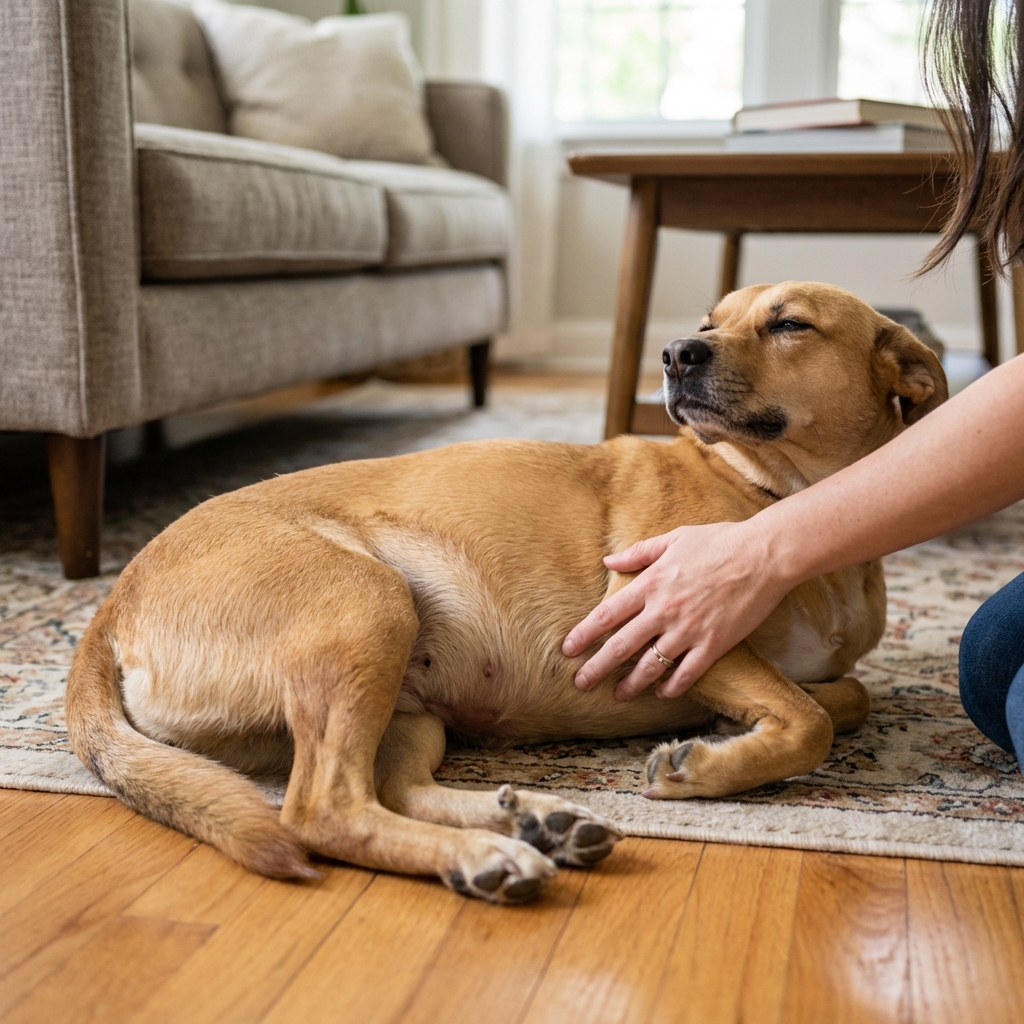
- Guarding the belly, flinching when touched, or refusing to be picked up
- Swollen abdomen or a belly that feels tense
5) Low energy or weakness
When a dog is dehydrated or in significant pain, energy can drop fast. Watch for:
- Sleeping more than usual
- Reluctant to move or go for a walk
- Acting weak or wobbly
6) Dehydration signs
Vomiting and poor intake can cause dehydration quickly:
- Dry, tacky gums
- Sunken eyes
- Reduced skin elasticity (skin tenting)
- Less frequent urination
7) Drooling, gagging, or repeated swallowing
If the blockage is in the stomach or upper GI tract, you might notice:
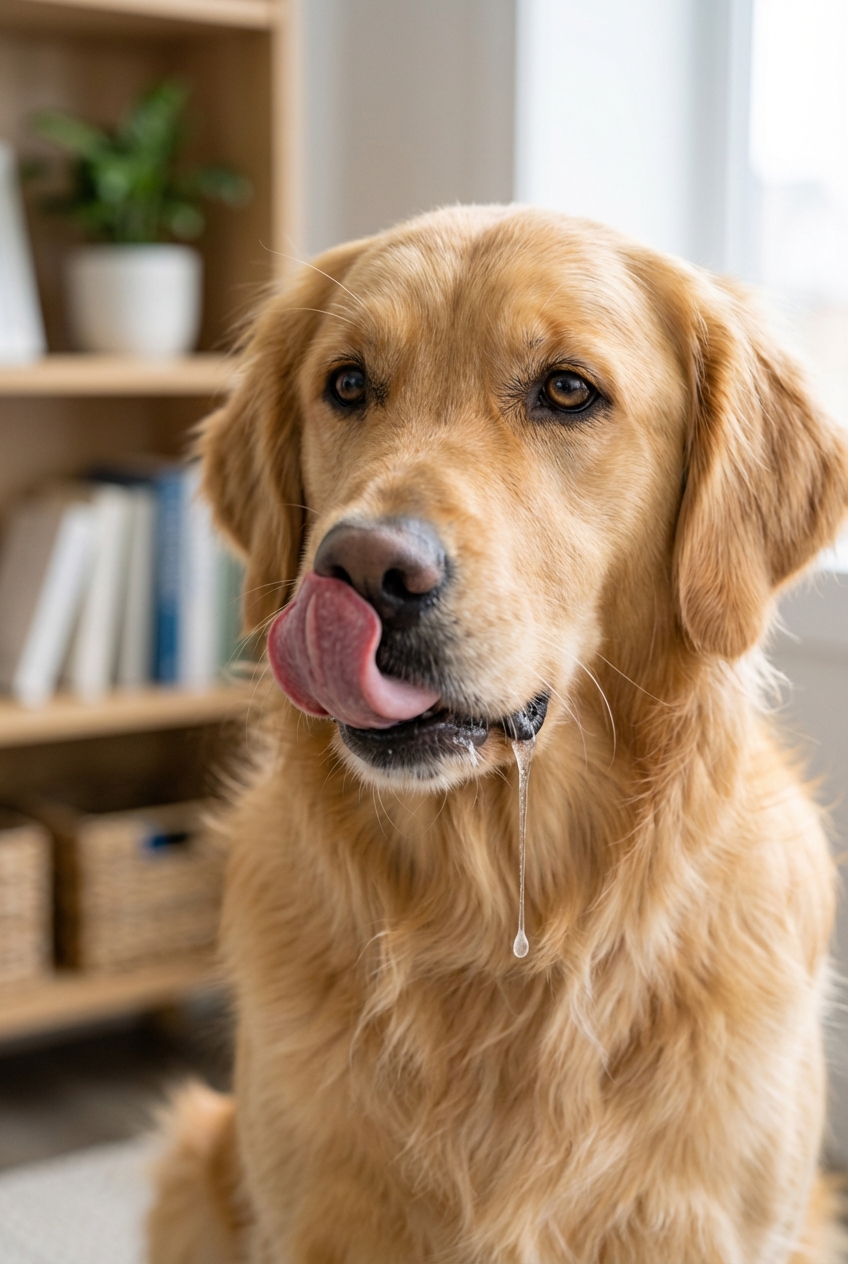
- Excess drool
- Retching without producing much
- Repeated swallowing or lip-licking
8) String and ribbon are emergencies
If you saw your dog swallow string, ribbon, floss, yarn, tinsel, or you see it hanging from the mouth or rectum, treat it as urgent. Linear foreign bodies can saw through the intestines as the gut tries to move, which can become life-threatening.
If you see string hanging out, do not pull it. Keep your dog calm and head to an emergency vet.
When to go in now
Please do not wait and see if any of these are happening:
- Repeated vomiting, especially unable to keep water down
- A painful, bloated, or tight abdomen
- Weakness, collapse, or very low energy
- Black stool or blood in vomit or stool
- Known or strongly suspected ingestion of a risky item (socks, toys, corn cobs, cooked bones, string)
- A puppy, small dog, or senior dog with sudden GI symptoms
Timing note: If vomiting repeats over a few hours, or if it happens even once with belly pain, bloating, significant lethargy, or known ingestion, I would treat that as a “go now” situation. If your regular vet is closed, this is absolutely a reason to visit an emergency clinic.
One more important point: other serious conditions can look similar at home, including bloat (GDV) and pancreatitis. You cannot reliably tell the difference without an exam and imaging, which is why prompt evaluation matters.
What to do at home
I know it is tempting to try home fixes, especially if your dog seems only mildly off. But with obstruction risk, the safest steps are simple.
Do
- Call your veterinarian and describe symptoms clearly, including timing and what was possibly swallowed.
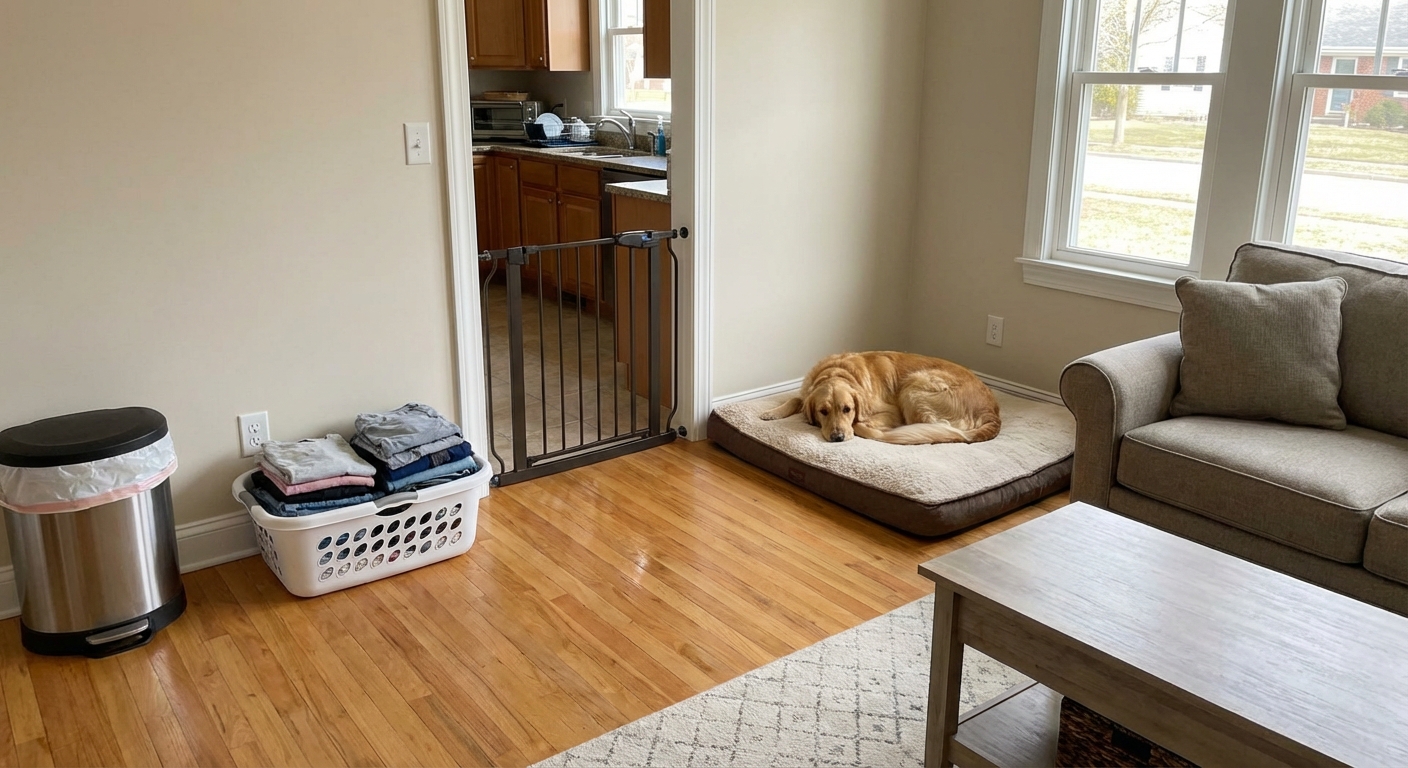
- Remove access to toys, laundry, trash, bones, and anything chewable.
- Bring a sample of vomit or stool if your clinic requests it (a photo can also help).
- Keep your dog calm and prevent running or rough play.
Do not
- Do not induce vomiting unless a veterinarian specifically instructs you to. Some items can cause more damage coming back up.
- Do not give laxatives, mineral oil, or stool softeners without veterinary guidance.
- Do not give human pain medication. Many are toxic to dogs.
- Do not pull string that is hanging from the mouth or rectum.
What to bring to the vet or ER
- When symptoms started and how they have changed
- When your dog last ate and drank
- What you think was swallowed (or what is missing), plus packaging if you have it
- A list of current medications and any health conditions
- Photos or short video of vomiting, retching, or abnormal posture
How vets diagnose it
Your veterinarian will choose tests based on your dog’s symptoms, exam findings, and history of possible ingestion. Common steps include:
- Physical exam with abdominal palpation and hydration assessment
- X-rays to look for foreign material, gas patterns, or intestinal dilation
- Abdominal ultrasound (often very helpful for soft objects like fabric)
- Bloodwork to check dehydration, electrolyte imbalance, infection, and organ function
- Contrast study in some cases to track movement through the GI tract
Treatment options
Treatment depends on the location and severity of the blockage, how stable your dog is, and what was swallowed.
Monitoring and supportive care
For select partial obstructions, your vet may recommend fluids, anti-nausea medication, pain control, and careful monitoring, sometimes with repeat imaging.
Endoscopy
If the object is in the stomach, or sometimes at the very beginning of the small intestine, some dogs can have it removed using an endoscope, which avoids an abdominal incision.
Surgery
If the object cannot pass and cannot be retrieved safely via endoscopy, surgery may be needed to remove it and assess the health of the intestines. Surgery is also more likely when there is concern for:
- Complete obstruction
- Linear foreign body (string)
- Intestinal damage or compromised blood supply
- Perforation or infection in the abdomen
Recovery and home care
Your clinic will give instructions tailored to your dog, but these are common recovery themes:
- Small, frequent meals of a vet-approved bland or gastrointestinal diet
- Strict rest after surgery, often 10 to 14 days
- Medication schedule for pain, nausea, antibiotics if prescribed
- Incision monitoring for redness, swelling, discharge, or opening
- Recheck visits as recommended
Call your veterinarian immediately if vomiting returns, appetite disappears, your dog seems painful, or you notice swelling or discharge at the incision site.
Prevention that works
Many obstructions are preventable, especially in puppies and determined chewers.
- Laundry control: Keep socks and underwear in a closed hamper.
- Trash security: Use a lidded can or keep it behind a door.
- Chew-safe toys: Choose size-appropriate toys that cannot be swallowed whole.
- Supervision: Watch play with squeaky toys and plush toys.
- Crate training: A safe crate can prevent late-night scavenging.
- Teach “drop it” and reward it generously.
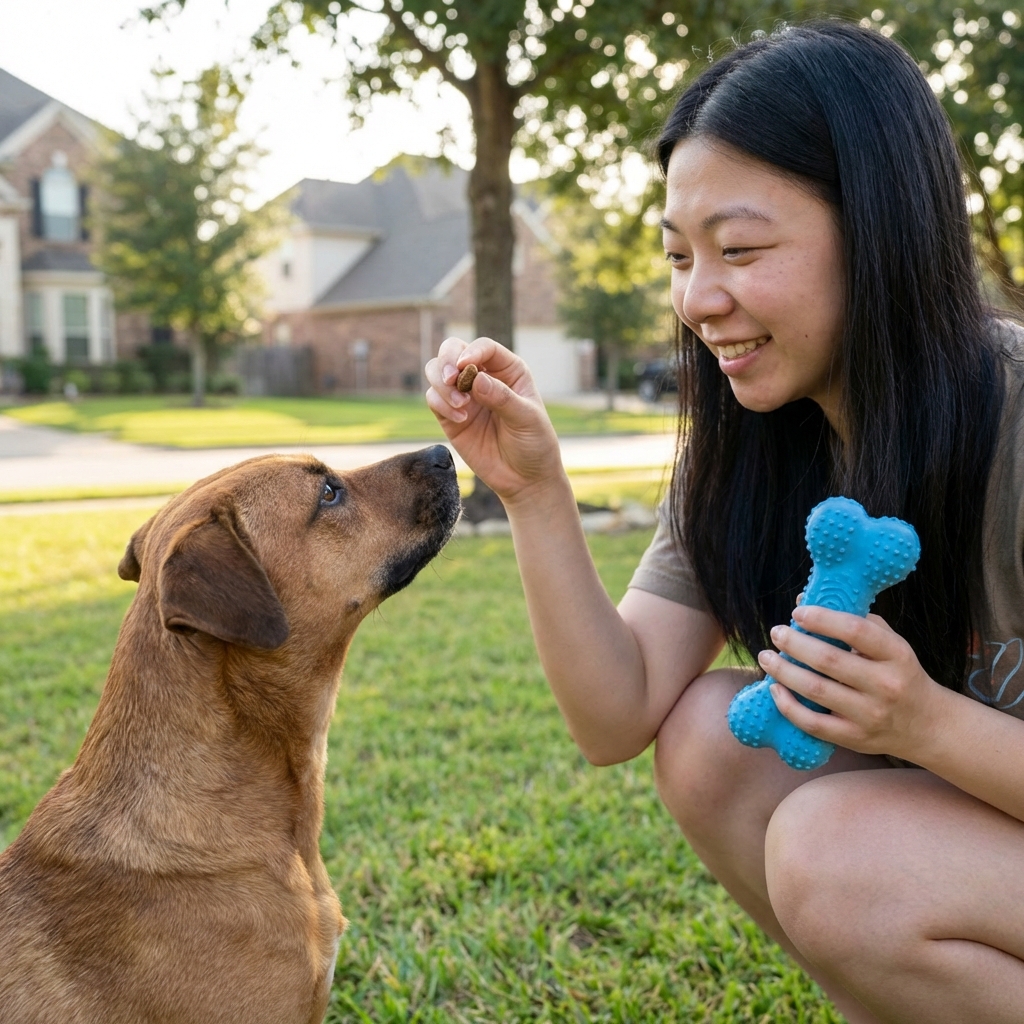
If your dog is a repeat “snacker” of non-food items, ask your veterinarian about pica, anxiety-related chewing, and enrichment strategies. There is almost always a better plan than hoping they will grow out of it.
Quick checklist
If you only remember one thing, remember this: repeated vomiting plus a painful belly is urgent.
- Vomiting more than once
- Cannot keep water down
- No stool or straining
- Diarrhea that keeps going
- Bloated or painful abdomen
- Drooling, gagging, repeated swallowing
- Low energy, weakness
- Known chewing or swallowing a risky item
Final note
If you are worried, trust that instinct and call your vet. You are not overreacting by asking questions. With obstructions, getting help early can be the difference between a simpler treatment and a much harder road.