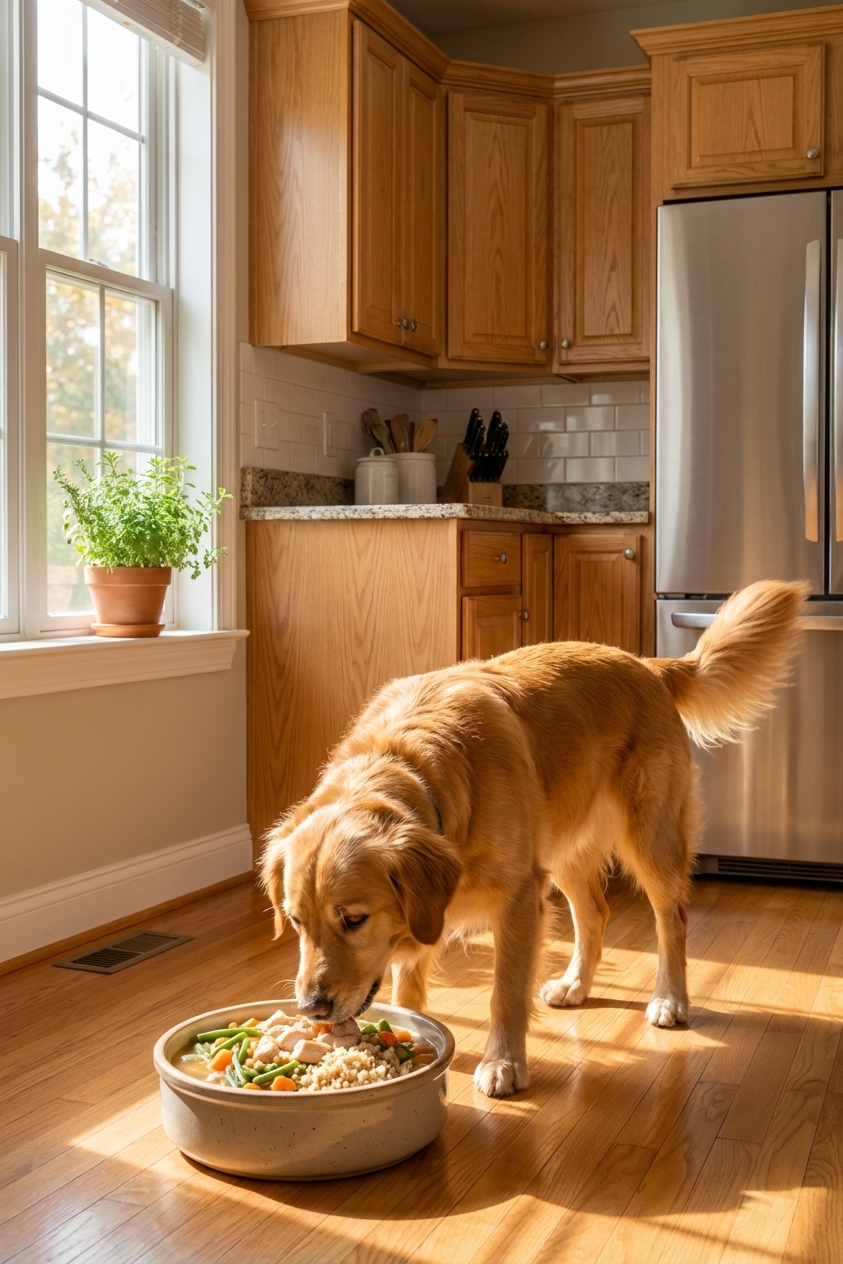
Support your dog’s heart with a vet-smart homemade diet. Learn how to manage sodium, keep weight and muscle stable, choose safe ingredients, and discuss su...
Article
•
Designer Mixes
Symptoms of Heart Failure in Dogs

Shari Shidate
Designer Mixes contributor
As a veterinary assistant here in Frisco, Texas, I have learned that heart failure in dogs can be tricky because the earliest signs often look like “normal aging” or a mild cough. The good news is that when you know what to watch for, you can get your dog help sooner, and sooner usually means more options and a better quality of life.
Important note: If your dog is struggling to breathe, has blue or gray gums, collapses, or cannot get comfortable, treat it as an emergency and go to an emergency vet right away.

What “heart failure” means
Heart failure does not mean the heart suddenly stops. It means the heart can no longer pump effectively enough to meet the body’s needs. When that happens, fluid can back up into the lungs, around the lungs (pleural effusion), or into the abdomen. Dogs can live with heart disease for years, and some eventually develop congestive heart failure (CHF) when fluid buildup and poor circulation start causing symptoms.
The most common underlying cause in dogs is degenerative mitral valve disease (especially in small and medium breeds). Another cause is dilated cardiomyopathy (more common in some larger breeds). Your veterinarian will determine the cause with an exam and testing.
Common symptoms
These are the signs I encourage pet parents to take seriously, especially if you notice more than one sign or symptoms are worsening over days to weeks.
- Coughing, especially a soft, persistent cough at night, early morning, or after lying down.
- Faster breathing at rest or breathing that seems more effortful. You might notice your dog’s chest and belly moving more than usual.
- Exercise intolerance: tiring on walks, stopping sooner, or not wanting to play.
- Weakness or lethargy: “Just not themselves,” sleeping more, acting withdrawn.
- Fainting or collapsing (syncope), sometimes after excitement or exercise.
- Decreased appetite or nausea. Some dogs lose weight over time.
- Swollen belly (ascites) from fluid accumulation, more common with right-sided heart failure.
- Restlessness at night or trouble getting comfortable, often because breathing feels harder when lying flat.
- Pale, gray, or blue-tinged gums (late sign, urgent).
A quick, helpful nuance about coughing: not every heart-related cough means CHF. Some dogs cough because an enlarged heart can press on the airways, while others cough because fluid is building up in the lungs. That is one reason chest X-rays and an exam matter so much.
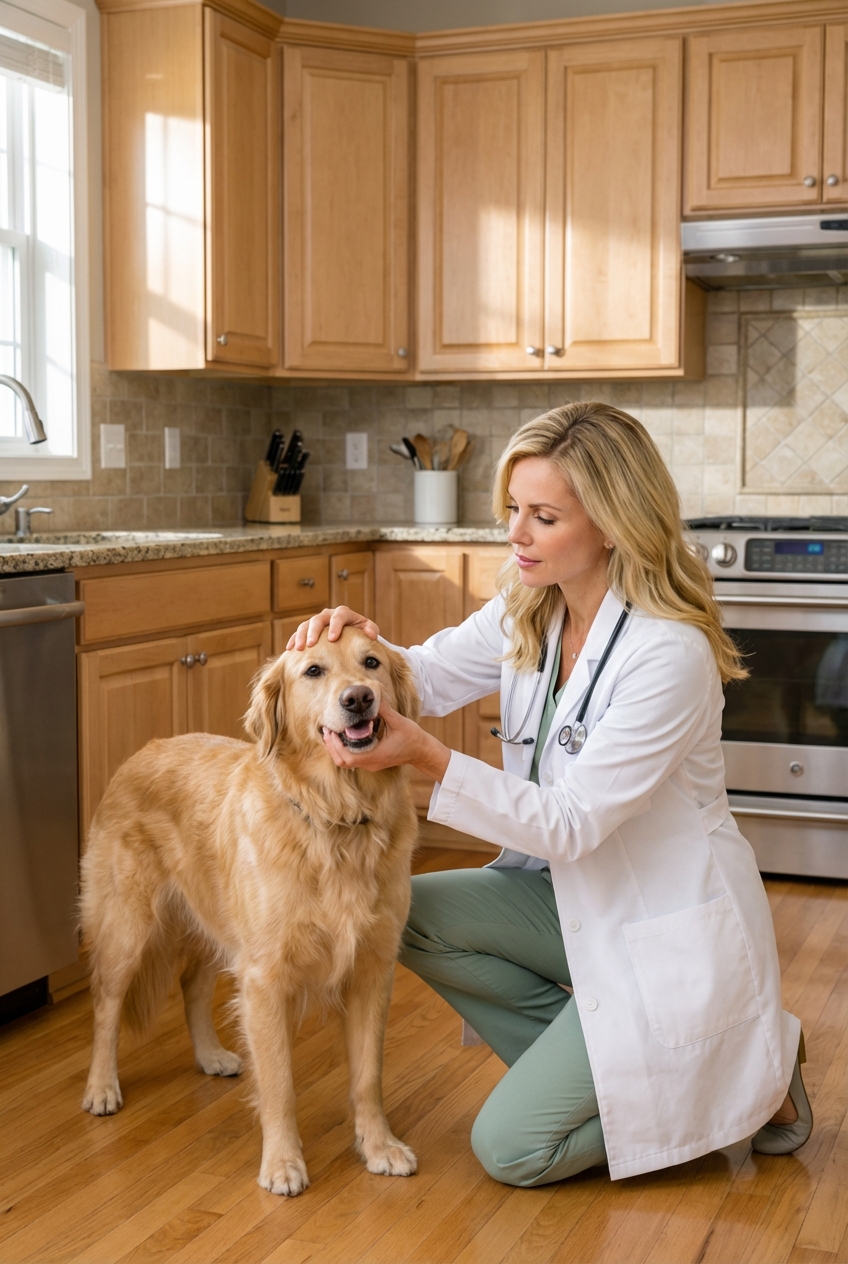
Check resting breathing rate
This is one of the simplest, most useful at-home checks, especially for dogs with known heart disease.
Step-by-step
- Wait until your dog is fully asleep or deeply resting (not panting, not active, not dreaming).
- Watch the chest rise and fall. One rise and one fall = 1 breath.
- Count breaths for 30 seconds and multiply by 2.
- Write it down in your phone notes. If you can, check at roughly the same time of day. Trends matter more than a single number.
What numbers are concerning?
- Many healthy resting dogs are often under 30 breaths per minute.
- If your dog’s resting rate is persistently above 30 to 35, or it suddenly increases compared to their usual baseline, call your vet.
- If your dog is working hard to breathe, even with a normal number, that is still urgent.
This is not meant to diagnose heart failure at home, but it is an excellent early warning system for fluid in or around the lungs.

Early vs. urgent signs
Early signs (call within 24 to 48 hours)
- New cough or cough that is slowly becoming more frequent
- Slight decrease in stamina
- Mildly increased resting breathing rate compared with normal, especially if the trend is rising over several days
- Occasional gagging or retching that seems tied to coughing
Urgent signs (same day, often emergency)
- Labored breathing or open-mouth breathing when not hot or excited
- Breathing fast at rest and unable to settle
- Blue, gray, or very pale gums
- Collapse, fainting, extreme weakness
- Distended belly that appears quickly or is worsening
If you are ever deciding whether your dog’s breathing looks “bad enough,” trust your instincts. Breathing trouble is not a wait-and-see symptom.
What can look similar
Coughing and low energy can also happen with other issues. That is why it is so important not to self-diagnose.
- Tracheal collapse (common in small breeds, “goose-honk” cough)
- Chronic bronchitis or respiratory infection
- Allergies or airway irritation
- Heartworm disease (can cause cough, fatigue, weight loss)
- Pneumonia or lung disease
- Obesity and poor conditioning (can mimic exercise intolerance)
Your vet will use history, an exam, and diagnostic tests to separate these possibilities.
What your vet may do
If heart failure is suspected, here are common next steps. Not every dog needs every test, but this gives you a feel for the process.
- Physical exam: listening for a heart murmur, abnormal rhythms, and lung sounds. Crackles can suggest fluid, but their absence does not rule it out.
- Chest X-rays: to look for heart enlargement and fluid in or around the lungs.
- Echocardiogram (cardiac ultrasound): the best way to evaluate valves, heart size, and pumping function.
- Bloodwork and urinalysis: important before starting certain medications and to check kidney function.
- Blood pressure measurement.
- ECG if an arrhythmia is suspected.
- NT-proBNP test in some cases to help assess cardiac strain.
If congestive heart failure is confirmed, treatment often includes medications to reduce fluid and support heart function. Common examples you may hear about include diuretics (like furosemide), pimobendan, and sometimes ACE inhibitors, depending on the diagnosis and stage. Your vet will tailor a plan to your dog’s specific needs.
How to help at home
- Track symptoms: cough frequency, stamina, appetite, and resting breathing rate.
- Keep excitement low if your dog is coughing or breathing faster than usual.
- Give medications as prescribed and do not stop them suddenly without veterinary guidance.
- Ask about diet and sodium: some heart patients benefit from a thoughtfully lower-sodium approach, but it should be individualized.
- Keep heartworm prevention current unless your veterinarian advises otherwise.
And one more gentle reminder: supplements can interact with heart medications. Always run new supplements, herbs, or diet changes by your veterinary team.