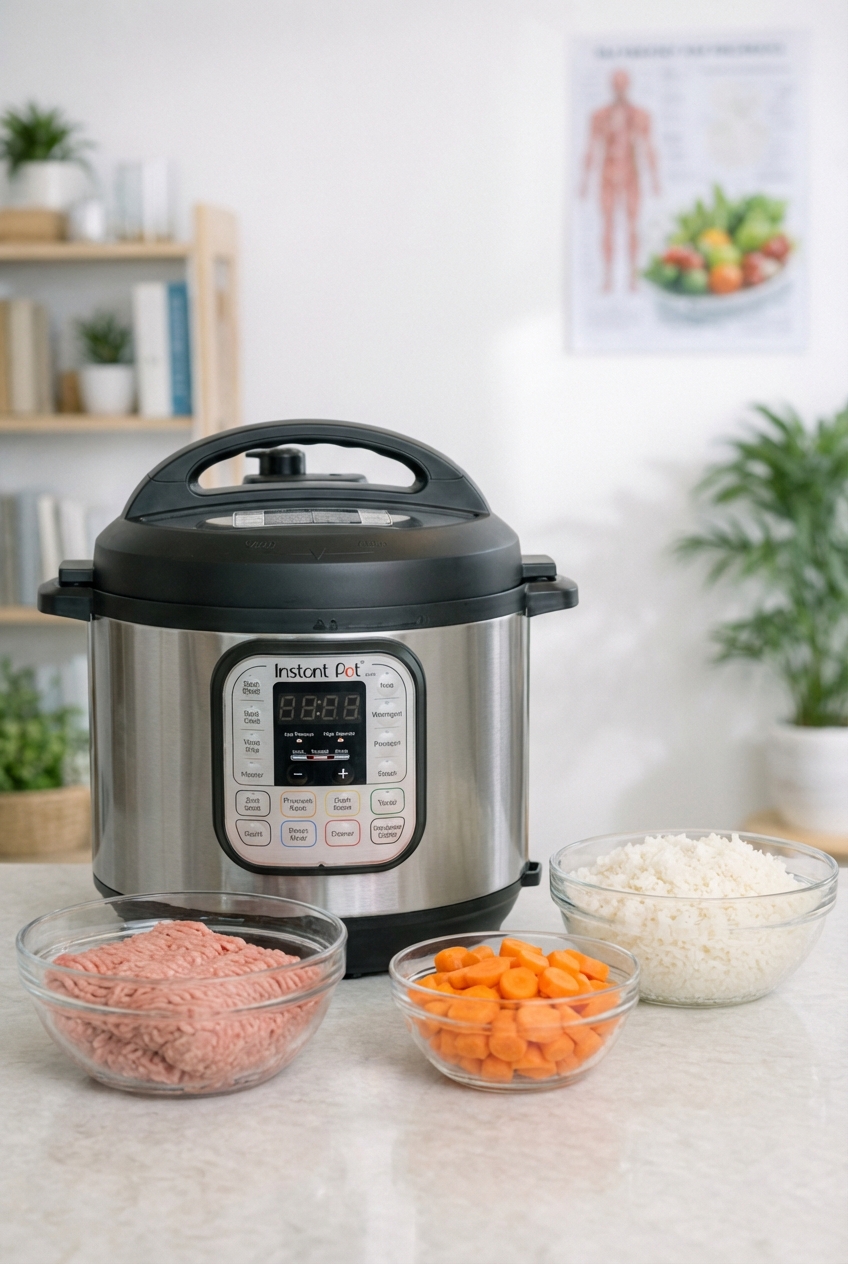
Help your dog feel better with gentle homemade meals for sensitive stomachs. Learn a 3-ingredient bland reset, easy recipes, transition steps, and what signs...
Article
•
Designer Mixes
Switching Your Dog to Homemade Food Safely

Shari Shidate
Designer Mixes contributor
If you are thinking about switching your dog to homemade food, you are in very good company. I see this question all the time as a veterinary assistant in Frisco, Texas: “How do I do it without upsetting my dog’s stomach or missing nutrients?” The good news is that you can absolutely make the transition safely, and you do not have to change everything overnight.
In this guide, I will walk you through a step-by-step transition, what a balanced bowl looks like, and the common mistakes that can cause diarrhea, picky eating, or nutritional gaps.
Quick note before we start: The “framework” and starter meal ideas below are meant for transitioning and learning the process. A homemade diet is not truly complete long-term unless it is formulated (or paired with a complete premix) to meet your dog’s vitamin and mineral needs.
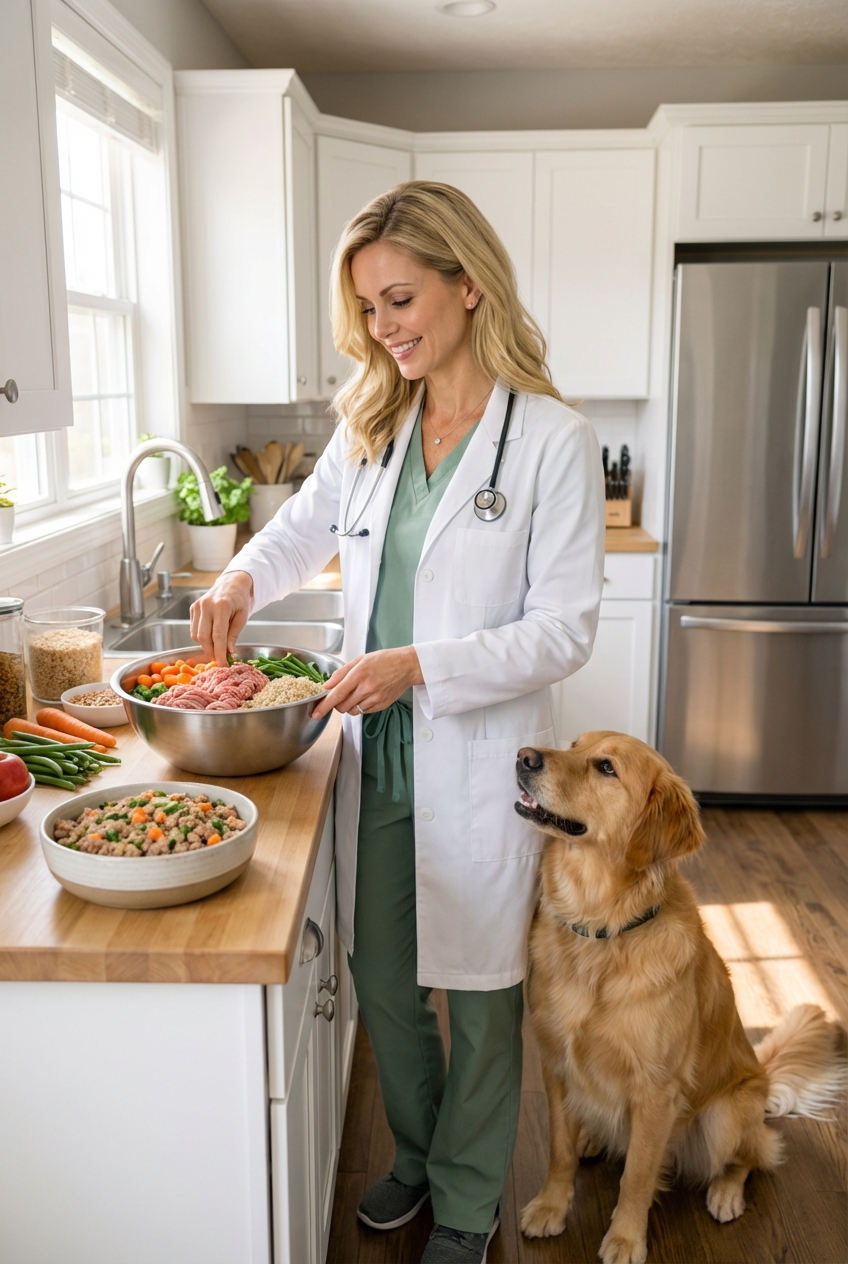
Start with a quick safety check
Before changing your dog’s diet, take 2 minutes to do a health and lifestyle check. This helps you choose the right pace and avoids problems.
Talk with your veterinarian if your dog:
- Has kidney disease, liver disease, pancreatitis, diabetes, or heart disease
- Has food allergies or inflammatory bowel disease
- Has a history of bladder stones or frequent urinary issues
- Is a puppy, pregnant, nursing, or a senior taking multiple medications
These pets can still eat homemade food, but the recipe and mineral balance matter more, and the transition should be customized.
Know the top goal
Your first goal is digestive stability, not perfection. You can improve quality right away while you work toward a fully balanced long-term plan.
How fast should you switch?
Many healthy adult dogs do well with a slow, structured transition over 10 to 14 days. Some dogs need longer, especially if they have a sensitive stomach. It is completely reasonable to take 2 to 3+ weeks if your dog does better with a slower pace.
If your dog has frequent diarrhea on their current food, talk to your vet first so you are not masking an underlying issue.
10 to 14 day transition schedule
- Days 1 to 3: 25% homemade, 75% current food
- Days 4 to 6: 50% homemade, 50% current food
- Days 7 to 9: 75% homemade, 25% current food
- Days 10 to 14: 100% homemade
Tip from the clinic: keep each meal consistent during the transition. This is not the time to rotate proteins, add treats, and try new chews all in the same week.
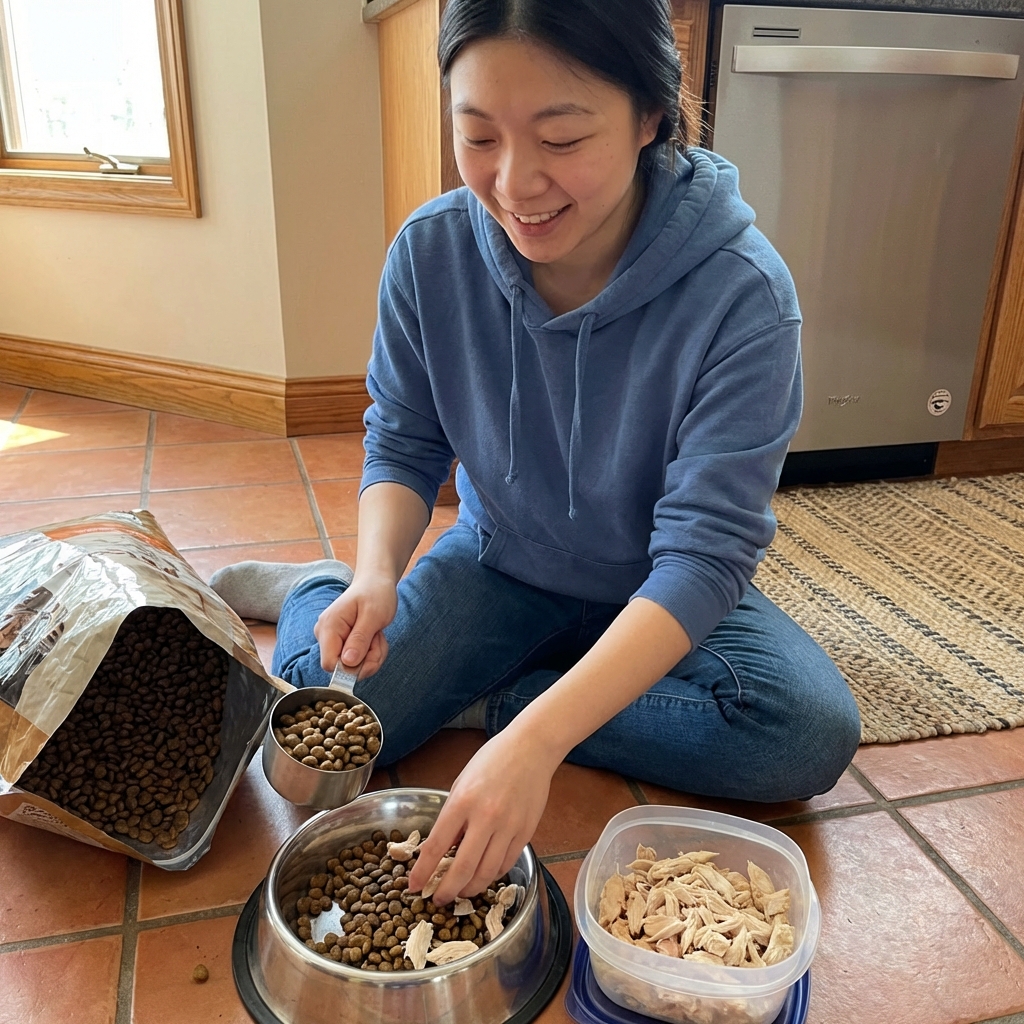
What a balanced bowl looks like
Homemade feeding works best when you think in categories: protein, healthy fats, carbs, veggies, and the nutrients that are easy to miss.
Important: Bowl “proportions” alone do not make a diet complete. The micronutrients (especially calcium, iodine, zinc, vitamin D, and vitamin E) are where many homemade diets fall short without a formulated recipe or premix.
A simple starting framework
- Protein (the foundation): cooked chicken, turkey, lean beef, eggs, sardines, salmon
- Vegetables (often 10 to 20%): lightly cooked or pureed carrots, spinach, green beans, broccoli, zucchini, pumpkin (this is a starting guideline for many dogs, not a nutritional rule)
- Carbs (optional, often helpful): cooked rice, oats, quinoa, sweet potato
- Healthy fats: salmon oil or small amounts of olive oil, plus naturally occurring fats in meat
The most important “hidden” piece is mineral balance, especially calcium. Meat is high in phosphorus, so if you feed meat without an appropriate calcium source long-term, the diet can become unbalanced.
Calcium needs a plan
For a homemade diet to be complete, calcium must be intentionally included and correctly dosed. Many families use a veterinary-formulated mineral supplement, a complete premix designed for homemade diets, or a recipe made by a board-certified veterinary nutritionist.
What is a “complete premix”? It is a product that supplies vitamins and minerals (and often calcium) that are missing from meat and produce. You add it to the recipe exactly as directed, including the specific amounts of meat, carbs, and oils it is designed to pair with.
If you are using homemade meals as a partial topper or a 50/50 approach, the risk of major imbalance is often lower than a 100% homemade plan, but it is not zero. It depends on what the homemade portion replaces and the overall calcium to phosphorus balance of the total diet. This is still a good time to build smart habits.
Calcium source caution: People sometimes ask about eggshell powder or bone meal. These can be used incorrectly very easily, and quality varies by product. If you are not following a properly formulated recipe, the safest route is a veterinary-formulated supplement or premix used exactly as directed.
Best first foods to start
When the goal is fewer tummy troubles, simpler is better. Choose one lean protein and one or two easy foods at first.
Starter-meal disclaimer: The combos below are great for transitioning and short-term use unless they are part of a complete, formulated recipe (or you are using a complete premix as directed).
Gentle starter combos
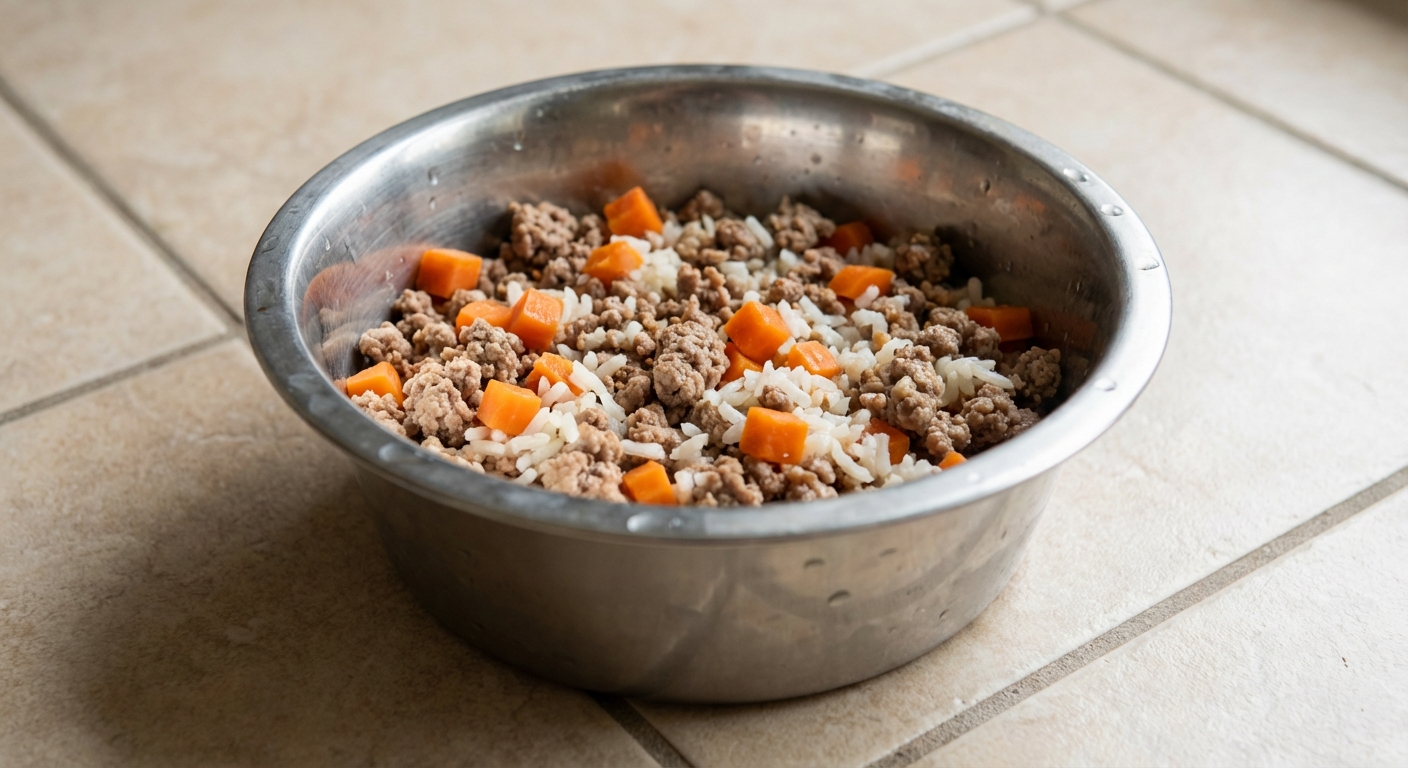
- Chicken + pumpkin + white rice (classic for sensitive stomachs)
- Turkey + cooked carrots + rice
- Lean beef + green beans + sweet potato
Cook the vegetables until soft. Many dogs digest vegetables best when they are lightly steamed and chopped fine or pureed.
Portions and feeding amount
How much to feed depends on your dog’s size, age, activity, and whether you are feeding 100% homemade or mixing with a commercial food.
A practical starting point
For many adult dogs, a common starting range is around 2 to 3% of ideal body weight per day in total food, split into meals.
Stronger caveat: this is only a rough starting estimate because homemade recipes vary wildly in calorie density. It can underfeed or overfeed depending on ingredients and fat content. The gold standard is feeding by calories and adjusting based on body condition and weekly weight trends.
You will adjust based on:
- Body condition score and waistline
- Energy level
- Stool quality
- Weekly weight trends
If you are currently feeding kibble, do not forget that homemade food often contains more water and fewer calories per cup. That is why measuring by “cups” can be misleading. A kitchen scale is your best friend.
Watch the stool
In veterinary medicine, poop tells a story. During a diet change, it is your early warning system.
What you want to see
- Formed stools that are easy to pick up
- Normal frequency for your dog
- No mucus, blood, or urgency
Slow down if you see
- Soft serve stool or diarrhea lasting more than 24 hours
- Vomiting
- Lots of gas or obvious belly discomfort
- New itchiness or ear inflammation
If symptoms are significant, pause the transition and check in with your vet, especially for puppies and small dogs who can dehydrate faster.
Common mistakes
1) Changing too much at once
If you rotate proteins, add new treats, and change chews during the transition, it becomes hard to know what caused the upset.
2) No calcium plan
This is the most common long-term issue I see with well-meaning homemade feeding. A balanced recipe or veterinary-formulated supplement is the safest path.
3) Too rich, too fast
High-fat meats, lots of cheese, greasy leftovers, or heavy oils can trigger pancreatitis in some dogs. Keep it lean until you know how your dog responds.
4) Forgetting food safety
- Keep cooked food refrigerated and use within 3 to 4 days
- Freeze portions you will not use quickly
- Reheat gently and stir well, then let it cool before serving (avoid hot spots)
- Wash hands, bowls, and prep surfaces
- Discard food left out for extended periods
Cooked or raw?
For many households, cooked homemade food is the easiest and safest starting point. Raw diets can carry bacterial and parasite risks for both pets and people.
Even with good hygiene, some pathogens can still be present and may be shed in your dog’s stool, which matters a lot in homes with kids, seniors, pregnant family members, or anyone immunocompromised.
If you are interested in raw feeding, I strongly recommend doing it with veterinary guidance and strict hygiene protocols.
A simple 3-step plan
- Choose one lean protein your dog already tolerates well.
- Pick one gentle carb and one vegetable, and cook them simply with no onions, no added salt, and no seasonings.
- Transition slowly using the 25/50/75/100 schedule, and go slower if needed.
Small changes add up. Even a 25% homemade upgrade can improve palatability and help you build confidence while you work toward a complete, balanced plan.
Foods to avoid
Some human foods are unsafe for dogs. Keep these out of the kitchen prep zone.
- Grapes and raisins
- Onions, chives, and leeks
- Garlic (best avoided)
- Xylitol (common in sugar-free gum and some peanut butters)
- Cooked bones (splinter risk)
- Alcohol and caffeine
- Chocolate
- Macadamia nuts
If you ever suspect your dog ate a toxin, contact your veterinarian or a pet poison hotline right away.
When to level up
If your end goal is 100% homemade long-term, the safest options are:
- A recipe formulated by a board-certified veterinary nutritionist (ACVN or ECVCN)
- A veterinary-validated homemade recipe resource
- A complete premix designed specifically for homemade dog diets, used exactly as directed
Quick “is it balanced?” checklist
- The recipe is formulated to AAFCO or NRC nutrient targets (not just “whole food” proportions)
- You are using the supplement or premix exactly as directed (including the specified ingredients and amounts)
- You monitor body condition score, weight trends, coat quality, and stool
- You schedule routine vet checkups, and consider baseline and periodic bloodwork for long-term homemade feeders
Homemade feeding can be wonderful, but it should be both wholesome and complete. You deserve a plan you can feel confident about.