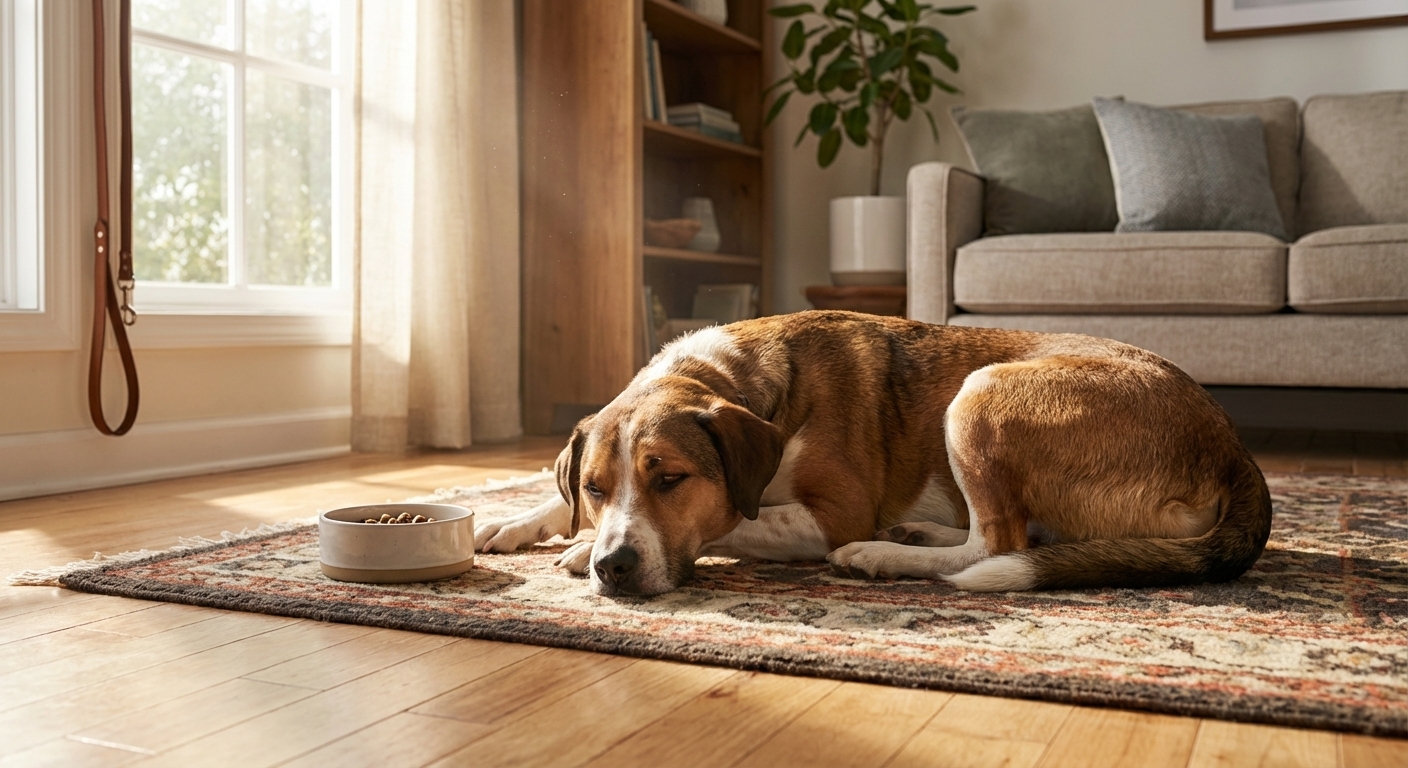
Switching Dog Food Without Diarrhea

Switching your dog’s kibble (or wet food) sounds simple, until you are staring at a puddle of diarrhea at 2 a.m. The good news is that most “food-change tummy troubles” are preventable with a slow, consistent transition and a little troubleshooting.
In clinic settings, I have seen the same pattern over and over: a well-meaning owner changes foods too quickly, makes portion math messy, and then feels stuck. Let’s make this easy, calm, and predictable.
Why switching foods can cause diarrhea
Diarrhea during a food switch is often not a true food allergy. It is most commonly a gut adjustment problem caused by a rapid change in ingredients, fat, fiber, and calorie density. That said, some dogs do have food intolerance or allergy, and diarrhea can be part of that picture, especially if it keeps happening with the same ingredient or comes with itching, ear infections, or chronic gas.
- Microbiome shift: Your dog’s intestinal bacteria adapt to what they eat. A sudden new formula can temporarily throw off that balance.
- Different fat or fiber levels: Even “similar” foods can vary a lot in fat, protein type, and fiber. Higher fat especially can trigger loose stool.
- Different protein sources: Chicken to beef, beef to lamb, or fish-based diets can digest differently.
- Overfeeding during the change: Measuring gets sloppy when two bags are open. Extra calories often lead to softer stool.
If your dog also has vomiting, lethargy, blood in stool, fever, or won’t drink water, that is not a “normal transition.” Scroll down to when to call your veterinarian.
The 7 to 10 day timeline (kibble or wet)
This schedule works for most healthy adult dogs switching between commercial foods. Keep the total amount of food the same as your dog currently eats, unless your veterinarian has advised otherwise.
Standard 8-day schedule
- Days 1–2: 75% old food, 25% new food
- Days 3–4: 50% old food, 50% new food
- Days 5–6: 25% old food, 75% new food
- Days 7–8: 100% new food
If your dog has a history of a sensitive stomach, plan on 10 to 14 days instead of rushing. Slow is faster when it prevents backtracking.
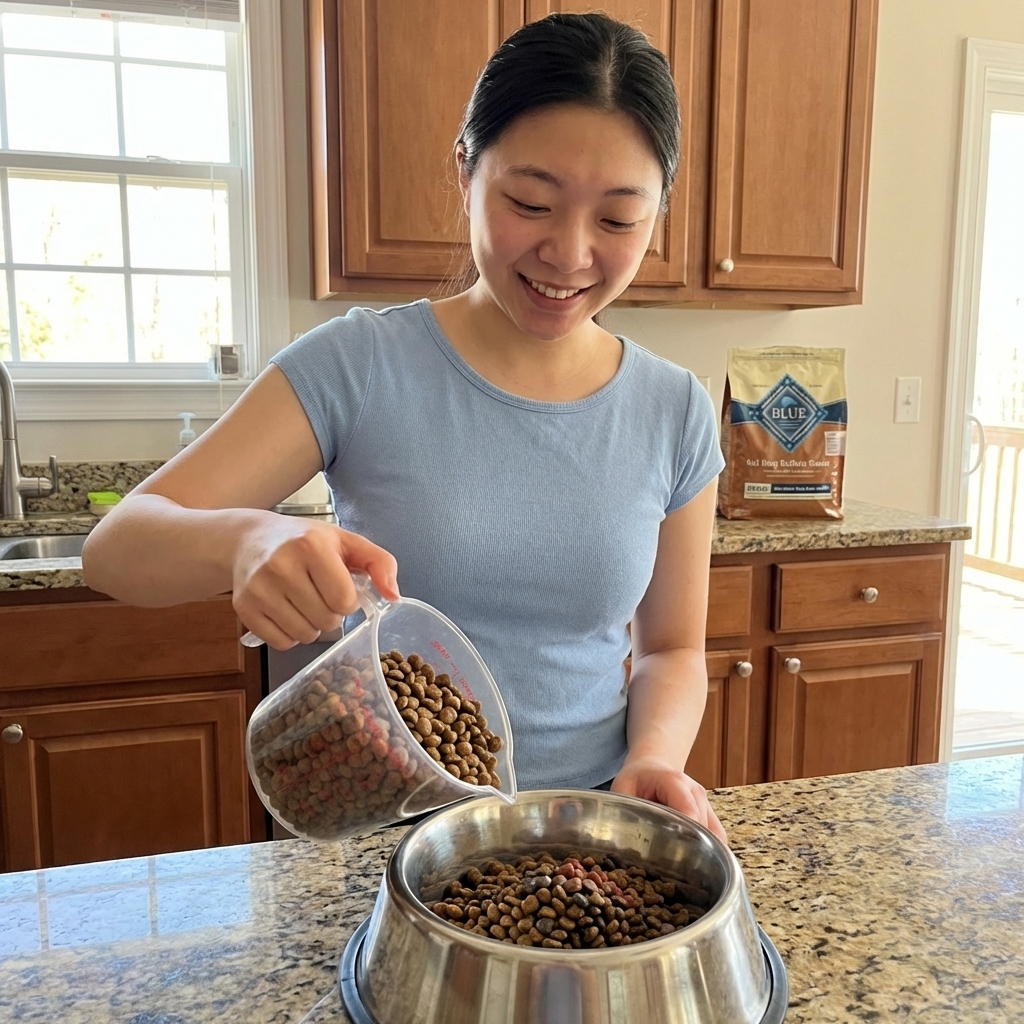
How to measure (so the math does not sabotage you)
- Measure by calories if you can (especially when switching wet food to kibble or vice versa). Wet food is often much lower in calories per cup than kibble.
- If you are measuring by volume, use the same measuring cup every time and level it off.
- Feed on schedule, not free-choice, while you are transitioning. It is easier to monitor appetite and stool.

Common pitfalls (and how to avoid them)
Many people jump straight to 50/50 because it feels balanced and fair. Unfortunately, it is also where many dogs get loose stool.
- Pitfall: Starting at 50/50 on day one.
Do instead: Start at 75/25 and let the gut adjust. - Pitfall: Switching to a very different formula (example: high-fat performance food to a lower-fat maintenance food).
Do instead: Choose a similar calorie density and fat percentage when possible, or extend the transition to 14 days. - Pitfall: “Topping” with extra treats during the switch to encourage eating.
Do instead: Keep treats bland and minimal, or pause treats entirely for the first few days. - Pitfall: Switching foods and changing feeding amount at the same time.
Do instead: Change one variable at a time. Keep portions stable until stools are normal. - Pitfall: In multi-dog homes, one dog sneaks the other dog’s bowl (which can accidentally double the “new food” amount).
Do instead: Feed separately and pick bowls up after meals so you can control portions during the transition.
Troubleshooting loose stool
If your dog’s stool gets soft, do not panic. Think: slow down, simplify, and support hydration.
Quick stool guide (so you know what “counts”)
- Soft but formed: Like soft-serve, still easy to pick up. Often manageable by slowing the schedule.
- Loose: Like pudding, hard to pick up, may have urgency.
- Watery diarrhea: Mostly liquid, puddles, may happen repeatedly and can cause dehydration faster.
Step 1: Pause or back up
- Mildly soft stool, dog feels fine: Stay at the current ratio for 2 to 3 more days.
- Loose stool two or more times in 24 hours, urgency, gassiness: Go back to the last ratio where stools were normal (often 75/25) and hold there for 3 to 5 days.
- Watery diarrhea: Stop advancing the new food. Consider returning to 100% old food for 24 to 48 hours and contact your veterinarian if it persists, worsens, or your dog seems unwell.
Step 2: Tighten up the “extras”
During a transition, treats, chews, table scraps, and rich toppers can be the hidden cause. For a few days, keep it boring.
- Use the old kibble as treats if your dog will take it.
- Avoid high-fat chews, bully sticks, pig ears, and rich training treats.
Step 3: Short GI support (ask your vet if unsure)
For many dogs, a brief, simple GI support approach can help stools firm up while you slow the transition.
- Hydration first: Make sure your dog is drinking. Call your vet if your dog is not drinking, seems weak, or has dry gums.
- Fiber support: Plain canned pumpkin (not pie filling) is commonly used. Too much fiber can worsen stool in some dogs, so ask your veterinarian about an amount for your dog’s size.
- Probiotics: Some dogs do well with a veterinarian-formulated probiotic during transitions. Not all products are equal, so use a reputable veterinary option if you use one.
If diarrhea is severe or persistent, do not try to “out-supplement” a problem that needs medical care.
When to call your vet
Use this section as your decision filter. When in doubt, call. It is always easier to treat GI upset early than after dehydration sets in.
Call your vet the same day
- Diarrhea lasting more than 48 hours in a healthy adult dog
- Loose stool that is not improving despite slowing the transition
- Small dogs, toy breeds, seniors, or dogs with chronic conditions with diarrhea that lasts more than 24 hours, even if it seems mild
- Any concern for dehydration (sticky gums, weakness, not drinking)
Urgent or ER
- Watery diarrhea with vomiting
- Blood in stool or black, tarry stool
- Repeated vomiting or inability to keep water down
- Lethargy, painful belly, fever, collapse, or “not acting like themselves”
- Puppies with diarrhea (they can dehydrate quickly)
- A history of pancreatitis or suspected pancreatitis (painful abdomen, hunched posture, refusing food, vomiting)
Food changes can also unmask unrelated problems, like parasites, dietary indiscretion (raiding the trash), pancreatitis, or a contagious GI bug.
Puppies and seniors
Puppies and seniors can get into trouble faster with diarrhea because dehydration hits harder. If you are switching a puppy’s food, a slower timeline is usually safer, and it is smart to check in with your veterinarian before making big changes. If a puppy has diarrhea, especially with low energy or vomiting, treat it as a “call today” situation.
Kibble and wet switches
Texture and moisture changes can be part of the story, but the bigger driver is usually a shift in calorie density, fat, fiber, and formulation. Portions can be misleading when you switch formats, so measure carefully.
Kibble to wet
- Wet foods often have higher palatability. Dogs may eat faster and beg more.
- Stool may look slightly softer at first because of the added moisture, but it should not be watery.
- Measure the wet food by calories so you do not accidentally overfeed.
- Wash bowls thoroughly after wet meals (hot soapy water is fine). Leftover wet food can grow bacteria quickly, and that can cause diarrhea that looks like “transition trouble.”
Wet to kibble
- Kibble is calorie-dense. It is easy to feed too much at the beginning.
- Encourage water intake, since you are removing a moisture source.
- Some dogs do best with a sensitive-stomach kibble during the change, especially if they have a history of loose stool.
Commercial vs homemade
Rotating between commercial foods is mostly about digestive tolerance and consistency. Moving to homemade food introduces additional layers, because you are changing not just brands, but the nutrient structure and how the diet is balanced.
- Commercial to commercial: Usually a 7 to 10 day transition works well if formulas are similar.
- Commercial to homemade: The ingredient profile shifts more dramatically, so many dogs need a slower transition and a plan for balanced nutrition.
For homemade transitions, use the site’s dedicated guide: transitioning to homemade food. Think of this page as your go-to for kibble and wet food switching, especially if your dog has a sensitive stomach and you are trying to avoid diarrhea.
Prescription GI diets
Some dogs are switched to a veterinary therapeutic GI diet after a bout of diarrhea or vomiting. Follow your veterinarian’s timeline. Depending on the situation, your vet may recommend a faster switch than usual, or a slower, more cautious transition if your dog is stable but sensitive.
Sensitive stomach options
If your dog gets loose stool every time you try a new food, it may be time to choose a formula designed for GI support.
What tends to help
- Moderate fat (higher fat can be a diarrhea trigger)
- Simple ingredient lists
- Highly digestible proteins
- Added prebiotic fiber (like beet pulp, inulin, or similar fibers)
- Veterinary therapeutic GI diets if recommended for your dog
If your dog reacts to multiple proteins, talk with your veterinarian about whether a limited-ingredient or hydrolyzed protein diet makes sense. These are tools, not fads, and they are most helpful when paired with a careful transition and consistent treats.
Quick checklist
- Pick a realistic timeline: 7 to 10 days, or 10 to 14 days for sensitive dogs.
- Measure carefully so you do not overfeed.
- Feed separately in multi-dog households so no one steals meals.
- Keep treats and chews minimal during the transition.
- If stools loosen, pause at the current ratio or go back one step.
- Wash bowls thoroughly after wet meals.
- Call your vet sooner for puppies, seniors, small dogs, dehydration concerns, blood, vomiting, or worsening diarrhea.
The goal is not to power through the switch. The goal is a stable gut. Once your dog is stable, everything else gets easier.