
Swimmer Puppy Syndrome: Exercises, Bracing, and Timelines

Swimmer Puppy Syndrome can look scary the first time you see it. A puppy that should be toddling around instead lies flat, paddles, and seems unable to get their feet under their body.
The encouraging news is that many affected puppies improve dramatically with early intervention, better traction, and short, frequent exercises. The key is acting in the right window and knowing when this is more than a “weak puppy” situation.

What it looks like
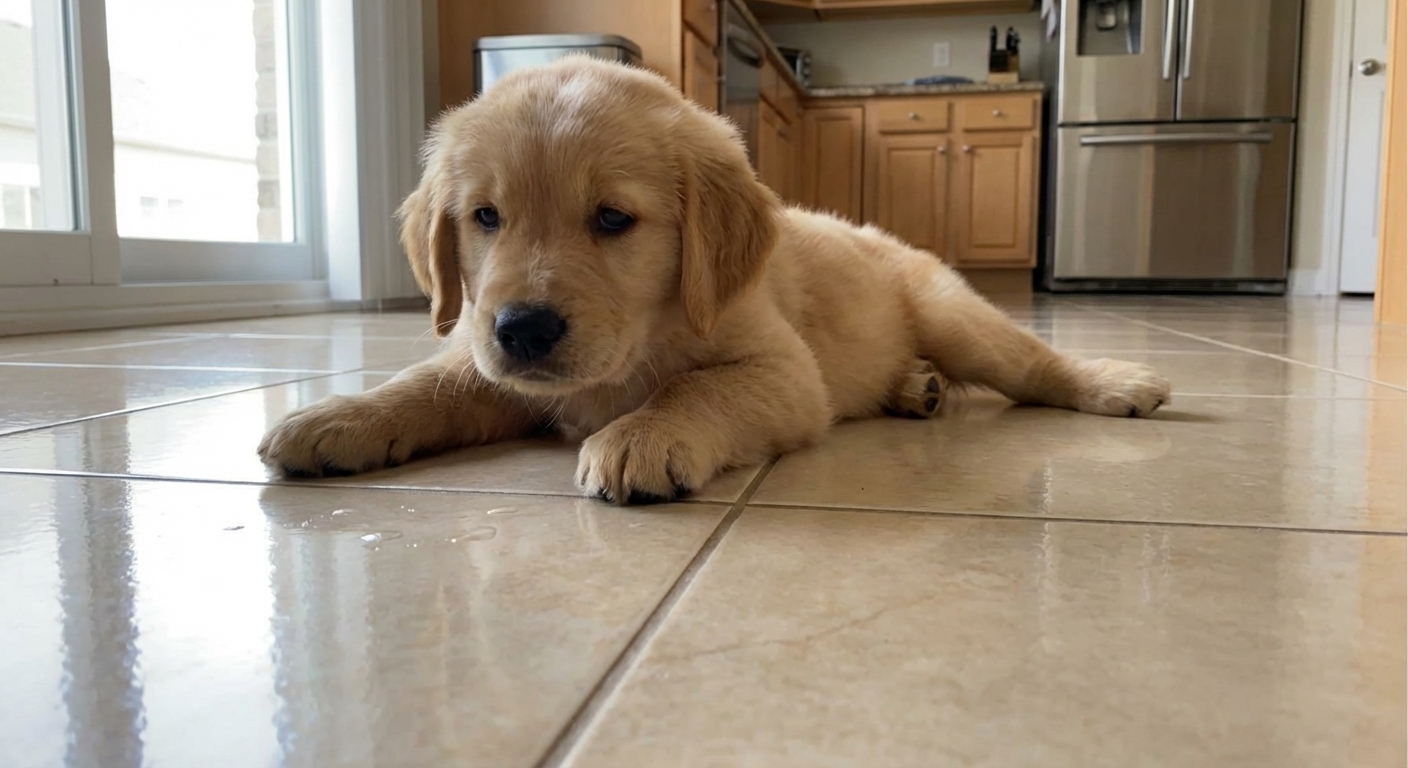
Swimmer Puppy Syndrome, sometimes called swimmer syndrome, is a developmental condition most often recognized in young puppies when they start trying to stand and walk. Instead of lifting the body, the puppy may:
- Lie flat on the chest and belly with legs splayed to the sides
- Paddle the legs outward like swimming
- Struggle on slick flooring and do better on high-traction surfaces
- Develop a flattened chest because the body rests on the ribcage more than it should
- Get tired quickly and seem frustrated when littermates move around
It can involve the front legs, the back legs, or both. The “why” is often multifactorial and not fully understood. It is commonly associated with factors like slippery surfaces, limited traction in the whelping area, heavier puppies, fast growth, and generalized weakness. Some puppies have underlying orthopedic or neurologic contributors, which is why a veterinary check matters.
Causes and risk factors
Swimmer Puppy Syndrome is usually considered a condition with multiple contributing factors rather than a single cause. Things that may increase risk include:
- Smooth or slippery flooring during the period when puppies begin to stand
- Limited space to practice standing and repositioning
- Heavier puppies in a litter (or rapid early weight gain)
- Generalized weakness from illness or poor condition
Because swimmer-like posture can also be a sign of other problems, it is safest to treat this as “needs assessment,” not “definitely swimmer syndrome,” until your veterinarian has examined the puppy.
Age window
Most families notice swimmer-like signs around 2 to 4 weeks of age, right when puppies should begin getting up, bearing weight, and taking wobbly steps. Many veterinary resources describe recognition around 3 to 4 weeks as mobility begins in earnest. Intervention tends to be most effective when started early, but improvement can still happen later.
- Early stage: about 2 to 5 weeks (often the best response to conservative home care and traction changes)
- Still worth treating: about 5 to 8 weeks (may need more structured rehab and sometimes bracing)
- After 8 weeks: improvement is still possible, but persistent splaying may be harder to reverse without professional rehab
If you suspect swimmer puppy syndrome, do not “wait and see” for weeks. In my experience as a vet assistant, the pups who do best usually have someone improving traction and starting gentle daily work as soon as the problem is recognized.
First steps at home
Before we even talk exercises, the home environment matters. Puppies cannot build strength if their feet keep sliding out from under them.
Make surfaces non-slip
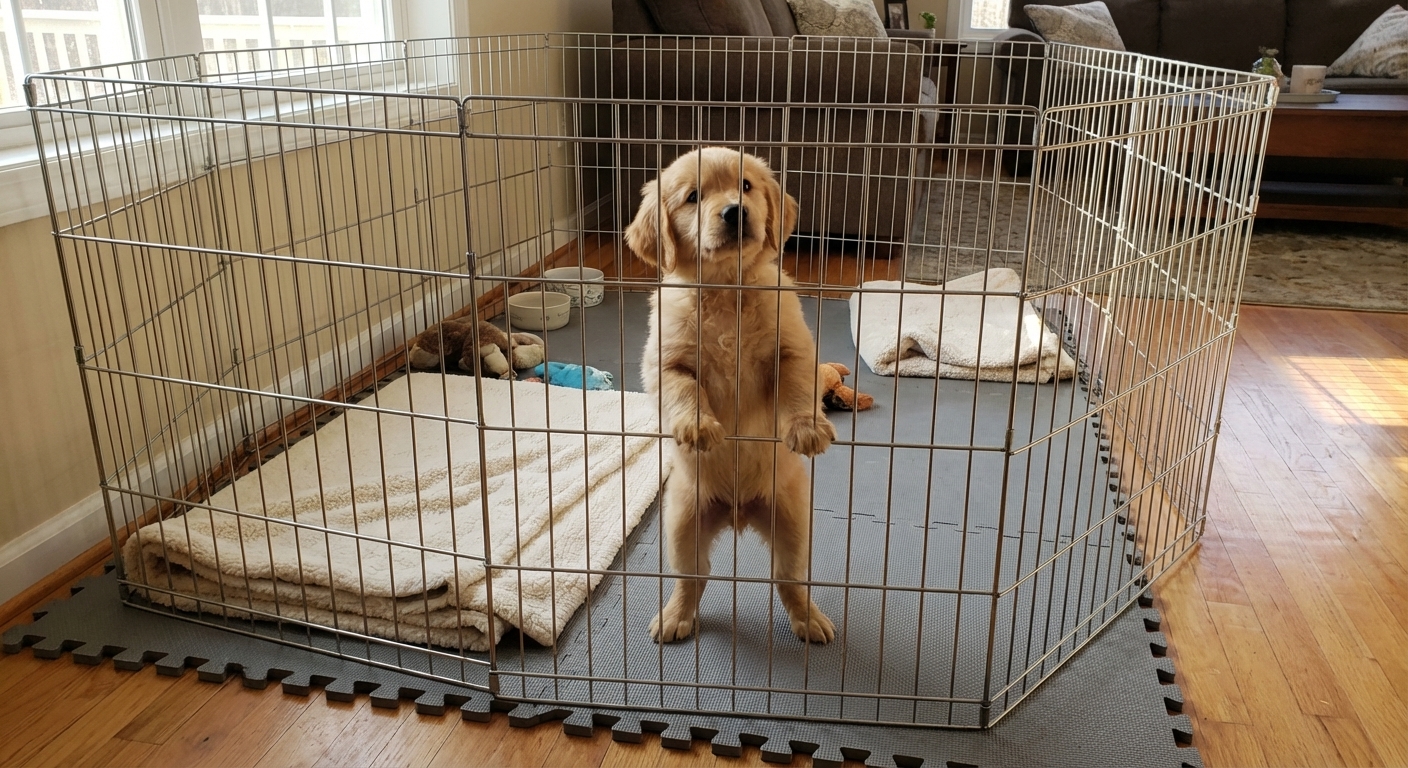
- Cover slick floors with rubber-backed bath mats, yoga mats, or inexpensive non-slip runners.
- In a whelping box or pen, use fleece over grippy padding. Avoid loose fabric that bunches up and becomes slippery.
- Keep bedding dry. Damp bedding increases slipping and chills the puppy.
Give them room to practice
A very small area can limit practice. A safe pen with traction encourages brief, frequent attempts to stand and reposition.
Keep body condition in check
Excess weight can make splaying worse. If you are supplementing, do it with guidance from your veterinarian so the puppy stays well-nourished without overdoing calories.
Exercises and positioning
Think of swimmer puppy care like physical therapy for a tiny athlete. You want short sessions, multiple times a day, and a focus on good form. Do everything as tolerated. If the puppy cries in pain, stops breathing normally, or seems distressed, stop and call your vet.
1) Towel bolster support
Flattened pups often benefit from a small support under the chest so they can bring the legs beneath them.
- Roll a hand towel into a small bolster.
- Place it under the puppy’s chest so the sternum is lifted slightly.
- Gently tuck the legs into a more normal standing position for a few seconds.
- Repeat for 30 to 90 seconds, several times daily (or as your vet or rehab therapist advises).
Goal: teach the puppy what “under the body” feels like.
2) Assisted standing on traction
- On a non-slip surface, support the puppy under the chest and belly.
- Help place each foot under the body.
- Hold for 10 to 20 seconds, rest, and repeat a few times.
Keep it gentle. You are building neuromuscular patterning, not forcing a long workout.
3) Gentle range of motion (ROM)
If your veterinarian says it is appropriate, gentle ROM can help prevent stiffness.
- Slowly flex and extend each limb in a comfortable range.
- Use very light pressure and stop if the puppy resists or vocalizes.
- Do 5 to 10 slow cycles per limb.
4) “Bicycle” movements and paw placement
While the puppy is supported, gently mimic stepping motions so the feet land under the body rather than out to the side.
5) Brief tummy time, then reset
Supervised tummy time on traction encourages pushing up. If the puppy splays, calmly reset the legs and try again for a short burst.
Consistency beats intensity. Five 2-minute sessions a day often help more than one long session that exhausts the puppy.

Protecting the chest and breathing
One reason we take swimmer syndrome seriously is that a puppy lying flat for long periods can develop a more pronounced flattened chest. In more severe or prolonged cases, chest shape changes can affect breathing comfort. This is one reason early intervention and veterinary monitoring matter.
Helpful positioning habits
- Rotate resting positions frequently. Encourage side-lying rather than always belly-flat.
- Use small rolled towels to help prevent the legs from sliding outward during rest.
- Keep sessions calm and warm. Chilled puppies tense up and struggle more.
Watch breathing
A puppy that is working hard to breathe, has a blue or gray tongue, or cannot nurse comfortably needs veterinary attention immediately.
Splints and bracing
For some puppies, environmental changes and exercises are not enough on their own. Veterinary teams may discuss:
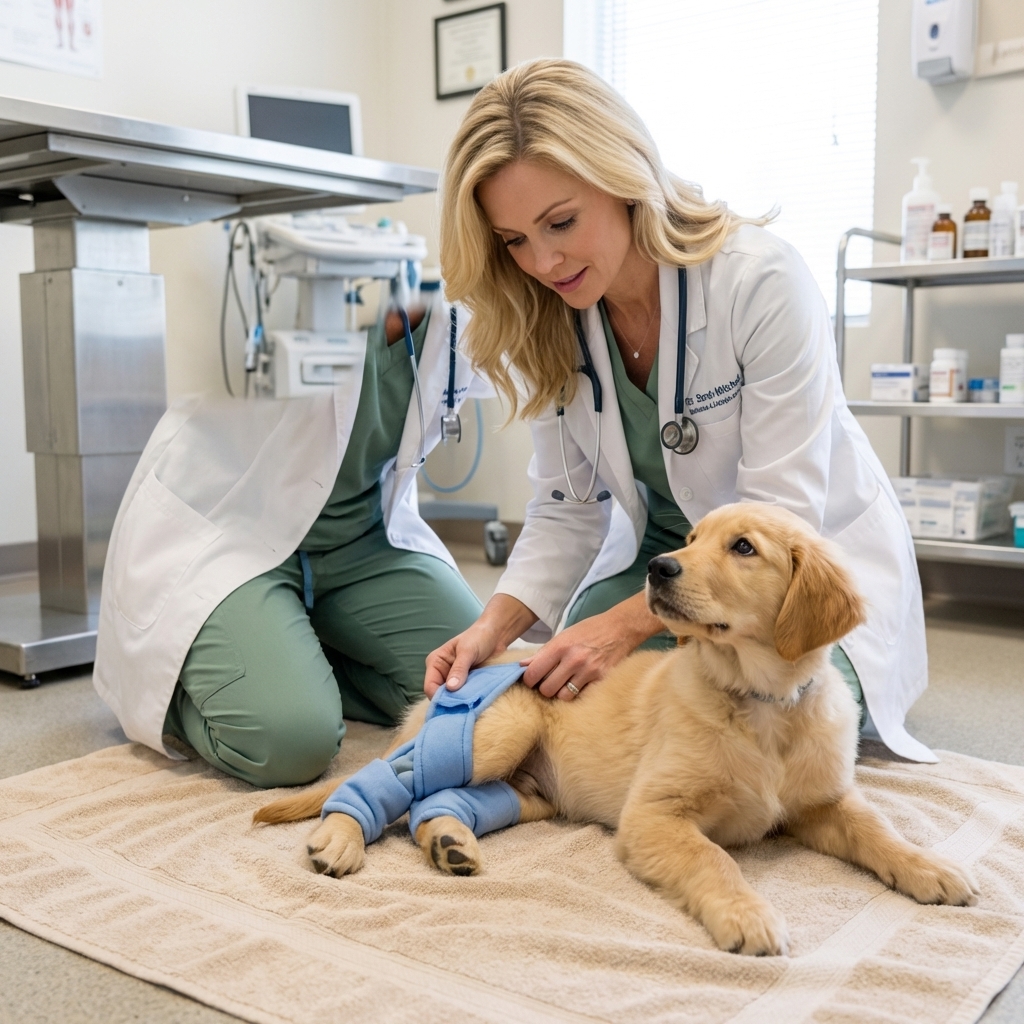
- Hobbles to limit excessive splaying (often soft ties that keep limbs from sliding outward)
- Temporary splints if there is abnormal limb positioning or weakness that needs support
- Rehab therapy with a professional who can guide strengthening, neuromotor work, and safe progression
Safety note: bracing is not a DIY craft project. A device that is too tight can restrict blood flow, cause skin injury, or worsen joint alignment. Avoid adhesives, tape, or homemade hobbles unless your veterinarian or a rehab professional has shown you exactly how to place and monitor them.
If your vet recommends a device, ask for:
- Exact placement instructions
- How often to remove it for skin checks
- What redness is normal versus concerning
- How to confirm toes stay warm and pink
In many cases, simple, correctly applied hobbles used for short periods can help the puppy learn a narrower stance while strengthening catches up. Your veterinarian will decide if that is appropriate based on the puppy’s age, severity, and limb position.
What your vet may do
Your veterinarian will usually focus on two goals: confirming this fits swimmer puppy syndrome, and ruling out problems that can look similar.
- Physical exam of joints, limb alignment, and overall strength
- Neurologic screening to look for deficits, asymmetry, or abnormal reflexes
- Chest evaluation to monitor thoracic shape and breathing comfort
- Imaging or referral in select cases, especially if there is pain, deformity, or no improvement with appropriate traction and therapy
- Rehab plan (home program, recheck schedule, and possible referral to a veterinary rehab therapist)
Timelines
Every puppy is unique, but families usually want to know one thing: How long will this take?
Mild cases (caught early)
- You may see better traction and less splaying in 3 to 7 days.
- More stable standing and early walking may develop over 1 to 3 weeks.
Moderate cases
- Often improve over 2 to 6 weeks with consistent home care and possible rehab support.
- May need temporary hobbles or structured therapy.
More severe or later-recognized cases
- Progress can be slower and may require veterinary rehab and investigation for underlying issues.
- Some puppies still do very well, but the plan is usually more involved and the timeline is longer.
A practical way to track progress is to take a short video every few days on the same non-slip surface. Small changes are easier to see when you compare clips.
Red flags
Swimmer-like posture can overlap with other conditions. Please call your veterinarian promptly if you notice any of the following:
- Pain when you touch or move a limb, spine, or hips
- One-sided weakness (for example, only one limb consistently fails)
- Knuckling (walking on the top of the foot) or severe paw scuffing
- No trend toward improvement within about a week of traction plus gentle, consistent exercises, or sooner if things worsen
- Tremors, seizures, or abnormal eye movements
- Trouble urinating or defecating (this is urgent in young puppies whether the cause is neurologic, dehydration, illness, or lack of stimulation)
- Breathing difficulty, persistent coughing, or blue-tinged gums or tongue
- Obvious limb deformity or a joint that seems unstable or out of place
Your vet may recommend an orthopedic exam, a neurologic assessment, and sometimes imaging to rule out conditions like joint malformations, congenital issues, or spinal and nerve problems.
What to ask your vet
If you are heading into an appointment, here are questions that can help you leave with a clear plan:
- Does my puppy’s presentation fit swimmer puppy syndrome, or do you suspect another cause?
- Is the chest shape normal, and are lungs and heart sounds normal?
- Do you recommend hobbles or splints for this puppy?
- What exercises should I do, and how many minutes per day?
- When should we recheck, and what would count as “not improving”?
- Should we see a rehab specialist?
Take-home message
Swimmer Puppy Syndrome is one of those conditions where small, steady steps add up fast. The most helpful routine is usually simple: upgrade traction, reposition often, and do short, gentle strengthening sessions several times a day. If progress stalls, or anything seems painful, uneven, or tied to breathing or neurologic changes, it is time to bring your vet in right away.
You are not behind. You are paying attention, and that is exactly what your puppy needs.
Sources
- VIN Veterinary Partner. “Swimmer Syndrome in Puppies.” https://veterinarypartner.vin.com/ (client education article; accessed 2026).
- Merck Veterinary Manual. “Musculoskeletal Disorders of Dogs” (developmental and congenital conditions; accessed 2026). https://www.merckvetmanual.com/
- American College of Veterinary Surgeons (ACVS). Client education resources on orthopedic conditions and rehabilitation principles (accessed 2026). https://www.acvs.org/