
Submissive Urination in Dogs

If your dog pees when you walk in the door, it can feel confusing and frustrating, especially if you have been working hard on house-training. As a veterinary assistant, I want you to know this first: submissive urination is not “bad behavior”. It is usually a dog’s way of saying, “Please do not be upset with me, I am not a threat.”
The good news is that many dogs improve with gentle handling, a predictable routine, and confidence-building training. And if something medical is contributing, a vet visit can help you get answers quickly.
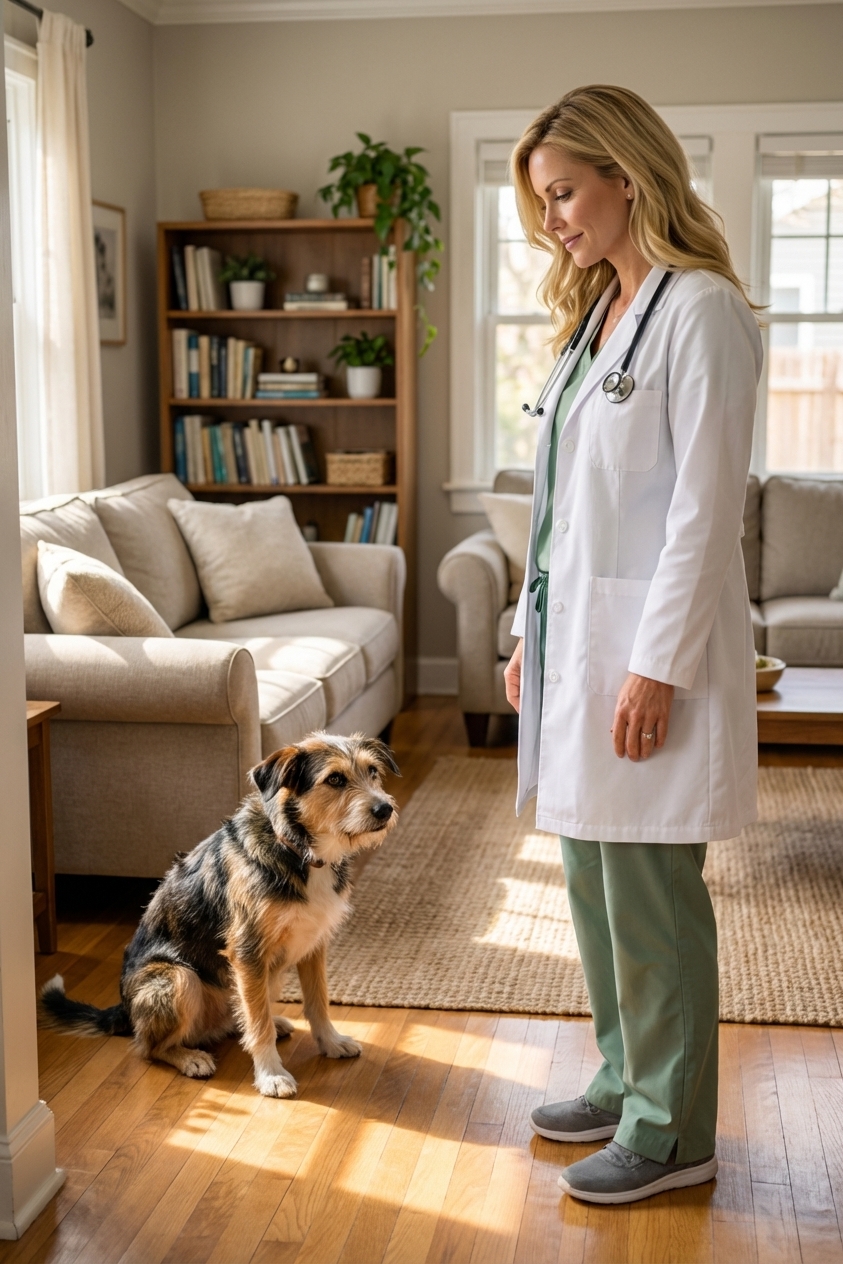
What it is and what it is not
Submissive urination is urine released during a moment of social pressure or fear. It is often a small amount, but some dogs can release more. It often happens alongside classic appeasement body language.
Common signs
- Crouching low, head down
- Ears back, tail tucked or low wag
- Avoiding eye contact
- Rolling partially onto the side or back
- Urinating when someone leans over, reaches, or speaks sternly
Submissive vs. excitement urination
These can look similar at first glance, but the emotional “driver” is different.
- Submissive urination: triggered by perceived pressure or intimidation. The dog looks worried or tries to look small.
- Excitement urination: triggered by happy arousal. The dog may be wiggly, bouncy, and overly thrilled, often with a loose body and friendly approach.
Some dogs have a bit of both. That is very common in puppies and adolescents.
Submissive urination vs. house-training issues
House-training issues usually show up as urine found when no one is actively interacting with the dog. Submissive urination is typically linked to a specific social moment such as greetings, handling, or being approached.
It is also possible to have both. For example, a young dog may still be learning house-training skills and pee during greetings when they feel pressure.
If your dog is having accidents at random times, drinking more than usual, asking to go out more often, or straining to pee, treat that as a medical or training issue rather than “submission.”
Why it happens
Submissive urination is most common in puppies and young dogs because their nervous system is still maturing and they are learning how to handle social pressure. But adults can do it too, especially if they are sensitive or have a history of harsh handling.
Most common contributors
- Temperament: naturally cautious, soft, or anxious dogs may be more prone.
- Age: many puppies improve as confidence and bladder control develop, but some still need targeted training.
- Past experiences: punishment-based training, intimidation, or frightening handling can make it worse.
- Social pressure during greetings: direct eye contact, looming over the dog, loud voices, fast hands, or hugging.
- Big routine changes: moving homes, a new baby, new roommate, travel, boarding, or schedule shifts.
Think of submissive urination as an emotional response first, and a bladder issue second. When your dog feels safer, the problem often shrinks.
Vet rule-outs to consider
Even when the timing looks behavioral, it is still smart to rule out medical factors. In clinic, we often see dogs labeled “submissive” who also have something physical going on.
Schedule a vet visit sooner if you notice
- Frequent urination outside of greetings
- Straining, discomfort, or licking the genital area
- Blood in urine or strong odor
- Increased thirst or sudden accidents in an adult dog
- Dribbling urine when resting or sleeping
Common medical considerations
- Urinary tract infection or bladder inflammation
- Vaginitis in young females
- Urinary incontinence (more common in spayed females, but can affect others)
- Hormonal or metabolic conditions that increase thirst and urination
A quick note on incontinence: it more commonly shows up as leaking at rest, damp bedding, or dribbling during sleep. That pattern is different from greeting-related urination, but it is worth discussing with your vet if you see it.
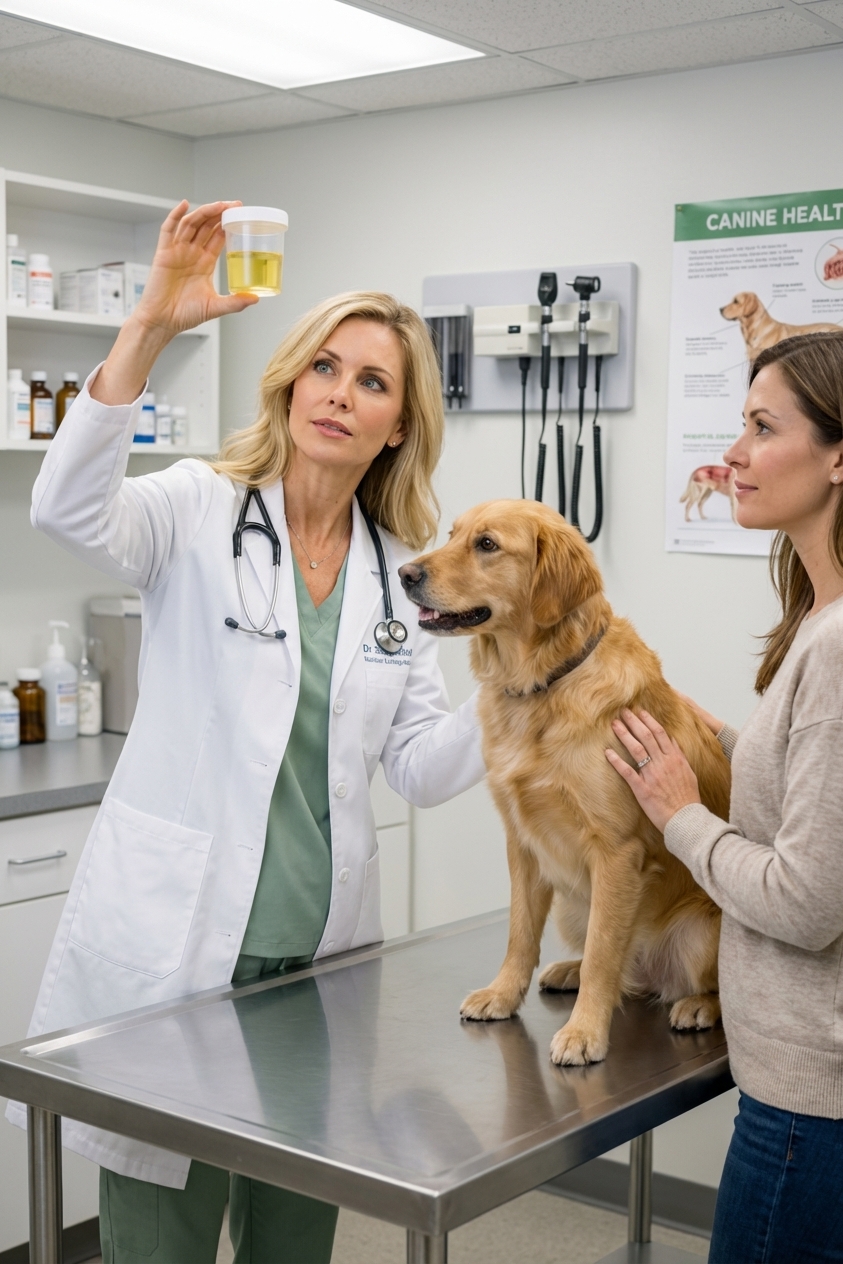
Your veterinarian may recommend a urinalysis, urine culture, and sometimes bloodwork depending on age and symptoms. If a medical issue is present, addressing it can make training progress much faster.
Greeting habits that help
Greetings are a very common trigger I hear about. The goal is to make hellos feel boring, predictable, and safe.
Do this for 2 to 3 weeks
Start here for 2 to 3 weeks, then continue as needed. Consistency matters more than speed.
- Take your dog out first: a quick potty break before guests arrive or before you greet after work.
- Keep greetings low-key: soft voice, slow movements, relaxed posture.
- Turn sideways: approach from the side rather than head-on, and avoid looming.
- No face-to-face hovering: skip bending over, hugging, or reaching over the head.
- Let your dog come to you: allow sniffing first, then gentle chest or side scratches if your dog asks for contact.
- Use “treat and retreat”: toss a treat a few feet away so your dog can move away from pressure and reset.
Simple scripts
- When you walk in: ignore for 30 to 60 seconds, put your bag down, then calmly invite your dog outside.
- With guests: ask guests to toss treats without reaching to pet. Petting can come later, after the dog is relaxed.
If your dog tends to pee as soon as you speak, try greeting silently at first. Your tone of voice matters more than most people realize. High-pitched excitement can trigger excitement peeing, and a firm or disappointed tone can trigger submissive peeing.
What not to do
- Do not scold or “correct”: it increases fear and makes the cycle stronger.
- Do not force contact: no hugging, looming, or repeated reaching when your dog is trying to shrink away.
- Do not corner your dog: give them space and an easy exit route.
- Do not require a sit for greetings if it adds pressure. Choose calm, not control.
Training for confidence
Confidence-building is the long-term fix. You are teaching your dog, “I can handle this. Humans are predictable. I have choices.”
Start with these low-stress games
- Hand targeting (touch): teach your dog to boop your open palm, then reward. This gives your dog a safe way to approach.
- Find it: toss treats on the floor and let your dog sniff them out. Sniffing is naturally calming.
- Mat training: reward your dog for going to a bed or mat. This creates a safe “place” during greetings.
- Trick training: spin, paw, chin rest, or “go around” a chair. Easy wins create brave dogs.
Handling practice (only if relaxed)
If touch triggers urination, go slow. Pair gentle handling with high-value treats, and stop before your dog feels overwhelmed. In counter-conditioning, you typically add closeness before you add touch.
- Stand one step closer, treat.
- Reach your hand slightly toward the shoulder, treat (no contact yet).
- Touch shoulder briefly, treat.
- Touch chest briefly, treat.
- Collar touch for one second, treat.
If your dog freezes, tucks, or looks away, you are moving too fast. Back up to the last step where your dog looked comfortable.
Management to keep things clean
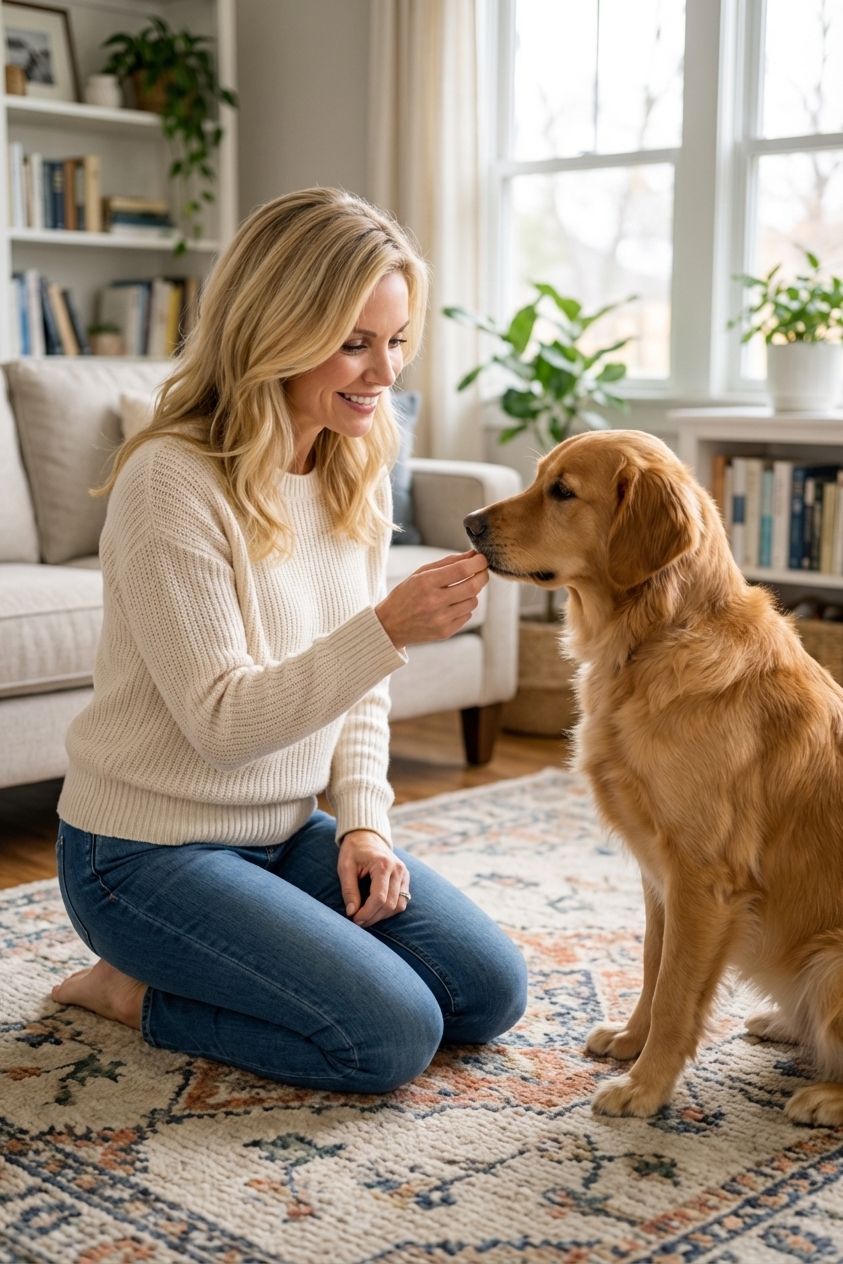
Training is easier when you are not stressed about the mess. Management is not “giving up.” It is a bridge while confidence grows.
- Meet outside: if greetings trigger peeing, greet in the yard or on the sidewalk first.
- Set up the doorway: keep a leash near the door for a calm walk straight outside, or use a baby gate to reduce intense doorway greetings.
- Use washable rugs or a towel zone: place a washable runner near the entry during the training period.
- Consider a belly band or dog diaper: helpful for short guest visits, but do not use as a substitute for training. Change promptly and keep skin dry.
- Use an enzyme cleaner: this removes odor fully, which helps reduce lingering scent cues and helps prevent your dog from returning to the same spot.
- Avoid punishment: scolding increases fear and makes the cycle stronger.
How long improvement takes
Timelines vary based on age, temperament, medical factors, and how consistently triggers are managed.
- Puppies: many improve over weeks to a few months as bladder control and confidence increase, especially with gentle greeting changes.
- Adolescents: often improve with consistent greeting habits plus training.
- Adults: improvement is still very possible, but plan for a longer runway, especially if fear is the main driver.
Progress usually looks like smaller puddles, fewer incidents, and faster recovery after a startle. Celebrate those wins. They matter.
When to get extra help
If you are not seeing improvement, or if your dog shows broader anxiety, it is worth bringing in support. If fear is significant or there is any aggressive behavior, prioritize professional help for safety and a clear plan.
Reach out if you see
- Growling, snapping, or hiding during greetings or handling
- Fear of men, strangers, or specific environments
- Urination paired with trembling, panting, or panic
- No progress after 3 to 4 weeks of consistent changes
Look for a certified positive reinforcement trainer or a veterinary behaviorist. In some cases, your veterinarian may also discuss anxiety medication to reduce fear enough for learning to happen. That is not a shortcut. It can be a kindness when used appropriately.
Quick checklist
- Potty break first
- Quiet voice, slow movements
- Turn sideways and avoid hovering
- No reaching over the head
- Toss treats away from you
- Pet later, only if your dog asks
If you take one idea from this article, let it be this: your dog is not trying to be difficult. Submissive urination is communication. When we respond with calm, consistency, and gentle training, most dogs learn they do not have to apologize with their bladder.