
Stud Tail in Cats

If you have ever scratched your cat right above the tail and noticed your fingers came away oily, or you spotted a dark, waxy patch that just will not brush out, you may be dealing with stud tail. The good news is that many cases improve with the right hygiene routine and a little patience. The not-so-fun news is that greasy buildup can set the stage for clogged follicles, skin irritation, and secondary infection if it is ignored.
As a veterinary assistant here in Frisco, Texas, I have seen how quickly a “greasy tail” can turn into inflamed skin when well-meaning pet parents scrub too hard or wait too long. Let’s walk through what stud tail actually is, what it looks like, how to groom it safely, and when a vet visit beats another bath at home.
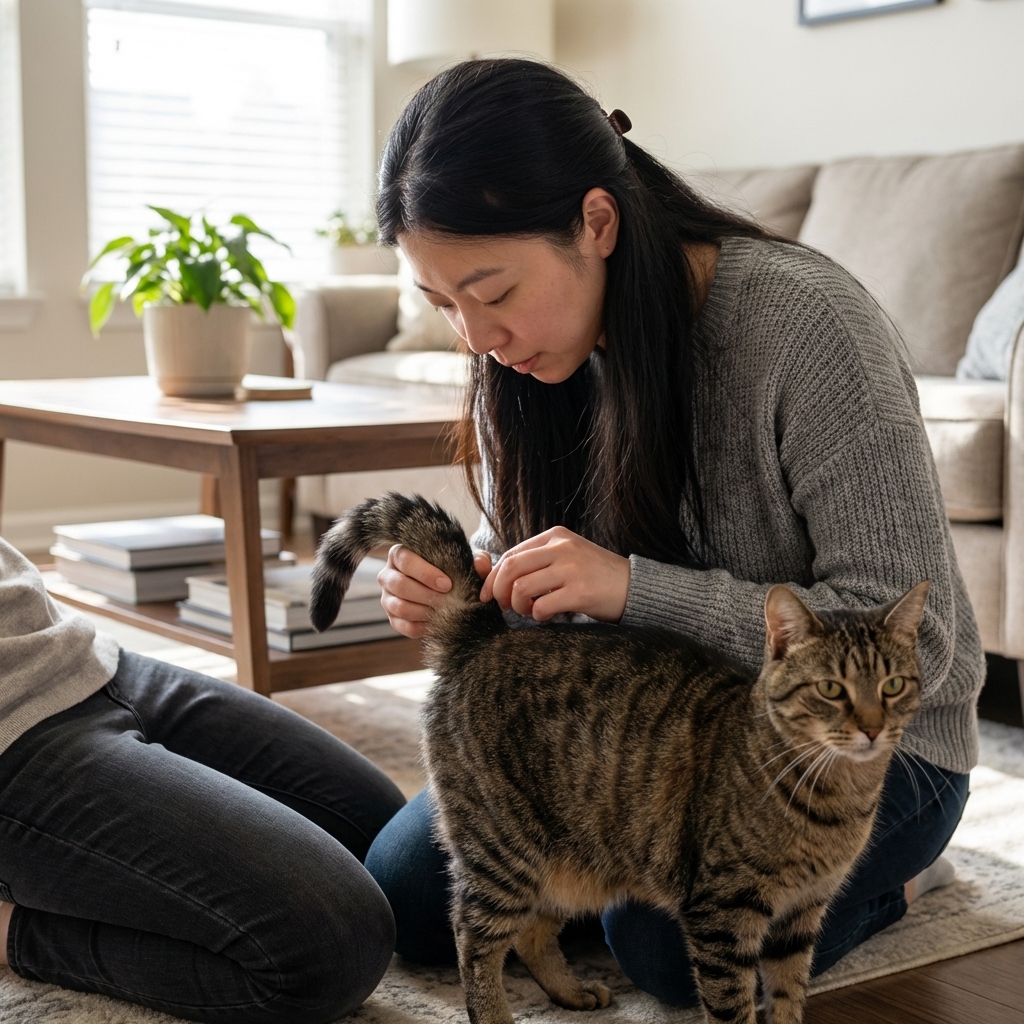
What stud tail is
Stud tail is the common name for supracaudal (tail) gland hyperplasia, also called tail gland hyperplasia. It means the sebaceous (oil) glands at the top side of the tail base become overactive and enlarged. Cats naturally have scent glands in this area, but with stud tail, the oil production goes into overdrive.
Despite the name, stud tail is not limited to intact male cats. It is most common in intact males, since androgen hormones can stimulate these glands, but it can also show up in:
- Neutered males
- Females (spayed or intact)
- Cats that are overweight or have trouble grooming well
- Cats with skin conditions that increase oiliness
It is also worth noting that stud tail is different from ringworm, flea dirt, or “just dandruff,” even though it can look similar at a glance.
What it looks and feels like
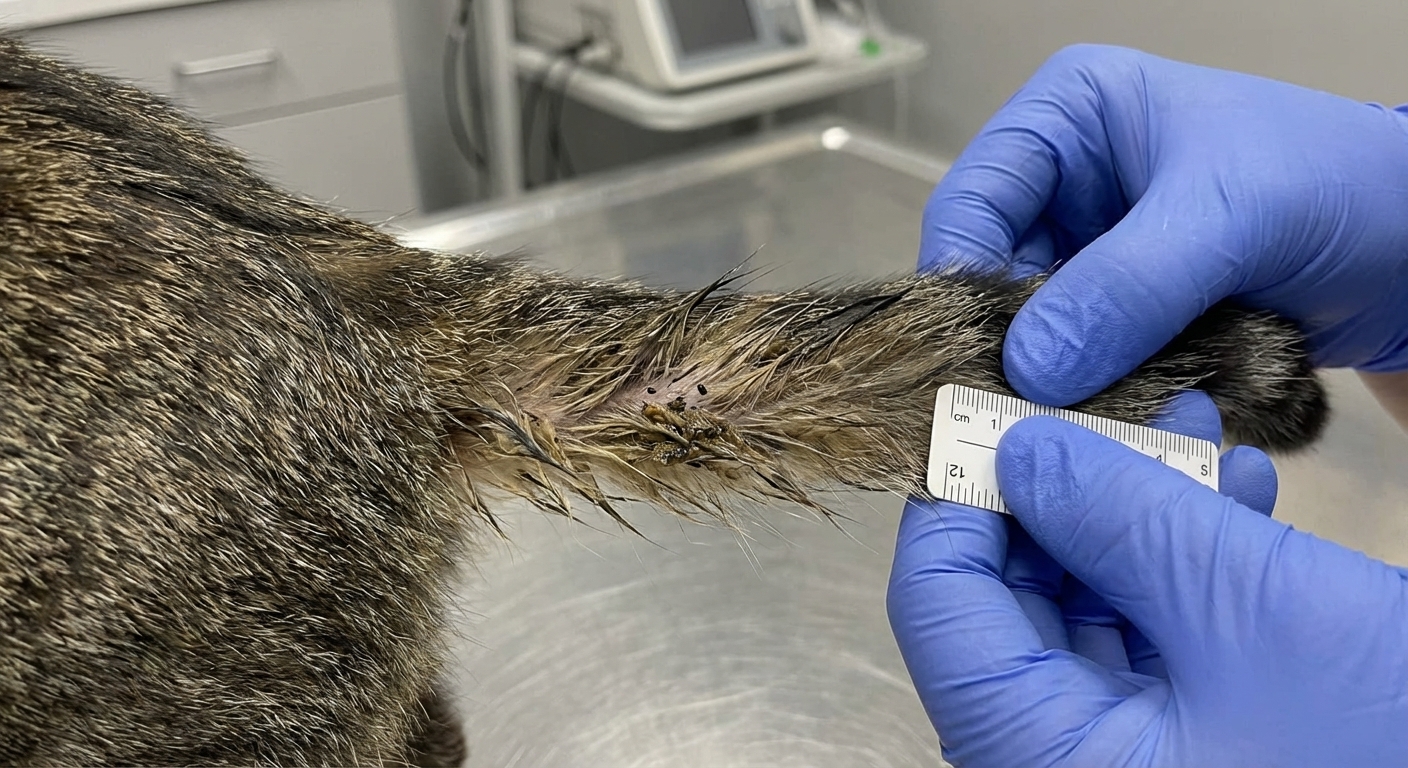
Stud tail tends to show up right at the base of the tail on the top side. Common signs include:
- Greasy or oily fur that separates into “spikes”
- Dark waxy buildup or black specks stuck to the hair
- Thinning hair at the tail base
- Comedones (blackheads) and clogged follicles
- Odor that smells waxy, musty, or “dirty” even after brushing
- Redness or scabs if irritation is developing
Why it can get worse
The oil itself is not “toxic,” but it creates an easy environment for trouble: it traps debris, blocks follicles, and holds moisture against the skin. That can lead to secondary issues such as:
1) Bacterial folliculitis
Clogged follicles can become inflamed and infected. You might notice pimples, crusts, tenderness, or your cat flinching when touched.
2) Yeast overgrowth
In some cats, yeast can take advantage of warm, oily skin. Signs may include stronger odor, greasy scaling, and increased itchiness. Your veterinarian can confirm yeast with a simple skin test (cytology).
3) Matting and skin trauma
When hair stays greasy, it mats. Then brushing becomes painful, and cats may overgroom, scratch, or develop hot spots.
4) “Itchy tail” behavior
Some cats start scooting, chewing at the tail base, or acting cranky when petted near the back end. That is your clue the skin is uncomfortable.
Important: If you see open sores, pus, significant swelling, or your cat seems painful, skip home washing and call your veterinarian. Infection can worsen quickly and can require prescription treatment.
Home grooming that helps
If your cat’s skin is not broken and you are mainly seeing oil and waxy buildup, a gentle routine is usually the best first step. Think: soften, cleanse, and prevent re-buildup, not scrub the life out of the skin.
Step 1: Brush and de-grease first
Start with a soft brush or comb to remove loose debris. If the fur is very oily, you can apply a small amount of cornstarch (plain, unscented) to the area, gently work it in, and brush it out.
Cornstarch cautions: Use sparingly to reduce mess and inhalation risk, keep it away from the face, and stop if you notice redness or irritation. It is a short-term helper, not a replacement for medicated therapy when skin is inflamed.
Step 2: Use the right cleanser
Many cats do well with a cat-specific degreasing or antiseborrheic shampoo recommended by your veterinarian. In some cases, veterinarians may choose products that contain ingredients like chlorhexidine or salicylic acid. Benzoyl peroxide can be effective in certain oily, comedone-heavy cases, but it is also more likely to be drying and irritating for cats, so it should be vet-directed.
What not to do
- Do not use human acne washes unless your veterinarian specifically directs you.
- Do not use essential oils. Cats are especially sensitive to many of them.
- Do not use dish soap routinely. It can strip oils aggressively, cause dryness and irritation, and may worsen skin inflammation.
- Do not squeeze blackheads.
Step 3: Rinse very well and dry thoroughly
Leftover shampoo residue can irritate the skin and increase itching. Rinse longer than you think you need to, then towel dry. If your cat tolerates it, a low, cool dryer setting from a distance can help prevent damp skin under greasy fur.
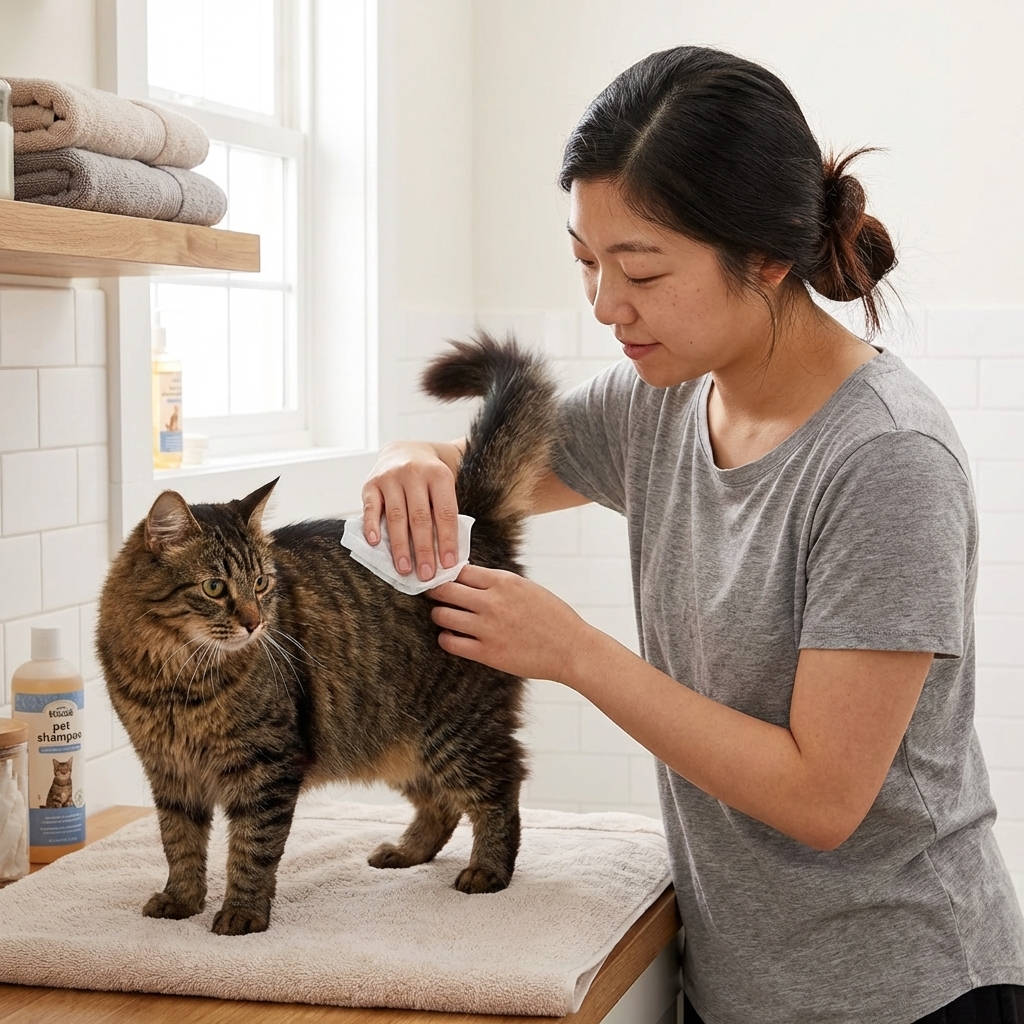
Step 4: Wipe maintenance
Between baths, some cats do well with cat-safe grooming wipes used once or twice a week. Look for unscented, pet-formulated wipes. You are aiming to reduce oil, not perfume the problem.
How often should you clean it?
A conservative starting point for many mild cases is a weekly bath with a vet-approved product, plus wipes 1 to 2 times weekly if needed. If the skin looks dry, your cat seems itchy, or redness increases, back off and call your veterinarian. Over-bathing can irritate skin and make the problem harder to control.
Lookalikes to keep in mind
Greasy buildup at the tail base is common, but not every tail problem is stud tail. A veterinary exam is especially helpful if the pattern seems unusual. Conditions that can look similar or overlap include:
- Flea dirt and flea allergy dermatitis (tail-base itch is classic)
- Ringworm (can be contagious and often causes patchy hair loss)
- Overgrooming or barbering from stress, pain, or itchy skin
- Contact dermatitis from shampoos, wipes, or household products
- Arthritis or back pain that makes grooming hard
- Anal gland issues (more likely to cause scooting and licking under the tail, but can be confused with “tail discomfort”)
When home care is not enough
Stud tail is one of those conditions where a vet visit can save you time and save your cat discomfort. Please contact your veterinarian if you notice any of the following:
- Red, inflamed, or hot skin at the tail base
- Pustules, oozing, crusting, or a foul smell that suggests infection
- Hair loss spreading beyond the tail base
- Significant itch or pain, including yowling when touched
- No improvement after 2 to 3 weeks of consistent gentle hygiene
- Fleas are present or you see flea dirt
- Any lumps or thickened skin you can feel under the greasy patch
At the clinic, your vet may do a skin exam and may recommend tests to confirm what is going on, such as:
- Skin cytology (tape prep or swab) to check for bacteria or yeast
- Flea combing and a parasite check
- Skin scraping in some cases to rule out mites
- Fungal testing (Wood’s lamp and or culture) if ringworm is on the list
Treatment may include:
- Medicated shampoos, wipes, or mousse products
- Antibiotics or antifungals if there is infection
- Anti-inflammatory medications if the skin is very irritated
- Flea control if parasites are contributing
- Hormonal discussion, including neutering if your cat is intact, since it often improves stud tail
Preventing flare-ups
Some cats get stud tail once and it resolves. Others are prone to repeat greasy buildup. These habits can help reduce recurrence:
- Maintain a healthy weight so your cat can groom effectively
- Brush regularly, especially cats with thicker coats
- Keep a consistent flea prevention plan recommended by your vet
- Use gentle, scheduled cleansing rather than occasional aggressive scrubbing
- Reduce stress when possible, since stress can worsen grooming habits and skin health
If you take one thing from this article, let it be this: with stud tail, gentle consistency beats harsh “deep cleaning.” The goal is calm skin and a clean coat, not stripping every bit of oil in one go.
Quick FAQ
Is stud tail contagious?
No. Stud tail is not contagious. However, conditions that look similar, like ringworm, can be contagious, which is why a vet exam is smart if you are unsure.
Can I squeeze the blackheads?
Please do not. Squeezing can injure the skin, introduce bacteria, and make infection more likely. Focus on cleansing and vet-guided treatment.
Will neutering help?
Often, yes, especially in intact males. It can reduce hormone-driven oil gland activity. Some cats still need hygiene maintenance afterward.
Is it the same as feline acne?
They are related in the sense that both involve clogged follicles and sebaceous material, but feline acne usually affects the chin and lips. Stud tail is centered at the tail base.
Bottom line
Stud tail (supracaudal gland hyperplasia) is common, manageable, and often more of a nuisance than a crisis. But the oily patch and dark waxy buildup can snowball into infection if the skin gets inflamed or the follicles stay clogged.
Start with gentle grooming, use cat-safe, vet-recommended degreasing products, and keep the routine steady. If you see redness, pain, worsening odor, or no improvement after a couple of weeks, let your veterinarian step in. That is usually the fastest path to a comfortable cat and a tail you can pet again without that greasy surprise.