Poop on the floor usually signals a problem, not “spite.” Learn medical red flags, litter box fixes, stress triggers, cleaning steps, and a practical 7�...
Article
•
Designer Mixes
Stop Your Cat From Pooping on the Floor

Shari Shidate
Designer Mixes contributor
If your cat is pooping on the floor, I know how stressful and confusing that can feel. As a veterinary assistant, I can tell you this is rarely “spite” or revenge. It is usually a sign of a medical issue, a litter box problem, stress, or a mismatch between what your cat needs and what the home setup provides.
The good news is that most cases improve with a thoughtful, step-by-step plan. Let’s walk through what to do first, what to change at home, and when it is time to get your vet involved.
Start here: the next 24 hours
1) Check for red flags
Floor pooping can be a behavior issue, but it can also be your first clue that something is wrong physically. Call your vet promptly if you notice any of the following:
- Blood or mucus in stool
- Diarrhea lasting more than 24 hours (or any diarrhea in a kitten, bloody diarrhea, repeated large-volume diarrhea, or signs of dehydration like tacky gums or marked lethargy)
- Straining, crying, or repeated trips to the box with little output
- Vomiting, lethargy, loss of appetite, weight loss
- Very hard, dry stools
- No stool for more than 48 hours, especially with straining, vomiting, poor appetite, or obvious discomfort
- Sudden change in an older cat
If your cat is also having trouble urinating, that is urgent. Straining in the litter box is often mistaken for constipation, but urinary blockage can be life-threatening, especially in male cats.
2) Do not punish
Yelling, rubbing a cat’s nose in stool, or “disciplining” will usually make the problem worse. Cats connect punishment with your presence, not with the poop. The most common result is increased anxiety and more avoidance of the litter box.
3) Clean the area thoroughly
Use an enzymatic cleaner made for pet waste. Regular soap or vinegar may remove odor to you, but cats can still smell it and may return to the same spot.
A safety note: avoid ammonia-based cleaners (they can smell like urine to pets), and never mix bleach with other cleaners. Skip essential oils too, since many are unsafe for cats. Whatever product you use, let the area dry fully before your cat has access again.
After cleaning, block access temporarily with a baby gate, closed door, or furniture if possible.
Why cats poop on the floor
Most cases fall into one or more of these buckets. The trick is to address them in the right order, starting with health and comfort.
Medical causes to rule out
- Constipation (hard stools, straining, discomfort that makes the box a “bad place” in their memory)
- Diarrhea (urgent need to go, they may not make it to the box)
- Arthritis or pain (difficulty stepping into a high-sided box, especially in older cats)
- Inflammatory bowel disease, parasites, infections
- Anal gland discomfort (less common in cats than dogs, but possible)
- Cognitive decline in seniors (disorientation, changes in routine)
If this is a new behavior, especially in an adult or senior cat, a vet visit is your best first step. Many “behavior” cases turn out to be treatable discomfort.
Helpful observations to track for your vet: how often your cat is pooping, stool volume, whether they strain or vocalize, posture changes (hunched stance, reluctance to squat), and whether they seem painful afterward. If you can do so safely, take a quick photo of the stool and note the date and time.
Litter box setup problems
- Box is not clean enough for your cat’s preferences
- Not enough boxes, or boxes are in the wrong locations
- Litter type, scent, or texture changed
- Box is too small or has high sides
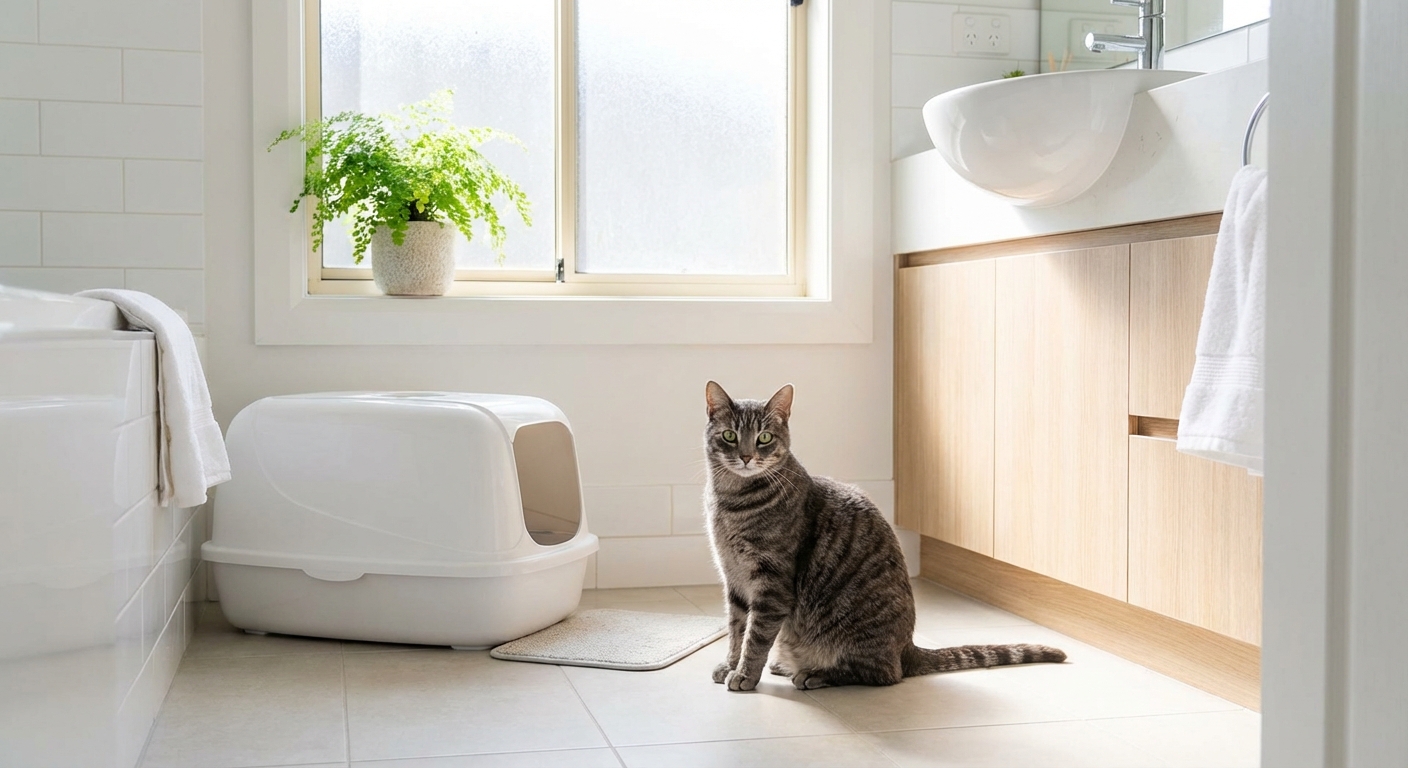
- Covered box traps odors, or the door flap feels scary
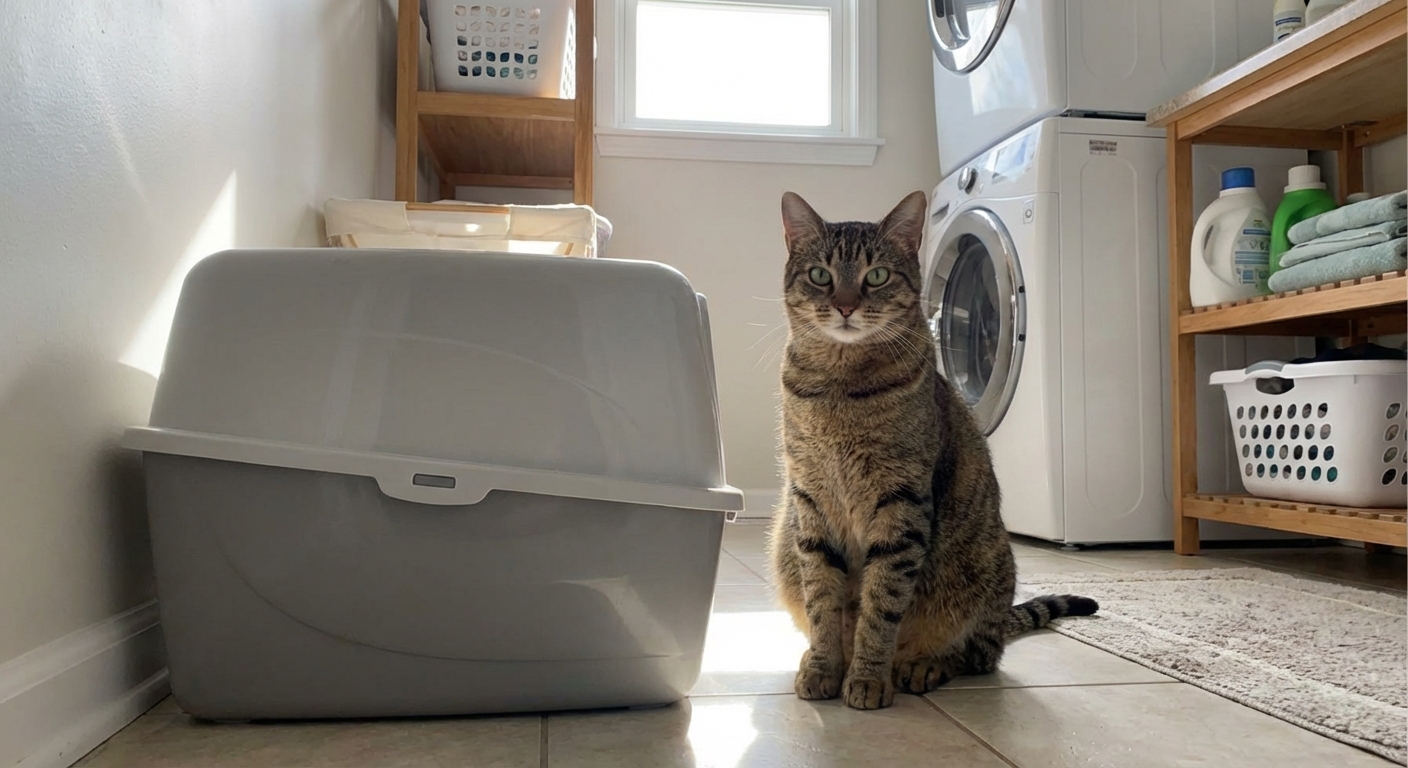
- Box is near loud appliances or in a high-traffic area
- Access is blocked (closed door, a baby gate your cat will not jump, a dog hanging around the box)
Stress and household changes
Cats are sensitive to change. Common triggers include:
- New baby, new pet, visitors, moving, remodeling
- Outdoor cats visible through windows
- Conflict between cats in the home, including blocking access to the box
- Schedule changes that affect playtime and attention
The litter box reset
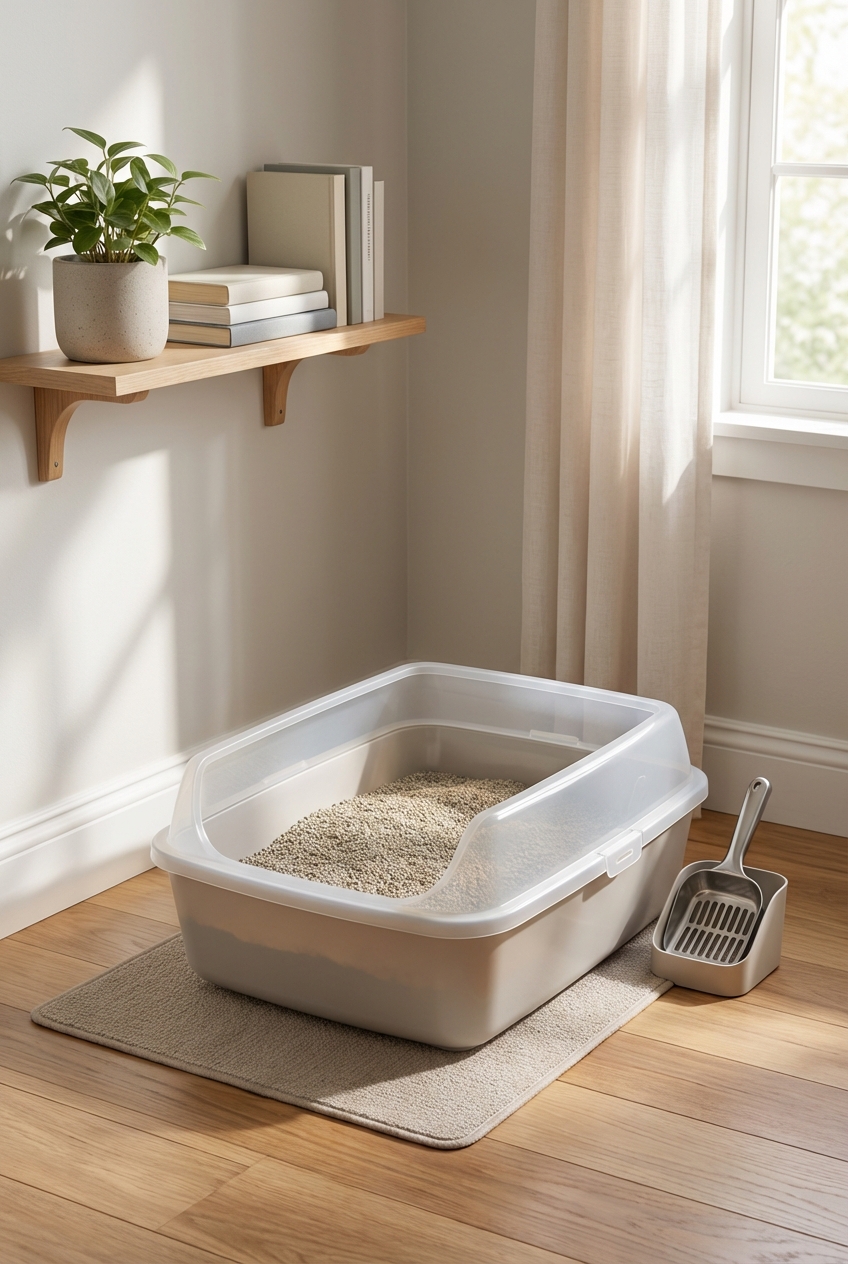
Once you have ruled out urgent medical concerns, a full litter box reset resolves many cases. Think of it as making the “right” choice effortless for your cat.
How many boxes you need
A reliable rule is: number of cats + 1. So, two cats should ideally have three boxes. This reduces competition, ambushing, and “I do not like that box” stand-offs.
Where to place boxes
- Spread boxes across the home, not all in one spot
- Choose quiet, low-traffic areas
- Avoid placing next to the washer, dryer, or furnace
- Make sure your cat cannot be cornered by another cat (or a dog)
- For seniors, keep at least one box on the main floor to reduce stair trips
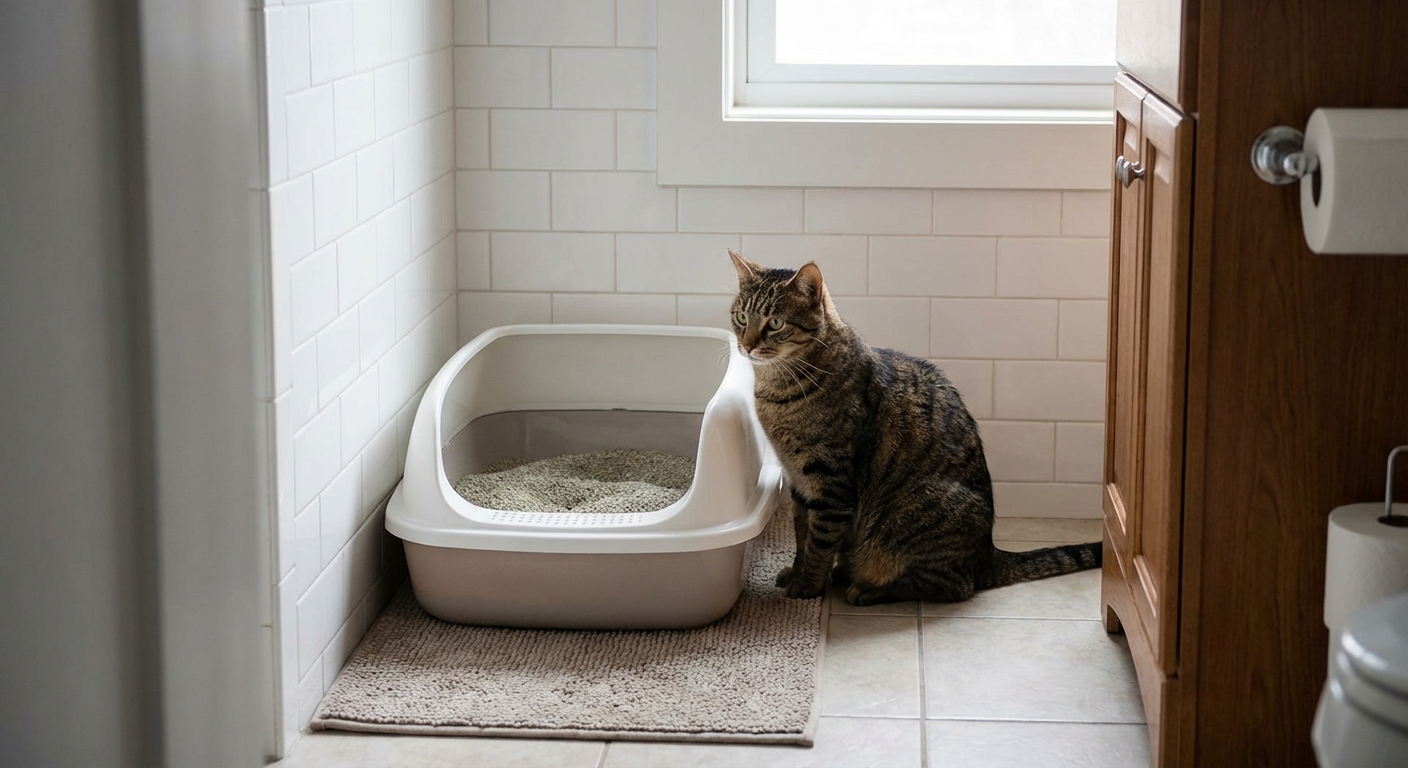
Pick the right box
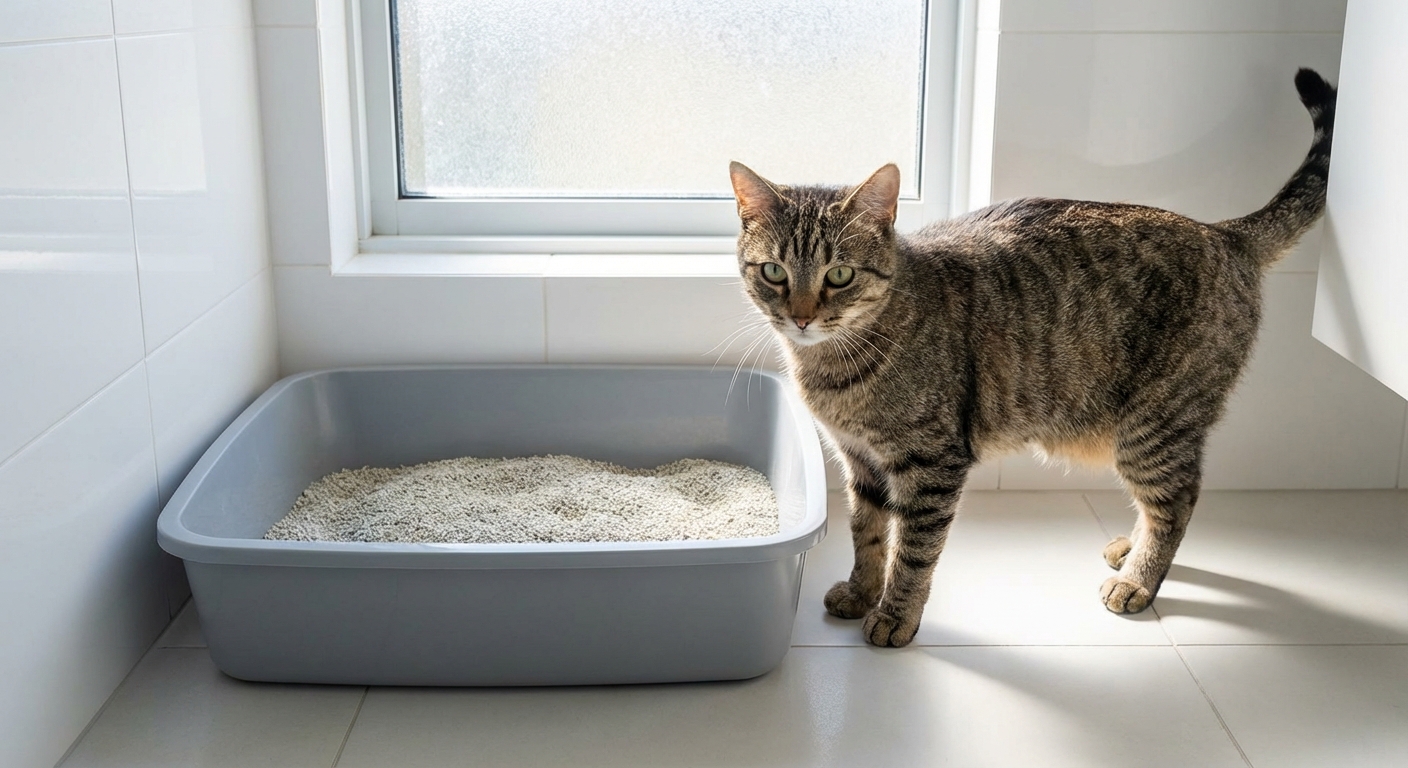
- Size: aim for at least 1.5 times your cat’s body length
- Entry: low-entry boxes help seniors and cats with pain
- Covered vs uncovered: many cats prefer uncovered because it feels safer, and odors can build up more in covered boxes
Mobility helpers can make a big difference: a low-entry box plus a non-slip mat, or a small step for cats that struggle with balance.
Choose litter your cat will actually use
Many cats do best with unscented, clumping litter with a sand-like texture. Strong fragrances can be off-putting, and big pellets can be uncomfortable for sensitive paws.
If you must switch litter, do it slowly by mixing the new litter in over 7 to 14 days.
Cleaning routine that keeps cats loyal to the box
- Scoop at least once daily, twice daily is even better
- Wash the box with mild soap and warm water weekly or as needed
- Avoid harsh cleaners with strong smells
- Replace old boxes periodically because scratched plastic holds odor
Clues that point to the cause
Is the poop near the box?
If your cat poops right next to the litter box, it often suggests:
- The box is “almost” acceptable but something is wrong (dirty, litter disliked, box too small)
- Pain getting in or squatting (arthritis, constipation)
- They were startled while in the box and now avoid fully entering
Is the poop in one specific spot?
This may indicate:
- Residual odor is drawing them back
- That location feels safer than the box area
- Territory or stress issues, especially in multi-cat homes
Is it only at night or when you are gone?
Look for anxiety triggers, access issues (a door gets closed, a dog is crated nearby), or a box location that becomes noisy at certain times.
Is it soft stool or normal stool?
Soft stool increases urgency, and your cat may not make it to the box. Normal stool with consistent floor pooping points more strongly toward box preference, stress, or access problems.
How to stop repeat accidents
Create a “yes zone”
Temporarily make the litter box area extra easy and appealing:
- Add a second box nearby with the most cat-friendly setup: large, uncovered, unscented clumping litter
- Keep it spotless for two weeks
- Use a low-entry box if your cat is older or stiff
Make the old accident spot less appealing
- Clean with enzymatic cleaner
- Block the area if you can
- Place food bowls, treats, or a bed there (cats usually avoid toileting near eating and resting areas)
Try a litter attractant if needed
Commercial litter attractants can help re-train litter box habits, especially after a painful episode like constipation. If you use one, keep everything else stable so you can tell what is working.
Support calmer routines
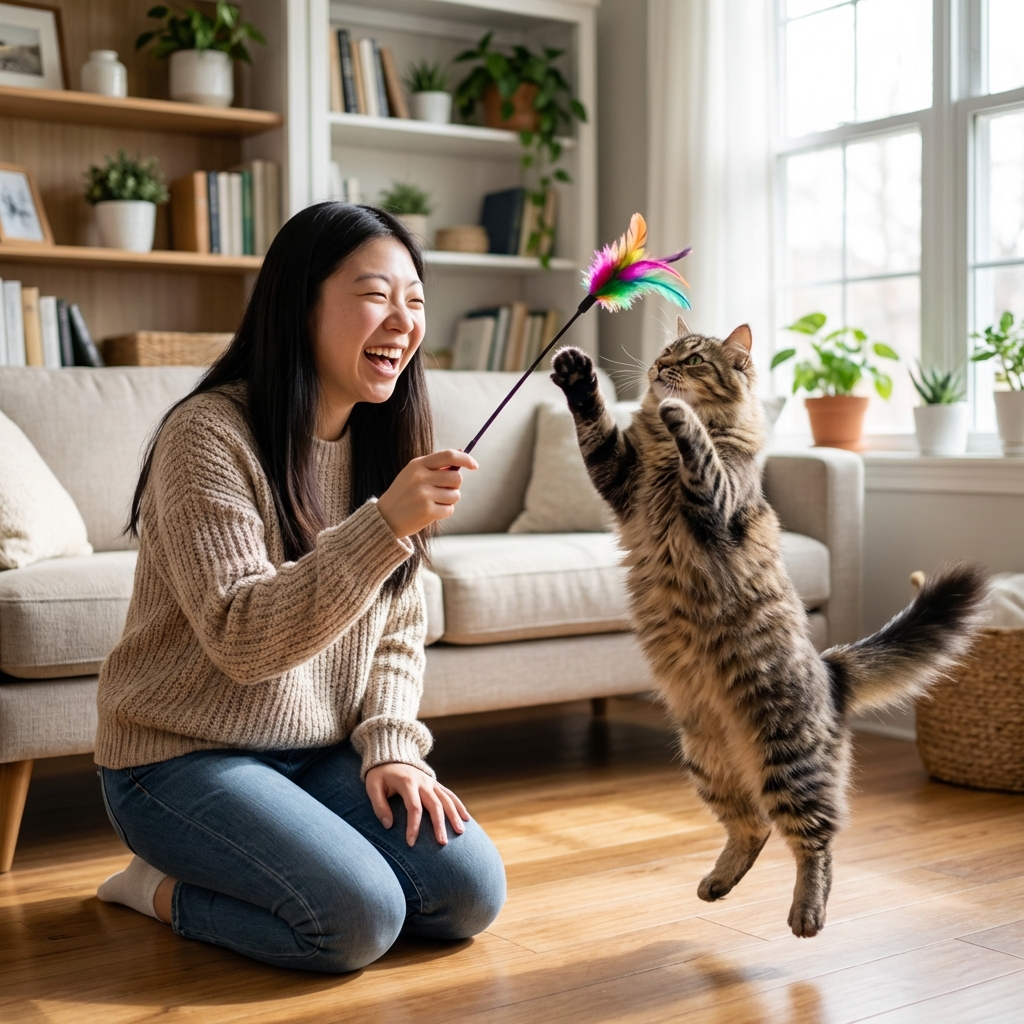
Daily play sessions can reduce stress and improve gut motility. Even 10 to 15 minutes twice a day with a wand toy can make a meaningful difference.
Multi-cat homes: a common hidden factor
In homes with more than one cat, litter box issues often come down to social stress, even when you never see an obvious fight.
Signs one cat is guarding resources
- One cat stares at or follows the other
- Blocking hallways or doorways
- Chasing after litter box use
- The “victim” cat seems jumpy or waits to use the box
Fixes that help fast
- Add more boxes in multiple locations
- Provide multiple feeding and water stations
- Add vertical space like cat trees or shelves
- Use pheromone diffusers in key areas
When diet and digestion matter
Stool quality matters. Chronic constipation, frequent diarrhea, and food sensitivities can all contribute to litter box avoidance.
What you can do at home
- Keep diet consistent and avoid frequent food switching
- Increase hydration with wet food or added water to meals if your vet agrees
- Ask your vet about fiber options if constipation is a pattern
- Bring a stool sample to your vet if diarrhea is recurring
What not to do
- Do not give human laxatives, enemas, or anti-diarrheal medications unless your vet tells you to
- Do not switch foods repeatedly in a short period trying to “fix” stool fast
Any diet changes should be gradual, and cats with medical conditions should have a plan tailored to them. The goal is comfortable, predictable stools that are easy for your cat to pass in the box.
Working with your vet
If the problem persists beyond a basic litter box reset, or if there are any red flags, your vet can help you rule out pain and disease. Common next steps include:
- Physical exam, including abdominal palpation for constipation
- Fecal testing for parasites
- Discussion of diet, hydration, and stool consistency
- Bloodwork for seniors or chronic cases
- Imaging if constipation, megacolon, or other GI issues are suspected
If medical issues are ruled out, ask about a behavior plan. Many cats do best with a combined approach: environment changes plus stress reduction, and sometimes short-term medication support when anxiety is significant.
A simple 10-day plan
Days 1 to 2
- Vet check if this is new or there are any red flags
- Deep clean accident spots with enzymatic cleaner
- Set up one extra uncovered, large box with unscented clumping litter
Days 3 to 6
- Scoop twice daily
- Keep boxes in quiet, accessible areas
- Play twice daily and keep routines steady
Days 7 to 10
- Adjust box locations if you suspect ambushing or access issues
- Add another box if you have multiple cats
- If it is still happening, schedule vet follow-up and bring photos of your litter box setups plus a stool description (or photo)
You are not failing your cat. In most homes, this improves when we treat it like a comfort and communication problem, not a discipline problem.
Quick FAQ
Should I move the litter box to the accident spot?
Sometimes, yes, temporarily. If your cat has chosen a “safe” spot, placing a box there can stop the habit. After a few weeks of success, you can slowly relocate the box a few feet at a time to a better long-term location.
Why does my cat pee in the box but poop on the floor?
Pooping takes longer and can feel more vulnerable. That points to box comfort, privacy, fear of being ambushed, pain while squatting, or a litter texture issue.
Will adding more litter help?
Many cats prefer about 2 to 3 inches of litter, but preferences vary. If your cat seems hesitant to dig or slips around, try a slightly shallower layer and see what they choose.