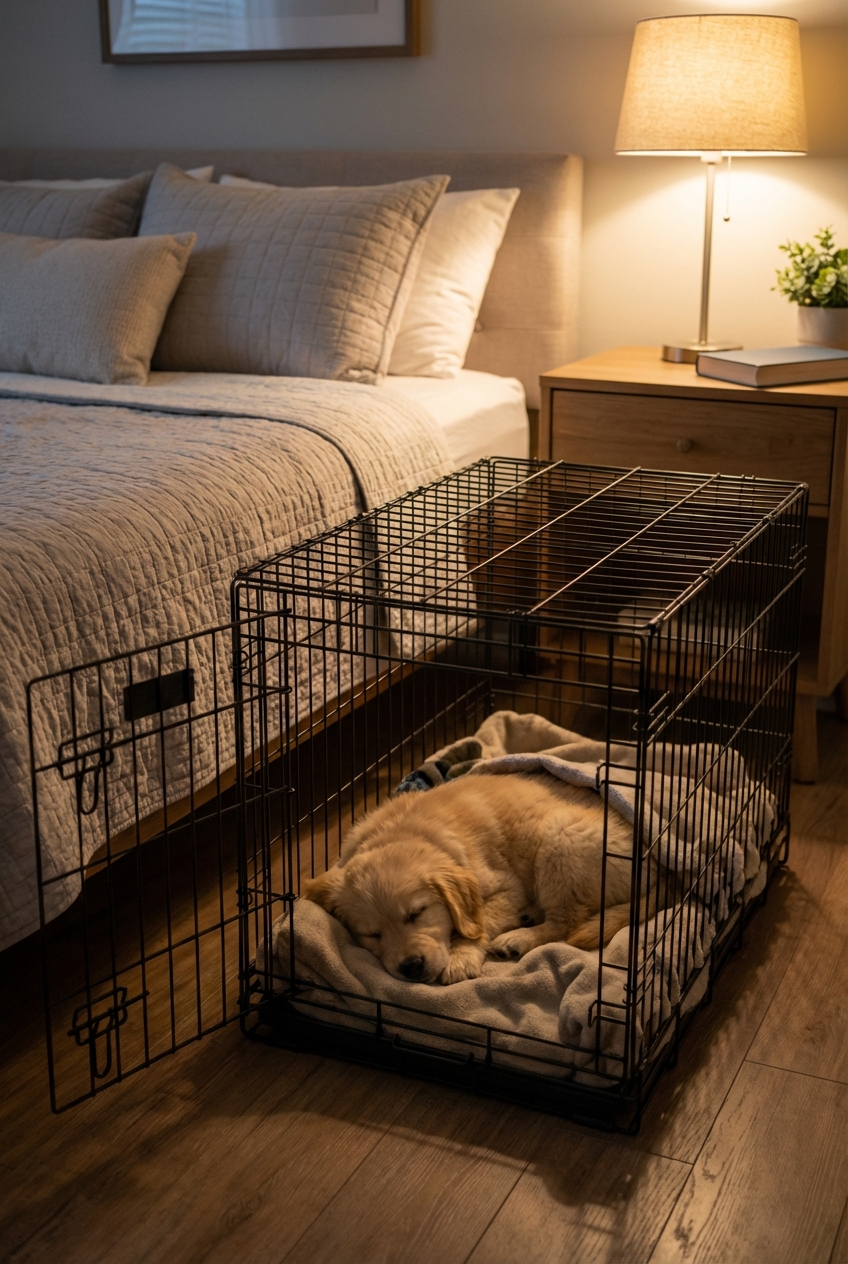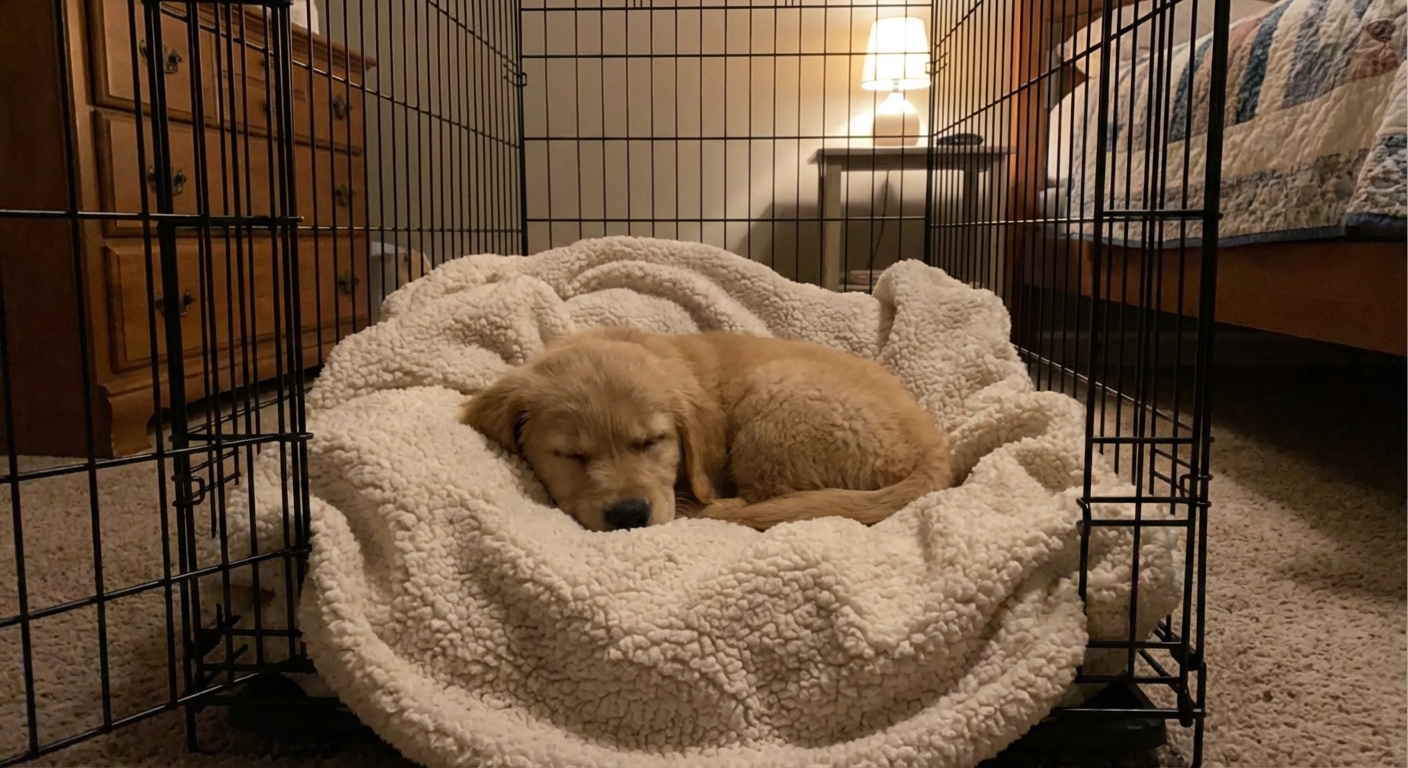
Your puppy isn’t being “bad”—they’re adjusting. Learn vet-informed ways to stop nighttime crying: crate-by-bed setup, calm potty trips, routines, a...
Article
•
Designer Mixes
Stop Puppy Crying at Night

Shari Shidate
Designer Mixes contributor
Bringing home a puppy is equal parts joy and sleep deprivation. Nighttime crying is incredibly common, especially in the first days and weeks, because your puppy just went from sleeping in a warm pile of littermates to being alone in a new place with new sounds and smells.
The good news: nighttime crying often improves quickly when you combine the right setup, a predictable routine, and steady, low-key responses. Below are the essential facts and steps I share as a veterinary assistant, using practical strategies that align with what we know about canine behavior and stress.
Why puppies cry at night
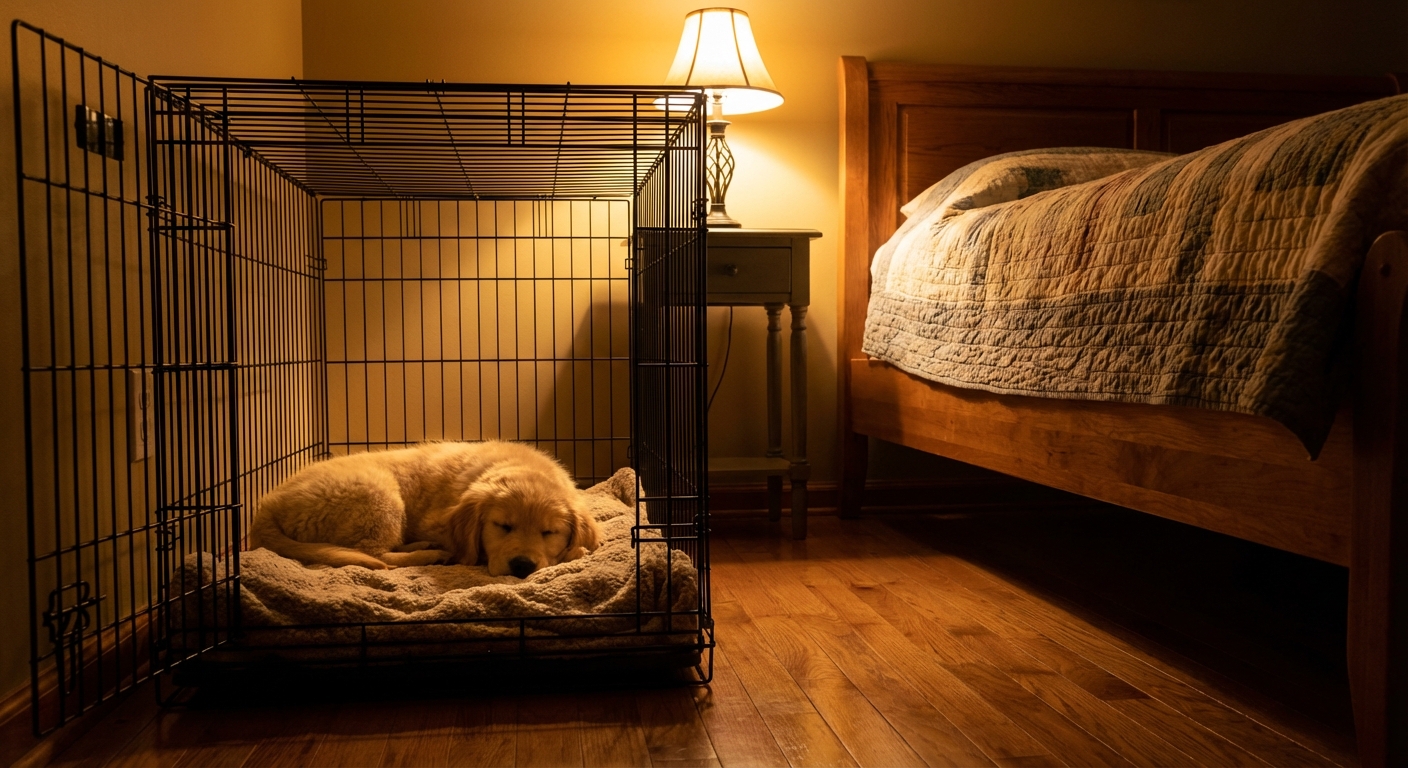
Crying is communication. Your puppy is not being “bad” or trying to manipulate you. They are usually saying one of these things:
- I’m scared or lonely: Separation from the litter and mom is a big, abrupt change.
- I need to potty: Puppies have tiny bladders and limited control.
- I’m uncomfortable: Too hot, too cold, itchy bedding, or the crate is too big or too small.
- I have extra energy: Not enough daytime enrichment or a late nap can show up as midnight complaints.
- I feel unwell: Digestive upset, parasites, or pain can show up as restlessness and crying.
When you treat the cause instead of only trying to “shush the symptom,” you will see the fastest improvement.
What to do the first night
1) Use a crate or safe puppy pen
A crate can be a wonderful tool because it creates a secure, enclosed space and helps with housetraining. The key is making it comfortable, safe, and appropriately sized.
- Size matters: Big enough to stand, turn, and lie down. If it is too large, many puppies will potty on one side and sleep on the other.
- Add a comfortable surface: Use washable bedding, but if your puppy chews or eats fabric, switch to a safer mat recommended by your vet or trainer.
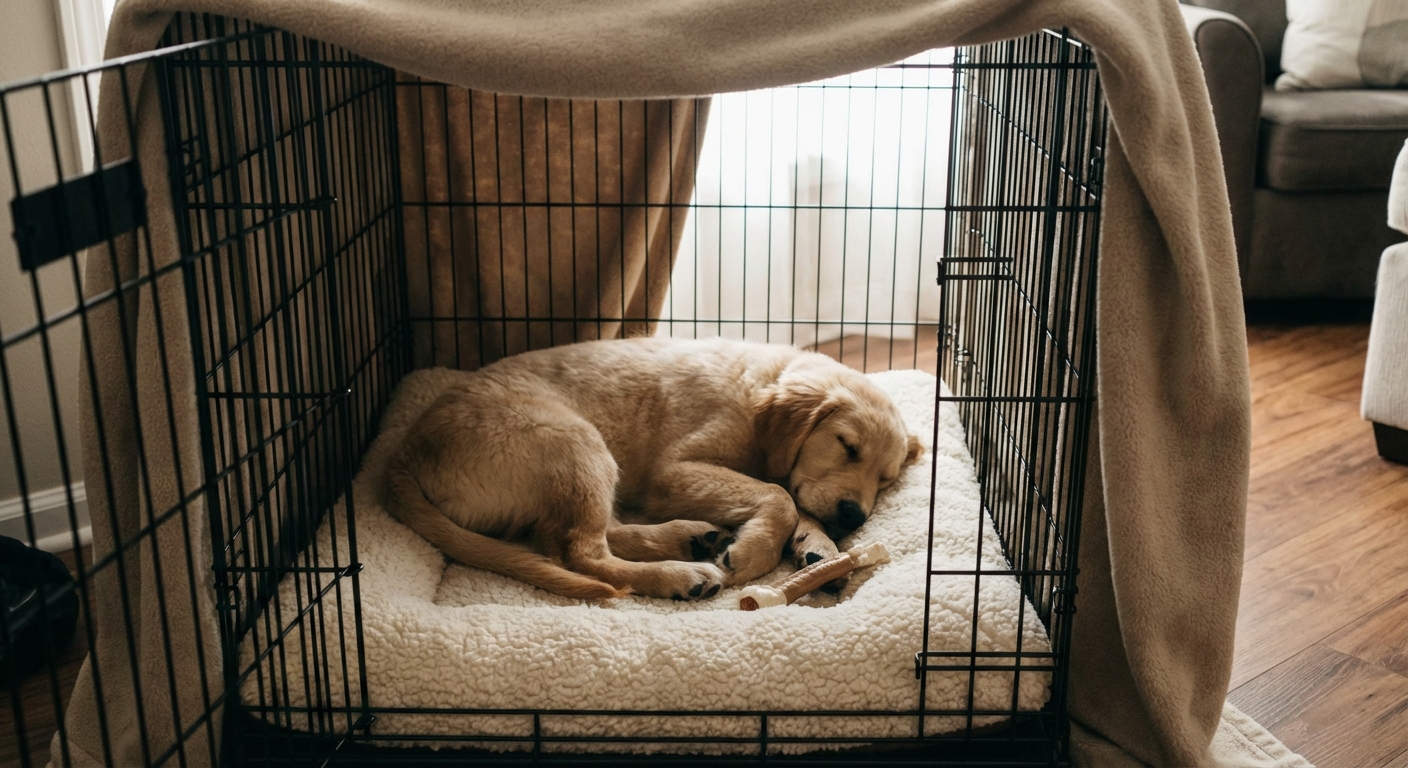
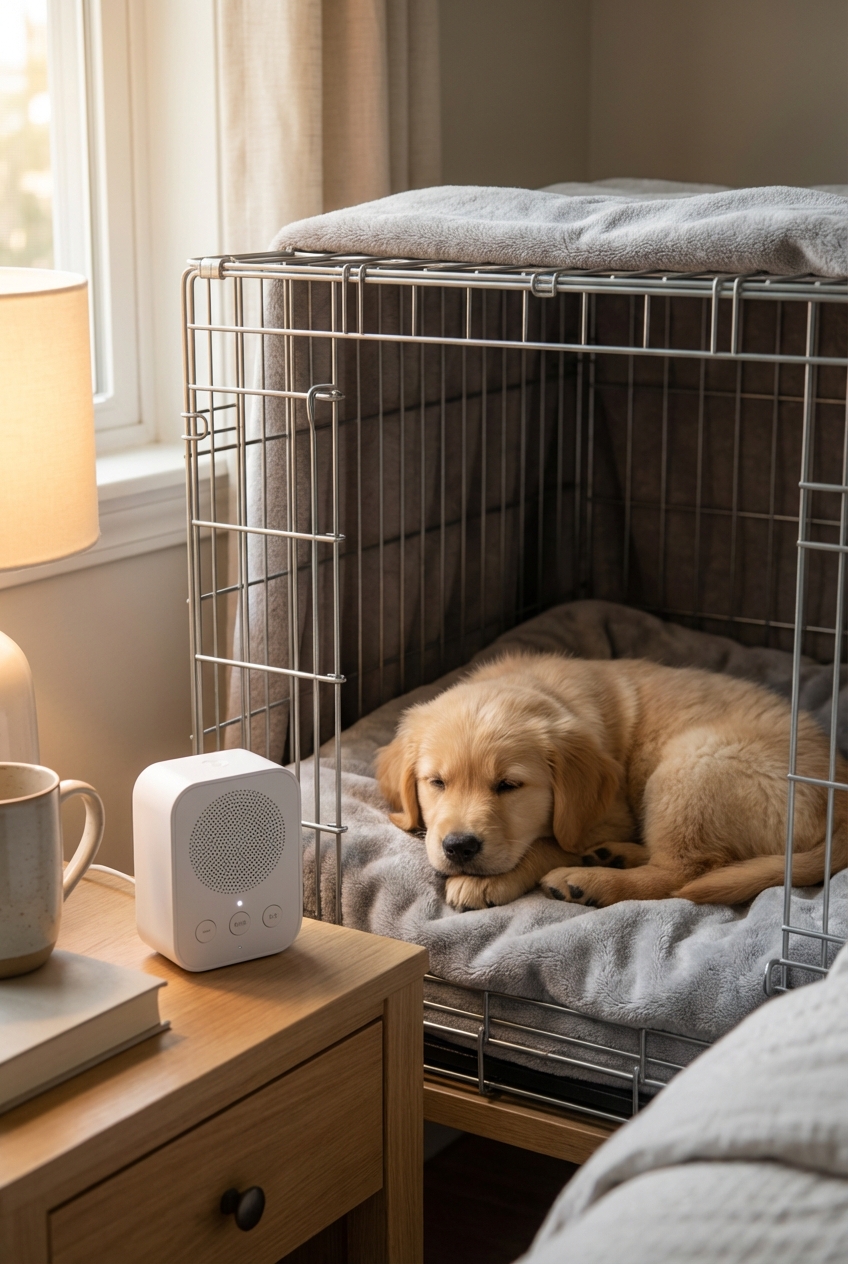
- Cover part of the crate: A light cover over 2 to 3 sides can reduce visual stimulation and help some puppies settle.
- Crate safety basics: Remove collars and harnesses in the crate to reduce snag risk. Check bar spacing for small puppies. Avoid loose blankets if your puppy shreds or eats them.
2) Put the crate close to you
For most puppies, sleeping near you reduces anxiety significantly. In the early weeks, place the crate next to your bed where your puppy can hear and smell you. This is not “spoiling.” It is supporting a baby animal through a normal transition.
Once nights are calmer and potty habits improve, you can gradually move the crate farther away if that is your goal.
3) Plan potty breaks
Many “crying problems” are actually potty problems. Take your puppy out:
- right before bedtime
- once during the night for very young puppies (often needed at 8 to 12 weeks)
- immediately when you wake up
Keep nighttime potty trips boring: leash on, quiet voice, minimal lights, potty, small praise, then back to the crate. No play session at 2 a.m.
4) Keep a simple bedtime routine
Predictability lowers stress. A simple routine might look like this:
- evening play session (age-appropriate, not exhausting)
- short training game for mental enrichment (sit, touch, name game)
- last potty trip
- settle in crate with a safe chew
Mental work often helps more than extra running around, especially for busy breeds.
How to respond to crying
Rule 1: Check real needs first
If your puppy has not pottied in a while, take them out calmly. If they just went, give them a short window to settle first, about 30 to 90 seconds, because some puppies vocalize briefly as they wind down.
Rule 2: Do not turn crying into a reward
If you rush over, talk a lot, cuddle, or start playing, your puppy can learn that crying is the button that makes fun things happen. Instead:
- use a calm, quiet “shh” or a soft phrase from your bed
- wait for a quiet moment, even 1 to 2 seconds, then offer gentle reassurance
- if you need to approach, keep it low-key and short
What you are looking for: reward the first tiny break in the noise, not the stop-start pattern where your puppy gets louder as you move closer. If crying escalates when you approach, pause and reset so you are not accidentally teaching “louder works.”
Rule 3: Build crate comfort during the day
Nighttime success is built during daytime practice. Feed meals in the crate, toss treats in randomly, and do short “crate naps” with a chew so your puppy does not only associate the crate with nighttime separation.
Rule 4: Know the difference between whining and panic
Some noise is normal adjustment. A puppy who is settling may whine, shift around, then get quieter.
If you see signs of panic, like frantic scratching, biting bars, intense drooling, throwing their body at the door, or they cannot settle at all, change your approach. You may need to slow down crate training, try a pen setup, or work with a qualified trainer. Persistent panic can create crate fear and can also overlap with separation-related problems.
Tools that can help
Comfort items
- Snuggle-style heartbeat toy: Many puppies settle faster with the warmth and rhythmic sound.
- Item that smells like you: A worn t-shirt can help, but only if your puppy will not shred and ingest fabric.
Safe chews and enrichment
Chewing is naturally soothing. Options include puppy-safe rubber toys or vet and trainer approved chews. Avoid anything that splinters, breaks teeth, or can be swallowed in chunks.
If you use food-stuffable toys, adjust dinner portions so you are not accidentally overfeeding.
White noise
A fan or white-noise machine can mask outside sounds that trigger alert barking or crying.
Supplements, melatonin, CBD
Please talk with your veterinarian before using calming chews, CBD products, or melatonin. “Natural” does not always mean safe for puppies, and dosages matter. CBD quality and labeling can vary widely, and many products are not well-studied in young puppies. In puppies, we also want to avoid masking symptoms of illness.
Mistakes that backfire
- Letting a puppy “cry it out” for long stretches: Some puppies panic rather than self-soothe, which can create crate fear.
- Too much freedom at night: Sleeping loose in the house often leads to accidents and more anxiety, not less.
- Inconsistent responses: If crying sometimes leads to cuddles and sometimes leads to being ignored, crying can become more persistent.
- Late-night rough play: It can wind puppies up and teach them that nighttime equals party time.
- Not adjusting for age: A 9-week-old puppy needs more support and more potty breaks than a 5-month-old.
Bladder reality by age
Every puppy is different. You may hear the “age in months plus one hour” guideline for bladder holding. Think of that as a rough daytime estimate for some puppies, not a promise, and it can be optimistic for toy breeds, newly rehomed puppies, and pups with stress or stomach upset.
Nighttime sleep stretches can be different than awake holding, and many puppies still need a scheduled night potty break early on.
- 8 to 10 weeks: often needs 1 to 2 nighttime potty breaks
- 10 to 12 weeks: often 1 break, sometimes none
- 3 to 4 months: many can sleep longer stretches if bedtime routine and daytime training are solid
If your puppy is crying and also having frequent accidents, we usually need to rethink timing, crate setup, and possibly health screening.
When it could be health
Please call your veterinarian if nighttime crying comes with any of these:
- diarrhea, vomiting, or a swollen belly
- loss of appetite, lethargy, or weakness
- coughing, sneezing, nasal discharge, or labored breathing
- signs of pain like yelping when picked up, limping, or an arched back
- straining to urinate, frequent tiny pee attempts, or blood in urine
Puppies can get sick quickly, and it is always better to ask early than wait.
A night plan to start tonight
- 1 hour before bed: light play plus a short training game.
- 30 minutes before bed: calm time, dim lights, no wrestling.
- Right before bed: potty trip.
- Bedtime: puppy goes into crate next to your bed with a safe chew.
- If crying happens: pause 30 to 90 seconds, listen, then decide: potty need or settling noise. Keep responses quiet and consistent.
- Night potty trip (if needed): leash, potty, praise, back to crate, no play.
Many families see real progress within about a week when they stay steady, but it is normal for some puppies to take longer. The first few nights can be the hardest, and you are building your puppy’s sense of safety and confidence for the long term.
Bottom line
Your puppy is learning that nighttime is safe, predictable, and boring. When you meet real needs, avoid accidentally reinforcing crying, and create a cozy sleep environment, the tears usually fade.
And if you are feeling exhausted, I want you to know this is normal. You are not failing. You are simply guiding a baby animal through a big life change, one calm night at a time.