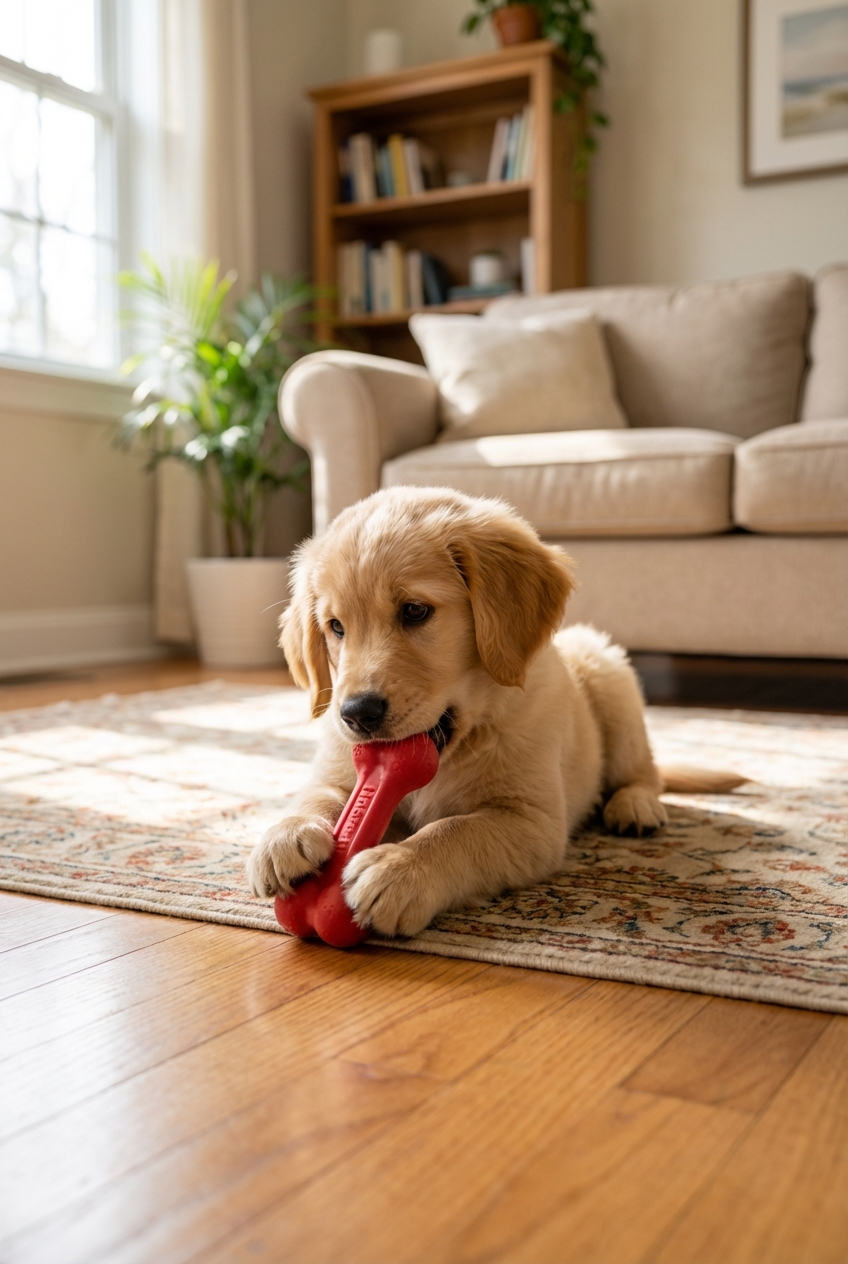
Puppy biting is usually normal. Learn why it happens and how to reduce it fast with redirects, reverse time-outs, calm breaks, naps, enrichment, and teething...
Article
•
Designer Mixes
Stop Puppy Biting Daily

Shari Shidate
Designer Mixes contributor
Puppy biting can feel personal, but in almost every case it is normal development: puppies explore with their mouths, they play by grabbing, and their gums can be sore while teething. The key is not to “win” a fight with your puppy. The key is to teach a daily routine that meets their needs and makes biting unrewarding.
As a veterinary assistant in Frisco, Texas, I see the same pattern all the time: the puppies that improve fastest are not the ones with the strictest owners. They are the ones with consistent, calm follow-through and a plan they repeat every day.
Quick note: This is general guidance. If your puppy’s mouthiness feels extreme, unusually painful, or suddenly worse, check in with your veterinarian.
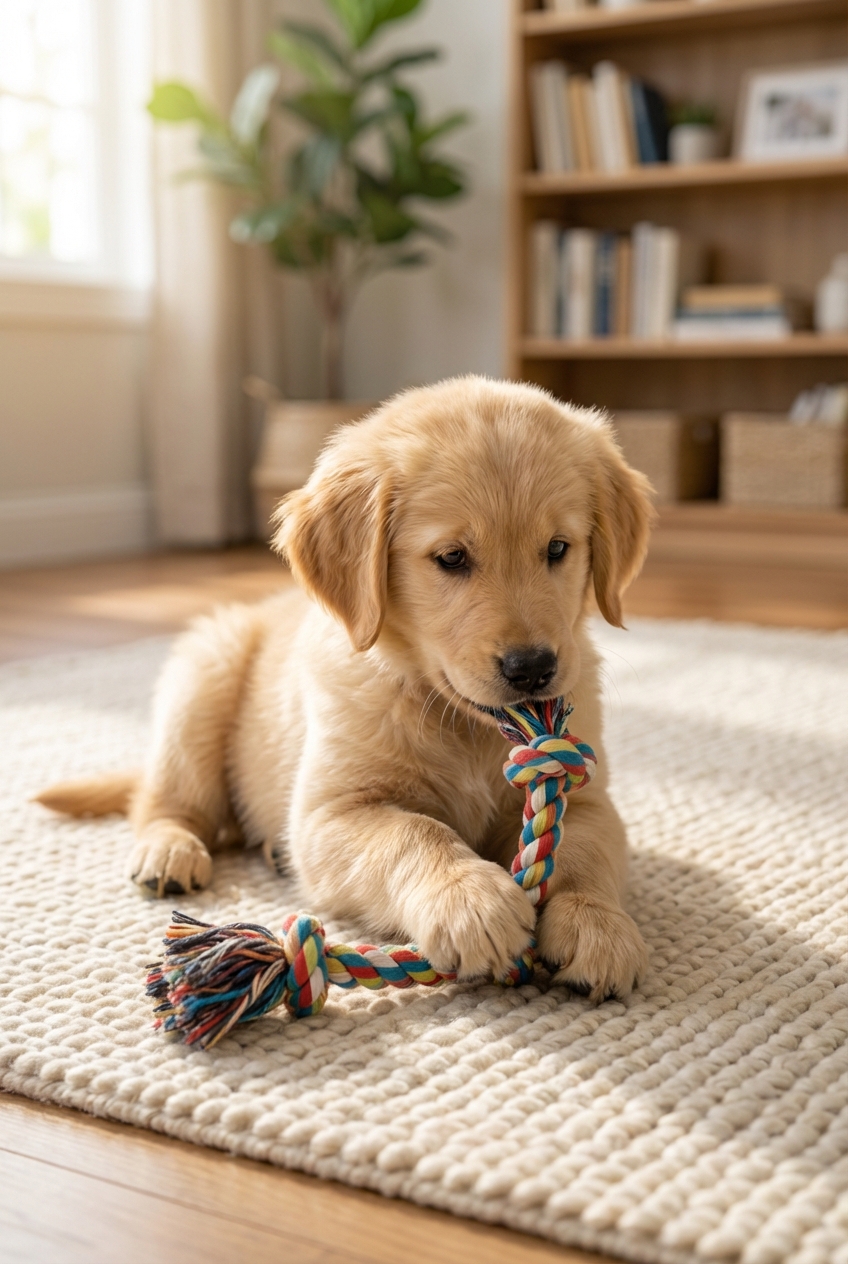
Why puppies bite
1) Biting is communication
Puppies bite to initiate play, to keep play going, to get attention, or to say “I am overstimulated.” If biting reliably gets a reaction, even a negative one, many puppies will repeat it.
2) Teething can hurt
Most puppies typically start losing baby teeth around 3 to 4 months and finish getting adult teeth around 6 to 7 months, but it varies by puppy and breed. During this window, chewing and mouthiness often increase. If your puppy seems unusually uncomfortable, or stops eating normally, ask your vet.
3) Your puppy is learning bite pressure
Puppies learn “soft mouth” by feedback. Littermates often withdraw or stop playing when bites are too hard. Humans can teach the same lesson, just in a calmer, more predictable way.
4) Overtired puppies get mouthy
A puppy that missed naps often looks hyper, wild, and “naughty.” In reality, they are running on fumes. More sleep often equals less biting.
The daily plan
Most families see improvement when they follow a simple rhythm: sleep, potty, play, train, chew, nap. Puppies do best when you make the right choices easy and the biting choice boring.
Step 1: Start with a puppy-safe chew
Before your puppy gets worked up, hand them a puppy-safe chew toy. This sets the tone: mouths belong on toys, not skin.
- Good options: rubber chew toys, food-stuffed toys, braided fleece tug, puppy-safe dental chews that match your puppy’s size.
- Tip: rotate toys. “New” toys reduce boredom and reduce nipping.
Step 2: Choose low-impact exercise
Young puppies do not need marathon runs. They need short bursts of safe activity several times a day, plus mental work.
- 5 to 10 minutes of gentle retrieve or soft-toss games (avoid repetitive hard chasing for very young pups)
- Sniff walk in the yard on leash
- Basic training: sit, touch, down, come
- Food puzzles and scatter feeding
Step 3: Use a short reset when teeth hit skin
When your puppy’s teeth hit skin or clothing, do this every time:
- Freeze your hands and body for 1 second.
- Calmly say “Too bad” or “Oops.” Keep it boring.
- Remove attention briefly so your puppy can connect cause and effect: step away, turn your back, or step behind a baby gate for 10 to 30 seconds.
This works because it copies what puppies learn in a litter: biting makes play stop. You are not “punishing.” You are teaching cause and effect.
Step 4: Redirect, do not wrestle
As soon as you remove attention, offer a toy when your puppy is calmer. If you push hands into their mouth, wave fingers, or roughhouse, you can accidentally train harder biting.
- Keep a tug toy in every room.
- When your puppy runs toward you mouth-first, put a toy in their mouth before they connect with skin.
Step 5: Teach a daily calm-down habit
Mouthy puppies often need help downshifting. Choose one daily calming ritual:
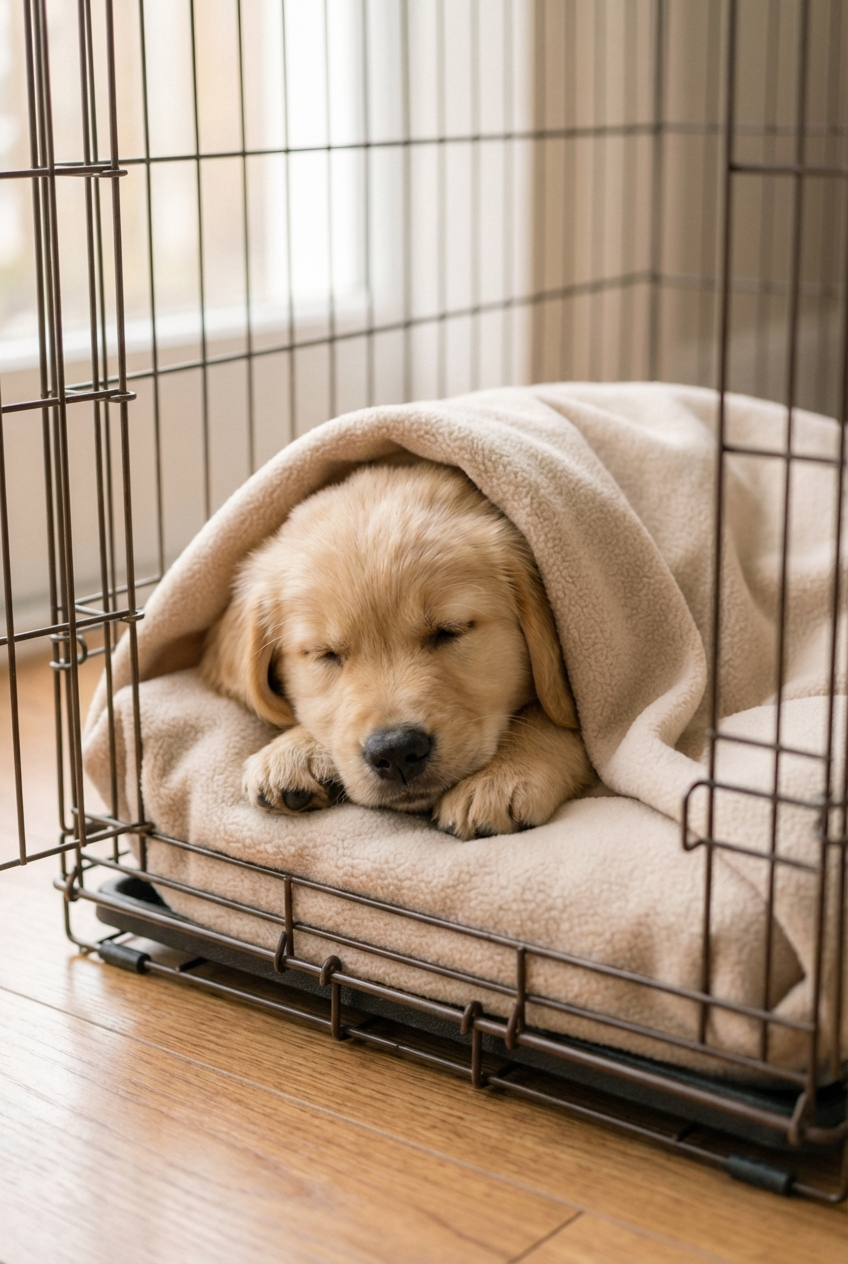
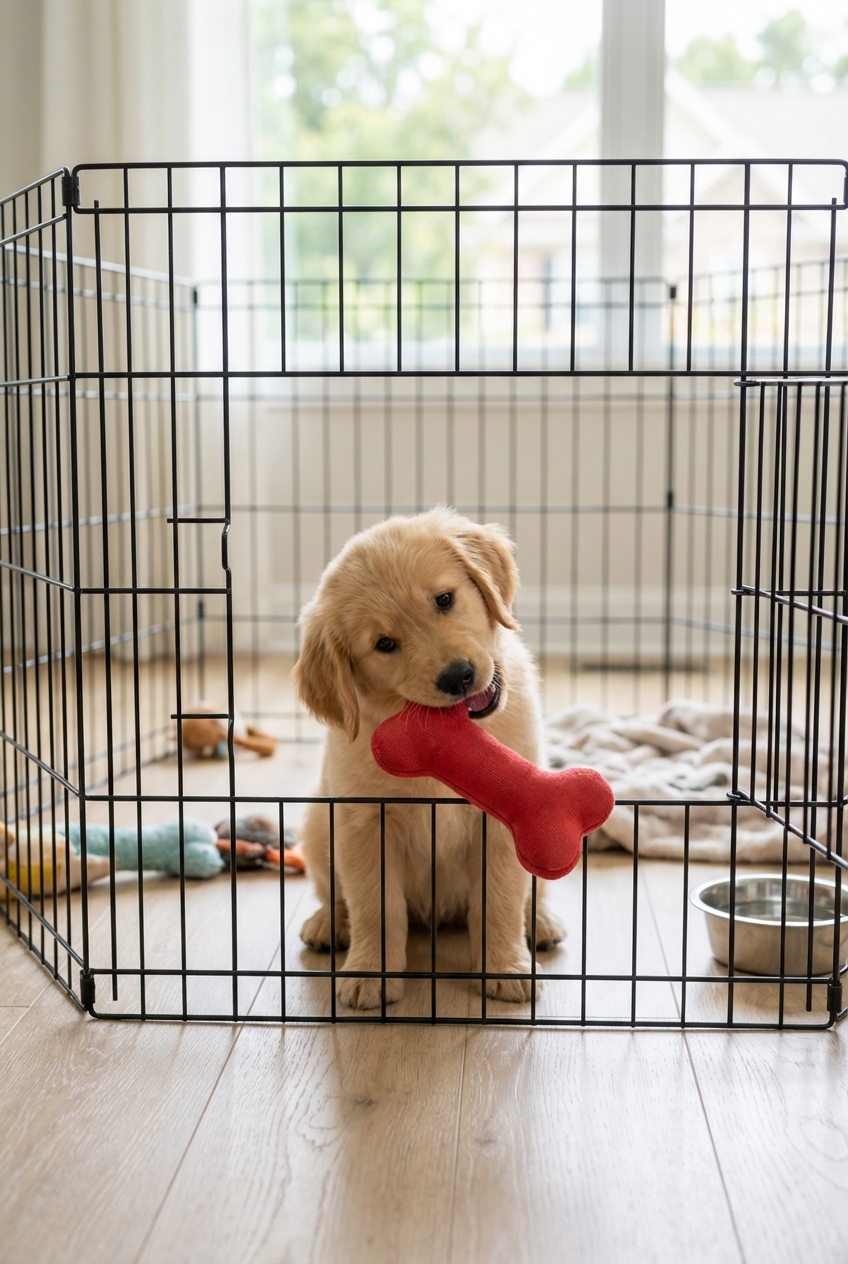
- Crate or pen time with a stuffed toy
- Mat training (reward for lying on a bed)
- Gentle chew time next to you while you ignore minor attention-seeking
Step 6: Protect sleep
Many puppies often need 16 to 20 hours of sleep per day, but it varies by age and individual. If your puppy is biting more in the evening, it is often a nap problem, not a training problem.
A common schedule for young puppies is 1 hour awake, then 1 to 2 hours down in a crate or pen.
What to do fast
If your puppy bites your hands
Freeze, say “Oops,” remove attention for 10 to 30 seconds. Return and offer a toy. Repeat as needed.
If your puppy bites pant legs or ankles
Stop moving. Movement makes you a fun chase target. Use a toy lure to redirect, then reward when they grab the toy. If they are too amped up, calmly step behind a gate for a short reset.
If your puppy bites during petting
Pet for 2 seconds, stop, then offer a chew. Some puppies get overstimulated by long petting sessions. Keep affection short and predictable.
If your puppy bites children
Kids move fast and squeal, which is extremely exciting for puppies. Use management, not willpower.
- Use baby gates and puppy pens to separate when you cannot supervise.
- Teach kids to “be a tree”: arms crossed, stand still, look away.
- Give kids a job: toss treats for calm behavior, or hold a toy for the puppy to grab instead of hands.
Training that helps
Teach “Touch”
This gives your puppy a positive way to approach you without grabbing. Hold out your palm. When they bump it with their nose, say “Yes” and treat.
Teach “Drop it” with trades
Never chase or pry the mouth open. Offer a treat, say “Drop it,” then reward when they release. This reduces grabbing and keeps play safer.
Pay for calm behavior
If your puppy is sitting, lying down, chewing their toy, or walking by you without nipping, quietly reward. Calm behavior grows when it pays.
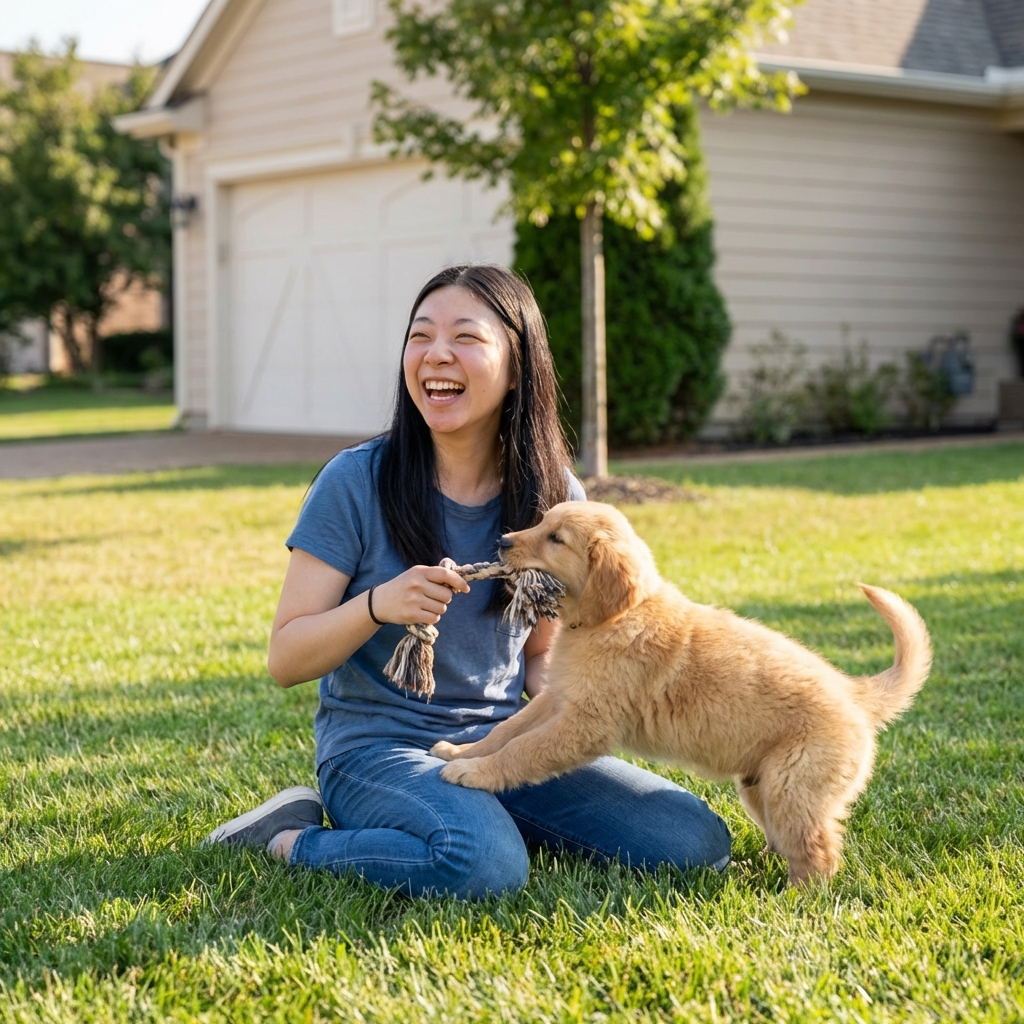
Practice gentle play with a toy
Use a tug toy and keep the game structured: tug for 3 seconds, ask for “Drop it,” treat, then resume. This builds impulse control. Keep tug low and controlled for young puppies.
What not to do
- No hitting, muzzle grabbing, or “alpha” methods. These can increase fear and worsen biting.
- No yelling. For many puppies, loud reactions look like exciting play.
- No pushing fingers deeper into the mouth. Some older advice suggests this, but it can teach puppies to bite harder.
- No long time-outs. Keep them brief so your puppy understands the connection. Typically 10 to 60 seconds is plenty.
- Do not expect perfect behavior when your puppy is overtired. Use naps and management.
Safe teething support
Chewing is not the enemy. Your job is to provide safe outlets.
- Chilled rubber toys can soothe gums.
- Frozen stuffed toys with a puppy-safe filling can keep them busy.
- Vet-approved chews that match your puppy’s size and chewing style help reduce “search and destroy” biting.
Puppy-safe filling means: plain options like soaked kibble, a little canned puppy food, or plain yogurt or pumpkin if your puppy tolerates it. Avoid anything with xylitol, and skip foods with onion or garlic. Keep portions reasonable to avoid tummy upset.
Safety note: supervise chewing, choose the right size, and inspect toys often. Replace chews that are cracking, shredding, or small enough to swallow.
Avoid: cooked bones, very hard items that can fracture teeth, and any chew that splinters.
When to get help
Normal puppy mouthing is wiggly, playful, and improves with rest and routine. Hard, tense biting with warning signs is different.
Most puppy biting improves steadily with age and consistent training. Please talk to your veterinarian and consider a certified trainer if you notice:
- Growling or snapping that seems fearful or guarding-based
- Biting that breaks skin repeatedly
- Stiff body, hard staring, or freezing before biting
- Biting that escalates despite sleep, exercise, and daily training
- Any sudden behavior change, especially with signs of pain (limping, sensitivity to touch, reluctance to eat)
Early support makes a huge difference. The goal is a safe puppy and a confident family.
7-day routine
If you want one plan to start today, try this for a full week:
- Morning: potty, 5 minutes training, breakfast in a food puzzle, then nap
- Midday: sniff walk, short tug session, then chew in pen
- Afternoon: playdate or social exposure (safe, age-appropriate, and supervised), then nap
- Evening: calm enrichment (lick mat or stuffed toy), then early bedtime
- All day: short reset every single time teeth touch skin
Playdate safety: choose calm, well-matched dogs, supervise closely, and follow your vet’s guidance on vaccination and low-risk locations for your puppy’s age.
Progress is usually not overnight. But it is absolutely real when you stay consistent. Your puppy is not giving you a hard time. They are having a hard time learning, and you are teaching them.