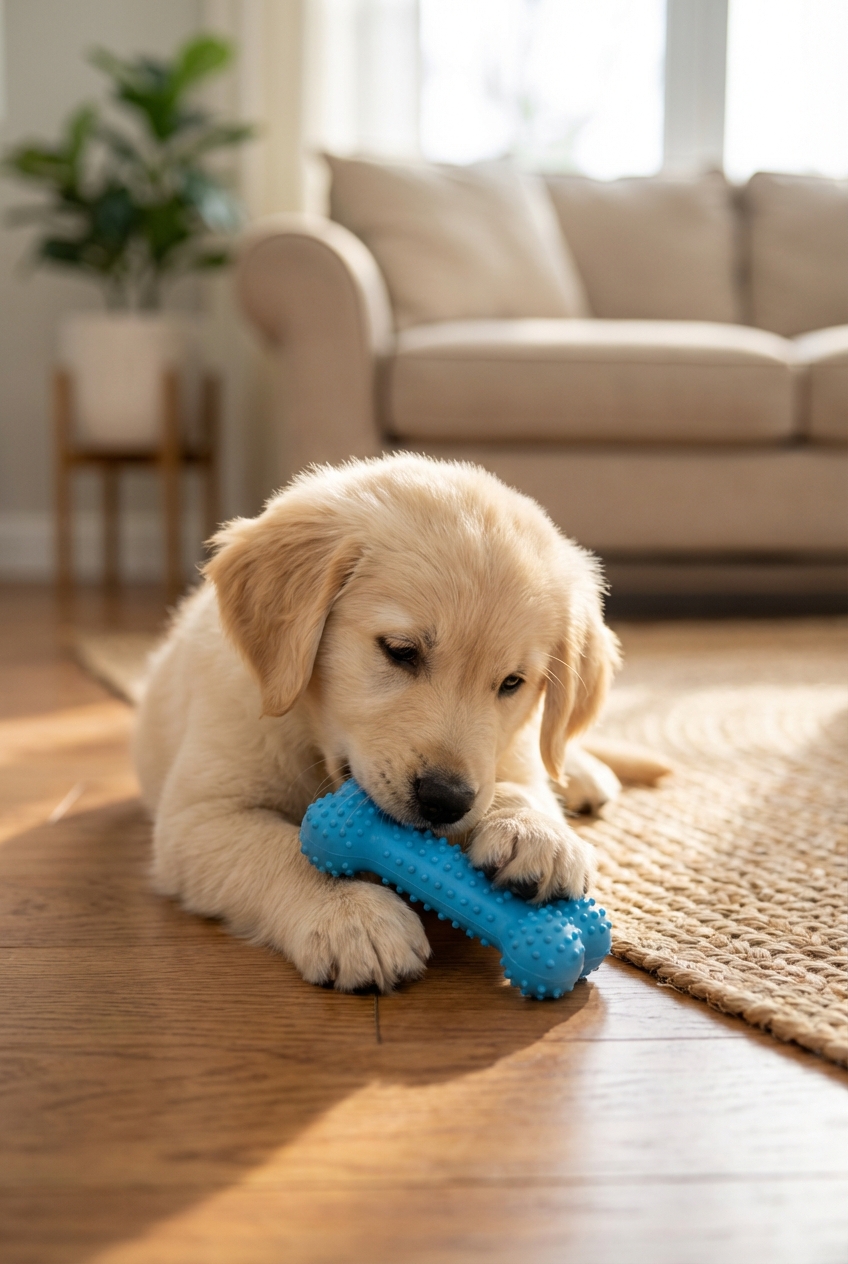
Puppy biting is usually normal. Learn why it happens and how to reduce it fast with redirects, reverse time-outs, calm breaks, naps, enrichment, and teething...
Article
•
Designer Mixes
Stop Puppy Biting

Shari Shidate
Designer Mixes contributor
Puppy biting can feel personal, but it almost never is. In my work as a veterinary assistant here in Frisco, Texas, I see this every day: a sweet puppy with a sharp little mouth and a family wondering what they are doing wrong.
The good news is that puppy biting is normal, teachable, and very responsive to the right plan. This care guide will walk you through why it happens, what works fast, and what to avoid so you can protect your hands and help your puppy grow into a polite, safe adult dog.
Why puppies bite
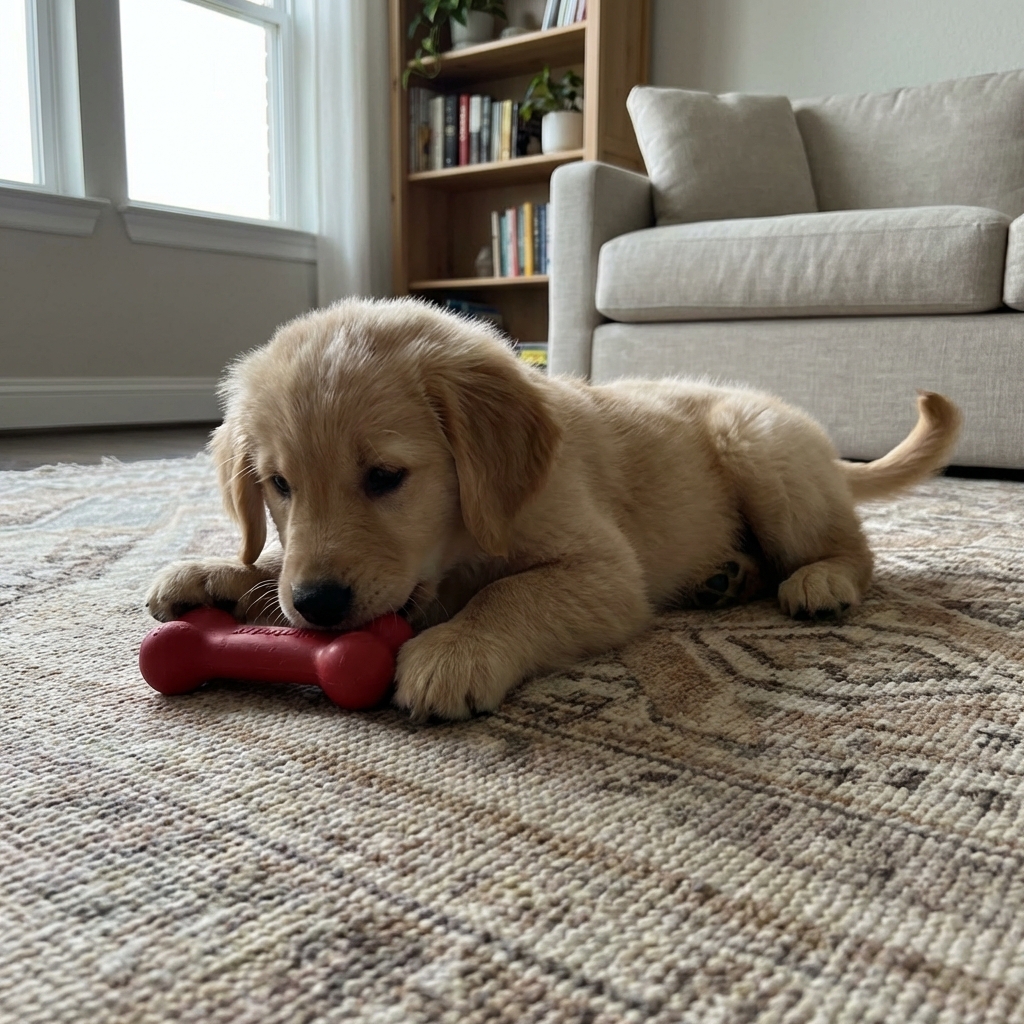
Biting is one of the main ways puppies explore the world. It also shows up during specific developmental phases.
- Teething pain: Most puppies start losing baby teeth around 3 to 4 months. Adult teeth are usually in by about 6 months (sometimes a bit later). Chewing helps relieve sore gums.
- Play behavior: Puppies play with their mouths. They learn bite control mostly because play stops when someone has had enough. Some puppies also yelp, but the pause in play is the real lesson.
- Overtired and overstimulated: Many “landshark” episodes happen when a puppy needs sleep or a break.
- Herding or chasing instinct: Some mixes nip moving ankles or sleeves more than others.
- Attention seeking: If biting makes you squeal, wave your hands, or chase, it can accidentally become a fun game.
If biting is paired with stiff body language, guarding, hard staring, or escalating aggression, talk to your veterinarian and a qualified trainer early. Most puppy biting is normal, but you do not want to guess when it is not.
Set up your home for success
The fastest way to reduce biting is to make good choices easy for your puppy and bad choices boring.
Stock the right chews
- Soft rubber toys your puppy can compress with their mouth.
- Food-stuffed toys (like a rubber toy filled with canned puppy food or soaked kibble).
- Appropriate chews recommended for puppies by your vet, especially during teething.
Safety note: choose chews that are firm but not rock hard. As a rule of thumb, if you cannot make at least a small impression with your fingernail, it may be too hard for puppy teeth. Avoid anything that splinters or breaks into sharp pieces. When in doubt, ask your veterinarian what is appropriate for your puppy’s age and teeth.
Create a calm puppy zone
Use a crate or exercise pen with:
- water
- a safe chew
- a comfortable bed or mat
- a covered area for naps
This is not a punishment space. It is your puppy’s “reset button” when they are tired or too excited to make good decisions.

The 3-step plan
These steps work best when everyone in the home responds the same way every time. Consistency is what makes this go quickly.
Step 1: Redirect to a toy
Keep a toy within reach in the rooms where you play. The moment teeth touch skin:
- go still: freeze your hands, keep them close to your body, and avoid eye contact for a beat
- quietly offer a toy
- praise when they bite the toy instead
Think of this as teaching your puppy what to bite, not just what not to bite.
Step 2: Remove attention
If your puppy ignores the toy and keeps biting:
- say a calm cue like “Too bad” or “Oops”
- immediately end play for 10 to 20 seconds
- stand up, turn away, or step behind a baby gate
After the brief pause, try again once. If your puppy re-engages with intense biting right away, move to Step 3.
Step 3: Reset break
If the biting is frantic, your puppy may be overtired or over-aroused. Give a short break in their puppy zone for about 1 to 5 minutes with something calming like a chew, stuffed toy, or lick mat, then aim for a nap. Many young puppies sleep up to 18 to 20 hours a day, but individual needs vary.
Teach gentle mouths
Bite inhibition means your puppy learns to control how hard they use their mouth. This matters because even friendly adult dogs can accidentally mouth a hand during excitement. You want a dog that can be gentle.
A simple progression:
- Week 1: reward calm play with toys. End play when teeth touch skin.
- Week 2: aim for fewer mouth contacts overall. Ask for a sit before play, and reward calm.
- Week 3 and beyond: replace mouthing with trained behaviors like “sit,” “touch,” “go to mat,” or “settle.”
Short, consistent sessions beat long lectures every time.
Daily routine
A puppy with the right outlets bites less. Here is a realistic structure you can copy:
Morning
- Potty break
- Breakfast in a puzzle feeder or stuffed toy
- 5 minutes of training (sit, down, touch)
- Nap
Midday
- Potty break
- Leash walk or gentle play
- Chew time
- Nap
Evening
- Potty break
- Dinner, then calm time
- Short training session
- Wind-down routine and sleep
If biting spikes at a certain time, it is often because your puppy is hungry, tired, or overstimulated. Adjust the schedule before you blame behavior.
Exercise note: more is not always better for puppies. A short sniffy walk, training, and enrichment (sniffing, licking, foraging) often reduces biting more than high-intensity wrestling or nonstop fetch.
Kids and puppy safety
Puppies and kids can be a tough combo because fast movement and excited noises trigger nipping. A few rules help everyone stay safe:
- Use baby gates and pens so kids can move around without a puppy attached to their ankles.
- No running, squealing, or roughhousing with the puppy.
- Have kids toss treats or roll a toy instead of offering hands during mouthy phases.
- Supervise all interactions. If either one is getting wound up, give the puppy a reset break.
Common mistakes
- Wiggling hands away: this triggers chase and makes biting more exciting.
- High-pitched squealing: for many puppies, this amps them up rather than stopping them.
- Rough play with hands: it teaches that skin is a toy.
- Physical punishment: it can increase fear, create distrust, and worsen aggression risk.
- Too much freedom: an overtired puppy roaming the house is a biting puppy in training.
Teething comfort
Teething can be genuinely uncomfortable. These options often help:
- Chilled rubber toys (cool, not frozen solid, to protect teeth)
- Cold, wet washcloth tied in a knot for supervised chewing
- Vet-approved dental chews made for puppies
If your puppy’s gums are very swollen, bleeding excessively, or they seem unusually painful, check in with your veterinarian to rule out retained baby teeth or oral injury.
When to get help
Please reach out for professional help if you notice any of the following:
- biting that breaks skin repeatedly
- growling with freezing, hard staring, or guarding
- sudden behavior change or sensitivity to touch
- biting that worsens after teething ends (often around 6 months, sometimes later)
- kids in the home who feel unsafe
A positive reinforcement trainer can coach timing and handling, and your veterinarian can look for pain or other medical issues that may be contributing to irritability or reactivity.
Quick reference
If you only remember one thing, remember this sequence:
- Teeth on skin: go still
- Offer toy: praise when they take it
- Teeth on skin again: calmly end play for 10 to 20 seconds
- Still intense: reset break with a chew, then a nap
You are not raising a “bad” puppy. You are teaching a baby dog how to live politely in a human home, one calm repetition at a time.
With consistency, many families notice early improvement within 1 to 2 weeks, with bigger changes over the following weeks and months as skills build and teething ends. Stay patient and keep it simple. Your future self will thank you.