Stop indoor urine marking with a practical, vet-informed plan: rule out health problems, use enzymatic cleaning, prevent rehearsals, manage triggers, and rew...
Article
•
Designer Mixes
Stop Male Dog Marking Indoors

Shari Shidate
Designer Mixes contributor
Male dogs who mark inside the house are not being “bad” or “spiteful.” Marking is communication. It can be driven by hormones, stress, new smells, changes in the home, or simply a habit that has been accidentally reinforced over time. The good news is that marking often improves when you combine smart management with a simple training plan.
As a veterinary assistant, I always like to start with the basics: rule out medical problems, then set your dog up to succeed with fewer opportunities to mark. Some dogs show improvement within days once everyone is consistent, but it is normal for full reliability to take a few weeks.
Quick note: While this article focuses on male dogs, females and neutered males can mark too. The same management and training steps apply.
Marking vs. potty accidents
These look similar, but they are not the same. Knowing which one you are dealing with changes the fix.
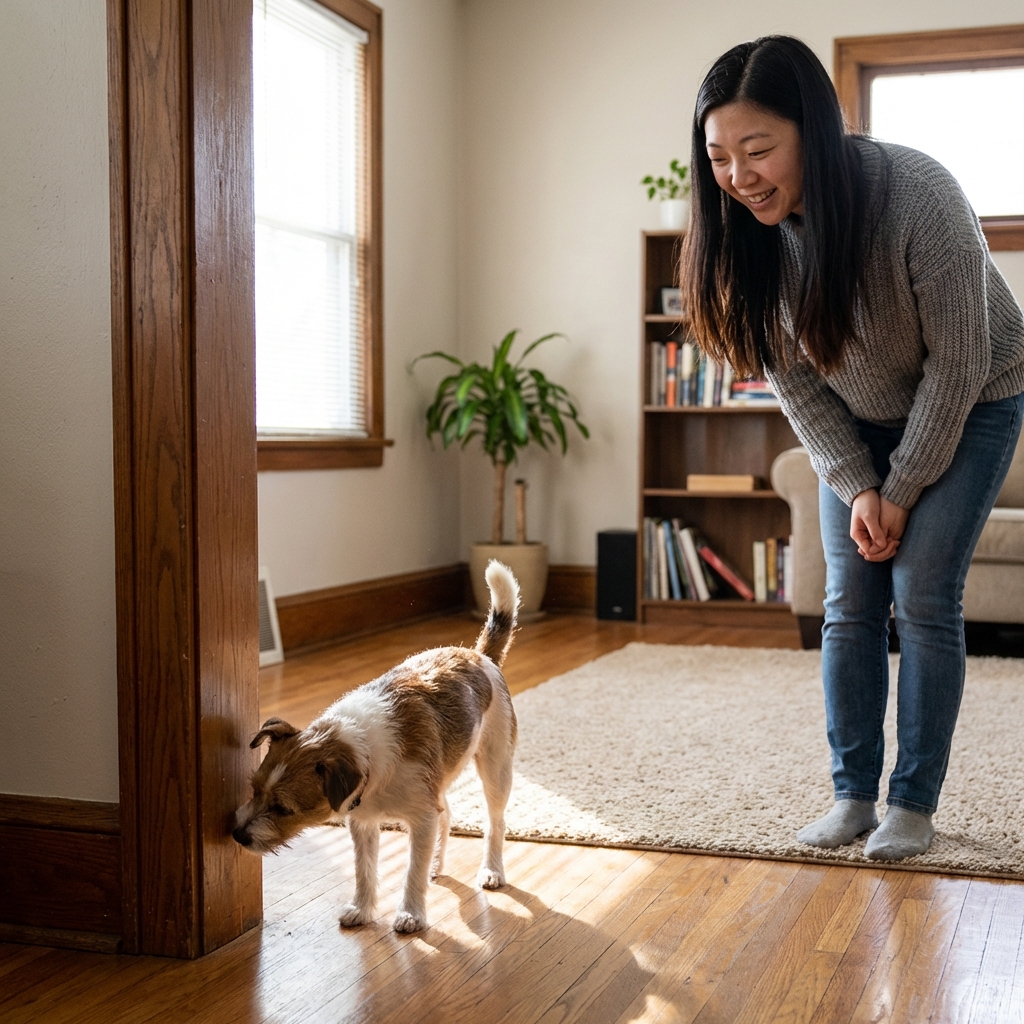
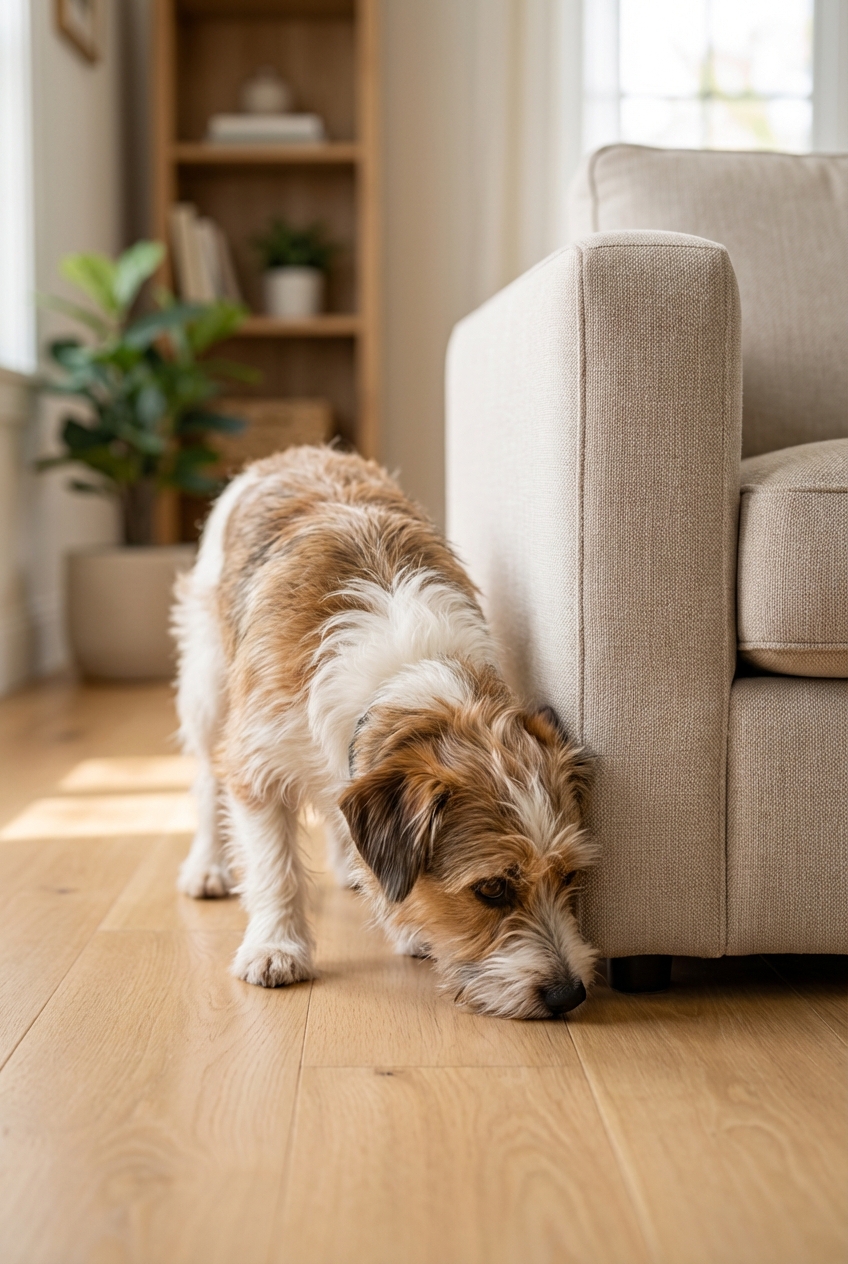
- Marking is usually small amounts of urine, often on vertical surfaces like furniture legs, corners, walls, or a new bag on the floor.
- House-training accidents are typically larger puddles, often when a dog could not hold it.
- Submissive or excited urination happens during greetings or high emotion, and the dog may crouch or roll.
If you are seeing frequent small “tags” in multiple spots, especially after visitors or changes, you are likely dealing with marking.
First: rule out medical causes
If marking is new, suddenly worse, or paired with any urinary changes, schedule a vet visit. A urine test is often the quickest way to get answers.
- Urinary tract infection or inflammation
- Bladder stones or crystals
- Increased thirst and urination (for example diabetes or kidney disease)
- Pain, arthritis, or mobility issues that make it hard to get outside in time
Urgent signs: If your dog is straining, dribbling, licking his penis frequently, seems painful, or you see blood, treat that as urgent. Male dogs can develop a urinary blockage from stones or inflammation, and a blockage is an emergency.
The quick-start plan (next 7 days)
This is the fastest way to reduce indoor marking while you build long-term habits.
1) Remove opportunities now
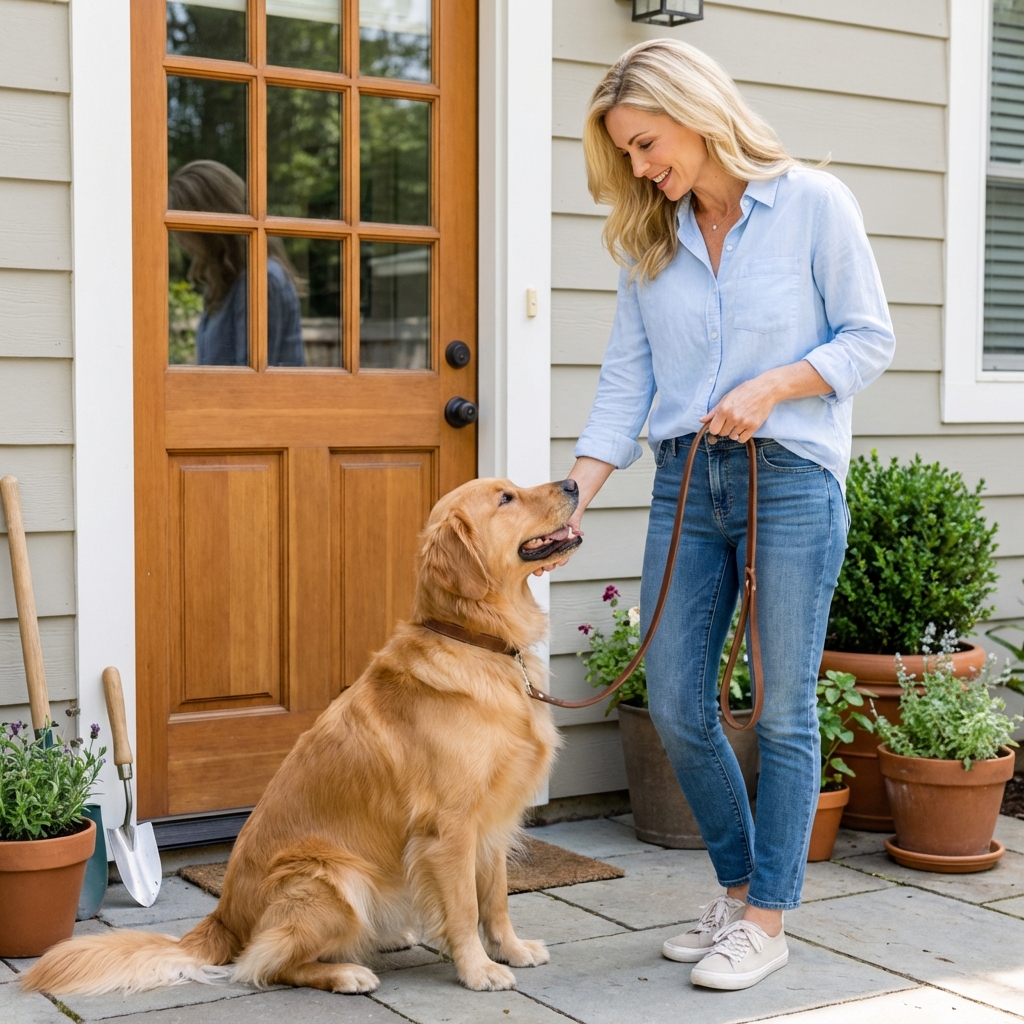
- Leash indoors (a “house leash”) so your dog is always within reach.
- Use crates, gates, and closed doors to limit free-roaming.
- Block favorite target zones with furniture rearranging or gates for now.
Marking is self-rewarding. Every successful “tag” makes the habit stronger, so preventing practice is step one.
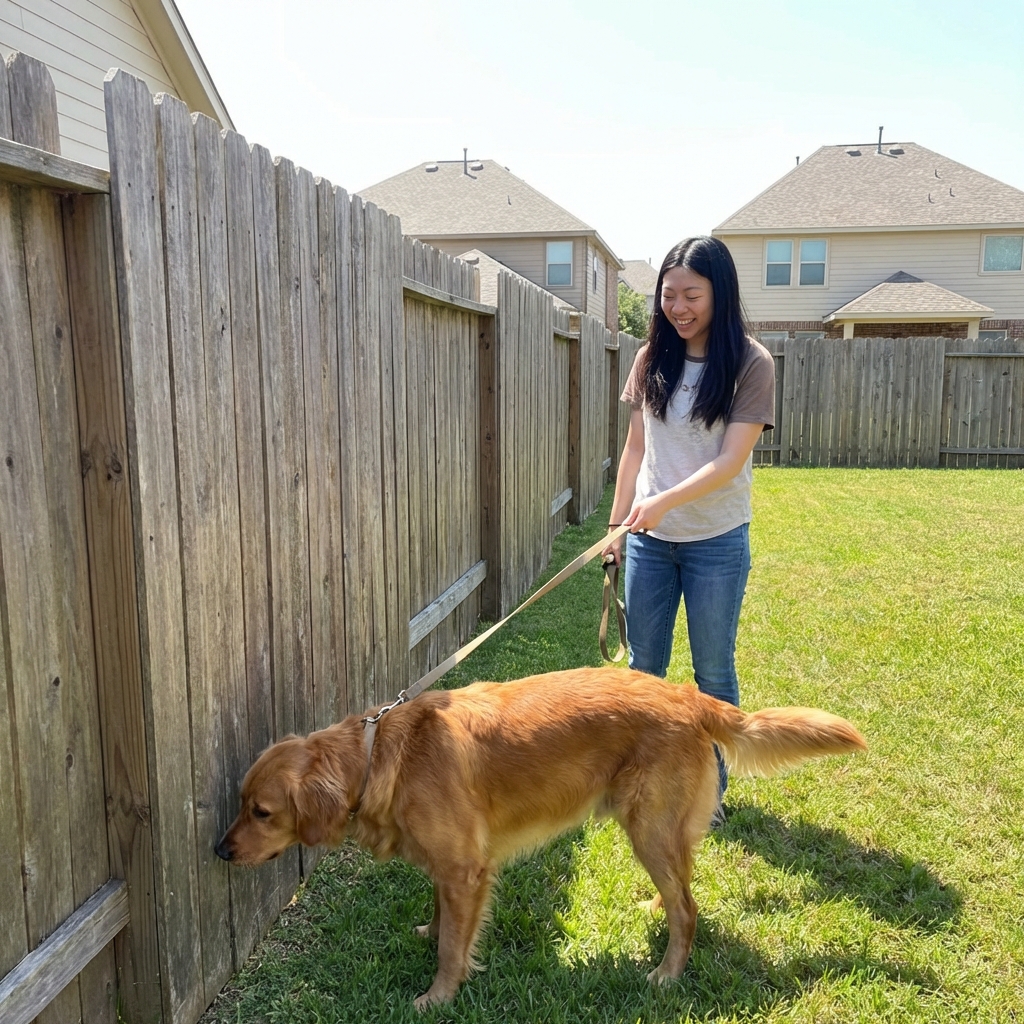
2) Take him out more often than you think
For this short reset period, use a simple schedule: first thing in the morning, after meals, after play, after naps, and before bed. Add one extra outing in the evening if marking is happening then.
- Go to the same potty spot.
- Stand still and give it 3 to 5 minutes.
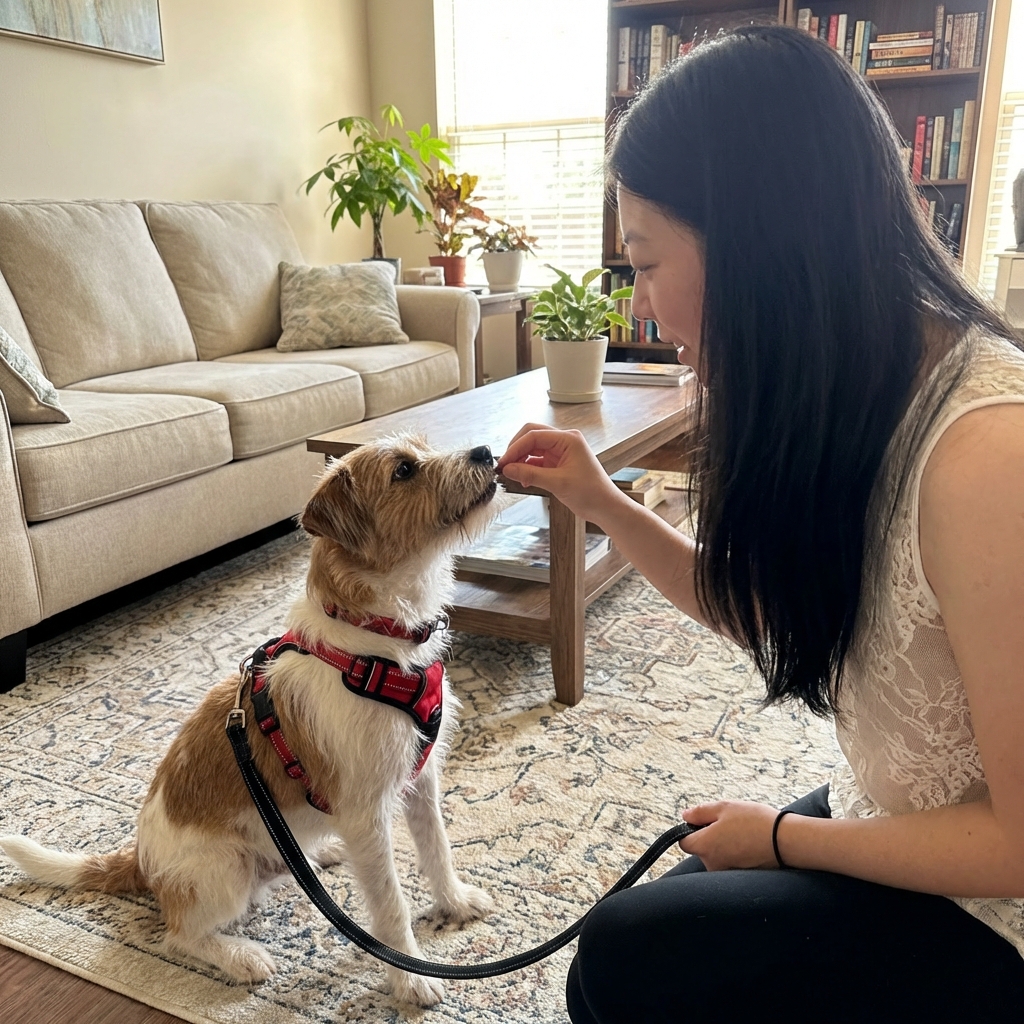
- The second he finishes, praise and reward with a high-value treat.
3) Clean every marked spot the right way
Use an enzymatic cleaner made for pet urine. Regular soap may not remove scent cues a dog can smell. Heat (like some steam cleaning) can make odors harder to remove on some materials.
- Blot fresh urine first.
- Saturate the area per label directions.
- Let it air-dry fully.
Porous surfaces tip: Carpet pad, grout, baseboards, and unfinished wood often need repeated applications. If your dog keeps returning to the same place, odor is still present or the location has become part of his routine.
Do not: Use ammonia-based cleaners on urine spots. Ammonia can smell like urine to dogs. Also skip “rubbing his nose in it” or other punishment based tactics. They do not teach the right behavior and can increase stress.
4) Reinforce passing trigger spots
When your dog walks through a typical trigger area (like the hallway corner) without marking, calmly say “yes” and give a treat. Start with about one treat per successful pass for a few days, then fade to every other pass, then randomly. You are teaching him what you want, not just what you do not want.
5) Belly bands can help, but they are not the fix
A belly band can prevent damage while you retrain, but it does not solve the behavior. If you use one:
- Change it often to prevent skin irritation and urine scald.
- Make sure it fits comfortably and is not too tight.
- Still follow the schedule, training, and cleaning plan.
6) Do not give freedom back too fast
Once you see improvement, keep supervision in place and gradually increase access. A good rule of thumb is to wait for 1 to 2 clean weeks in a space before expanding to the next area of the house.
Why it happens
Once you reduce the behavior with the quick-start plan, look for the “why.” Fixing triggers speeds up the long-term win.
New smells and social triggers
- Visitors, workers, or houseguests
- Another dog visiting
- New furniture, packages, or shopping bags on the floor
- Windows where neighborhood dogs pass by
Stress and routine changes
- Moving homes
- Schedule changes
- Conflict between pets
- Not enough mental and physical enrichment
Hormones
Intact males are more likely to mark, especially around puberty and young adulthood. Neutering can reduce marking for many dogs, but it is not a guaranteed “off switch,” especially if the behavior has been practiced for months or years.
Multi-dog homes
If you have more than one dog, excitement and competition can increase marking. For a few weeks, do more individual potty trips, separate dogs during greetings and high arousal moments, and pick up high value items that trigger tension.
Training that sticks
Rebuild indoor habits like house-training
Even if your dog was previously house-trained, treat this like a fresh start for 2 to 3 weeks.
- Supervise or confine at all times.
- Take frequent potty breaks.
- Reward outdoor urination every time.
- If you cannot watch him, use a crate or safe gated area.
Teach a calm interrupt
If you catch him mid-lift or sniffing and lining up to mark:
- Say a neutral interrupter like “this way” (no yelling).
- Lead him outside immediately.
- Reward if he urinates outside.
Skip punishment. Stress can contribute to marking, and punishment can increase stress and make the problem harder to fix.
Reduce trigger access
If window-watching is a trigger, use frosted window film on lower panes, close blinds during busy times, or keep him in a back room when dogs walk by. Lower arousal often means less marking.
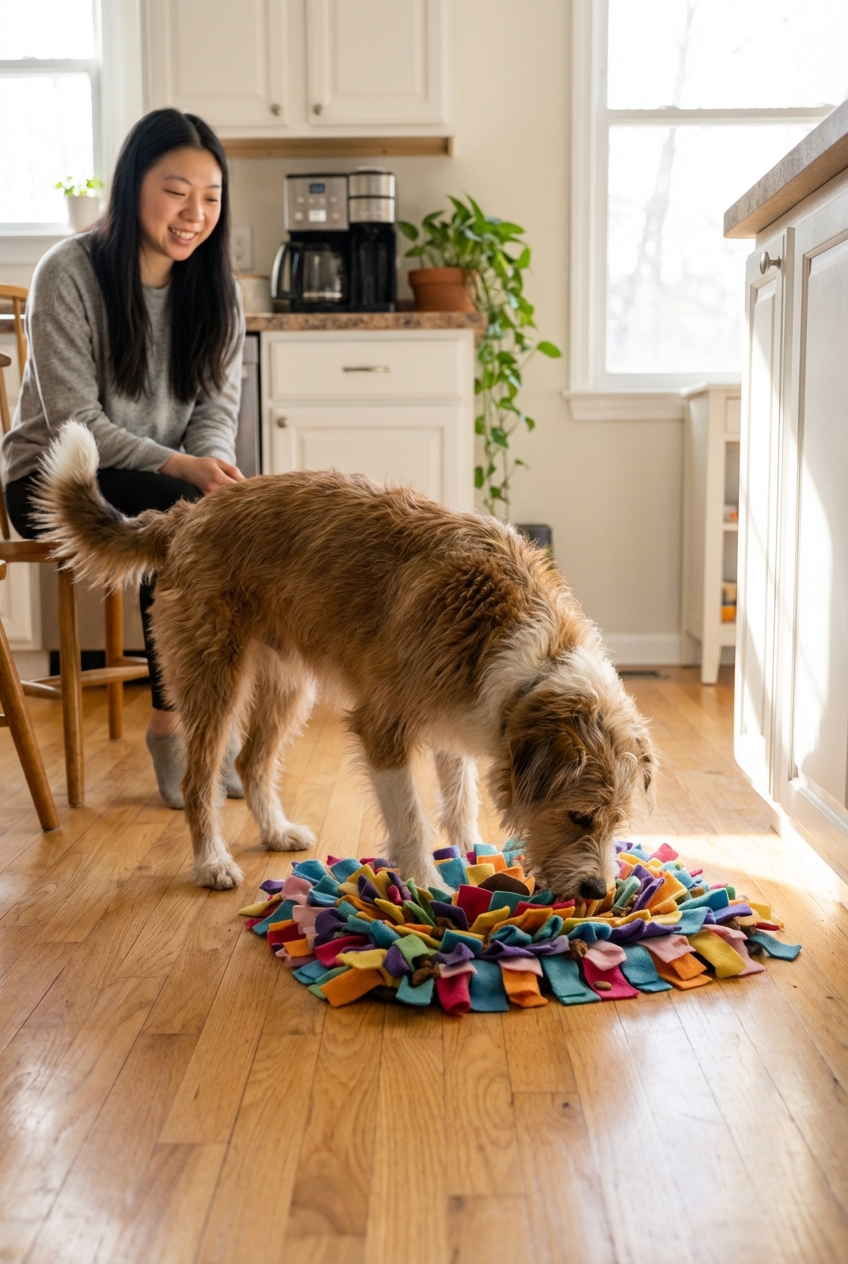
Add enrichment to lower stress
- Food puzzles, snuffle mats, lick mats
- Two short training sessions per day (2 to 5 minutes)
- More sniff walks, fewer rushed walks
Neutering
Neutering often reduces urine marking in male dogs, especially when done before the habit is well established. If your dog is already a frequent marker, neutering can still help, but you will usually get the best results when it is combined with the management and training steps above.
If you are unsure about timing, your veterinarian can advise based on your dog’s age, breed mix, and health history.
When to call a pro
If you have followed the plan consistently for 2 weeks and you are not seeing improvement, bring in help. A certified, reward-based trainer or a veterinary behaviorist can spot triggers you may be missing.
Look for credentials such as CPDT-KA, CPDT-KSA, KPA-CTP, or an IAABC consultant. For complex cases, a board-certified veterinary behaviorist (DACVB) is ideal.
Seek extra support sooner if:
- Marking started after a scary event or major household change.
- There is tension between pets in the home.
- Your dog is also growling, guarding, or showing new anxiety.
Fast FAQ
How long does it take to stop indoor marking?
With consistent management, some households see improvement within a few days. Long-term reliability often takes 2 to 6 weeks, depending on how ingrained the habit is and how many triggers are present.
Will vinegar stop a dog from marking?
Vinegar may reduce odor to you, but it usually does not remove the scent cues a dog can smell. Enzymatic cleaners are the best option for urine.
Should I use a deterrent spray?
Deterrents can help as a temporary layer, but they rarely solve the cause. Think of them as backup, not the main plan.
My dog only marks when guests come over. What should I do?
Leash him before guests arrive, take him out right before the doorbell, and reward calm behaviors. Use gates or a crate if needed for the first 10 to 20 minutes of excitement, then reintroduce once he settles.
The bottom line
To stop a male dog from marking indoors, focus on three things: prevent practice (supervision and confinement), reward the right bathroom behavior (more potty trips and treats), and erase scent cues (enzymatic cleaning). Add stress reduction and consider neutering if appropriate. With consistency, many dogs turn the corner faster than you would expect.
If you want, tell me your dog’s age, whether he is neutered, whether you have other pets at home, and when marking usually happens. I can suggest a simple schedule that fits your routine.