
Male cat spraying is usually fixable. Learn how to tell spraying vs. peeing, rule out urinary issues, improve litter boxes, reduce stress, clean with enzymes...
Article
•
Designer Mixes
Stop Male Cat Spraying Indoors

Shari Shidate
Designer Mixes contributor
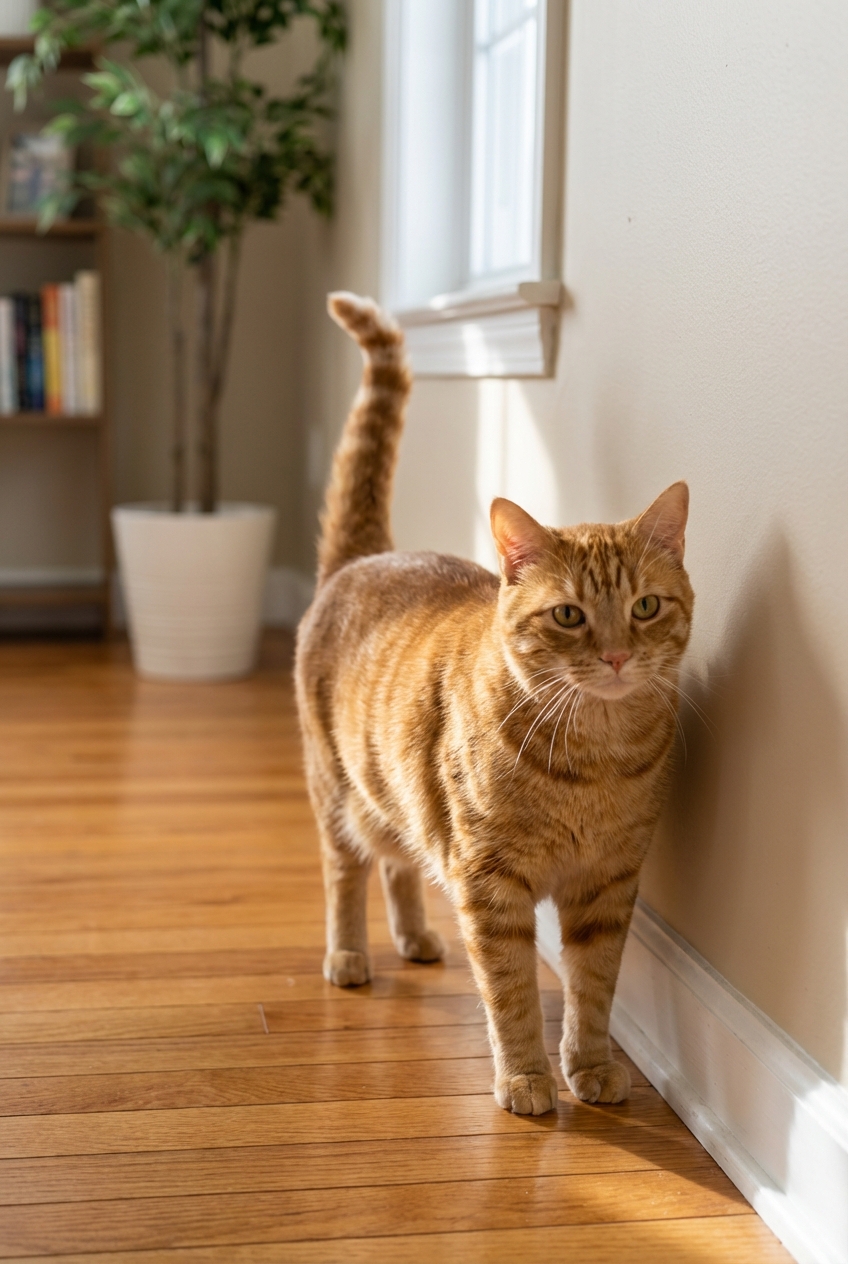
If your male cat is spraying inside, you are not dealing with “bad behavior.” You are seeing a normal cat communication tool showing up in the wrong place. Spraying is most often driven by hormones, stress, conflict with other pets, outdoor cat pressure, or a medical problem that makes your cat feel urgent or insecure.
Quick safety note: If your cat is straining to urinate, crying in the box, or producing little to no urine, treat it as an emergency (male cats can block).
The good news is that most spraying can be dramatically reduced, and often fully stopped, with a step-by-step plan.
Spraying vs. peeing outside the box
These look similar, but they are not the same, and the fix can be different.
- Spraying is usually a small amount of urine on a vertical surface like a wall, couch side, hamper, or door. Cats often stand, lift the tail, and “mark.”
- Inappropriate urination is usually a larger puddle on a horizontal surface like a bed, rug, or laundry pile.
If you are seeing vertical marks and the tail-up posture, treat it as spraying even if there is some overlap.
Note: This article focuses on male cats, but many of the medical and stress-related tips also apply to females and to multi-cat homes in general.
First rule: rule out medical causes
As a vet assistant, I always say this part up front because it saves time and frustration. Cats do not always show pain clearly, and urinary discomfort can make them start marking, avoid the litter box, or try to spread their scent to feel safer.
Schedule a veterinary visit promptly if spraying is new, suddenly worse, or paired with any of these:
- Frequent trips to the box
- Straining or crying
- Blood in urine
- Urinating small amounts
- Licking the genital area more than usual
- Accidents plus appetite or behavior changes
Common medical contributors include feline lower urinary tract disease (FLUTD), including stress-linked feline idiopathic cystitis (FIC), urinary crystals or stones, pain from arthritis (making the box uncomfortable to enter), and other sources of discomfort.
Ask your veterinarian what testing makes sense for your cat. Often that includes a urinalysis (and sometimes a urine culture), and in recurrent cases, imaging (x-rays or ultrasound) to check for stones or other issues.
Important: A blocked urinary tract is an emergency, especially in male cats. If your cat cannot pass urine or is straining with little to no output, seek emergency care right away.
Neutering: the biggest lever for most male cats
If your male cat is not neutered, neutering is typically the most effective single step to reduce spraying. Improvement is often seen within a few weeks, but it can take a few months, especially if spraying has become an established habit or if the cat was neutered later.
If your cat is already neutered and spraying continues, do not panic. That usually means the driver is territorial stress, anxiety, inter-cat tension, outdoor cat pressure, or a lingering scent habit in the home.

Clean correctly so the scent does not call him back
Cats return to areas that smell like “their message.” Regular cleaners often fail because they do not fully break down odor-causing compounds left behind in urine.
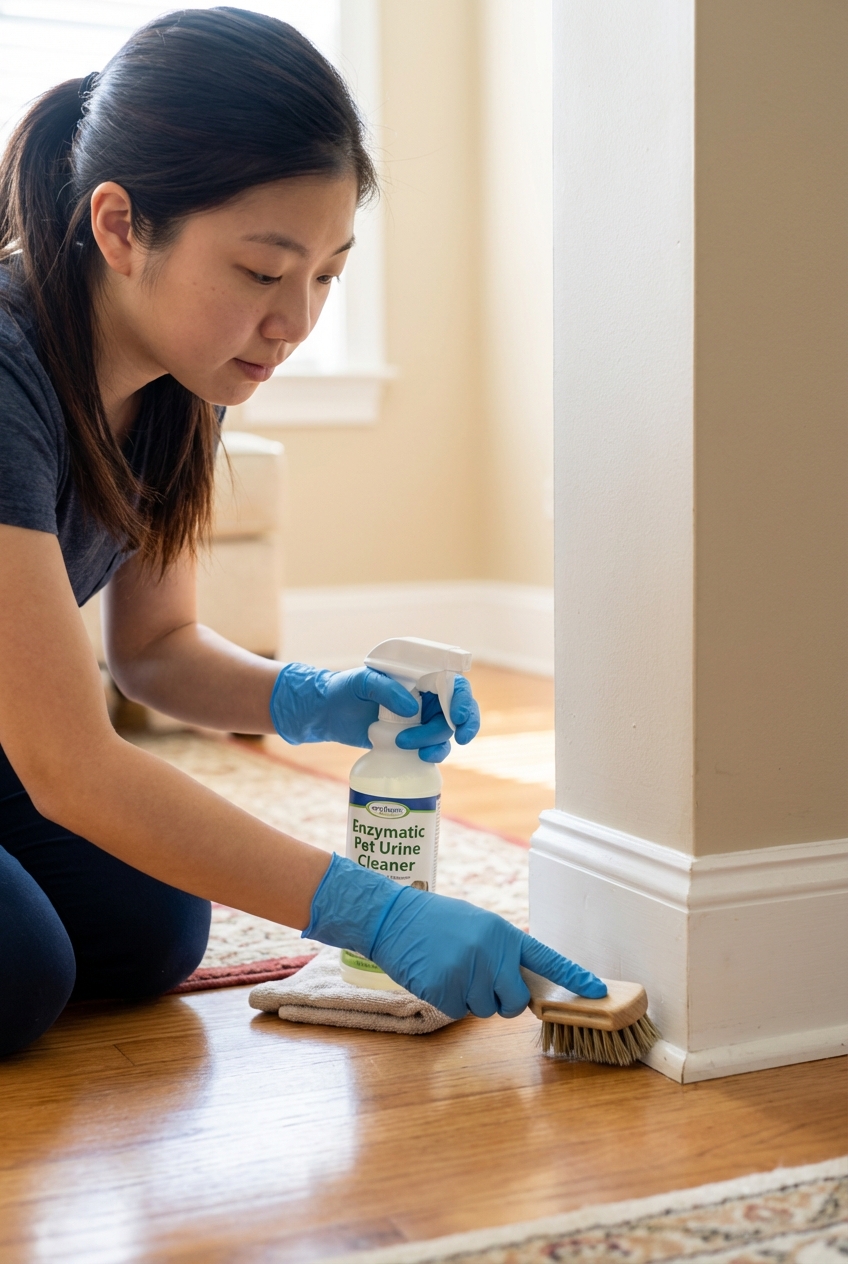
Use an enzymatic cleaner
- Blot first, do not rub.
- Soak the area according to the product directions and allow the full contact time.
- Let it air dry if possible. Fans help.
Avoid ammonia-based cleaners
Ammonia can smell like urine to cats and can encourage repeat marking.
Do not steam clean urine spots
Heat can set odor into fabric and padding.
Helpful tip: If you keep missing spots, use a UV flashlight in a dark room to scan baseboards, furniture edges, and the sides of beds or couches. Keep in mind that some detergents and cleaners also fluoresce, so confirm by location, pattern, and any remaining odor.
When cleaning is not enough: If urine has soaked into carpet pad, subfloor, or drywall, replacement or sealing may be necessary. In rentals, document damage early and ask about approved remediation so you do not fight the same odor for months.
Fix the litter box setup
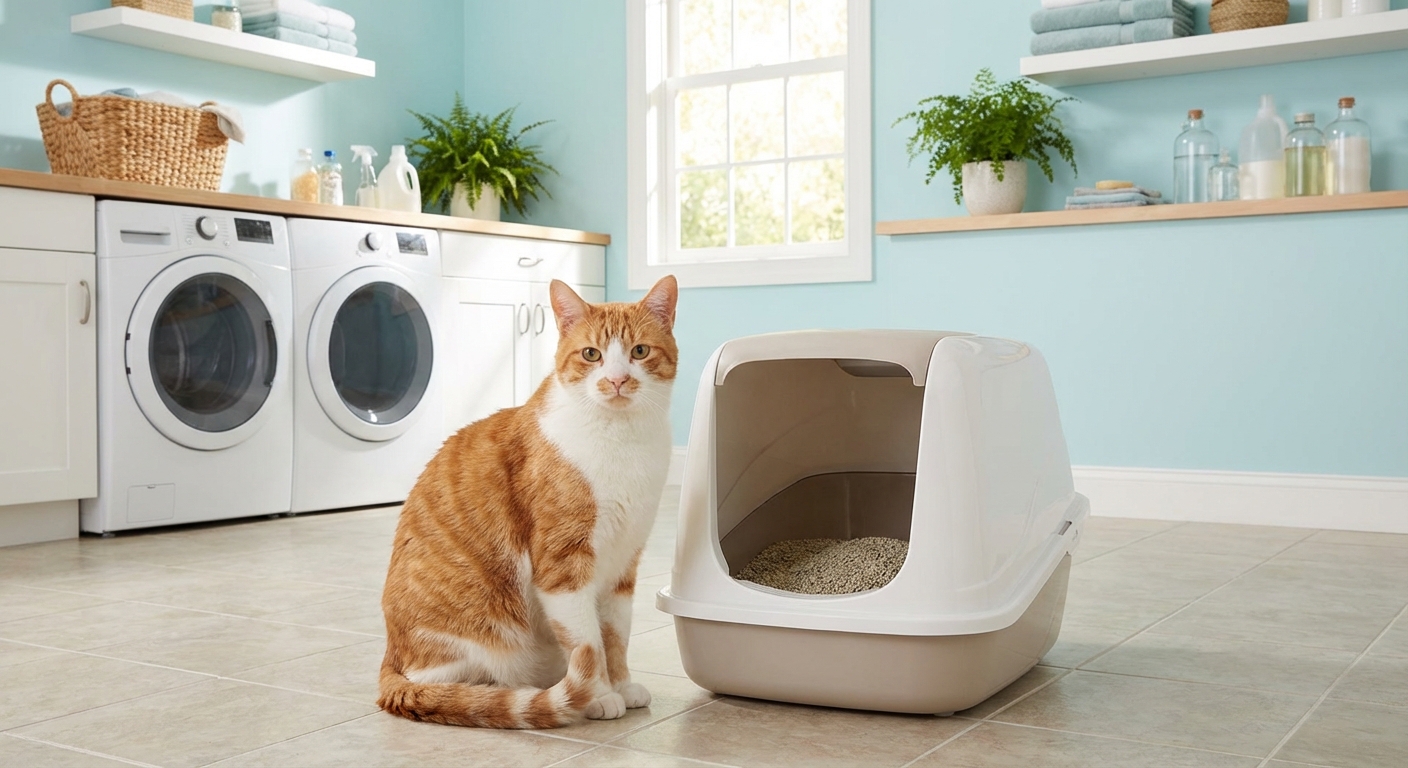
Spraying and litter box issues often overlap. When the box feels unpleasant or unsafe, cats may mark to cope or may start using alternative locations.
Quick litter box checklist
- Number of boxes: Aim for one box per cat, plus one extra.
- Location: Quiet, easy to access, not next to loud appliances. Spread boxes out so one cat cannot guard them all.
- Size: Bigger is better. Many cats dislike small boxes.
- Style: Many cats prefer uncovered boxes. For seniors or arthritic cats, try a low-entry box.
- Litter: Most cats prefer unscented, soft clumping litter.
- Cleanliness: Scoop daily. Wash boxes with mild soap and water regularly, then rinse well.
If your cat sprays near the box, try moving the box a few feet away and creating a simple visual break between the box and the sprayed wall. A cat tree, a tall plant (cat-safe), or a piece of furniture can work. The goal is to reduce the “straight shot” to the target and add an appealing alternative spot to linger.
Reduce stress and territorial pressure
Indoor spraying is often a stress signal. Your cat may feel like the home is not fully “his,” especially if there are other cats, outdoor cats visible through windows, recent moves, renovations, schedule changes, or new pets or people.
Block outdoor triggers
- Close blinds at peak times if neighborhood cats patrol outside.
- Use frosted window film on lower panes where cats stare out.
- Discourage outdoor cats from hanging around doors and windows (motion sprinklers can help outside).
Create a “yes zone” for territory needs
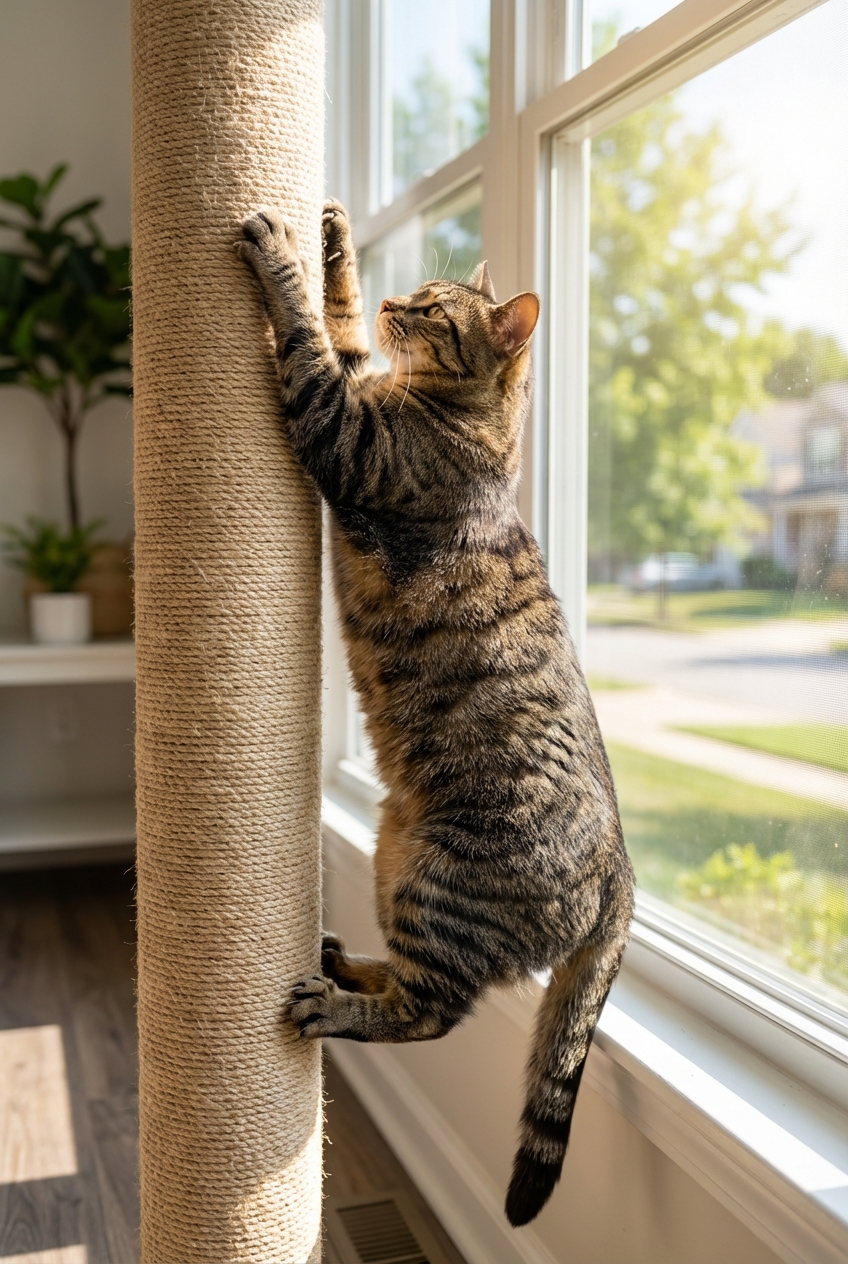
Spraying is one way cats claim space, but you can redirect that need toward healthier territory behaviors like scratching, climbing, and resting up high. Give your cat multiple safe, elevated resting areas and scratching posts. Scratching is healthy scent communication, and it can reduce the urge to spray.
- Place scratching posts near previous spray areas, then reward your cat for using them.
- Add cat shelves or a tall cat tree to increase vertical territory.
Use pheromones and calming routines
Many households do well with feline pheromone diffusers in the rooms where spraying occurs most (for example, a Feliway diffuser). Pheromones help some cats a lot and others only mildly, so give it time. I usually assess results after 2 to 4 weeks of consistent use.
Pair pheromones with predictable routines: play, feed, and bedtime at consistent times.
Multi-cat homes: address conflict
Spraying is one of the most common signs of cat-to-cat tension. The “problem cat” is not always the bully. Sometimes it is the cat who feels trapped, stared at, or blocked from resources.
What to do
- Resource separation: Put food, water, and litter boxes in more than one area so no cat can control access.
- More vertical space: Cat trees and shelves allow cats to pass each other without confrontation.
- Play therapy: Daily wand-toy play helps reduce anxiety and redirects energy.
- Slow reintroductions: If tension is high, a structured separation and reintroduction plan may be needed.
If you see chasing, blocking, ambushing, or one cat hiding often, talk with your veterinarian about behavior support or a referral to a qualified cat behavior professional.
Make targets unattractive
While you work on the cause, you can prevent repeat marking with smart management.
Temporarily block access
- Move furniture a few inches from walls where your cat sprays.
- Close doors to high-value targets like closets and laundry rooms.
- Use safer deterrents on surfaces when appropriate, like double-sided tape or a temporary furniture cover that is easy to wipe down.
- If you consider plastic runners, use them cautiously. Some cats can slip or injure paws, and the stress can backfire. In many homes, physical blocking plus better resources works better.
Create positive associations
Cats rarely spray where they eat or where they have a calm, rewarding routine.
- Place food bowls or treat stations near prior spray areas if it is practical and sanitary.
- Use short play sessions and treats near those locations.
Try a “legal” station
Some cats do better when they have a permitted setup near a former spray zone: a scratching post, plus a soft bed, plus a pheromone diffuser nearby. The goal is not to “allow marking,” but to give your cat an acceptable way to feel secure in that location.
Soft items: protect and reset
If your cat is targeting beds, laundry piles, couch corners, or other soft items, protect them while you retrain and investigate triggers.
- Use a waterproof mattress protector and wash bedding promptly with an enzymatic laundry additive if needed.
- Keep laundry off the floor and use covered hampers.
- If a cushion insert or foam has been soaked repeatedly, replacement is sometimes the only way to fully remove odor.
What not to do
- Do not punish with yelling, spraying water, or rubbing a cat’s nose in it. Punishment increases stress and often worsens spraying.
- Do not use strong scents like citrus oils or harsh cleaners directly on surfaces where your cat spends time. Many essential oils are unsafe for cats.
- Do not assume it is spite. Cats spray to communicate safety and territory, not revenge.
When to ask your vet about medication
If you have addressed health issues, cleaning, litter box setup, and stress triggers and spraying continues, it is reasonable to discuss medication. For some cats, short-term anti-anxiety medication or long-term support can help the brain get out of “alert mode” so training and environmental fixes can actually stick.
Medication should be paired with environmental and behavior changes, not used alone. Your veterinarian can help you choose the safest option for your cat’s health history.
A simple 14-day action plan
Days 1 to 2
- Book a vet visit if this is new or worsening, or if there is any straining or frequent box trips.
- Buy an enzymatic cleaner and a UV flashlight.
- Deep clean known spray areas.
Days 3 to 6
- Adjust litter boxes: add one box, scoop daily, switch to unscented clumping litter if needed.
- Try an uncovered, larger box, or a low-entry box if mobility might be an issue.
- Add a tall scratching post near a common spray spot.
Days 7 to 10
- Install a pheromone diffuser in the main spray room and give it 2 to 4 weeks before you judge results.
- Block outdoor cat views if your cat is window-watching and agitated.
Days 11 to 14
- Start daily play sessions and a predictable routine.
- Track progress in a notebook: time, location, triggers, and which cats were nearby.
If spraying is not clearly improving after two to four weeks of consistent changes, that is the point where I recommend a deeper veterinary behavior conversation and, if indicated, additional diagnostics.
Bottom line
Stopping indoor spraying is absolutely possible, but it works best when you tackle it from three angles at once: health, environment, and stress. Be patient with your cat and with yourself. When a cat feels safe, has the right setup, and no longer smells old markings, the urge to spray usually fades.
