Stop kitten biting without punishment. Learn why kittens bite, how to freeze and disengage, redirect to toys, prevent ankle attacks, and build a daily play r...
Article
•
Designer Mixes
Stop Kitten Biting With Love

Shari Shidate
Designer Mixes contributor
Kitten biting can feel confusing because it often happens during sweet moments like petting, playtime, or cuddles. The good news is that most kitten biting is normal development, not aggression. Kittens explore the world with their mouths, practice hunting skills through play, and learn bite control the same way human kids learn to use “inside voices.”
As a veterinary assistant, I like to reassure families that you can stop painful biting without punishment. The goal is to teach your kitten what is appropriate to bite and how hard is too hard, while also meeting their needs for play, rest, and comfort.
Why kittens bite
Understanding the why helps you choose the right fix. Common reasons include:
- Play and hunting practice: Stalking, pouncing, grabbing, and biting are natural kitten behaviors.
- Overstimulation: Some kittens go from “this feels nice” to “too much” quickly during petting and react with a nip.
- Teething: Many kittens get mouthy as adult teeth come in, often around 3 to 6 (sometimes 7) months, with some discomfort starting earlier.
- Attention-seeking: If biting makes you talk, move, or chase, your kitten may learn it works.
- Missed bite inhibition practice: Kittens raised without other kittens may miss out on early lessons from littermates about what “too hard” feels like.
- Fear or pain: Less common, but important. Sudden biting paired with hiding, growling, or sensitivity to touch needs a closer look.
Play bite vs. stop bite
Many bites happen because we miss early body language. Watch for these clues and respond early.
Signs of playful energy
- Wiggly body, playful stalking, pouncing
- Ears mostly neutral, eyes bright
- “Bunny kicks” and grabbing your hand like a toy
Signs of overstimulation or discomfort
- Tail flicking or thumping
- Skin twitching along the back
- Ears rotating sideways or flattening
- Sudden freezing, then a quick nip
If you see the overstimulation signs, pause petting and give space before a bite happens. That one habit can reduce biting dramatically.
A gentle, science-informed plan
Here is what works best in most homes, using positive, cat-friendly training principles. Progress is not always perfectly linear, so expect an occasional relapse during high-energy times and keep your response consistent.
1) Teach: hands are not toys
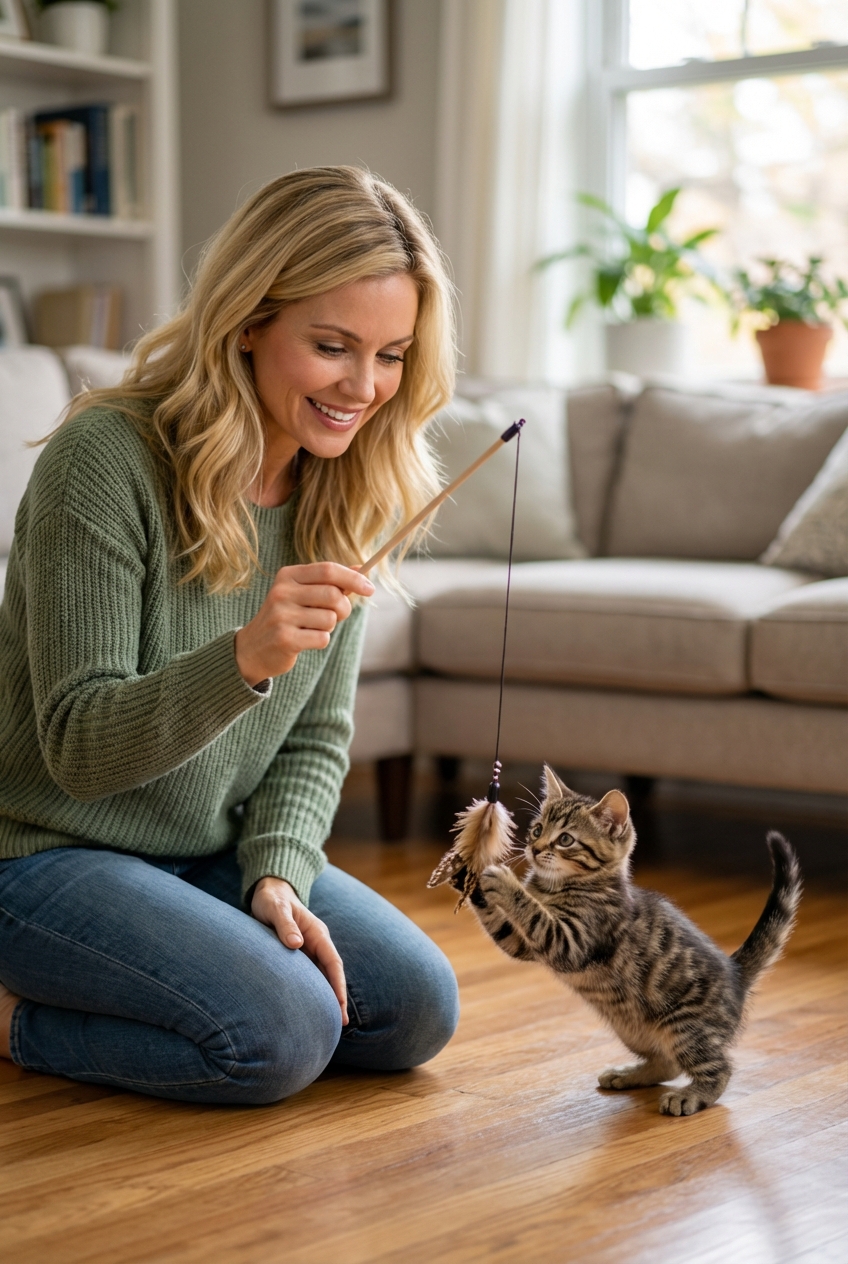
If you wrestle with your kitten using your fingers, they will bite fingers. Instead:
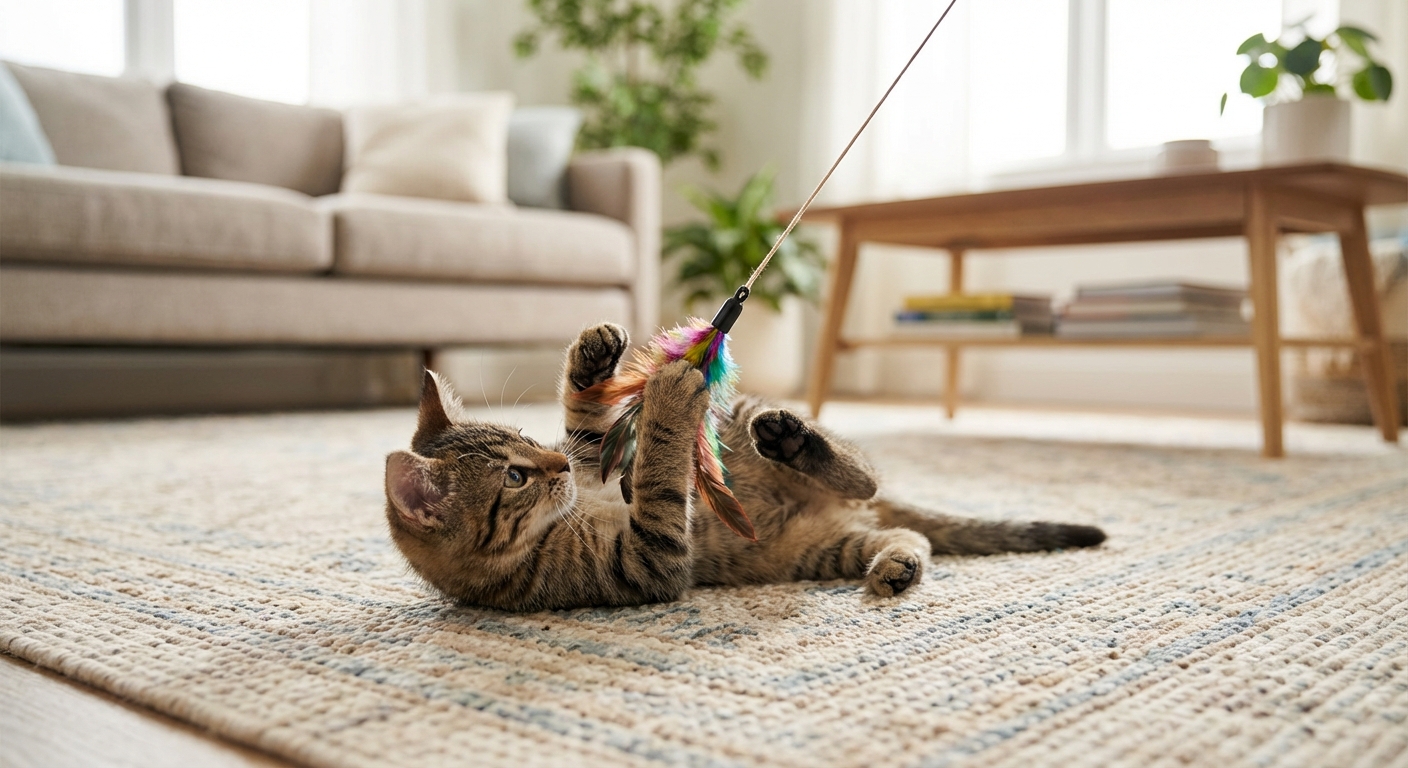
- Use wand toys, a soft kicker toy, or toss toys for chasing.
- Save hands for gentle petting, feeding, and calm handling only.
2) When teeth touch skin, end the game
Consistency matters more than intensity. The moment teeth touch skin:
- Freeze your hand (pulling away fast can trigger chase).
- Go still and quiet for 2 to 5 seconds.
- Then redirect or disengage by offering an appropriate toy, or calmly stand up and walk away.
This teaches a simple rule: biting makes the fun stop.
3) Reward gentle behavior
Look for moments when your kitten is playing nicely or sitting calmly and reinforce it:
- Drop a treat when they play with a toy instead of your hand.
- Praise with a soft voice and slow blinks.
- Offer 1 to 3 seconds of petting, then pause before they get overexcited.
4) Build a simple daily play routine
Many biting issues are unused-energy issues. Aim for 2 to 4 short play sessions daily (5 to 10 minutes each). A helpful pattern is:
- Hunt: wand toy play that includes stalking and pouncing
- Catch: let them “win” at the end
- Eat: offer a small meal or a few treats after play
- Rest: most kittens will settle after
5) Use a petting budget
Some kittens love attention but get overstimulated quickly. Try shorter petting sessions:
- Pet 2 to 3 strokes, then pause.
- Focus on areas many cats prefer, like cheeks and chin.
- Avoid belly rubs unless your kitten clearly enjoys them.
6) Offer safe chewing options
For teething kittens, provide cat-safe chew outlets:
- Cat-specific, non-toxic chew toys that are too large to swallow
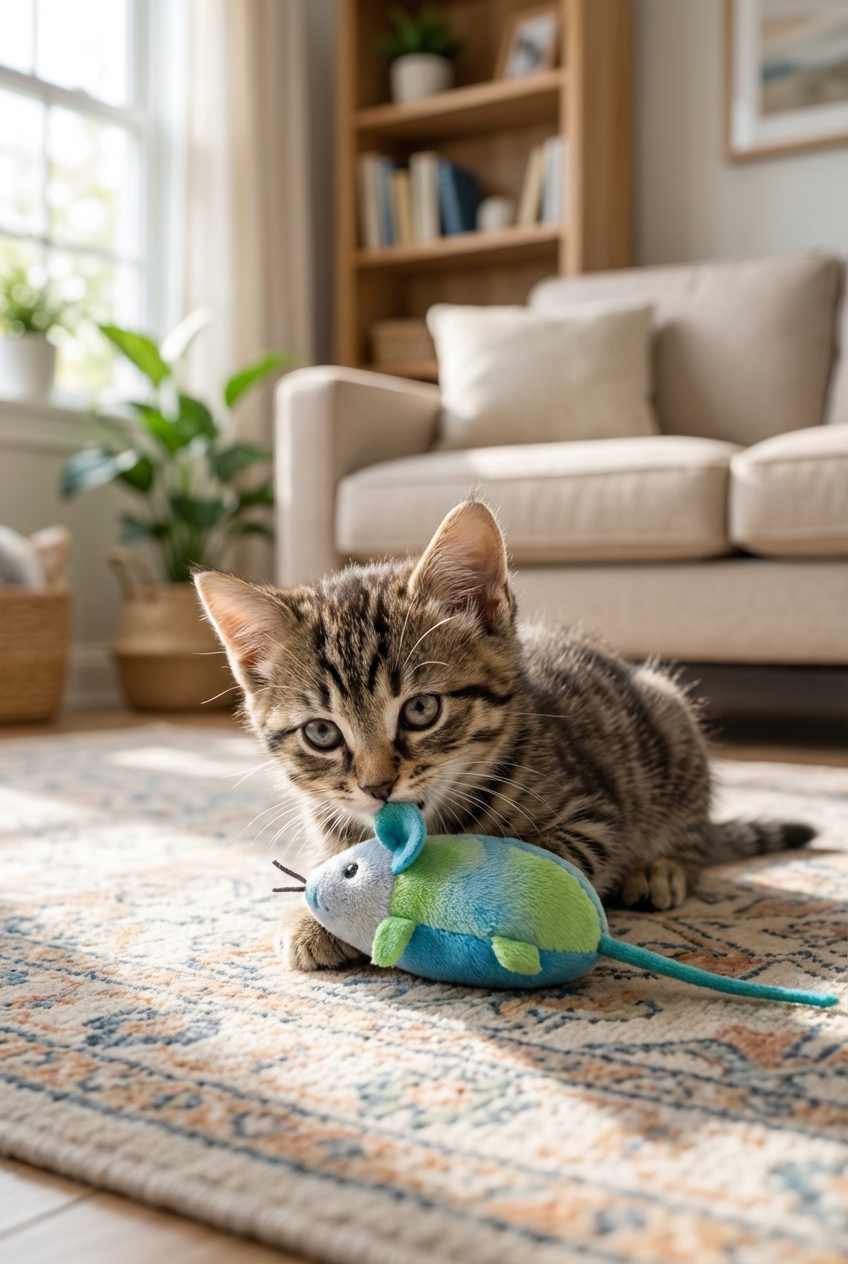
- Kicker toys they can hug and bite
- Chilled (not frozen) wet washcloth twisted into a “rope” for supervised chewing
Always supervise anything fabric-like and remove it if your kitten starts shredding or swallowing pieces.
Kids and kittens
Kittens and children can be a great match, but they need extra structure. To protect both:
- Supervise all play until your kitten is reliably gentle.
- Teach kids to use toys, not hands (wand toys, toss toys, kicker toys).
- No chasing or cornering, and avoid grabbing, squeezing, or “hugging” a kitten who is trying to leave.
- Pause at the first warning signs like tail flicks or body stiffening.
Gentle handling basics
Many bites happen during picking up or restraint. A few handling habits can help:
- Avoid scruffing. It can increase fear and struggle, and it is not needed for most home handling.
- Support the body. Scoop with one hand under the chest and the other supporting the rear, then hold close to your body.
- Keep it short. Set your kitten down before they squirm, and reward calm handling with a treat.
- Stop if they escalate. If your kitten stiffens, growls, or tries to bite, calmly end the interaction and try again later with a slower approach.
What not to do
These responses can increase fear, stress, or biting intensity over time:
- Do not hit, flick, or tap the nose. It teaches hands are scary.
- Do not yell. It can overstimulate or frighten your kitten and may increase stress around handling.
- Do not use hands to push them away repeatedly. That becomes a game.
- Avoid punishment-based spray bottles. They can create anxiety and damage trust.
Helpful home setup
A kitten-friendly environment lowers biting because your kitten has appropriate outlets.
- Scratching options: at least one vertical and one horizontal scratcher.
- Climbing and hiding: a cat tree plus a cozy hiding spot.
- Rotation of toys: keep some toys “new” by rotating every few days.
- Food puzzles: great for mental stimulation and calmer energy.
Bite wound safety
Even a small cat bite can become infected, especially puncture wounds. If your kitten breaks skin, wash the area promptly with soap and running water. Seek medical care urgently for deep punctures, bites to the hand or face, spreading redness, swelling, warmth, increasing pain, pus, fever, or if you are immunocompromised.
When to call your veterinarian
Most kitten biting improves with consistent redirection and routine. Please check in with your veterinarian if you notice:
- Sudden biting that seems out of character
- Biting when picked up along with crying, limping, or hiding
- Swollen gums, foul breath, drooling, or trouble eating
- Intense aggression signs: growling, stiff posture, pupils very dilated, repeated attacks
Medical issues like dental pain, injury, or skin sensitivity can make even sweet kittens react defensively.
A gentle 7-day reset
If you want something simple to follow, try this for one week:
- Day 1 to 2: Stop all hand play. Add 2 daily wand-toy sessions.
- Day 3 to 4: Start “freeze and redirect” every time teeth touch skin.
- Day 5: Add a small treat after calm play with toys.
- Day 6: Shorten petting sessions and watch tail flicks.
- Day 7: Rotate toys and add a food puzzle to reduce boredom biting.
Most families see noticeable improvement when everyone in the home follows the same rules.
Bottom line
Your kitten is not trying to be bad. They are learning. With a steady routine, the right toys, and calm boundaries, you can protect your hands and help your kitten grow into a gentle, confident adult cat.
Kindness plus consistency is the winning combination: stop the game when teeth touch skin, then show your kitten what to bite instead.
Helpful references: For more guidance, see the American Association of Feline Practitioners (AAFP) and International Society of Feline Medicine (ISFM) resources on feline-friendly handling and behavior.