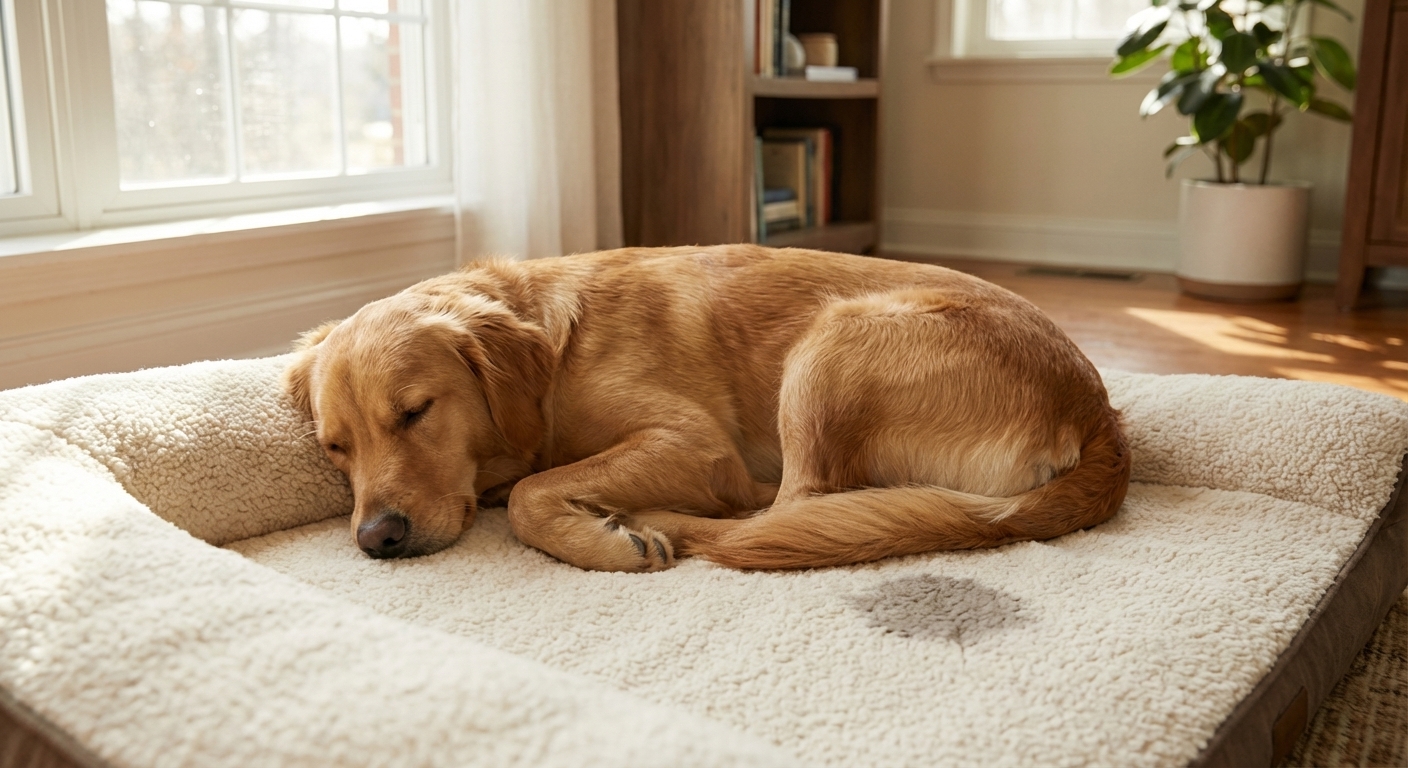
If your dog pees a little when excited, you’re not alone. Learn how to tell excitement vs submissive peeing, use calm greeting routines, mat training, and ...
Article
•
Designer Mixes
Stop Excited Peeing in Dogs

Shari Shidate
Designer Mixes contributor
If your dog urinates when they are excited, you are not dealing with a “bad dog.” In my work as a veterinary assistant, I see this all the time, especially in puppies, adolescents, and sweet, sensitive dogs who love people a little too much.
The good news is that excited urination is usually manageable with the right plan. Below are practical, veterinarian-aligned steps you can start today, plus clear signs it is time to call your veterinarian.
What excited peeing is (and what it is not)
Excited urination is an involuntary release of urine during greetings or high-arousal moments. It is most common when a dog is:
- Greeting people at the door
- Meeting new dogs or visitors
- Being talked to in a high, enthusiastic voice
- Getting picked up or leaned over
- Coming out of a crate after a long rest
This is different from, but can sometimes overlap with, other causes of accidents. Many dogs that “excited pee” also show appeasement or submissive signals in the same moment.
- House-training accidents: often happen when a dog simply needed to go out.
- Urine marking: small amounts on vertical surfaces, often in multiple spots.
- Submissive or fear-related urination: more likely when paired with stress signals like crouching, tail tucked, avoiding eye contact, freezing, or rolling over.
- Medical urinary problems: frequent urination, straining, discomfort, increased thirst, or accidents that are not tied to greetings.
Why dogs pee when excited
Most excited pee moments come down to a mix of three things:
- Immature bladder control: Puppies and some adolescents simply do not have full control yet.
- Big emotions and high arousal: The nervous system revs up fast, and the bladder can leak.
- Learning history: If greetings are always intense, dogs can get stuck in an excitement loop.
Many dogs improve as their body control and emotional regulation mature, especially with calm, consistent training.
Rule out medical causes first
If excited urination is new, suddenly worse, or happening outside of greetings, a quick vet check is worth it. Some medical issues can look like behavior problems, including urinary tract infection, bladder inflammation, urinary stones, or hormone-related incontinence.
Call your vet promptly if you notice:
- Straining to urinate or crying out
- Blood in the urine
- Frequent small pees throughout the day
- Increased drinking
- Accidents during sleep or when fully relaxed
- Strong urine odor or licking the genital area more than usual
Your veterinarian may recommend a urinalysis, and sometimes a urine culture, to confirm what is going on. If your dog has true incontinence, medical treatment may be recommended depending on the diagnosis.
Simple management that can help quickly
Management is not “giving up.” It prevents repeated accidents while you teach calmer greetings.
1) Potty first, then greet
Before guests come in, take your dog outside and give them time to fully empty their bladder. Do not rush. For some dogs, a second “try” 2 to 3 minutes later often helps them empty a bit more.
2) Keep greetings low-key
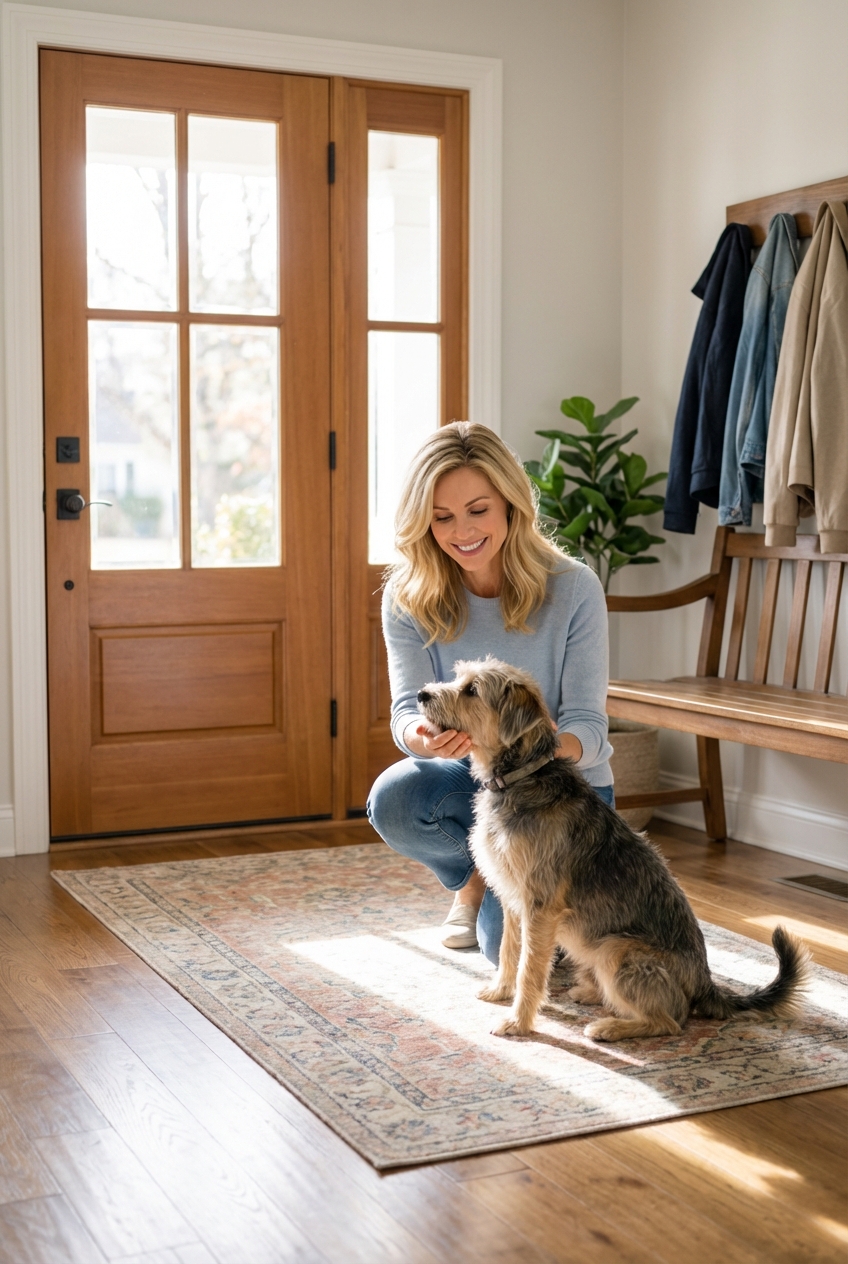
Ask visitors to ignore your dog for the first 30 to 60 seconds. No eye contact, no leaning over, no baby talk. Calm voice, calm body.
3) Use the “meet outside” trick
If the door is the biggest trigger, start the greeting in the yard or driveway after your dog has already pottied. Many dogs do better without the pressure of the doorway.
4) Remove intensity at the door
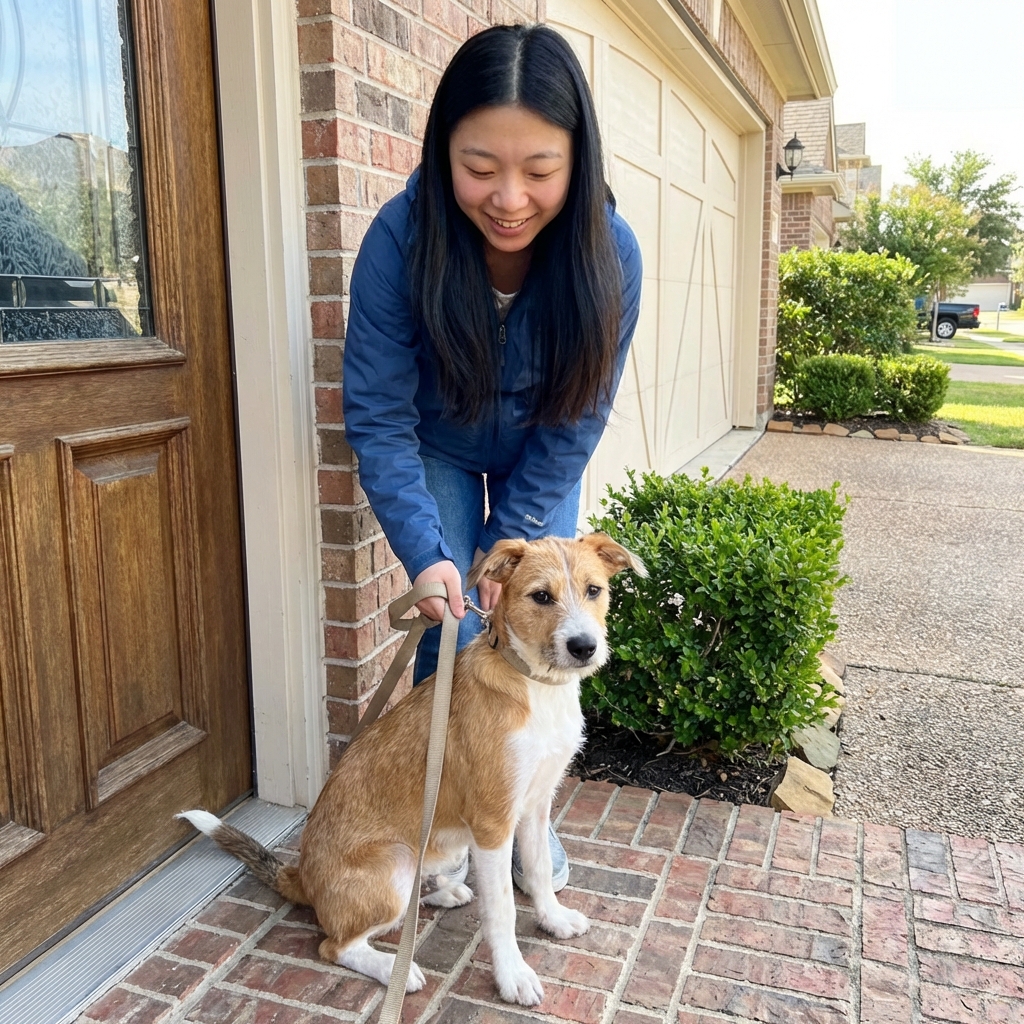
- Keep your dog on a leash for arrivals so they cannot rush the guest.
- Use a baby gate or exercise pen to create space.
- Try a stuffed food toy or scatter a small handful of treats on the floor to encourage sniffing and calmer movement.
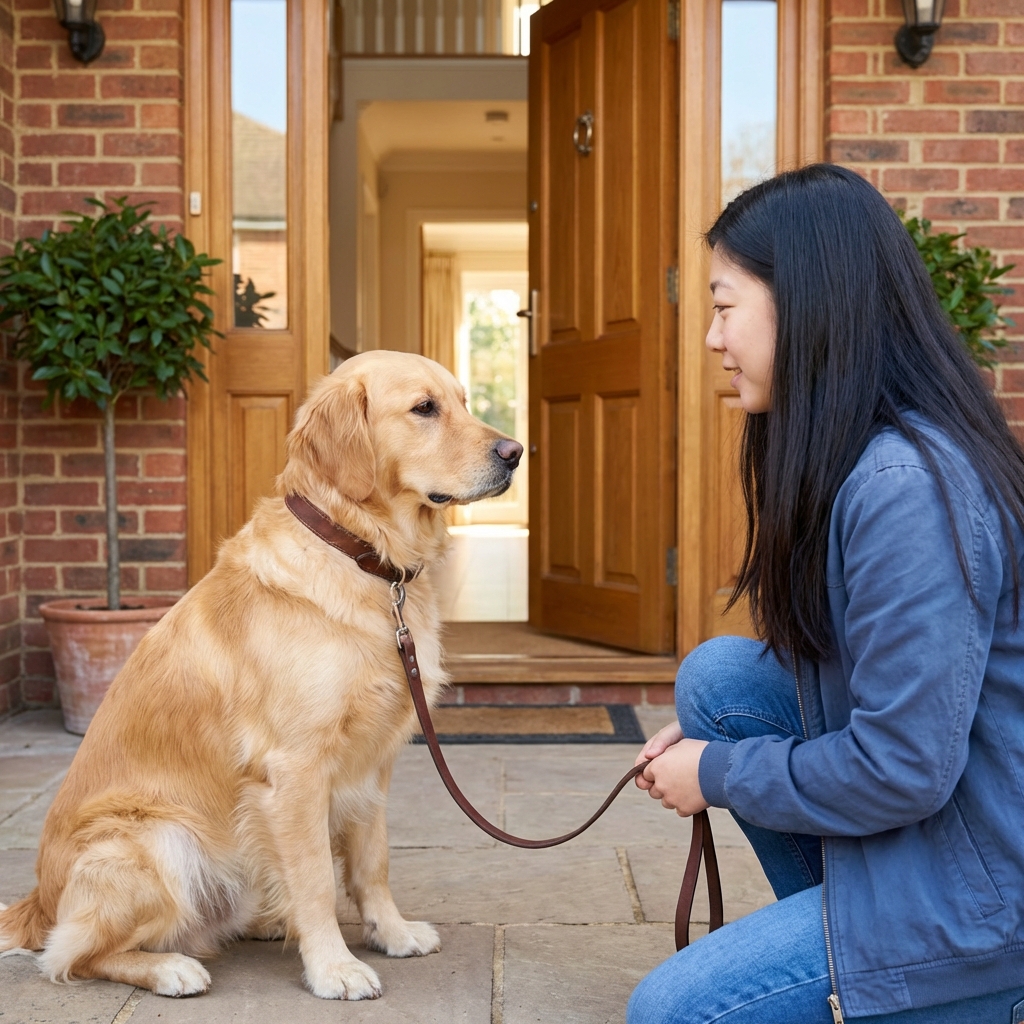
Greeting do and do not
- Do: approach from the side, keep your body soft, and speak quietly.
- Do:
- Do not:
- Do not:
Train calm greetings
Your goal is to teach your dog that greetings are predictable and calm, not a burst of intensity. Think short, successful practice sessions rather than big real-life chaos.
Step 1: Teach an incompatible behavior
Pick one behavior your dog can do instead of jumping and wriggling around, such as:
- Sit for greetings
- Go to mat and lie down
- Find it (sniff for treats on the floor)
Practice when no one is at the door first. Reward with tiny treats. Keep sessions upbeat but not intense.
Step 2: Add mild excitement
Walk to the door, touch the knob, open it a crack, then reward calm behavior. If your dog gets too excited, you went too fast. Make it easier.
Step 3: Add a person
Recruit a friend who will follow instructions. The helper should enter quietly, turn sideways, and ignore the dog until the dog is calm. Then reward calm behavior and allow gentle petting if your dog stays relaxed.
Step 4: Generalize
Practice with different people, different times of day, and different entry points. Dogs do not automatically generalize skills, so variety matters.
If you punish excited urination, you can accidentally create anxiety around greetings, which often makes the problem worse. Calm, clear training is often the quickest path forward.
What to do in the moment
If your dog starts to pee during a greeting, here is what helps most:
- Stay neutral: no scolding, no big reaction.
- Pause attention: step back and reduce excitement.
- Quietly lead them outside: if you can do so calmly, give them a chance to finish.
- Clean with an enzymatic cleaner: it helps remove urine residue and odor so your home stays fresh.
Then reset the situation. Try again with a calmer entry, or give your dog a short break behind a gate with a chew.
How long does it take?
It depends on age, temperament, and consistency. Many puppies improve noticeably in a few weeks with calm greetings and routine potty breaks. Some dogs need a few months of practice, especially if the whole household is high-energy at the door.
If you are seeing steady improvement, you are on the right track.
Special situations
Puppies
For puppies, excited urination is incredibly common. Keep greetings gentle, increase potty breaks, and remember that bladder control is still developing. Avoid picking them up during high excitement, since that can put pressure on the bladder.
Adult dogs with new leaks
If your adult dog suddenly starts leaking urine, or if it happens during sleep, talk to your veterinarian. Hormone-related incontinence can be more common, especially in some spayed females, but it can occur for other reasons too. Age, body size, and individual anatomy can all play a role, and your vet can help you sort out the cause.
Shy or fearful dogs
If your dog is urinating from nervousness, focus on confidence and consent-based handling. Ask guests to toss treats, keep distance, and let the dog approach on their own timeline. A certified positive-reinforcement trainer can be a wonderful support here.
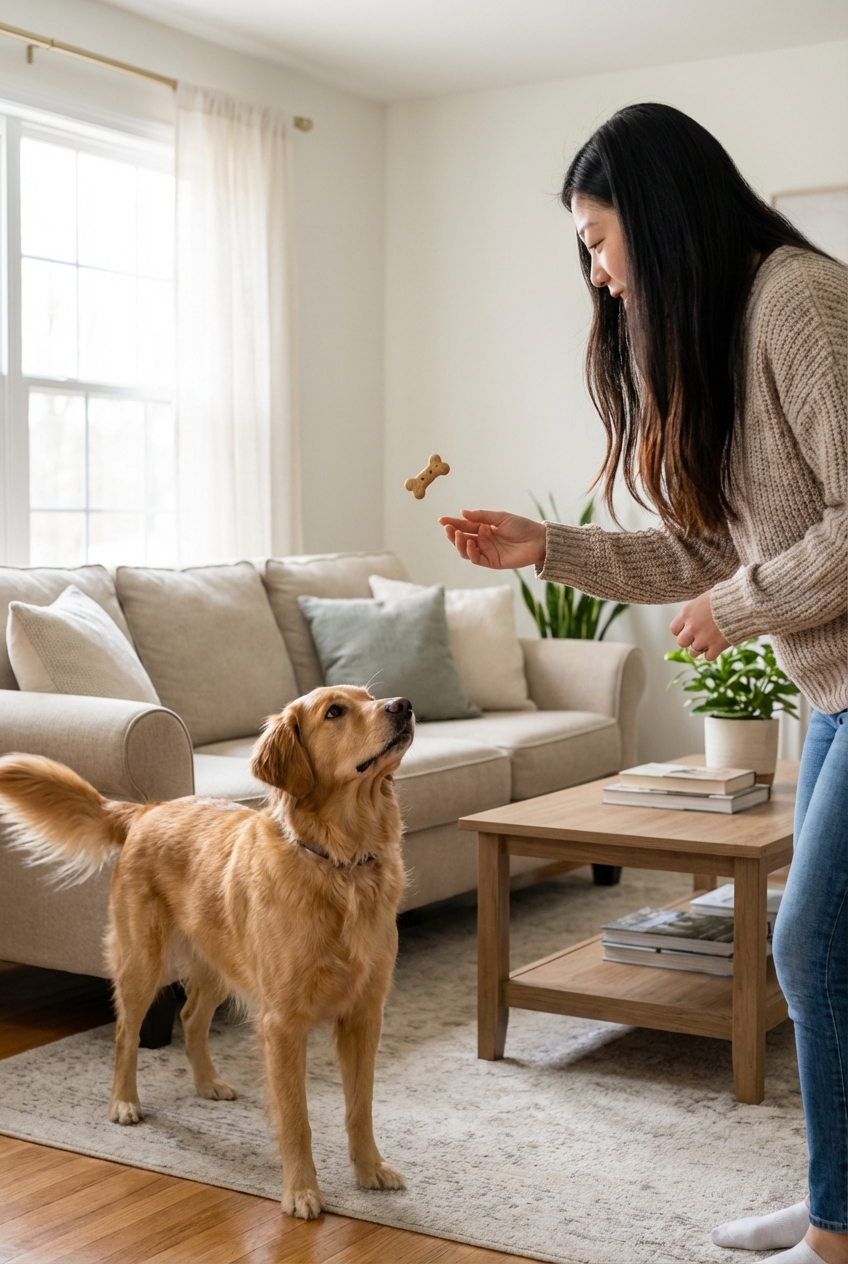
A simple 7-day plan
Days 1 to 2: Set up success
- Potty break before every greeting
- Visitors ignore dog for 60 seconds
- Use a leash or gate at the door
Days 3 to 5: Train the replacement behavior
- Practice “sit” or “go to mat” away from the door
- Do 3 short sessions per day, 2 minutes each
- Reward calm, quiet behavior
Days 6 to 7: Add door practice
- Touch knob, open door slightly, reward calm
- Add a helper for one calm practice greeting
- End sessions before your dog gets overly excited
Small steps done consistently beat big, stressful training attempts every time.
When to bring in a pro
Consider support from your veterinarian and a certified trainer if:
- There is no improvement after 4 to 6 weeks of consistent work
- Your dog also shows fear, cowering, or avoidance during greetings
- Accidents happen in many contexts, not just excitement
- You are overwhelmed and need a clear plan
Look for a reward-based trainer with credentials such as CPDT-KA, KPA-CTP, or IAABC. Avoid anyone who recommends intimidation or punishment for urination issues.
Bottom line
Excited peeing is common, usually fixable, and not something to be ashamed of. Focus on calm greetings, smart potty timing, and gentle training that helps your dog feel regulated and successful. With consistency, most dogs improve dramatically, and many grow out of it entirely.