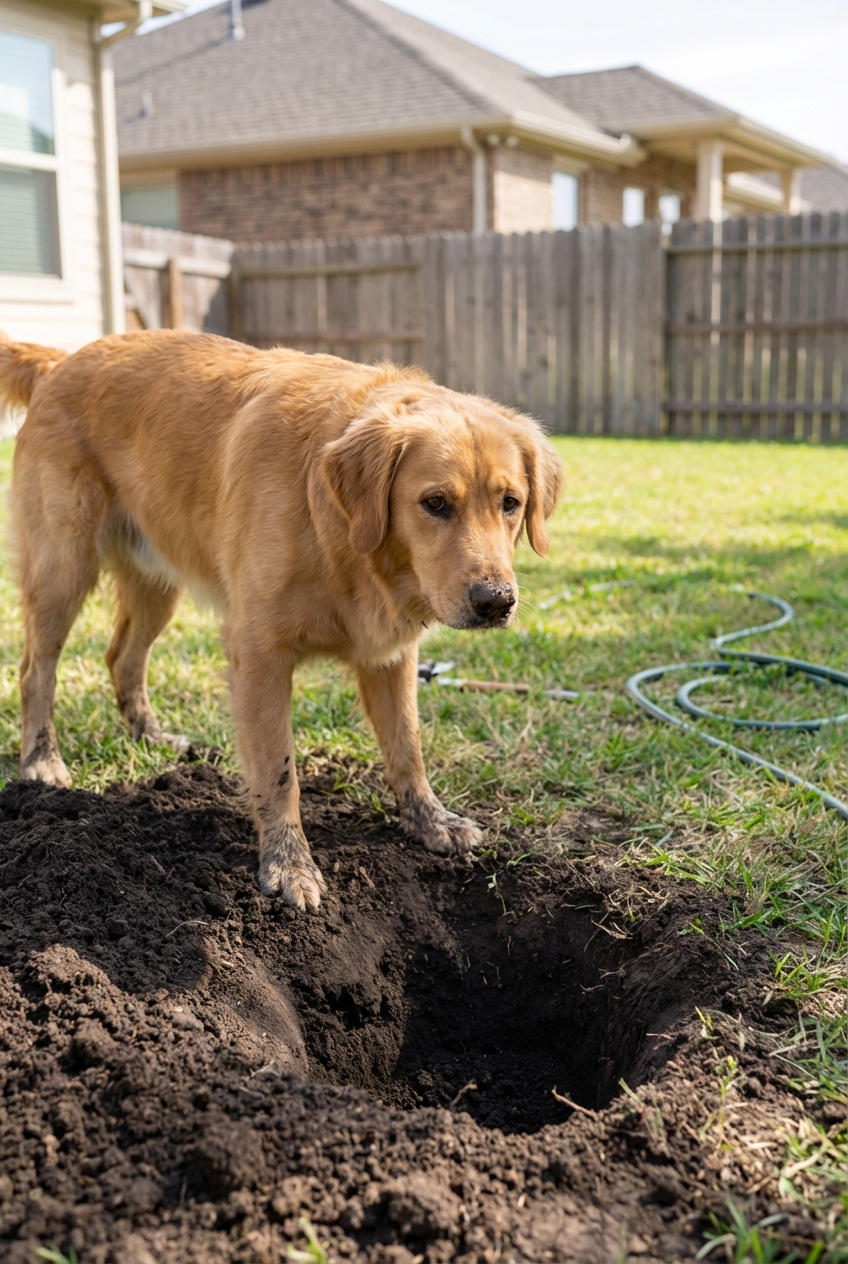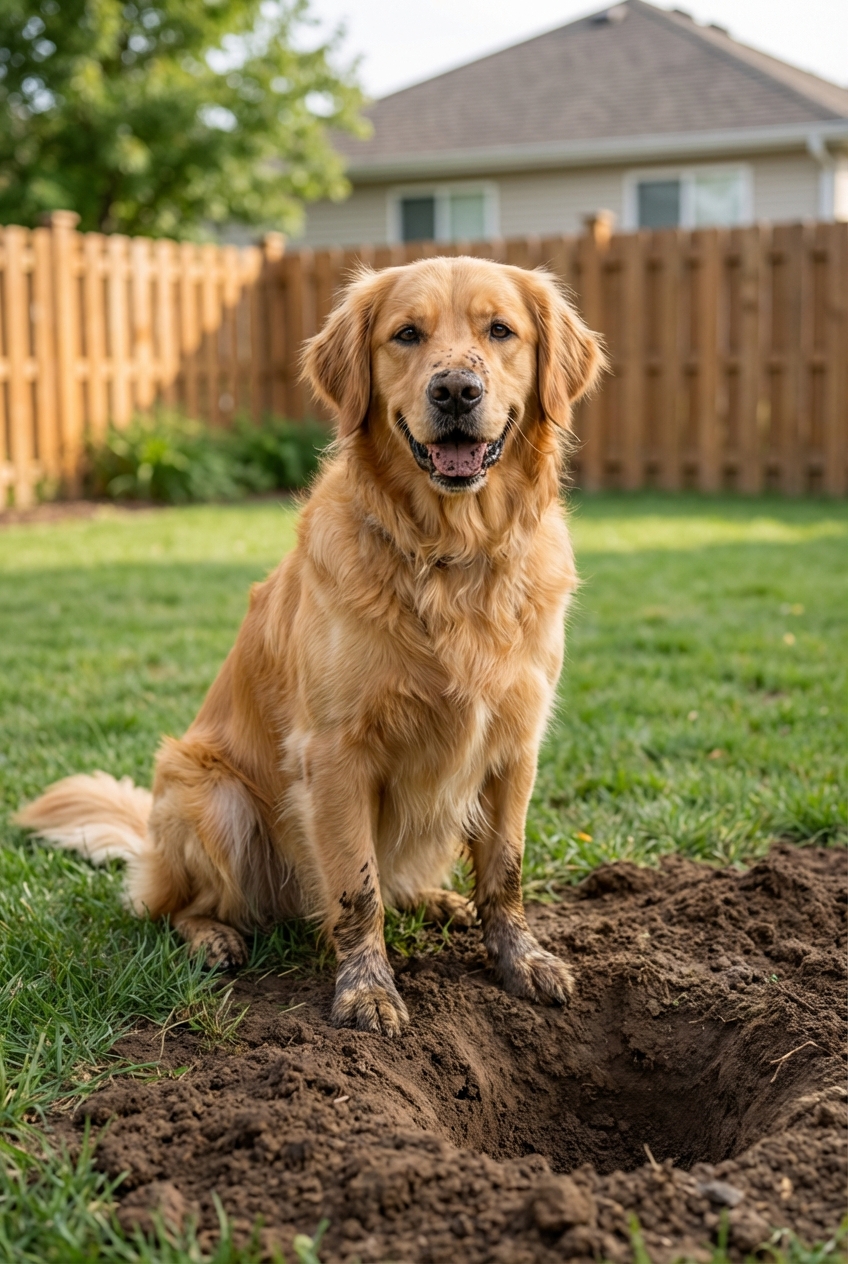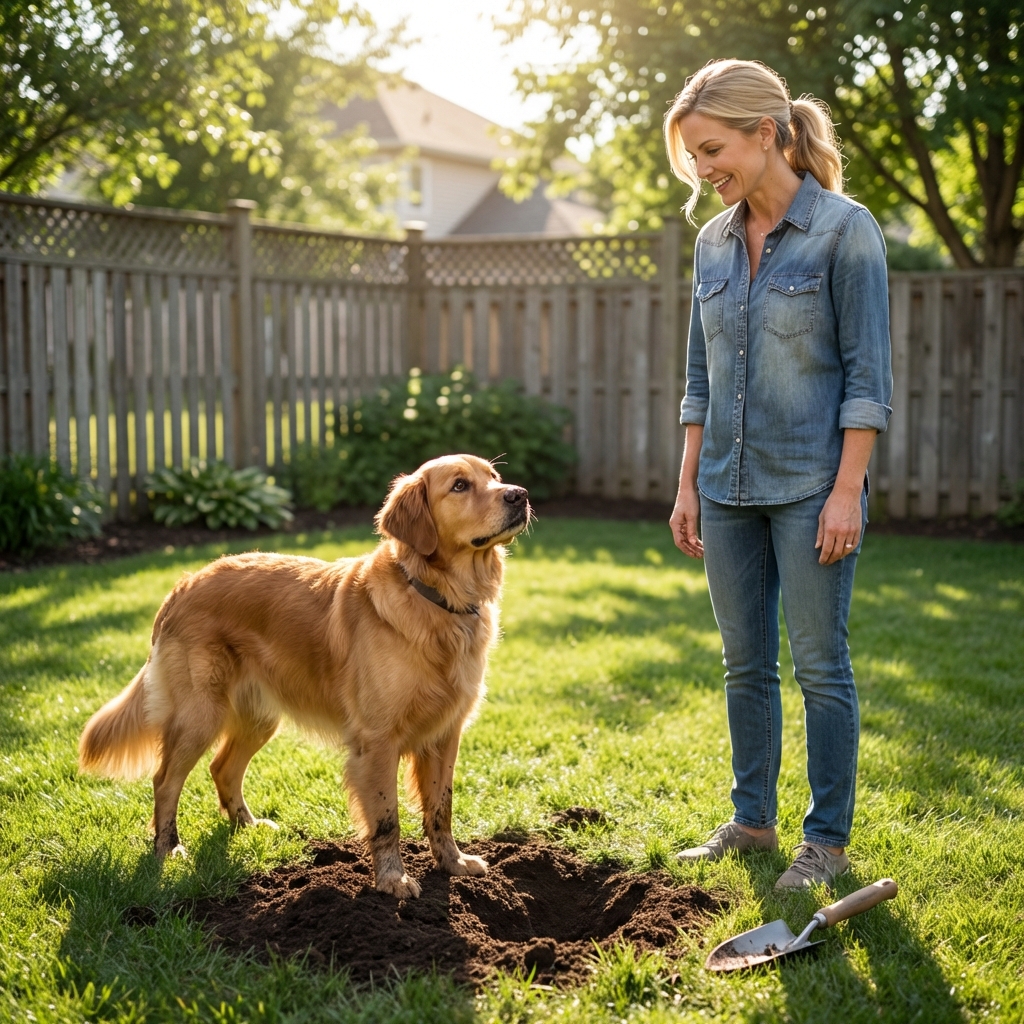
Stop yard and fence-line digging without harsh corrections. Learn the real reasons dogs dig, plus management, a dig pit, redirect cues, enrichment, and a sim...
Article
•
Designer Mixes
Stop Dogs From Digging in the Yard

Shari Shidate
Designer Mixes contributor
If your dog is digging up your yard, I promise you are not “failing.” Digging is a normal canine behavior, and most dogs do it for very specific, addressable reasons: boredom, excess energy, heat relief, prey drive, anxiety, or simply because digging has become a self-rewarding habit.
As a veterinary assistant in Frisco, Texas, I see this all the time. The good news is you do not have to choose between a happy dog and a nice lawn. You just need a plan that meets your dog’s needs while making the “wrong” digging spots less rewarding.
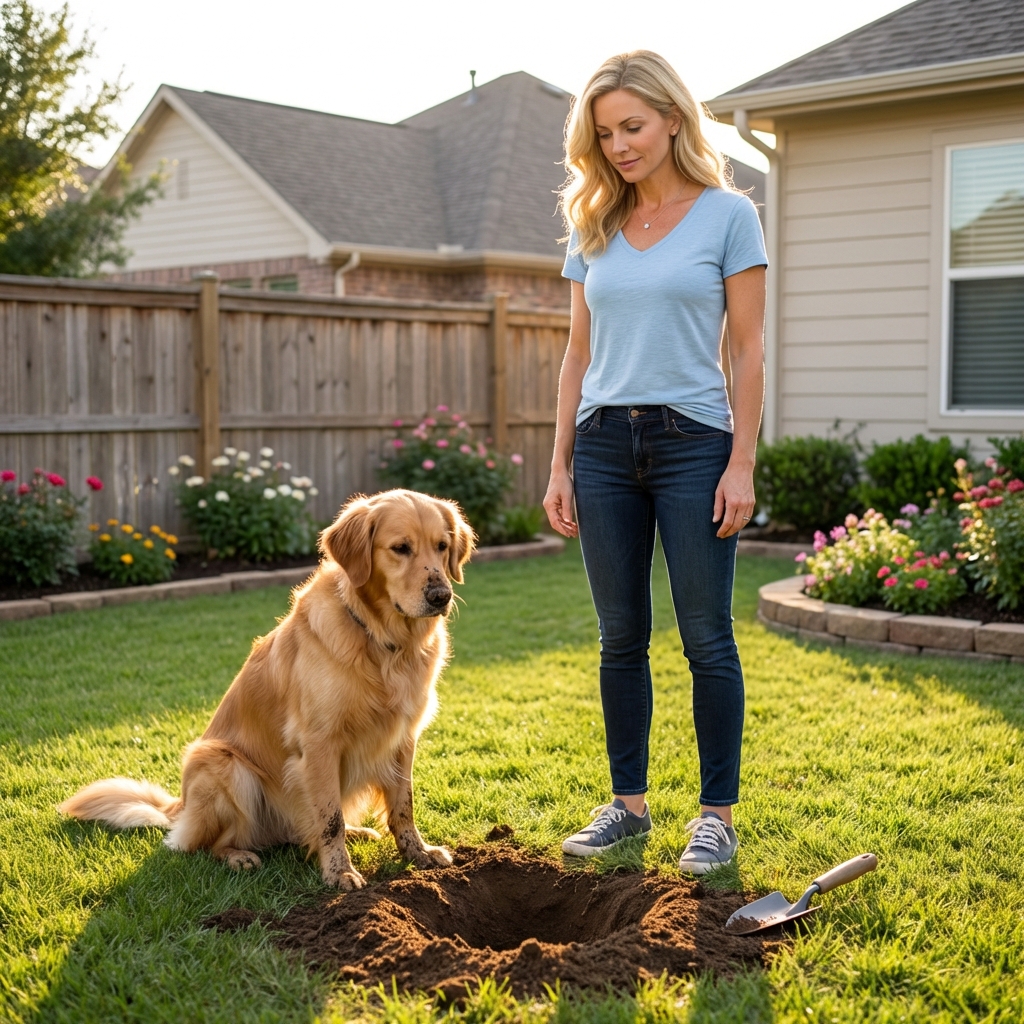
Why dogs dig (the real reasons)
Digging is not spite. Dogs are not trying to “get back at you” for leaving the house. Usually, at least one of these is driving the behavior:
- Boredom and under-stimulation: Digging is an activity that feels good and kills time. Some dogs also dig at roots or sprinkler spots simply because the texture and feedback are interesting.
- Too much unused energy: High-drive breeds and young dogs often dig because they are physically underworked.
- Heat or comfort seeking: Dogs will dig cooler soil to lie in during hot weather or to create a cozy resting spot.
- Prey drive: Moles, gophers, lizards, insects, and other critters can trigger digging.
- Anxiety and separation stress: Some dogs dig along fences, gates, or near doors when they feel distressed.
- Escape behavior: Digging under a fence can be motivated by boredom, fear, or the desire to reach something exciting.
- Instinct and genetics: Terriers, dachshunds, and northern breeds are simply born with a stronger urge to dig.
Most dogs are a mix. For example: an energetic terrier plus a shady corner plus squirrels equals a perfect digging storm.
Clues to the cause
If you are not sure why your dog is digging, the where and when can tell you a lot:
- Shady dirt on hot days: usually cooling off or comfort.
- Along the fence line: often escape, barrier frustration, or chasing something outside the yard.
- Near trees, bushes, or garden beds: scent hunting, critters, or just a fun texture.
- Near sprinklers or damp areas: cool soil, worms, or interesting smells.
- Mostly when left alone: possible separation-related stress (especially if paired with barking, drooling, destruction, or attempts to get out).
This is not about labeling your dog. It is about picking the right solution faster.
First, do a quick safety check
Before you jump into training, rule out a few issues that can make digging worse.
Heat management
If your dog digs most on hot days, treat this as a comfort issue first. Provide:
- Reliable shade during the hottest part of the day
- Fresh, cool water in multiple spots
- A cooling mat or a well-ventilated covered run area
- Outdoor time earlier in the morning and later in the evening
Pest control, humanely
If digging is focused in one area and your dog seems intensely fixated, look for signs of burrowing critters. Consider contacting a humane wildlife or pest professional. Addressing the root cause reduces the “payoff” your dog gets from digging.
When to talk to your veterinarian
Call your veterinarian if digging suddenly appears alongside pacing, whining, appetite changes, or other new behaviors. Pain, cognitive changes in seniors, or anxiety can change behavior quickly, and it is always worth checking.
Quick note: This article is general guidance and does not replace medical or behavior advice for your individual dog.
The core strategy: needs, management, training
Here is the simple framework that works for most families:
- Meet the need: exercise, enrichment, comfort, social time.
- Manage access: limit opportunities to rehearse digging in forbidden zones.
- Train an alternative: teach what you want instead and reward it.
If you only do step three, you often lose because digging is naturally rewarding.
Step 1: Tire the body and feed the brain
Many dogs do not need “more backyard time.” They need more purposeful activity.
Daily exercise that actually counts
- Sniff walks: A 20- to 40-minute decompression walk where your dog can sniff safely can be more satisfying than a fast walk around the block.
- Fetch with rules: Short sessions, breaks, and a stop cue. Quality beats endless throwing.
- Tug games: Excellent for energy burn and bonding, especially for terriers and mixes.
- Training on the move: Practice sit, touch, loose-leash walking, and recall during walks for mental work.
Enrichment that reduces digging
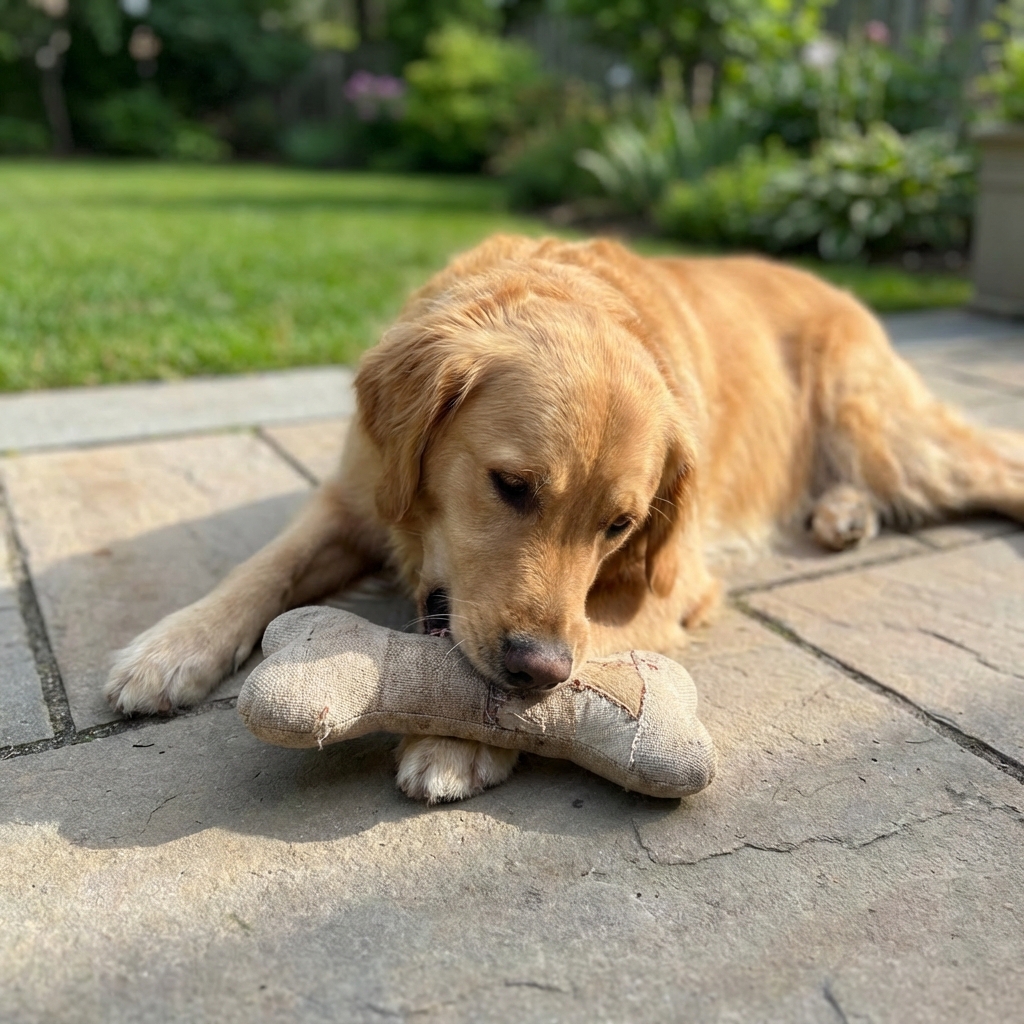
- Food puzzles and stuffed Kongs: Use part of your dog’s daily calories here.
- Scatter feeding in grass: Toss kibble or treats and let your dog forage. Safety reminder: only do this if your lawn has not been treated recently with pesticides, herbicides, or fertilizers.
- Sniff games: Hide treats around the yard and say “find it.”
- Chew time: Vet-approved chews help dogs self-soothe and stay occupied.
If your dog digs when you are busy, a predictable routine helps. Many dogs do better when they can count on when their needs will be met.
Step 2: Create a legal digging zone
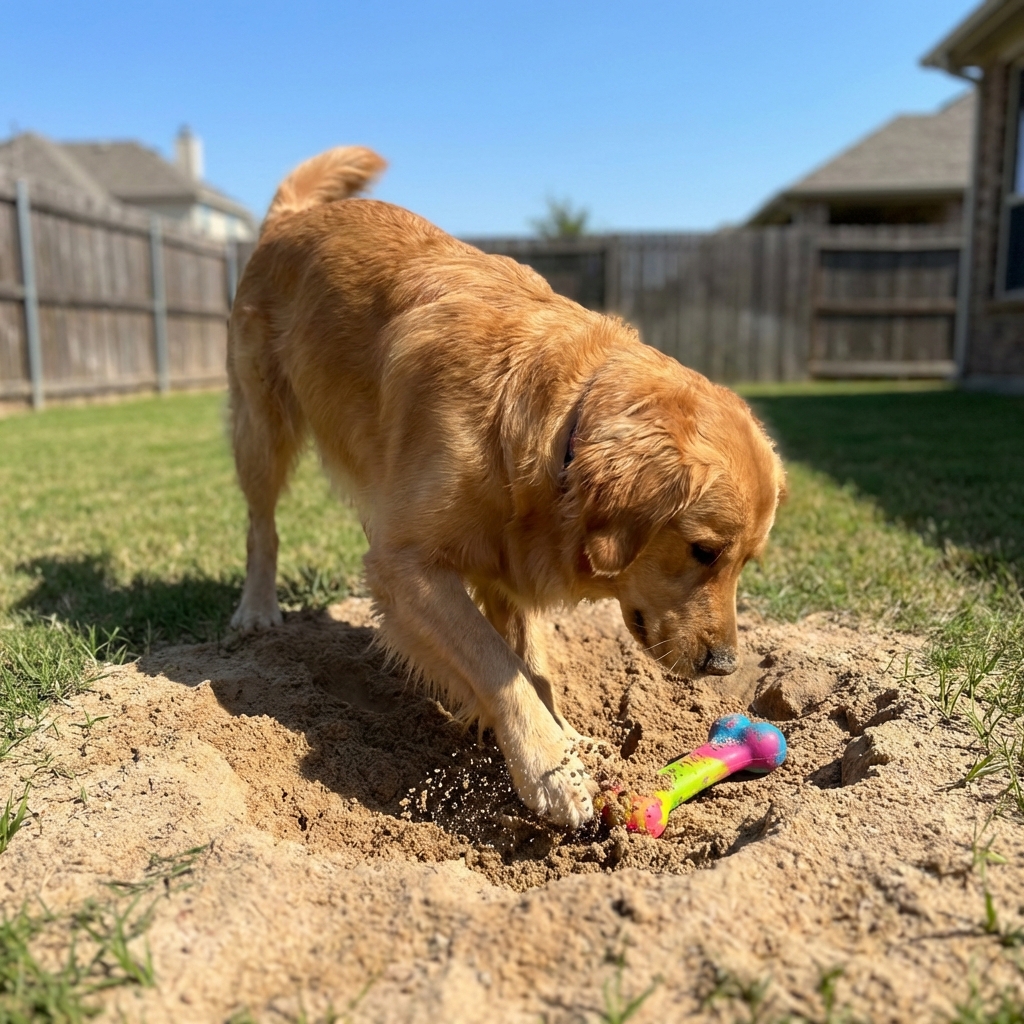
Trying to eliminate digging entirely is often unrealistic. Instead, give your dog a place where digging is allowed and rewarding.
Easy DIY dig pit
- Pick a spot that is naturally attractive, like a cool shady area.
- Use a child’s sandbox, a framed section of yard, or a large planter area.
- Fill with clean play sand or soft soil that drains well.
- Add a few durable toys.
Two quick safety notes: Supervise at first to make sure your dog is not eating sand or dirt. If they do, switch to a topsoil and dirt mix and talk with your veterinarian if ingestion is persistent. Also avoid cocoa mulch, fertilizers, or treated soils in any digging area.
Teach it like a fun game
- Bring your dog to the dig zone on leash.
- Scratch the surface with your hand and cheerfully say “dig.”
- When your dog paws at it, reward immediately with praise or a treat.
- Hide a toy or treat shallowly in the pit, then gradually bury deeper.
Important: reward digging only in the approved spot. The clarity helps your dog succeed faster.
Step 3: Make the “no-dig” zones boring
Now that your dog has a “yes” spot, your job is to make the “no” spots pay off less and less.
If your dog has a favorite hole location, you need to remove the reward from that spot.
Block access while you retrain
- Use temporary garden fencing, x-pens, or patio furniture to limit access.
- Supervise backyard time until habits improve.
- Use a long line for dogs who make a beeline for holes.
Fix the hole the right way
After you remove your dog from the area, fill the hole and tamp it down firmly. If you can, place a large flat stone, pavers, or a patio block just under the surface in repeat offender spots, especially along fences.
Yard safety: before you dig, bury wire, or place barriers, check for irrigation lines and call 811 (or your local utility locating service) to mark any buried utilities.
Use safe deterrents carefully
Some owners use smell-based deterrents. Be cautious: many products are irritating, and some “home remedies” can be unsafe. Avoid anything that could harm paws or be toxic if licked. If you try a commercial dog-safe deterrent, test in a small area first and prioritize management and training over sprays.
Step 4: Teach an interrupt and redirect
Your goal is to catch digging early, interrupt calmly, then show your dog what to do instead.
What to do in the moment
- Approach calmly. No yelling. Yelling can increase arousal or stress, and it usually does not teach an alternative.
- Interrupt with a cue. Try “this way” or “come.”
- Reward the redirect. The second your dog disengages from the dirt, reward with a treat and movement to an activity.
- Offer an alternative. “Find it,” tug, a short training burst, or guide them to the dig pit.
If your dog is extremely locked in, you waited too long. Increase supervision and reduce free roaming until the habit weakens.
Training works best when your dog practices the right behavior more often than the wrong one.
Fence-line digging and escape attempts
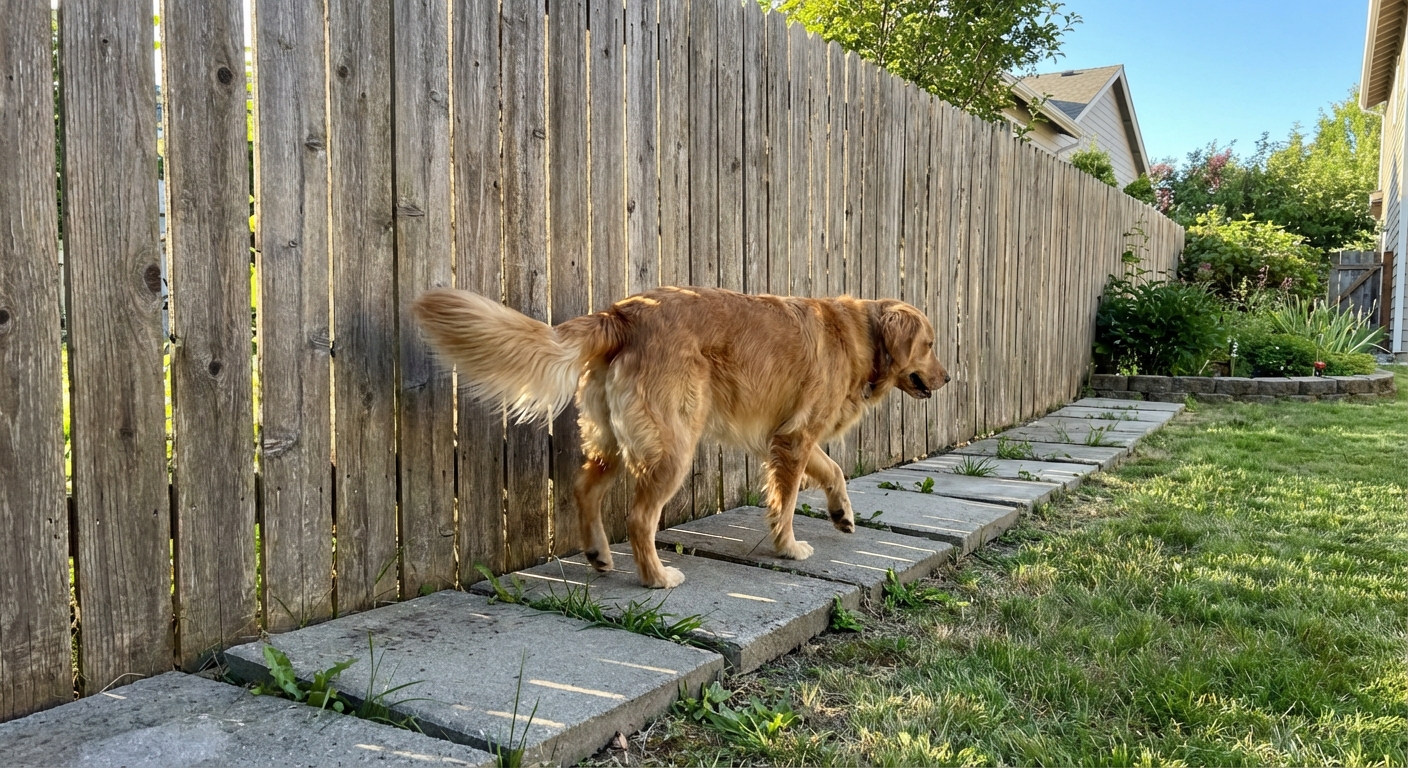
Digging along the fence is its own category. It often has a purpose: to get out, to get to another animal, or to patrol a boundary.
Practical fixes
- Improve fence security: Bury hardware cloth or welded wire along the base, bent in an L-shape inward.
- Add a digging barrier: Place pavers or large, stable rocks along the fence line. Avoid loose, shifting rock that can bruise paws. If you use rocks, choose pieces too large to swallow.
- Reduce triggers: If your dog sees another dog and reacts, use visual barriers like privacy screening.
- Increase structured activity: Escape behavior often decreases when a dog’s daily needs are met.
If your dog is escaping, do not leave them unattended until the fence line is secured. It is a safety issue first.
Breed and life-stage tips
Puppies and adolescents
Young dogs dig because they are learning the world with their bodies. Keep outdoor time supervised, increase enrichment, and do short training sessions often. Consistency now prevents a long-term habit.
Terriers and scent hounds
These dogs were built to go after critters. A dig pit plus daily sniff work plus games like “find it” can be a game changer.
Senior dogs
If digging shows up late in life, talk to your veterinarian. Pain, hearing or vision changes, and canine cognitive dysfunction can shift behavior. Comfort, predictability, and gentle enrichment matter most.
Multi-dog households
In a multi-dog home, one dog’s digging can quickly become a group project. If you can, supervise outside time and reward calm, non-dig behavior individually. It is also okay to rotate yard time while you retrain so your dogs are not rehearsing the habit together.
What not to do
- Do not punish after the fact. Your dog will not connect the scolding with the hole you found 20 minutes later.
- Do not use harsh aversives. They can increase anxiety and make yard time stressful.
- Do not rely on “more yard time” alone. Many dogs dig more when left outside bored.
- Do not ignore the heat. In Texas summers, overheating is real. Digging for cooler ground can be a sign your dog needs better heat relief.
A simple 14-day anti-digging plan
Progress feels better when you have a schedule. Here is a starter plan you can adjust.
Days 1 to 3: Reset
- Supervised yard time only
- One sniff walk daily
- Food puzzle for one meal
- Block off the worst digging zones
Days 4 to 7: Add the dig pit
- Introduce the dig zone and reward digging there
- Short training in the yard: come, touch, this way
- Play “find it” outside once per day
Days 8 to 14: Reduce management gradually
- Allow limited free time only if your dog chooses non-dig behaviors
- If digging returns, tighten supervision again
- Keep rewarding the right choices, especially calm yard behavior
Many families see improvement within two weeks, especially with consistent supervision and a solid outlet like a dig pit. Dogs with long-standing habits, high prey drive, or separation-related stress may take longer. Consistency beats intensity.
When to bring in a professional
If digging is paired with panic behaviors, nonstop barking, destruction, or repeated escape attempts, it is time for support. If it happens mainly when your dog is alone, consider getting help early, since separation anxiety often needs a targeted plan. A qualified positive reinforcement trainer or a veterinary behavior professional can help you identify triggers and build a plan that keeps everyone safe.
Your dog is not trying to ruin your yard. They are trying to meet a need. Once you figure out which need it is, the solution becomes much clearer, and a whole lot kinder.