Dog humping isn’t always sexual. Learn the most common triggers (excitement, stress, attention, habit, hormones), when to see a vet, and a step-by-step pla...
Article
•
Designer Mixes
Stop Dog Humping

Shari Shidate
Designer Mixes contributor
As a veterinary assistant, I can tell you this with a lot of compassion: humping is one of the most common behavior complaints, and it is also one of the most misunderstood. It can be sexual, yes. But it is also very commonly linked to excitement, stress, attention-seeking, or a learned habit that keeps getting reinforced.
The good news is that many dogs improve noticeably within days to weeks when you use a simple plan that addresses why it is happening for your dog. Some dogs stop entirely. Others need more time, especially if anxiety, pain, or a long-standing habit is involved.
Quick note: This article is general behavior guidance and does not replace veterinary advice. If you are worried about pain, infection, or sudden behavior changes, your veterinarian should be your first call.
What it means
Humping is a normal canine behavior. It becomes a problem when it is frequent, intense, socially inappropriate, unsafe, or escalating into conflict with people or other pets.
Common reasons dogs hump
- Overexcitement: greetings, play, visitors, kids running, doorbell.
- Stress or anxiety: changes in routine, loud environments, new pets, being overtired.
- Attention-seeking: even negative attention like yelling can be rewarding if it reliably gets a reaction.
- Play behavior: especially in young dogs and adolescent dogs, it can show up during rough play.
- Hormones: intact males and females can hump more, but spayed and neutered dogs can hump too.
- Medical discomfort: skin irritation, allergies, urinary issues, anal gland discomfort, pain.
- Compulsive habit: a repeated behavior that becomes self-reinforcing.
Key takeaway: treat humping like a symptom, not a personality flaw. We change it by finding the trigger and teaching a better behavior that works in that moment.
Rule out medical causes
If humping is sudden, new, intense, or paired with licking the genitals, scooting, odor, frequent urination, straining to urinate, or restlessness, a vet visit is a smart first step. In clinic we commonly see humping related to:
- Urinary tract infection or urinary irritation
- Dermatitis or allergies causing itching in the groin area
- Anal gland discomfort
- Pain, including back or hip pain
- Female heat cycle related behaviors
Keep in mind that signs like licking or urinary changes do not automatically mean a UTI. Testing and an exam matter because several conditions can look similar.
When discomfort is driving the behavior, training alone will feel like a constant uphill climb. Treat the body, then work on the habit.

Stop practice
Behaviors that get practiced become stronger. If your dog humps daily, they are getting daily reps.
Management that helps right away
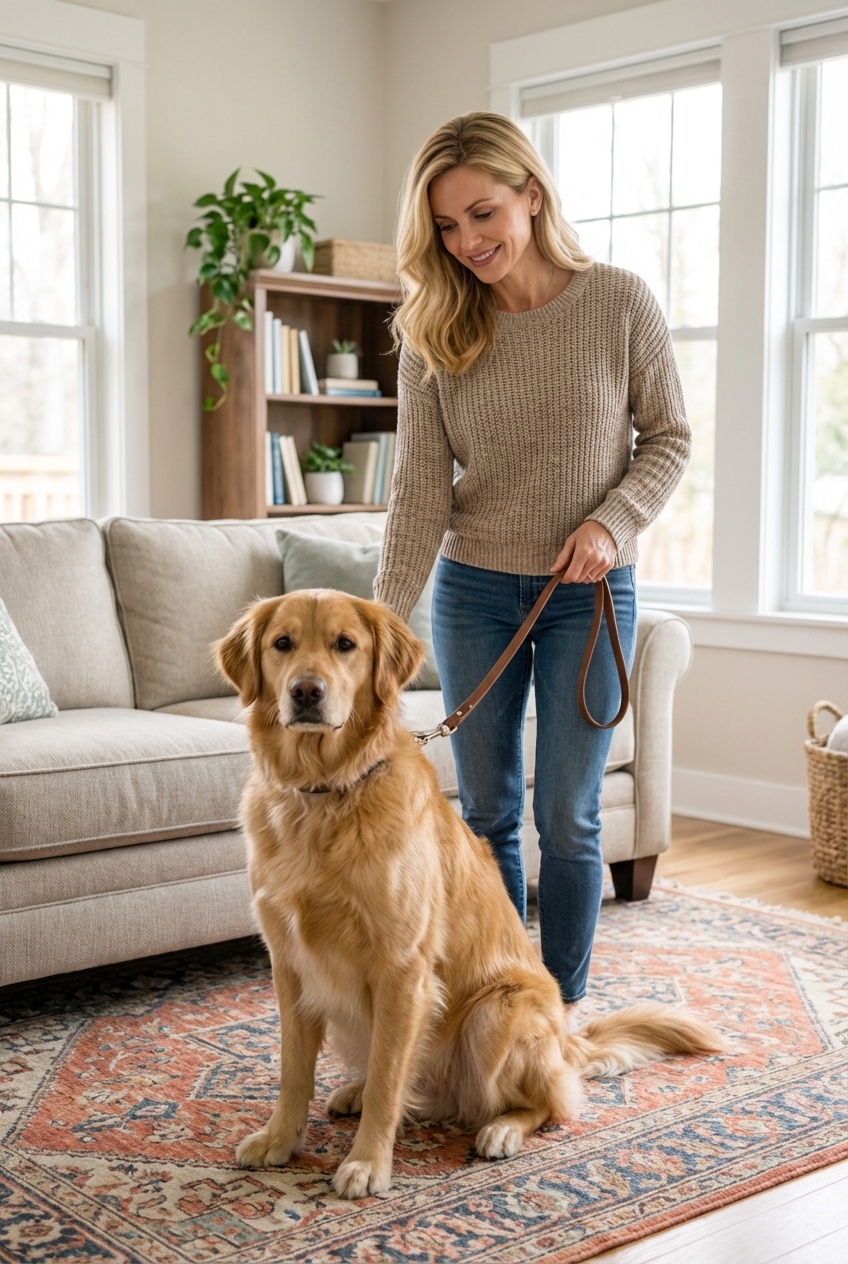
- Use a leash indoors during high-risk times (guests, evenings, kid playtime) so you can guide your dog away early.
- Remove common targets temporarily (favorite pillow, certain plush toys, dog bed) if those are the main triggers.
- Create a calm zone with a baby gate or crate when your dog is overtired or overstimulated.
- Supervise play and interrupt before it escalates.
This is not about punishment. It is about preventing the habit from getting stronger while you teach a replacement behavior.
Safety first
If your dog humps people, treat it as a safety and consent issue, not a funny moment. It is especially important around children, older adults, and anyone unsteady on their feet.
- Use barriers and leashes during busy times, especially when guests arrive.
- Teach kids not to push, grab, or yell. Adults should calmly step in.
- Move the dog, not the person. Guide your dog away with a leash or call them to you, then reward the redirect.
Important: If your dog growls, snaps, or becomes tense when you interrupt, stop trying to physically handle it and call a qualified professional. That can be a sign of fear, frustration, pain, or guarding.
Teach what to do instead
The most effective training is simple: interrupt early, redirect, reward the right choice, repeat.
Step-by-step plan
- Catch the first sign. Watch for stiffening, climbing, pawing, intense staring, or sudden over-arousal.
- Interrupt calmly. Use a cheerful cue like “This way” or “Off.” Avoid yelling, which can add fuel to excitement.
- Redirect to a specific job. Pick one or two behaviors you will reinforce heavily:
- Sit or down
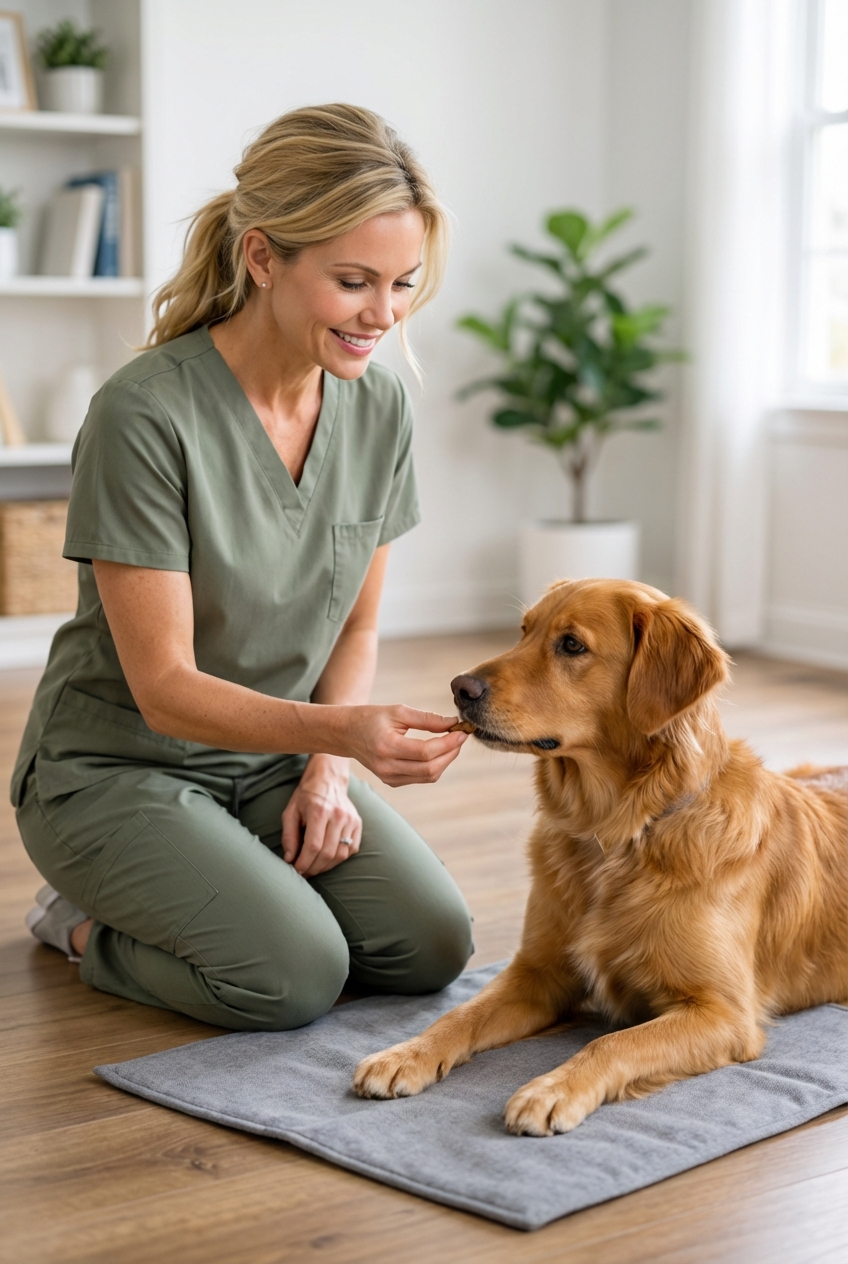
- Go to mat (place training)
- Find it (treat scatter on the floor to reset the brain)
- Touch (nose-to-hand target)
- Reward generously. Give treats, praise, or a calm toy when your dog chooses the replacement behavior.
- Repeat daily. Consistency is the “magic.” Your dog learns what works.
Tip: If your dog is too excited to take treats, that is data. You need more distance from the trigger, a calmer environment, or a higher value reward.
Do not reward by accident
Many dogs hump because it reliably turns into a game or a big reaction. Common accidental rewards include:
- Laughing, talking, or filming
- Pushing the dog off repeatedly (some dogs experience this as play)
- Letting the dog keep hovering, stalking, and escalating without interruption
Aim for calm, boring interruptions and quick reinforcement for the replacement behavior.
Better outlets
Many humpers are not under-exercised. They are under-stimulated or over-aroused. A long game of frantic fetch can actually build a dog who is better at getting worked up.
Better outlets for excitement
- Sniff walks: 20 to 40 minutes where your dog can smell, explore, and decompress.
- Food enrichment: stuffed Kongs, lick mats, slow feeders, scatter feeding.
- Short training sessions: 5 minutes, 2 to 3 times a day, focusing on calm cues.
- Chewing: veterinarian-approved chews can reduce stress for many dogs.
Think of it as teaching your dog how to come down from excitement, not just how to burn energy.
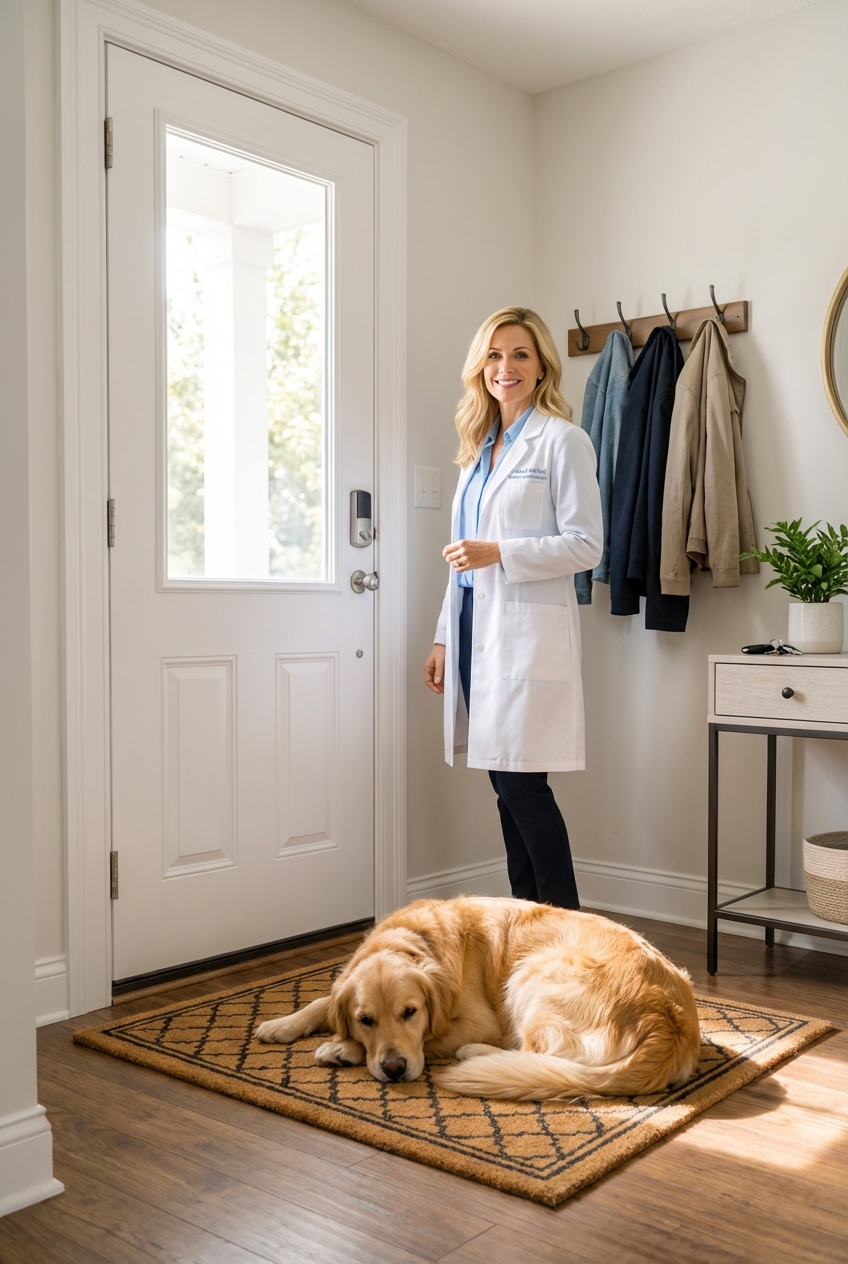
Guests at the door
Doorways and greetings are humping hotspots. Have a plan before the doorbell rings.
Try this routine
- Leash your dog before opening the door.
- Ask for “go to mat.” Reward with a treat every few seconds for staying there.
- Keep greetings calm. Guests should avoid high-pitched talk, leaning over, or rough petting at first.
- Release only when calm. If your dog pops up and starts to climb, guide them back to the mat and pay again for calm.
With consistent practice, many dogs show big improvement in one to two weeks, but the timeline varies by dog and household.
Humping other dogs
Dog-on-dog humping is one of the fastest ways to start a scuffle. If your dog is doing it, it is your cue to step in early.
Play vs. trouble
Brief mounting can happen in play, but separate dogs if you see any of the following:
- One dog looks stiff, pinned, tucked, or tries to escape
- The humper keeps returning immediately after being interrupted
- Vocalizing increases, hackles rise, or the other dog freezes
- It turns into body slamming, cornering, or bullying
What to do in the moment
- Call your dog away and reward.
- Take a short break (30 to 60 seconds) for sniffing and calming down.
- End the session if your dog repeatedly returns to hump. Repeated attempts mean they are too aroused to make good choices.
Skip risky setups
Be cautious about using a long line inside a busy dog park. It can tangle dogs and is against the rules in some parks. If your recall is shaky, it is usually better to skip the dog park while you train and instead practice in a fenced field, on quiet trails, or during structured playdates with one compatible dog.
Does neutering help?
Spay and neuter can reduce hormonally driven behaviors in some dogs, especially roaming and some types of urine marking or mounting. But it is not a guaranteed fix because many dogs hump for reasons unrelated to hormones, and learning history matters.
If you are deciding about spay or neuter, talk with your veterinarian about overall health, timing, and behavior. If humping is mostly excitement or anxiety, training and management will still be necessary.
What not to do
Some approaches backfire or create fear, which can increase stress behaviors over time.
- Do not punish physically (kneeing, hitting, alpha rolls). It can escalate arousal or lead to defensive behavior.
- Do not yell as your main strategy. For many dogs, loud attention is still attention.
- Do not allow kids to “handle it.” Adults should interrupt and redirect safely.
- Do not laugh it off if you want it to stop. Smiling, talking, or filming can reward the behavior.
When to get help
If humping is intense, obsessive, or tied to fear and reactivity, you do not have to figure it out alone.
- Veterinarian: rule out pain, urinary issues, allergies, and discuss medication if anxiety is significant.
- Certified trainer: look for force-free credentials (CPDT-KA, KPA, IAABC).
- Veterinary behaviorist: best for severe anxiety, compulsive behavior, or aggression risk.
Also get help sooner if your dog guards the “target” (a person, bed, toy, or another dog) or becomes snarly when interrupted. That can escalate quickly and deserves a tailored plan.
Getting help early is often faster and less expensive than trying to undo a long-standing pattern.
7-day reset
- Day 1: Identify triggers (people, dog, time of day, overstimulation).
- Day 2: Start indoor leash or baby gate management during trigger times.
- Day 3: Teach “go to mat” and reward calm daily.
- Day 4: Add “find it” treat scatters as your go-to interruption.
- Day 5: Increase sniff walks and reduce frantic high-arousal games.
- Day 6: Practice calm greeting routine with a friend.
- Day 7: Review progress, adjust triggers, and schedule a vet visit if signs point to discomfort.
Most families see improvement when they combine management (prevent practice) with one consistent replacement behavior and better calm outlets.
Bottom line
Humping is usually not dominance. It is communication, arousal, stress, discomfort, or habit. When you address the root cause, prevent rehearsals, and teach your dog what to do instead, you can get your home back to calm and your dog back to better choices.
If you want to start today, pick one thing: interrupt early and redirect to “go to mat,” then reward. Simple, kind, and surprisingly powerful.