Cat spraying is usually communication, not spite. Learn how to tell spraying vs accidents, rule out medical issues, improve litter boxes, reduce stress, and ...
Article
•
Designer Mixes
Stop a Male Cat From Spraying

Shari Shidate
Designer Mixes contributor
Cat spraying can feel personal, but it is not “spite” or “revenge.” Urine marking is a normal feline communication behavior, but frequent indoor spraying is a problem in a home setting. It usually shows up when hormones, stress, conflict, or a medical issue pushes your cat to mark territory. The good news is that most spraying can be reduced dramatically, and in many homes it can be stopped completely with the right plan.
As a veterinary assistant, I always encourage a two-track approach: rule out health problems first, then tackle hormones, stress, litter box setup, and environmental triggers. Let’s walk through a complete, practical handbook you can actually follow, based on common veterinary and feline behavior guidance.
If you only do three things, start here: (1) book a vet visit to rule out urinary pain or blockage, (2) deep clean with an enzyme cleaner so hotspots do not “call him back,” and (3) upgrade the litter box setup (more boxes, better placement, scoop daily).
What spraying is (and what it is not)
Spraying is urine marking. A cat usually stands upright, backs up to a vertical surface, lifts the tail, and releases a small amount of urine. You may see a quivering tail. The goal is communication: “I live here,” “I am stressed,” or “this area is mine.”
Inappropriate urination is different. That is when a cat squats and empties a larger amount of urine, often because of litter box aversion, pain, urinary disease, or anxiety.
Why it matters: the solutions overlap, but not completely. A cat with urinary pain will not “behavior train” out of discomfort.
Quick note: both male and female cats can spray. This guide focuses on male cats because urinary problems and hormone-driven marking are common concerns in males.
Step 1: Vet check first (do not skip)
If your male cat is suddenly spraying, spraying more than usual, crying in the litter box, visiting the box repeatedly, or producing only a few drops, schedule a veterinary visit as soon as you can. Urinary issues in male cats can become emergencies.
Medical problems that can look like spraying
- Urinary tract infection (less common in young male cats, but possible)
- Feline idiopathic cystitis (stress-related bladder inflammation)
- Urinary crystals or stones
- Partial or full urinary blockage (emergency, especially in males)
- Arthritis or pain (can change litter box use)
- Kidney disease or diabetes (more urine volume, more accidents)
Red flags that require emergency care immediately: repeated straining with little or no urine, vomiting, hiding, lethargy, a painful belly, or yowling. Obstruction can deteriorate quickly.
Your veterinarian may recommend a urinalysis, urine culture, bloodwork, and sometimes X-rays or ultrasound. Getting a clear diagnosis is the fastest path to real improvement.
Important: do not DIY pain meds, antibiotics, or urinary diets. Pain relief and prescription urinary diets can be very helpful, but they should be used under veterinary direction to avoid delays or unsafe choices.
Step 2: Neuter if he is not neutered
In intact male cats, spraying is strongly driven by testosterone. Neutering is often the most effective single intervention for hormone-driven spraying, but results vary by cat and situation.
- Many cats improve significantly within several weeks.
- Some take 1 to 3 months for hormone levels and habits to fade.
- If your cat has been spraying for a long time, or if stress and conflict are involved, you may still need behavior and environment changes to fully stop it.
If your cat is already neutered and still spraying, do not assume it is “just a behavior problem.” Neutered males spray most often because of stress, territorial conflict, or litter box issues.
Step 3: Find the trigger (location is a clue)
Spraying patterns usually are not random. Take notes for one week. The “where” often points to the “why.”
Common patterns and what they suggest
- Near doors, windows, or vents: outdoor cats, neighborhood cats, or wildlife stressors
- On new items (bags, shoes, guest luggage): unfamiliar scent, change in routine, anxiety
- On your bed or laundry: high-value social scent mixing, separation stress, conflict between pets
- In hallways or corners: territory mapping, multi-cat tension, blocked pathways
- After moving, remodeling, new baby, visitors: environment change and insecurity
Action step: write down the date, time, location, and what was happening in the home that day. This “spray log” helps you target the right fix instead of trying everything at once.
Step 4: Clean correctly so the smell does not pull him back
From your cat’s perspective, old urine is a message board. If any scent remains, many cats will remark.
How to clean urine marking
- Blot first (do not rub). Use paper towels or clean cloths.
- Do not use heat first. Avoid steam cleaners or hot air on urine before enzymatic treatment, because heat can set odor.
- Use an enzymatic cleaner made for pet urine. Follow label directions and allow full contact time.
- Avoid ammonia-based cleaners. Ammonia can smell similar to urine and may increase marking.
- Avoid strong fragrances and irritants (including bleach). Also, never mix cleaners.
- For walls and baseboards, saturate the area per product directions and let it air dry.
- For laundry, pre-treat with enzyme cleaner, then wash. Avoid high heat drying until you are sure the odor is gone.
Helpful tip: a UV blacklight can help you find old spray spots you might miss, especially on baseboards, curtains, and furniture edges.
Step 5: Fix the litter box setup
This surprises many families: improving litter box comfort can reduce spraying. Why? A cat that feels secure and satisfied about bathroom routines is often less driven to mark.
The basic litter box rules
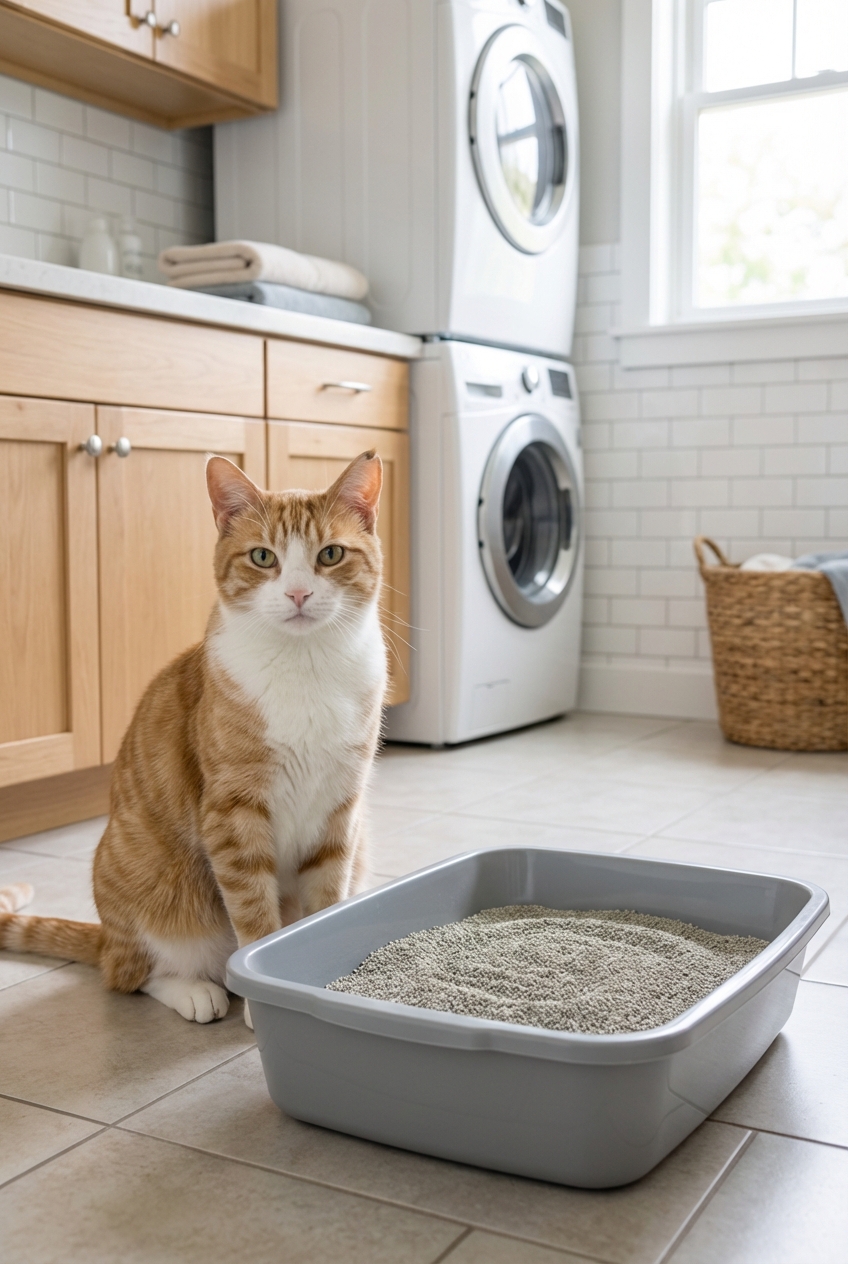
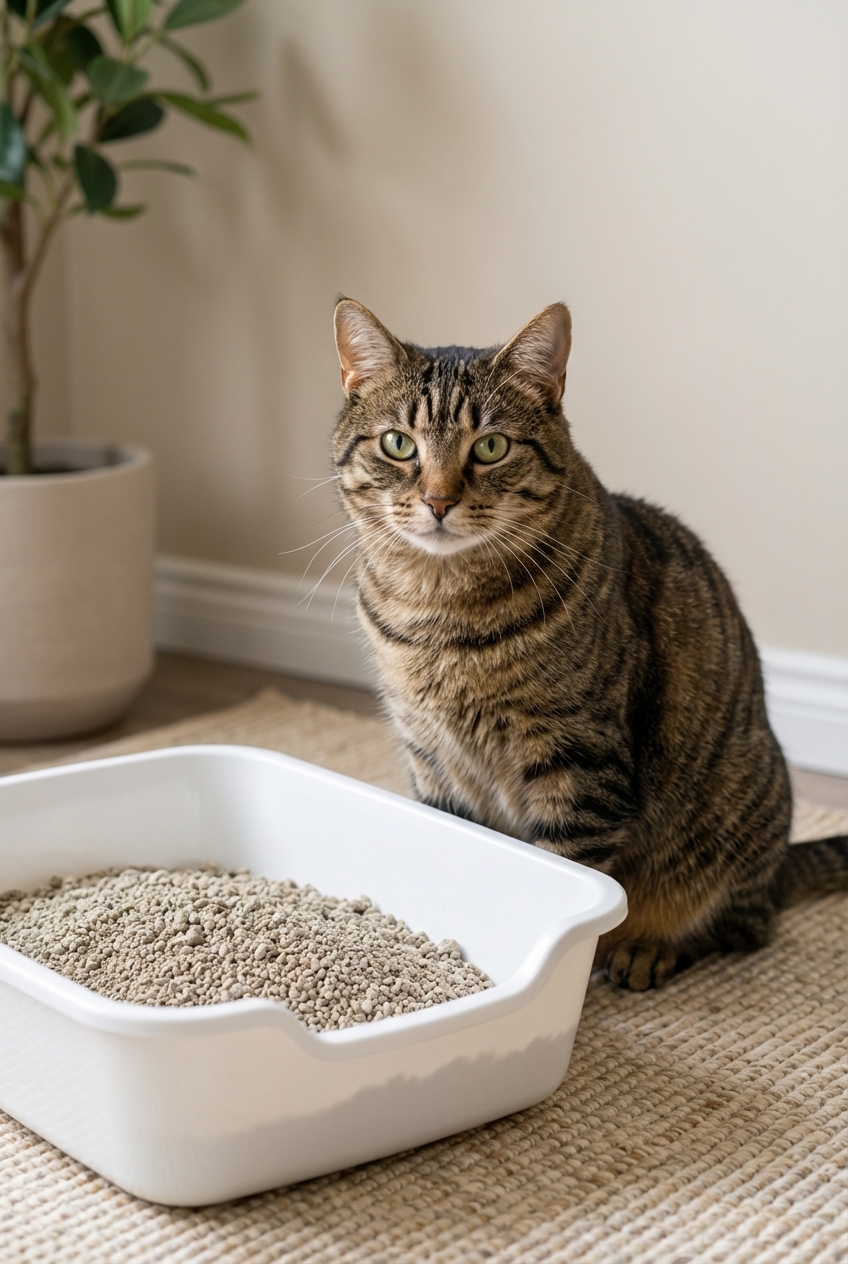
- Number: one box per cat, plus one extra
- Location: quiet, accessible, and spread out (not all in one closet)
- Size: large enough to turn around comfortably (many commercial boxes are too small)
- Style: many cats prefer uncovered boxes; covered boxes can trap odor and feel cornering
- Litter: unscented clumping litter is often best tolerated
- Depth: many cats like about 2 to 3 inches, but some prefer less. If spraying started after a change, go back to the previous depth and type while you troubleshoot.
- Entry height: low entry can help seniors or cats with arthritis. A high-sided box can help with mess, but it should still be comfortable to step into.
- Cleanliness: scoop daily; wash and fully dry the box regularly
If your cat started spraying after a litter change, box relocation, new box style, or reduced scooping, revert to the last setup that worked while you troubleshoot.
Step 6: Reduce stress and rebuild security
Spraying is frequently an anxiety signal. Cats love predictable routines, and even small changes can feel big to them.
Practical stress-reduction steps
- Keep a consistent schedule for feeding and play.
- Add vertical territory like cat trees and shelves so your cat can observe without conflict.
- Create safe resting zones in multiple rooms with beds, water, and a scratching post.
- Increase interactive play daily. Two short sessions can be better than one long session.
- Use food puzzles to redirect nervous energy and build confidence.
Stress matters because a stressed cat is more likely to mark, and a stressed multi-cat home can spiral quickly if one cat starts spraying and another starts reacting.
Step 7: Address multi-cat conflict
Even cats that “seem fine” can have silent tension. One cat may block hallways, stare, or chase, and the other cat may respond with hiding, overgrooming, or spraying.
What to do in multi-cat homes
- Separate key resources: food, water, litter boxes, and resting spots should not be forced into one area.
- Prevent bottlenecks: give multiple pathways around furniture and through hallways.
- Use gradual reintroductions if a relationship has deteriorated (especially after a move or vet visit).
- Reward calm co-existence with treats and play when cats are relaxed near each other.
If fighting is intense or escalating, bring in your veterinarian and consider working with a qualified feline behavior professional. Early help is often faster and cheaper than months of trial and error.
Step 8: Block outside triggers
Outdoor cats are a major cause of indoor spraying. Your cat can see a “trespasser” and feel compelled to mark.
Ways to reduce outdoor-cat stress
- Window film or frosted cling at the lower portion of windows
- Close blinds during peak times, often dawn and dusk
- Motion-activated outdoor sprinklers to discourage visiting cats (pet-safe setup and placement matters)
- Remove attractants like outdoor food bowls
Action step: if your cat marks one window or door repeatedly, treat that zone like a hotspot and manage it aggressively for a few weeks while you reset the behavior.
Step 9: Use calming supports
For many cats, pheromone products can take the edge off while you address the underlying issue. They work best as part of a plan, not as the only solution.
Options to discuss with your veterinarian
- Pheromone diffusers placed in the rooms where your cat spends the most time
- Pheromone sprays for targeted hotspots (follow label directions)
- Calming diets or supplements that support stress resilience
If anxiety is significant or spraying is severe, your veterinarian may discuss prescription anti-anxiety medications. This is not “giving up.” For some cats, medication creates enough calm to allow behavior change to stick.
Step 10: Reset a chronic sprayer
If spraying has become a habit, you may need a structured reset for 2 to 4 weeks.
A simple reset plan
- Use a comfortable safe room temporarily (bed, water, food, toys, scratching post, and a very clean litter box).
- Acclimate gently. Some cats find confinement stressful at first, so pair the room with meals, play, and calm routines. The goal is safety, not punishment.
- Clean the rest of the home thoroughly with enzymatic cleaner.
- Reintroduce rooms gradually once spraying stops in the safe room.
- Supervise access to previous hotspots at first.
- Add enrichment so the safe room stays positive.
This approach reduces opportunity to practice the behavior while you rebuild confident litter box habits and lower stress.
What not to do
- Do not punish. Yelling, rubbing noses, or spraying with water increases stress and can worsen marking.
- Do not use ammonia. It can mimic urine odor and encourage remarking.
- Do not use harsh, strong-smelling cleaners in hotspots and never mix cleaning products.
- Do not trap a cat with one litter box in a scary, noisy location like next to a washer or in a high-traffic hallway.
- Do not delay medical care if there are urinary signs, especially straining with little or no urine.
Quick checklist: your 7-day plan
If you want a clear starting point, here is a simple plan you can begin today.
- Day 1: Schedule a vet check if spraying is new, increasing, or paired with straining or frequent box trips.
- Day 1 to 2: Deep clean hotspots with enzymatic cleaner. Use a blacklight if needed.
- Day 2: Upgrade litter box setup (add a box, go bigger, go unscented, scoop daily).
- Day 3: Start a consistent play routine. Add vertical space and safe resting spots.
- Day 4: Reduce outdoor triggers at windows and doors.
- Day 5: If multi-cat, separate resources and watch for hallway blocking or staring.
- Day 6 to 7: Add pheromone support and reassess your spray log for patterns.
Most families see meaningful improvement when they combine these steps instead of trying just one.
When to get extra help
Consider working with your veterinarian or a qualified feline behavior consultant if:
- Spraying continues after neutering and environmental changes
- You have escalating cat-to-cat aggression
- The home has major stressors you cannot easily change (construction, frequent travel, rotating visitors)
- Your cat has recurrent urinary inflammation
You deserve support, and your cat does too. Spraying is a communication problem at heart. Once we understand what your cat is trying to say, we can usually bring peace back to your home.