Yes, older dogs can be potty trained—often faster than puppies. Use a vet checklist, a 2-week routine, supervision, fast rewards, and enzyme cleaning to st...
Article
•
Designer Mixes
Stop a Dog From Peeing on Furniture

Shari Shidate
Designer Mixes contributor
When a dog pees on furniture, it feels personal. I promise it usually is not. In most cases, it is your dog telling you something important: they are not fully house-trained (or they have had a setback), they are marking due to stress or hormones, or they have a medical problem that makes “holding it” uncomfortable. Sometimes there is overlap, and a few other common contributors can be part of the picture too, like excitement or submissive urination, multi-dog tension, or a sudden routine change.
As a veterinary assistant in Frisco, Texas, I have seen all of these. The good news is that you can reduce and often stop it, and you can do it without harsh punishment. This step-by-step handbook walks you through what to do today, this week, and over the next month so your home can feel calm again.
Step 1: Rule out medical causes first
If your dog is suddenly peeing on the couch, bed, or chairs, treat it like a health concern until proven otherwise. Medical issues can look like “bad behavior,” and no training plan will stick if your dog is uncomfortable.
Call your vet quickly if you notice
- New or sudden accidents after being reliably house-trained
- Frequent small urinations, straining, repeated attempts with little urine, or licking the genital area
- Blood in urine, strong odor, or cloudy urine
- Increased thirst and increased urination
- Accidents along with vomiting, lethargy, or appetite changes
Urgent note: If your dog is straining, crying, producing only drops, or seems distressed, treat it as urgent. Urinary blockage is an emergency (especially in male dogs).
Common medical reasons
- Urinary tract infection (UTI): urgency and accidents, sometimes painful.
- Bladder stones or crystals: frequent attempts, discomfort, sometimes blood.
- Incontinence: common in spayed females (urethral sphincter issues), but it can happen in males and intact females too. Age, size, and breed can be risk factors.
- Kidney disease, diabetes, Cushing’s disease: often increased thirst and urine volume.
- Cognitive decline in seniors: confusion and changed routines.
- Incomplete emptying or urine retention issues: some dogs feel like they “have to go” often because the bladder is not fully emptying.
What to ask for: a urinalysis, and often a urine culture if infection is suspected or if symptoms recur. In some cases, your vet may recommend bloodwork or imaging.
If your dog is peeing on soft furniture and bedding, it can be because those surfaces feel stable underfoot and they absorb urine quickly. That pattern does not automatically mean your dog is being spiteful.
Step 2: Identify the pattern in 48 hours
Before you change anything, gather a little evidence. You are looking for the “why” behind the pee.
Quick pattern checklist
- Timing: After meals? After naps? When you leave? During greetings?
- Location: One specific couch cushion? The bed? Multiple rooms?
- Amount: A full bladder empty or small squirts?
- Body language: Squatting to relieve (potty), quick leg-lift (marking), or a little dribble during excitement or fear?
- Triggers: Visitors, new pet, schedule change, loud noises, moving, conflict between pets?
Tip: Take notes on your phone. Even a simple “time, place, amount” log helps your vet and makes your training plan much more precise.
Step 3: Clean the right way or it will keep happening
Dogs have an incredible sense of smell. If any urine odor remains, your dog is more likely to return to the same spot. Regular household cleaners often remove the stain for humans but not the scent markers for dogs.
Use an enzymatic cleaner
- Choose a cleaner specifically labeled enzymatic and made for pet urine.
- Blot, do not rub. Press with paper towels or a clean cloth.
- Saturate the area as directed. Urine can soak into foam cushions and seams.
- Allow proper dwell time. Many products need time to break down proteins.
- Let it fully dry before letting your dog access the area.
- For repeat spots, you may need more than one treatment.
For cushions and mattresses
If the urine has reached inside foam, you may need to treat both sides or remove covers and treat the inner cushion. In tough cases, a professional upholstery cleaning that specifically handles pet urine can be worth it.
Avoid: heat and steam on stained areas until you have treated them. Heat can set stains and odors in some materials.
Also avoid: ammonia-based cleaners. The smell can be confusing to dogs and does not help with odor issues.
Step 4: Block access while you retrain
This step is strongly recommended. If your dog keeps practicing the behavior, it becomes a habit. Management gives your training a clean slate.
Simple management tools
- Baby gates to block rooms with upholstered furniture
- Crate or exercise pen when you cannot supervise
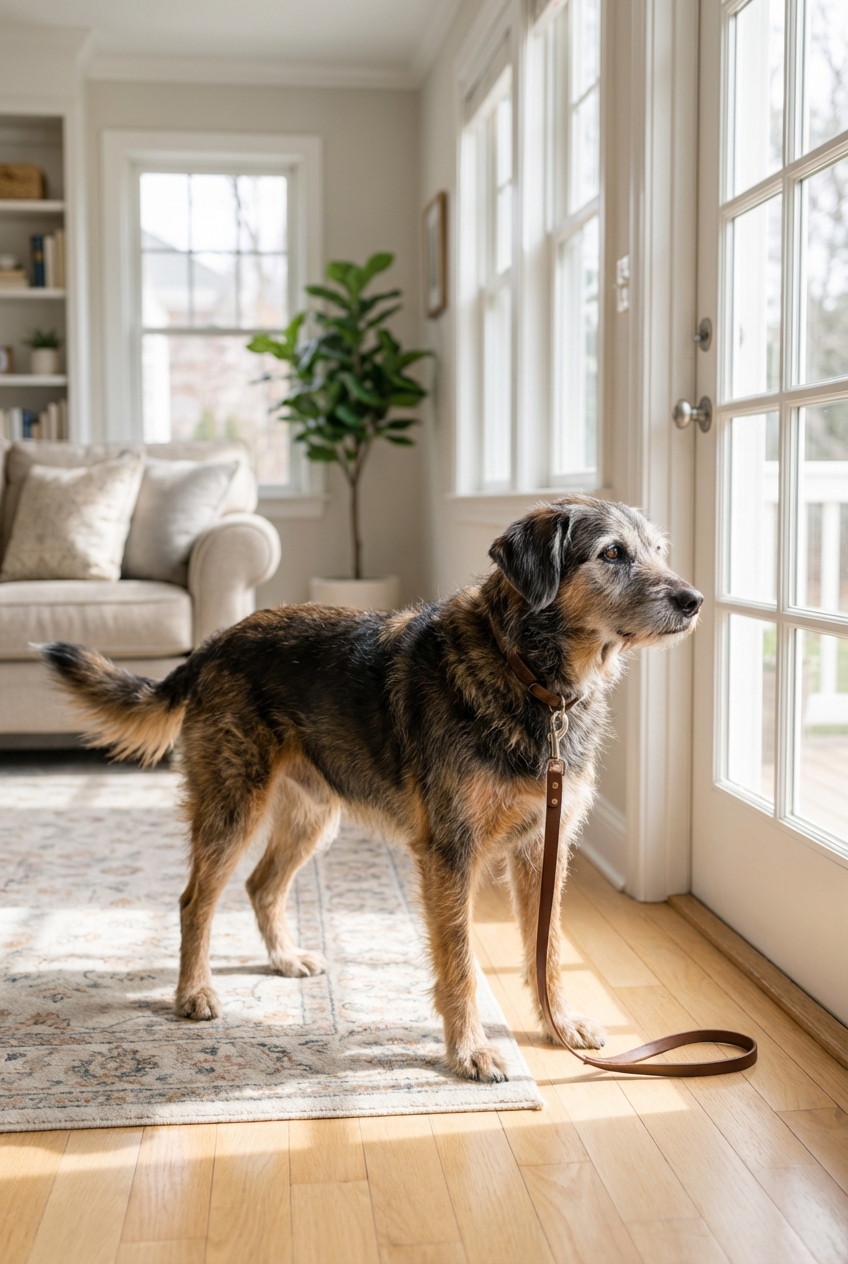
- Leash indoors for dogs that sneak off to mark
- Furniture covers that can be washed easily
- Closed doors to bedrooms and offices
Think of management as kindness. You are preventing your dog from making a mistake, and you are preventing frustration for you.
Step 5: Reset potty training with a schedule
Even adult dogs may need a “back to basics” reset. This is especially true after moving, adding a new pet, schedule changes, or long periods without structure.
Realistic expectations
How long a dog can hold urine depends on age, health, and routine. Puppies generally need more frequent breaks (often every 1 to 2 hours when awake, depending on age). Many healthy adult dogs can hold longer, but asking for long stretches too soon can backfire, especially if your dog is drinking more due to heat, exercise, medication, or a medical issue.
The 7-day reset plan
Days 1 to 3: Tight supervision and frequent breaks
- Take your dog out every 2 to 3 hours while awake (more often for puppies or seniors).
- Always go out after waking, after eating, and after play.
- Use a leash and go to the same potty spot.
- When they pee outside, reward immediately with a small treat and calm praise.
Days 4 to 7: Gradually extend time
- If your dog stays accident-free, slowly extend to every 3 to 4 hours while awake (adjust based on your dog).
- Continue rewarding outside pees. Rewards are not bribery, they are communication.
- Keep furniture access limited until you have at least 2 full weeks with no accidents.
Key technique: the two-minute rule
If your dog does not pee within 2 minutes outside, bring them back in and keep them on leash with you. Try again in 10 to 15 minutes. This prevents the common pattern of “go outside, come inside, pee on the couch.”
Step 6: If it is marking, address the cause
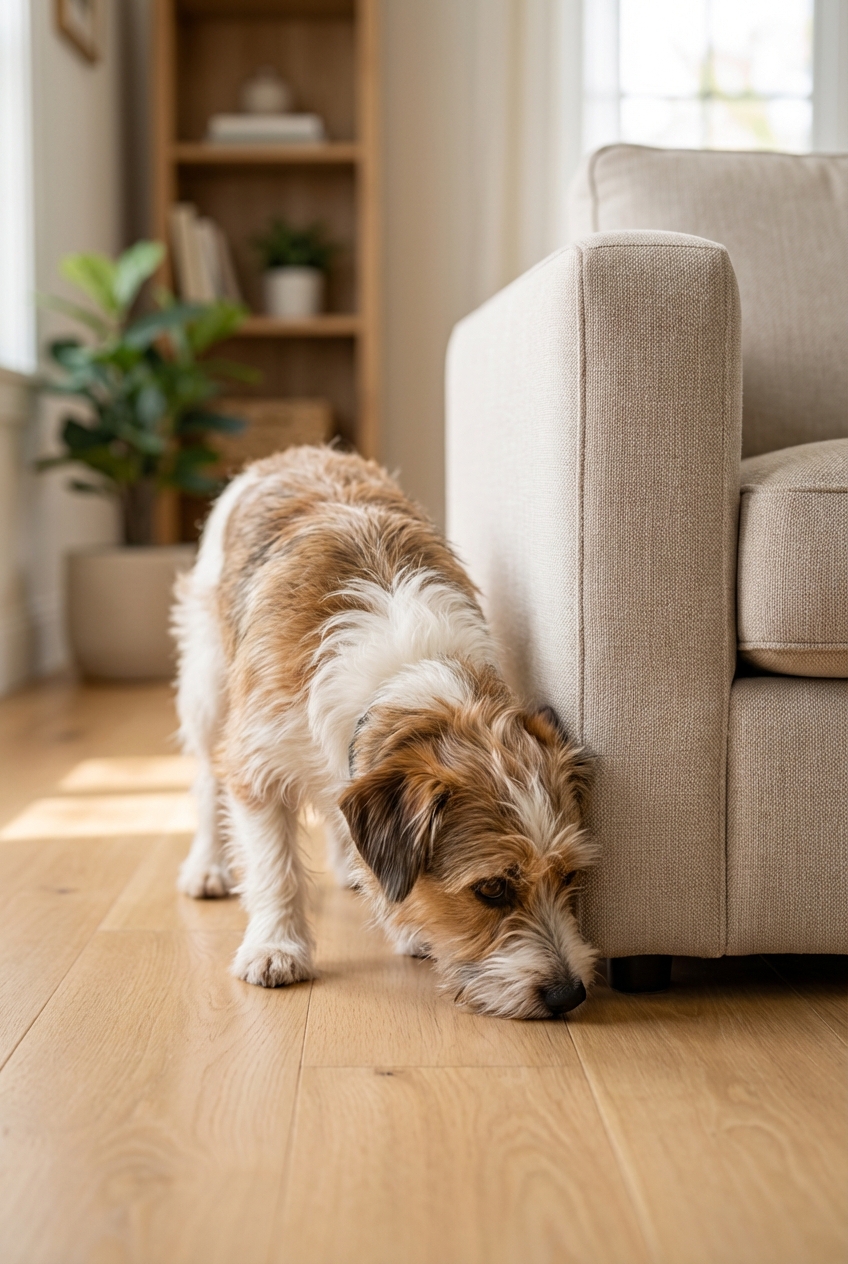
Marking is different than potty accidents. It is often small amounts of urine on vertical surfaces, furniture corners, or new items. Marking is driven by communication, stress, excitement, social tension, and sometimes hormones.
How to tell marking vs. needing to potty
- Marking: small amount, often on furniture edges, may happen soon after already peeing outside.
- Potty need: larger amount, typical squat posture, often after waking or drinking water.
Marking solutions that work
- Increase outside sniff walks: Sniffing often helps many dogs settle and decompress while they process their environment.
- Reduce triggers: Block window views if your dog reacts to outside dogs, manage visitors, and create quiet spaces.
- Neutral introductions: If a new pet is involved, use slow, controlled meetings and separate resources.
- Consider spay or neuter timing: Discuss with your veterinarian. It can reduce some hormone-driven marking, but it is not a guaranteed fix by itself.
- Use belly bands for males as a temporary management tool, not a cure.
If marking is sudden and intense, it is still worth a vet check. Pain, infection, and stress can all increase marking behavior.
Step 7: Make furniture boring and outside valuable
Dogs repeat what works. Your job is to make peeing outside the most rewarding option, and peeing on furniture difficult and unrewarding.
What to do
- Feed high-value treats only for outdoor potty success for a couple weeks.
- Go to the potty spot on leash so your dog cannot wander, get distracted, and forget why they are there.
- Interrupt gently if you catch them mid-act: say a calm “outside,” pick up the leash, and take them out. Then reward if they finish outside.
- Never punish after the fact. Your dog will not connect it to the earlier pee, but they can learn to hide accidents behind furniture.
Important: If your dog is anxious, punishment can increase stress and make indoor urination worse.
Step 8: Address anxiety and separation issues
If accidents happen when you leave, this can be separation anxiety or isolation distress. These dogs often do well when you are home but struggle alone.
Signs it may be separation-related
- Peeing often happens soon after you leave, but timing varies from dog to dog
- Pacing, drooling, barking, or destructive behavior when alone
- “Velcro dog” behavior when you are home
What helps
- Confinement choice matters: Some dogs do better in a crate, others panic and do better in a safe room or exercise pen.
- Pre-departure potty routine: A calm walk and potty break right before you leave.
- Food puzzles only when you leave to build a positive association.
- Desensitization training: Short departures that gradually build up.
- Talk to your vet: For true separation anxiety, behavior medication can be a helpful, humane tool alongside training.
Step 9: Troubleshoot common setbacks
My dog pees on the bed specifically
Beds smell strongly like you and feel safe. Some dogs also mark beds in multi-pet homes. Close the bedroom door, use a waterproof mattress protector, and restart potty training plus stress reduction.
My dog only pees on one couch cushion
Deep-clean that cushion with enzymatic cleaner, then block access. Rotate cushions if possible so your dog cannot target the same spot by habit.
My dog pees right in front of me
That can happen with excitement urination, submissive urination, fear, or medical urgency. Stay calm, avoid looming over your dog, and focus on predictable potty breaks and confidence-building training.
I tried everything and it keeps happening
That is your cue to widen the net: veterinary testing, a certified trainer, or a veterinary behaviorist. Persistent indoor urination is often treatable, but sometimes it needs a team approach and a more tailored plan.
When to get professional help
Reach out to your veterinarian or a qualified behavior professional if:
- Accidents started suddenly
- There is any sign of pain, straining, or increased thirst
- Your dog is marking multiple locations daily
- You suspect separation anxiety
- You have tried consistent management and retraining for 2 to 3 weeks with little improvement
Look for trainers who use reward-based methods. For complex cases, a board-certified veterinary behaviorist (DACVB) is the gold standard.
Quick action checklist
- Today: Block access to furniture, start enzymatic cleaning, increase potty breaks.
- This week: Track patterns, restart potty training, reward outdoor pees like it is your job.
- Next 2 to 4 weeks: Gradually reintroduce furniture access only after consistent success.
- Anytime: Call your vet if symptoms are sudden, frequent, or painful.
Your dog is not giving you a hard time. They are having a hard time. With a clear plan and a little patience, many families see real improvement quickly.