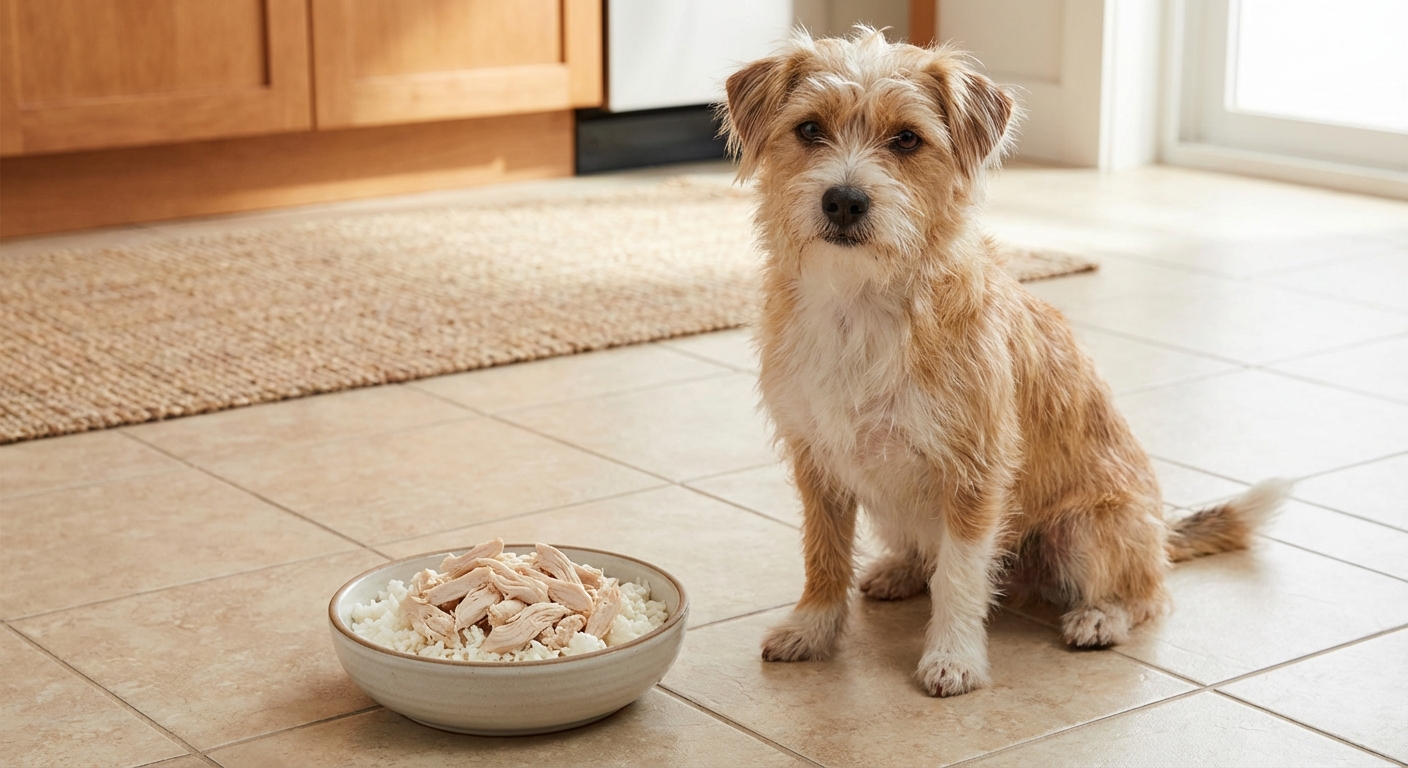
Step-by-step home care for mild dog diarrhea and vomiting: short food break, small sips of water, bland diet, pumpkin, probiotics, dehydration checks, and ur...
Article
•
Designer Mixes
Stomach Ache in Dogs: Trusted Causes and Solutions

Shari Shidate
Designer Mixes contributor
When your dog has a stomach ache, it can feel urgent and confusing. One minute they are fine, and the next they are drooling, refusing food, or asking to go outside over and over. The good news is that many tummy troubles are mild and short-lived. The important part is knowing what you can safely do at home, and when it is time to call your veterinarian right away.
As a veterinary assistant here in Frisco, Texas, I always tell families this: your dog’s stomach can get upset for simple reasons, but it can also be the first sign of something serious. Let’s walk through trusted, practical signs, causes, and solutions you can use today.
Common signs of a stomach ache
Dogs cannot tell us “my stomach hurts,” so we watch their behavior and body language. A stomach ache might look like:
- Vomiting or retching
- Diarrhea or soft stool
- Excess drooling, licking lips, or swallowing repeatedly
- Reduced appetite or refusing treats they usually love
- Eating grass
- Gurgling stomach sounds
- Hunched posture, restlessness, or pacing
- “Prayer position” (front end down, rear end up), which can be a sign of abdominal pain. Pancreatitis is one possible cause, but it is not the only one.
- Trying to poop with little or no stool produced (can also suggest constipation or obstruction)
One episode of vomiting can be a minor upset. Repeated vomiting, or vomiting plus lethargy or pain, is a different story and deserves quicker attention.
Also keep in mind: not every nausea sign is strictly “stomach.” Pain elsewhere, motion sickness, and some neurologic or inner ear issues can cause drooling and vomiting too. If your dog seems unusually unsteady, painful, or “not themselves,” call your vet for guidance.
Most common causes
Many stomach aches come down to irritation or inflammation in the stomach or intestines. Here are the big categories we see in real life:
Dietary indiscretion
This is the polite way of saying “they ate something they should not have.” Common culprits include greasy table scraps, trash, new treats, chews that are too rich, spoiled food, or raiding the cat’s litter box.
Sudden diet changes
Switching foods too quickly can lead to vomiting, diarrhea, gas, and cramping. Most dogs do best with a gradual transition over about a week, and up to 10 days for sensitive stomachs.
Stress and anxiety
Boarding, storms, new pets, travel, or changes in routine can trigger GI upset. The gut and brain are closely connected in dogs, just like in humans.
Parasites and infections
Intestinal parasites (especially in puppies) and viral or bacterial infections can cause significant diarrhea and vomiting. These are more likely when dogs are exposed to contaminated soil or stool, or in high-traffic dog areas.
Food sensitivities
Some dogs react to certain proteins or ingredients with chronic soft stool, intermittent vomiting, gas, or itchy skin. This tends to be more ongoing than sudden.
Pancreatitis
Pancreatitis is inflammation of the pancreas and can be associated with high-fat meals or rich treats in some dogs. It often causes vomiting, loss of appetite, abdominal pain, and lethargy. Because pancreatitis is multifactorial, avoiding rich, greasy foods is a smart risk-reduction step, not a guarantee.
Foreign body obstruction
Socks, toys, corn cobs, bones, and pieces of chews can block the intestines. Obstructions can be life-threatening.
Bloat (GDV)
Deep-chested dogs are at higher risk, but any dog can bloat. If the stomach fills with gas and twists, it is an emergency.
When to call the vet immediately
If you are ever unsure, it is completely appropriate to call your veterinarian or an emergency clinic. Please seek urgent care if you notice:
- Repeated vomiting, especially if your dog cannot keep water down
- Vomiting that continues even after offering only small sips of water
- Bloody diarrhea or vomit, or black tarry stool
- Severe lethargy, collapse, weakness, or pale gums
- Swollen, tight, or painful abdomen
- Unproductive retching (trying to vomit but nothing comes up), especially if the belly looks larger or your dog seems distressed. This can suggest bloat and should not wait.
- Known or suspected toxin exposure (xylitol, chocolate, grapes or raisins, medications, cannabis, rodent bait)
- Possible foreign body ingestion (socks, toys, bones, corn cobs, string)
- Very frequent diarrhea, large-volume watery diarrhea, or diarrhea that is happening so often your dog cannot rest (dehydration can happen quickly)
- Dehydration signs (dry gums, sunken eyes, sticky saliva)
- Puppies, seniors, or dogs with chronic illness (kidney disease, diabetes, Addison’s disease) showing GI symptoms
- Symptoms that persist beyond a day, or diarrhea that persists beyond two days, even if mild. Call sooner if signs are severe or your dog is high-risk.
These are not “wait and see” moments. Getting help early often means a faster recovery and lower cost.
Trusted at-home care for mild stomach upset
If your dog is bright, alert, still interested in you, and symptoms are mild (for example one vomit and then they seem normal), your vet may recommend supportive care at home. Always follow your clinic’s guidance, but here are commonly used approaches.
Step 1: Rest the stomach carefully
For an adult dog with a mild upset, your vet may suggest a brief break from food. Many owners hear “about 8 to 12 hours,” but the right plan depends on your dog and the situation. Do not fast puppies without veterinary direction because they can become hypoglycemic. Also do not fast dogs with diabetes, very small dogs, or dogs with other chronic conditions unless your veterinarian specifically advises it.
Step 2: Hydration first
Offer small, frequent sips of water. If your dog gulps a full bowl after vomiting, they may vomit again. Ice chips can help some dogs take in fluid more slowly.
If your dog cannot keep down small sips, vomits repeatedly, or seems weak or painful, stop home care and contact a veterinarian.
Step 3: A bland diet (short-term)
A bland diet is not meant to be permanent, but it can calm an irritated GI tract. Common vet-approved options include:
- Boiled chicken breast with white rice (no skin, no seasoning, no oil)
- Lean ground turkey with white rice (drained well, no seasoning)
- Low-fat cottage cheese (for dogs that tolerate dairy) with rice
- Veterinary prescription GI diets (often the easiest and most balanced option for sensitive stomachs)
Feed small portions 3 to 6 times daily, then gradually transition back to regular food over several days once stools normalize.
Step 4: Consider a probiotic
Veterinary probiotics can help support a healthier gut microbiome during diarrhea or after GI stress. Use a product made for dogs and follow your veterinarian’s dosing recommendations.
Step 5: Pause rich treats and chews
Hold off on fatty treats, bully sticks, bones, and new chews for now. When you reintroduce them, do it slowly and in moderation.
What not to do at home
- Do not give human medications like ibuprofen, naproxen, or aspirin unless your veterinarian specifically directs it
- Do not force-feed a nauseated dog
- Do not use anti-diarrheal medications without guidance, especially if there may be infection, toxins, or a blockage involved
What to monitor
If you are managing mild symptoms at home, track a few simple details. This makes it much easier to know if your dog is improving, and it helps your vet if you need to call.
- How many times your dog vomits (and whether they are producing vomit or just retching)
- Diarrhea frequency and appearance (watery, mucus, blood, black stool)
- Water intake and whether it stays down
- Urination (normal, decreased, or none)
- Energy level and comfort (resting normally versus restless, painful, or hiding)
How your veterinarian finds the cause
If symptoms are moderate to severe, persistent, or recurring, your veterinarian will likely recommend diagnostics. This is not “extra.” It is how we avoid missing pancreatitis, obstruction, metabolic disease, or dangerous dehydration.
- Physical exam: checking hydration, abdominal pain, temperature, gum color
- Fecal testing: parasites, Giardia
- Bloodwork: dehydration, electrolyte changes, infection, organ function, pancreatitis screening
- X-rays or ultrasound: foreign body, obstruction, bloat, intestinal inflammation
- Parvo testing: especially in puppies with vomiting and diarrhea
Treatment may include fluids, anti-nausea medication, gut protectants, deworming, diet therapy, or in emergency cases, surgery.
Prevention
You cannot prevent every stomach ache, but you can reduce the odds and improve recovery when GI upset happens.
Make food changes slowly
Transition over about a week, and up to 10 days for sensitive dogs, by mixing increasing amounts of the new food into the old.
Skip fatty table scraps
High-fat foods are a common risk factor for pancreatitis and can trigger sudden vomiting or diarrhea in many dogs.
Practice safe chewing
Choose chews that are appropriately sized and not easy to break into sharp chunks. Supervise chewing time and remove small pieces.
Use parasite prevention and do routine fecals
Year-round parasite prevention and regular fecal checks are simple steps that can prevent a lot of GI misery.
Support gut health with consistent nutrition
Many dogs do well on a consistent, balanced diet with limited ingredient changes. If you want to add fresh foods, introduce one item at a time in small amounts so you can spot what helps and what does not.
Frequently asked questions
How long does a mild stomach ache last in dogs?
Mild dietary upset often improves within 12 to 24 hours with rest, hydration, and a bland diet. If symptoms persist, worsen, or your dog seems painful or lethargic, call your veterinarian.
Is grass eating always a sign of stomach pain?
Not always. Some dogs simply graze. But if grass eating is new and paired with drooling, lip licking, vomiting, or refusing meals, nausea is a common reason.
Can homemade food help?
Fresh, gently cooked food can help some dogs, especially when it is balanced and introduced slowly. The key is nutritional completeness long-term. For dogs with repeated GI issues, talk with your veterinarian about an elimination diet, a prescription GI diet, or a veterinary nutritionist-supported homemade plan.
A calm plan
If your dog seems mildly uncomfortable but otherwise stable, take a breath and focus on the basics: remove risky foods, offer small amounts of water, feed a bland diet in small portions, and monitor closely. If anything feels “off,” especially repeated vomiting, unproductive retching, abdominal swelling, pain, blood, or profound lethargy, trust your instincts and contact your veterinarian.
Your dog does not need you to be perfect. They need you to be observant, steady, and willing to get help early when it counts.